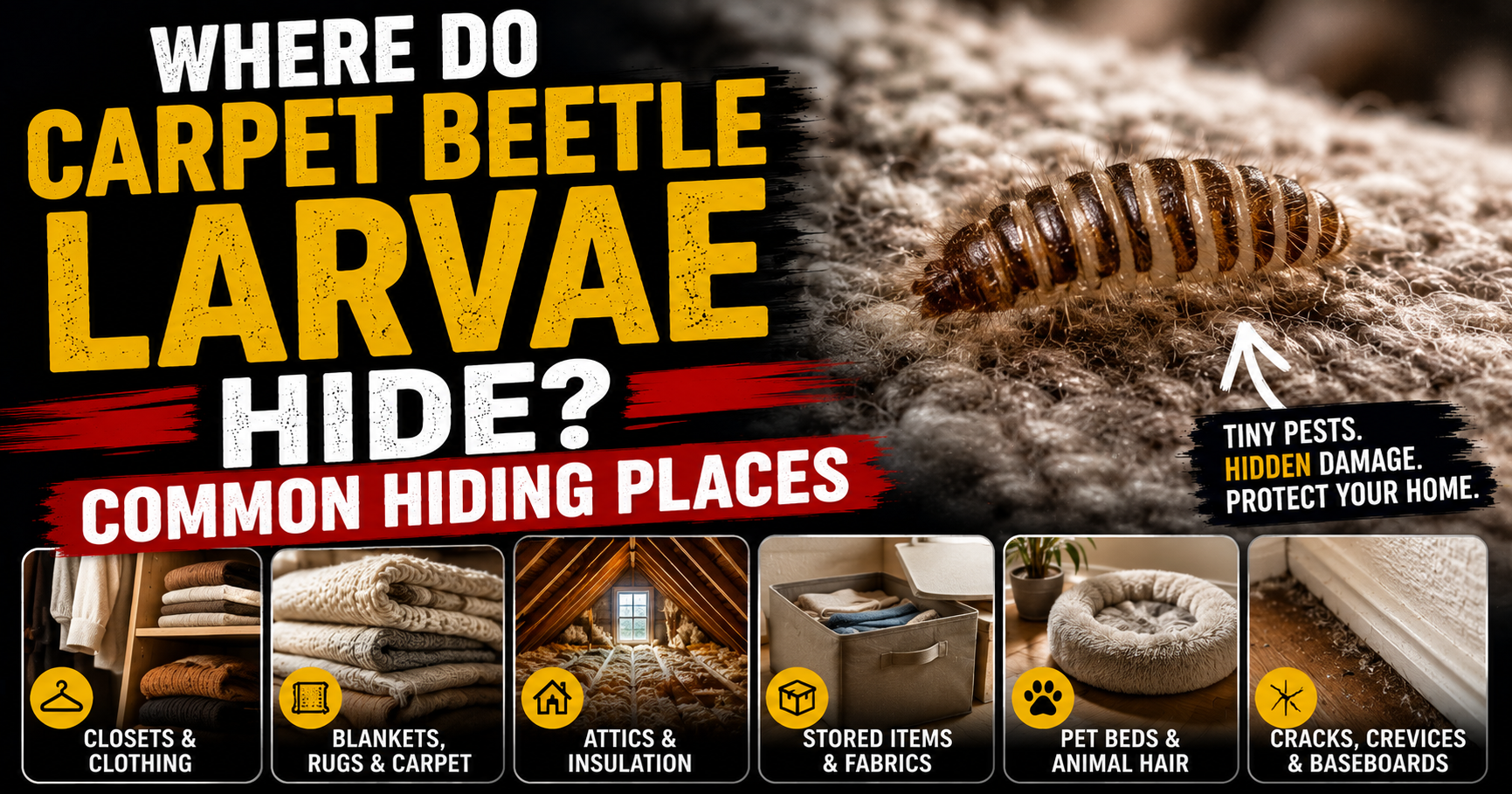
One of the biggest frustrations with carpet beetles is that you almost never find them where you expect.
I’ve had homeowners tell me they searched every inch of their bedroom, vacuumed the carpet twice, and still couldn’t find a single larva.
Then weeks later, they discovered one tucked inside a storage box or under a wool blanket that hadn’t been moved in months.
That doesn’t surprise me anymore.
Carpet beetle larvae are incredibly good at staying out of sight.
In fact, if you find one crawling across the floor in the middle of the day, there’s a good chance you’ve already had them around longer than you realize.
Learning where carpet beetle larvae hide is one of the most important steps toward finding the source of an infestation before it spreads.
My First Thought
Whenever someone tells me they can’t find the larvae, I ask one simple question.
Where in your house gets disturbed the least?
That’s usually where I begin my search.
Unlike many household insects that constantly move around, carpet beetle larvae prefer quiet, protected places where they can feed without being disturbed.
The less traffic an area gets, the more interested I become.
One of the First Clues Isn’t the Larva
Before I ever expect to find a live larva, I’m usually looking for evidence that one was there.
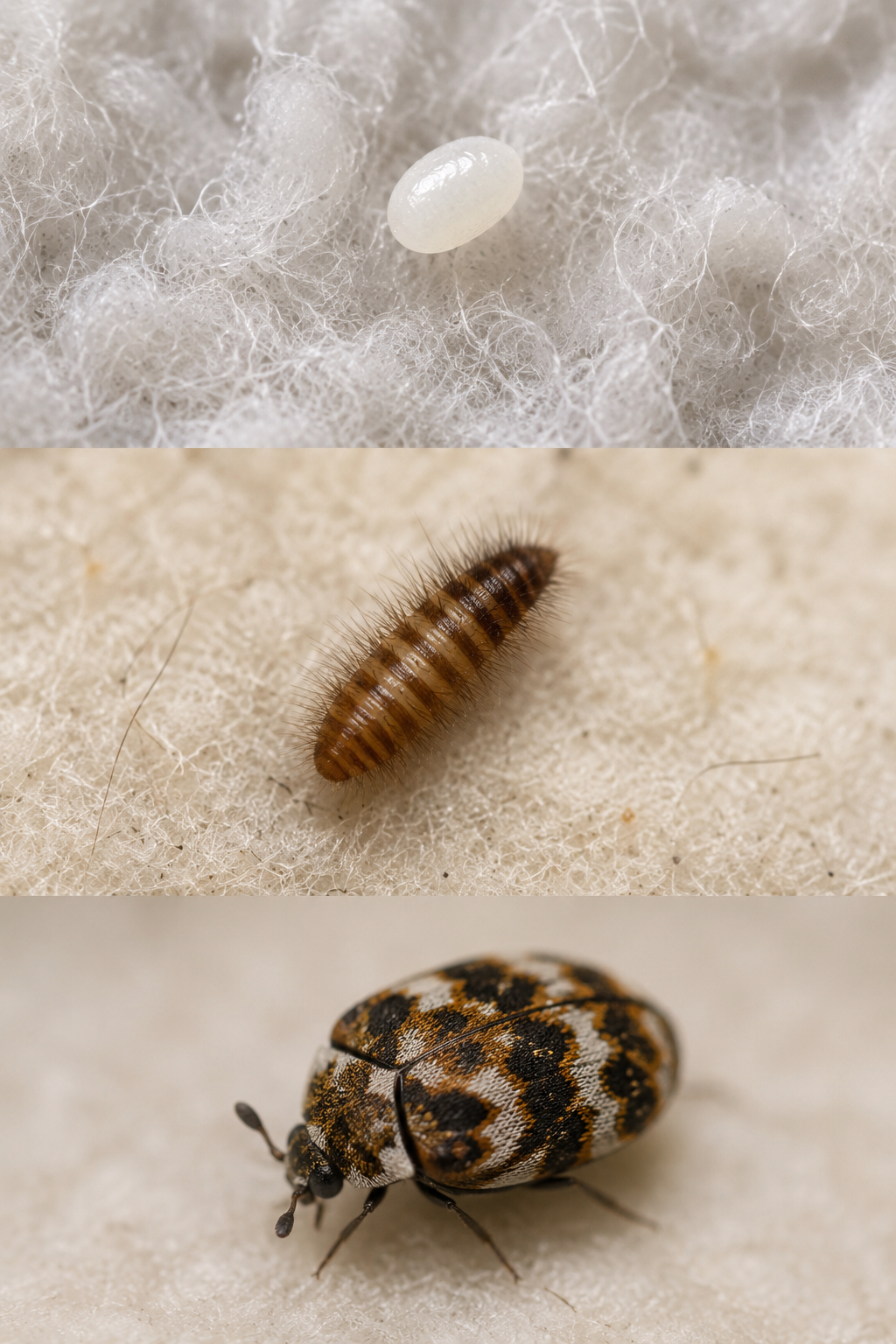
One of the most common clues is an empty shed skin.
I recently found one inside a shoe that had been stored in our attic, and it reminded me how easy they are to overlook or mistake for another insect.
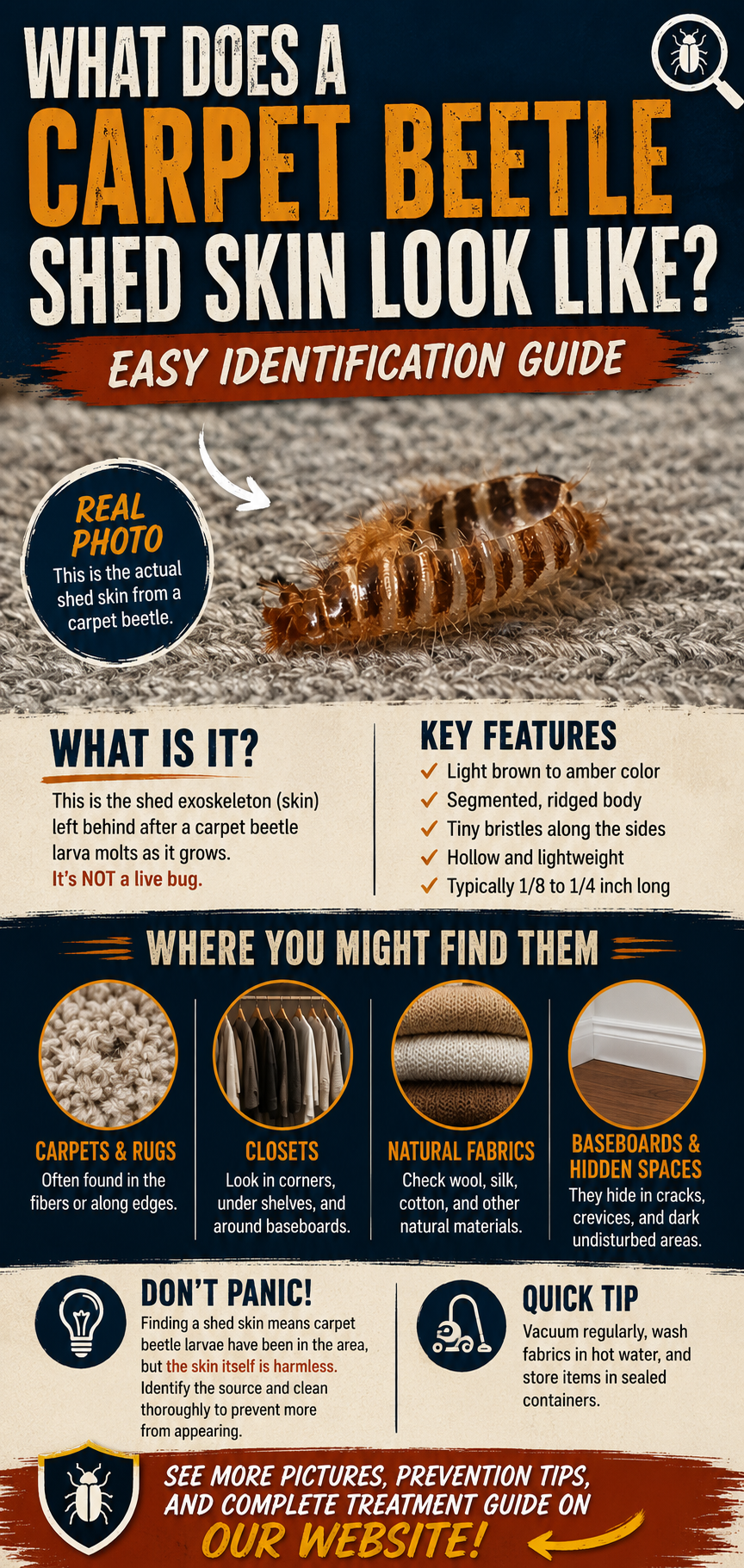
If you’re not completely sure what you’ve found, my guide showing what a carpet beetle shed skin looks like walks through the features I use to identify them.
Closets Are One of the First Places I Check
Closets are almost always near the top of my inspection list.
Why?
Because they often contain exactly what carpet beetle larvae are looking for.
Wool sweaters.
Coats.
Scarves.
Blankets.
Leather accessories.
Shoes.
Most closets also stay dark for long periods and aren’t cleaned as frequently as the rest of the house.
That combination makes them an excellent hiding place.
If you’re looking for a broader overview, my Everything You Need to Know About Carpet Beetles guide brings together everything I’ve learned about identifying, preventing, and getting rid of carpet beetles in one place.
Stored Boxes Are Often Overlooked
One thing I’ve noticed is that homeowners rarely inspect storage boxes until they’re looking for holiday decorations or seasonal clothing.
Unfortunately, carpet beetle larvae love that.
Boxes often contain:
- Clothing.
- Blankets.
- Fabric decorations.
- Yarn.
- Felt.
- Natural fibers.
If those boxes sit untouched for months, they provide both shelter and food.


Shoes Can Be a Surprisingly Good Hiding Place
This one caught me by surprise until I experienced it myself.
The carpet beetle shed skin I found was inside a shoe that had been sitting in our attic.
After learning more about carpet beetles, it actually made perfect sense.
Shoes often collect tiny amounts of lint, hair, dust, and natural fibers.
When they’re stored for long periods without being disturbed, they can become attractive hiding places for larvae.
Does carpet beetle spray work? We tested to let you know, find out results here!
I wouldn’t assume every stored shoe has carpet beetles.
But after my own experience, they’re definitely one of the places I’d inspect.
Under Furniture Is Another Favorite Spot
Most of us vacuum the open parts of a room.
Far fewer people move heavy furniture every week.
That’s exactly why carpet beetle larvae often end up underneath:
- Couches.
- Recliners.
- Beds.
- Dressers.
- Bookshelves.
Dust, pet hair, and lint naturally collect underneath furniture, providing a steady food source.



After You Find Them, Vacuum Them Out
Finding where carpet beetle larvae are hiding is only half the battle.
The next step is removing as many larvae and food sources as possible.
During our own carpet beetle problem, I vacuumed every day for weeks. I paid special attention to closets, baseboards, under furniture, storage areas, and anywhere pet hair or lint collected. That routine made a much bigger difference than I expected.

I put together a detailed guide explaining why I believe a powerful vacuum is one of the best tools for carpet beetle control if you’d like to see exactly what I recommend.
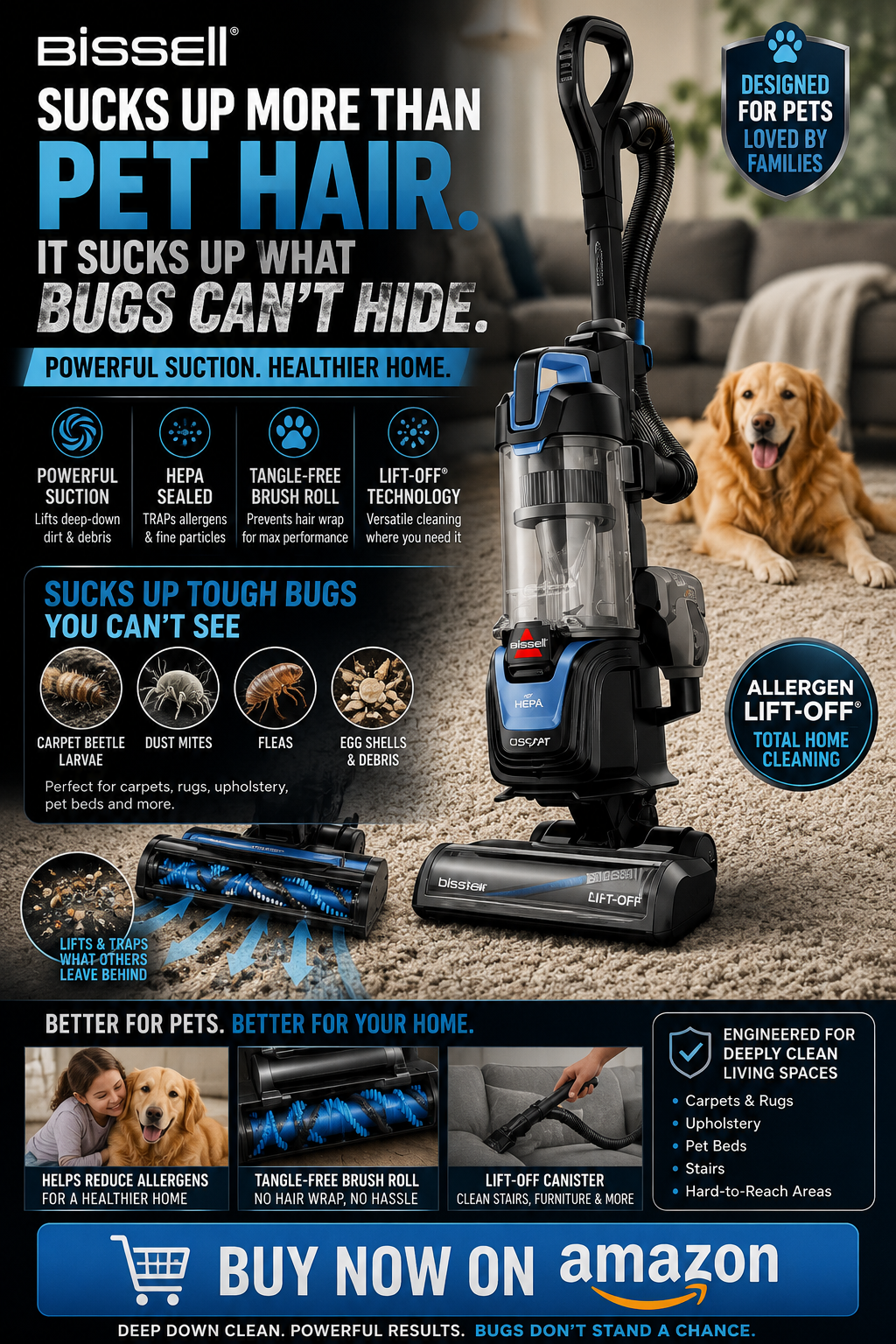
If you’re ready to upgrade, the Bissell Pet Hair Eraser Allergen Lift-Off is worth a look because it has the suction and attachments needed to clean many of the places carpet beetle larvae like to hide.
Pet Beds Can Support Larvae
If you have dogs or cats, don’t forget about their favorite sleeping spots.
Pet beds collect:
- Fur.
- Hair.
- Dander.
- Skin flakes.
While your pets don’t cause carpet beetles, the material that naturally builds up around pet bedding can become food for developing larvae if it isn’t cleaned regularly.

Attics Are High on My List
Attics combine almost everything carpet beetle larvae like.
They’re usually:
- Dark.
- Quiet.
- Rarely disturbed.
- Filled with stored belongings.
I’ve seen attics contain old blankets, clothing, stuffed animals, taxidermy, holiday decorations, and cardboard boxes that hadn’t been opened in years.
If you’ve already discovered carpet beetle evidence elsewhere, I would absolutely inspect the attic if you have one.
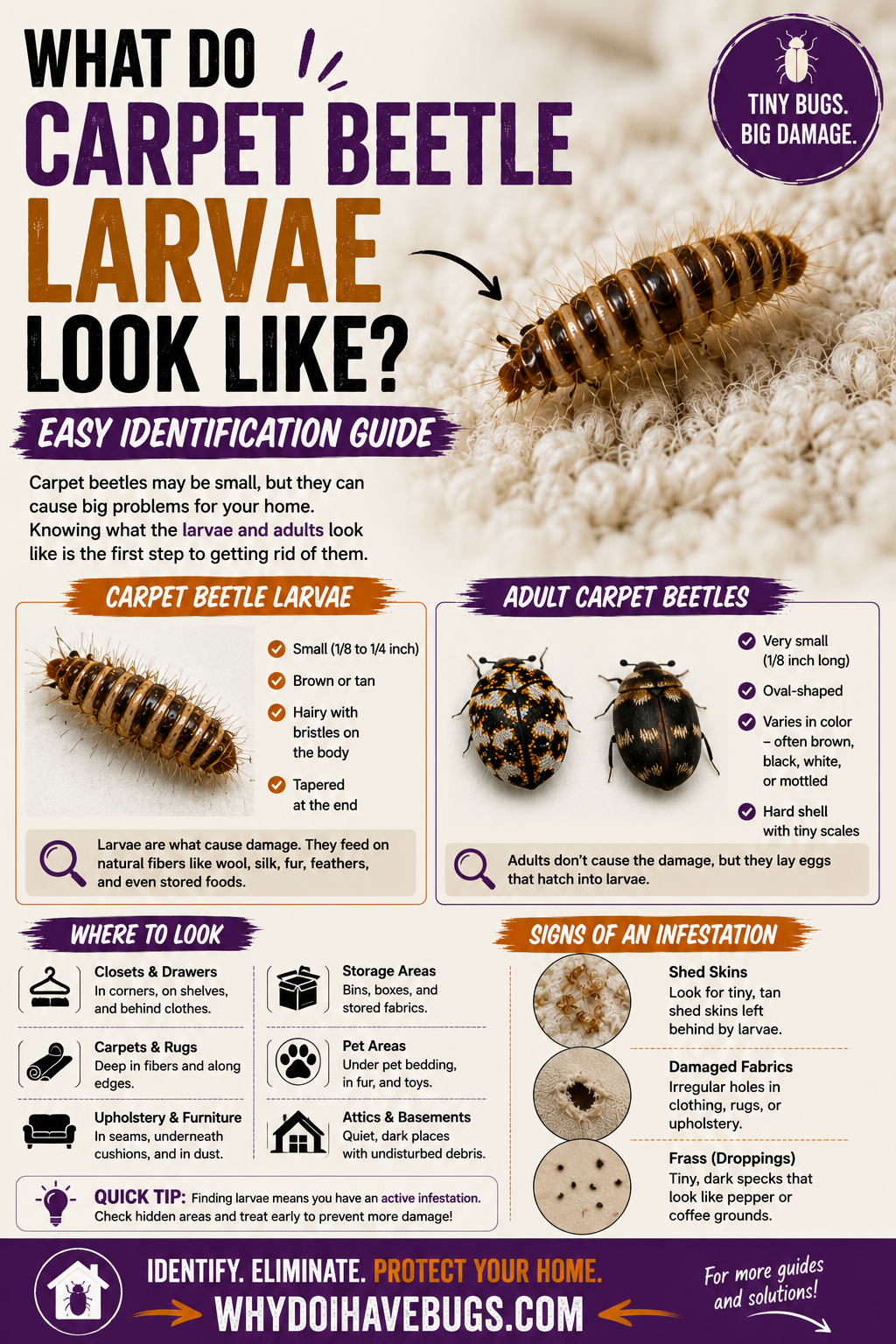
Curious what carpet beetle larvae really look like?
Why You May Only Find Shed Skins
One thing I hear all the time is,
“I keep finding the shells, but I never find the bugs.”
Honestly, that’s one of the most common situations homeowners experience.
Carpet beetle larvae spend so much time hidden that the empty shed skins often become the first visible clue.
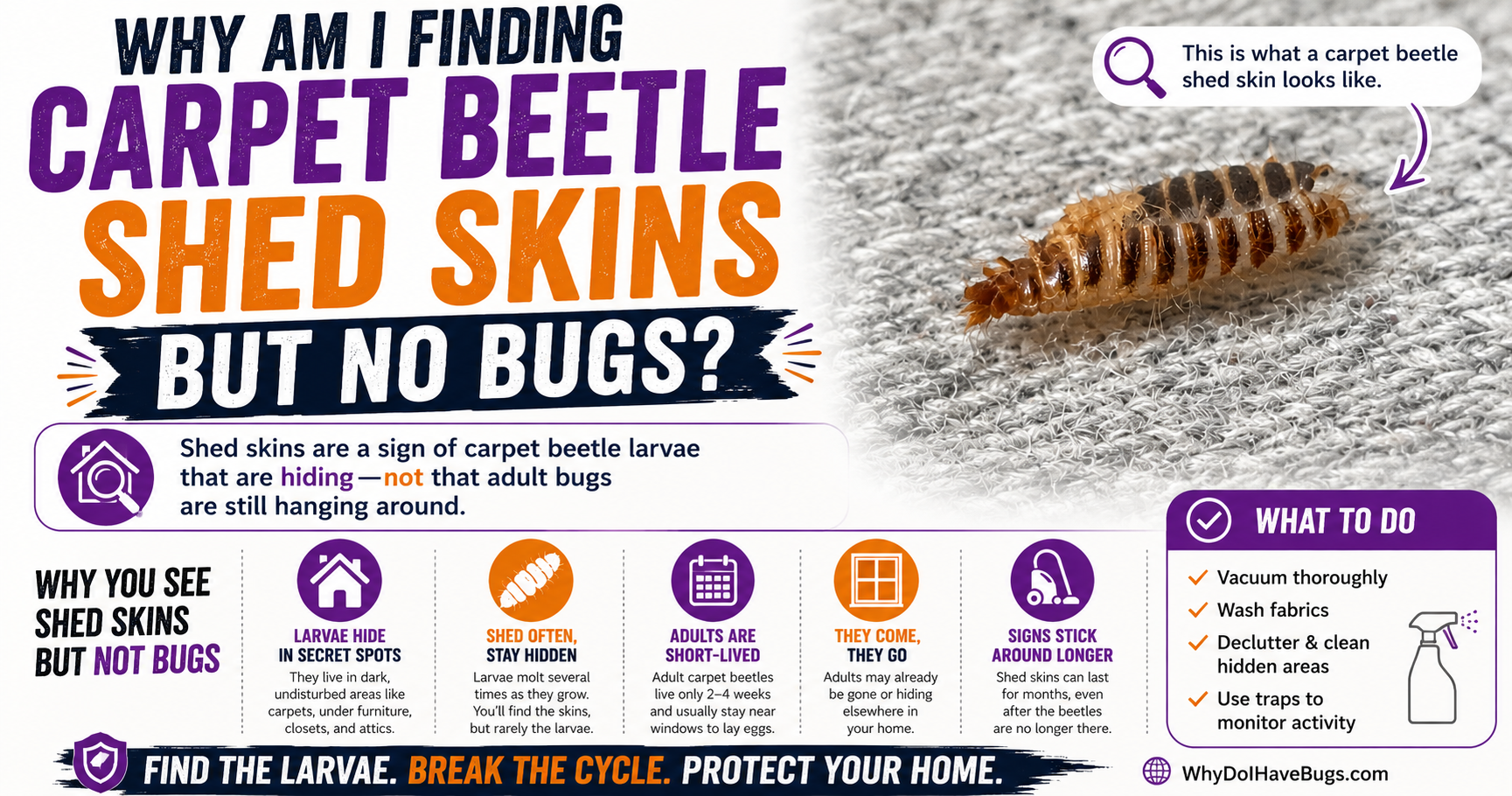
If that’s happening in your home, my article explaining why you’re finding carpet beetle shed skins but no bugs walks through the reasons this happens and what I’d inspect next.



Why Carpet Beetles Chose Your Home
Finding the larvae is only half the puzzle.
The next question I ask is:
Why did they choose this house?
In almost every case, the answer comes back to food and shelter.
Natural fibers.
Pet hair.
Stored belongings.
Dead insects.
Quiet hiding places.
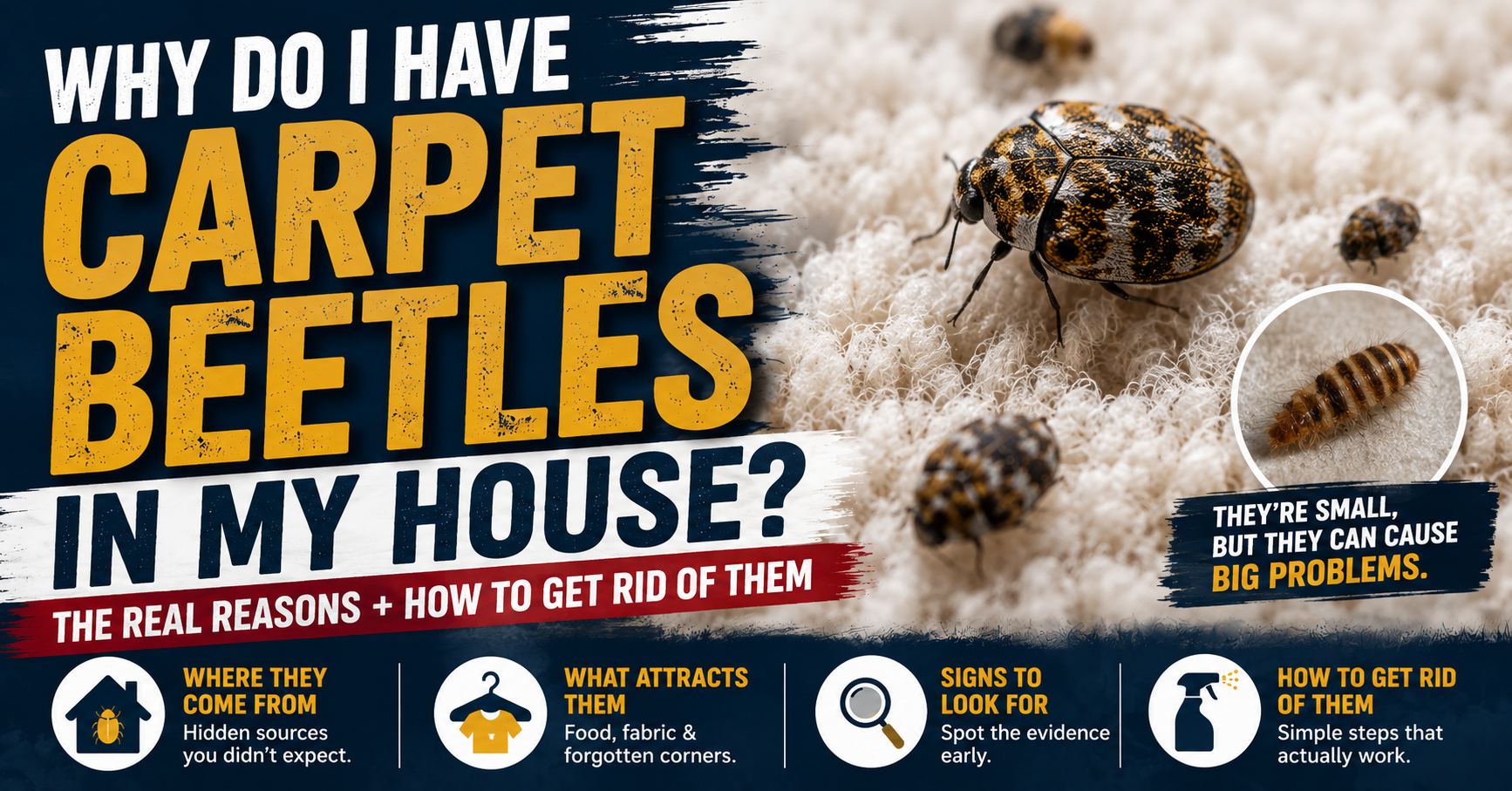
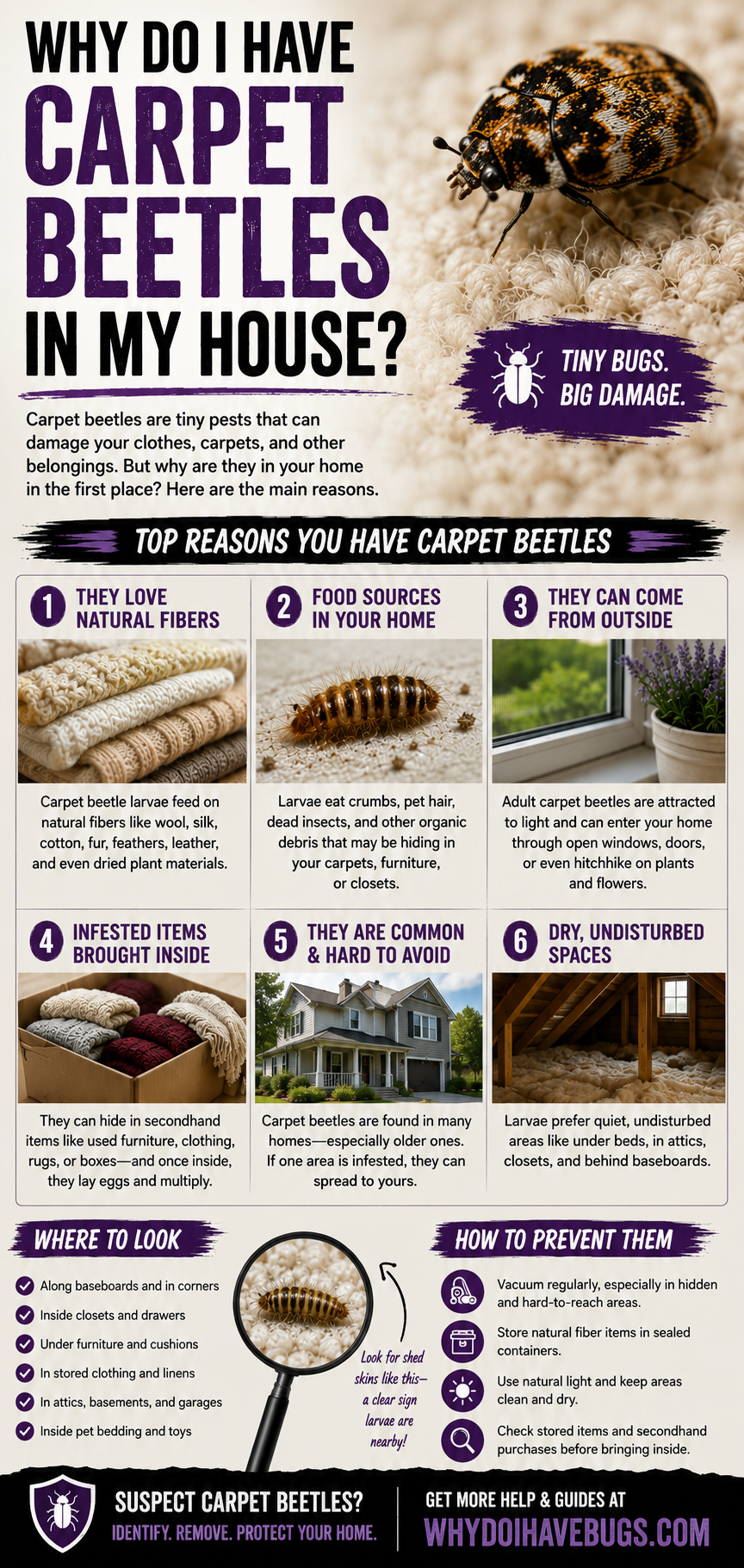
If you haven’t already, I recommend reading my guide on why carpet beetles are in your house because understanding what attracted them often makes locating the larvae much easier.
Don’t Ignore Air Vents
One place that doesn’t get enough attention is HVAC vents.
Return vents, floor vents, and the spaces around ductwork often collect lint, hair, and dust.
They’re also protected from daily activity.
While I wouldn’t assume every vent contains carpet beetles, I definitely inspect them whenever I’m trying to locate a hidden infestation.
Baseboards and Carpet Edges
Another place I inspect carefully is along baseboards.
Especially behind furniture.
Lint naturally accumulates there.
So does pet hair.
Carpet edges near walls often receive less cleaning than the center of the room, making them another location where larvae can quietly develop.
What I Would Do If This Were My House
If I suspected carpet beetle larvae were hiding somewhere in my home, I wouldn’t start by spraying every room.
I’d investigate first.
I’d inspect closets.
I’d open storage boxes.
I’d check under furniture.
I’d examine pet beds.
I’d look inside stored shoes.
I’d vacuum thoroughly before making any treatment decisions.
Finding the hiding place tells me far more than simply finding one adult beetle wandering across a windowsill.
Products and Prevention
My first line of defense is almost always cleaning rather than chemicals.
A thorough vacuuming removes lint, hair, dead insects, larvae, eggs, and shed skins while also removing many of the food sources carpet beetle larvae depend on.
I also recommend washing or dry-cleaning infested fabrics and storing seasonal clothing in sealed plastic containers whenever possible.
As our Beetles resource center continues growing, I’ll also be reviewing products that have proven effective against carpet beetles so homeowners can make informed decisions instead of relying on trial and error.
The Biggest Mistake I See
The biggest mistake I see is homeowners searching only where they found the first beetle.
Adult carpet beetles often wander.
Larvae usually don’t.
If you want to solve the problem, spend less time chasing the adults and more time investigating the quiet places where the larvae actually live.
That’s where the real story almost always begins.
If you’re still trying to identify another beetle or household insect, you can also browse the Why Do I Have Bugs? homepage for additional identification guides covering common pests found inside homes.
Frequently Asked Questions
Where do carpet beetle larvae usually hide?
They commonly hide in closets, attics, storage boxes, under furniture, along baseboards, inside pet bedding, and anywhere natural fibers collect and remain undisturbed.
Why can’t I find the larvae?
Carpet beetle larvae avoid open areas and spend most of their lives hidden near food sources, making them much harder to find than the adult beetles.
Do carpet beetle larvae hide in shoes?
Yes. Stored shoes, especially those left undisturbed for long periods, can become hiding places because they collect dust, lint, and natural materials.
Should I check my attic for carpet beetles?
Absolutely. Attics are one of the most common places I inspect because they often contain stored fabrics and other materials carpet beetle larvae feed on.
What’s the best way to find where carpet beetle larvae are hiding?
Look in quiet areas that contain natural fibers, inspect stored belongings carefully, and watch for clues like shed skins, damaged fabrics, or live larvae.
About the Author
Daniel Brooks is a pest management writer who specializes in helping homeowners identify hidden pest problems before they become major infestations. His work focuses on practical home inspections, insect behavior, and real-world prevention strategies based on how pests actually live inside homes.