Advion gel bait is the same product exterminators use. Here’s an honest review — how it works, how to apply it right, and whether it’s worth buying.
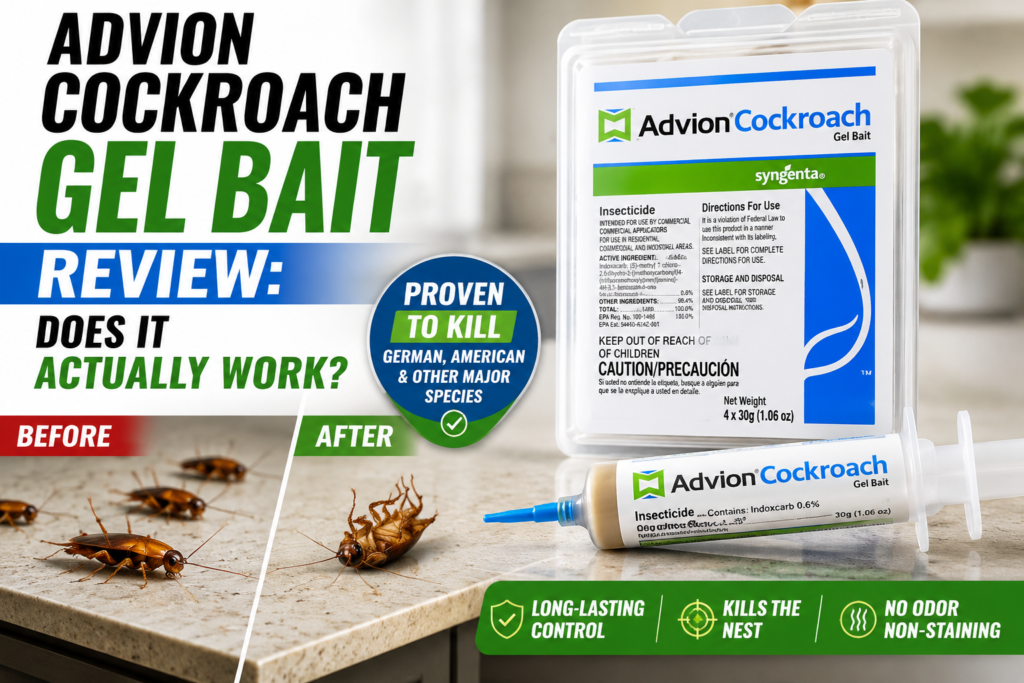
You’ve tried the sprays. You’ve set out the little bait stations from the dollar store. You’ve wiped down every surface in your kitchen until it squeaked — and there’s still a roach staring at you from behind the toaster at midnight. If that’s where you’re at, you’ve probably stumbled across Advion gel bait and wondered if it’s worth it or just another product making big promises.
I’m going to give you a straight answer. What Advion is, how it works, whether it actually kills roaches or just annoys them, how to apply it correctly, and who should bother buying it in the first place. No fluff — just what actually matters.
The Short Answer
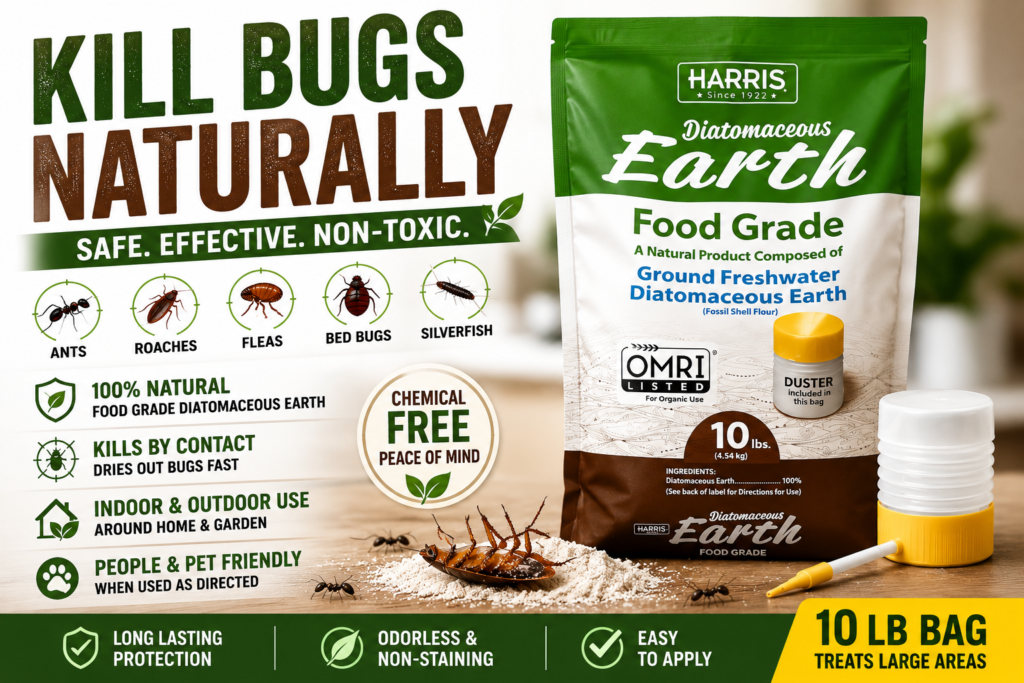
Yes, Advion Cockroach Gel Bait works — and it works better than almost anything else you can buy without a pest control license. It uses a professional-grade active ingredient called indoxacarb that roaches actually want to eat, and it spreads through the colony via secondary kill, meaning it wipes out roaches that never even touched the original bait. Most people see dead roaches within 24–48 hours and a significant population drop within one to two weeks. It’s not instant, but for a DIY product, it’s as close to professional-grade as you’re going to get. For added protection against stragglers and future activity, pair the bait strategy with a diatomaceous earth barrier treatment.
What Is Advion Cockroach Gel Bait?
Advion is made by Syngenta, one of the largest agricultural and pest control chemical companies in the world. This isn’t a consumer product dressed up in fancy packaging. Pest control professionals have used Advion for years because it consistently outperforms everything else on stubborn infestations — particularly German roaches, which are notoriously hard to eliminate.
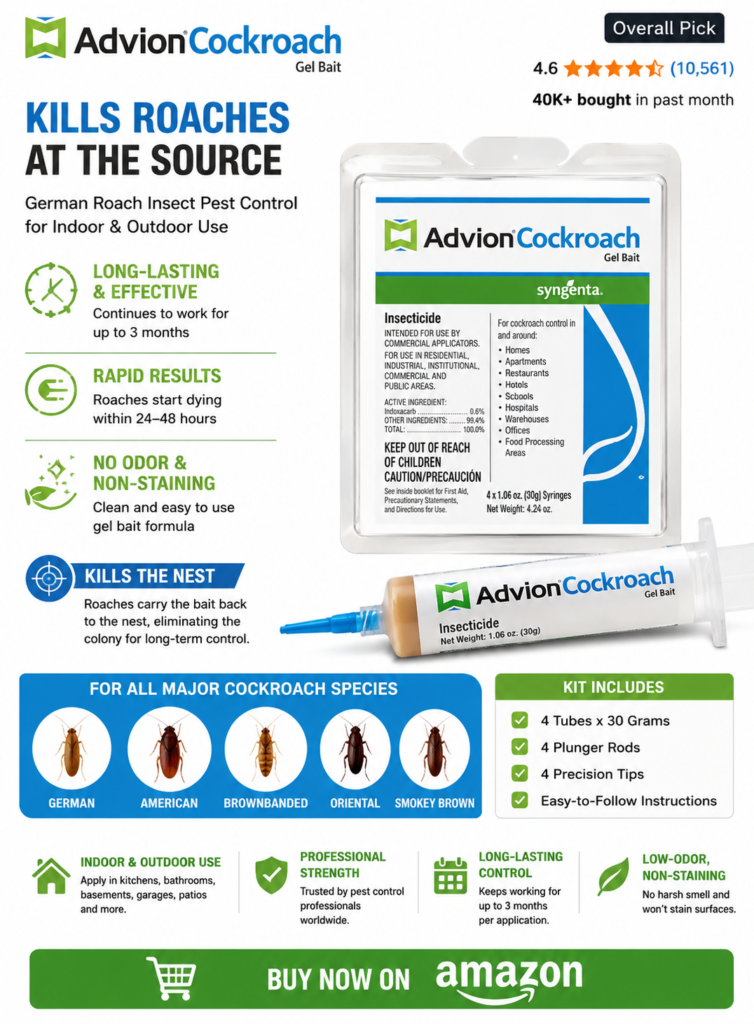
The version available on Amazon comes as a set of four 30-gram syringes, each with a plunger and tip included. That’s 120 grams of bait total — more than enough to treat an entire apartment or house multiple times over.
The active ingredient is indoxacarb at 0.6%. That specific concentration matters. It’s strong enough to kill effectively but low enough that roaches don’t detect it as a threat and avoid it — which is a real, documented problem with some older bait formulas.
→ Check the current price on Advion Cockroach Gel Bait on Amazon — it’s almost always cheaper than a single exterminator visit.


How Does Advion Actually Work?
This is the part that makes Advion different from a spray, and understanding it will help you use it correctly.
Most people think of pest control as direct kill — spray the bug, bug dies. Advion doesn’t work that way, and that’s exactly why it’s more effective for an actual infestation.
Here’s the sequence:
- You apply small pea-sized dots of gel in areas where roaches travel and hide — under the sink, along cabinet edges, inside hinges, near the fridge motor.
- Roaches are attracted to the bait matrix. Syngenta engineered it to smell and taste like food to cockroaches.
- A roach eats the bait. The indoxacarb takes several hours to kill it — intentionally. The roach returns to the harborage area before it dies.
- Other roaches eat the dead roach and its droppings, which still contain active indoxacarb. They get dosed too.
- This secondary and even tertiary kill cascades through the colony, wiping out roaches that never came near the original bait placement.
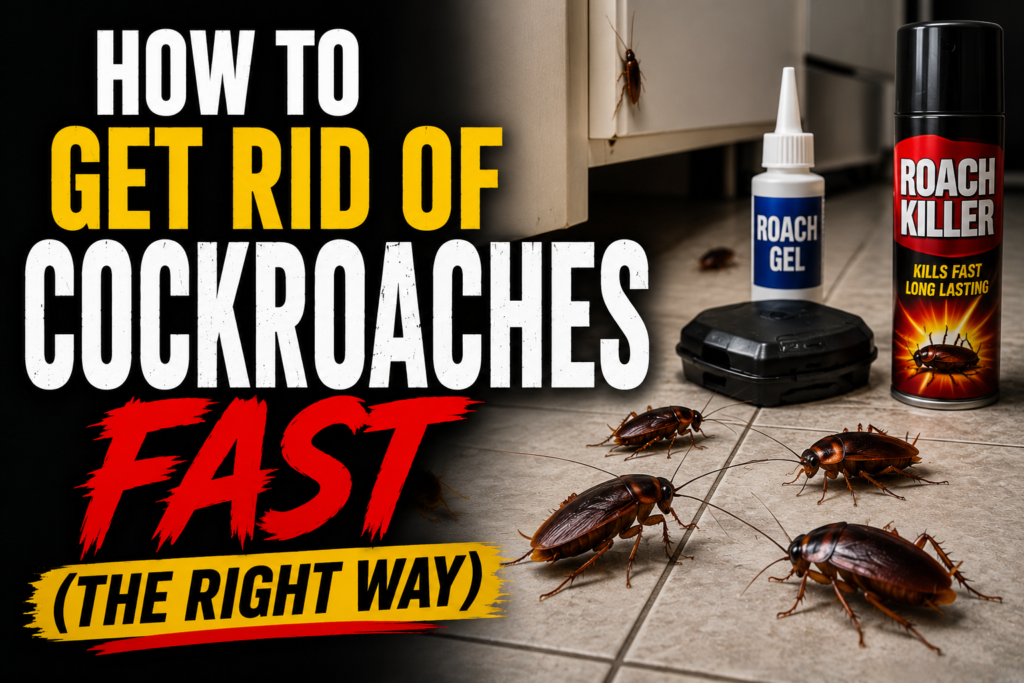
That cascade is why Advion outperforms sprays for anything beyond a single visible roach. Sprays kill what you can see. Bait kills the ones you can’t. With roaches, the visible ones are maybe 10% of the population. The other 90% are hiding in walls, under appliances, and deep in cabinet voids during the day. The right placement and treatment sequence matter just as much as the bait itself, as explained in How to Get Rid of Cockroaches Fast (The Right Way).
Which Roaches Does It Work On?
Advion is labeled for and tested against:
- German cockroaches — the small tan/brown ones, most common in kitchens and bathrooms, hardest to kill
- American cockroaches — the big ones, sometimes called palmetto bugs or water bugs
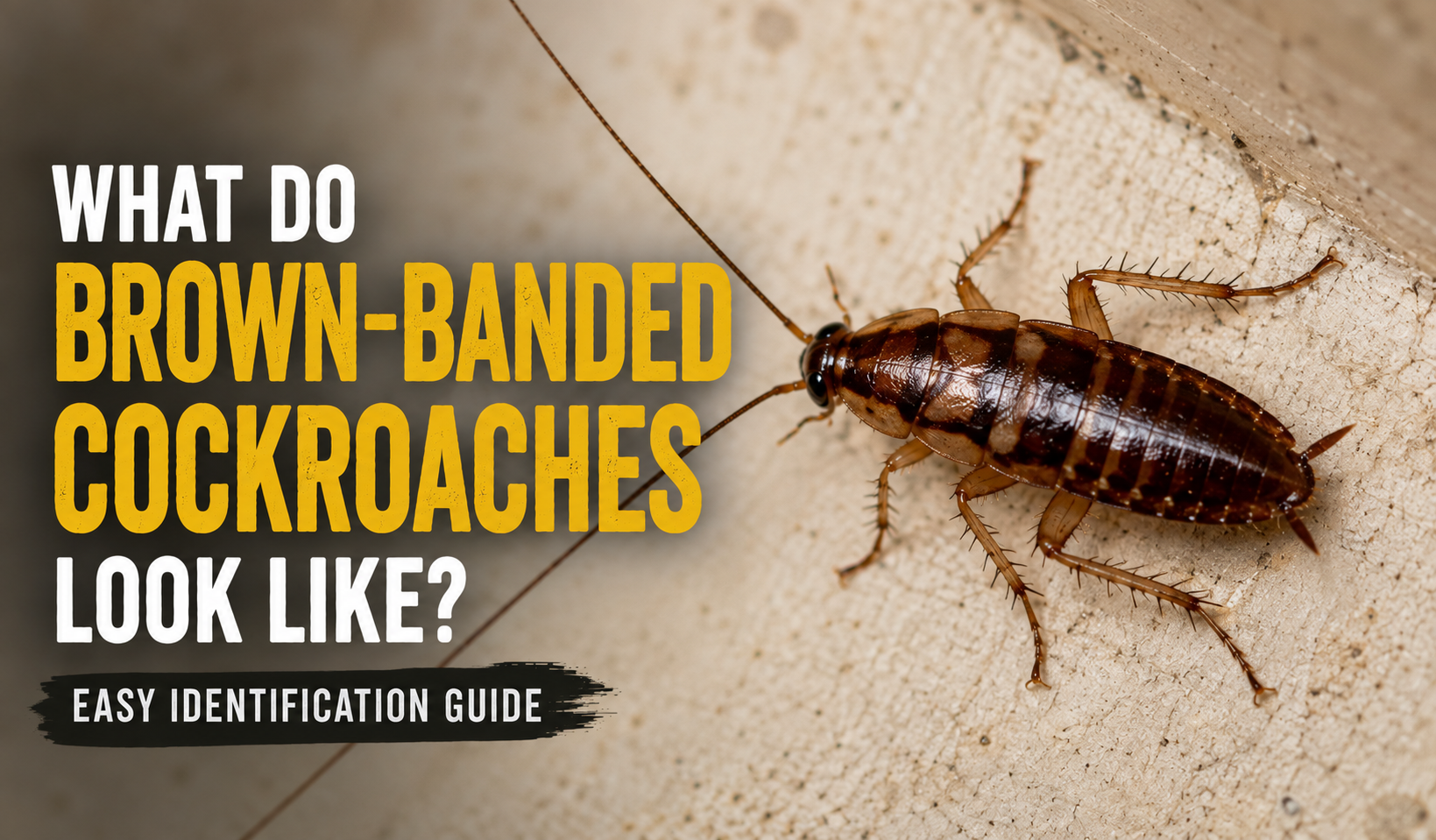
- Brown-banded cockroaches — less common, prefer drier and warmer areas of the home
- Oriental cockroaches — dark, slower-moving, often found near drains and basements
- Smoky brown cockroaches — common in the South, often enter from outside
It’s most consistently impressive on German roaches, which matters because that’s the species most people are actually fighting. German roaches breed fast, hide deep, and have developed resistance to a lot of older treatments. Advion’s indoxacarb cuts through that resistance. If you’ve got small brown roaches multiplying in your kitchen, this is the right tool. You can learn more about identifying what you’re dealing with in our roach guide.
Who Should Buy Advion?
Advion is the right call if any of these describe your situation:
- You’ve seen roaches more than once in your kitchen, bathroom, or under appliances
- You’ve tried store sprays and the roaches keep coming back within days
- You’re in an apartment and roaches are coming in from neighboring units
- You want professional-grade results without paying exterminator prices
- You have kids or pets and want to minimize chemical exposure compared to foggers or heavy sprays
- You’re dealing specifically with German roaches — the small ones
It’s especially valuable for apartment dwellers. German roaches spread between units through shared walls and plumbing. Spraying just pushes them around. Bait gets into the colony and kills it at the source — the only way to actually break the cycle.
Who Might Not Need It
If you’ve seen one single roach once and you’re not sure it wasn’t a fluke — start with prevention. Seal your pipe gaps, deep clean under your appliances, fix dripping pipes, and monitor with a few sticky traps. One roach doesn’t automatically mean an infestation.
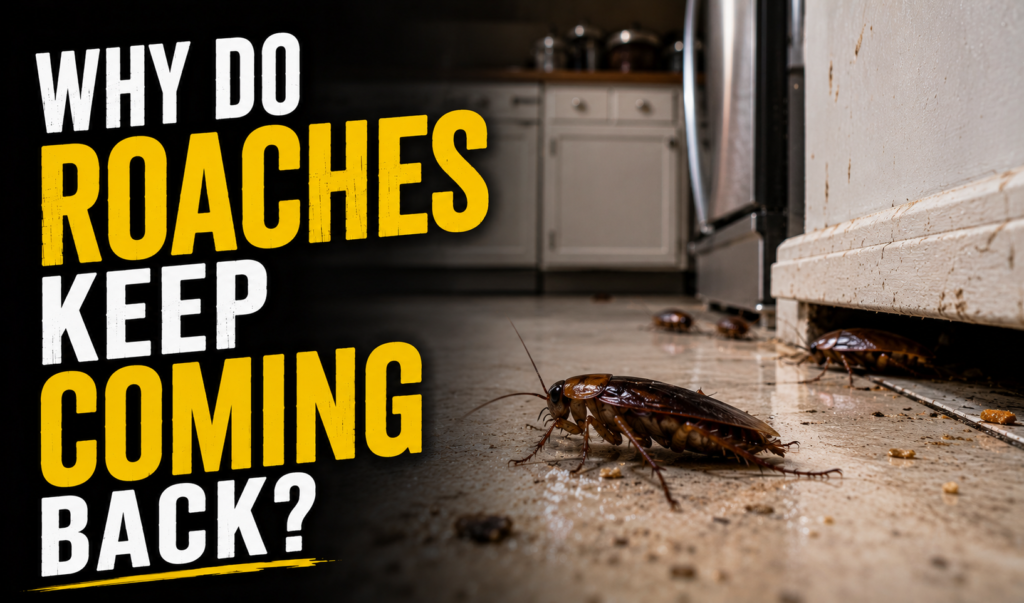
If you’ve seen three or more, seen them during the daytime, found droppings, or spotted egg cases anywhere — you have an infestation. Don’t wait. Get the bait. Before treating a recurring infestation, review Why Do Roaches Keep Coming Back? Common Reasons Explained to identify the conditions that may be allowing the problem to restart.
How to Use Advion Correctly
Application is easy but placement makes or breaks the results. Most people under-place it and wonder why it’s not working.
Step 1: Cut Off Competing Food Sources First
Wipe down surfaces, put away food left out on counters, and take out the trash before you bait. Bait competes with real food. If roaches have crumbs, grease, and standing water available, they may ignore the gel entirely. Clean up first.
And critically — do not spray insecticide anywhere near where you’re placing bait. Repellent chemicals drive roaches away from the gel. If you spray and bait at the same time, you wasted your bait. Pick one approach.
Step 2: Place It Where Roaches Actually Travel
Roaches don’t run through open space. They move along edges, through cracks, and in dark protected spots. That’s where your bait needs to go.
Best placement locations:
- Under the kitchen sink — especially right around pipe penetrations in the cabinet wall
- Along the back inside edge of cabinet shelves
- Inside cabinet door hinges
- Behind and underneath the refrigerator
- Behind the stove — pull it out if you can
- Under the dishwasher
- Around electrical outlet boxes — roaches love the warmth inside these
- Under the bathroom sink and around the base of the toilet
- Along wall-floor junctions in kitchens and bathrooms
Step 3: Use Small Dots, Not Big Globs
Pea-sized dots only. Not a stripe, not a half-inch blob, not a squeeze-and-hope approach. Small dots placed frequently beat large amounts placed rarely. Space them every 6 to 12 inches in active areas. For heavy infestations, use more placement points — not more bait per point.
Step 4: Monitor and Refresh
Check your placements every 3–4 days. If the gel has been eaten or dried out, replace it. Old bait doesn’t work. Keep fresh gel in place until roach activity has stopped completely. If a spot hasn’t been touched in a week, move it — roaches aren’t traveling that route or there’s a competing food source nearby.
Tip: Apply bait in the evening right before dark. Roaches are most active at night, so fresh bait placed just before their active period gets the fastest response.
What Results to Expect and When
A lot of people feel like Advion isn’t working because they expect it to perform like a spray — kill on contact, results in minutes. That’s not how it works, and that’s not a flaw.
- 24–48 hours: You’ll likely start seeing dead roaches. Good sign — the bait is working.
- 3–5 days: Noticeable reduction in live activity. Fewer roaches, and the ones you see may seem sluggish.
- 1–2 weeks: Significant population drop. Most moderate infestations are mostly handled by this point.
- 2–3 weeks: Full effect. A properly treated infestation should be largely eliminated.
Seeing more roaches in the first few days is actually normal. The bait is drawing them out of hiding. Don’t panic and reach for the spray — you’ll ruin the treatment.
Is It Safe Around Kids and Pets?
This is the first question most parents ask, and it’s a fair one.
Advion uses a low-toxicity formulation and the application method — tiny dots in cracks and hidden spots — is far safer than fogging a room or saturating surfaces with spray. Compared to most over-the-counter alternatives, Advion is actually the more conservative choice for households with kids and pets.
That said, use common sense. Don’t squeeze gel on the floor in your dog’s reach. Don’t put it anywhere a toddler’s hands go. Use it in the cracks, hinges, and hidden spots it’s designed for and the risk is minimal. If a pet did get into a small amount, contact your vet — but serious toxicity from a pet exposure at these concentrations is rare.
Warning: Never apply gel bait on food prep surfaces or any location a child or pet can directly access. Cabinet hinges, pipe gaps, and cracks behind appliances are ideal. Open floors and countertops are not.
Advion vs. The Competition
Advion vs. Combat Roach Bait
Combat uses hydramethylnon as its active ingredient and it works — but Advion’s indoxacarb consistently outperforms it, especially on German roaches that have developed resistance to hydramethylnon through years of widespread use. If you’ve already tried Combat with limited success, switching to Advion is the logical next step.
Advion vs. Raid and Over-the-Counter Sprays
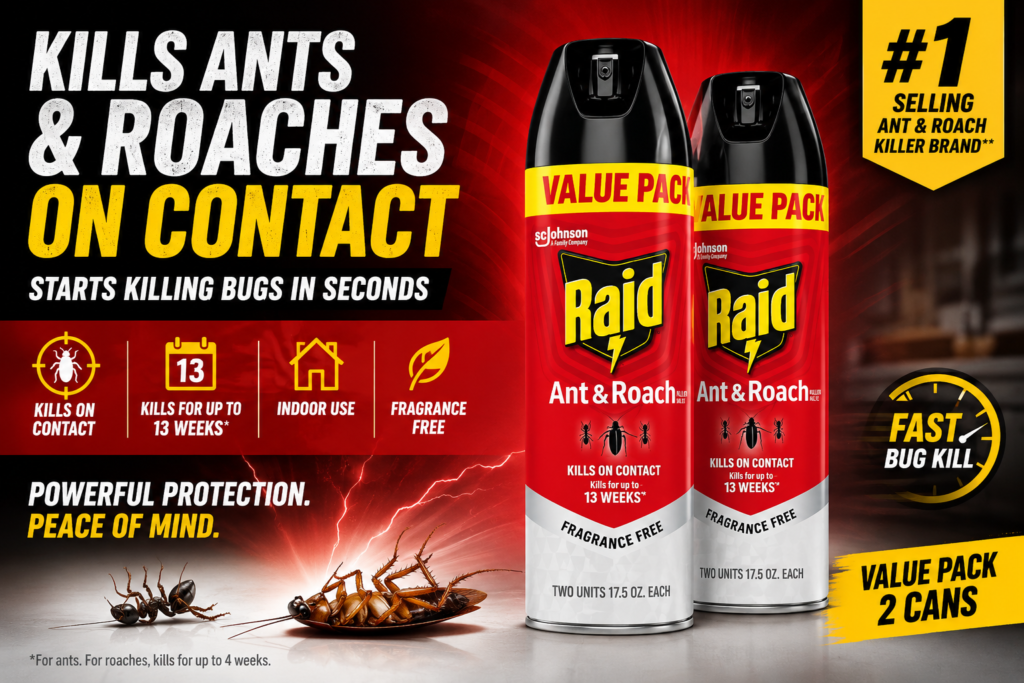
Sprays kill on contact. Bait kills the colony. For a real infestation, bait wins decisively. Spray handles the roach you can see right now. It does nothing about the hundreds living behind your walls. If you’re treating an infestation with spray only, you’re managing the symptom, not solving the problem. When you need to handle a roach immediately while bait addresses the infestation, Raid for immediate knockdown explains where contact spray fits.
Advion vs. Calling an Exterminator
Exterminators often use Advion — or a very similar indoxacarb or fipronil-based gel bait. You’re buying the same category of product a professional would apply, at a fraction of the cost. A single pest control visit runs $100–$300 or more. A 4-pack of Advion covers multiple full treatments for far less. For most moderate home infestations, Advion used correctly gets you to the same place.
Common Mistakes That Kill Your Results
Spraying and baiting at the same time. This kills your results every time. Repellent sprays drive roaches away from the bait. One or the other — not both.
Applying too much in one spot. Big globs dry out faster and don’t spread coverage. Small frequent dots are correct.
Not refreshing consumed or dried bait. Old bait does nothing. If it’s gone or dried out, replace it immediately.
Only treating the obvious spots. Under the sink is obvious. The outlet boxes, the fridge motor, the cabinet hinges, the dishwasher gap — those spots are where the real difference gets made.
Expecting overnight results. Give it a full two weeks before you evaluate. The cascade kill takes time by design.
How to Keep Roaches From Coming Back
Advion handles the infestation. Keeping it gone requires a few permanent changes.
Seal every pipe gap you can find. Check under every sink. The hole where the pipe enters the cabinet wall almost always has a gap around it. Caulk it. That’s a roach highway right into your home.
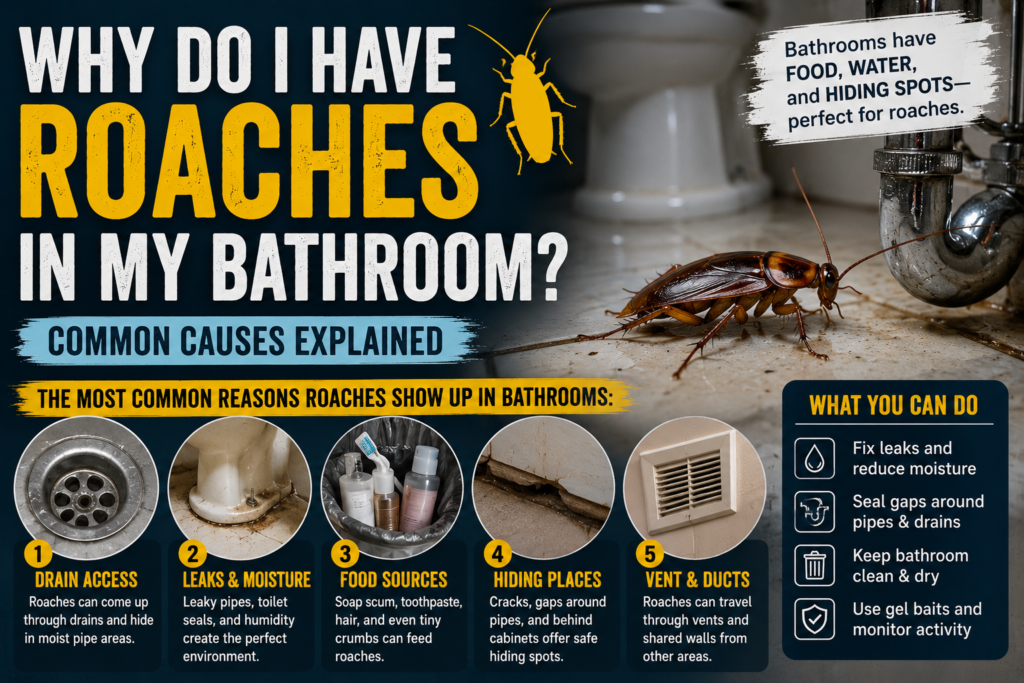
Fix moisture problems immediately. Roaches need water more urgently than food. A dripping pipe is more attractive than crumbs. Fix leaks fast, don’t leave standing water in the sink overnight. These moisture issues are among the main reasons why roaches show up in bathrooms even when the room appears clean.
Store dry food in sealed hard containers. Cardboard boxes and folded-over bags are not sealed. Transfer cereal, flour, rice, and pet food into containers with actual lids.
Take the trash out every night. A full kitchen trash can sitting overnight is a roach buffet. Tight-fitting lid at minimum, or take it out before bed.
Keep up with maintenance bait. After the infestation is cleared, a small dot of Advion in a few key spots every 4–6 weeks catches new arrivals before they establish. Two minutes of effort every month keeps you from dealing with this again.
If you’re fighting roaches alongside other bugs in your home, our bug FAQ can help you identify exactly what you’re dealing with. And if gnats or flies are part of the problem too, check out our gnat and fruit fly guide — kitchens tend to attract more than one pest at a time.
Final Verdict
If you want the most effective DIY roach killer available without a pest control license, Advion Cockroach Gel Bait is the answer. Professional-grade active ingredient, cascade colony kill, safe application method, and enough product for multiple treatments. Apply it correctly, cut off competing food sources, give it two full weeks, and a moderate infestation is handled.
It’s not magic and it won’t work overnight. But roaches are stubborn, and Advion is more stubborn. That’s the deal.