The Zevo plug-in fly trap catches gnats, fruit flies, and house flies without chemicals or mess. Here’s how it works, where to place it, and what to expect.
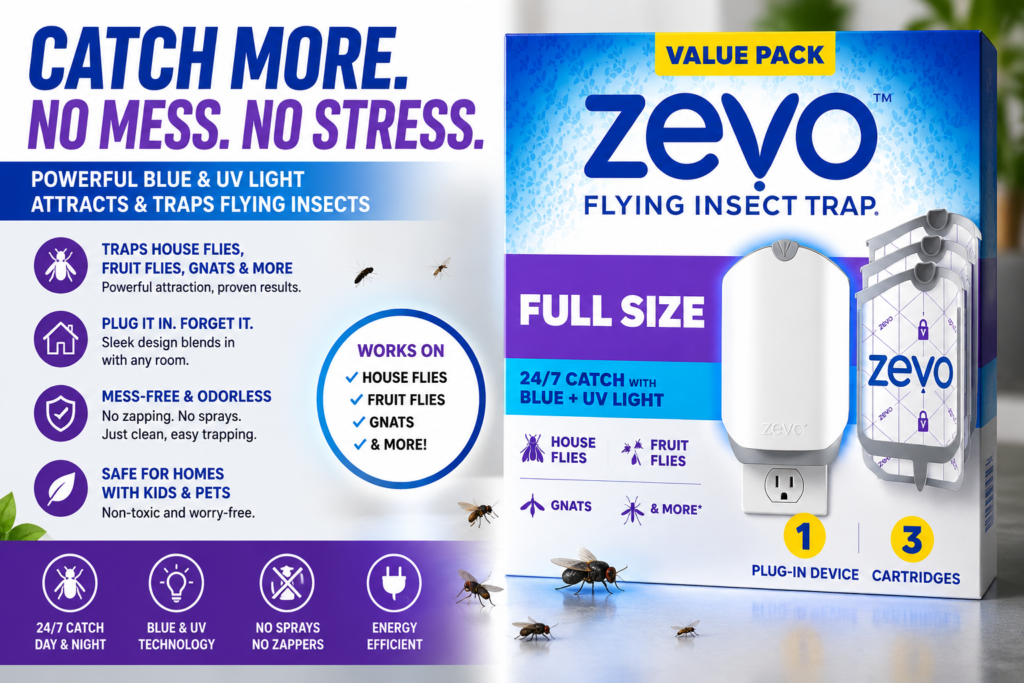
Gnats circling your face while you cook. Fruit flies hovering over the sink. House flies landing on everything the second you stop paying attention. Flying insects in the house are one of those problems that seems minor until it’s happening to you constantly — and then it’s infuriating. Sprays don’t work well on flies. Swatting is exhausting. And traditional bug zappers are loud, messy, and not something most people want plugged in their kitchen.
Zevo Flying Insect Trap is one of the most talked-about alternatives to all of that — a plug-in trap that uses blue and UV light to attract and capture flying insects without chemicals, without the zap, and without a pile of dead bugs on your floor. This review covers exactly how it works, what it actually catches, where it performs well, and whether the trap-plus-three-refills bundle is worth the buy.
The Quick Verdict
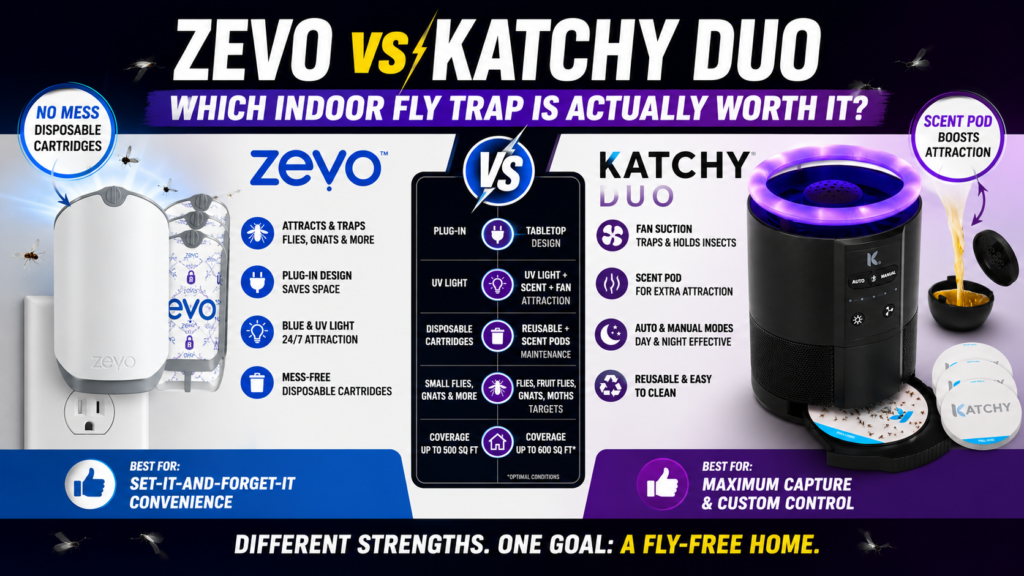
The Zevo Flying Insect Trap works well for what it’s designed to do — passively capture gnats, fruit flies, and house flies using light attraction and a sticky cartridge. It’s not going to eliminate a heavy infestation on its own, but as part of a broader approach to flying insect control it’s one of the cleanest and most low-maintenance options available. The bundle with three refill cartridges gives you solid long-term value and means you won’t be running out of replacements at the worst possible time. If you're weighing Zevo against a more active trap, the Zevo vs KATCHY Duo: Which Indoor Fly Trap Is Actually Worth It? breaks down the practical differences.
What Is the Zevo Flying Insect Trap?
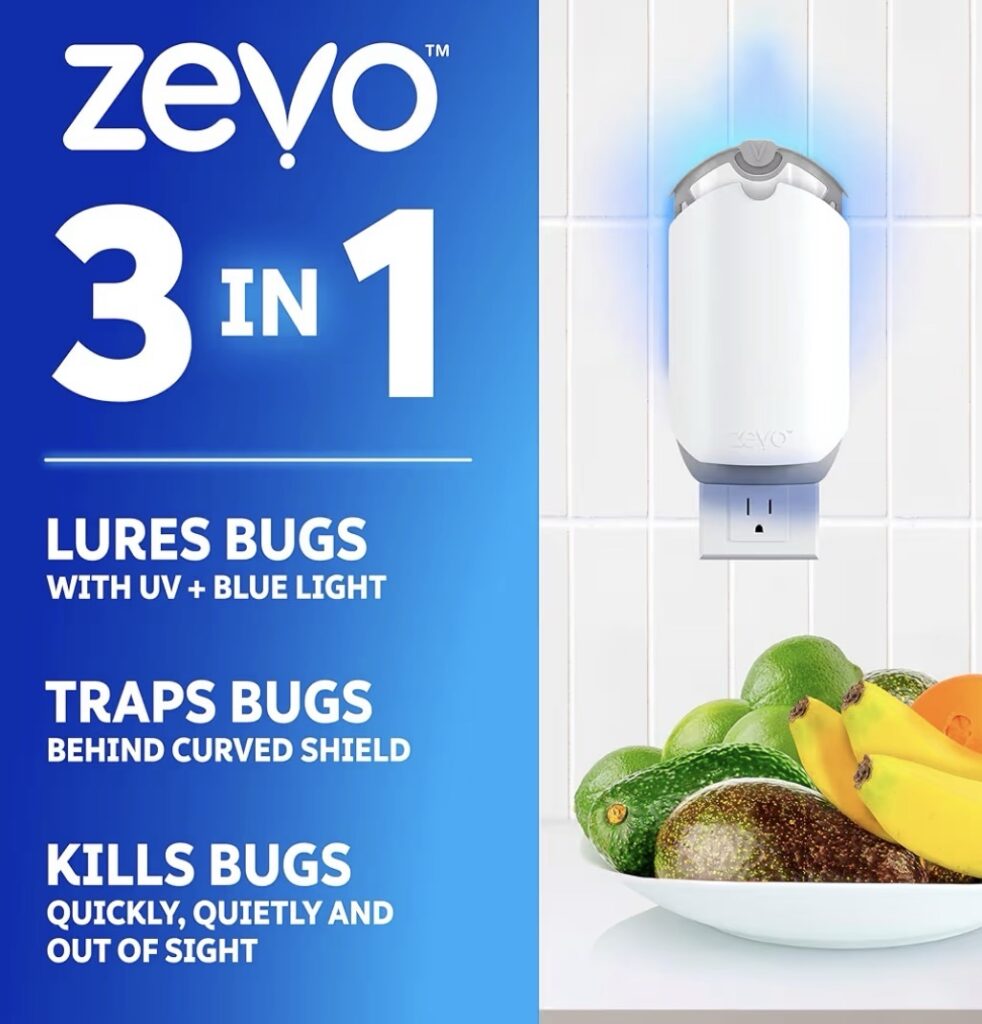
Zevo is a consumer pest control brand focused on what they call “bio-selective” pest control — products that target insects without the chemical load of traditional pesticides. Their flying insect trap is a plug-in device that sits in a standard outlet and runs continuously, attracting flying insects with a combination of blue light and UV light and trapping them on a replaceable sticky cartridge inside the unit.
No zapping sound. No chemical spray. No mess on the floor. The bugs fly in, get stuck on the cartridge, and stay there until you swap out the refill. It’s genuinely one of the more pleasant pest control products to live with — it runs silently in the background and you don’t have to think about it until the cartridge needs changing.
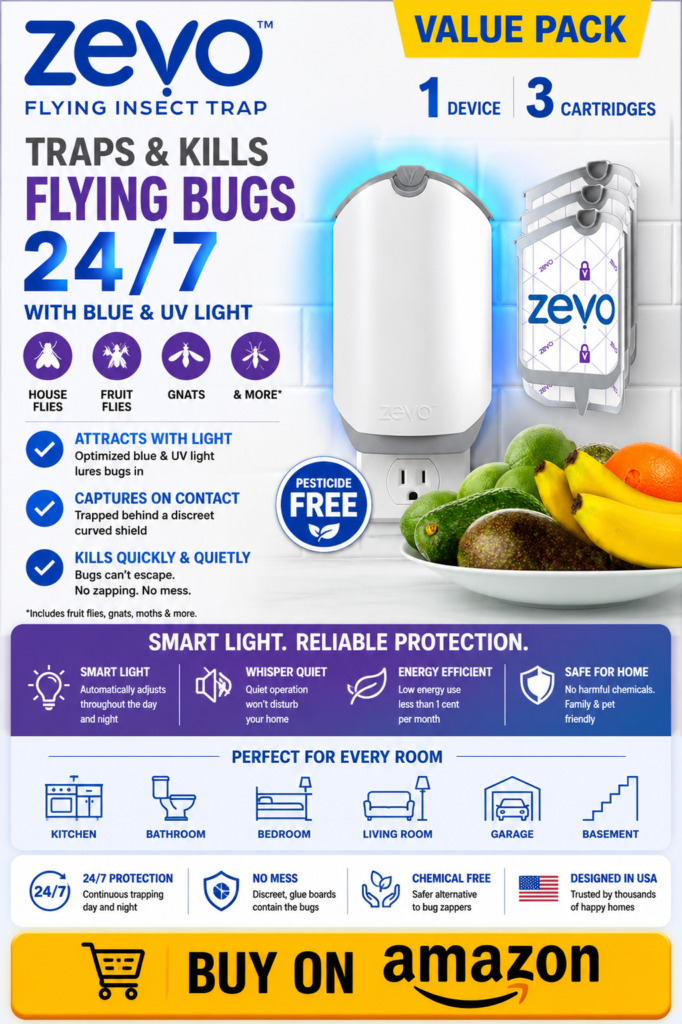
The bundle version includes the trap unit plus three refill cartridges, which is the smart buy if you’re planning to use this as an ongoing solution rather than a one-time experiment.
→ Check the current price on the Zevo Flying Insect Trap with 3 Refills on Amazon — the bundle pricing beats buying the trap and refills separately.
How Does the Light Attraction Work?
The science behind Zevo’s trap is worth understanding because it explains both why it works and what its limits are.
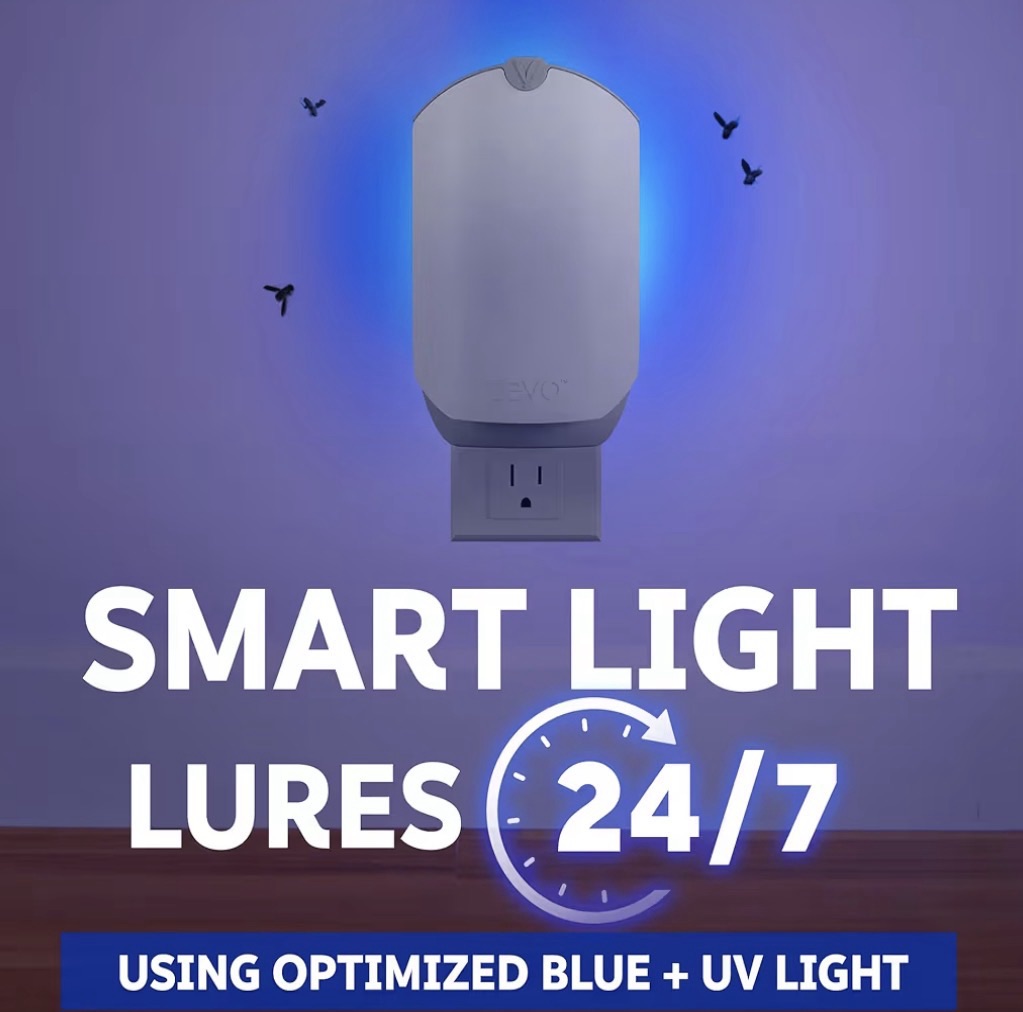
Flying insects — gnats, fruit flies, house flies, and most other small fliers — are strongly attracted to specific wavelengths of light. Blue light and UV light fall in the spectrum that these insects use to navigate and find food sources. It’s the same reason flies congregate near windows — they’re following light.
Zevo’s trap emits both blue light and UV light from inside the unit, creating an attractive light source that draws flying insects toward it. When they fly into the unit to investigate the light, they contact the sticky cartridge inside and get trapped.
The key advantage over traditional bug zappers is that Zevo’s trap doesn’t electrocute the bugs — it just sticks them. That means no zapping noise, no exploding insects, no mess around the unit. The bugs accumulate on the cartridge quietly until you replace it.
It also means the trap works best in lower ambient light conditions. In a brightly lit room, the trap’s light is competing with overhead lighting and is less of a standout attractant. Dimmer environments — nightlights, hallways, kitchens at night — are where Zevo performs best. If daytime performance matters in your space, a stronger daytime trap option may be a better fit than a light-only design.
What Flying Insects Does It Catch?
Zevo is most effective on:
- Fungus gnats — the tiny black gnats that come from overwatered houseplants, strongly attracted to the light spectrum Zevo uses
- Fruit flies — the small tan/red-eyed flies that hover around produce and drains
- House flies — standard flies that get in through doors and windows
- Drain flies — small moth-like flies that breed in slow or dirty drains
- Phorid flies — tiny humpbacked flies sometimes called sewer flies
Performance varies by species. Fungus gnats and small flies are the strongest use case — they’re highly responsive to light attraction and small enough to be reliably captured by the sticky cartridge. Larger house flies get caught but are less consistently drawn to the trap since they rely more on smell than light to navigate.
It will not catch mosquitoes effectively. Mosquitoes are attracted to CO2, body heat, and specific chemical cues — not primarily light. If mosquitoes are your problem, see our mosquito guide for treatments that actually address that species.
It also won’t catch wasps or hornets — and you wouldn’t want a plug-in trap anywhere near an active wasp problem anyway. See our wasp and hornet guide for those situations.
Where to Place It for Best Results
Placement makes a significant difference with light-based traps. Get this right and the trap punches above its weight. Get it wrong and you’ll wonder why it’s not doing much.
Best Locations
- Kitchen — near the sink or trash area. This is where fruit flies and gnats concentrate. An outlet near the sink, under cabinets, or near the trash cabinet puts the trap right in the action zone.
- Near houseplants. Fungus gnats breed in soil and swarm around plants. A trap nearby intercepts them before they spread through the house.
- Hallways and low-light areas. Darker environments make the trap’s light more visible and more attractive to insects. A hallway outlet between the kitchen and living area catches insects moving through the house.
- Laundry rooms and basements. These lower-traffic areas often have drain fly and gnat activity that goes unnoticed until it’s significant. A Zevo trap running continuously catches them before populations build.
- Near exterior doors. Catches house flies that enter every time the door opens before they disperse through the home.
Locations That Underperform
- Brightly lit rooms during the day. The trap’s light is much less attractive when competing with overhead lighting and daylight from windows. It still works, but less effectively than in dimmer spots.
- High up on walls. Most small flying insects fly low. Outlet placement near floor level or mid-wall outperforms traps plugged into outlets near the ceiling.
- Away from insect activity. Seems obvious but worth saying — a trap in the guest bedroom doesn’t help the fruit fly problem in your kitchen. Put it where the bugs are.
Tip: If your kitchen has limited outlet options near the problem area, a short extension cord or outlet extender lets you position the Zevo exactly where you need it rather than settling for whatever outlet is nearby.
The Refill Cartridges — How Long Do They Last and When to Change Them
Each sticky refill cartridge lasts approximately 30 days under normal use. Zevo recommends monthly replacement, and that’s a reasonable guideline — though in heavy infestation situations you may find cartridges filling up faster and need to change them sooner.
Changing a cartridge is straightforward. Pull the old one out, slide the new one in. Takes about ten seconds and you don’t have to touch the bugs — the cartridge is self-contained. This is one of the genuine quality-of-life advantages over other trap types that require emptying, cleaning, or handling dead insects directly.
The three-refill bundle gives you four months of continuous use including the cartridge that comes loaded in the trap. For an ongoing problem that’s meaningful coverage, and it works out cheaper per cartridge than buying refills individually.
Watch the cartridge as it fills up. A mostly-covered cartridge loses effectiveness because there’s less sticky surface available. Don’t wait until it’s completely packed — change it when it’s about 80% full to maintain peak performance.
Zevo vs. Other Flying Insect Solutions
Zevo vs. Traditional Bug Zappers

Bug zappers use UV light to attract insects and an electric grid to kill them. They work outdoors where the noise and debris aren’t issues. Indoors, they’re a different story — the zapping sound is constant and startling, exploded insects scatter around the unit, and they’re generally not something you want in your kitchen or living space. If you want outdoor fly control without relying on an electric grid, a quieter outdoor fly-control alternative provides a quieter bag-based alternative.
Zevo captures rather than zaps. Silent operation, contained mess, clean cartridge replacement. For indoor use there’s no real contest — Zevo is the more livable option by a significant margin.
Zevo vs. Apple Cider Vinegar Traps
The classic DIY fruit fly trap — a jar with apple cider vinegar and a drop of dish soap — actually works reasonably well for fruit flies specifically. It’s free, and for a targeted fruit fly problem near your produce bowl it does the job.
Its limits: it only attracts scent-driven insects, it’s unattractive to leave out, it requires emptying and refreshing regularly, and it doesn’t work on gnats or house flies that aren’t drawn to fermented smells. Zevo works passively and continuously without maintenance beyond monthly cartridge swaps. For ongoing use, Zevo wins on convenience even if a vinegar trap gets the edge on cost.
Zevo vs. Fly Strips

Sticky fly strips work — and they work well — but they’re ugly. A dangling yellow strip covered in dead flies is not something most people want visible in their kitchen. Zevo does the same basic job with a unit that looks like a nightlight rather than a horror show. Same sticky-trap principle, dramatically better aesthetics. If you're considering the simpler option, fly strips work best explains where they perform well and what limitations to expect.
Zevo vs. Chemical Sprays for Flies
Sprays kill flies you can see right now. They do nothing about the breeding source and nothing about flies you can’t see yet. In kitchens and food prep areas, spraying insecticide regularly is also something most people reasonably want to minimize.
Zevo runs continuously with zero chemical output. It catches flies passively as part of the background rather than requiring you to actively spray every time you see one. As a long-term management tool, it’s the better choice for kitchens and living spaces.
What Zevo Won’t Do — Set the Right Expectations
Being straight about the limits keeps you from being disappointed.
Zevo will not eliminate a heavy infestation by itself. If you have a serious fruit fly problem because there’s a breeding source — rotting produce, a dirty drain, a forgotten potato growing mold in a cabinet corner — the trap will catch flies but the population will keep regenerating from the source faster than the trap can catch them.
The rule with any flying insect problem is: find and eliminate the breeding source first. Then the trap handles the stragglers and prevents population from rebuilding. Without dealing with the source, you’re fighting an uphill battle no trap can win.
For gnats specifically — if they’re coming from overwatered houseplants, letting the soil dry out between waterings cuts off the breeding site. For fruit flies, check every piece of produce, look in the back of cabinets for forgotten items, clean your drains with a brush and drain cleaner. Eliminate the source, then let Zevo clean up what’s left. Check our full gnat and fruit fly guide for complete source-elimination steps.
Zevo also won’t work well on every flying insect. Larger flies are less reliably attracted. Mosquitoes are not meaningfully attracted at all. Wasps and hornets are not a use case for this trap. Know what you’re dealing with before you buy — if your problem is primarily mosquitoes, this isn’t the right product.

Is It Safe Around Kids and Pets?
Yes — this is one of Zevo’s genuine selling points. The trap uses light and a sticky surface. No insecticide, no chemical output, no electric shock hazard beyond the standard precautions of anything plugged into an outlet.
The sticky cartridge is the only thing to keep in mind around pets and small children — a curious cat or toddler getting their paw or hand stuck to the cartridge is unpleasant for everyone. The cartridge sits inside the unit housing which provides reasonable protection, but plug it into an outlet that isn’t at floor level in a space where a pet or toddler is going to be poking at things.
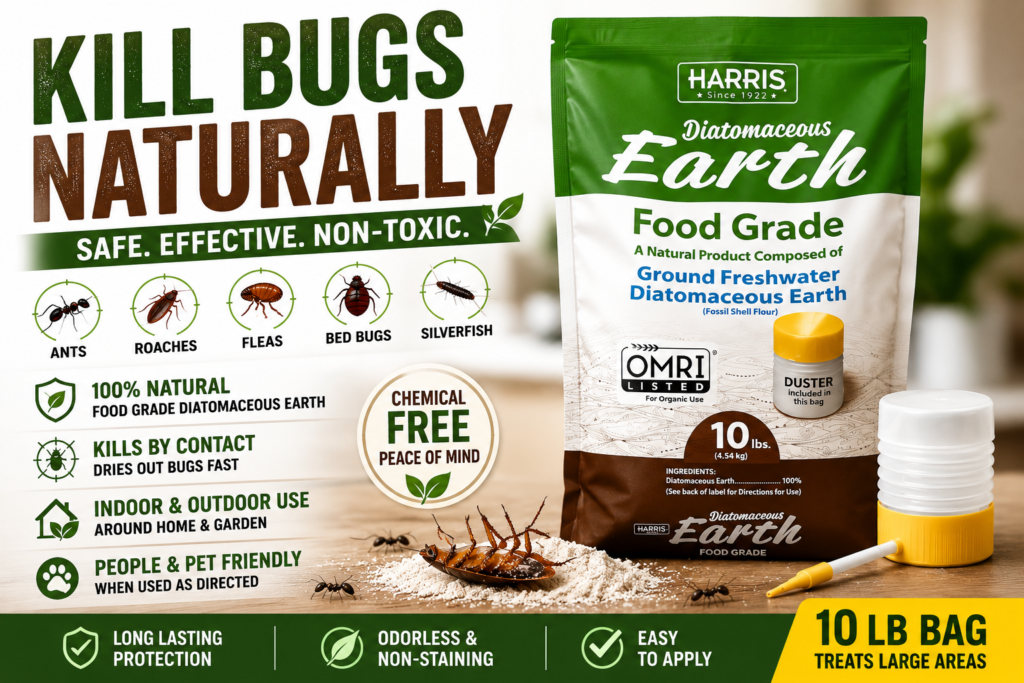
For households that specifically want to minimize chemical use in pest control — and diatomaceous earth and boric acid are already in that same category — Zevo fits well into a lower-chemical pest control approach.
Building a Complete Flying Insect Defense
Zevo works best as one layer of a complete approach rather than the only thing you’re doing. Here’s how to build a system that actually keeps flying insects under control long-term.
Eliminate breeding sources. Non-negotiable first step. No trap handles an active breeding population effectively. Find the source — overripe produce, dirty drains, damp soil, standing water, organic debris — and eliminate it.
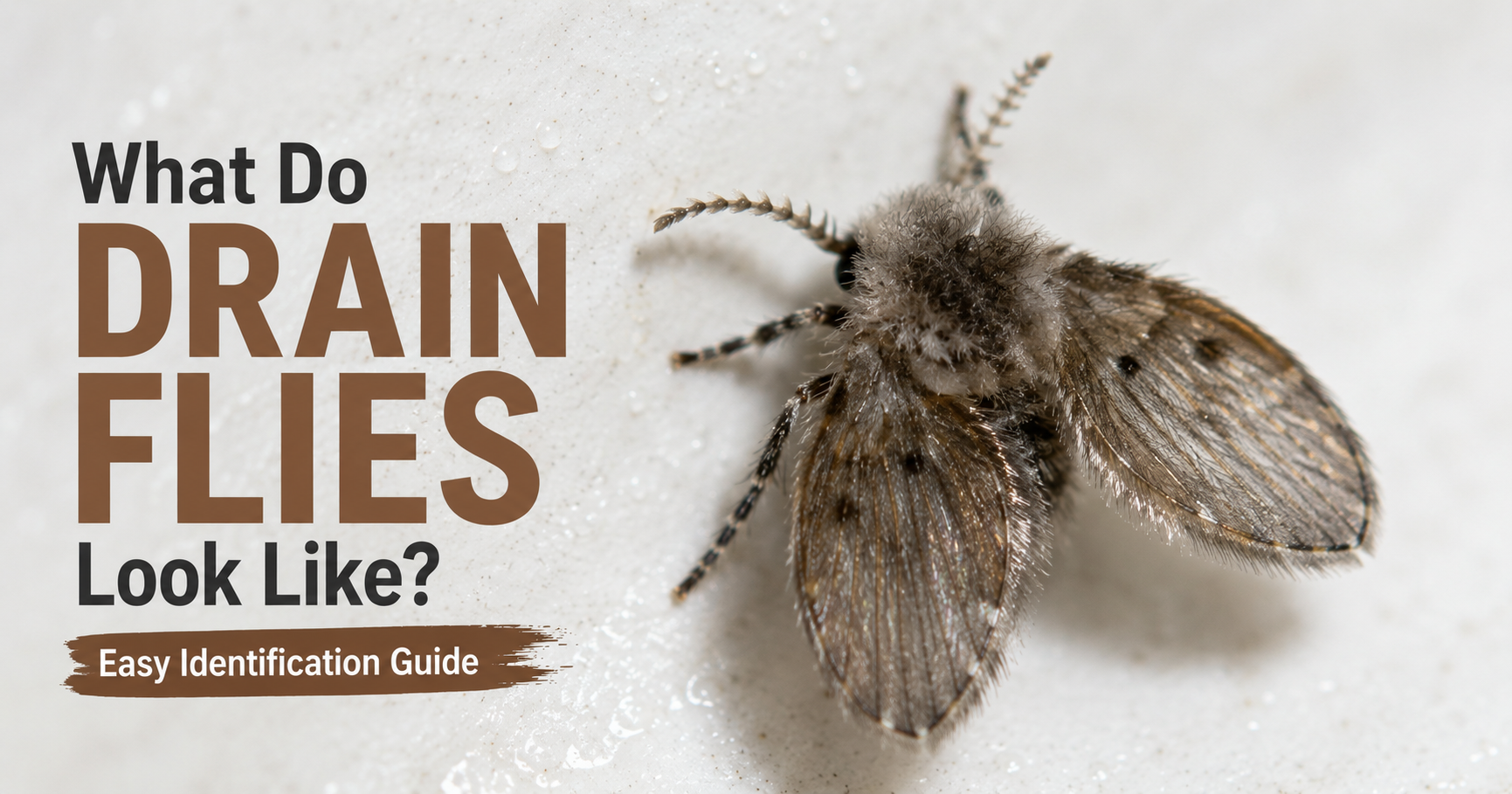
Clean drains regularly. Drains are one of the most overlooked breeding sites for drain flies and fruit flies. A drain brush plus a biological drain cleaner used monthly breaks down the organic buildup that these insects breed in. This one step alone resolves a significant number of recurring fly problems. Before choosing a drain-focused solution, use this guide to recognize drain flies first and confirm that the insects match.
Manage produce storage. Fruit left in a bowl on the counter is a fruit fly magnet, especially in warm weather. Store ripe fruit in the refrigerator. Check the bottom of produce bags for anything starting to turn. One forgotten overripe tomato can generate a fruit fly population that takes weeks to clear.
Seal entry points. House flies come in from outside. Weatherstripping on doors, screens on windows, and sealing gaps around exterior utility penetrations reduces the volume getting in before the trap has to deal with them.
Run Zevo continuously. The trap works passively in the background. Unplugging it between visible outbreaks means you’re not catching the low-level population that becomes the next outbreak. Leave it running and let it work.
Place it strategically, not just conveniently. The nearest outlet to you is rarely the best placement for the trap. Think about where the insect activity actually is and position accordingly — near the sink, near the plants, near the trash. Move it if it’s not in the right spot.
Flying insects in the house are annoying but controllable. Eliminate the source, run Zevo continuously in the right location, and maintain basic food and moisture hygiene. That combination handles the vast majority of indoor flying insect problems without chemicals and without the aesthetic disaster of traditional bug control methods.
Grab the Zevo Flying Insect Trap with 3 Refills on Amazon — plug it in near your problem area and let it run. It’s one of the easiest and most livable pest control tools you’ll add to your home.