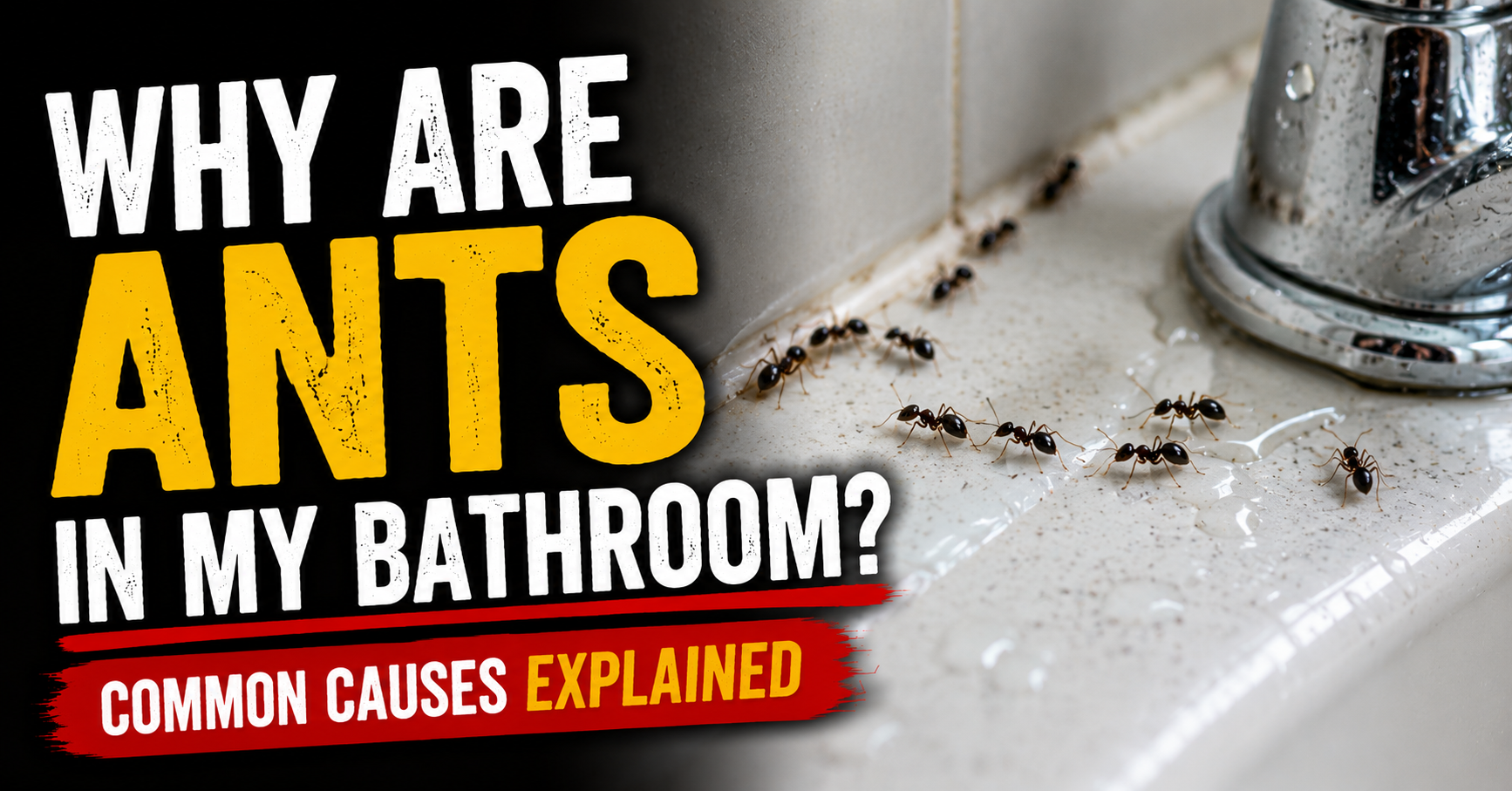
When most people think about ants, they picture a trail leading to crumbs on the kitchen floor.
That’s why finding ants in the bathroom catches so many homeowners off guard.
I’ve had people tell me they scrubbed the entire bathroom from top to bottom and still woke up to a line of ants marching across the vanity.
It doesn’t seem to make sense.
After all, there isn’t much food in a typical bathroom.
The truth is that ants aren’t always searching for food. Moisture is one of several recurring reasons small ants enter homes, alongside the food sources discussed in Why Do I Have Tiny Black Ants in My House? Common Reasons Explained.
Very often, they’re searching for water.
Bathrooms provide many of the things ants need to survive, especially during hot, dry weather or after heavy rain. Weather-driven changes can also explain why ants suddenly enter other parts of the house, as explained in Why Are Ants Suddenly in My House — And How Do I Stop Them?.
If you understand what they’re looking for, it’s much easier to stop them from coming back.
What I Look For Right Away
When someone tells me they have ants in the bathroom, I don’t immediately start looking at the floor.
I start asking questions.
- Are they near the sink?
- Around the bathtub?
- Coming from behind the toilet?
- Appearing after it rains?
- Mostly active in the morning or evening?
Those answers usually point me toward the source much faster than simply spraying the ants I can see.
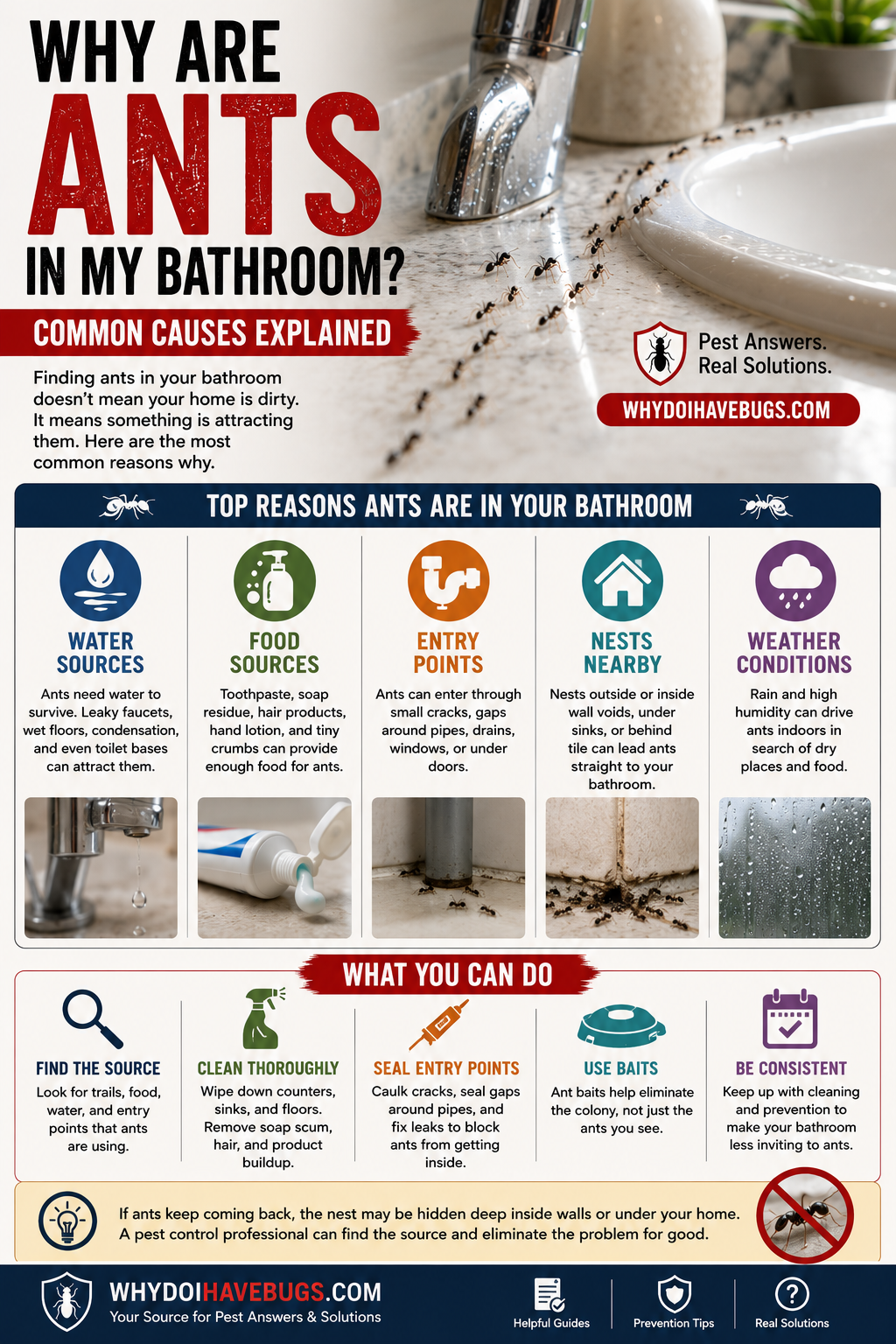
Water Is Often the Real Attraction
One of the biggest misconceptions I hear is that ants only invade homes looking for food.
That’s simply not true.
Water is just as important to an ant colony.
Your bathroom may provide moisture through:
- Leaky faucets
- Dripping pipes
- Condensation
- Wet shower floors
- Damp bath mats
- Toilet seals
- Sink overflows
Even a tiny, slow leak inside a vanity cabinet can provide enough moisture to keep ants returning day after day.
Why I Always Check Under the Sink First
If this were my house, the vanity cabinet would be one of the first places I’d inspect.
I’ve found ants entering bathrooms through surprisingly small openings around:
- Water supply lines
- Drain pipes
- Caulking gaps
- Wall penetrations
The space under the sink is often dark, humid, and rarely disturbed, making it an ideal travel route for ants moving between the wall and the room.
Tiny Leaks Can Cause Big Problems
One thing many homeowners underestimate is how little water ants actually need.
A slow drip that barely catches your attention can become a dependable water source for an entire trail of worker ants.
That’s why I always recommend checking for:
- Damp wood
- Water stains
- Soft cabinet flooring
- Mold or mildew
- Condensation on plumbing
Sometimes fixing the moisture problem does as much to discourage ants as treating the insects themselves.

Why Do Ants Show Up Around the Sink?
Bathroom sinks create several things ants like.
There’s water from brushing your teeth and washing your hands.
Small amounts of toothpaste or soap residue can also contain ingredients that attract certain ant species.
I’m not saying toothpaste is a favorite ant food.
But when you combine moisture with tiny amounts of residue, you’ve created a place worth investigating from an ant’s perspective.
Can They Be Coming From the Walls?
Absolutely.
One thing that surprises many homeowners is that ants often travel inside wall voids long before you ever see them.
They may enter through:
- Plumbing openings
- Electrical outlets
- Baseboard gaps
- Expansion joints
- Small foundation cracks
By the time they emerge into the bathroom, they’ve often been traveling unseen for quite a while.

Why Rain Often Makes Bathroom Ant Problems Worse
I’ve noticed a pattern over the years.
After a heavy rain, my inbox fills with questions about ants.
That’s because saturated soil can flood outdoor nests.
When that happens, ants begin searching for dry shelter and reliable water sources.
Your bathroom may offer both.
If you’ve noticed ants appearing shortly after storms, that timing isn’t a coincidence.
Could They Be Carpenter Ants?
Most bathroom ants are not carpenter ants.
However, bathrooms often contain damp wood if there has been a plumbing leak.
Since carpenter ants prefer moist, damaged wood for nesting, I always keep them in mind when I discover:
- Large black ants
- Sawdust-like material
- Damaged trim
- Soft wood around plumbing
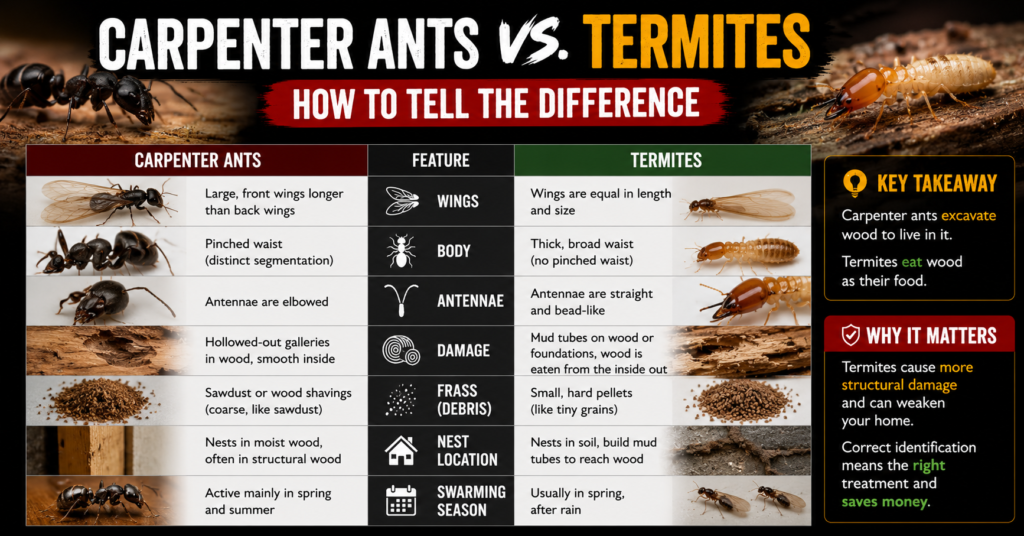
Our guide on Carpenter Ants vs. Termites explains the warning signs I look for before assuming structural pests are involved.
Why They Keep Coming Back
If you’ve already sprayed ants once or twice but they continue returning, chances are the colony is still active.
Sprays often eliminate the workers you see.
The queen and the rest of the colony remain hidden.
That’s why the problem seems to restart every few days.
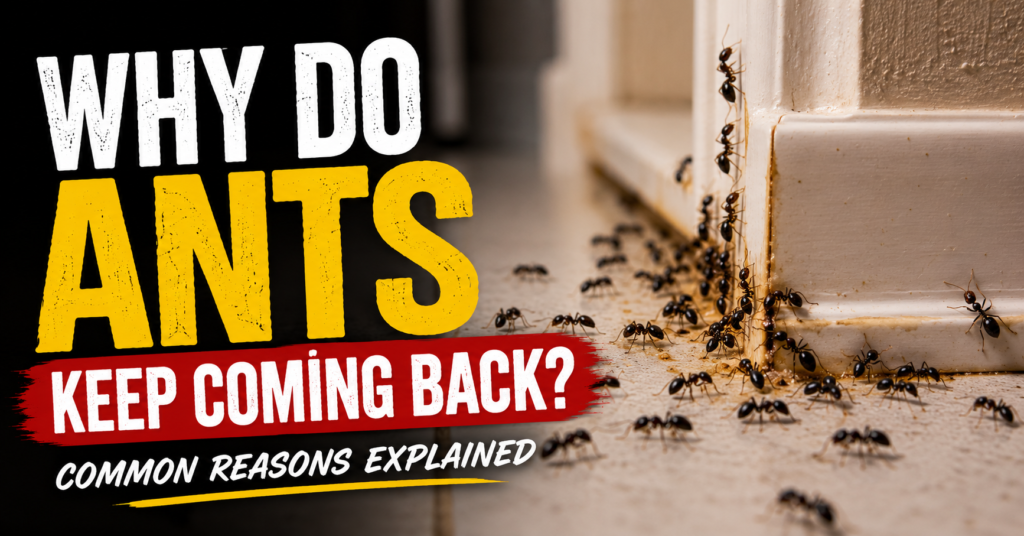
Our article on Why Do Ants Keep Coming Back? explains why this happens and how I approach recurring infestations.
What I Would Do If This Were My House
If ants suddenly appeared in my bathroom, I wouldn’t immediately empty an entire can of bug spray under the sink.
I’d spend the first hour investigating.
I’d check every plumbing connection for leaks.
I’d inspect around the vanity and baseboards.
I’d watch where the ants were traveling instead of simply killing them.
That trail usually tells me far more than the ants themselves.
Once I understood where they were entering, I’d have a much better chance of stopping them permanently.
Products That Can Help
If you’ve confirmed an active ant infestation, I usually recommend focusing on eliminating the colony instead of only killing the ants you see.
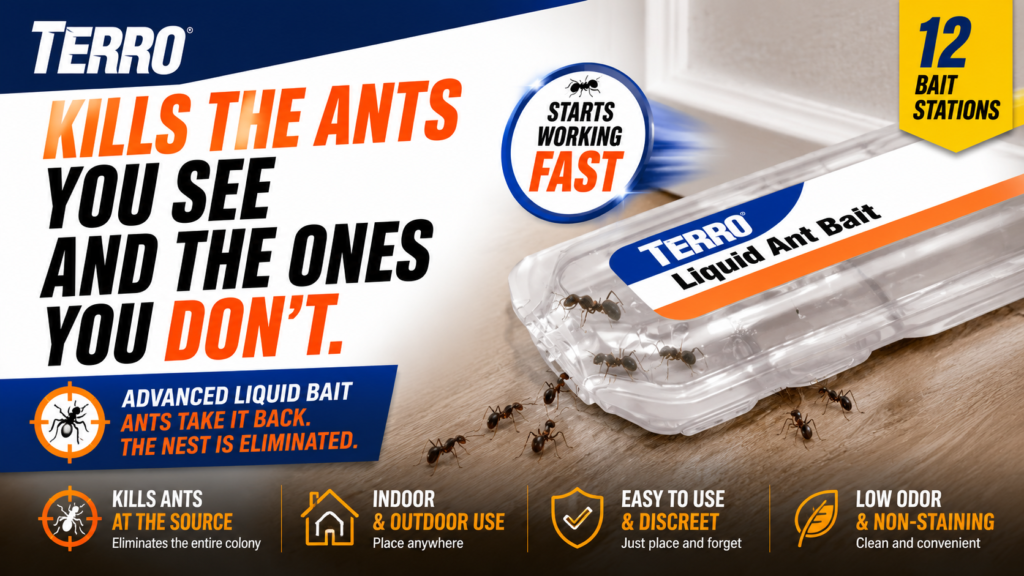
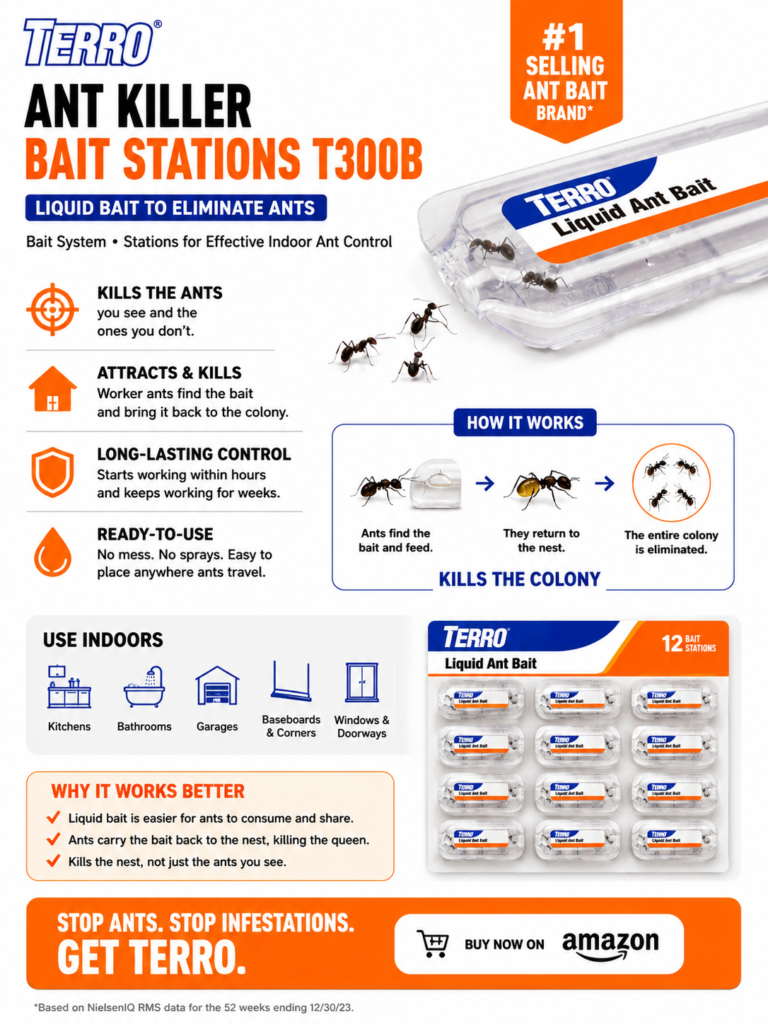
I’ve had good results with TERRO Liquid Ant Bait Stations because worker ants carry the bait back to the nest. In my TERRO Liquid Ant Bait Stations review, I explain where to place them and what results you should realistically expect.
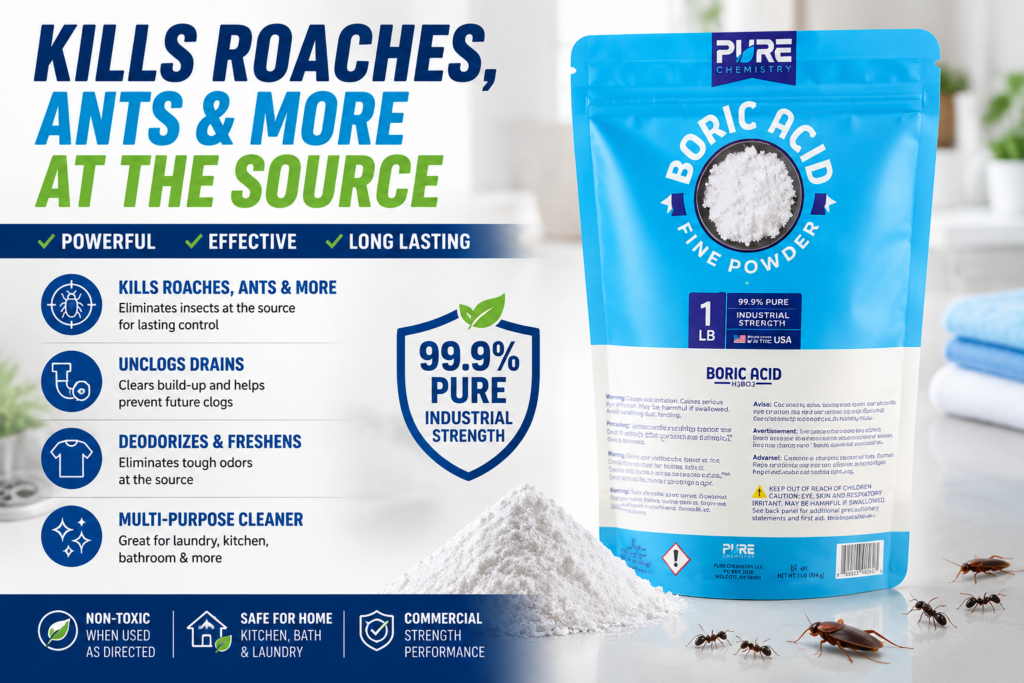
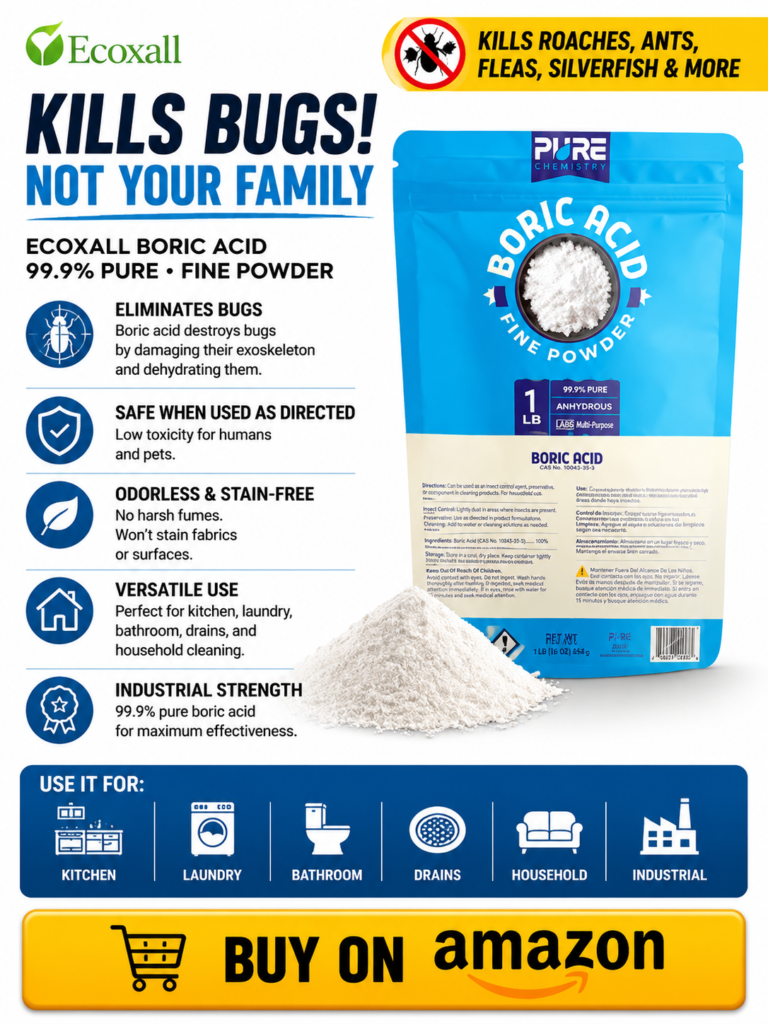
For certain situations, Ecoxall Boric Acid Fine Powder can also be an effective part of an overall ant control plan. I discuss when it works best in my Boric Acid for Roaches and Ants review.
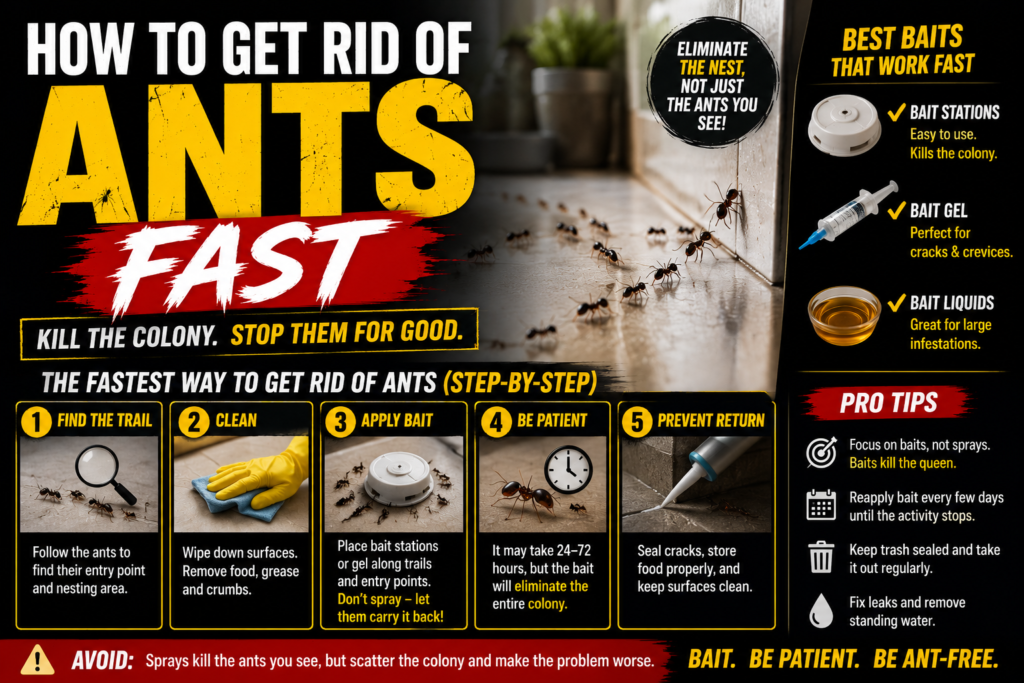
If ants are spreading beyond the bathroom into other parts of the house, my guide on Getting Rid of Ants Fast walks through the complete strategy I’d follow.
The Biggest Mistake I See
The biggest mistake I see is homeowners assuming bathroom ants are there because the room is dirty.
In reality, moisture is often a much stronger attraction than dirt.
I’ve seen spotless bathrooms with persistent ant problems simply because of a slow plumbing leak hidden inside the vanity.
Treating the ants without addressing the moisture source often leads to the same problem returning again and again.
Frequently Asked Questions
Why are ants only in my bathroom?
Bathrooms often provide moisture, shelter, and entry points through plumbing, making them attractive to ants even when food is limited.
Can ants come up through the drain?
Ants don’t usually live in drains, but they may enter around plumbing openings or gaps where pipes pass through walls or floors.
Why do ants appear after I shower?
Warm, humid conditions and standing moisture can make the bathroom more attractive to thirsty ants.
Will fixing a leak get rid of ants?
Repairing leaks removes an important water source, but you may still need to eliminate the colony if ants have already established regular trails into your home.
Should I spray ants in my bathroom?
Spraying may kill visible workers, but it often doesn’t eliminate the colony. Treatments that target the nest are usually more effective for long-term control.
About the Author
Michael Carter researches household ants, seasonal insect behavior, and practical pest management strategies. He specializes in helping homeowners identify the real causes of indoor ant infestations and solve them by addressing the source instead of just the visible ants.