You’ve confirmed you have bed bugs. You’ve got the mattress encased, the interceptor cups under the bed legs, and now you need something that actually kills the bugs already in your room — in the cracks, along the baseboards, inside the bed frame joints, and anywhere else they’re hiding between feedings. That’s where a dedicated bed bug spray comes in, and Harris Toughest Bed Bug Killer is one of the strongest options available without a pest control license. Before moving straight to treatment, whether one bed bug means an infestation can help put a single sighting in context.
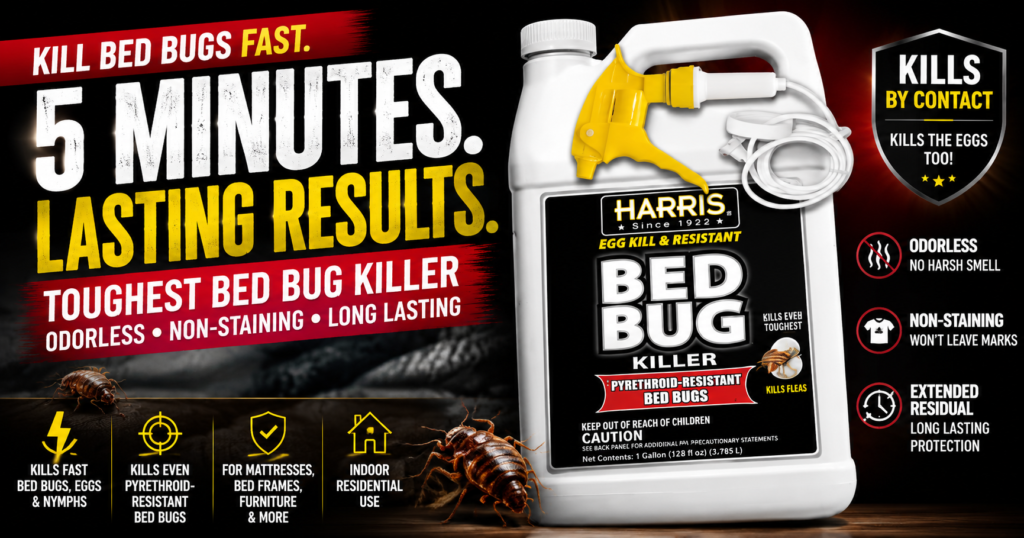
This review covers what makes it different from generic bug sprays, how to use it correctly as part of a complete bed bug treatment, and whether the gallon size is the right buy for your situation.
Why Bed Bugs Need a Dedicated Treatment
Before getting into the product itself, it’s worth understanding why bed bugs can’t just be treated with whatever spray is under your sink.
Bed bugs have developed significant resistance to pyrethroids — the active ingredient class in most common household insecticides including Raid. Decades of widespread pyrethroid use has created populations that survive exposure that would kill other insects outright. Spraying bed bugs with standard household bug spray often doesn’t kill them. It may slow them down temporarily or cause them to scatter to new harborage sites, spreading the infestation further.
Effective bed bug treatment requires active ingredients that bypass or overcome that resistance — which is exactly what Harris Toughest is formulated to do.
→ Check the current price on Harris Toughest Bed Bug Killer Gallon on Amazon — the gallon size gives you enough for thorough whole-room treatment plus follow-up applications.
The Honest Verdict
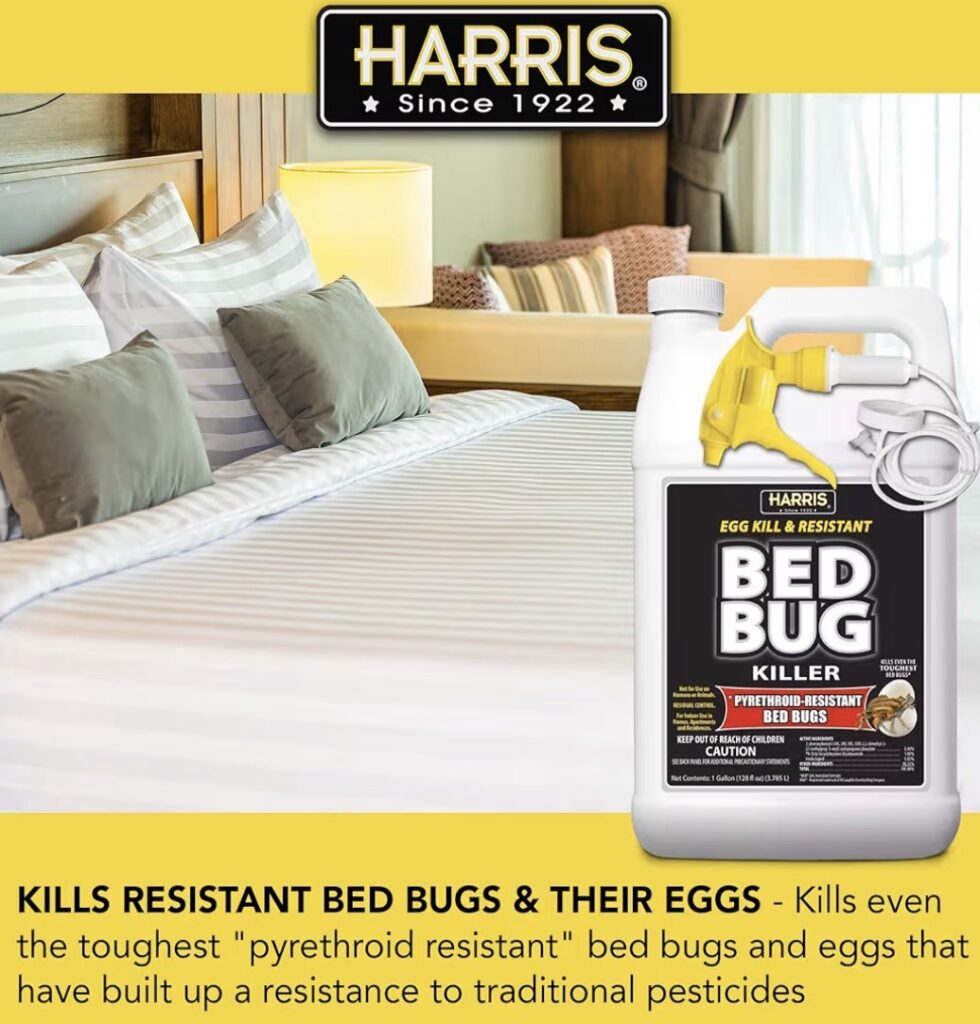
Harris Toughest Bed Bug Killer is a legitimate professional-grade bed bug treatment that works on both pyrethroid-resistant and non-resistant populations. The odorless, non-staining formula makes it practical to use on mattresses, box springs, and furniture without ruining them or making your bedroom unlivable. The extended residual formula keeps killing bed bugs that contact treated surfaces for weeks after application. For a DIY bed bug treatment it’s one of the strongest options available — used correctly as part of a complete approach, it significantly accelerates the elimination timeline.
What’s In It and Why It Matters
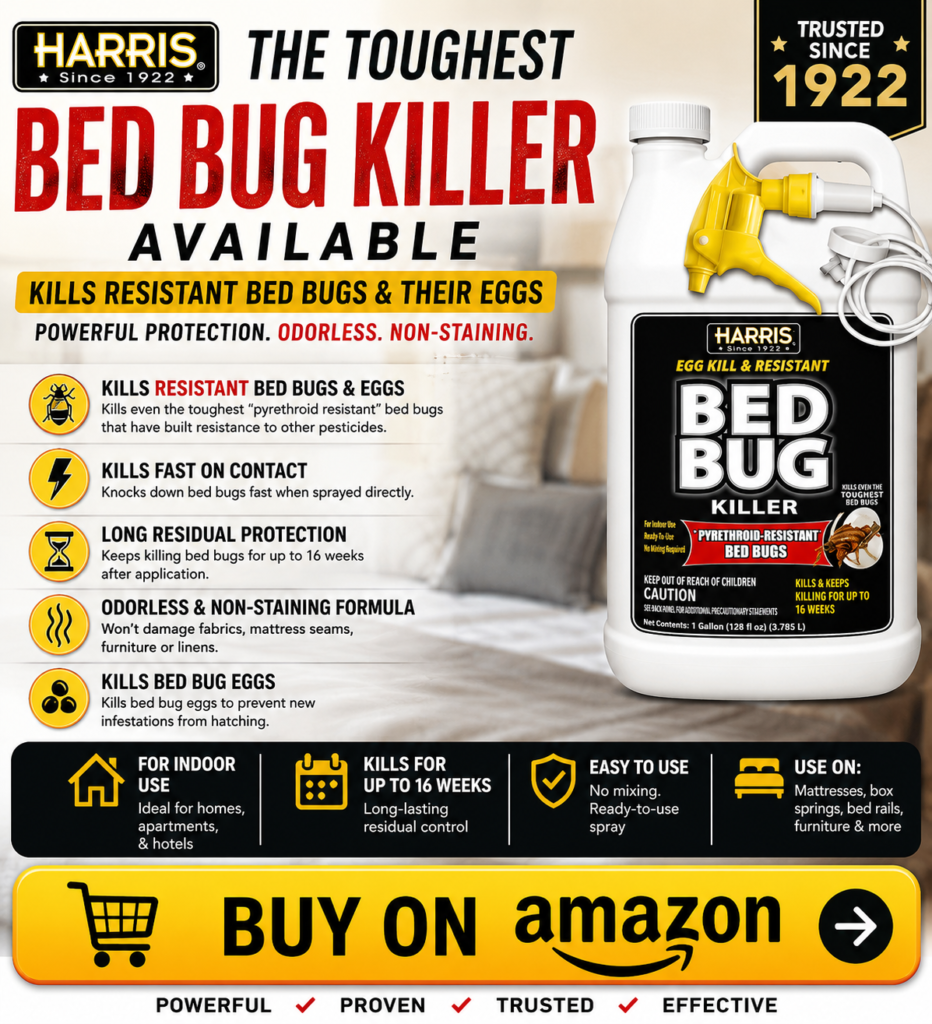
Harris Toughest uses a combination of active ingredients specifically chosen for bed bug resistance profiles. The formula includes both contact killers and residual agents designed to work on populations that have developed resistance to standard pyrethroids.
The key practical features of the formula:
- Odorless — you can treat your bedroom and sleep in it the same night once dry, without the heavy chemical smell that makes standard sprays unbearable in a sleeping environment
- Non-staining — safe to apply directly to mattresses, box springs, upholstered furniture, and bedding without leaving marks or residue that ruins the material
- Extended residual — continues killing bed bugs that walk across treated surfaces for weeks after application, not just during the initial wet spray
- Water-based — dries quickly and doesn’t leave an oily or sticky residue on treated surfaces
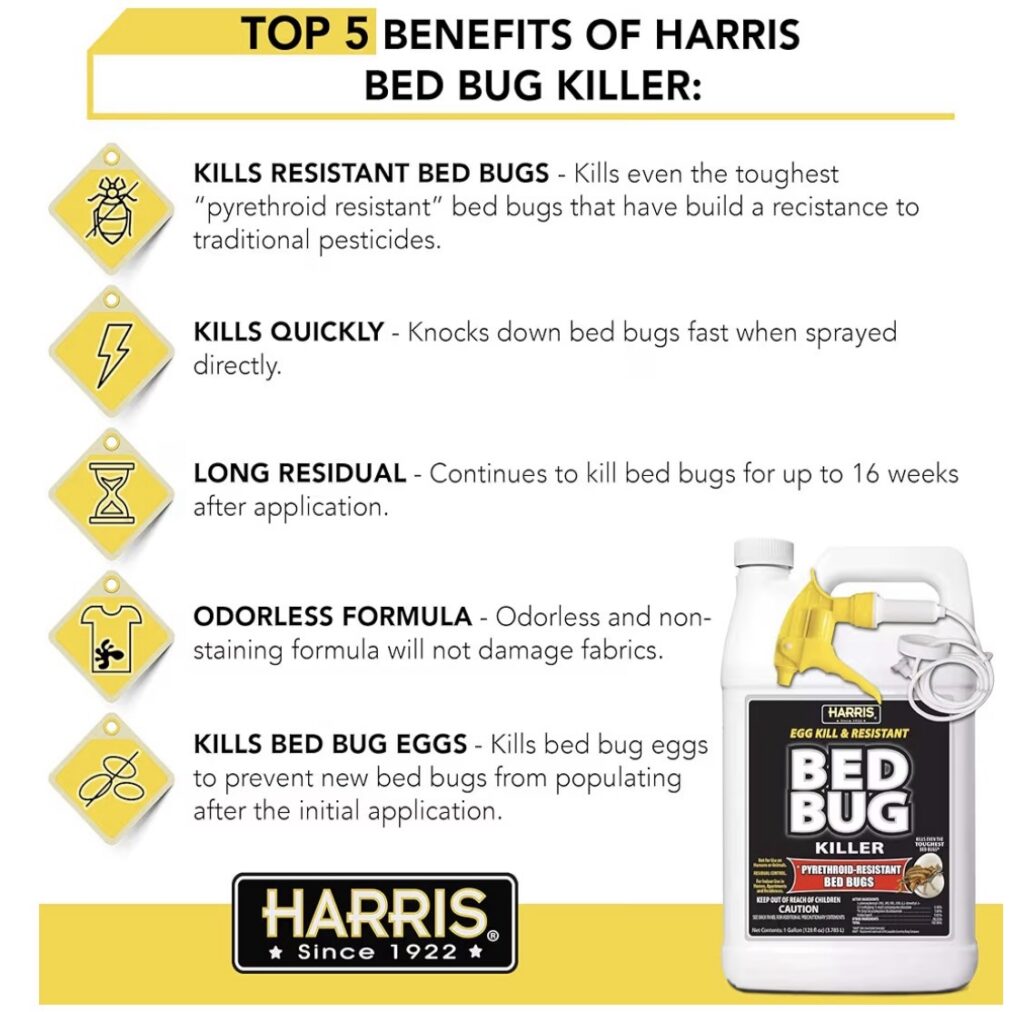
The odorless and non-staining properties aren’t just conveniences — they’re what make this product practical for bedroom use. A bed bug spray you can’t apply to a mattress without ruining it or making the room uninhabitable is a bed bug spray with a significant limitation. Harris Toughest removes both of those barriers.
How It Fits Into a Complete Bed Bug Treatment
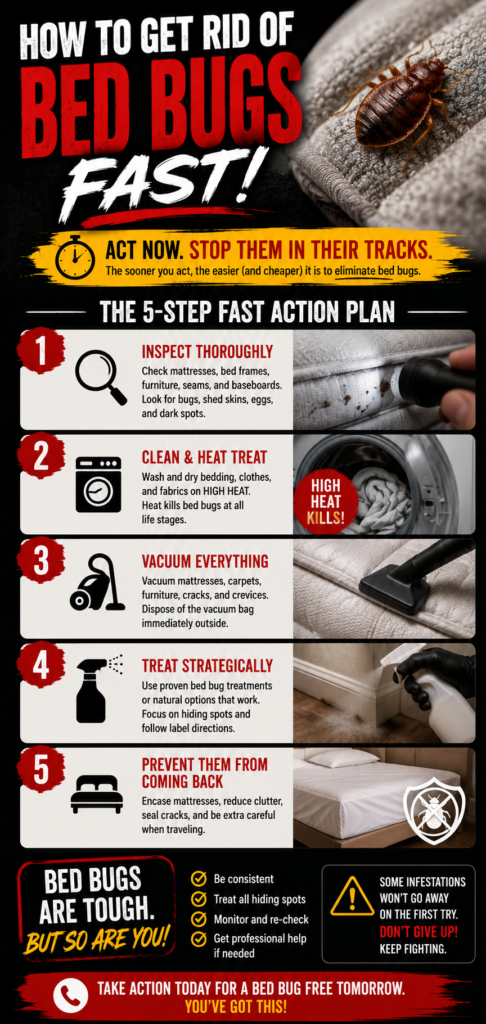
Harris Toughest is a contact and residual spray — it’s one tool in a complete bed bug elimination system, not the whole system by itself. Understanding how the pieces work together helps you use each product where it’s most effective. The broader sequence for combining inspection, prevention, and treatment is laid out in How to Get Rid of Bed Bugs Fast: Step-by-Step Guide.
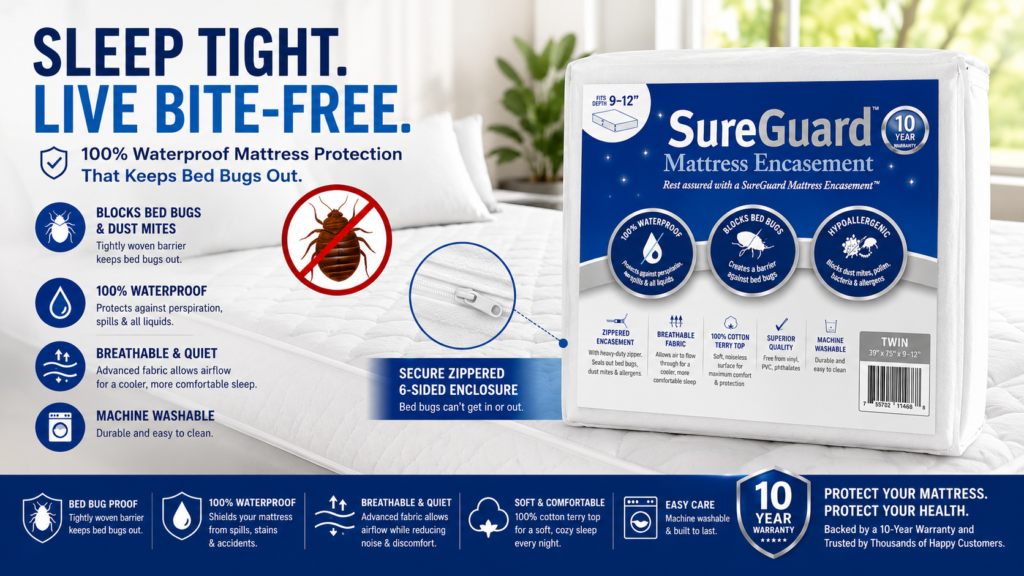
Mattress and box spring encasement handles the bugs living inside the mattress itself. Once encased, bugs inside are sealed in and starved out over 12-18 months. The encasement also creates a smooth surface that’s easier to inspect and makes it impossible for new bugs to establish inside the mattress. If you haven’t done this yet, our full mattress encasement review covers exactly what to buy and how to install it.
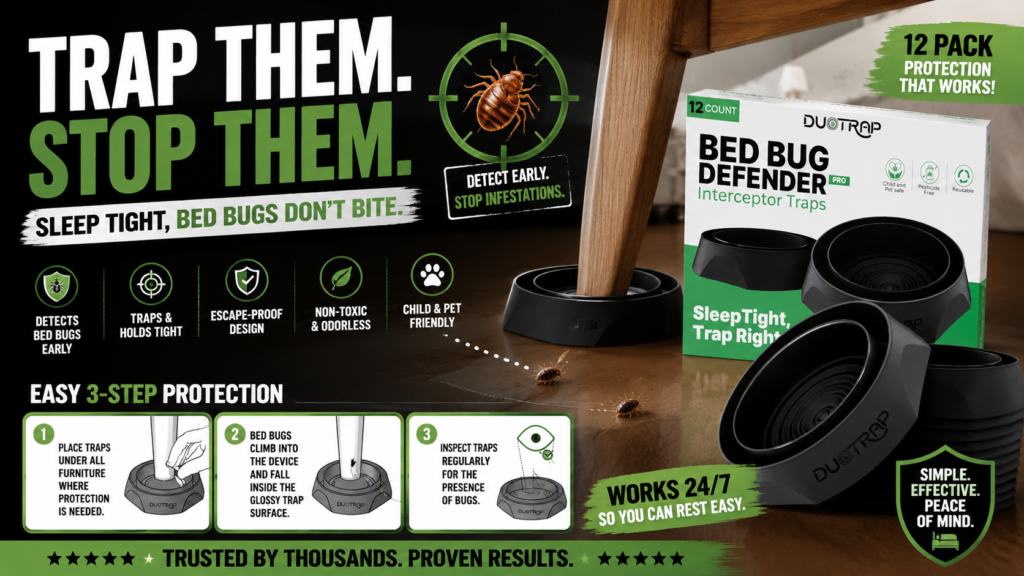
Interceptor cups under every bed leg block the travel routes between floor harborage and the bed, trapping bugs in transit and giving you monitoring data on population activity. See our interceptor cup review for setup instructions.
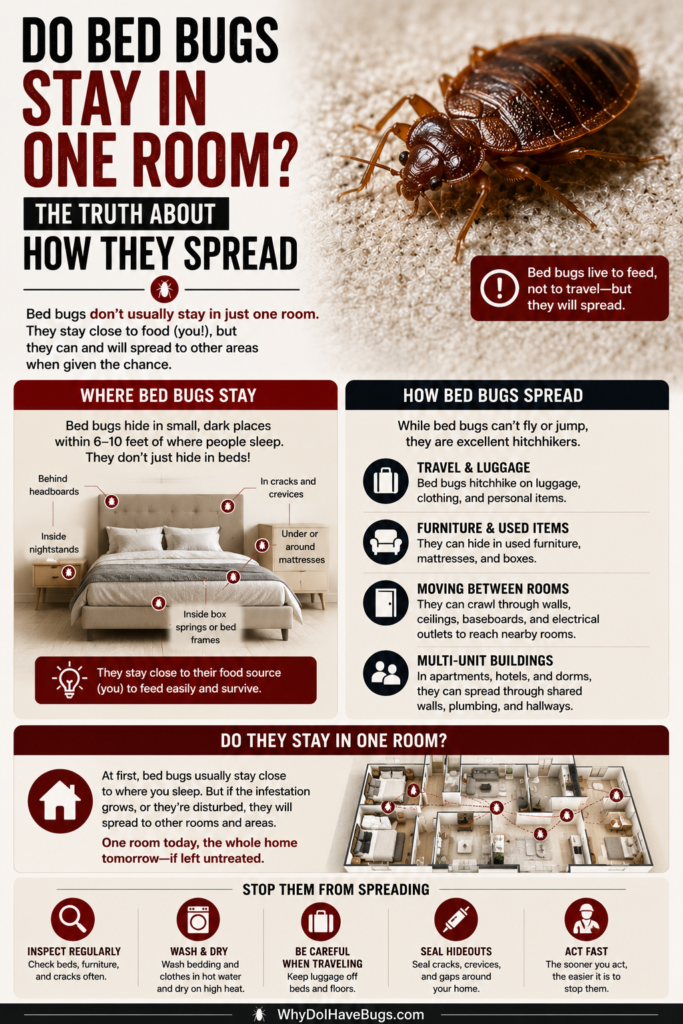
Harris Toughest spray handles the bugs in the room — in the bed frame joints, along baseboards, inside furniture crevices, and in any crack or gap where bed bugs hide between feedings. This is the active kill layer that eliminates the population in the surrounding environment while the encasement starves out what’s in the mattress. Because treatment may need to extend beyond the original area, how bed bugs spread beyond one room explains when nearby rooms may also be at risk.
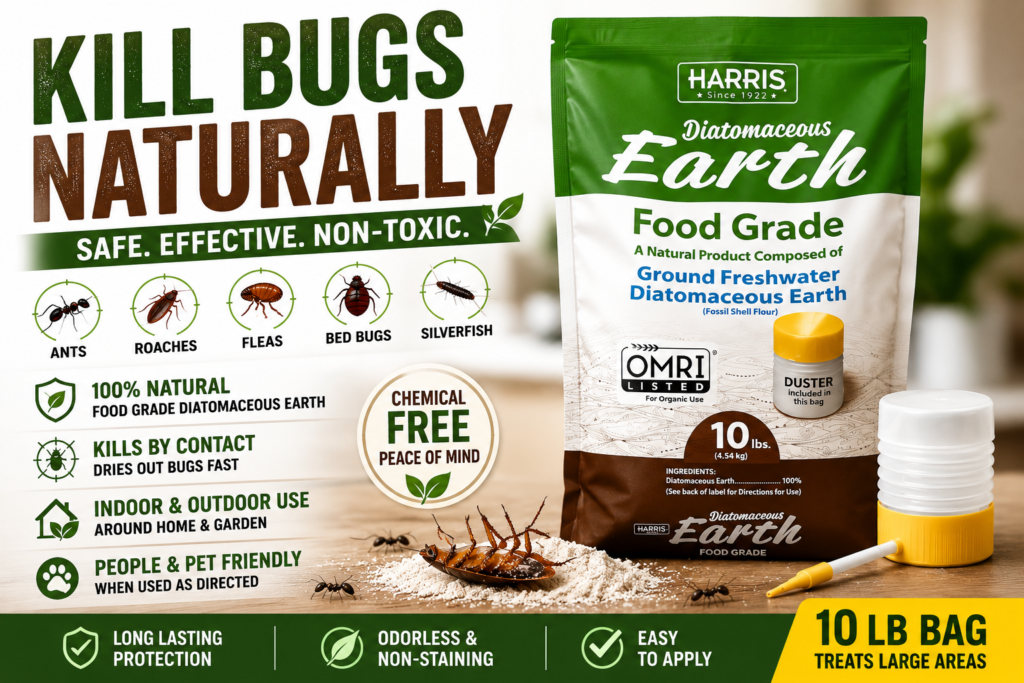
Diatomaceous earth along baseboards and in cracks creates a physical kill barrier that works independently of chemical resistance. DE is particularly valuable for bed bugs because it bypasses pesticide resistance entirely — bugs can’t develop immunity to getting dehydrated.
Running all four layers simultaneously gives you the fastest and most complete bed bug elimination possible without professional heat treatment.

Where and How to Apply It
Application location is as important as the product itself. Bed bugs don’t sit in the open — they hide in specific protected spots and only emerge to feed. Your spray needs to reach those spots.
The Bed Frame
The bed frame is the most important treatment zone after the mattress itself. Spray inside every joint, every crack, every screw hole, and every gap in the frame construction. Pay particular attention to the headboard — it’s one of the most common bed bug harborage sites and one of the most overlooked treatment areas.
Wooden bed frames with carved details, joints, and rough surfaces harbor more bugs than metal frames. Spray every surface and get the nozzle into every gap you can access. If the bed frame has hollow legs, spray inside those too.
The Mattress and Box Spring Surfaces
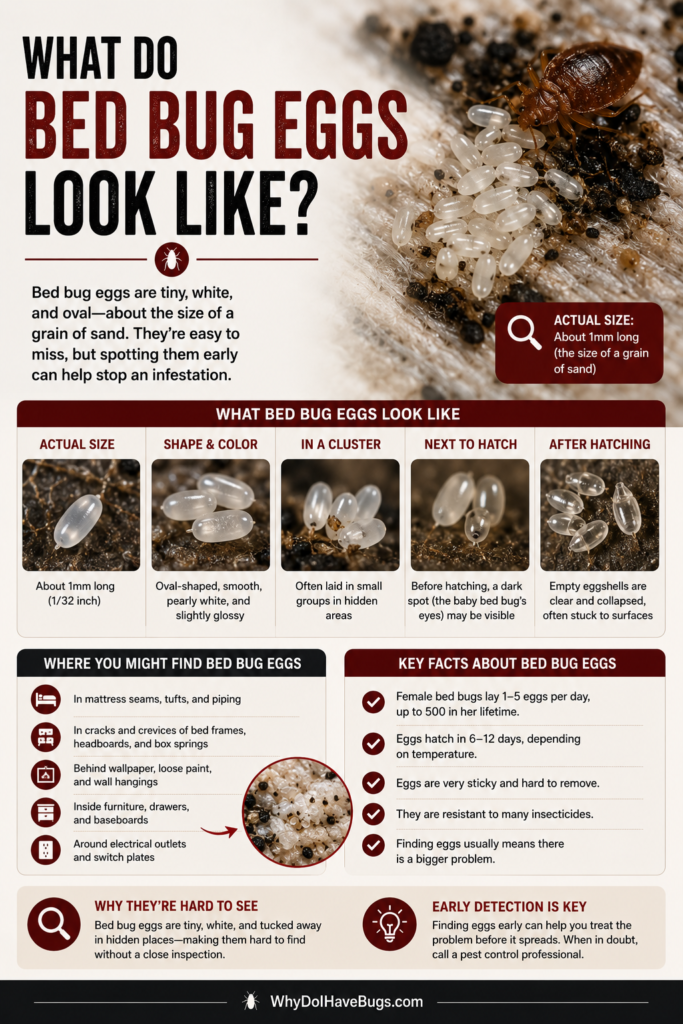
Before encasing, spray the mattress surface — seams, tufting, handles, and any visible crevices. The non-staining formula makes this safe without damaging the material. Allow to dry completely before encasing. Once the encasement is on, you won’t need to spray the mattress again. A close inspection of those mattress seams can also help you identify possible bed bug eggs before treating the area.
Spray the box spring thoroughly — the fabric underside, the staple lines, every wooden joint and crevice inside. Box springs are prime bed bug real estate and often get less treatment attention than the mattress.
Baseboards and Wall-Floor Junctions
Spray along the baseboards in the entire bedroom, particularly in corners and along the wall adjacent to the bed. Bed bugs travel along baseboards between the bed and their secondary harborage sites. The residual treatment on baseboards kills bugs in transit even days after application.
Furniture in the Bedroom
Nightstands, dressers, and any upholstered furniture in the bedroom should be treated — inside drawers, along joints, behind and underneath. Bed bugs establish satellite colonies in bedroom furniture when the primary infestation grows large enough. Treating only the bed and ignoring the nightstand next to it leaves a population that reinfests the treated areas.
Inside Electrical Outlets and Wall Cracks
Spray inside outlet boxes and along any visible cracks in walls near the bed. Bed bugs travel through wall voids and emerge through outlets — treating these spots addresses bugs in transit through the wall infrastructure.
Tip: Use a crack and crevice tip on the spray nozzle wherever possible — it directs the spray precisely into the narrow spaces where bed bugs actually hide rather than misting open surfaces. Most Harris Toughest bottles include one or it can be purchased separately for a few dollars.
Safety and Dry Time
Harris Toughest is water-based and odorless, which significantly improves the practical safety profile for bedroom use compared to solvent-based alternatives.
Keep people and pets out of the treated area until completely dry — typically 30 to 60 minutes with good ventilation. Once dry, the treated surfaces are safe for normal contact. You can sleep on a treated and dried mattress the same night.
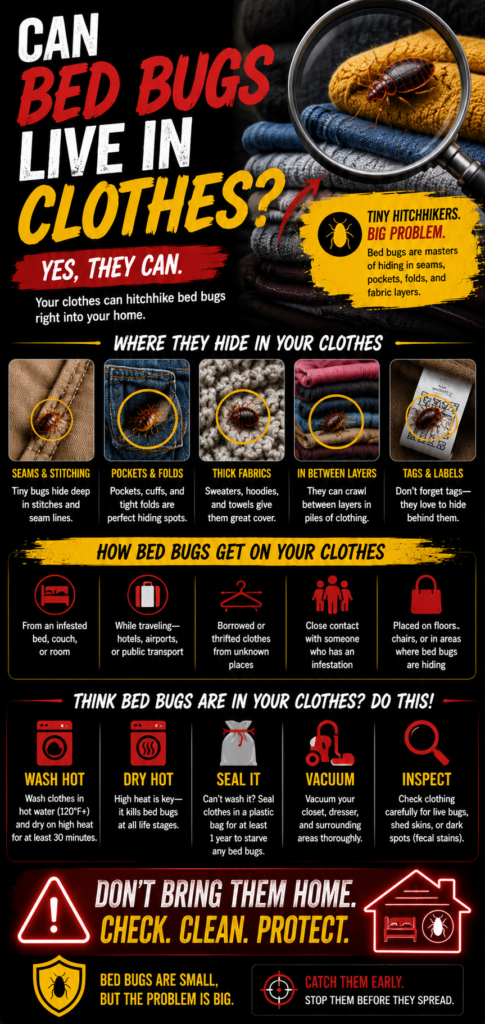
Don’t spray directly on bedding or pillowcases that will be in contact with skin while sleeping — wash those separately in hot water and dry on high heat as part of your treatment preparation. The spray is designed for hard surfaces, fabric upholstery, and mattress material — not for items with prolonged direct skin contact. The same careful approach applies when handling potentially exposed clothing during bed bug treatment.
Warning: Ventilate the room during application and immediately after. Open windows and run a fan. Even an odorless formula benefits from ventilation during the application process. Don’t apply in a completely sealed room.
Why the Gallon Size Makes Sense
Bed bug treatment is not a one-and-done application. It requires:
- An initial thorough treatment of the entire bedroom
- A follow-up treatment 7 to 10 days later to catch any eggs that hatched after the first application
- Periodic maintenance applications for several weeks as you monitor the population
- Potential treatment of adjacent rooms if the infestation has spread
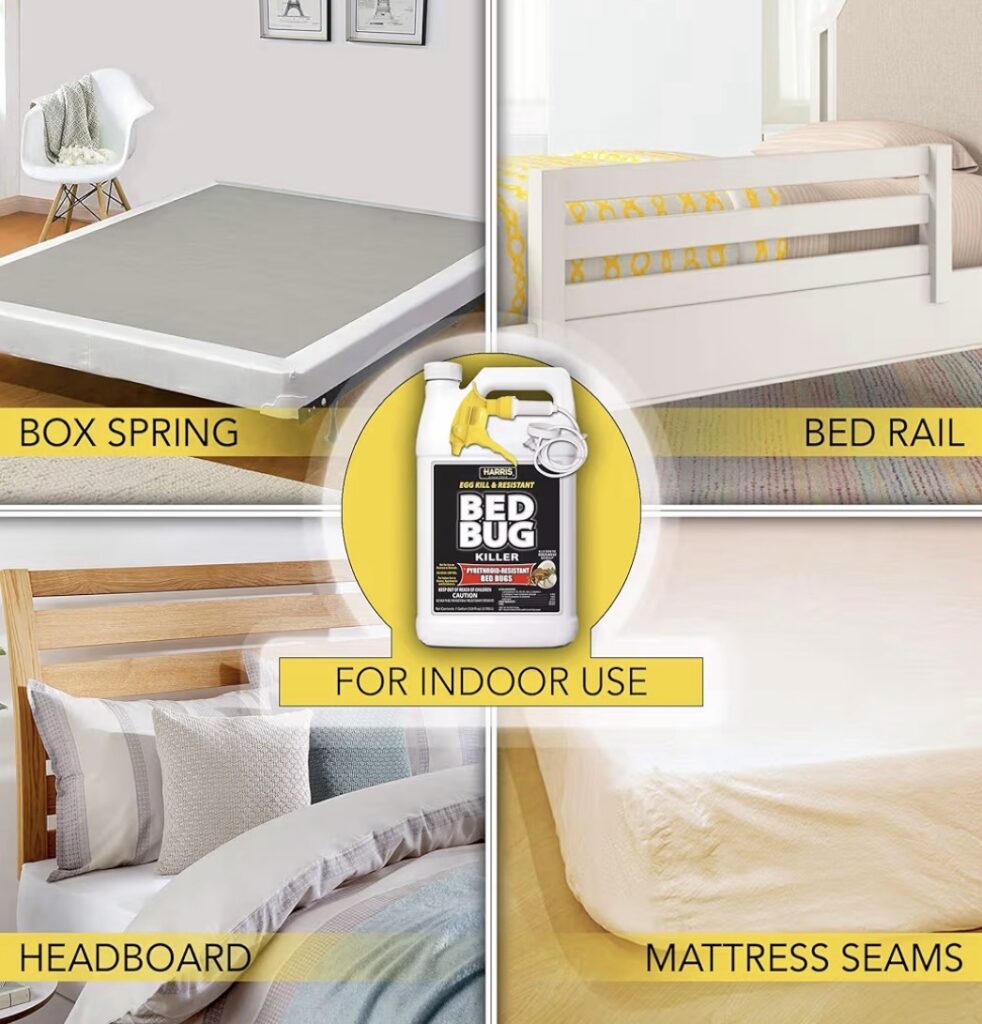
A small bottle runs out fast when you’re treating a full bedroom thoroughly. The gallon size ensures you have enough product to complete a full treatment cycle without running out mid-treatment — which is exactly when you don’t want to be waiting for a reorder. Any leftover product stores well and can be used for maintenance applications or future infestations.
Harris Toughest vs. Other Bed Bug Sprays
vs. Standard Household Bug Sprays
Standard sprays like Raid use pyrethroid active ingredients that many bed bug populations have developed significant resistance to. Using a standard household spray on bed bugs may produce little to no kill while giving you false confidence that you’ve treated the problem. Harris Toughest is specifically formulated to address resistant populations — this is not an incremental difference, it’s a fundamental one.
vs. Other Dedicated Bed Bug Sprays
Harris Toughest competes with products like Bedlam Plus and EcoRaider in the dedicated bed bug spray category. All three are legitimate products with solid track records. Harris Toughest’s odorless non-staining formula gives it a practical advantage for bedroom use specifically — the ability to spray directly on a mattress without smell or staining is meaningful when the mattress is your primary treatment surface.
vs. Professional Heat Treatment
Professional heat treatment — raising the entire room to temperatures that kill all life stages of bed bugs — is the most reliable single-treatment option for severe infestations. It’s also $1,000 to $2,500 per treatment depending on your area.
For moderate infestations caught reasonably early, Harris Toughest combined with encasements, interceptors, and DE gets you to the same place at a fraction of the cost. For severe infestations that have been untreated for months or have spread through multiple rooms, professional treatment may be the faster path — but Harris Toughest is still a valuable part of the treatment protocol before and after professional treatment.
The Complete Bed Bug Treatment Checklist
For the best and fastest results use Harris Toughest as part of this complete approach:
- Wash all bedding, pillowcases, and any fabric near the bed in hot water. Dry on high heat for at least 30 minutes.
- Vacuum the mattress, box spring, bed frame, and surrounding floor thoroughly. Dispose of the vacuum bag immediately in an outdoor trash can.
- Apply Harris Toughest to the bed frame, box spring, mattress surface, baseboards, furniture, and any cracks or crevices in the room.
- Allow to dry completely — 30 to 60 minutes with ventilation.
- Encase the mattress and box spring immediately after the spray has dried.
- Place interceptor cups under every bed leg.
- Apply diatomaceous earth along baseboards and in cracks around the room perimeter.
- Repeat the spray treatment in 7 to 10 days to catch newly hatched eggs.
- Monitor interceptor cups weekly and check for activity.
- Maintain the treatment for 4 to 6 weeks minimum before confirming elimination.
How to Keep Bed Bugs From Coming Back
Once eliminated, preventing re-introduction is the priority. Bed bugs don’t come back on their own — they come back because something brought them in.
Keep the mattress encasement on permanently. It protects against re-infestation as effectively as it helped eliminate the current one. Never remove it.
Keep interceptor cups in place as permanent monitors. Check them weekly. A bug in a cup caught early is a vastly more manageable problem than one caught after months of unchecked growth.
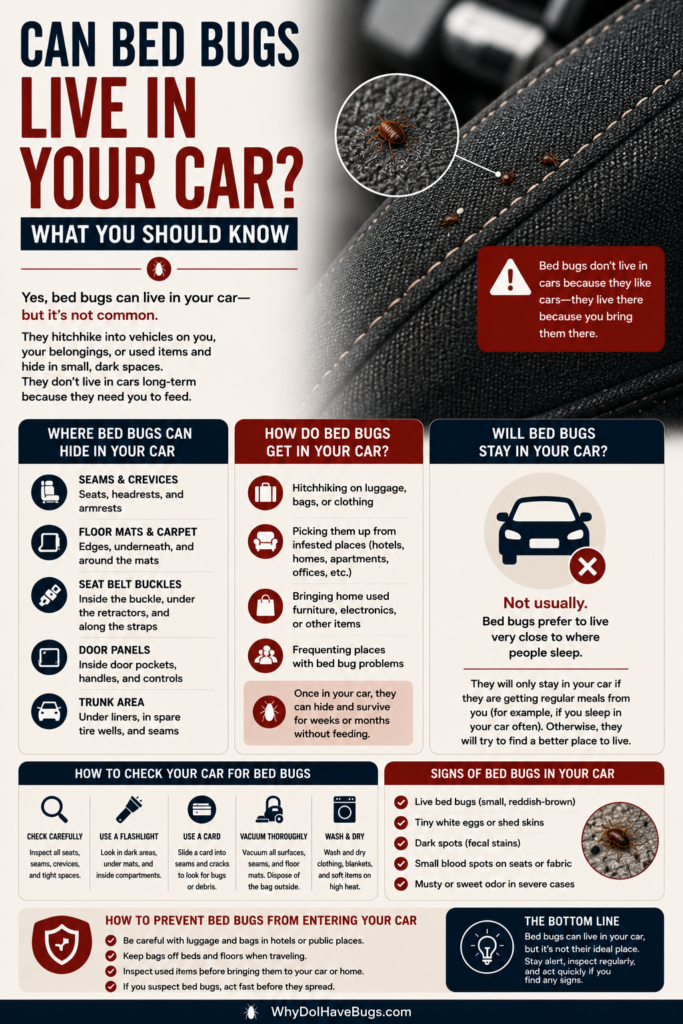
Inspect luggage after every trip. Never put luggage on a hotel bed. Inspect it before bringing it into your bedroom when you return home. Store luggage away from the bedroom when not in use. If you're concerned that bed bugs may have traveled home with you, bed bugs in your vehicle explains what to check and how likely they are to survive there.
Be cautious with secondhand furniture. Inspect every joint and crevice of any used furniture before it enters your home. If you can’t inspect it confidently, don’t bring it in.
Bed bugs are one of the harder pest problems to deal with — but they’re beatable with the right tools used correctly and consistently. The complete system of spray, encasement, interceptors, and DE covers every angle of the problem. Grab the Harris Toughest Bed Bug Killer Gallon on Amazon and get the treatment started — the sooner you begin the faster it’s over.