Finding carpet beetles in your home can be frustrating.
Most people don’t notice them until they’ve already found damaged clothing, mysterious shed skins, or an adult beetle crawling across a windowsill.
I know exactly how confusing that can be.
After finding a carpet beetle shed skin inside a shoe that had been sitting in our attic, I started learning everything I could about these insects. The more I researched them, the more I realized that getting rid of carpet beetles isn’t about spraying one bug.
It’s about finding the source.
If you skip that step, they’ll often come right back.
This guide walks through exactly how I’d approach a carpet beetle problem in my own house.
If you’re looking for a broader overview, my Everything You Need to Know About Carpet Beetles guide brings together everything I’ve learned about identifying, preventing, and getting rid of carpet beetles in one place.
My First Rule
Whenever I find carpet beetles, I slow down before I buy anything.
That might sound strange.
Most people immediately want insect spray.
I want information.
The more I understand where the carpet beetles are living and why they’re there, the easier they are to eliminate.
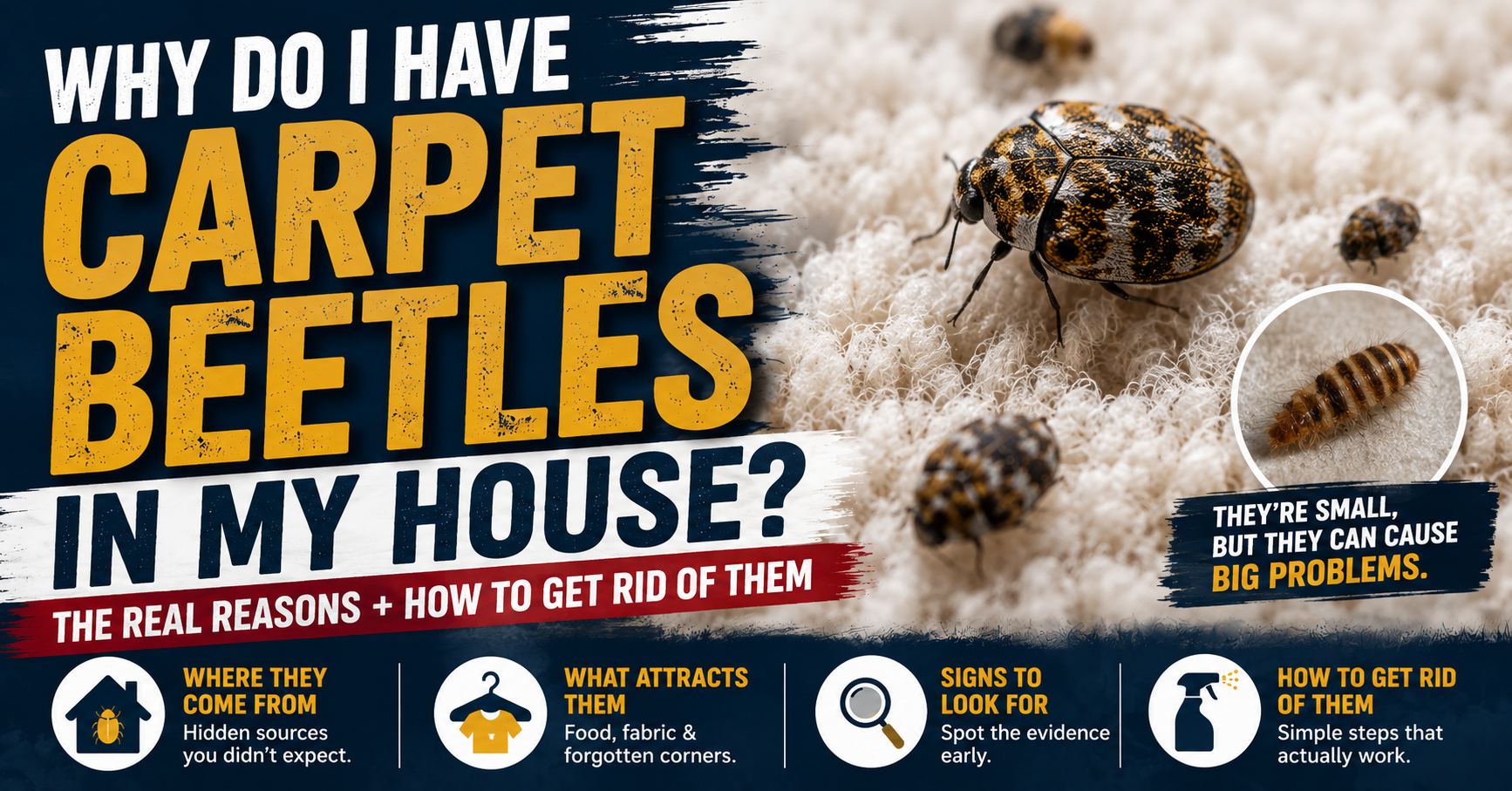
If you’re still wondering why carpet beetles are in your house, I’d start there because solving the attraction is just as important as killing the insects.
Step 1: Make Sure They’re Actually Carpet Beetles
This might sound obvious, but it’s one of the biggest mistakes I see.
Homeowners often confuse carpet beetles with bed bugs, small roaches, pantry beetles, or other insects.
Treating the wrong pest wastes both time and money.
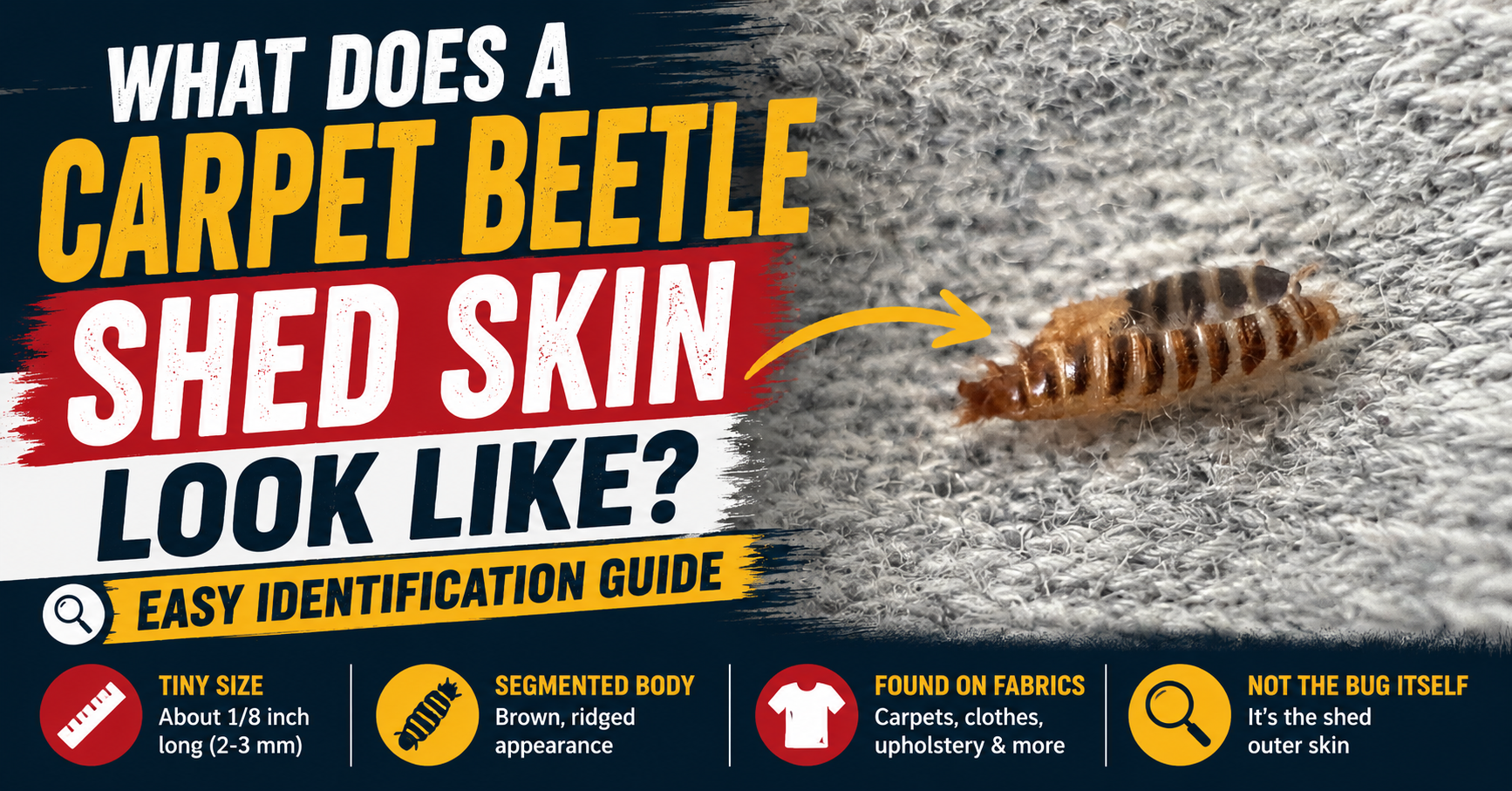
If you’ve only found a strange brown shell, compare it with my guide on what a carpet beetle shed skin looks likebefore assuming carpet beetles are the problem.
Likewise, if you’ve found a fuzzy little insect instead of a shell, my article explaining what carpet beetle larvae look likecan help you identify the living stage that’s responsible for most of the damage.



Step 2: Find Where the Larvae Are Living
One adult carpet beetle doesn’t tell me very much.
The larvae tell me everything.
That’s because they’re the ones feeding on your belongings.
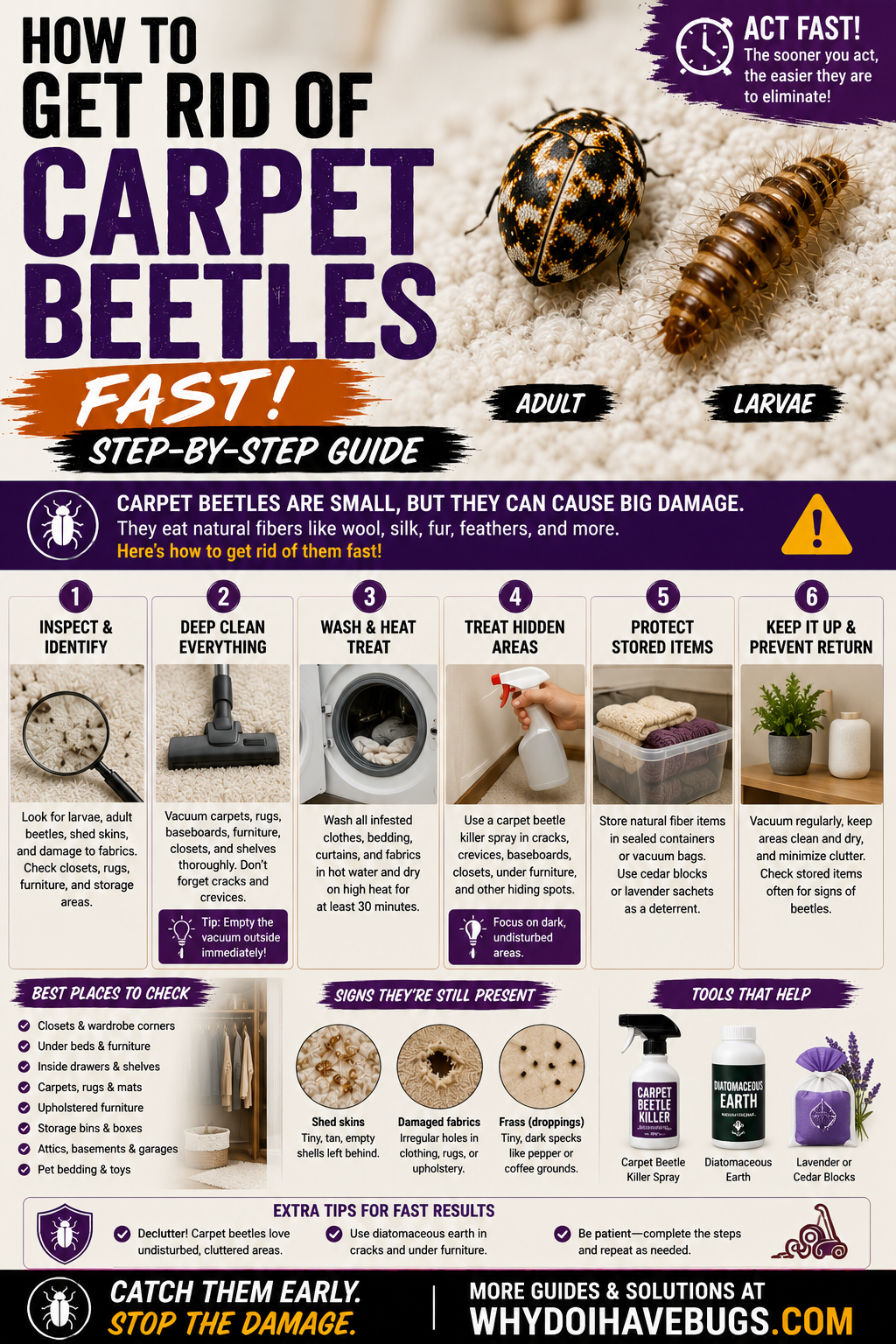
Instead of chasing adult beetles around windows, I’d spend my time inspecting:
- Closets
- Storage boxes
- Blankets
- Wool clothing
- Shoes
- Pet bedding
- Under furniture
- Attics
If you’re not sure where to begin, I recently put together a guide explaining where carpet beetle larvae hide and the first places I would inspect.
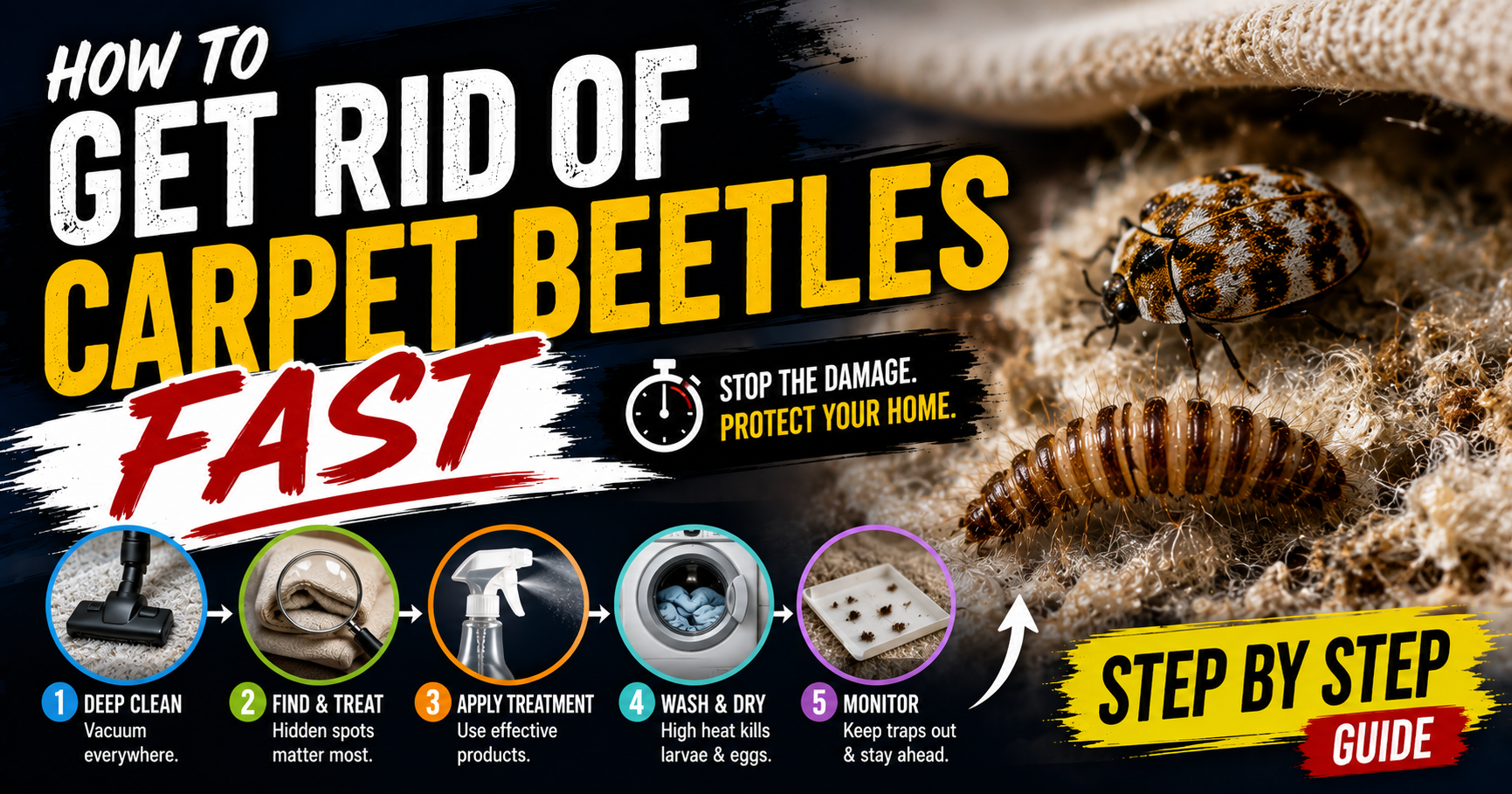
Step 3: Vacuum More Than You Think You Need To
If I could only recommend one thing, it would be a thorough vacuuming.
Not just the middle of the carpet.
Everywhere.
I vacuum:
- Along baseboards.
- Closet corners.
- Under furniture.
- Shelving.
- Air vents.
- Under beds.
- Around pet beds.
Vacuuming removes larvae, eggs, shed skins, pet hair, lint, dead insects, and many of the food sources carpet beetles depend on.
It’s one of the simplest and most effective things you can do.


(Bonus step) Don’t Underestimate Your Vacuum Cleaner
When we dealt with carpet beetles ourselves, one thing became obvious pretty quickly.
The more consistently we vacuumed, the fewer signs of carpet beetles we kept finding.
Vacuuming isn’t just about making the carpet look clean. Every time you vacuum thoroughly, you’re removing carpet beetle larvae, shed skins, pet hair, lint, dead insects, and many of the organic materials the larvae feed on. That makes daily vacuuming one of the most effective habits you can build while trying to get an infestation under control.
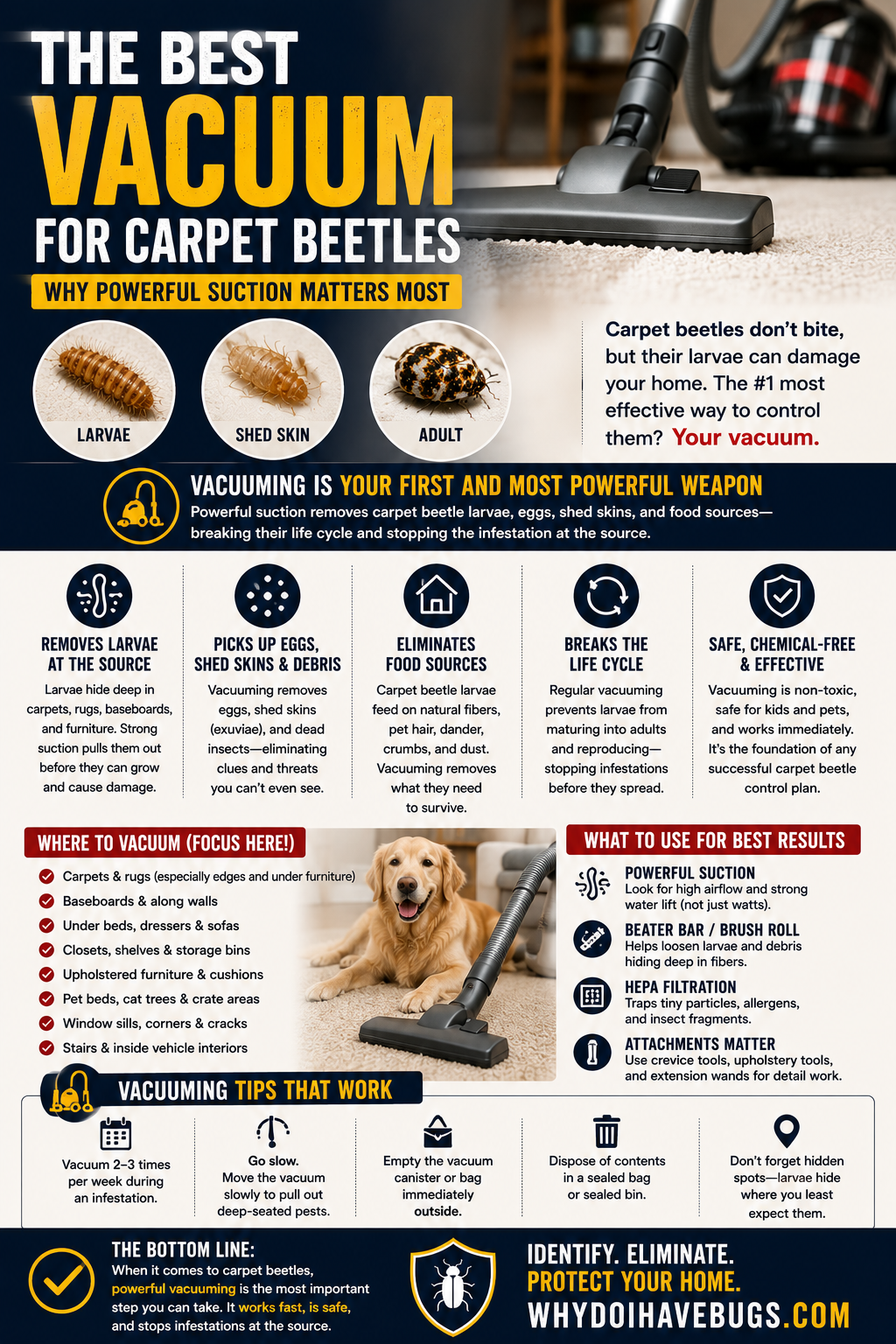
I eventually wrote an entire guide explaining why a powerful vacuum is one of the best tools for controlling carpet beetles because I think it’s one of the most overlooked parts of treatment.
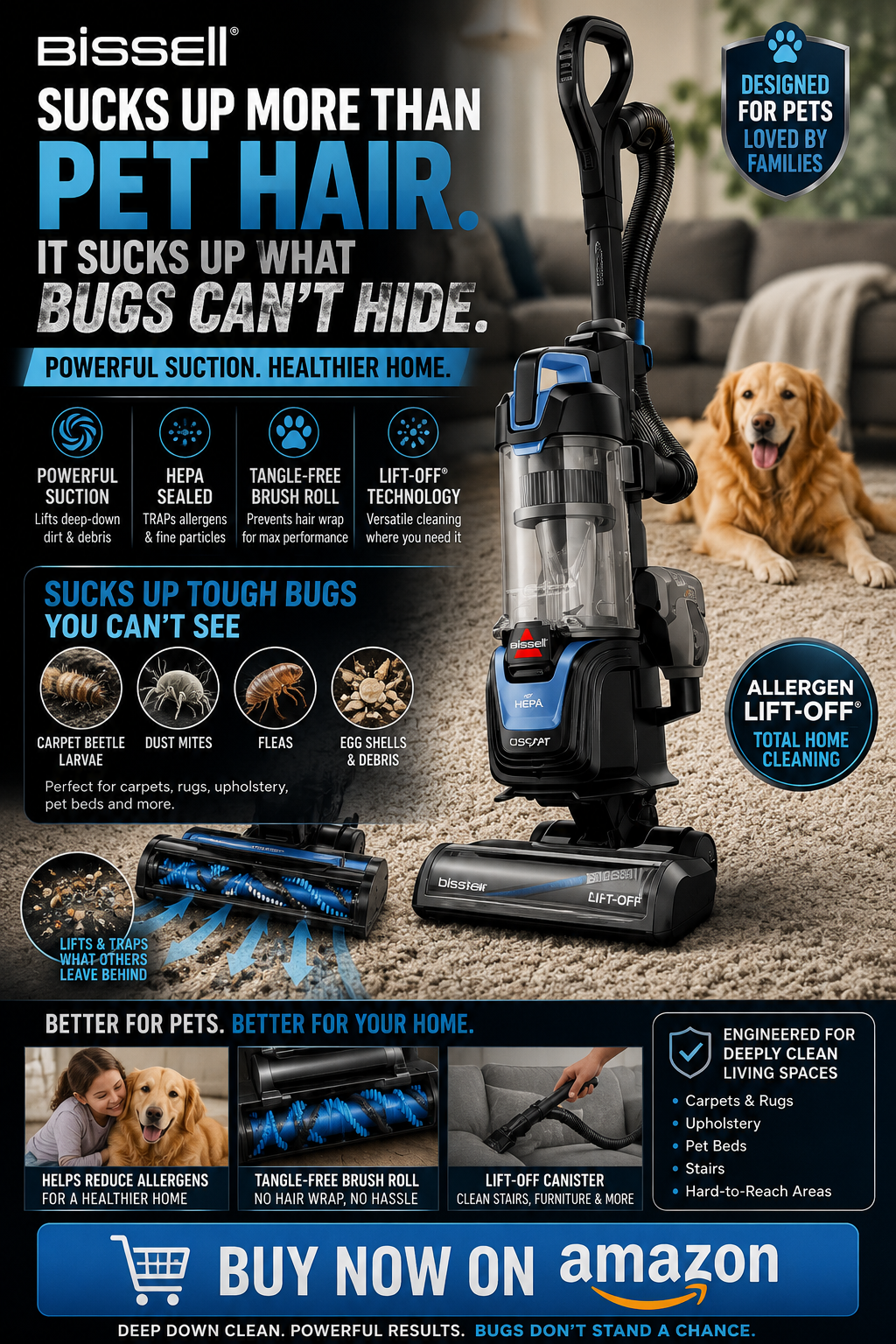
If you’re shopping for a vacuum, I personally like the Bissell Pet Hair Eraser Allergen Lift-Off because its strong suction, Lift-Off design, and HEPA filtration make it well suited for cleaning baseboards, closets, upholstery, stairs, and other places where carpet beetle larvae commonly hide.
Step 4: Inspect Natural Fiber Items
Carpet beetle larvae aren’t interested in every material inside your home.
They’re mainly attracted to natural animal-based fibers.
I’d carefully inspect:
- Wool sweaters.
- Blankets.
- Leather items.
- Fur.
- Silk.
- Feather pillows.
- Taxidermy.
- Pet bedding.
The goal isn’t simply finding damage.
It’s finding where the larvae are feeding.


Step 5: Wash or Dry Clean Infested Fabrics
Whenever possible, I wash clothing, blankets, and other washable items before putting them back into storage.
Items that can’t be washed may need professional dry cleaning.
After they’re clean, I store seasonal fabrics inside sealed plastic containers instead of cardboard boxes whenever possible.
That makes it much harder for future carpet beetles to reach them.
Step 6: Use a Carpet Beetle Spray When It Makes Sense
Once I’ve confirmed where the infestation is located, then I start thinking about insecticides.
Notice I said after.
Not before.
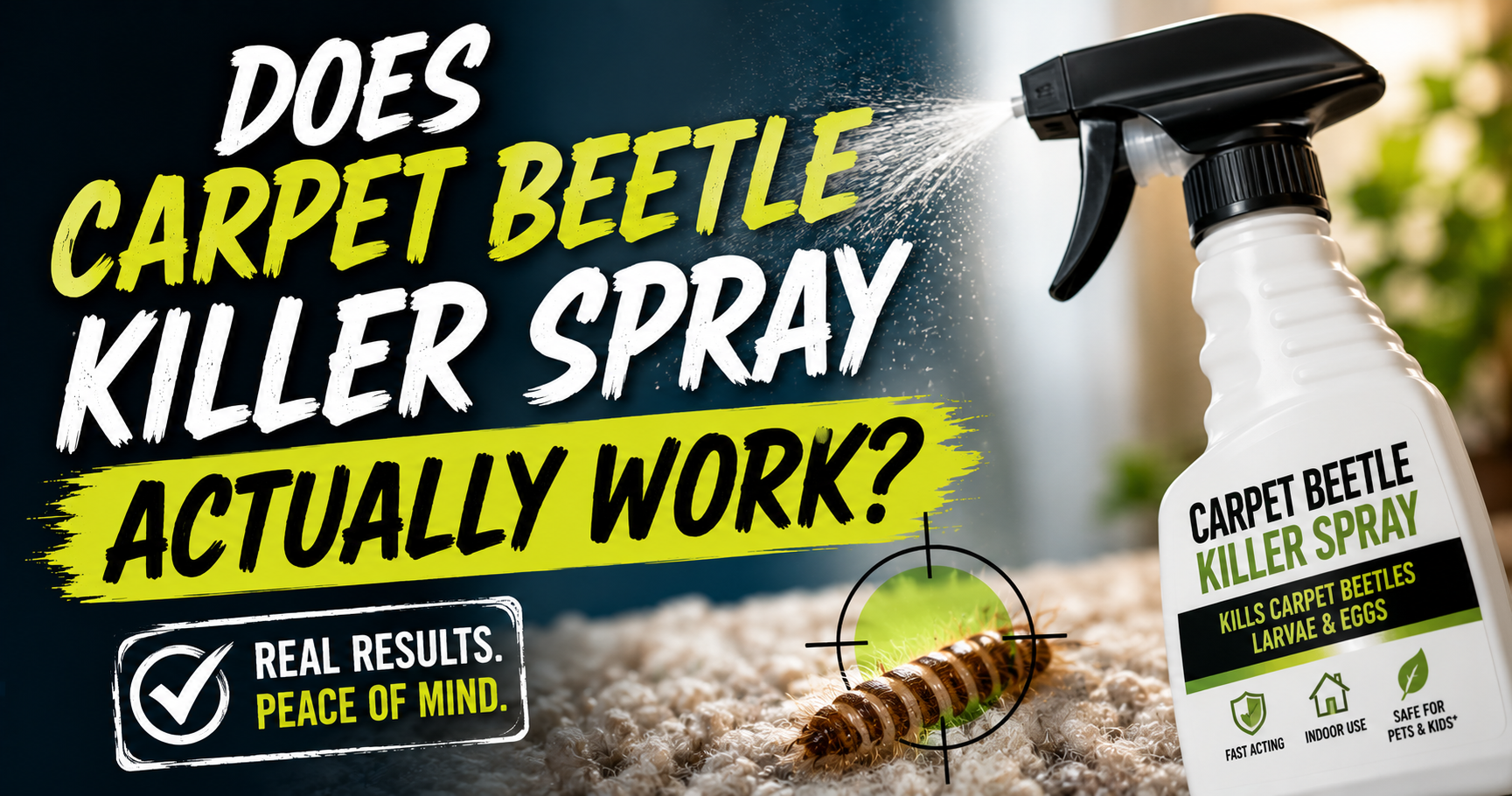
If you’re considering using one, I recommend reading my guide on whether carpet beetle killer spray actually worksbecause I explain where I think sprays fit into an overall treatment plan.
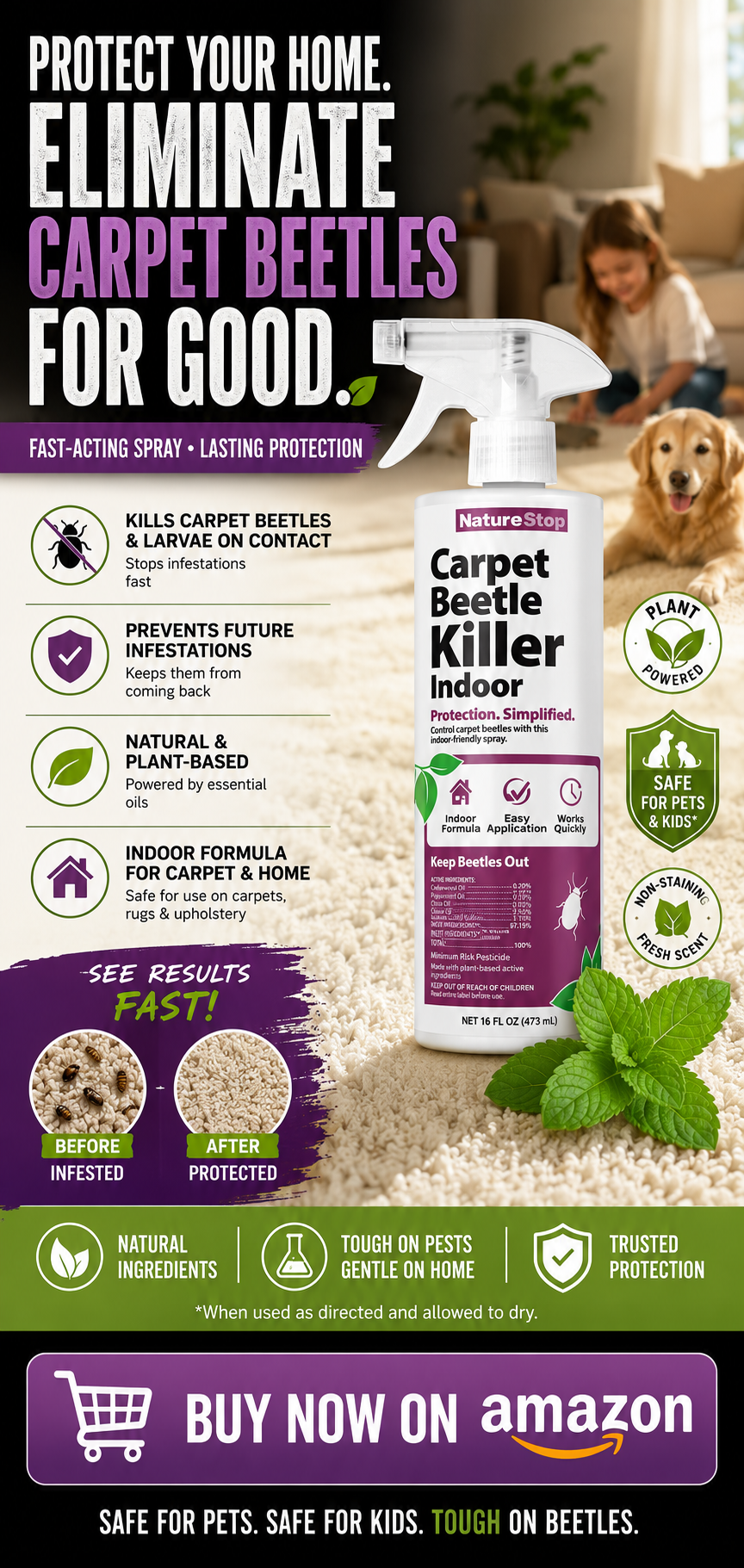
One product worth considering is Carpet Beetle Killer Spray for Indoor Use. According to the product labeling, it’s designed to target both carpet beetles and their larvae when used as directed. I see it as one tool in the process, not the entire solution.


Step 7: Don’t Ignore Shed Skins
One mistake I see all the time is homeowners finding shed skins after treatment and assuming the spray didn’t work.
Remember…
Shed skins don’t disappear.
They’re simply the empty outer coverings larvae left behind as they grew.
They’ll stay there until someone vacuums or removes them.
If you’re continuing to find them, don’t automatically assume you still have active larvae.
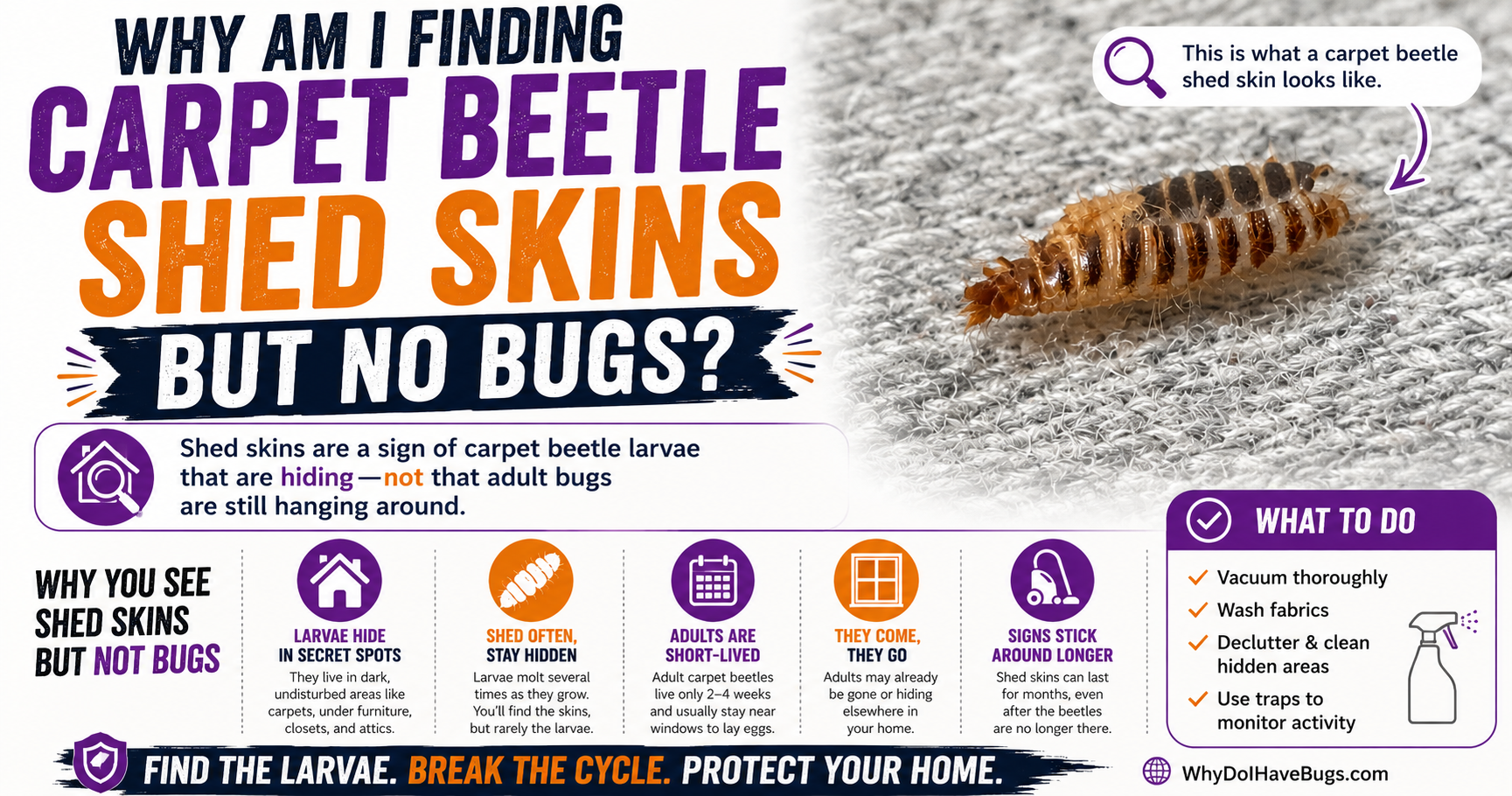
My guide on why you’re finding carpet beetle shed skins but no bugs explains why this happens and what I’d inspect next.
Step 8: Monitor the Area
After cleaning and treating, I don’t simply forget about the problem.
For the next several weeks, I’d continue checking:
- Closets.
- Storage shelves.
- Window sills.
- Blankets.
- Pet bedding.
- Shoes.
- Baseboards.
Finding new evidence early makes it much easier to stop another infestation before it grows.

What Usually Doesn’t Work
I’ve seen homeowners waste a lot of time doing things that sound helpful but rarely solve the underlying problem.
Some of the biggest mistakes include:
- Spraying one adult beetle and assuming the infestation is gone.
- Never inspecting closets or storage areas.
- Ignoring pet hair and lint buildup.
- Treating without identifying the insect first.
- Putting infested items back into storage without cleaning them.
Those mistakes often allow the infestation to continue unnoticed.
What I Would Do If This Were My House
If I walked into my attic tomorrow and found another carpet beetle shed skin, I already know exactly what I’d do.
I’d inspect nearby storage.
I’d vacuum thoroughly.
I’d examine clothing and blankets.
I’d look for larvae instead of focusing on adult beetles.
Only after understanding the scope of the problem would I decide whether treatment products were necessary.
Taking an organized approach usually saves both time and money.
The Biggest Mistake I See
The biggest mistake I see is treating carpet beetles like ants or flies.
They’re completely different.
The visible beetle is often the smallest part of the problem.
The real work happens in the quiet places where the larvae feed, grow, and hide.
Once you find those areas, eliminating carpet beetles becomes much more straightforward.
If you’d like more identification guides and prevention tips, be sure to visit our growing Beetles resource center where I’m continuing to expand our carpet beetle resources.
Frequently Asked Questions
What is the fastest way to get rid of carpet beetles?
The fastest approach combines accurate identification, thorough vacuuming, removing infested materials, cleaning natural fabrics, and targeted treatment when needed.
Do I need insect spray to get rid of carpet beetles?
Not always. Small infestations can often be greatly reduced through careful inspection, cleaning, and removing the food sources larvae depend on. Sprays can be helpful when they’re part of a broader treatment plan.
Why do carpet beetles keep coming back?
Most recurring infestations happen because larvae or eggs remain hidden, or because the food sources attracting them haven’t been removed.
Can I get rid of carpet beetles myself?
Yes. Many homeowners successfully eliminate small infestations with careful inspections, deep cleaning, proper storage, and targeted treatments when necessary.
How long does it take to eliminate carpet beetles?
It depends on the size of the infestation and how quickly the larvae and food sources are found. Small infestations can often be controlled much faster than widespread ones.
About the Author
Daniel Brooks is a home pest management writer who focuses on helping homeowners solve household insect problems through accurate identification, practical inspections, and realistic treatment strategies. His goal is to help readers eliminate the source of an infestation instead of simply treating the insects they happen to see.