You have ants and you want them gone. Not managed, not reduced — gone. Whether you’ve got a trail marching across your kitchen counter or a full-blown infestation coming through your walls, the approach that actually eliminates ants is the same. It’s just a matter of using the right products in the right order and not making the mistakes that turn a two-week fix into a two-month frustration.
This guide covers exactly what to do, in what sequence, and why — so you stop spinning your wheels and start seeing results.
Before You Do Anything — Identify What You’re Dealing With
Not all ants respond to the same treatment. Spending two weeks on the wrong approach costs you time you don’t need to waste.
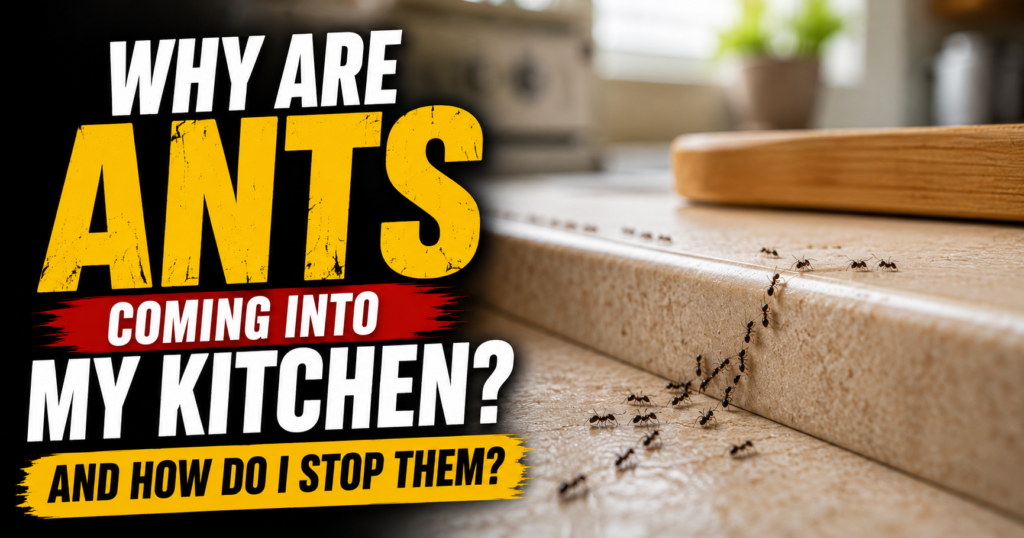
Small ants in the kitchen — odorous house ants, Argentine ants, pavement ants, or little black ants. Strongly attracted to sweets and moisture. Liquid bait is the most effective treatment for all of these. This guide is primarily written for this group since they represent the vast majority of household ant problems. Before treating these common invaders, learn why kitchen ants keep returning so you can address the food, moisture, and entry points sustaining the problem.
Large black ants — likely carpenter ants. These are a different problem entirely. They nest in wood — often damp or damaged wood — and their presence may signal a structural moisture issue. Standard sweet bait doesn’t work on carpenter ants. See our full ant guide if you’re dealing with large black ants.
Red stinging ants outdoors — fire ants. Require a completely different bait formula and outdoor treatment strategy. Also covered in our ant category.
If you have small ants in your kitchen, bathroom, or anywhere inside your home — keep reading. This is your guide.
The Fastest Way to Get Rid of Ants
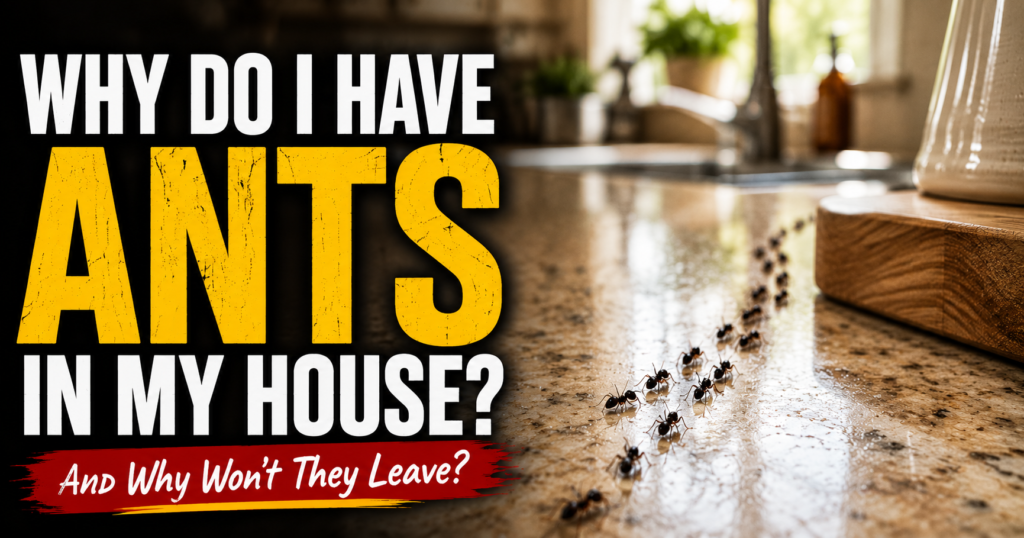
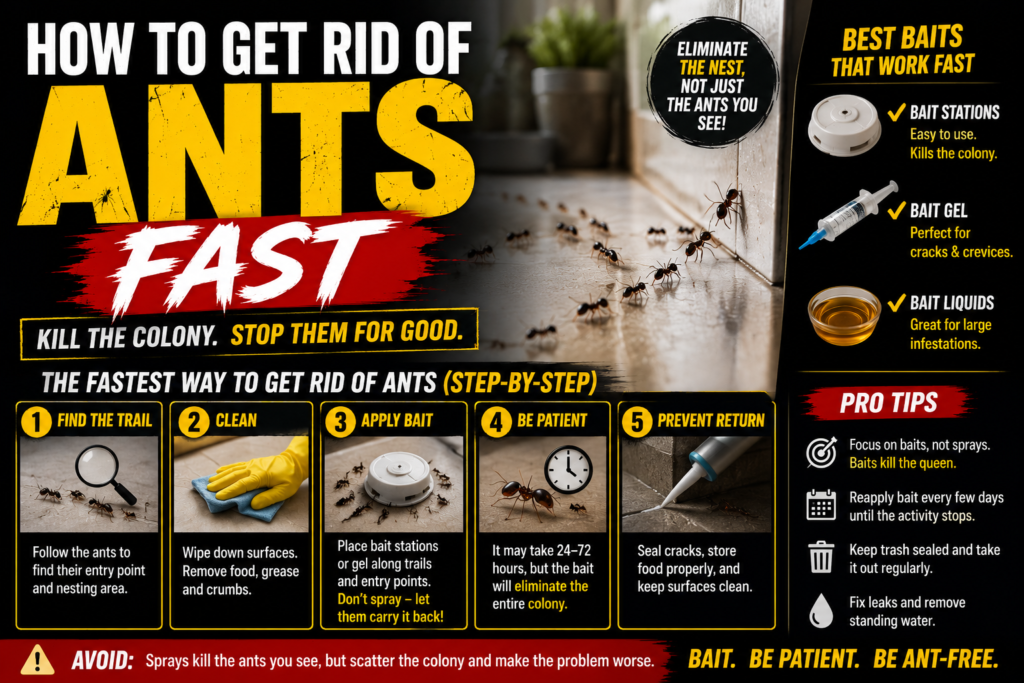
Here’s the direct answer before the detail: liquid bait plus sealed entry points plus eliminated food source. That combination resolves most household ant infestations in one to two weeks. Everything else in this guide is the how and why behind those three things. When the infestation seems sudden, Why Are Ants Suddenly in My House — And How Do I Stop Them? explains the environmental changes and entry points that often trigger it.

Step One — Stop What Isn’t Working
Most people’s first instinct with ants is to spray them. It feels satisfying — you can see them dying — but it’s one of the least effective approaches for an actual infestation and it actively makes the best treatment harder to use.
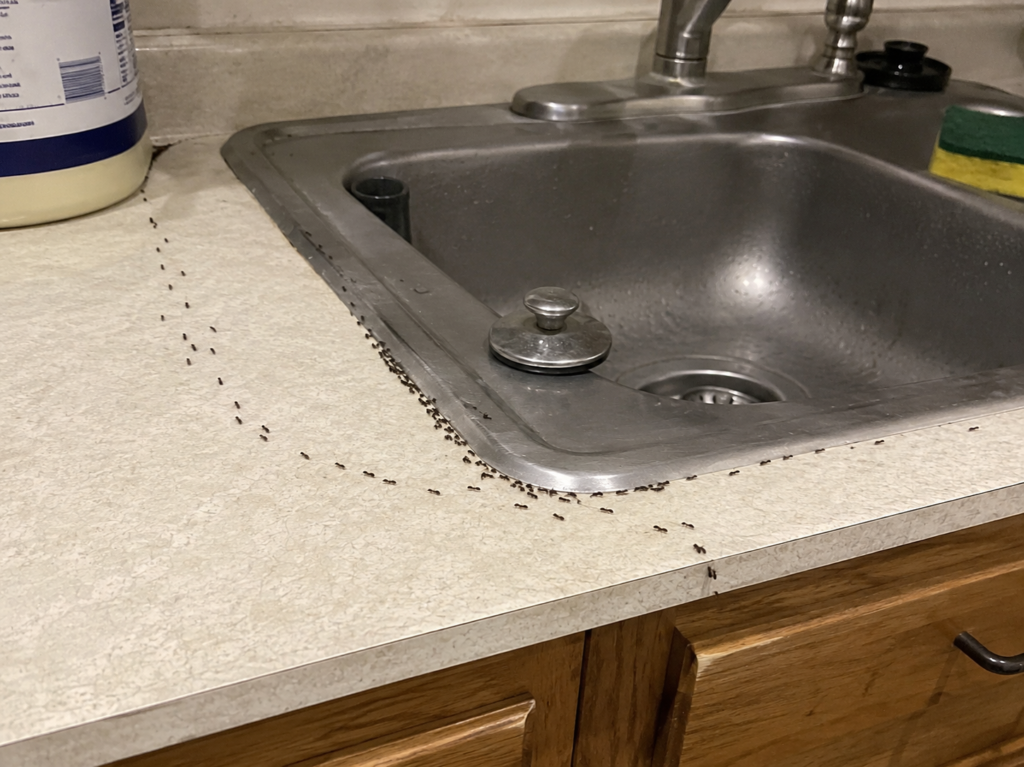
Here’s the problem with spray: it kills the workers you can see, which is a small fraction of the colony. The colony — which may have hundreds of thousands of workers — simply sends more. The foragers you killed get replaced within hours. And because most household bug sprays are pyrethroid-based repellents, they drive ants away from treated areas including anywhere you plan to put bait. Spray the counter, then place bait on the counter, and the ants won’t go near the bait. You’ve just made your most effective tool useless.
Stop spraying in areas where you’re going to bait. If you’ve been heavy with the spray recently, give it 48 to 72 hours before placing bait stations to let the repellent effect dissipate.
Also stop cleaning ant trails with bleach or strong disinfectants before your bait is in place. Those chemicals destroy the pheromone trails ants use to navigate — including the trails that will lead them to your bait stations. Let the trails exist until the bait is working.
Step Two — Find the Food Source and Eliminate It
Bait works faster and more completely when it’s the best food option available. If ants have access to real food alongside the bait, they’ll split their foraging between both and the bait spreads through the colony more slowly.
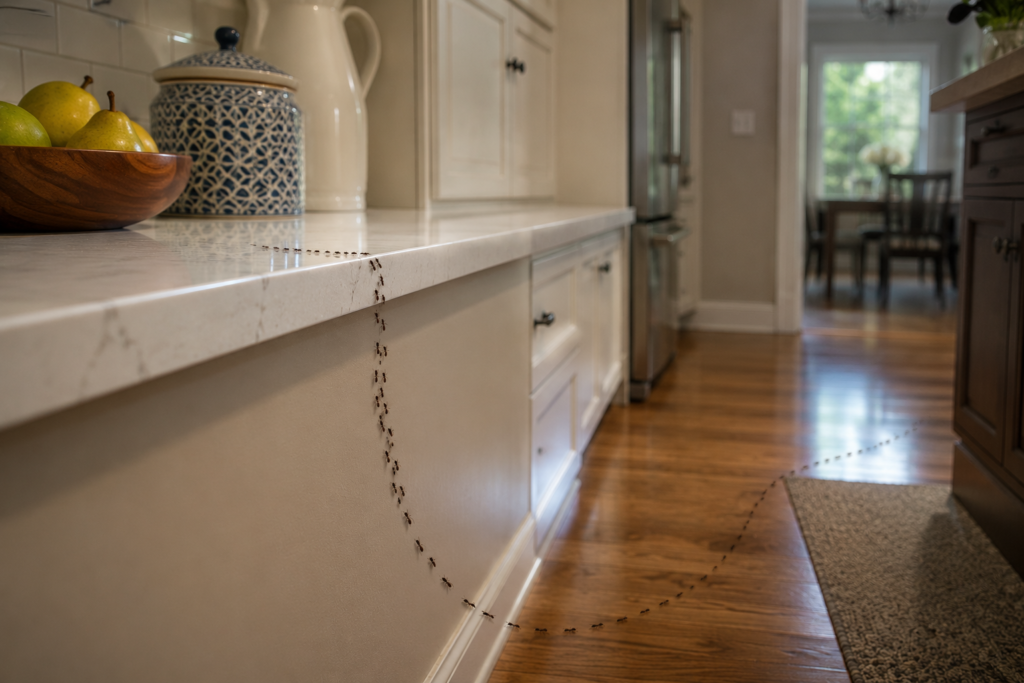
Follow the trail. Where does it start? Where does it go? The endpoint tells you what they’re after. Common sources that people miss:
- Grease residue on the stove backsplash or behind appliances
- Sticky residue inside the recycling bin from unwashed containers
- Pet food left in a bowl on the floor
- Ripe fruit on the counter
- A spill or sticky spot inside a cabinet or pantry shelf
- The residue in an improperly sealed sugar, honey, or syrup container
- A drip under the sink providing moisture
Clean thoroughly — behind and under appliances, inside cabinets, the back of shelves. Fix any moisture issue you find. Then place the bait.
Step Three — Place Liquid Bait Correctly
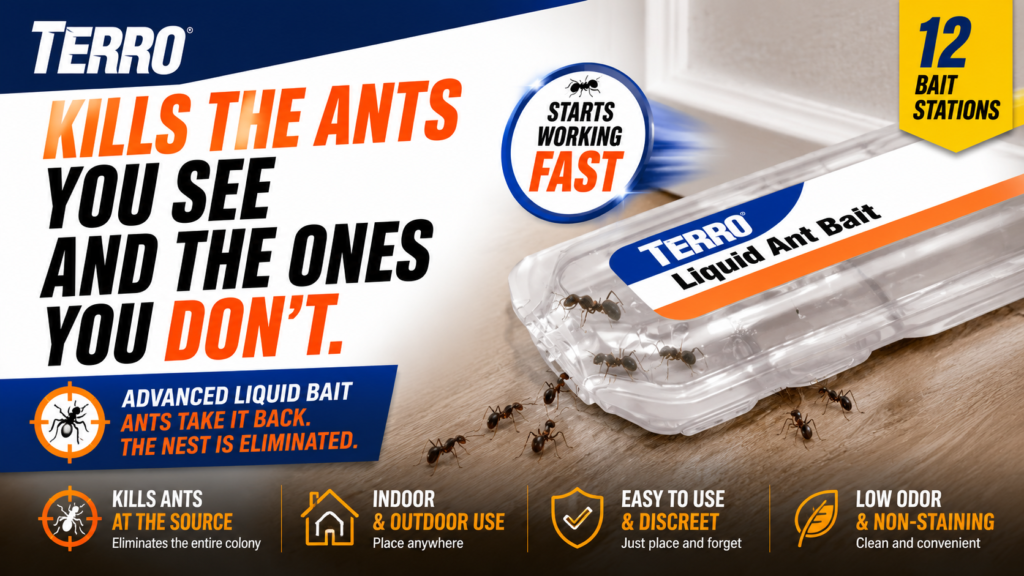
Liquid bait is the most effective treatment for the small sweet-feeding ants that invade kitchens. TERRO Liquid Ant Bait is the standard recommendation — it uses borax at a concentration that’s attractive to ants and slow-acting enough that workers carry it back to the colony before dying, poisoning the population including queens from the inside out.
The cascade kill is the point. You’re not trying to kill the ants at the station — you’re using them as delivery vehicles to poison the colony. Every worker that feeds on the bait and returns to the nest carries a lethal dose to hundreds of ants that never touched your bait station.
Where to Place Bait Stations
Place stations directly on active ant trails — the paths you can see ants traveling. Ants follow pheromone trails between the colony and food sources. Bait placed on those trails gets found fast. Bait placed randomly in areas with no activity may sit untouched for days.
Best placement spots:
- Directly on the trail you can see on your counter or floor
- Under the kitchen sink near pipe penetrations where ants are entering
- Along the baseboard where a trail is running
- Near windowsills if ants are entering from outside through windows
- Inside pantry shelves if that’s where activity is concentrated
- Near pet food bowls if ants have been hitting those
- Along the back edge of cabinet shelves with activity
How Many Stations to Use
More than you think. A 12-pack for a kitchen infestation is not excessive. More feeding stations means more workers carrying bait back simultaneously, which means faster colony kill. Don’t ration the stations — deploy them aggressively across all active areas. For a station-focused option, see these ant bait stations.
The Most Important Rule — Don’t Interfere
When you first place bait stations you’re going to see more ants, not fewer. Sometimes dramatically more — a surge of workers descending on the stations within hours. This is the treatment working exactly as designed. Ants found a food source and recruited the colony to it.
Do not spray those ants. Do not move the stations. Do not wipe away the trail leading to the bait. Every ant feeding on the station is a delivery vehicle carrying borax back to the colony. Interrupting that process restarts the clock.
The surge typically peaks around day three to five and then drops noticeably as the colony starts dying. By day ten to fourteen most moderate infestations are largely resolved.
Keep Fresh Bait Available
Check stations every few days. If a station has been fully consumed, replace it immediately with a fresh one. An empty station does nothing. Keep fresh bait available continuously until ant activity has stopped completely — don’t pull the stations the moment you stop seeing ants. Give it another week of clean stations to confirm the colony is gone.
Step Four — Seal Entry Points While Bait Works
Bait handles the current colony. Sealing entry points prevents the next one from establishing before you’ve finished eliminating this one — and stops the flow if ants are coming from outside or neighboring units.
The most important entry point in most kitchens is the gap around pipes where they enter the cabinet wall under the sink. This gap connects directly to the wall void and often to the exterior of the building. It’s the primary highway for ants moving between outside and your kitchen. Caulk it. Steel wool works too for a fast fix. Do this under every sink in the house.
Other high-priority spots:
- Gaps around window frames — check the caulking and reseal any gaps
- Under exterior doors — weatherstripping or a door sweep if you can see light through the gap
- Along baseboards where they meet the floor — particularly in corners
- Around utility penetrations on exterior walls
- Any crack in the foundation visible from inside
Sealing while the bait is working means you’re eliminating the current colony and closing the door on the next one simultaneously. That’s how a two-week fix stays fixed.


Step Five — Apply Powder Treatment for Long-Term Defense
Once the bait has done its job, a powder treatment in the right spots creates a permanent residual kill layer that catches future scouts before they can recruit a colony.
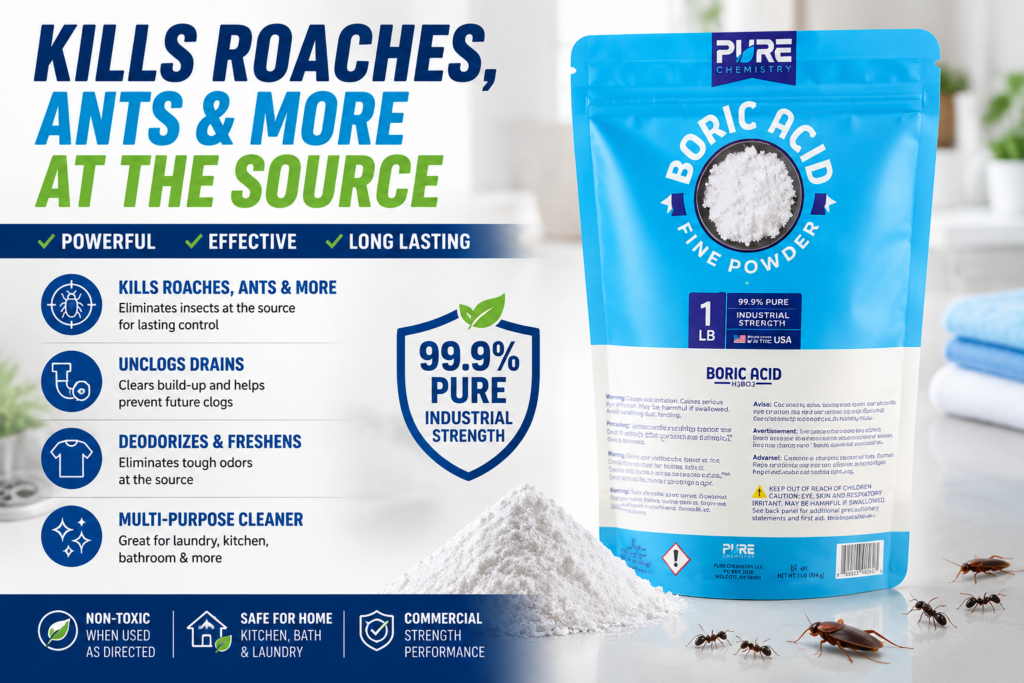
Boric acid applied as a thin dust along ant entry points, inside cabinet voids, and at confirmed travel routes kills ants through contact and ingestion when they groom themselves after walking through it. Applied correctly in dry hidden locations it lasts indefinitely without reapplication.
Key locations: the gap you caulked under the sink — dust boric acid around it before sealing so anything that squeezes through still gets treated. Along the back of cabinet shelves. Inside electrical outlet boxes in the kitchen. Along baseboards in the kitchen behind appliances where the powder won’t get disturbed.
Thin layer only — barely visible dusting. A thick pile repels ants rather than killing them on contact.
Step Six — Add a Perimeter Barrier Outside

For houses and ground-floor units, an outdoor perimeter spray creates a kill barrier that stops ants before they reach your foundation and find their way inside. For this exterior step, Ortho Home Defense perimeter spray is a relevant option to consider around outdoor entry points.
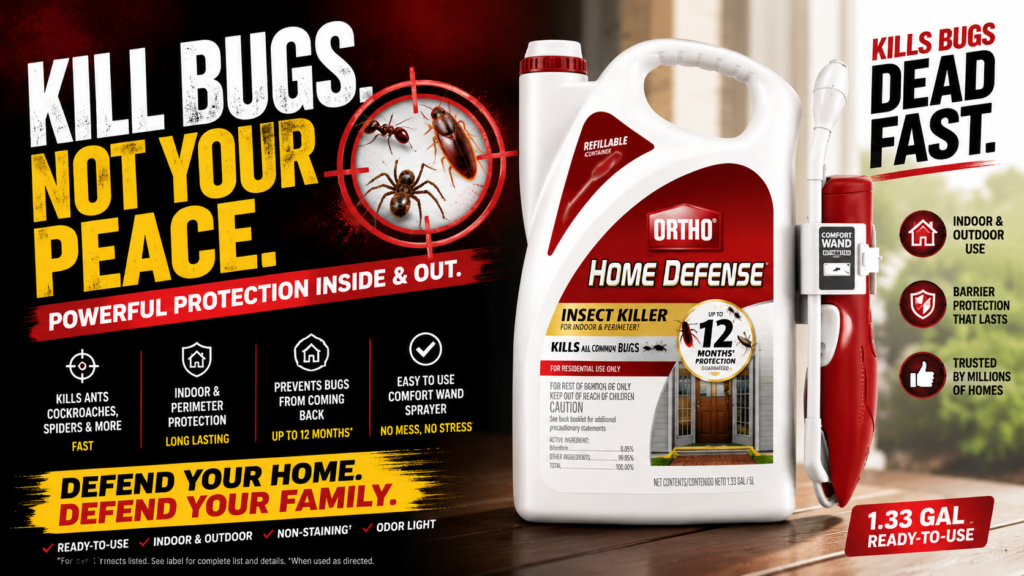
Ortho Home Defense applied along the foundation — four inches out on the ground and four inches up the foundation wall — kills ants approaching your home’s exterior. The residual lasts weeks to months depending on weather. One application applied correctly does more preventive work than months of reactive indoor spraying.
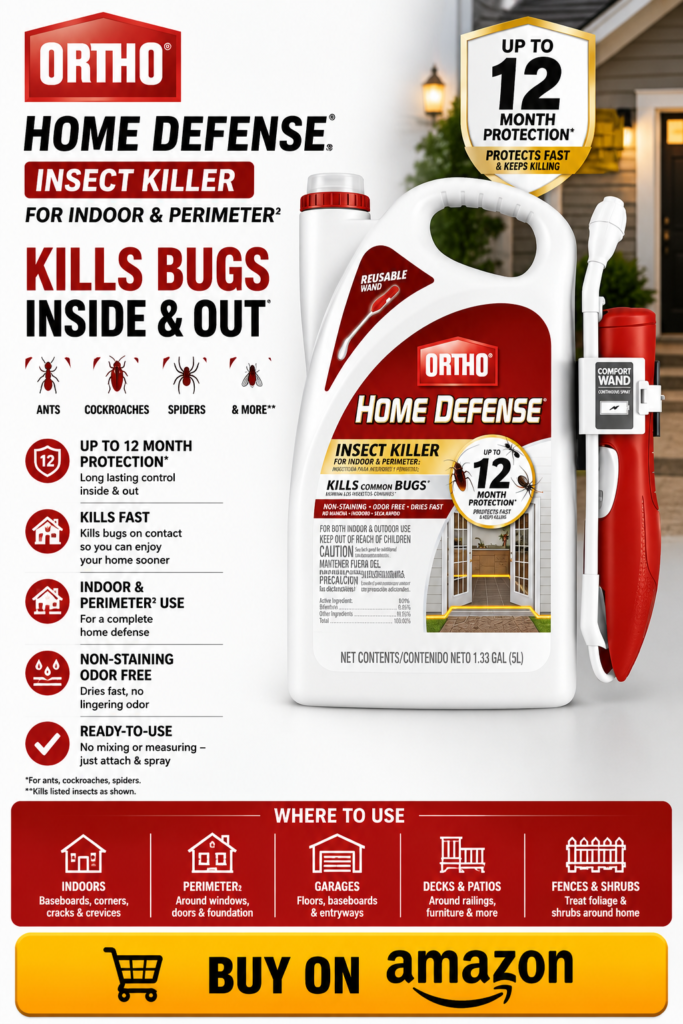
Apply around all entry points — every door frame, every window frame, around utility penetrations. Reapply every one to three months during active season. Keep it away from your interior bait stations — treat the perimeter with spray, treat the interior with bait, keep them in separate zones. For the exterior barrier portion of this plan, Ortho Home Defense bug killer may be one product to evaluate against its label directions.


What Results to Expect and When
Setting realistic expectations keeps you from abandoning a treatment that’s actually working.
- Day 1–3: Bait placed. Ant activity at stations increases. This is normal and good.
- Day 3–5: Peak activity at stations. Potentially a lot of ants. Leave everything alone.
- Day 5–10: Activity starts dropping noticeably. Fewer ants at stations and fewer overall.
- Day 10–14: Most moderate infestations largely resolved. Continue fresh bait through this point.
- Day 14+: If activity persists, refresh all stations and give it another week. Larger or more established colonies — particularly Argentine ant supercolonies — take longer.
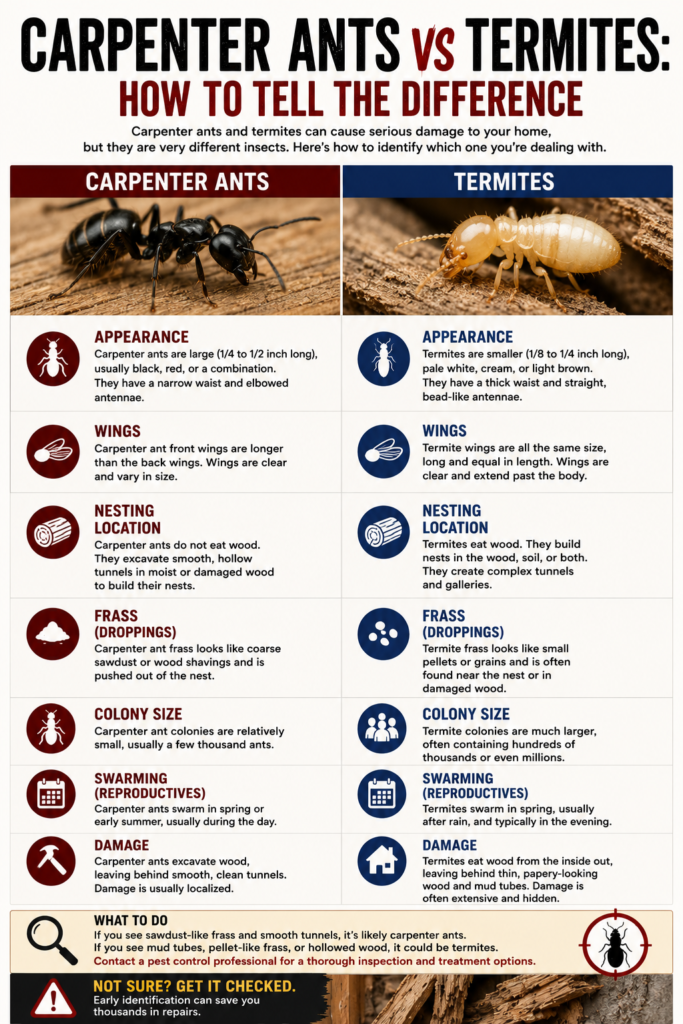
If you’re two weeks in with fresh bait consistently available and activity hasn’t dropped significantly, reassess. Either the food source hasn’t been fully eliminated, the entry point is still open with ants coming in faster than the bait is killing them, or you’re dealing with a species that doesn’t respond well to sweet bait — particularly carpenter ants or fire ants. Because carpenter ants can be mistaken for termites, carpenter ants and termites can help confirm which pest you’re dealing with before changing treatment.
Special Situations
Ants Coming Back After Rain
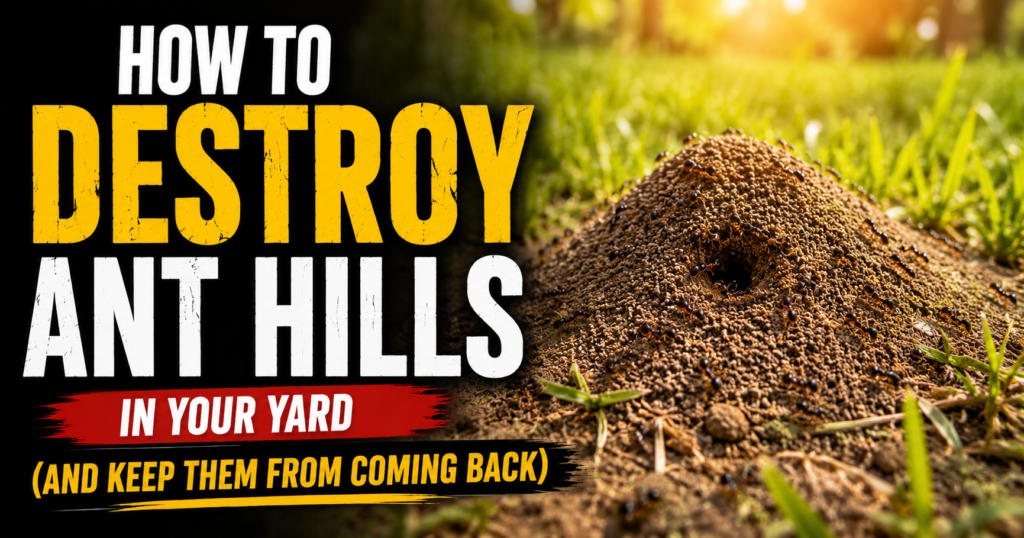
Rain floods outdoor nests and drives ants inside looking for shelter. If your ant problem spikes after every heavy rain, outdoor nesting ants are the source. Sealing entry points and maintaining an outdoor perimeter barrier addresses this — the goal is making your home inaccessible to displaced colonies seeking shelter. Bait handles whatever gets inside in the meantime. When rain drives ants from outdoor nests, treating outdoor ant colonies can help address the source before they move inside.
Ants in an Apartment
Apartment ant problems can persist because neighboring units may be the source — ants travel through shared walls and plumbing infrastructure regardless of what you do inside your own unit. Seal every pipe gap aggressively. Maintain bait stations permanently as an ongoing management tool rather than a one-time treatment. Report persistent problems to building management — a whole-building treatment is the only permanent solution when the source is next door.
Ants in Multiple Rooms
Multiple simultaneous trails in different parts of the house mean either a large established colony with multiple foraging routes, or multiple colonies — which is common with Argentine ants. Treat all active trails simultaneously with bait stations rather than one room at a time. Addressing one trail while others are active just redirects foraging without eliminating the colony.
Ants That Won’t Take the Bait
If ants ignore your bait stations for 24 to 48 hours, a few things may be happening. The competing food source hasn’t been fully eliminated. There’s spray residue near the stations repelling ants. The stations aren’t placed on active trails. Or the species you’re dealing with doesn’t respond to sweet bait — grease-feeding species like some pavement ant populations prefer protein-based bait.
Try moving stations closer to confirmed entry points, clean the area around stations with plain water rather than disinfectant, and double check that you’ve removed all competing food sources. If sweet bait consistently gets ignored, switch to a protein-based gel bait and see if the response changes.

How to Make Sure They Don’t Come Back
Eliminating the current infestation is one problem. Staying ant-free is another. These habits are what make the difference between a one-time fix and a recurring seasonal battle.
Keep maintenance bait active year-round. One or two fresh TERRO stations under the kitchen sink and at confirmed entry points costs almost nothing and catches new scout ants before they recruit a colony. Replace every few months. This single habit prevents more ant problems than anything else.
Store all food in sealed containers. Cereal, sugar, flour, rice, pasta, pet food — anything in a bag or box that isn’t resealable goes into a hard container with a lid. Remove the food source and you remove the primary reason ants want to be in your kitchen.
Fix moisture immediately. Every drip under every sink — fix it same day. Standing water and persistent moisture are as attractive as food. A dry kitchen is a less hospitable kitchen.
Maintain your perimeter barrier through active season. Reapply outdoor spray every one to three months from spring through fall. Preventive treatment applied consistently is far less work than treating a full infestation.
Deep clean behind appliances regularly. The grease and debris that accumulates behind the refrigerator and stove is a persistent food source that survives normal surface cleaning. Pull appliances out twice a year and clean thoroughly.
Ants are one of the most fixable pest problems in the home — they respond quickly to the right treatment and stay gone when you remove the conditions that brought them in. Find the food source, place the bait, seal the gaps, give it two weeks. That’s the whole plan. It works.