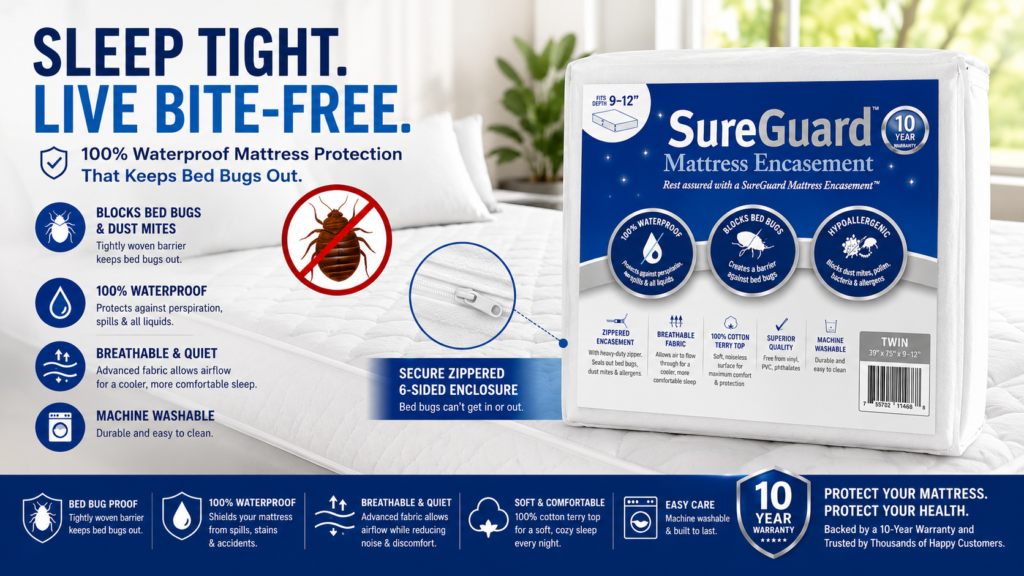
If you’ve got bed bugs — or you’re terrified of getting them — a mattress encasement is one of the first things every pest control professional will tell you to buy. It’s not glamorous. It’s not exciting. But it’s one of the most practical and cost-effective moves you can make to either trap existing bed bugs or prevent a future infestation from taking hold in the most expensive piece of furniture in your bedroom.
SureGuard is consistently one of the top-recommended encasements on the market, and this review covers exactly why — what it does, how it works, who needs it, and whether it lives up to the claims on the label.
Does It Work?
Yes — SureGuard Mattress Encasement does exactly what it’s designed to do. It creates a six-sided sealed barrier around your mattress that bed bugs cannot penetrate, escape from, or feed through. If you have bed bugs already, it traps them inside and starves them out. If you don’t have them yet, it prevents them from ever establishing a home in your mattress. The waterproofing and hypoallergenic benefits are real bonuses on top of the pest protection. For anyone dealing with bed bugs or living in a situation where they’re a realistic risk, this is a non-negotiable purchase.
What Is a Mattress Encasement and Why Does It Matter?
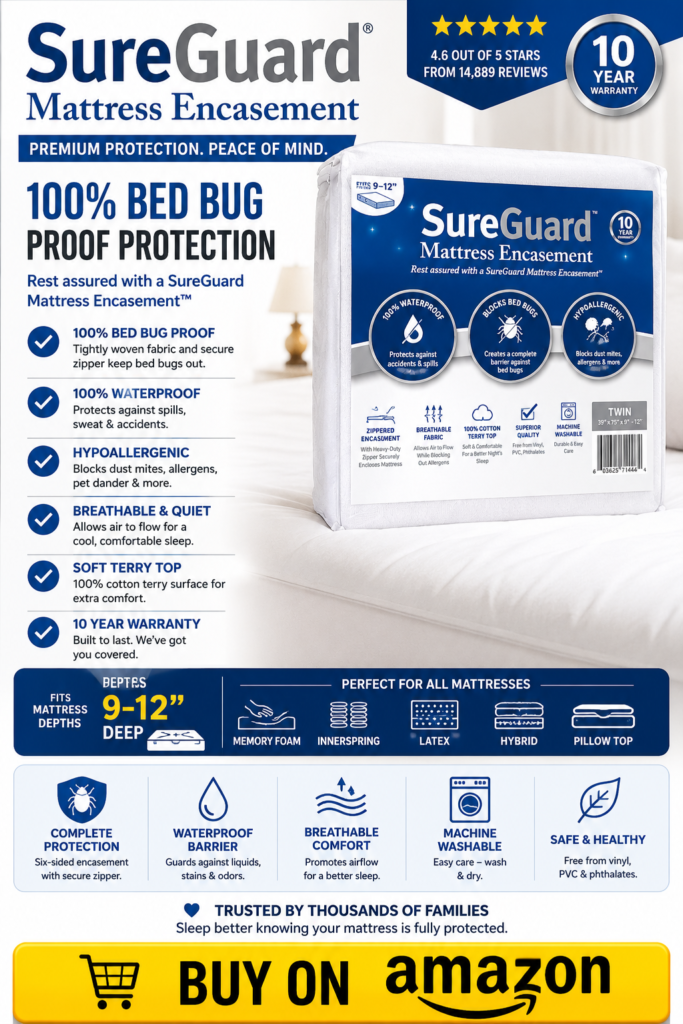
A mattress encasement is different from a mattress protector. A protector typically covers the top and sides — it protects against spills but leaves the bottom exposed. An encasement covers all six sides completely and zips shut, creating a sealed unit around the entire mattress.
For bed bug control, that distinction is everything. Your mattress is the single most common hiding spot for bed bugs. The seams, the tufting, the box spring — these are prime harborage zones where bed bugs nest, breed, and wait to feed at night. A standard mattress protector does nothing to address that. An encasement seals the whole environment.
SureGuard’s encasement is constructed from a premium terry fabric with a microfiber surface — it feels like a fitted sheet, not a plastic bag. The zipper seals completely with a Velcro zipper lock that prevents the zipper pull from working its way open over time, which is a real failure point on cheaper encasements that renders them useless.
→ Check the current price on SureGuard Mattress Encasement on Amazon — available in all standard mattress sizes including split king.


How It Handles Bed Bugs
There are two scenarios where a mattress encasement is the right move, and SureGuard handles both.
Scenario 1: You Already Have Bed Bugs
If bed bugs have established themselves in your mattress, you have two options — replace the mattress or encase it. Replacing is expensive and doesn’t solve the problem if bugs are also in your box spring, bed frame, or walls. Encasing is cheaper and actually more effective as part of a comprehensive treatment.
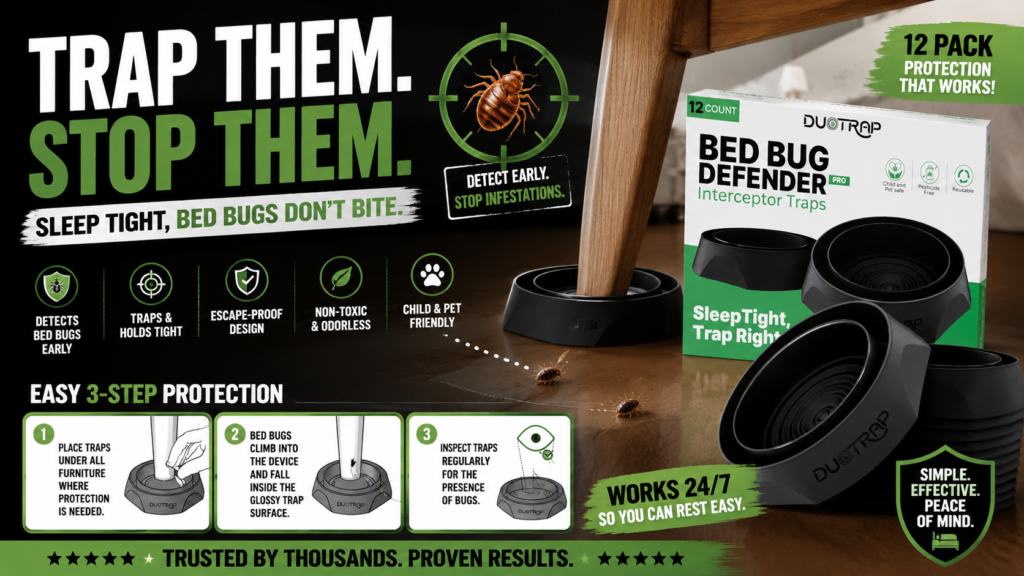
When you encase an infested mattress, you seal the bugs inside where they can’t feed. Bed bugs can survive months without feeding but they cannot survive indefinitely. An encasement left in place for 12–18 months starves out any bugs trapped inside. Combined with treatment of the surrounding area — bed frame, baseboards, carpet edges — encasing the mattress eliminates the biggest harborage site without having to throw the mattress out. Add Do Bed Bug Interceptor Cups Work? What Nobody Tells You to block bed bugs traveling between the floor and the protected bed.
This is standard practice in professional bed bug treatment. Exterminators recommend encasements because they work and because they protect an expensive asset while treatment is underway.
Scenario 2: Prevention
You don’t have to have bed bugs to benefit from an encasement. If you travel frequently, live in an apartment building, buy secondhand furniture, or have had bed bugs in the past — an encasement is cheap insurance against an expensive problem. For help weighing prevention against treatment, review the bed bug questions and treatment guidance.
Bed bugs that hitchhike home on luggage or clothing need to find a harborage site quickly. Your mattress is their first choice. With an encasement in place, they can’t get in — which means they’re exposed in the open where they’re easier to detect and treat before a full infestation establishes. See our full bed bug guide for the complete picture on prevention and treatment.
The Waterproofing — More Useful Than It Sounds
SureGuard is 100% waterproof, which matters beyond just spills. Mattresses absorb sweat, dead skin cells, and moisture over time — all of which feed dust mites and create conditions that attract other pests. A waterproof barrier keeps all of that on the surface of the encasement where it can be washed away rather than absorbed into the mattress itself.
It also protects your mattress warranty. Most mattress warranties are voided by stains — any stain. An encasement keeps the mattress itself pristine, which matters when a mattress costs $800 or more.
The waterproofing on SureGuard uses a breathable membrane rather than a solid plastic layer. That means moisture vapor passes through — so you don’t sleep hot — but liquid doesn’t penetrate. This is the meaningful difference between a quality encasement and a cheap plastic cover that makes your bed feel like sleeping on a tarp.


The Hypoallergenic Benefit
Dust mites are microscopic bugs that live in mattresses, pillows, and upholstered furniture and feed on shed skin cells. They’re the leading cause of indoor allergen issues — far more common than most people realize. If you or anyone in your household has unexplained allergies, asthma symptoms that are worse at night, or chronic nasal congestion in the morning, dust mites in the mattress are a prime suspect.
SureGuard’s encasement blocks dust mite access to the mattress interior and prevents their byproducts from passing through to the sleeping surface. For allergy and asthma sufferers this is as significant a benefit as the bed bug protection. The two problems are addressed by the same product, which makes the purchase easy to justify even if bed bugs aren’t your primary concern.
Build Quality — What Separates SureGuard From Cheaper Options
Mattress encasements range from a few dollars to over a hundred. The difference in quality at the low end is significant and it matters for actual pest protection.
The zipper is the critical point. A bed bug encasement with a zipper that gaps, separates, or leaves a space at the zipper pull is not a bed bug encasement — it’s a slightly snug mattress cover. SureGuard uses a zipper with teeth fine enough that bed bugs — which can squeeze through gaps the width of a credit card — cannot pass through, plus a Velcro closure over the zipper pull that prevents the pull from migrating and creating a gap over time.
The fabric is a terry-fiber top with a soft microfiber feel. It doesn’t crinkle, doesn’t make noise when you move, and breathes well enough that it doesn’t trap heat the way solid vinyl covers do. You can feel the quality difference the moment you put it on the bed.
The six-sided design with fully sealed corners is also a quality indicator. Cheaper encasements cut corners — literally — with loose fabric at the corners that creates gaps. SureGuard’s corners are fully enclosed and the fit is snug enough to stay in place without bunching.
How to Put It On and What to Do First
Installing a mattress encasement correctly matters, especially if you’re using it as part of an active bed bug treatment.
If You’re Treating an Active Infestation
- Wash all bedding in hot water and dry on high heat for at least 30 minutes before encasing. This kills any bugs or eggs on the bedding itself.
- Inspect the mattress thoroughly before encasing. If you’re using a spray treatment on the mattress surface, do that first and allow it to dry completely.
- Encase the mattress immediately after treatment — don’t leave it sitting exposed overnight.
- Encase the box spring as well. A box spring without an encasement is an untreated harborage site that will reinfest your treated mattress. SureGuard makes box spring encasements separately.
- Once the encasement is zipped and the Velcro closure is secured, do not open it for at least 12 months.
For Prevention
Put it on a clean mattress and leave it. Wash the encasement itself every few months along with your regular bedding — it’s machine washable. Check the zipper closure periodically to make sure it’s fully secured.
Tip: Put mattress encasements on every bed in the house at the same time — not just the one where you’ve seen activity. Bed bugs move between rooms and a treated room can get reinfested from an untreated one. Protecting all mattresses simultaneously closes that loop.
SureGuard vs. Cheaper Encasements
There are encasements on Amazon for $15–$20 that look similar on the product page. Here’s what you’re actually getting at that price point versus SureGuard:
- Zipper quality: Budget encasements use wider-tooth zippers with gaps large enough for bed bugs to pass through. This defeats the entire purpose of the product for pest control.
- No zipper lock: Without a Velcro closure over the pull, the zipper migrates open during normal use and sleep movement. You end up with a gap at the pull point — again, defeating the purpose.
- Fabric feel: Cheap encasements are often vinyl or thin plastic that crinkles with every movement and traps heat. You’ll notice it every night and eventually remove it — which means you’ve spent money on something that’s not protecting you.
- Corner construction: Budget options leave gaps at corners. Bed bugs find gaps.
For something you’re going to sleep on every night and rely on for pest protection, the SureGuard price premium over budget alternatives is worth it. A failed cheap encasement costs you both the purchase price and the pest protection you thought you had.

What Else You Need for Complete Bed Bug Protection
An encasement handles the mattress. A complete bed bug defense covers a few more bases.
Bed bug interceptor cups placed under each bed leg trap bugs moving up from the floor to the bed and bugs moving down from the bed to the floor. Combined with an encasement, they cut off the mattress entirely as a harborage and feeding zone.
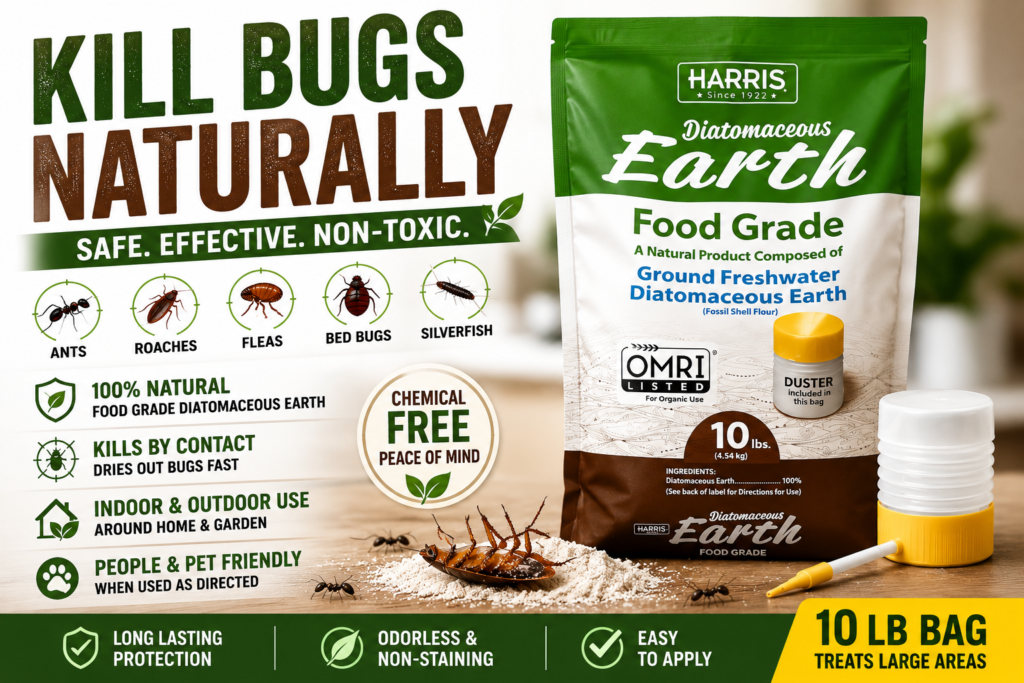
Diatomaceous earth applied along baseboards, in cracks in the bed frame, and around the perimeter of the bedroom creates a physical barrier that kills bugs crossing it. It’s one of the most effective non-chemical options for bed bugs specifically because bed bugs have developed resistance to many pesticides. See our full diatomaceous earth review for how to use it correctly.
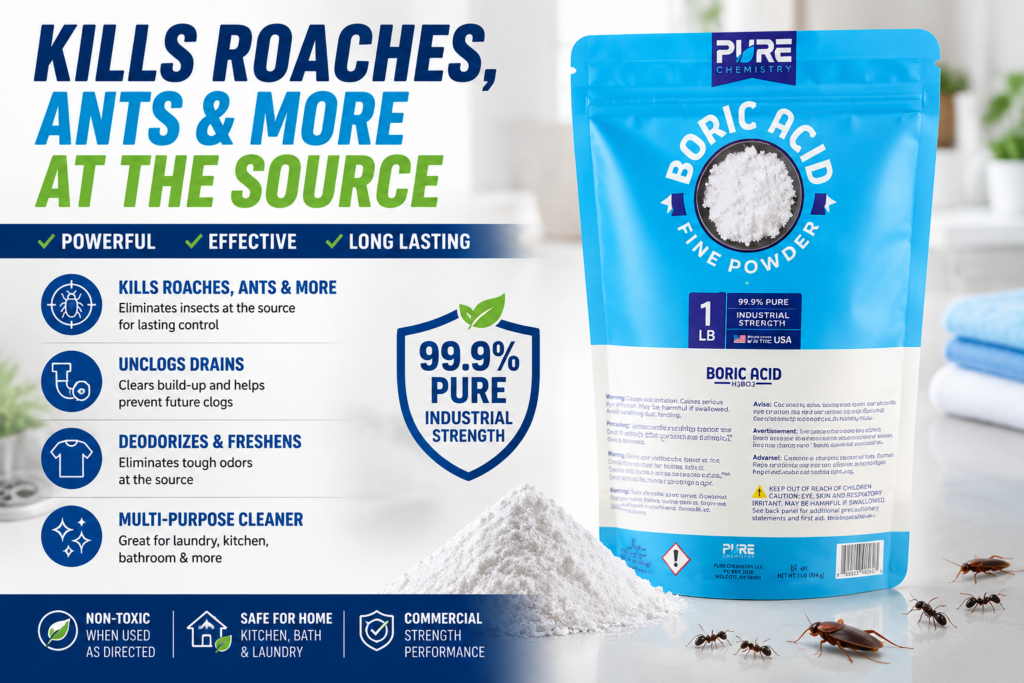
Boric acid in the wall voids, outlet boxes, and hidden zones around the bedroom adds a long-term residual layer. See our boric acid review for application guidance.
For a serious infestation, professional heat treatment may be necessary — heat is the most reliable full-room kill method and reaches areas no powder or spray can get to. But an encasement is part of the treatment plan regardless of what else you’re doing. When professional heat treatment is not immediately available, a dedicated bed bug spray can add a targeted chemical treatment layer alongside the encasement.
How to Keep Bed Bugs From Coming Back
Once you’ve dealt with an infestation or protected against one, keeping it that way requires a few permanent habits.
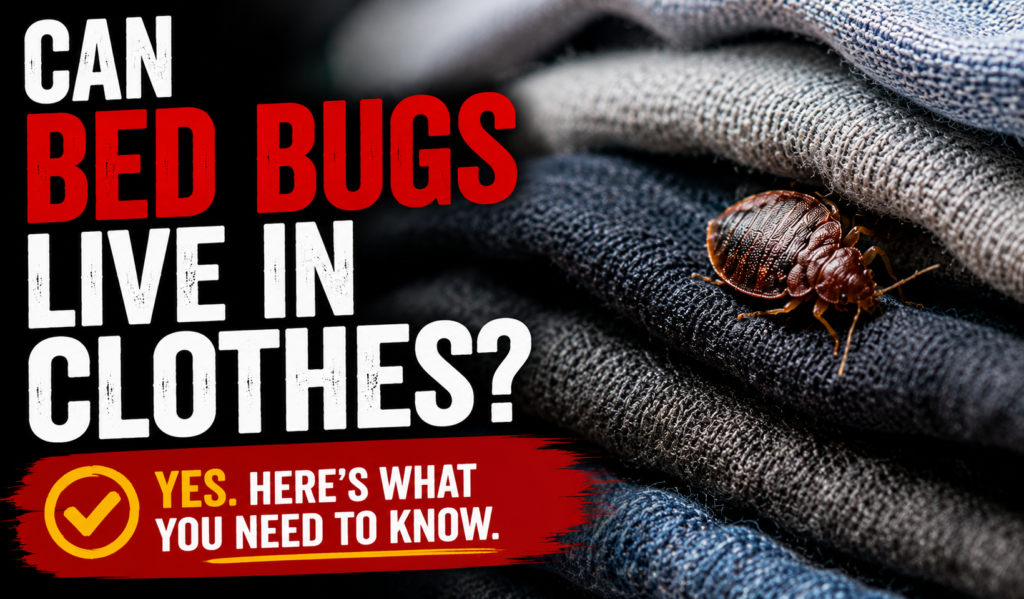
Never put luggage on the bed. This is the single most common way bed bugs enter a home. Put luggage on a hard floor or in the bathtub when you return from travel. Inspect it before bringing it into the bedroom. Travel precautions should also include understanding how bed bugs in clothing and luggage can spread an infestation.
Inspect secondhand furniture before it enters your home. Upholstered furniture, bed frames, and mattresses from thrift stores, garage sales, or online marketplaces are common sources. Inspect every seam and joint carefully before the piece comes inside.
When staying in hotels, inspect the room before unpacking. Pull back the bedding and check the mattress seams. Check behind the headboard. Keep luggage on the luggage rack, not the floor or bed.
Keep the encasement on indefinitely. It’s not a temporary treatment — it’s a permanent layer of protection. Leave it on the mattress and replace it if it ever gets damaged or the zipper fails.
Act immediately at the first sign of activity. Bed bugs caught early are manageable. Bed bugs discovered after months of undetected activity are a major undertaking. If you see a bug, a blood spot on the sheets, or unexplained bites — check immediately and treat fast. Our bed bug guide walks through identification and treatment step by step.
A mattress encasement isn’t the most exciting purchase you’ll make this year. But it’s one of the smartest ones if you take bed bugs seriously — and anyone who’s dealt with a full infestation will tell you that you should. Grab the SureGuard Mattress Encasement on Amazon in your size, put it on tonight, and stop worrying about what might be living in your mattress.