One of the questions I started asking after finding carpet beetles was one that most homeowners never think about until they’re already dealing with an infestation.
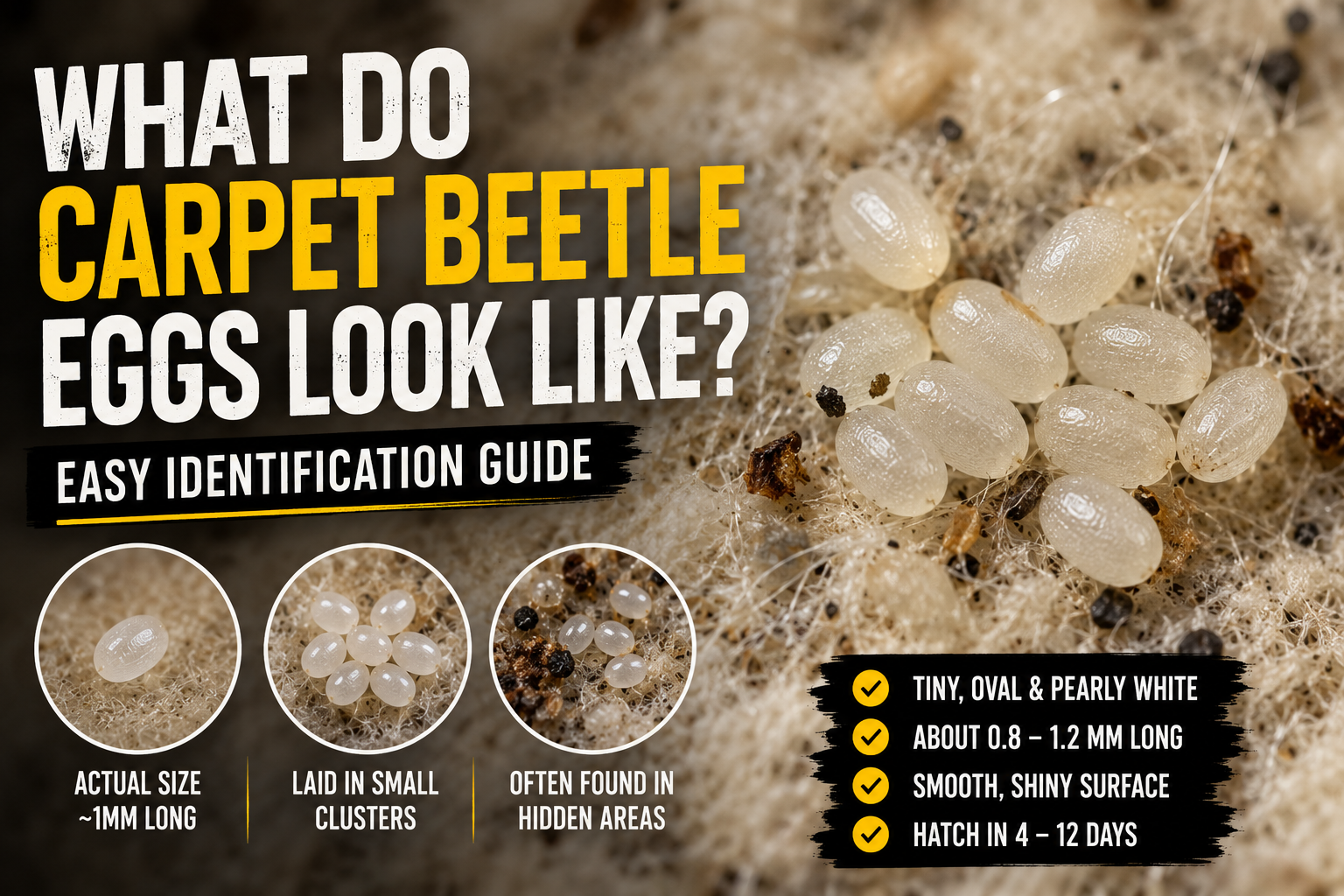
What do the eggs actually look like?
It’s a fair question.
If you can find the eggs before they hatch, you have a much better chance of stopping the next generation of carpet beetle larvae before they begin damaging your belongings. Understanding when eggs hatch and how larvae develop can make that prevention strategy clearer in How Long Do Carpet Beetles Live? Understanding Their Life Cycle.
The problem is…
Carpet beetle eggs are incredibly difficult to see.
They’re tiny, well hidden, and usually placed exactly where homeowners are least likely to look. A guide to Where Do Carpet Beetles Lay Eggs? Common Places to Check in Your Home can help narrow down the places worth checking first.
That’s one reason carpet beetle infestations often go unnoticed until someone discovers a larva, a shed skin, or damaged clothing.
If you’re just beginning to learn about these pests, I recommend reading my Everything You Need to Know About Carpet Beetles guide. It brings together all of my identification, prevention, and treatment articles in one place.
My First Thought
When I first started researching carpet beetles after finding evidence in our attic, I assumed the eggs would be fairly easy to spot.
I couldn’t have been more wrong.
They’re so small that most homeowners never actually see them.
Instead, they discover the larvae weeks later and never realize the eggs were there in the first place.


Carpet Beetle Eggs Are Extremely Small
One reason carpet beetle eggs are rarely found is their size.
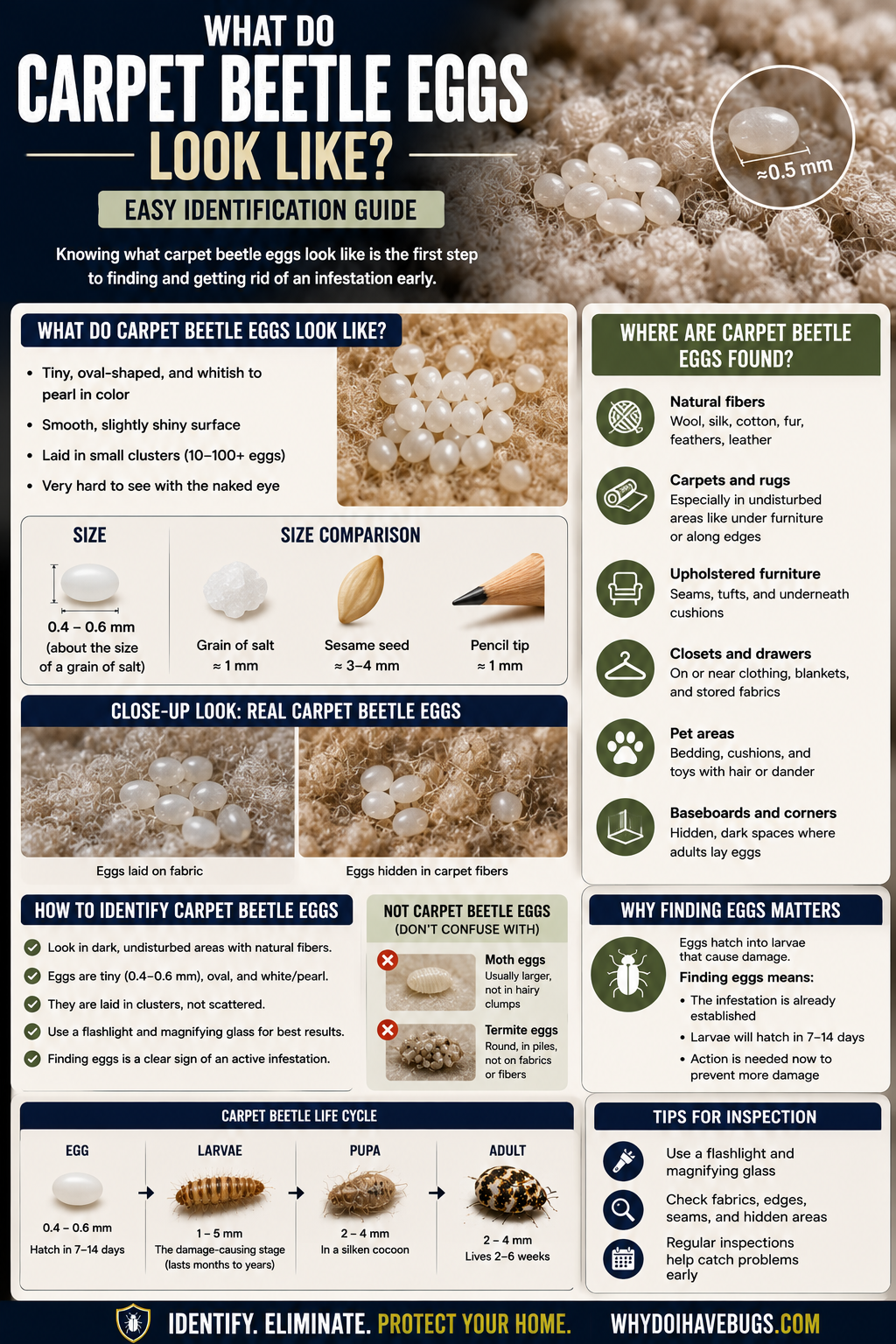
Most are only about 0.5 to 1 millimeter long, making them difficult to notice without very close inspection.
They’re often:
- White to cream colored.
- Oval-shaped.
- Slightly elongated.
- Smooth.
- Tiny enough to blend into fabric, lint, or dust.
If someone told me they found carpet beetle eggs with a quick glance across the room, I’d honestly be skeptical.
They’re simply too small.


What Carpet Beetle Eggs Look Like
If you manage to see them, carpet beetle eggs usually appear as tiny off-white specks.
Many homeowners mistake them for:
- Dust.
- Lint.
- Tiny grains of sand.
- Fabric fibers.
- Small pieces of debris.
That’s exactly why they’re so easy to overlook.
Without magnification, they rarely stand out.
Adult Carpet Beetles Lay Eggs Near Food
Female carpet beetles don’t randomly scatter eggs throughout your house.
Instead, they lay them where the larvae will have immediate access to food after hatching.
That usually means areas containing natural animal-based materials.
Common locations include:
- Wool clothing.
- Blankets.
- Closets.
- Pet bedding.
- Feathers.
- Rugs.
- Upholstered furniture.
- Storage boxes.
- Animal hides.
- Stored shoes.
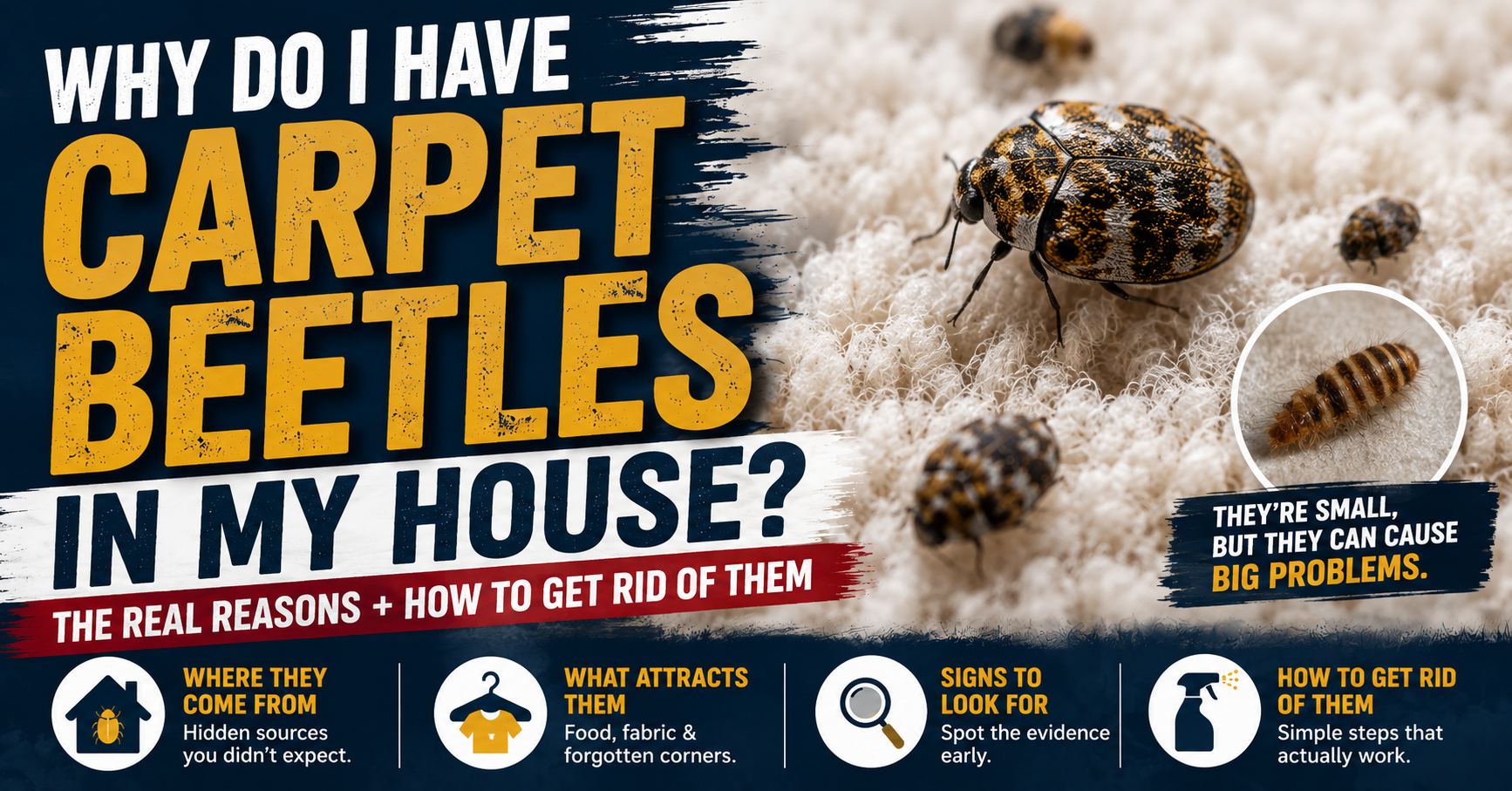
Understanding why carpet beetles are in your house makes those locations much easier to predict. I explain the most common reasons in my guide on why carpet beetles are in your house.



Where I Would Look First
If I suspected carpet beetle eggs were present, I wouldn’t start by searching open floors.
I’d inspect quiet places that rarely get disturbed.
Closets.
Storage bins.
Folded blankets.
Boxes in the attic.
Pet bedding.
Areas beneath heavy furniture.
Those locations provide both shelter and food for developing larvae.
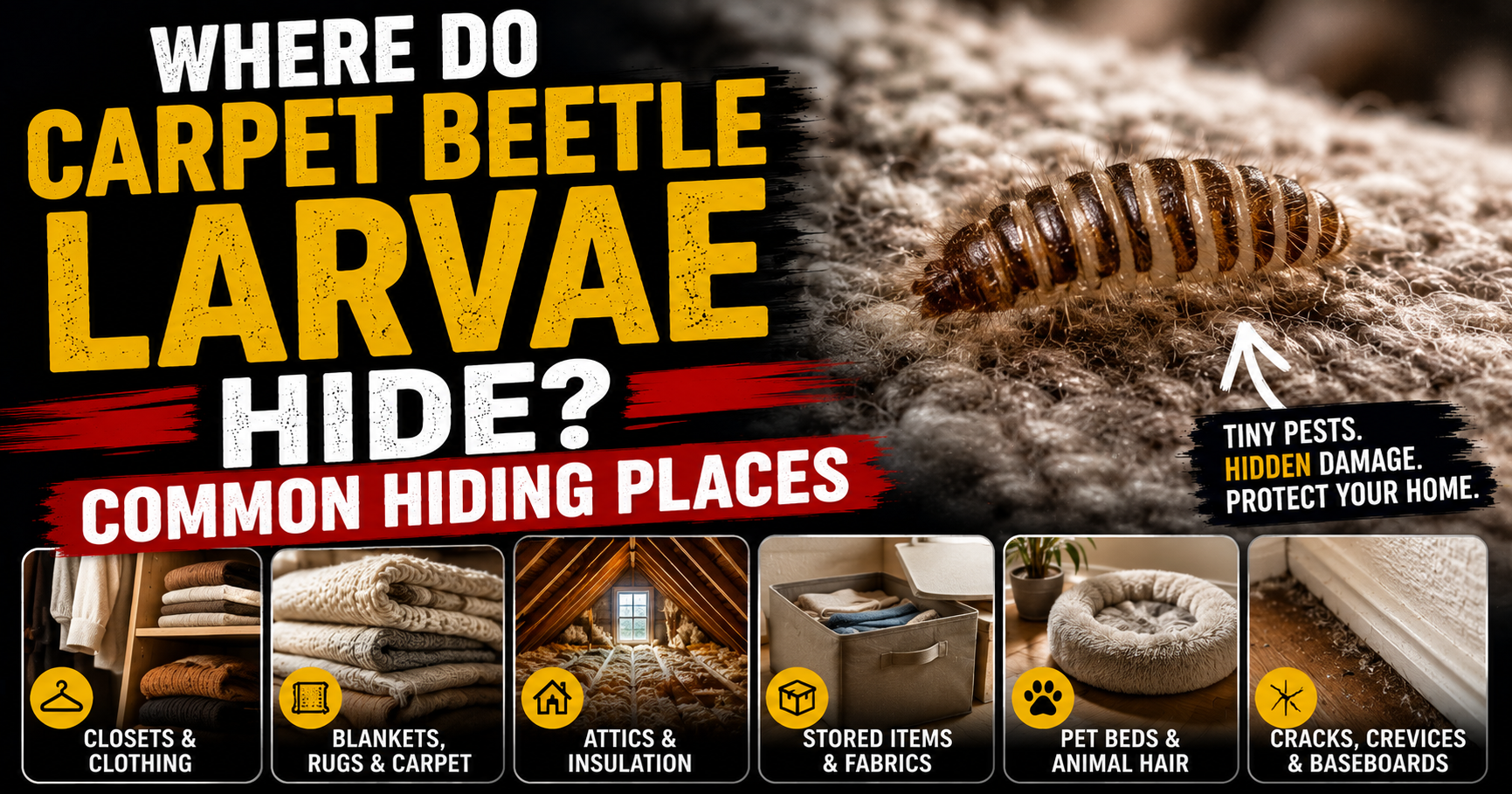
I also put together a guide explaining where carpet beetle larvae hide because the eggs are often laid in the same general areas where the larvae eventually develop.
You’re More Likely to Find Larvae Than Eggs
One thing I’ve learned is that most homeowners never see the eggs.
Instead, they notice the larvae after they’ve already hatched.
The larvae are much larger, fuzzy, and far easier to identify.
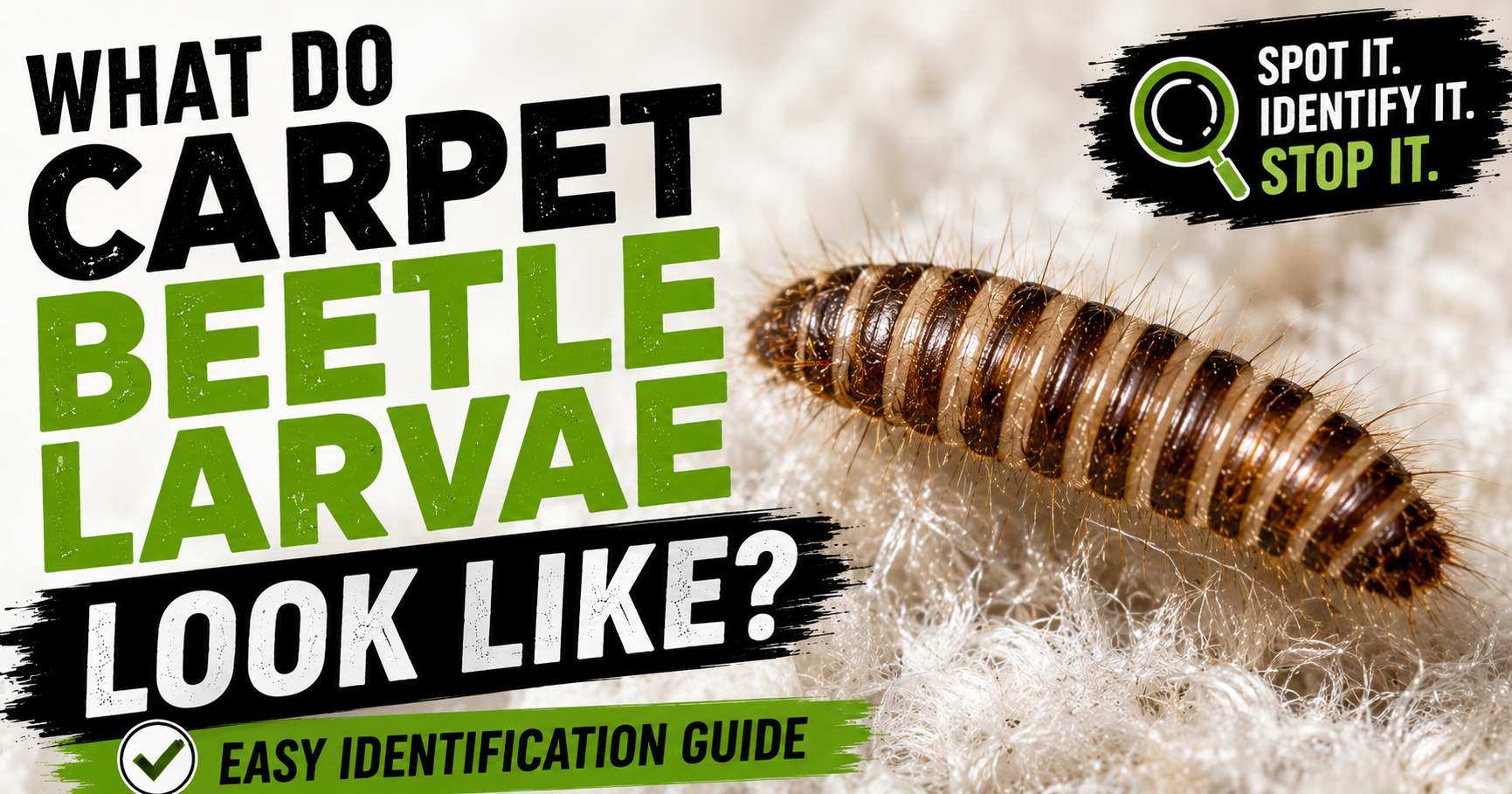
If you’ve found a strange little insect and aren’t sure what it is, my guide showing what carpet beetle larvae look likewalks through the features I use to identify them.


Don’t Forget About Shed Skins
Interestingly, many people don’t even find the larvae.
They find the shed skins instead.
That’s exactly what happened to me.
The first evidence I discovered wasn’t a live insect at all.
It was a carpet beetle shed skin inside a shoe that had been stored in our attic.
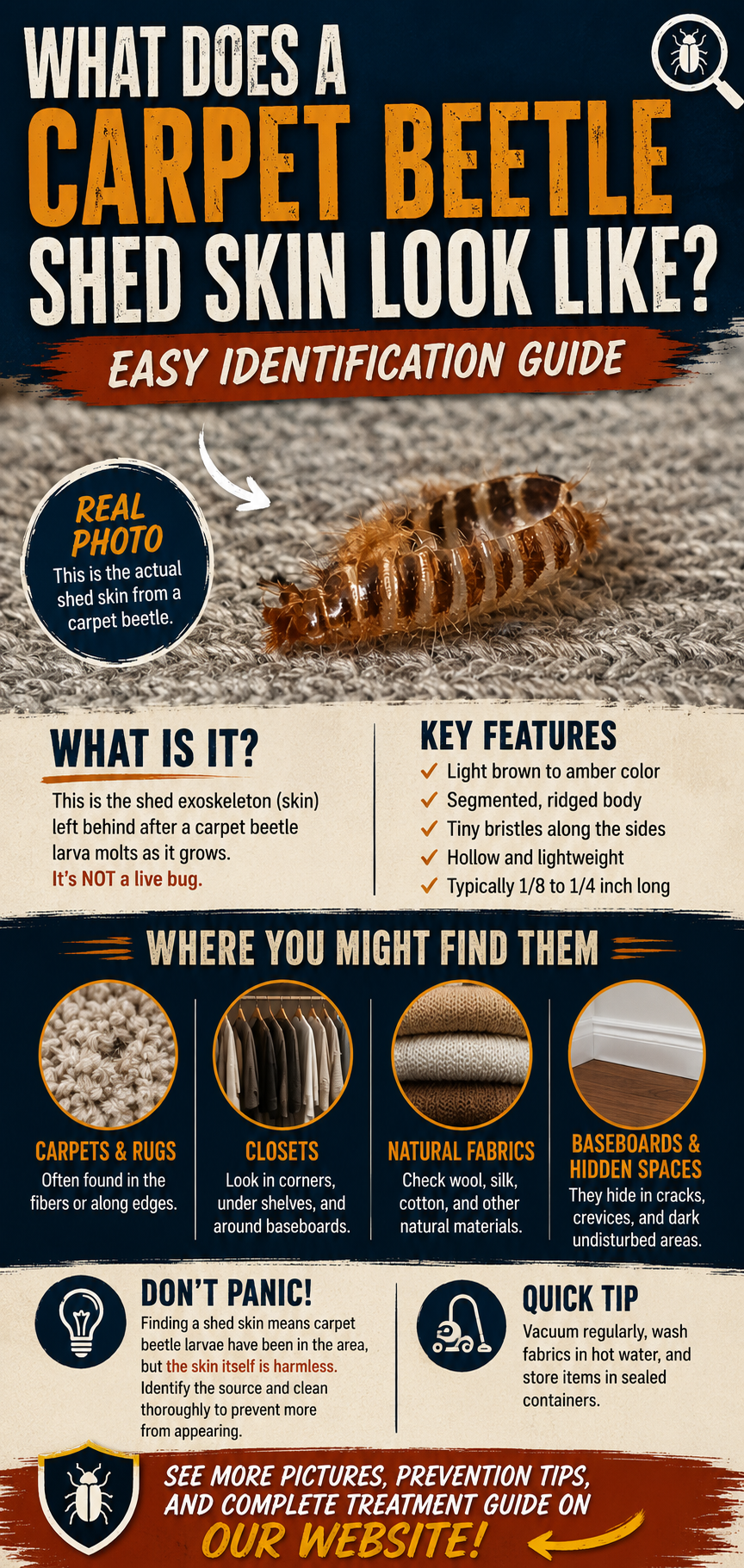
If you’ve found something similar, my guide explaining what a carpet beetle shed skin looks like can help you determine whether that’s actually what you have.
Why Vacuuming Is So Important
Since the eggs are so small and well hidden, I don’t spend much time trying to locate every single one.
Instead, I focus on removing as many as possible.
That’s one reason I believe vacuuming is one of the best things you can do during a carpet beetle infestation.
A thorough vacuum removes dust, lint, pet hair, shed skins, larvae, and many eggs that are sitting on accessible surfaces before they have a chance to hatch.
During our own carpet beetle problem, daily vacuuming became one of the biggest parts of our cleanup routine.
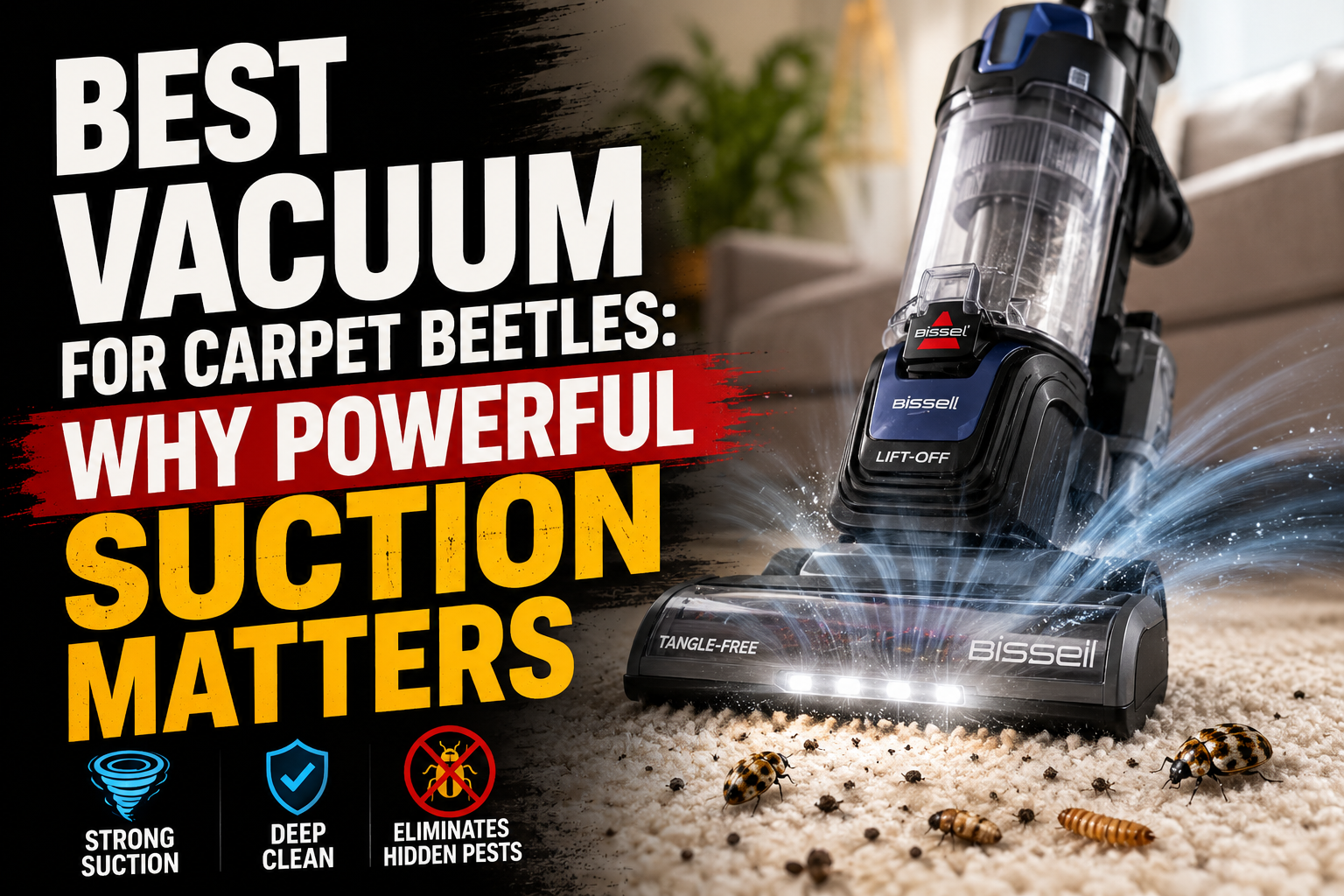
If you’d like to learn why I believe suction matters so much, I explain everything in my guide to the best vacuum for carpet beetles.
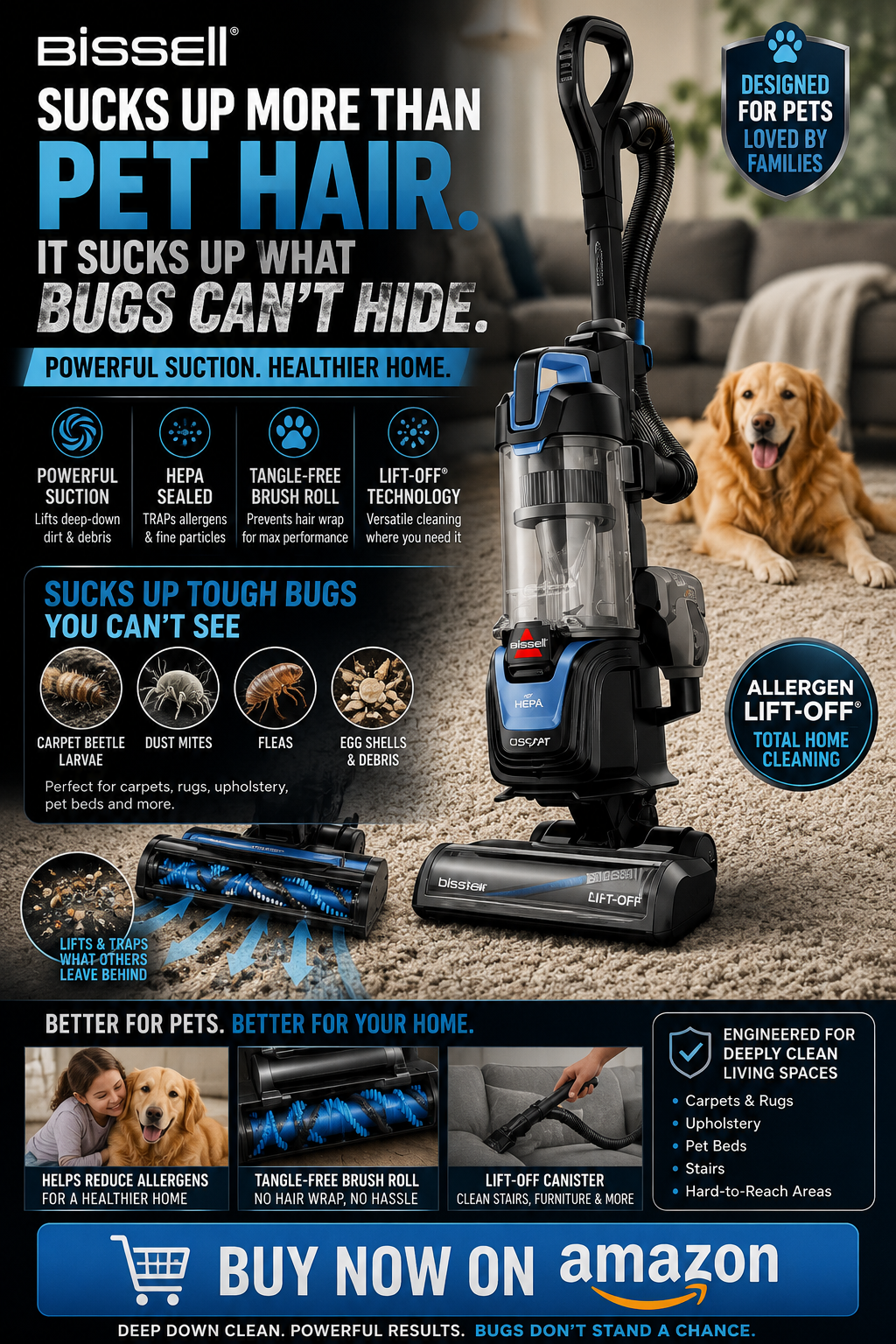
One vacuum I’d seriously consider for this kind of cleanup is the Bissell Pet Hair Eraser Allergen Lift-Off because its powerful suction, HEPA filtration, and Lift-Off design make it easier to clean closets, furniture, stairs, and other places where carpet beetle eggs and larvae are commonly found.


What I Would Do If I Suspected Eggs
If I believed carpet beetle eggs were present, I wouldn’t waste hours trying to find every individual egg.
Instead, I’d focus on the entire area.
I’d vacuum thoroughly.
I’d inspect nearby fabrics.
I’d wash clothing and blankets when possible.
I’d remove pet hair and lint.
I’d eliminate the food sources the larvae will need after hatching.
That approach usually gives you a much better chance of stopping the infestation before it grows.
Treating Carpet Beetle Eggs
Cleaning is the foundation of any treatment plan, but sometimes additional treatment is appropriate after you’ve identified an active infestation.
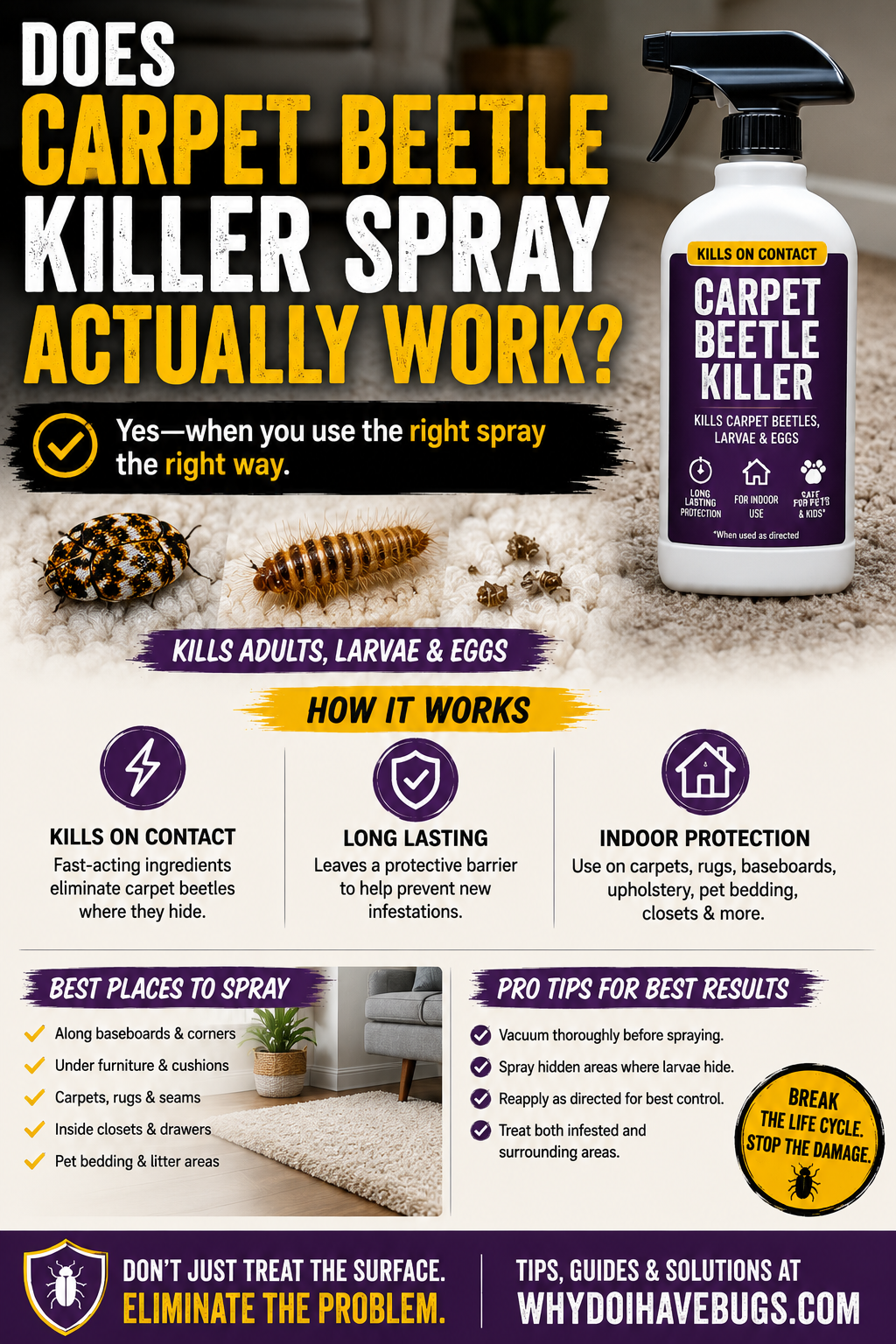
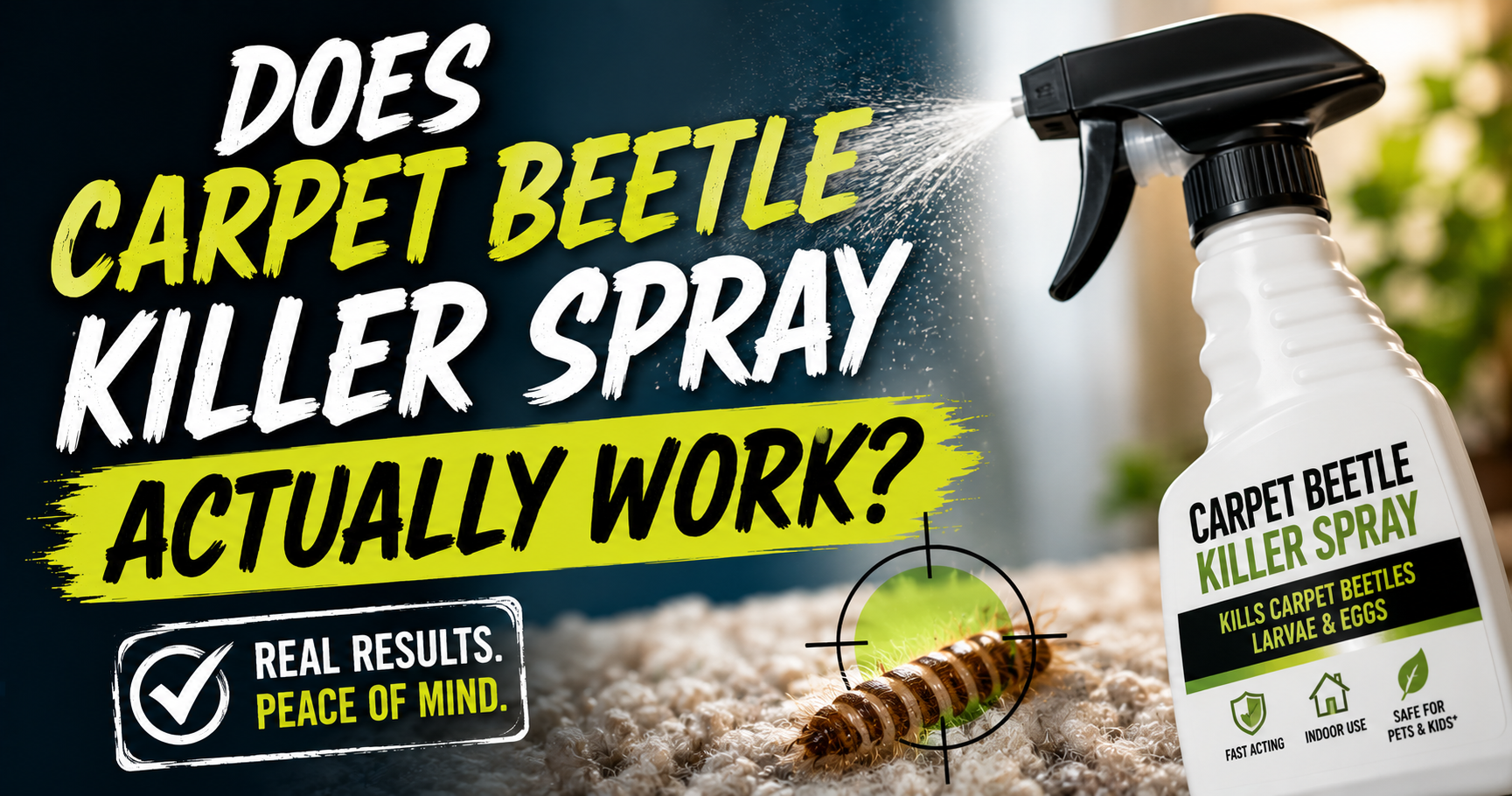
If you’re considering using an insecticide, I recommend reading my guide on Does Carpet Beetle Killer Spray Actually Work? before buying one. I explain where I think sprays fit into an overall treatment strategy and why they should always be combined with thorough cleaning.

If you decide a spray is appropriate, the Carpet Beetle Killer Spray for Indoor Use is designed to target carpet beetles and their larvae when used according to the product label.
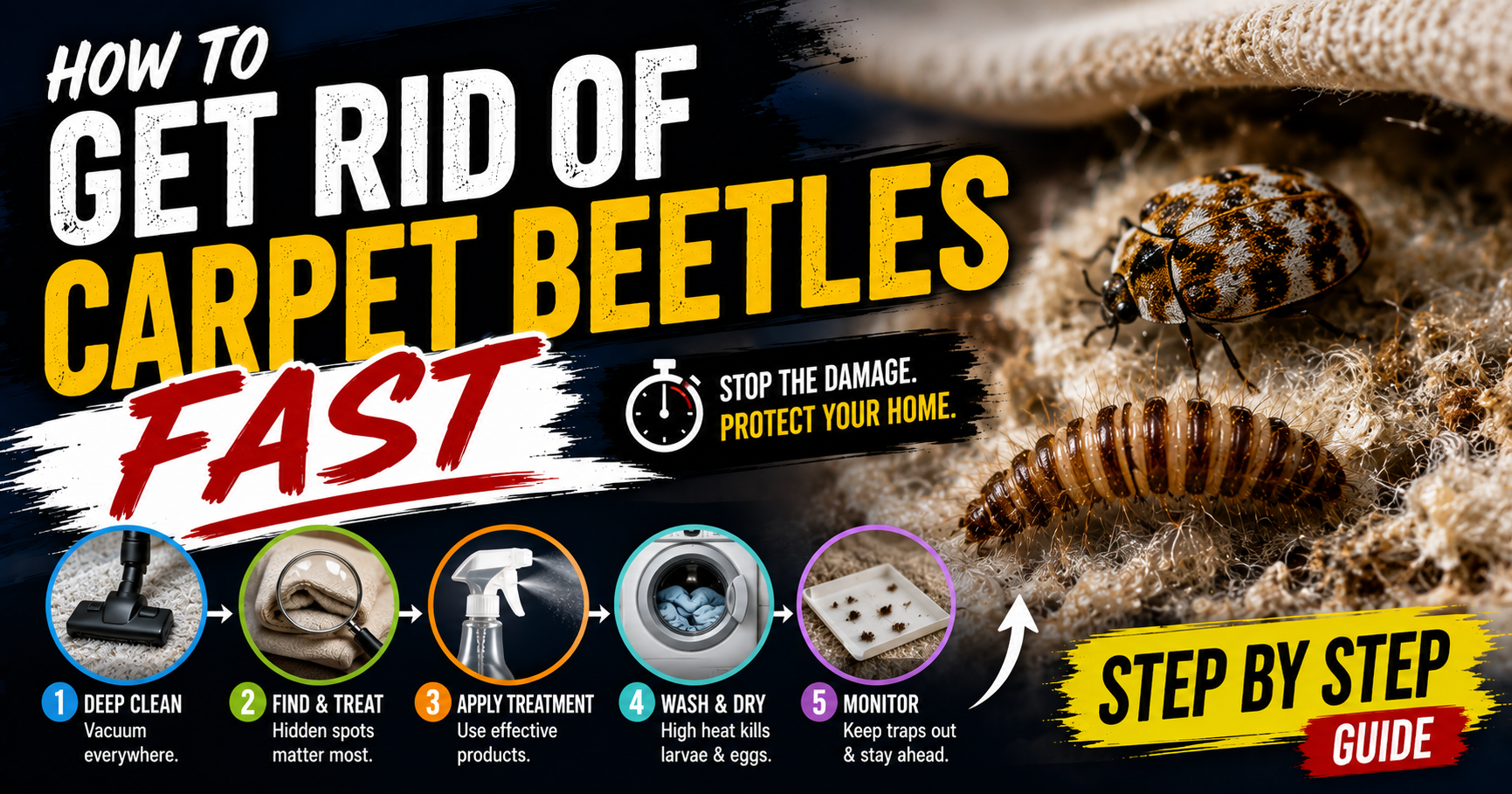
I also recommend following the complete process outlined in my How to Get Rid of Carpet Beetles Fast Step-by-Step Guide so you’re addressing the source of the infestation rather than just treating visible insects.

The Biggest Mistake I See
The biggest mistake I see is homeowners spending hours searching for carpet beetle eggs while ignoring the things they can actually control.
You may never see the eggs.
But you can remove the larvae.
You can vacuum away food sources.
You can inspect closets and storage boxes.
You can clean blankets and clothing.
Those actions usually have a much bigger impact than trying to locate something that’s barely visible without magnification.
For more identification guides, treatment advice, and prevention tips, be sure to visit our growing Beetles resource center.
Frequently Asked Questions
Can you see carpet beetle eggs with the naked eye?
Yes, but they’re extremely small. Most people overlook them because they resemble tiny specks of dust or lint.
What color are carpet beetle eggs?
They’re usually white to cream colored and have a smooth, oval appearance.
Where do carpet beetles lay their eggs?
Female carpet beetles lay eggs near food sources such as wool clothing, blankets, rugs, pet bedding, closets, and other natural-fiber materials.
Does vacuuming remove carpet beetle eggs?
It can remove many eggs that are on accessible surfaces, along with larvae, shed skins, and other debris. That’s one reason daily vacuuming is such an important part of controlling carpet beetles.
Should I spray if I find carpet beetle eggs?
Cleaning and vacuuming should always come first. Once you’ve confirmed an infestation, targeted treatment may also be appropriate depending on the situation and the product directions.
About the Author
Ryan Mitchell researches common household pests and writes practical identification and prevention guides based on firsthand experience, careful research, and real-world inspection methods. His goal is to help homeowners identify pest problems early and eliminate them before they become costly infestations.