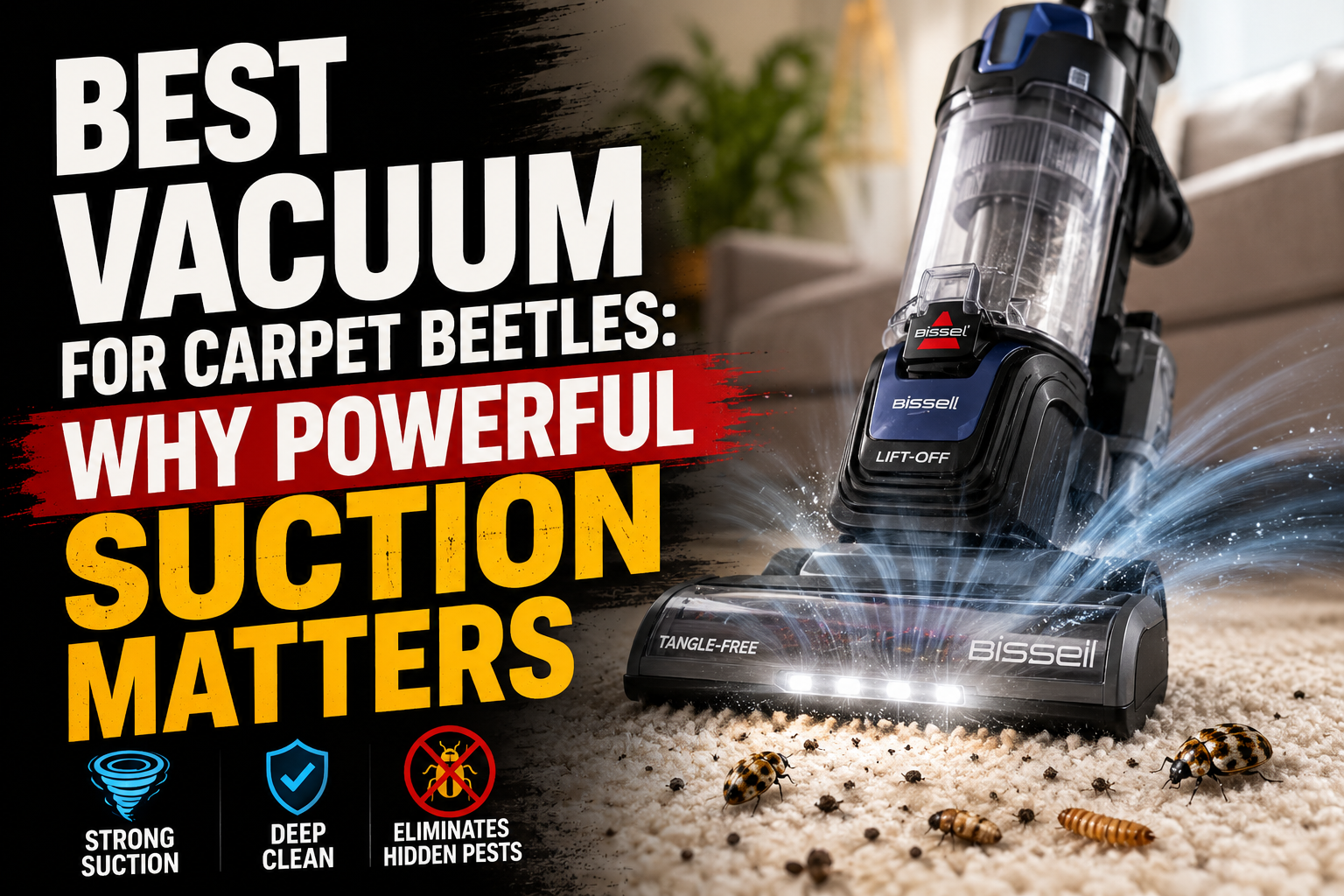
If there’s one thing I learned while dealing with carpet beetles in our own home, it’s this.
Vacuuming isn’t optional.
It’s one of the most important parts of getting rid of them.
When we found carpet beetles, I quickly realized that spraying alone wasn’t going to solve the problem.
The larvae hide incredibly well.
They’re tucked along baseboards, underneath furniture, inside closets, beneath shelves, around pet hair, and anywhere lint collects. Those hidden areas can also reveal the kind of thinning and fiber damage described in carpet damage under furniture.
If you aren’t removing those larvae and the food they’re living on every single day, you’re giving them more time to continue developing.
That’s why I believe a good vacuum cleaner is one of the best weapons you can own against carpet beetles.
If you’re just starting to deal with carpet beetles, I’d recommend beginning with my Everything You Need to Know About Carpet Beetles guide. It explains how these insects live, where they hide, and the steps I use to eliminate them.
My Biggest Mistake
When we first started dealing with carpet beetles, I honestly underestimated how important vacuuming was.
I’d vacuum once.
Maybe twice.
Then I’d assume I had done enough.
I was wrong.
The more I learned about carpet beetle larvae, the more I realized they spend almost all of their time hiding where most people rarely clean.
Daily vacuuming completely changed the way I approached the infestation.
Why Vacuuming Works So Well
A good vacuum isn’t just picking up dirt.
It’s removing things carpet beetles depend on to survive.
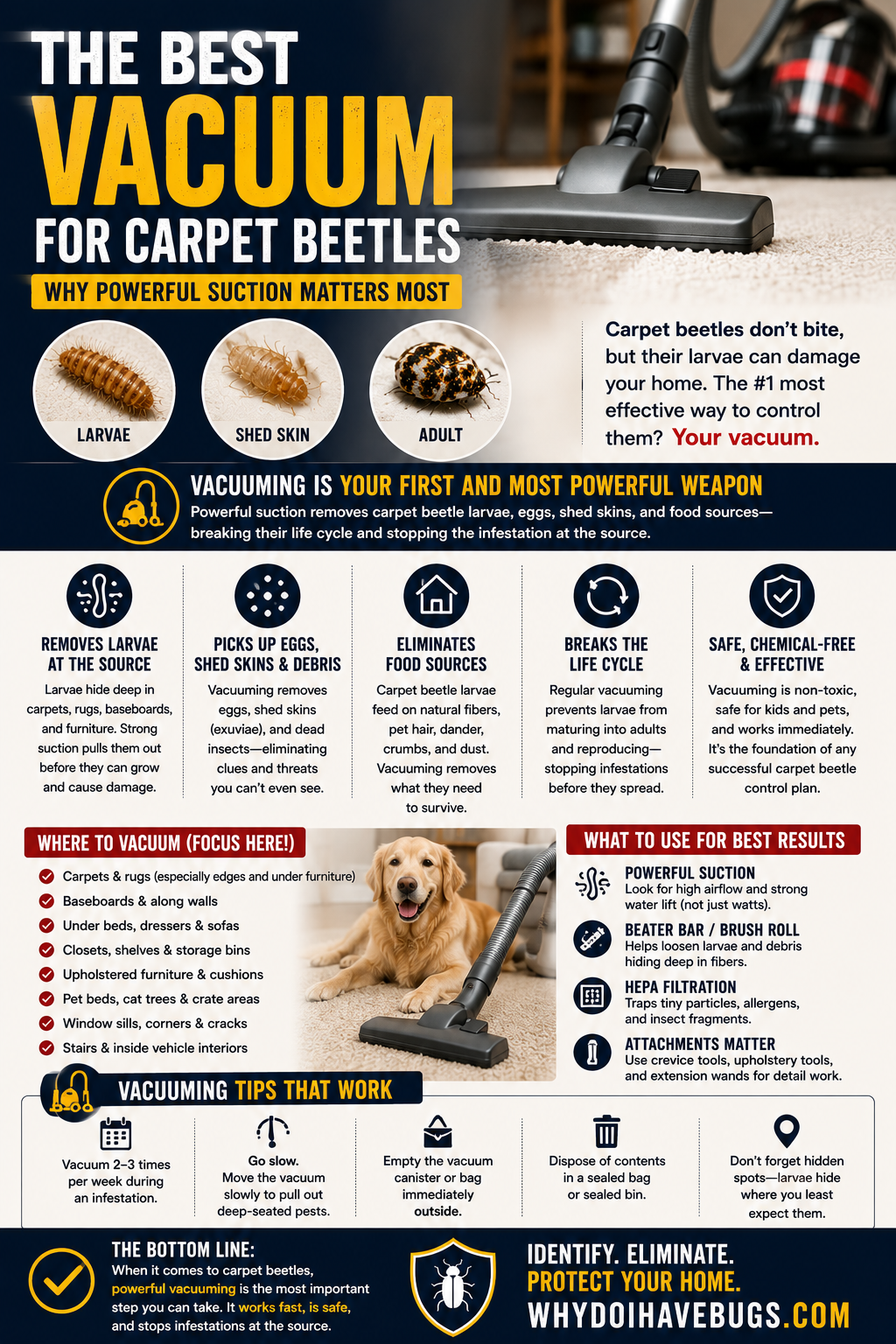
Every time I vacuum thoroughly, I’m removing things like:
- Live larvae.
- Shed skins.
- Hair.
- Pet hair.
- Lint.
- Dead insects.
- Dust collecting along baseboards.
- Organic debris that larvae feed on.
That means every pass of the vacuum is helping reduce both the insects and the things keeping them alive.
Powerful Suction Makes a Huge Difference
This is one place where I don’t think every vacuum is equal.
Weak suction may leave pet hair packed into carpet fibers.
It can miss debris buried along baseboards.
It may struggle with thick rugs or upholstery where carpet beetle larvae often hide.
When you’re trying to eliminate an infestation, I want the strongest suction I can reasonably get.
The better the vacuum removes hair, lint, and debris, the fewer places larvae have to hide and feed.
Why I Like the Bissell Pet Hair Eraser
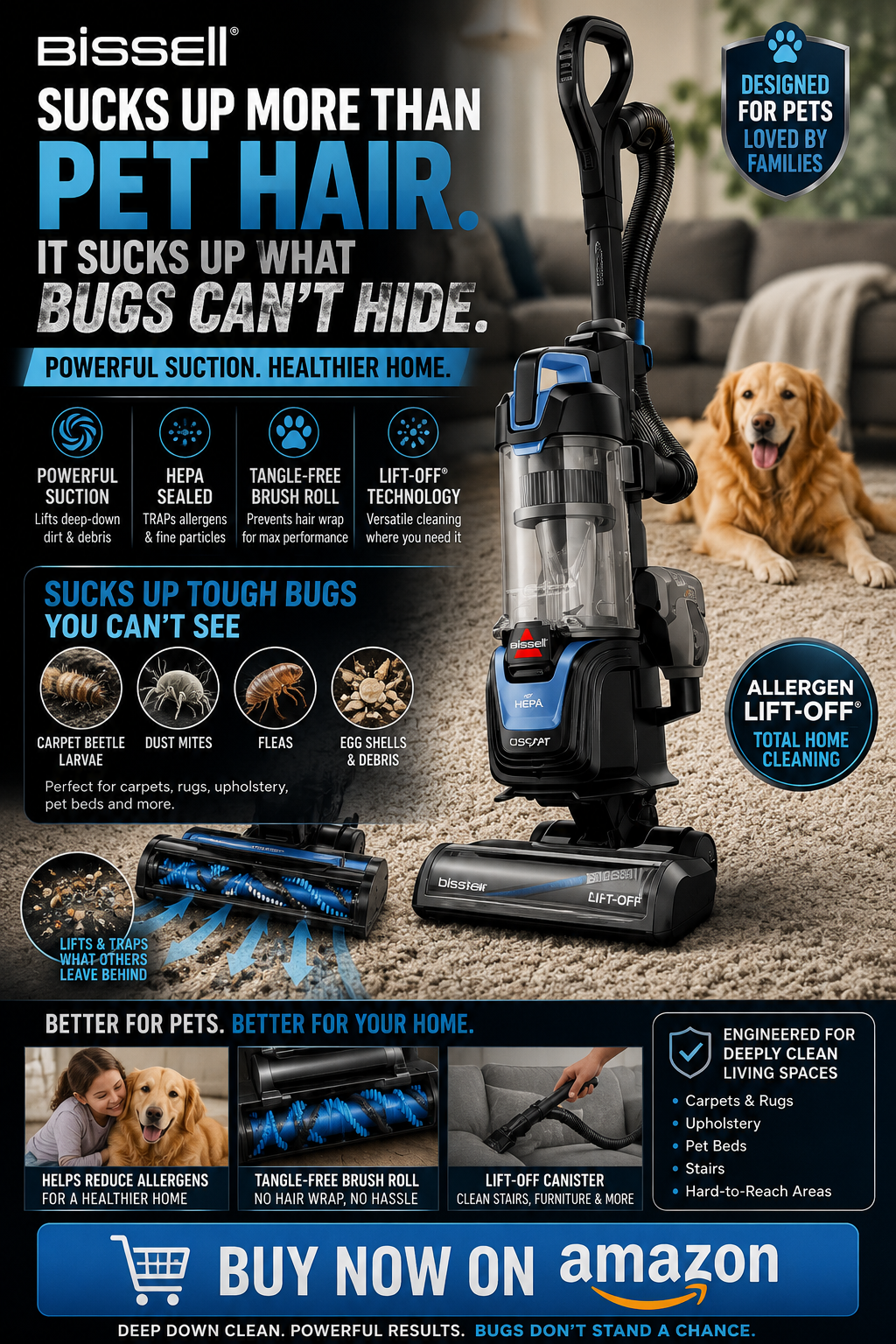
If I were buying a vacuum specifically for carpet beetles today, one of the first models I’d look at is the Bissell Pet Hair Eraser Allergen Lift-Off.
You can check the latest price and current customer reviews here: Bissell Pet Hair Eraser Allergen Lift-Off
Several features make it especially appealing for carpet beetle cleanup.
The strong suction helps pull debris from carpets and upholstery.
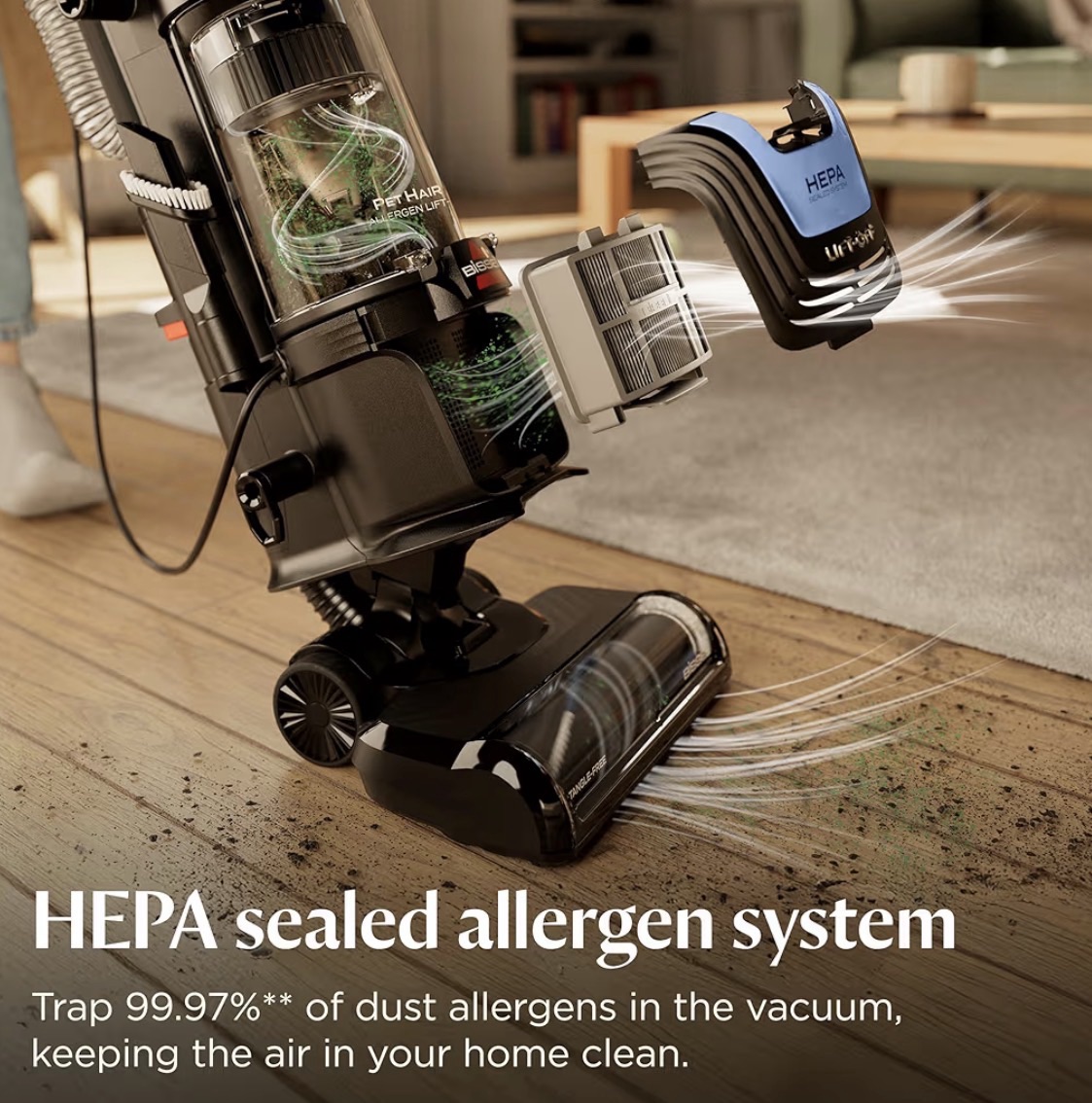
The HEPA filtration captures fine particles that many homeowners would rather not send back into the air.
The Lift-Off canister makes it easier to vacuum stairs, closets, furniture, and other places where carpet beetle larvae commonly hide.
And if you have pets like we do, the tangle-free brush roll and pet-focused design are huge advantages because pet hair is one of the things carpet beetle larvae frequently feed around.

Don’t Just Vacuum the Middle of the Floor
One mistake I see all the time is vacuuming only the open carpet.
That’s probably the least important part.
If this were my house, I’d spend extra time around:
- Baseboards.
- Closet floors.
- Under beds.
- Behind dressers.
- Under couches.
- Pet beds.
- Area rugs.
- Storage shelves.
- Window trim.
- HVAC vents.
Those are the places where carpet beetle larvae are much more likely to be hiding.
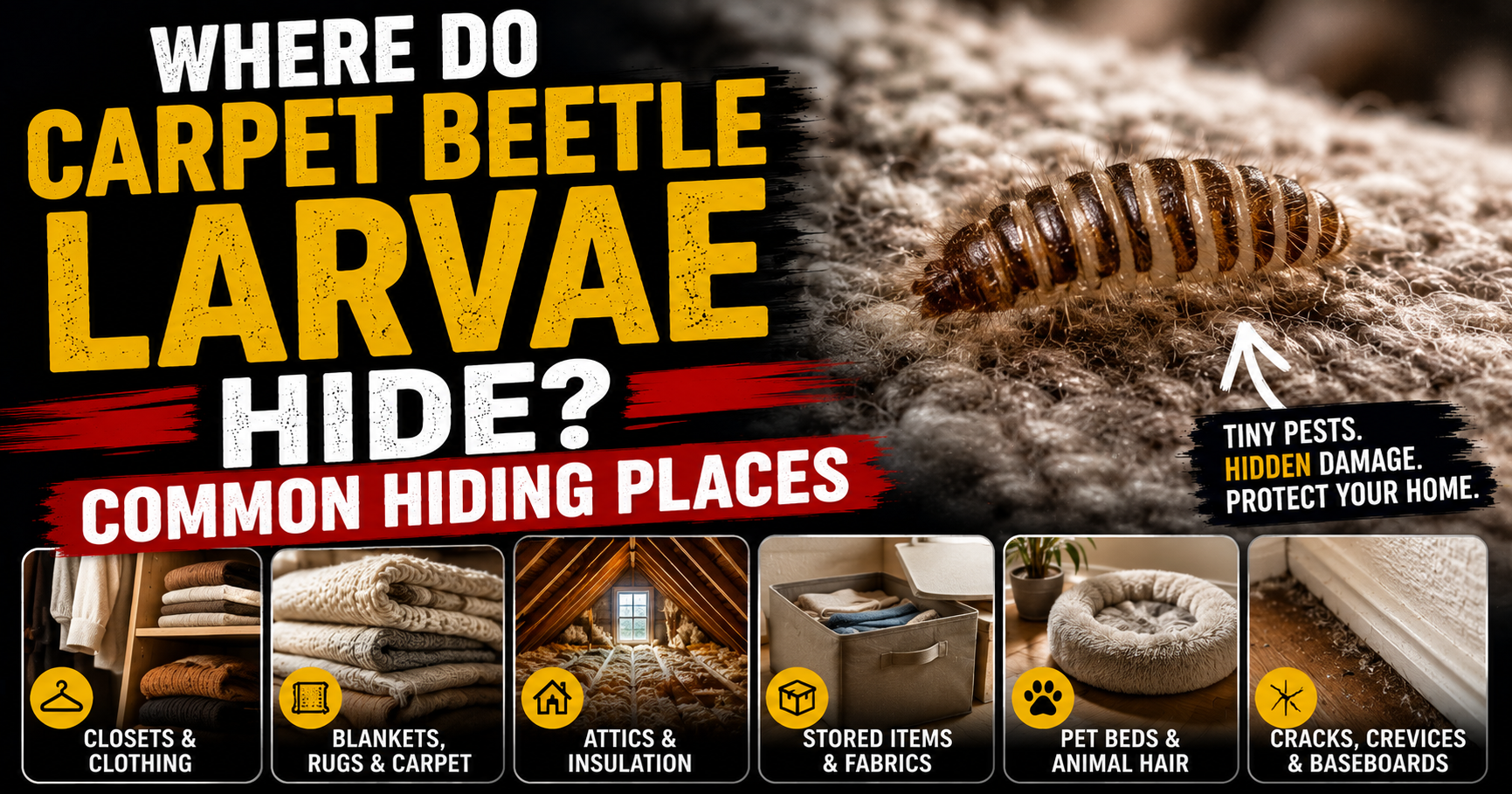
In fact, I put together an entire guide on where carpet beetle larvae hide because simply knowing where to vacuum can make your cleaning much more effective.
Vacuum Every Day During an Active Infestation
One thing that worked well for us was consistency.
Instead of vacuuming once each week, I’d vacuum every day for several weeks.
Yes, it’s more work.
But every day you’re removing more larvae, more shed skins, more eggs that may be accessible, and more of the food sources they depend on.
That’s much better than giving the infestation an entire week to continue developing between cleanings.
Vacuuming Doesn’t Replace Inspection
Even with a great vacuum, I still inspect the home carefully.
I look inside closets.
Storage boxes.
Blankets.
Shoes.
Furniture.
The vacuum is incredibly effective, but it works best when you know where to focus your effort.
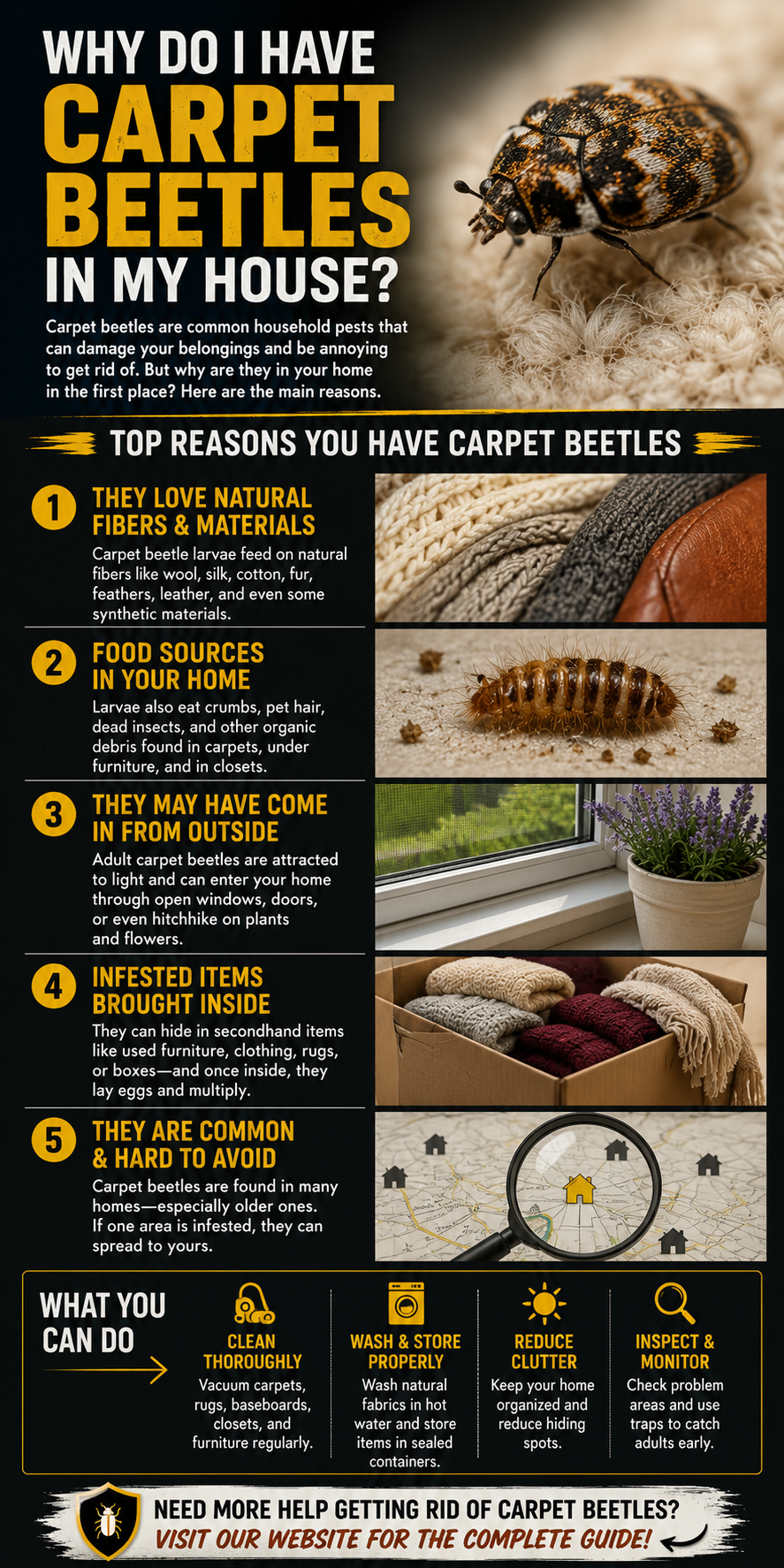
If you’re still trying to understand why carpet beetles chose your home, my article on why carpet beetles are in your house explains the conditions that usually attract them.
Pair Vacuuming With a Complete Treatment Plan
Vacuuming is one of the most important things I recommend, but I don’t consider it the entire solution.
For the best results, I combine it with:
- Careful inspections.
- Washing or cleaning infested fabrics.
- Removing lint and pet hair.
- Sealing seasonal clothing.
- Treating confirmed infestations when necessary.
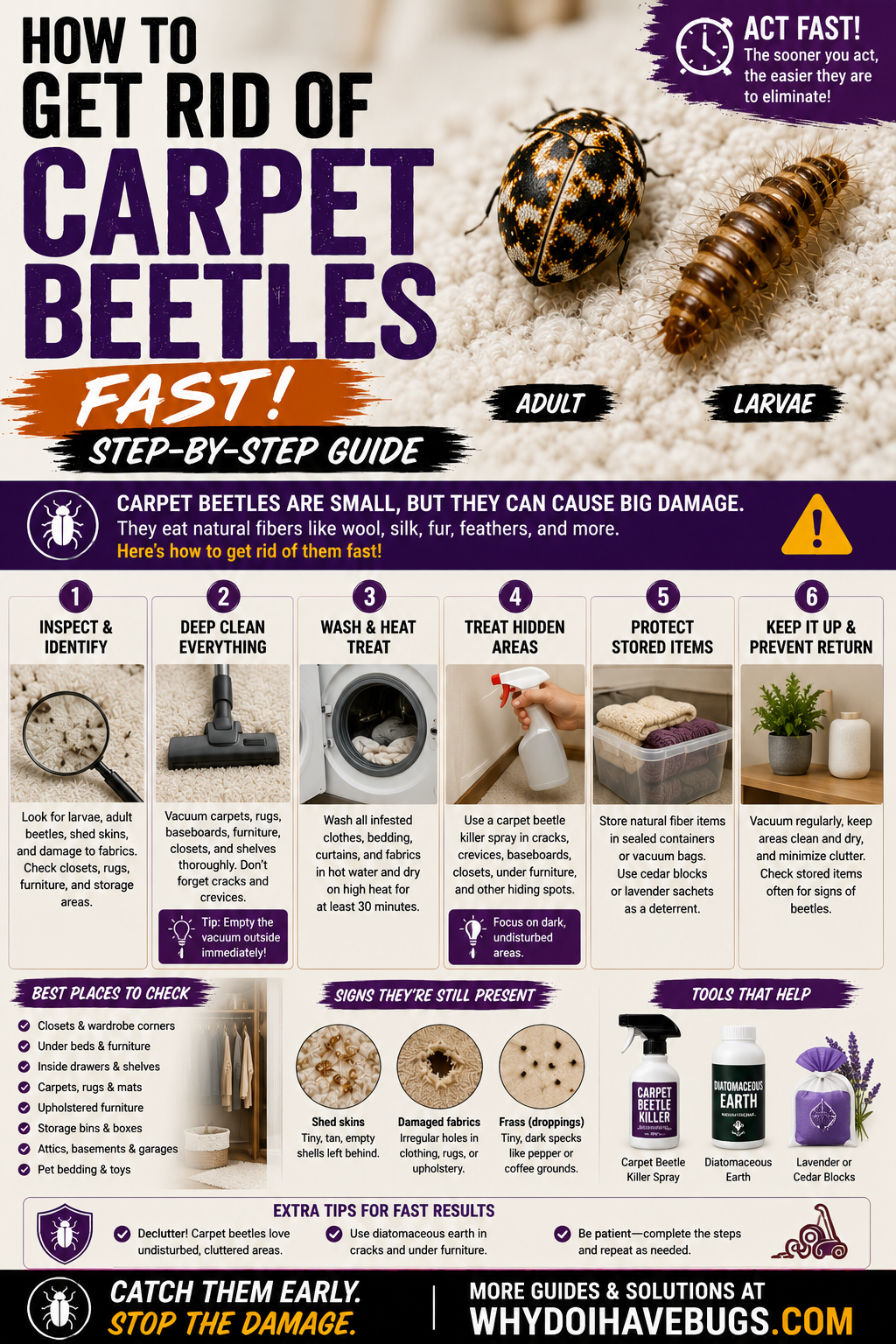
I explain that complete process in my How to Get Rid of Carpet Beetles Fast Step-by-Step Guide.
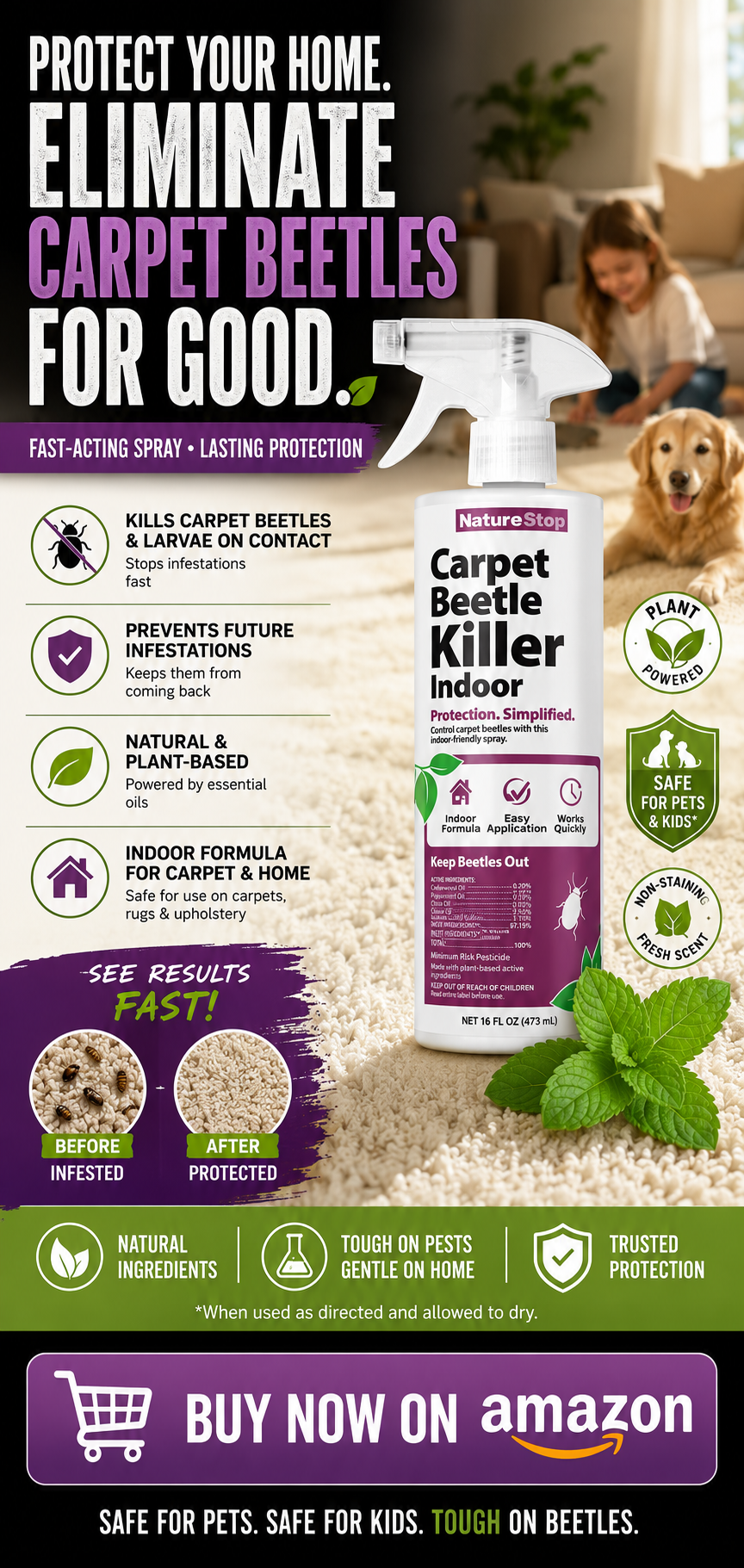
If you reach the point where a treatment product makes sense, I also recommend reading Does Carpet Beetle Killer Spray Actually Work? before buying one. If you decide a spray fits your situation, the Carpet Beetle Killer Spray for Indoor Use is one option designed to target both adult carpet beetles and larvae when used according to the label.
My Recommendation
If I could give one piece of advice to someone fighting carpet beetles, it’d be this.
Don’t underestimate your vacuum cleaner.
A quality vacuum with powerful suction isn’t just cleaning your floors.
It’s removing larvae, shed skins, pet hair, lint, and other materials that allow carpet beetles to survive.
Combined with consistent daily vacuuming and a thorough inspection, it’s one of the most effective tools I’ve found for getting an infestation under control.
Frequently Asked Questions
Is vacuuming enough to get rid of carpet beetles?
Vacuuming is one of the most important steps, but it works best when combined with inspections, cleaning natural-fiber items, and targeted treatments if needed.
How often should I vacuum for carpet beetles?

During an active infestation, I recommend vacuuming daily for several weeks, especially around baseboards, closets, furniture, and other areas where larvae hide. Closets deserve special attention because larvae can damage stored garments; carpet beetle damage in clothes covers the clothing materials and storage areas most at risk.
Does a powerful vacuum make a difference?
Yes. Strong suction can do a better job of removing pet hair, lint, larvae, and debris from carpets, upholstery, and other surfaces where carpet beetles may be living.
Why is pet hair important?
Carpet beetle larvae often feed around pet hair and other organic materials. Removing it regularly helps reduce one of their food sources.
Is the Bissell Pet Hair Eraser a good choice for carpet beetles?
Its strong suction, HEPA filtration, Lift-Off design, and pet hair handling make it a solid option to consider when you’re trying to remove larvae and debris from the areas where carpet beetles commonly hide.
Why I Prefer HEPA Filtration
One feature I think often gets overlooked is HEPA filtration.
When you’re vacuuming around carpet beetles, you’re not just picking up dirt.
You’re also removing fine dust, pet dander, lint, insect debris, and tiny particles that can easily become airborne.
A vacuum with HEPA filtration helps trap much of that material inside the vacuum instead of blowing it back into the room.
While HEPA filtration isn’t specifically about killing carpet beetles, it’s a feature I appreciate anytime I’m doing a deep cleaning after discovering an infestation.
Don’t Forget Upholstered Furniture
Many people immediately vacuum the carpet.
Far fewer think about the couch.
Or the recliner.
Or the fabric chair sitting in the corner of the bedroom.
Those are all places where lint, hair, crumbs, and pet fur collect over time.
If carpet beetle larvae are active in the room, I want those areas vacuumed just as thoroughly as the floor.
The Lift-Off design on the Bissell makes that much easier than trying to drag an entire upright vacuum onto furniture.
Closets Deserve Extra Attention
Closets are probably one of the most overlooked places in the house.
Yet they’re also one of the first places I inspect.
Seasonal clothing.
Blankets.
Shoes.
Storage bins.
Those areas often sit undisturbed for months, making them ideal places for carpet beetle larvae to develop.
That’s another reason I like having a vacuum that’s easy to maneuver into tight spaces instead of something bulky that’s difficult to use around shelving and clothing.
Vacuuming Helped Us Find the Problem
One unexpected benefit of vacuuming every day was that it forced me to slow down and really inspect each area.
As I vacuumed around shelves, inside closets, and under furniture, I started noticing things I would’ve missed otherwise.
Small accumulations of lint.
Pet hair tucked into corners.
And of course, the carpet beetle shed skin I eventually found inside one of our stored shoes.
That discovery completely changed the direction of my inspection.
Instead of randomly cleaning the house, I began focusing on nearby storage areas where the larvae were much more likely to be hiding.
Replace or Empty the Vacuum Promptly
One thing I always recommend is taking care of the vacuum after you’re finished cleaning.
If your vacuum uses disposable bags, replace them when they’re full according to the manufacturer’s recommendations.
If it’s a bagless model, empty the collection bin outside if practical and clean the filters as directed in the owner’s manual.
Keeping the vacuum maintained helps it continue performing at its best, especially when you’re using it every day during an active carpet beetle problem.
Why I Think This Vacuum Is Worth Considering
There are plenty of vacuums on the market.
I don’t think you need the most expensive model available.
What I do think you need is one that’s powerful enough to remove pet hair, lint, debris, and other materials that carpet beetle larvae depend on.
That’s why the Bissell Pet Hair Eraser Allergen Lift-Off stands out to me.
Its strong suction, Lift-Off portability, sealed HEPA filtration, and pet-focused design check a lot of the boxes I’d want if I were buying a vacuum specifically to help control a carpet beetle infestation.
You can see the latest price and read customer reviews here: Bissell Pet Hair Eraser Allergen Lift-Off Vacuum
It’s About Building Better Habits
One thing carpet beetles taught me is that consistency matters more than perfection.
I’d rather vacuum thoroughly every day for several weeks than do one giant cleaning and assume the problem is solved.
Those daily cleanings gradually remove larvae, shed skins, pet hair, lint, and many of the things that allow carpet beetles to survive.
When you combine that habit with careful inspections and targeted treatment when necessary, you’re giving yourself the best chance of getting the infestation under control.
Frequently Asked Questions
What is the best vacuum for carpet beetles?
Look for a vacuum with powerful suction, good edge cleaning, useful attachments, and HEPA filtration. Since carpet beetle larvae often hide around furniture, closets, and baseboards, versatility is just as important as suction.
Should I vacuum every day if I have carpet beetles?
Yes. During an active infestation, daily vacuuming can help remove larvae, shed skins, hair, lint, and other materials that support carpet beetle development.
Do I need a pet vacuum if I don’t have pets?
Not necessarily, but vacuums designed to handle pet hair are often excellent choices because they’re built to remove stubborn hair, lint, and debris from carpets and upholstery. Those same features can be helpful when cleaning up after carpet beetles.
Can vacuuming remove carpet beetle eggs?
Vacuuming may remove some eggs that are on accessible surfaces, along with larvae and shed skins, but eggs hidden deep in cracks, fabrics, or other protected areas may not all be reached. That’s why I recommend combining vacuuming with thorough inspections and other control methods.
Is a cordless vacuum good enough?
It depends on the model, but for a widespread carpet beetle infestation, I generally prefer a full-size vacuum with consistently strong suction and a larger dirt capacity, especially if you’re vacuuming your entire home every day.
About the Author
Ryan Mitchell writes practical home pest guides based on firsthand experiences, detailed research, and proven prevention strategies. His goal is to help homeowners identify pest problems early, choose products that genuinely help, and solve infestations by addressing the source instead of just the symptoms.