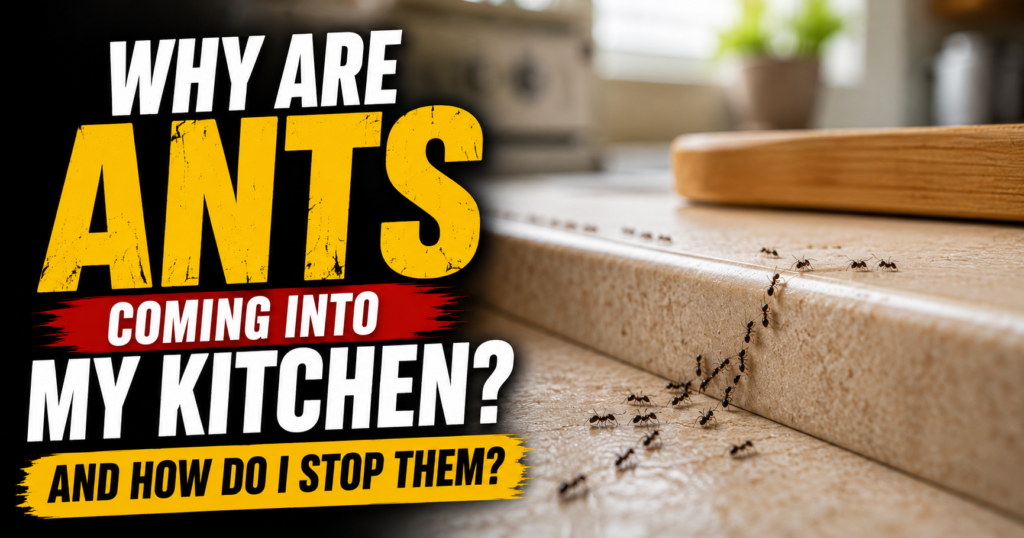
You walked into your kitchen this morning and there they were — a trail of ants marching across your counter like they own the place. Or maybe you’ve been finding a few here and there for weeks and now suddenly there are dozens. Either way you want to know where they came from, why they picked your kitchen, and how to make them stop.
The answers are more specific than most people expect. Ants don’t show up randomly. Something in your kitchen is attracting them, something is letting them in, and understanding both of those things is what makes the difference between fixing the problem and fighting it indefinitely. For a wider look at why different pests appear indoors, see these common questions about household bugs.
The Real Reason Ants Are in Your Kitchen
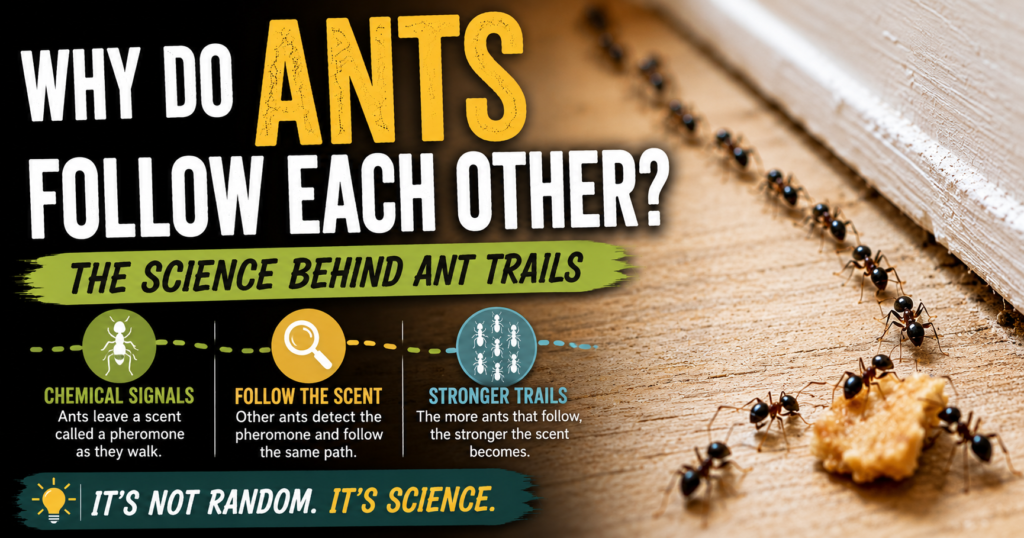
Ants are foragers. Their entire biological purpose outside the colony is to find food and water and bring it back. Your kitchen is the most resource-rich room in your home — food, moisture, warmth, and usually a few gaps in the structure that make it accessible. When a scout ant finds something worth having in your kitchen, it lays a pheromone trail back to the colony. Other workers follow that trail. More trails get laid. What starts as one ant becomes a hundred within hours. The pheromone behavior behind this rapid increase is explained in Why Do Ants Follow Each Other? The Science Behind Ant Trails.
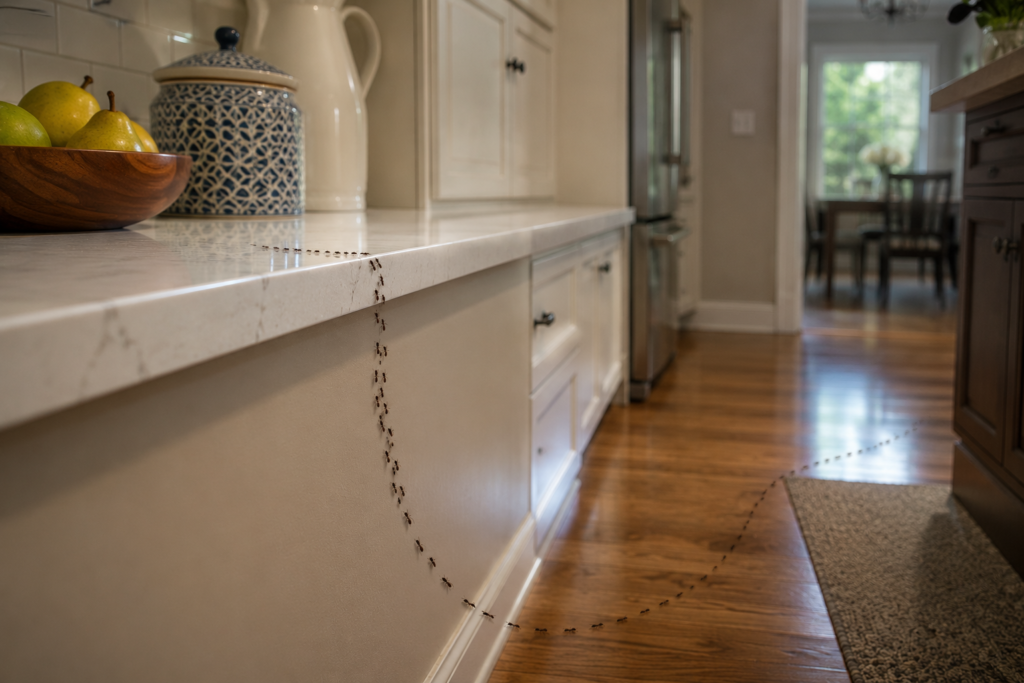
The frustrating part is that the trigger is often something you’d never notice. A sticky spot behind the toaster. A thin film of grease near the stove. A drop of juice that dried on the counter. A crumb that fell behind the refrigerator six months ago. Ants can detect food sources that are invisible to you and will travel significant distances to exploit them.
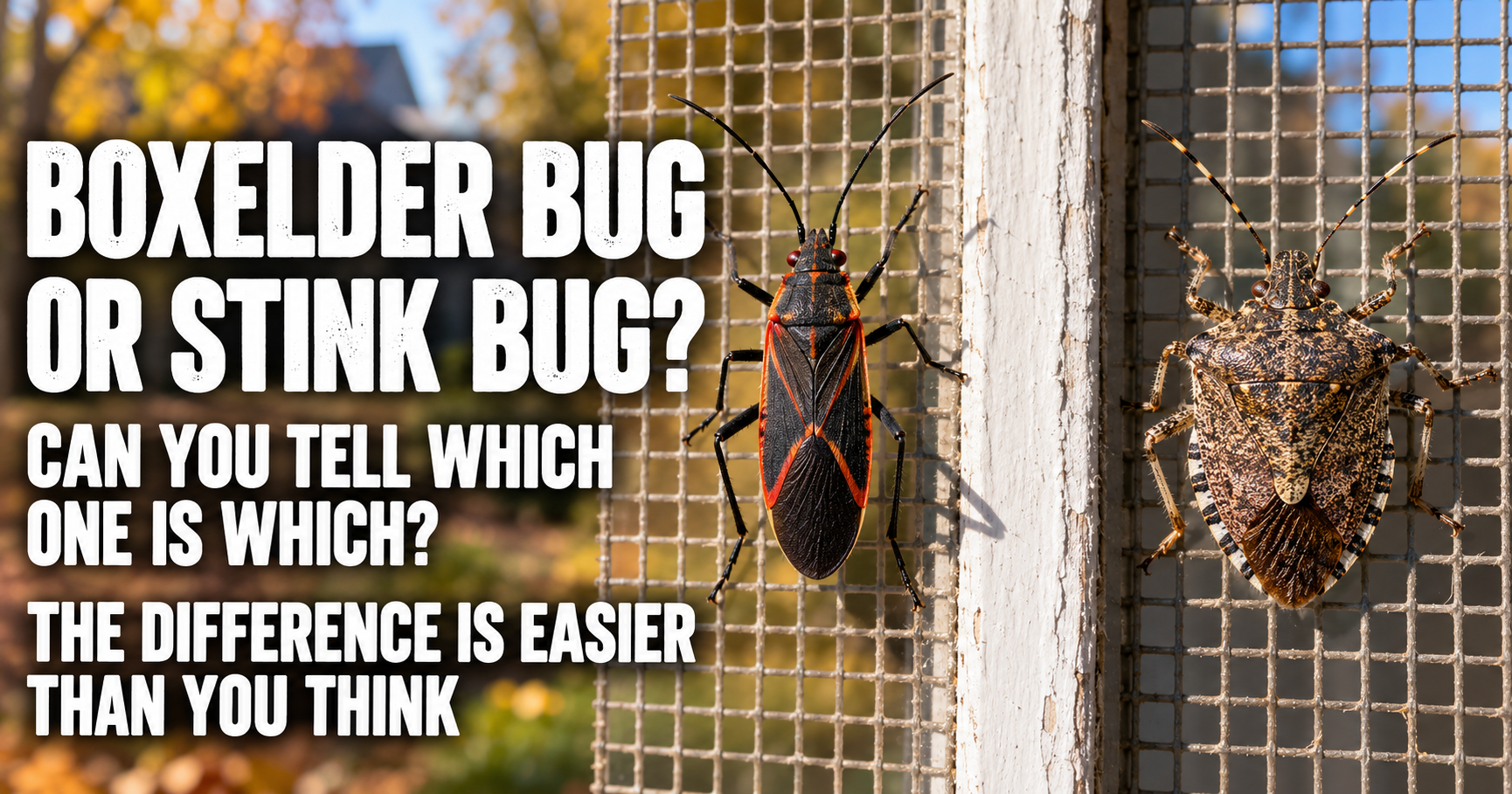
Which Ant Do You Have?
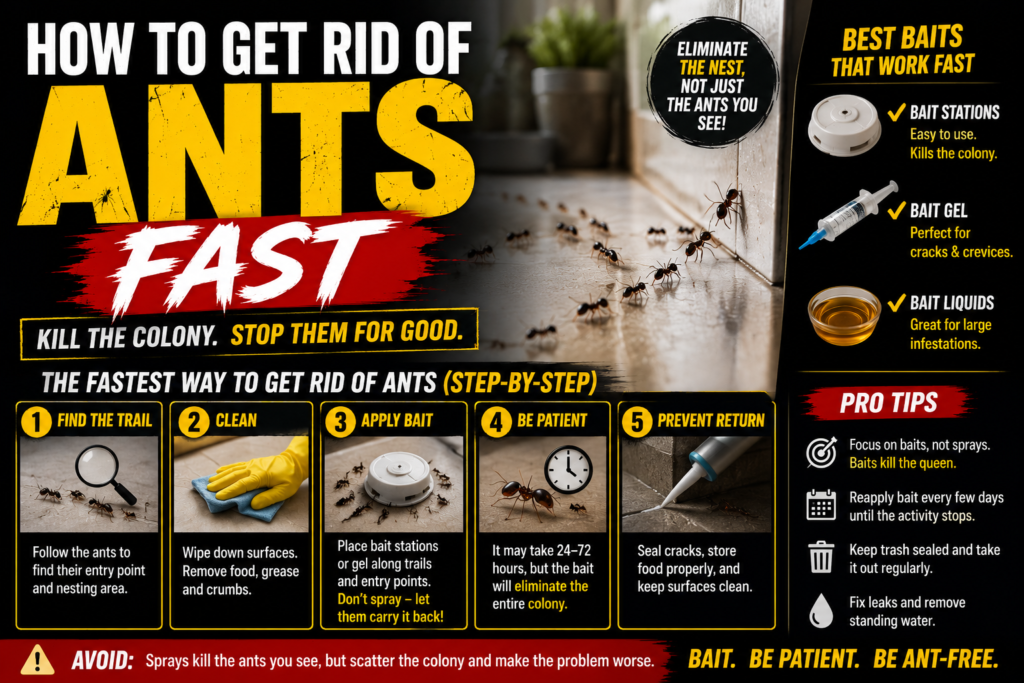
The species matters because different ants are attracted to different things and respond differently to treatment. Treating for the wrong type wastes time and money. Once you have a likely identification, the Getting Rid of Ants Fast: The Step-by-Step Guide That Works explains how to choose products and use them in sequence.
Odorous House Ants
Small — about an eighth of an inch. Dark brown to black. The defining characteristic: crush one and it smells like rotten coconut. That’s how they got their name. Odorous house ants are one of the most common kitchen invaders across the US. They’re strongly attracted to sweets — sugar, syrup, fruit, anything sticky or sweet-smelling. They nest outdoors but forage inside aggressively, especially after rain disrupts their outdoor nests.
Argentine Ants
Very small — about a sixteenth of an inch. Light to dark brown, uniform color. One of the most widespread invasive ant species in the US, particularly common in the South and along both coasts. Argentine ants form massive supercolonies — instead of one queen and one nest, they have multiple queens and interconnected nests that can span entire neighborhoods. This makes them particularly persistent — eliminating one entry point or one nest doesn’t solve the problem when the colony spans your entire block.
Pavement Ants
Small — about an eighth of an inch. Dark brown to black with lighter legs. Named for their habit of nesting under pavement, sidewalks, and building foundations. They enter homes through cracks in foundations and gaps under doors, and they eat almost anything — sweets, grease, proteins, crumbs. Common in kitchens near ground-level entry points.
Carpenter Ants
Large — a quarter inch to half an inch. Black, or black and red. These are not the same problem as the small ants in your kitchen. Carpenter ants nest in wood — specifically damp or damaged wood — and their presence in your home may indicate a moisture or structural problem beyond just a foraging infestation. Finding large black ants regularly, especially near windowsills, door frames, or anywhere with wood, warrants investigation beyond standard kitchen ant treatment. See our ant guide for carpenter ant specific guidance.
Little Black Ants
Tiny — about a sixteenth of an inch, among the smallest ants you’ll encounter. Jet black, uniform color. Common in kitchens and bathrooms. They eat sweets and grease and nest both outdoors and inside wall voids. Their small size lets them enter through gaps that would stop larger species.

What’s Actually Attracting Them
Most people assume ants are after obvious food — crumbs on the counter, an open cereal box, fruit in a bowl. Those are real attractants but they’re not the whole story. Ants find food sources that regular cleaning misses constantly.
Grease residue. The film of cooking grease that accumulates on the stove backsplash, inside the hood vent, on the sides of appliances, and on the wall behind the stove over months of cooking is a significant ant attractant. It’s not visible as food to you but to ants it’s a resource. A good degreasing of these surfaces is often more impactful than any amount of counter wiping.
Recycling bins. Unwashed cans, bottles, and containers sitting in an indoor recycling bin are one of the most overlooked ant attractants in most kitchens. The residue inside a rinsed-but-not-scrubbed juice bottle is enough to draw a trail. Rinse everything thoroughly before it goes in the recycling.
Pet food and water bowls. Dry pet food left in a bowl on the floor overnight is an open invitation. Even the residue left in a bowl after the food is gone draws ants. Pet water bowls provide the moisture component. Move bowls away from walls, pick up food bowls overnight, and consider placing them on a tray with a small amount of water around the base — ants can’t cross a water moat.
Fruit on the counter. Ripe and overripe fruit left in a bowl at room temperature emits volatile compounds that ants detect from a distance. Bananas especially — the moment they start to turn they’re broadcasting a signal. Refrigerate ripe fruit or keep it in a sealed container.
Sticky spots and spills. A drip of honey that dried on the pantry shelf six months ago. A splash of soda behind the toaster. Syrup residue on a cabinet shelf. These invisible-to-you food sources are exactly what ant scouts are looking for. A thorough cleaning that goes behind and under every appliance and inside every cabinet is often the single most impactful step you can take.
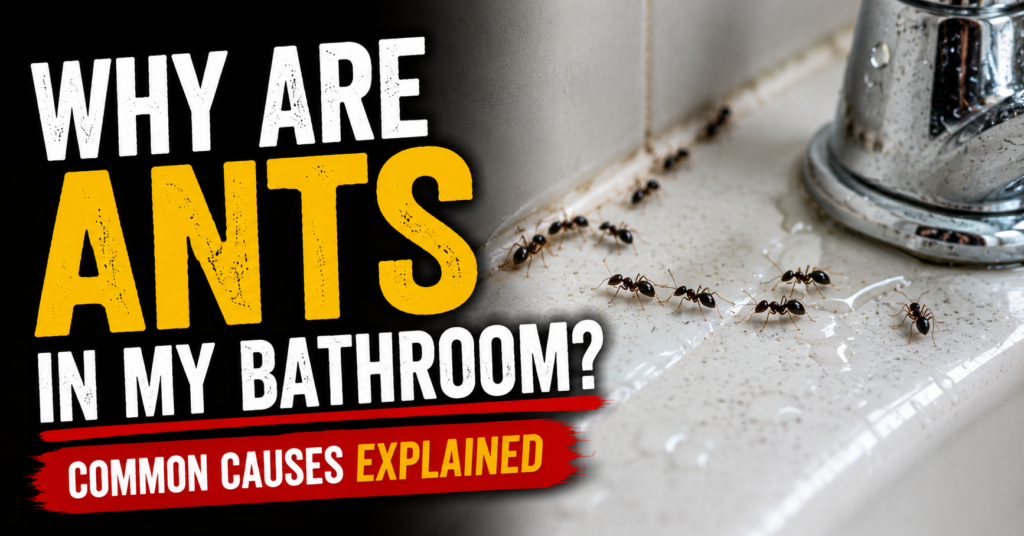
Moisture under the sink. Ants need water as much as food. A slow drip under the kitchen sink, condensation on cold water pipes, or a leak behind the dishwasher provides the water source that keeps a colony coming back even when food sources are addressed. Check under every sink for moisture — fix any drip you find. The same moisture issue can explain why ants enter bathrooms, even when there is little or no food nearby.
How They’re Getting In
Knowing what’s attracting them explains why they want to be there. Knowing how they’re getting in tells you where to focus your prevention efforts.
Gaps around pipes under the sink. The hole where the pipe enters the cabinet wall almost always has a gap around it. This gap connects to the wall void and often to the exterior of the building — it’s a direct highway from outside to your kitchen. This is the number one entry point for kitchen ants in most homes. Fill it with caulk or steel wool.
Gaps around windows and door frames. Ants enter through the smallest gaps — a hairline crack in caulking around a window frame, a space where weatherstripping has deteriorated, a gap where the door frame meets the wall. Walk around your kitchen and look at every frame. Any gap you can see is a gap ants use.
Along utility lines and wiring. Ants follow wires and pipes through walls. Electrical conduit, cable lines, and plumbing that enter through exterior walls create pathways from outside directly into your kitchen walls. The gaps around these penetrations are often left unsealed.
Under exterior doors. A gap at the bottom of an exterior door that you can see light through is a gap ant trails march through. Weatherstripping or a door sweep closes this entry point.
Through cracks in the foundation. Ground-level kitchens and basements are particularly vulnerable. Pavement ants and Argentine ants travel through foundation cracks and emerge inside. These are harder to seal comprehensively but caulking visible cracks along the base of interior walls helps.
Through plants brought inside. Ants nest in potting soil and enter homes through houseplants that were kept outdoors. Check any plant brought inside from outdoors for ant activity at the soil level.

Why Spraying Doesn’t Fix It
If you’ve been spraying ants and they keep coming back, there’s a specific reason — and it’s not that the spray isn’t working. It’s that spray addresses the symptom while leaving the cause completely untouched. A bait-first ant control approach explains why targeting the colony works better than repeatedly killing visible workers.
When you spray a trail of ants, you kill the workers you can see. The colony — which may have hundreds of thousands of workers and multiple queens — is unaffected. New workers are dispatched within hours to replace the ones you killed. If the pheromone trail and the food source still exist, the colony keeps sending foragers until something stops them.
Spray also has a repellent effect. Pyrethroid-based sprays drive ants away from treated areas — which sounds useful until you realize it also drives them away from bait. If you spray and then place bait stations, the spray residue repels ants from the bait and the treatment fails. Pick one approach.
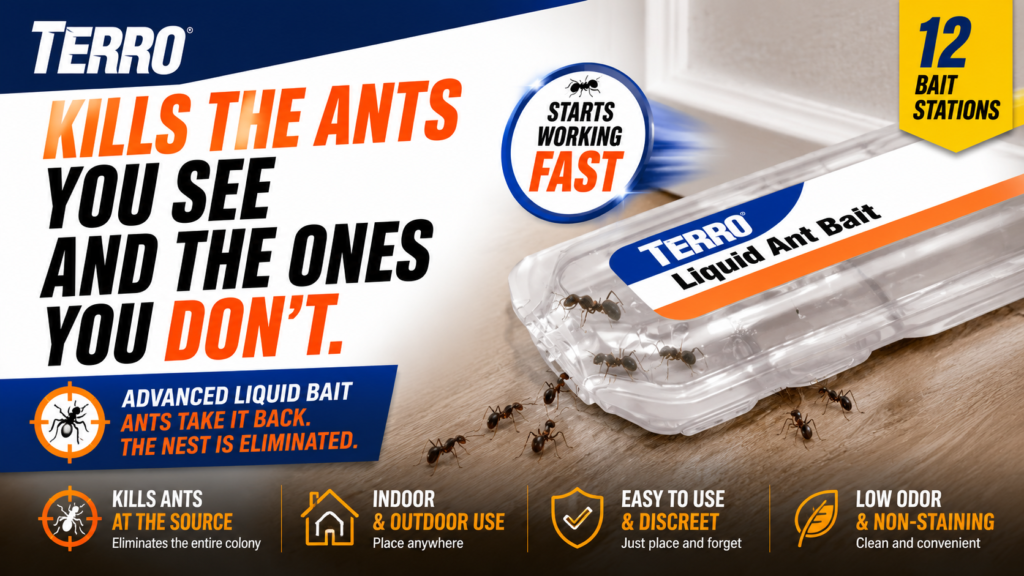
For a recurring ant problem, bait is the answer. TERRO liquid ant bait works by letting worker ants feed on a borax-based liquid and carry it back to the colony, poisoning the population including queens from the inside out. It takes longer than spray — typically 1 to 2 weeks for full effect — but it eliminates the colony rather than just the foragers you can see.
What Actually Gets Rid of Kitchen Ants
Step One — Find and Eliminate the Food Source
Before you place any bait or spray anything, find what’s attracting them. Follow the trail — where does it start? Where does it lead? The answer tells you what they’re after. Once you know, eliminate it. Deep clean the area, fix the moisture issue, store the food properly. Bait works faster and more completely when competing food sources are reduced.
Step Two — Place Bait Where the Ants Are
TERRO liquid ant bait stations placed directly in the trail and at the points where ants are entering your kitchen give you the fastest colony kill. Place multiple stations — the 12-pack exists for a reason. More feeding stations means more workers carrying bait back to the colony, which means faster spread through the population.
The critical instruction that most people ignore: when you see ants swarming the bait stations, leave them alone. That surge in activity is the treatment working — ants are feeding and carrying bait back. Don’t spray them. Don’t move the stations. Give it 3 to 5 days before the surge peaks and starts declining.
Step Three — Seal the Entry Points
While the bait is working on the current colony, seal the entry points to prevent the next one. Caulk the pipe gaps under the sink. Reapply weatherstripping on exterior doors. Seal gaps around window frames. A sealed entry point is better than any treatment — bugs that can’t get in don’t need to be killed.
Step Four — Add a Perimeter Barrier
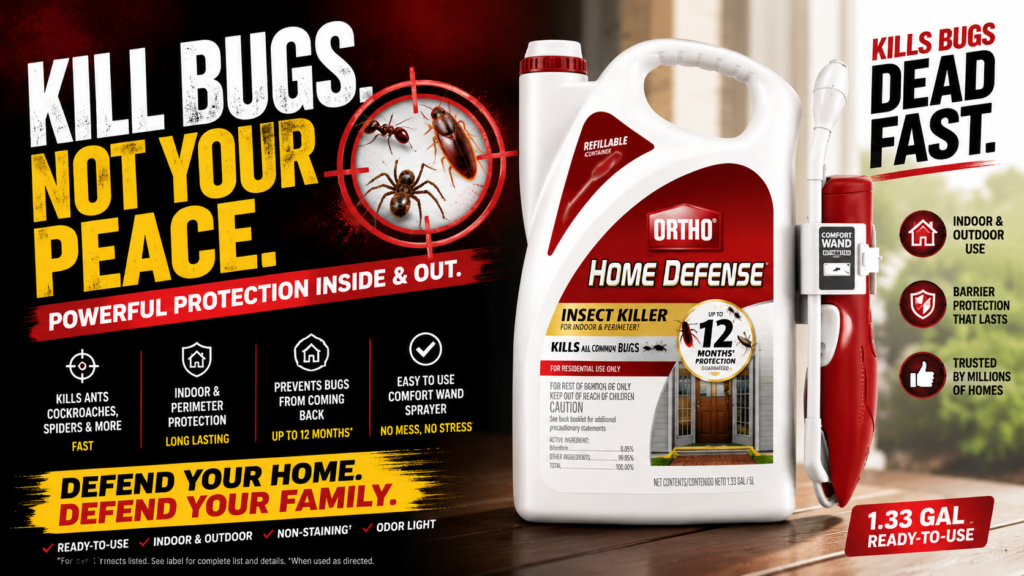
For ongoing prevention, a perimeter spray around your home’s foundation creates an outdoor kill barrier that stops ants before they find their way inside. Ortho Home Defense applied along the foundation and around entry points leaves a residual barrier that kills ants approaching the exterior for weeks after application. Applied consistently every 1 to 3 months during active season, it significantly reduces the volume of ants reaching your home in the first place.
Step Five — Long-Term Powder Treatment
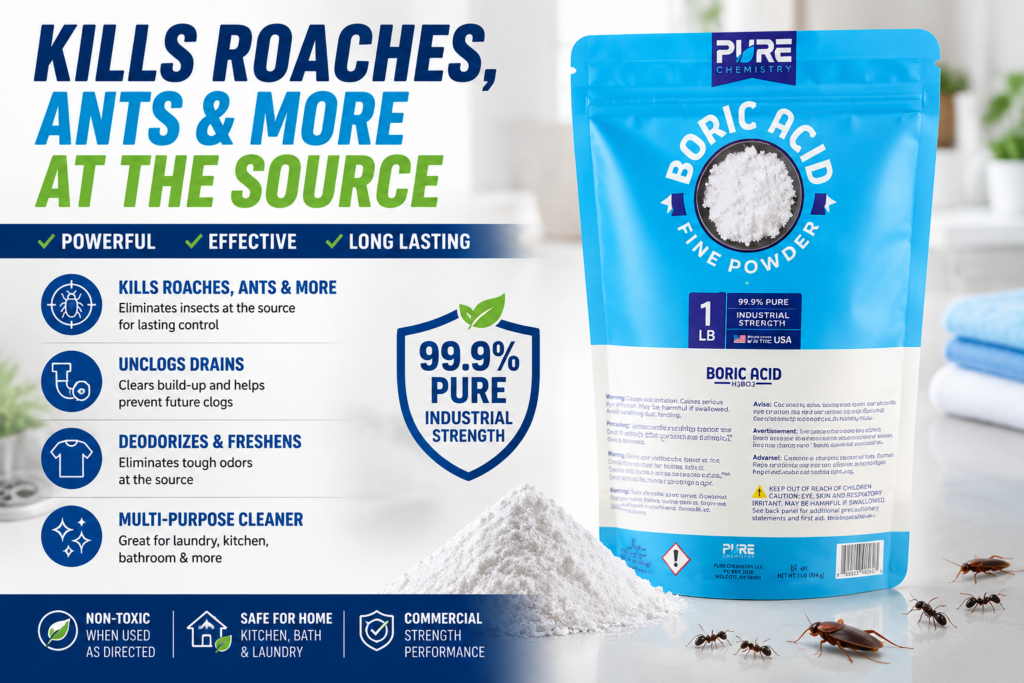
Boric acid applied as a thin dust along ant travel routes and at entry points creates a long-term residual kill layer that works independently of whatever else you’re doing. Boric acid in the gap under the sink, along the back of cabinet shelves, and at confirmed entry points keeps killing ants that pass through for months without reapplication. It’s the set-it-and-forget-it layer of your ant defense.
Specific Situations That Need Specific Approaches
Ants Appearing After Rain
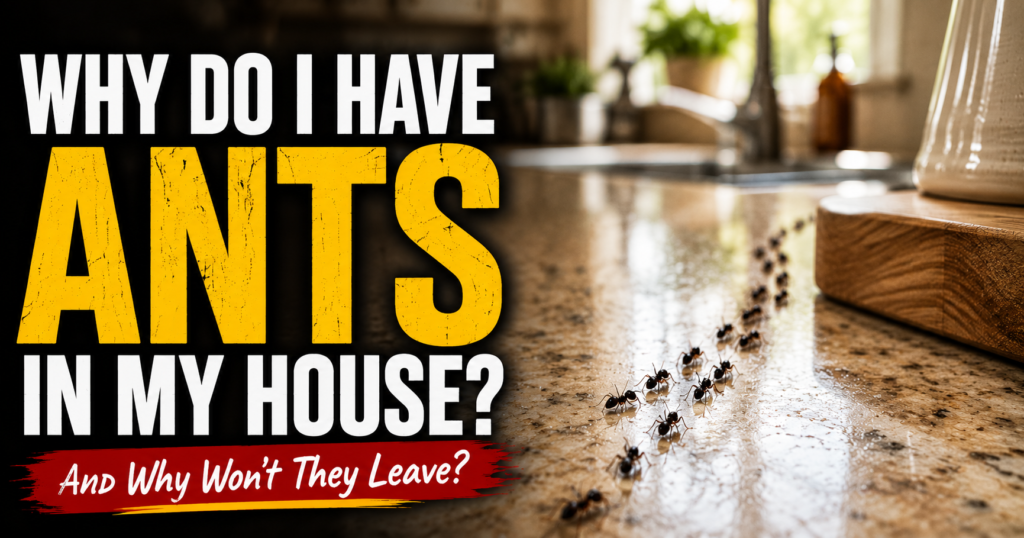
One of the most common triggers for sudden kitchen ant invasions is heavy rainfall. Rain floods outdoor ant nests, forcing colonies to relocate or seek shelter. If your ant problem appears or gets dramatically worse after rain, outdoor nesting ants are the cause. The fix is sealing entry points and applying a perimeter barrier — the goal is to make your home inaccessible to displaced colonies looking for shelter. Rain is only one of several conditions that can drive ants indoors, and why ants suddenly invade your home explains how weather, moisture, food, and new entry points contribute to the problem.
Ants in an Apartment
Apartment ant problems follow the same principles as house ant problems with one complication — neighboring units may have active infestations that keep introducing ants through shared walls and infrastructure. Seal every pipe gap aggressively, maintain bait stations permanently rather than as a one-time treatment, and report persistent problems to building management. A whole-building treatment is the only real solution when the source is a neighboring unit.
Ants Coming Back Every Year
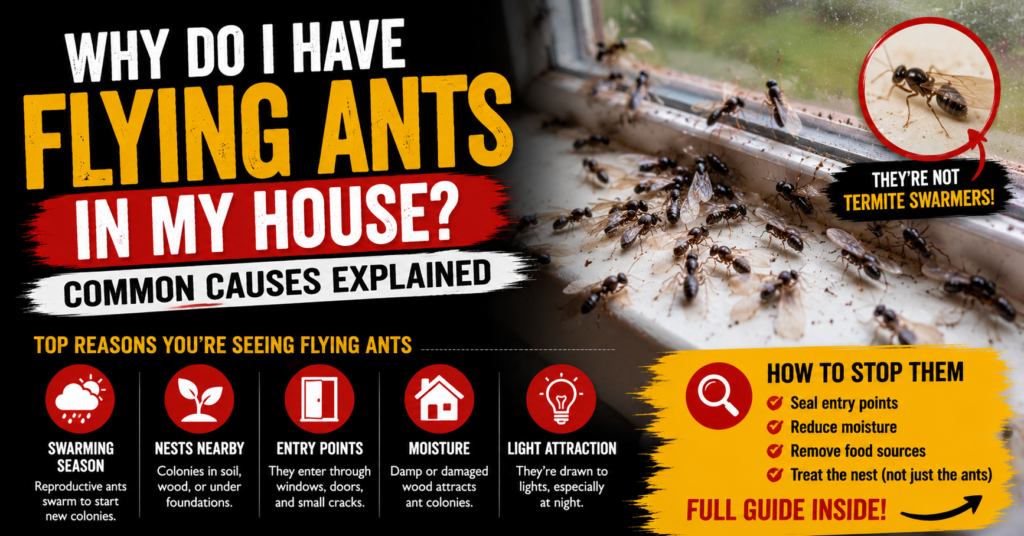
Seasonal ant invasions — particularly in spring and summer — usually mean there’s an established outdoor colony near your home that forages inside during warm months. The solution is a combination of perimeter barrier treatment applied consistently through the active season and sealing the entry points the colony uses to get inside. Treating the interior helps but doesn’t address the outdoor colony that keeps sending foragers. If those seasonal ants develop wings and start appearing indoors, these causes of flying ants indoors can help explain whether you're seeing a normal swarm or a nearby colony.
Ants in the Pantry
Pantry ant invasions almost always trace back to an unsealed food container. Check every item on your pantry shelves for gaps, tears, or loose lids. Transfer anything in cardboard or unsealed bags to hard containers with actual lids. Clean the shelves thoroughly — the residue from a spill months ago is enough to sustain a trail. Once the food source is eliminated and the shelves are clean, bait stations placed inside the pantry on active trails clear the remaining population.
How to Keep Ants Out of Your Kitchen for Good
Treating the current infestation is one problem. Staying ant-free long-term requires making your kitchen consistently less hospitable.
Store everything in sealed containers. Cereal, sugar, flour, rice, crackers, pet food — anything that comes in a bag or box that isn’t resealable goes into a hard container with a lid. This eliminates the most consistent food sources ants exploit in most kitchens.
Wipe down surfaces after cooking every night. The grease and residue from cooking accumulates fast. A quick wipe of the stove, backsplash, and counter after dinner removes the food film before it has time to attract scouts overnight.
Take the trash out every night. Kitchen trash with food waste sitting overnight is a reliable ant attractant. Tight-fitting lid at minimum, nightly emptying is better.
Fix moisture immediately. Any drip under any sink — fix it the same day you find it. Standing water and persistent moisture are as attractive to ants as food.

Maintain a perimeter barrier through active season. Reapply your outdoor spray every 1 to 3 months from spring through fall. Consistent preventive treatment is far less work than treating a full infestation. For the outdoor-treatment step, an indoor and perimeter insect killer is one option to review for indoor and perimeter use.
Keep maintenance bait active. One or two fresh TERRO stations under the sink and at confirmed entry points year-round catches scout ants before they recruit a colony. Replace them every few months. It costs almost nothing and prevents the problem from establishing in the first place.
Ants in the kitchen are fixable. They showed up for a reason, they’re getting in somewhere specific, and addressing both of those things while using the right treatment products gets rid of them faster than anything else you’ll try. Find the food source, place the bait, seal the gaps, and give it two weeks. The trail goes away when the colony does.