Finding ants in your house is one of those problems that feels like it came out of nowhere. One day there are none, the next day there’s a trail running along your baseboard or across your bathroom floor or up the wall in your laundry room. You didn’t change anything. You didn’t leave food out. So why are they suddenly there?
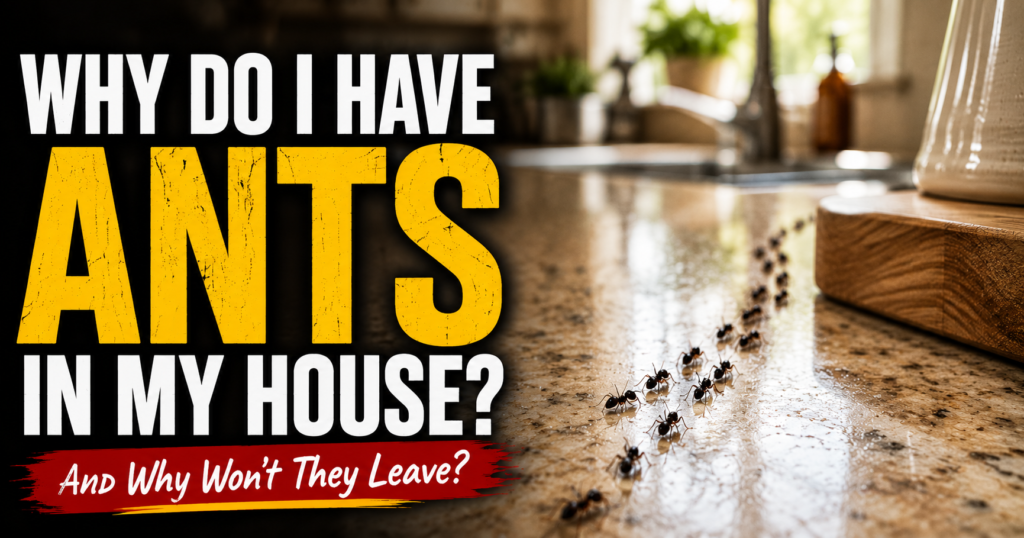
The answer is almost always something specific — a change in conditions outside, a new entry point, a resource they found that you didn’t know was there. Ants don’t wander into homes randomly. They come in with purpose, and figuring out that purpose is how you actually solve the problem instead of just treating symptoms indefinitely.
The Core Reason Any Ant Enters Your Home
Every ant you see inside your house is a worker on a foraging mission. Its job is to find food or water, establish a trail back to the colony, and recruit more workers to exploit whatever it found. The ant doesn’t know it’s in your house. It knows it found something worth having and it’s doing its job.
That means something in or around your home changed — a new food source appeared, moisture increased somewhere, outdoor conditions pushed the colony to expand its foraging range, or a new entry point opened up. Finding that trigger is the starting point for fixing it.

The Most Common Reasons Ants Come Inside
The Weather Changed
Weather is the single most common trigger for sudden ant invasions that seem to come from nowhere.
After heavy rain: Rain floods outdoor ant nests, forcing colonies to relocate or extend their foraging deep into dry shelter — which often means your home. If your ant problem appears or spikes dramatically after rain, this is almost certainly why. The ants aren’t after food — they’re displaced and looking for dry ground.


During hot dry spells: When soil dries out and outdoor water sources disappear, ants forage for moisture aggressively. Your home’s plumbing — even just the condensation on cold pipes — provides the water they can’t find outside. Summer ant invasions that center around sinks, bathrooms, and laundry rooms are almost always moisture-driven. For persistent indoor humidity, a a dehumidifier for bathroom humidity may be one tool to consider alongside fixing leaks and improving ventilation.
As temperatures drop in fall: Ants don’t hibernate but they slow down significantly in cold weather. In the weeks before temperatures drop they forage aggressively to build food stores, and the warmth of your home becomes an attractive destination as outdoor temperatures decline. Fall ant invasions often come from colonies that have been nearby all summer but weren’t pressing into the house until conditions changed.
They Found a Food Source
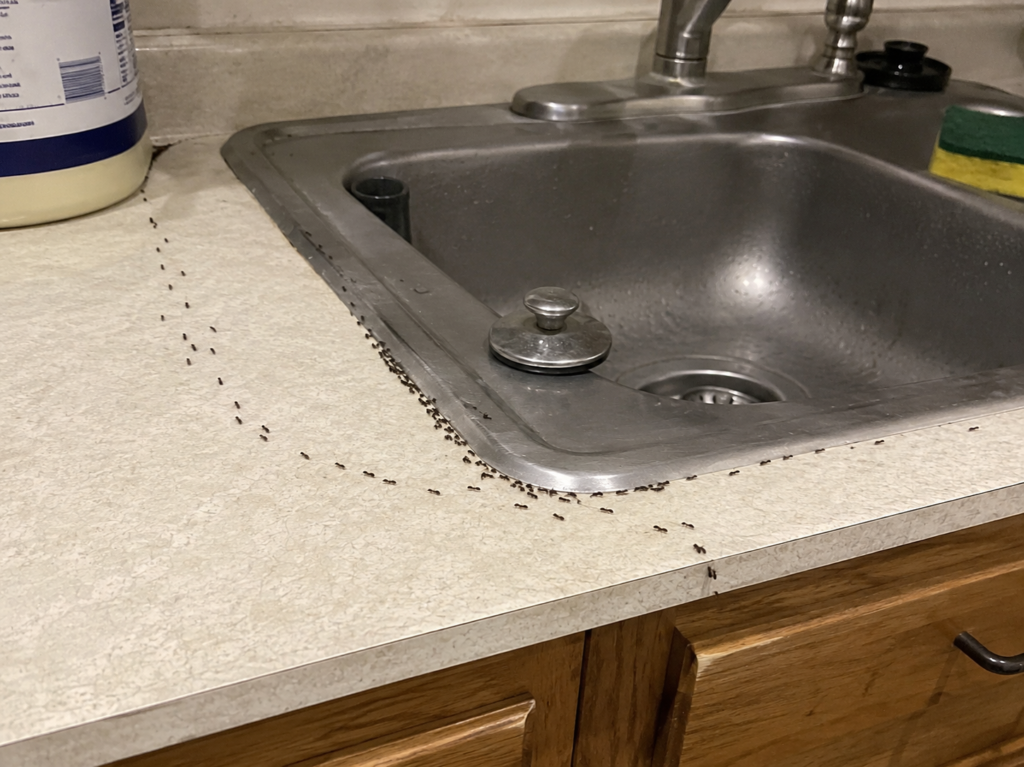
You don’t have to leave crumbs on the counter to attract ants. They detect food sources that are completely invisible to you — trace amounts of sugar, grease residue, the dried ring from a spilled drink, the residue inside an improperly rinsed recycling container.
Common hidden food sources throughout the house:
- Grease film on the stove, backsplash, and range hood — accumulates slowly and is rarely fully removed by surface wiping
- Sticky residue inside pantry shelves from old spills
- Crumbs and debris under and behind the refrigerator and stove
- Pet food left in a bowl on the floor, or the residue left in the bowl after feeding
- Fruit — especially overripe fruit — left on the counter
- Improperly sealed containers of sugar, honey, syrup, or anything sticky
- Recycling bins with insufficiently rinsed containers
- Crumbs in couch cushions or under furniture in living areas
- Food or crumbs in bedroom areas — kids eating in their rooms is a more common ant trigger than most parents realize
They Found Water
Moisture is often more important than food. Ants can survive surprisingly long without eating. They cannot survive without water. Any consistent moisture source in your home — visible or not — is a powerful attractant.
A slow drip under the kitchen or bathroom sink. Condensation on cold water pipes in a cabinet. A leak behind the dishwasher or refrigerator water line. The moisture that accumulates in a drip tray. A bathroom with consistently high humidity from inadequate ventilation. Finding and fixing these moisture issues often resolves an ant problem faster than any treatment product.
A New Entry Point Opened Up
Homes shift and settle over time. Caulking dries out and cracks. Weatherstripping deteriorates. Gaps open around pipes as plumbing ages. A gap that didn’t exist last year may exist now — and ants that have been foraging near your home find it and walk in.
Entry points also open up after work is done on the house. Plumbing repairs, electrical work, renovations — any time walls or floors get opened up, new gaps may appear that weren’t sealed properly when the work was completed. If your ant problem appeared shortly after work was done on your home, that’s worth investigating.
The Colony Near Your Home Grew
Ant colonies grow. A colony that was small enough to sustain itself on outdoor resources last year may have grown to the point where it needs to expand its foraging territory this year — which may include inside your home for the first time. This is especially common with Argentine ants, which form massive interconnected supercolonies that expand continuously.
This situation is frustrating because nothing in your home changed — the colony just got bigger and your home is now within their foraging range. The solution is the same as any other ant problem but it helps to understand that you didn’t do anything wrong.
Something Was Brought Inside
Ants hitchhike. Potted plants brought in from outdoors often have colonies living in the soil — particularly if the plant was kept outside for any length of time. Cardboard boxes stored in a garage or shed can harbor ant colonies or eggs. Firewood brought inside may have ants living under the bark.
If your ant problem appeared suddenly after bringing something inside, check that item carefully. A plant with ants in the soil should go back outside immediately and be treated or repotted with fresh sterile potting mix.


Where Ants Typically Show Up — and What It Tells You
The location of your ant problem gives you significant information about the source and the species.
Ants in the Kitchen
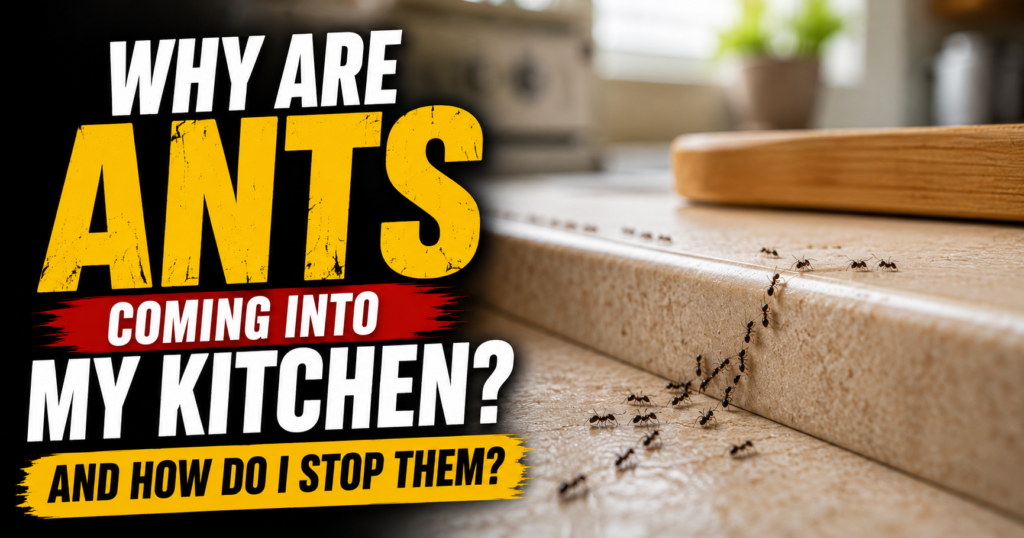
The most common location by far. Kitchens have food, water, and warmth — everything ants need concentrated in one room. Kitchen ant problems almost always involve sweet-feeding species like odorous house ants, Argentine ants, or pavement ants following food and moisture trails in from outside. See our full guide on why ants keep coming into your kitchen for a deeper breakdown of kitchen-specific causes and solutions.
Ants in the Bathroom
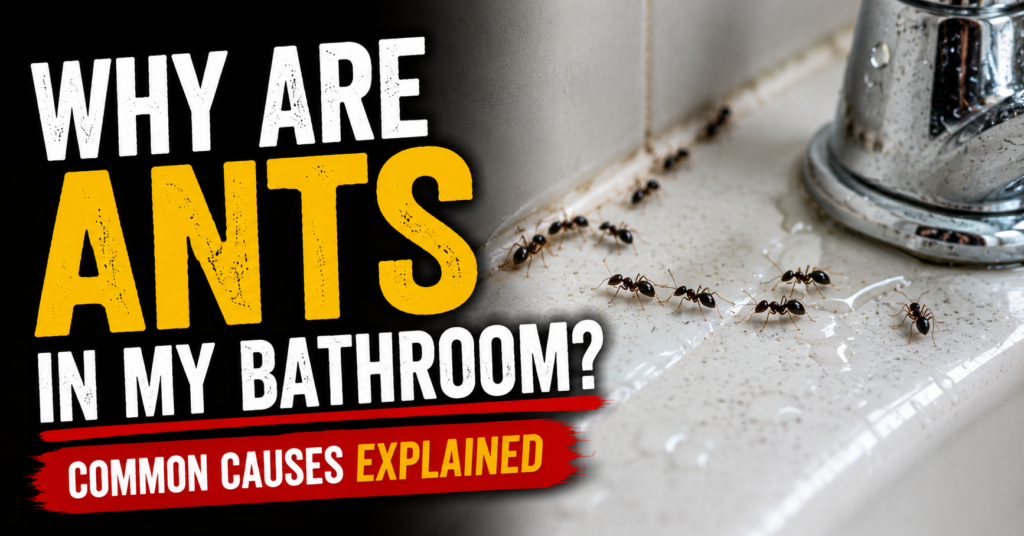
Bathroom ant problems are almost always moisture-driven. There’s rarely significant food in a bathroom — what there is is consistent moisture from the sink, shower, and toilet. If you have ants in your bathroom, look for water. A slow drip under the sink, caulking that’s failed around the tub or shower allowing moisture into the wall, a toilet that sweats condensation — these are the triggers. Fix the moisture source and the ants lose their reason to be there. The bathroom-specific causes and moisture checks are covered in Why Are Ants in My Bathroom? Common Causes Explained.
Ants in the Bedroom
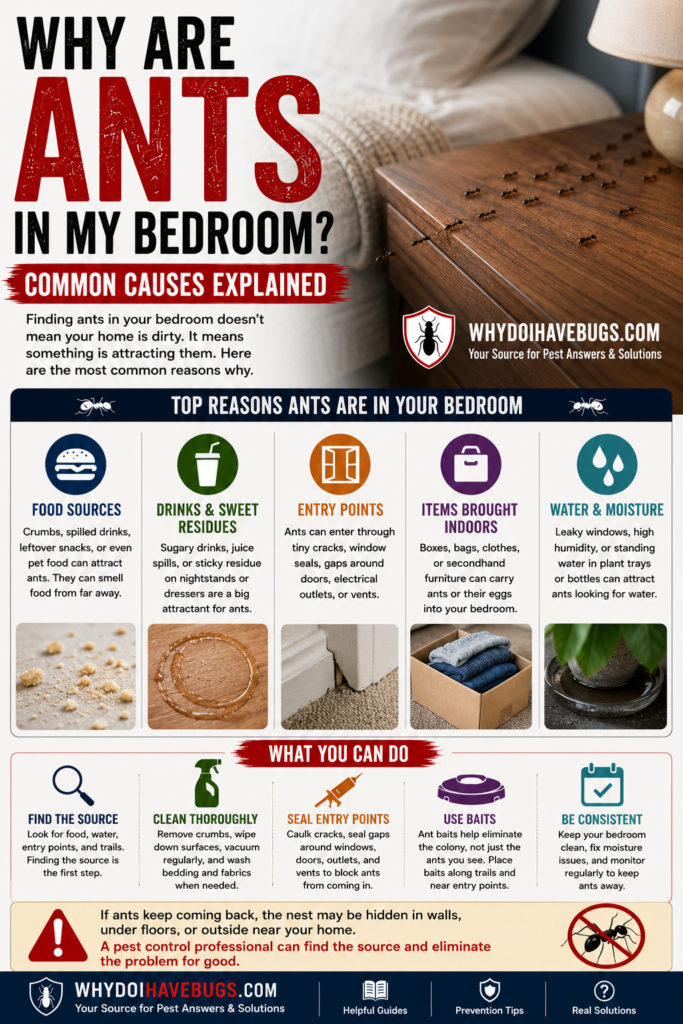
Less common but not rare, and almost always traced to food — eating in bed or in the bedroom, snacks left on a nightstand, a child’s room where food gets brought in regularly. Bedrooms don’t offer the moisture and warmth of kitchens and bathrooms, so food is typically the draw when ants appear there. A thorough cleaning and removing food sources from the bedroom usually resolves it quickly. The bedroom-specific causes are explained in ants in the bedroom.
Ants in the Laundry Room or Basement
Moisture and entry points. Laundry rooms have consistent moisture from the washer and often have gaps around utility penetrations where pipes and drains enter from outside. Basements have foundation cracks, sump pump areas, and high humidity. These are entry points and moisture sources more than food sources. Sealing gaps and addressing moisture is the primary fix.
Ants Along Windowsills and Door Frames
These are entry points. Ants traveling along windowsills and door frames are coming in through gaps in the framing, deteriorated caulking, or failed weatherstripping. The trail runs along the frame because that’s the route from outside to inside. Caulk the gaps and the trail stops having a destination.
Ants in the Walls
If you’re hearing rustling in walls or seeing ants emerging from wall outlets and gaps in baseboards, the colony may be nesting inside the wall void — not just foraging through it. This is more common with carpenter ants, which establish satellite colonies in wood, but odorous house ants and other species can nest in wall voids as well. A wall-nesting situation is harder to treat than a foraging trail and may require a different approach — gel bait applied at the emergence points rather than station-based bait in the open.
How to Figure Out Where They’re Coming From

Following the trail is the most reliable method. Ants travel in lines because they’re following pheromone trails laid by scout ants. That trail leads directly from the colony’s entry point to whatever they found worth eating or drinking. The science behind those pheromone-guided lines is explained in Why Do Ants Follow Each Other? The Science Behind Ant Trails.
Watch the trail and follow it in both directions. One end leads to the food or water source — that’s what you need to eliminate. The other end leads to the entry point — that’s what you need to seal. Both ends of the trail need to be addressed for the fix to hold.
If the trail disappears into a wall, under a baseboard, or behind an appliance — that’s your entry point. Get a flashlight and look carefully at where the trail enters. Is there a gap around a pipe? A crack in the baseboard? A space under the door trim? That’s where your caulk or steel wool goes.


What Actually Gets Rid of Them
The most effective approach combines bait to eliminate the colony, entry point sealing to stop the flow, and moisture and food source elimination to remove what attracted them.
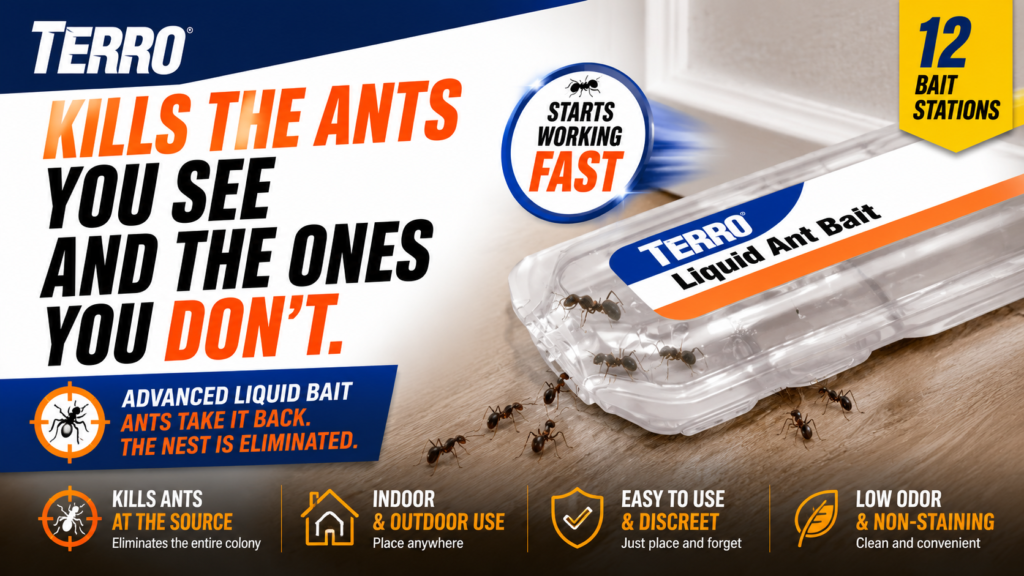
Liquid bait is the foundation. TERRO liquid ant bait stations placed on active trails let worker ants feed on borax-laced liquid and carry it back to the colony, killing the population including queens from the inside out. It takes one to two weeks for full effect but it eliminates the colony rather than just the foragers you can see. Place multiple stations on active trails and leave them completely alone while they work — the surge of ants you’ll see at the stations in the first few days is the treatment working, not failing.
Seal every entry point you can find. Caulk pipe gaps under every sink. Reapply weatherstripping on exterior doors. Seal gaps around window frames. Check utility penetrations on exterior walls. A sealed entry point is better than any treatment — bugs that can’t get in don’t need to be eliminated.
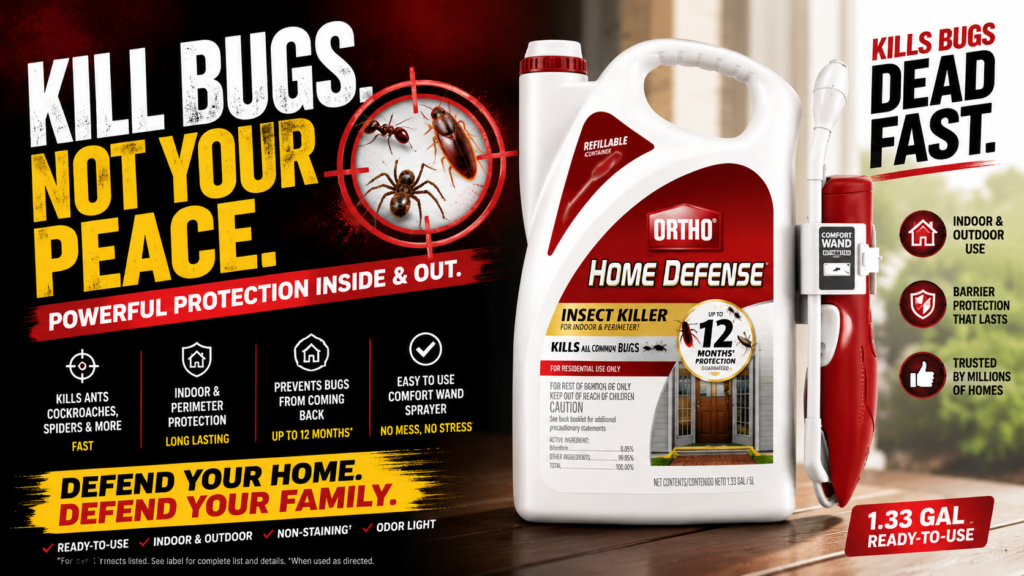
Apply a perimeter barrier outside. Ortho Home Defense applied along the foundation and around entry points creates a residual kill barrier that stops ants before they reach your home. For recurring seasonal ant problems, a consistent perimeter treatment every one to three months is the single most effective preventive step available.
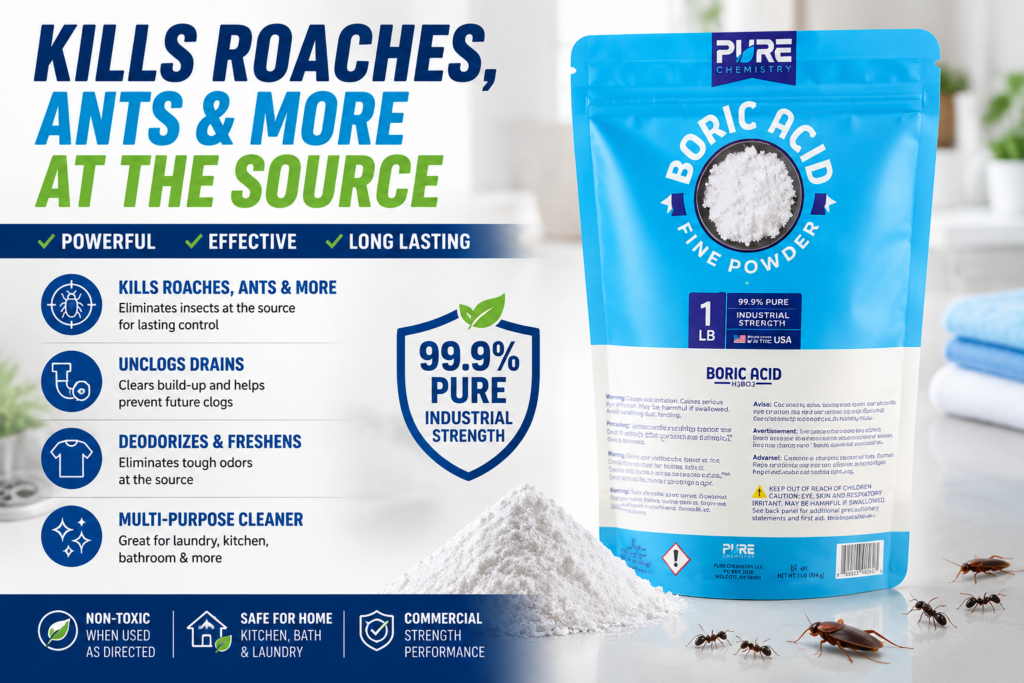
Add long-term powder treatment. Boric acid applied as a thin dust in hidden zones — inside cabinet voids, along the back of shelves, at confirmed entry points — creates a permanent residual kill layer that works independently and lasts indefinitely in dry undisturbed locations.
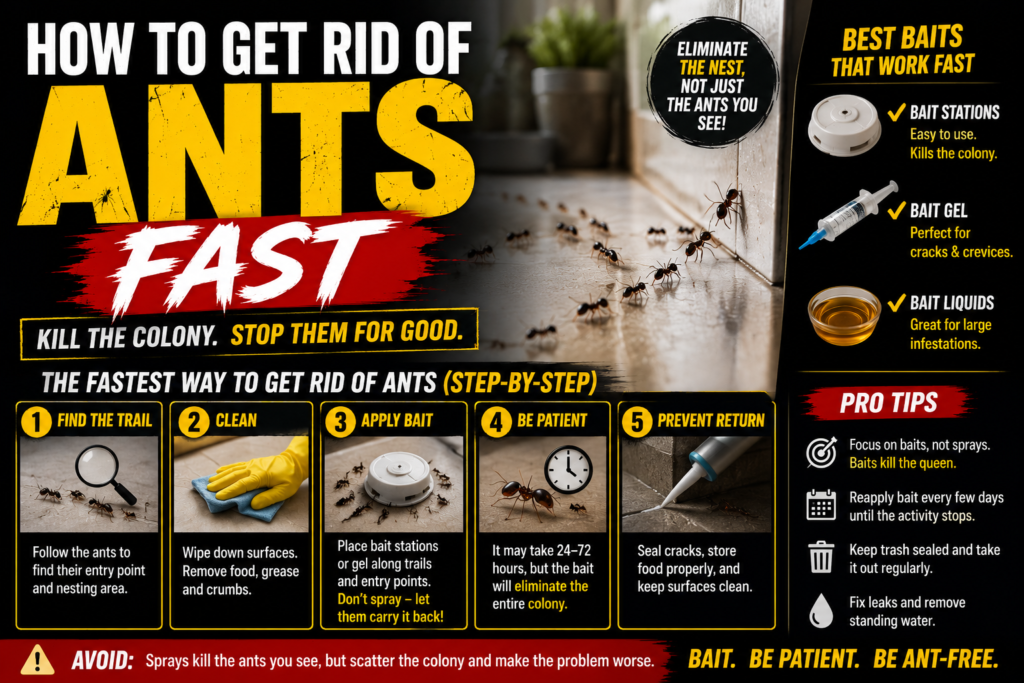
For the complete step-by-step treatment sequence, see our full guide on how to get rid of ants fast — it covers exactly what to do and in what order for the fastest results.
How to Keep Ants From Coming Back
Treating the current infestation solves today’s problem. These habits are what keep it from becoming next month’s problem too.
Maintain bait stations year-round. One or two fresh TERRO stations under the kitchen sink costs almost nothing and catches scout ants before they recruit a colony. Replace every few months. This single habit prevents more ant infestations than anything else you can do.
Store food in sealed hard containers. Anything in a bag or cardboard box that can be breached goes into a container with an actual lid. Sugar, flour, cereal, rice, pasta, pet food — all of it. Remove the food source and you remove the primary reason ants want to be inside.
Fix moisture immediately. The moment you find a drip — under any sink, behind any appliance — fix it. Don’t let it sit. Persistent moisture is as attractive as food and harder to notice since it doesn’t look like an obvious ant attractant.

Keep up with perimeter treatment. Reapply your outdoor barrier spray every one to three months through active season. Ants that die at your foundation never make it inside to find the entry point in the first place. For this part of the routine, Ortho Home Defense perimeter treatment can be considered alongside sealing gaps and correcting moisture problems.
Check entry point seals periodically. Caulk cracks over time. Weatherstripping wears out. A gap that was sealed last year may have opened again. A quick inspection twice a year — spring and fall — catches these before ants do.
Ants in the house feel like a bigger problem than they are. They show up for specific reasons, they come in through specific places, and they respond quickly to the right treatment used correctly. Find the why, fix the how, eliminate the colony. That’s the whole equation.