You’ve got bed bugs — or you’re doing everything you can to make sure you never do. Either way, bed bug interceptors are one of those products that sound almost too simple to work. Little plastic cups that go under your bed legs. That’s it. No chemicals, no electricity, no complicated setup. And yet pest control professionals recommend them constantly, both for active infestations and long-term prevention.
There’s a reason for that. This review covers exactly what interceptor cups do, why they work, how to use them correctly, and whether this 12-pack is the right buy for your situation.
What You Need to Know First
Bed bug interceptor cups work — and they work well for exactly what they’re designed to do. They trap bed bugs moving between the floor and your bed, giving you both a monitoring tool and a physical barrier that cuts off one of the main routes bugs use to reach you while you sleep. They won’t eliminate an infestation on their own, but as part of a complete bed bug defense alongside a mattress encasement and targeted treatment, they’re an essential piece of the puzzle. The 12-pack gives you enough to cover a full bed plus extras for monitoring in other areas.
What Are Bed Bug Interceptors?
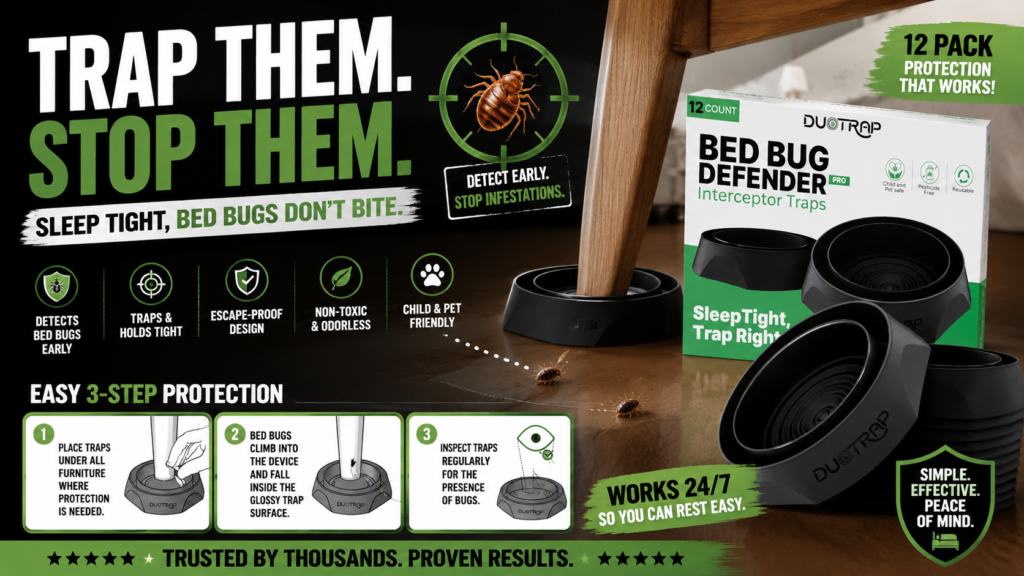
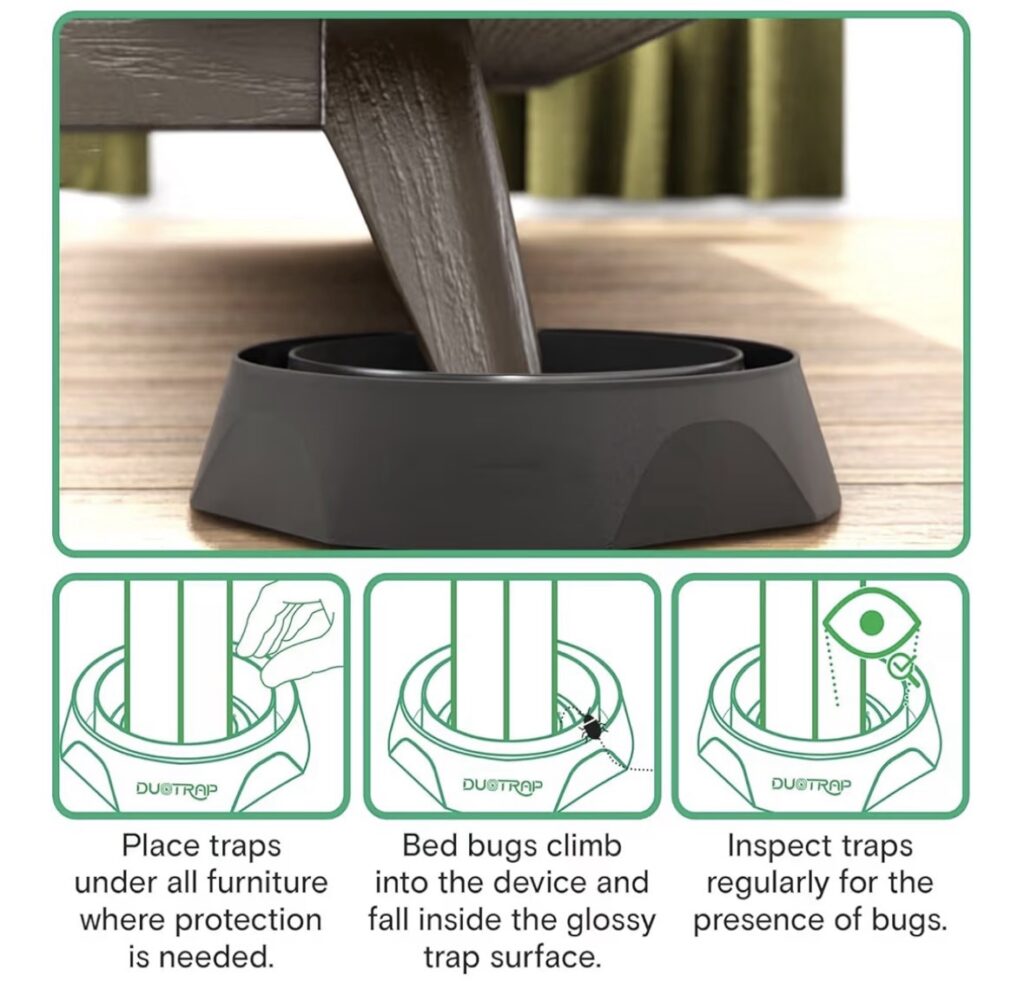
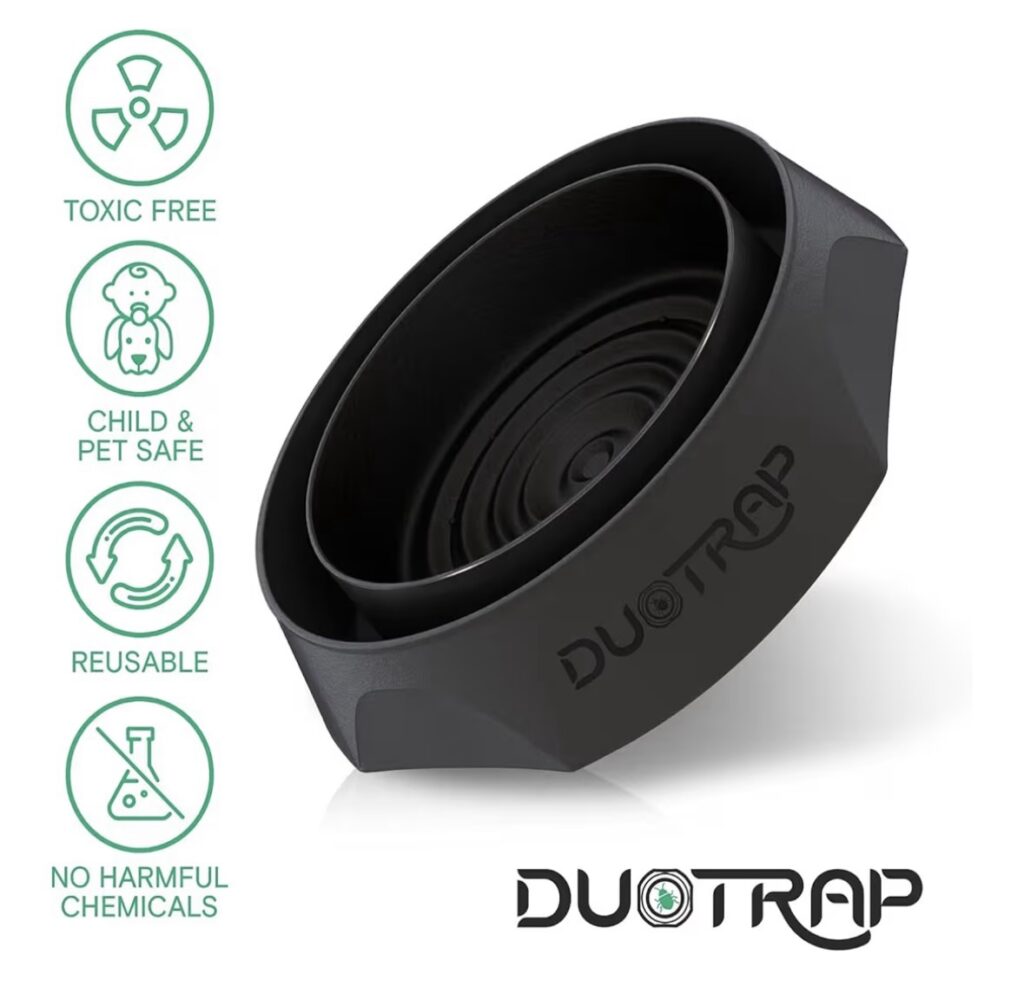
Bed bug interceptors are simple plastic traps designed to sit under each leg of your bed frame. Each unit has two rings — an inner ring that the bed leg sits in, and an outer ring that creates a moat-like channel around it. The channel walls are smooth and slightly angled, making them impossible for bed bugs to climb out of once they’ve fallen in.
Bed bugs can’t fly and can’t jump. They travel on foot — up from the floor to the bed, or down from the bed to the floor. The interceptor sits at the only point where those two worlds connect: the bed leg. Any bug traveling up toward the bed falls into the outer channel and can’t get out. Any bug traveling down from the bed falls into the inner channel and can’t get out either.
The result is a physical trap that requires no chemicals, no power, and no maintenance beyond periodic checking. It just sits there and catches whatever tries to cross it.
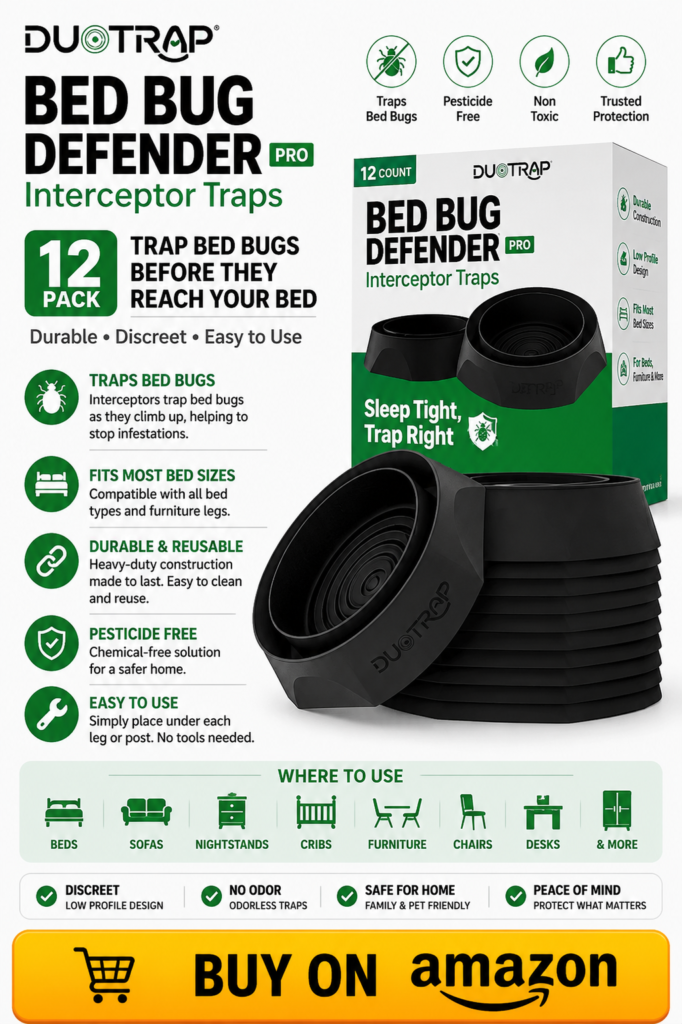
→ Check the current price on the 12-Pack Bed Bug Interceptors on Amazon — enough to cover a full bed with spares for monitoring elsewhere.
How Bed Bugs Actually Travel — And Why This Matters
Understanding bed bug movement makes it immediately obvious why interceptors are so effective.
Bed bugs feed on human blood while you sleep. Between feedings they retreat to harborage sites — mattress seams, box spring joints, bed frame cracks, baseboards, and wall voids near the bed. Every night when you get into bed, bed bugs in these harborage sites travel to reach you. The primary route for bugs coming from floor-level harborage spots is up the bed leg.
If every bed leg is sitting in an interceptor cup, that route is blocked. Bugs that try to climb up fall into the outer channel. Bugs that successfully fed and are returning to floor-level harborage fall into the inner channel on the way down. Either way, they’re trapped.
This doesn’t stop bugs already living in your mattress or box spring — which is why a mattress encasement is the companion product that handles that population. But it cuts off floor-based harborage from reaching you and traps bugs in a visible location where you can monitor the activity level of your infestation.
The Monitoring Function — This Is Underrated
Most people think of interceptors purely as traps. The monitoring function is equally valuable and gets overlooked.
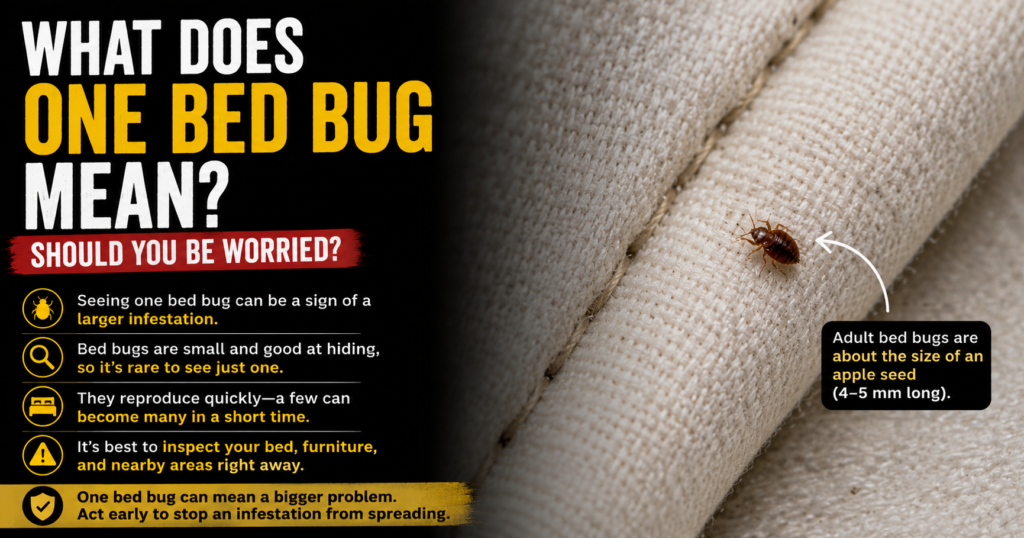
Bed bugs are notoriously hard to detect in the early stages of an infestation. They’re small, nocturnal, and hide in places you don’t regularly inspect. By the time most people notice they have bed bugs, the infestation has been established for weeks or months. If you've spotted only one, what a single bed bug may indicate can help you judge whether you may be seeing an early warning sign.
Interceptors change that. Check them weekly and you get a real-time picture of bed bug activity around your bed. Finding bugs in your interceptors tells you:
- You have an active infestation — even if you haven’t seen bugs anywhere else
- Where the activity is heaviest — which side of the bed, which leg
- Whether your treatment is working — declining catches over time mean the population is dropping
- Whether a treated infestation is truly eliminated — no catches for several weeks is a strong indicator
For anyone who travels frequently, lives in an apartment building, or has had bed bugs before, interceptors as a permanent monitoring tool give you early warning that no other product provides. Catching an infestation at two bugs is a very different problem than catching it at two hundred.
Who Needs These
Interceptors make sense in more situations than most people realize:
- Active bed bug infestation — part of your treatment protocol alongside encasements and targeted treatment
- Post-treatment monitoring — confirming the infestation is actually eliminated before you stop worrying
- Prevention in high-risk situations — frequent travelers, apartment dwellers, anyone who’s had bed bugs before
- New home or apartment — previous occupants may have had bed bugs without your knowledge; interceptors give you early warning
- College dorms and shared housing — high-traffic sleeping environments where bed bug introduction risk is elevated
- Anyone who recently purchased secondhand bedroom furniture — used bed frames and headboards are a common introduction source
If any of those apply to you, interceptors are worth having. They’re cheap, require no ongoing cost, and provide both protection and information. The downside of having them when you don’t need them is essentially zero. The downside of not having them when you do need them is a full infestation that could have been caught early.
How to Set Them Up Correctly
Setup is simple but a few details matter for the trap to work as intended.
Step 1: Isolate the Bed
Before placing interceptors, your bed needs to be fully isolated — meaning the only way on or off the bed is through the bed legs and the interceptor cups. If anything touches the bed other than the legs in the cups, you’ve created a bypass route bugs can use.
Check that:
- Bedding doesn’t drape to the floor — tuck it up or use fitted sheets that stay on the mattress
- The bed frame doesn’t touch the wall — pull it a few inches away from every wall
- No furniture touches the bed or the bed frame
- No clutter is stored under the bed that could provide an alternate climbing route
These seem like small details but they’re the difference between the interceptors working and bugs simply going around them entirely.
Step 2: Place a Cup Under Every Leg
Every single leg needs a cup. Skipping one leg gives bugs a free route to the bed. This 12-pack gives you enough for a full bed — typically 4 legs on a standard frame — with significant extras for monitoring stations elsewhere in the room or for beds with center support legs.
Place the bed leg in the inner ring of the cup. The outer ring creates the moat channel around it. Make sure the cup sits flat on the floor — on carpet, you may need to press it down slightly to ensure it’s stable and level.
Step 3: Don’t Add Anything to the Cups
Some people add talcum powder to the channels to make them more slippery. This isn’t necessary with quality smooth-walled interceptors and can actually interfere with catching bugs by making the surface too slippery for bugs to even enter the channel. Leave the cups as-is — the smooth walls are already designed to prevent escape.
Step 4: Check Them Regularly
Look in the cups at least once a week. Use a flashlight — the channels are dark and bugs can be small. If you find bugs, don’t remove them immediately — count them, note which leg they were under, and document the date. This information tells you about the direction and intensity of the infestation.
Empty and clean the cups periodically — bugs that die in the channel decompose and can make it harder to spot new catches.
Tip: Photograph what you find in the cups before emptying them. A photo record of catch counts over time is useful for tracking whether treatment is working and for showing a pest control professional if you end up calling one.
What Interceptors Won’t Do
Being straight about the limits keeps you from relying on them for something they’re not designed for.
They don’t eliminate an infestation. They trap bugs in transit but don’t affect bugs living in your mattress, walls, or elsewhere in the room. For elimination you need encasements, targeted treatment, and potentially professional heat treatment. Interceptors are one layer of a complete approach — not the whole solution. For the active treatment layer that reaches bugs hiding around the room, pair interceptors with targeted bed bug spray treatment.
They don’t work if the bed isn’t isolated. Bedding on the floor, the bed touching the wall, furniture next to the bed — any of these create bypass routes that make the cups irrelevant. The isolation step is non-negotiable.
They don’t catch bugs that are already in the mattress. Bugs living inside the mattress don’t need to travel via the bed legs. That population is handled by a properly installed mattress encasement that seals them in and starves them out over time.
Building the Complete Bed Bug Defense
Interceptors work best as one layer in a system. Here’s how the full bed bug defense fits together:
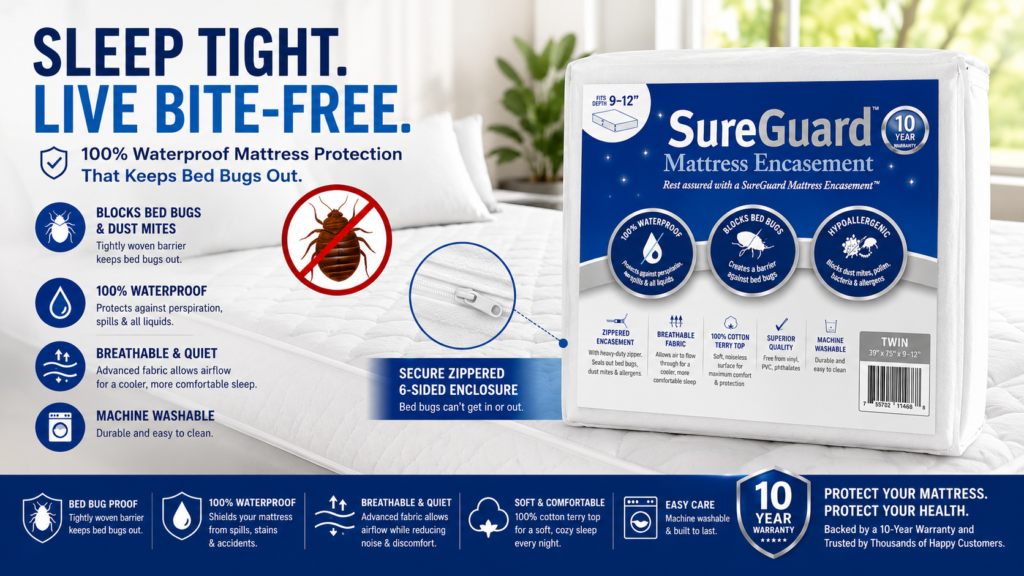
Mattress and box spring encasements seal the bugs already living in your mattress and box spring, cutting off that harborage entirely and starving them out. The encasement also prevents new bugs from establishing inside the mattress going forward. If you haven’t done this yet, our mattress encasement review covers exactly what to buy and how to install it correctly.
Interceptor cups under every bed leg block floor-to-bed travel routes and give you ongoing monitoring data about infestation activity.

Diatomaceous earth applied along baseboards, in cracks in the bed frame, and around the perimeter of the bedroom creates a physical kill barrier that works on bed bugs specifically — and importantly, bypasses the pesticide resistance that many bed bug populations have developed. See our full diatomaceous earth review for application guidance.

Boric acid in wall voids and hidden zones around the bedroom adds long-term residual coverage in the spots powders and sprays can’t easily reach. Our boric acid review covers where and how to apply it.
Running all four layers gives you a complete bed bug defense — sealed mattress, blocked travel routes, kill barriers at floor level, and long-term residual in harborage zones. That’s how you actually eliminate and prevent bed bugs rather than just hoping they go away.



How to Keep Bed Bugs From Coming Back
Once you’ve dealt with an infestation — or protected against one — keeping it that way comes down to a few permanent habits.
Keep the interceptors in place permanently. They cost nothing to run and give you continuous monitoring. There’s no good reason to remove them once they’re set up.
Check them weekly without fail. The monitoring value only works if you actually look. Make it part of your weekly routine — takes thirty seconds per cup.
Never put luggage on the bed. Put it on a hard floor, in the bathroom, or on a luggage rack. A suitcase fresh from a hotel room is the most common way bed bugs enter a home.
Inspect secondhand furniture thoroughly before it enters your home. Every seam, every joint, every crack in the frame. If you can’t inspect it confidently, don’t bring it in.
When traveling, inspect the hotel room before unpacking. Pull back the sheets and check the mattress seams. Check behind the headboard. Keep luggage off the floor and off the bed.
Act immediately at any sign of activity. A bug or two in your interceptor cups caught early is a manageable problem. The same infestation ignored for two months is a major undertaking. Early detection is everything — which is exactly what the interceptors are there to provide.
Bed bugs are one of the more psychologically brutal pest problems you can deal with — the idea of something feeding on you while you sleep is genuinely unsettling. But they’re beatable with the right tools used correctly. Grab the 12-Pack Bed Bug Interceptors on Amazon, get your bed isolated tonight, and start monitoring. The sooner you have eyes on the problem the sooner you can get ahead of it.