
One of the biggest surprises about fireflies is that their diet changes dramatically throughout their lives.
Most people assume they eat the same foods from the time they hatch until they become adults.
That’s actually far from the truth.
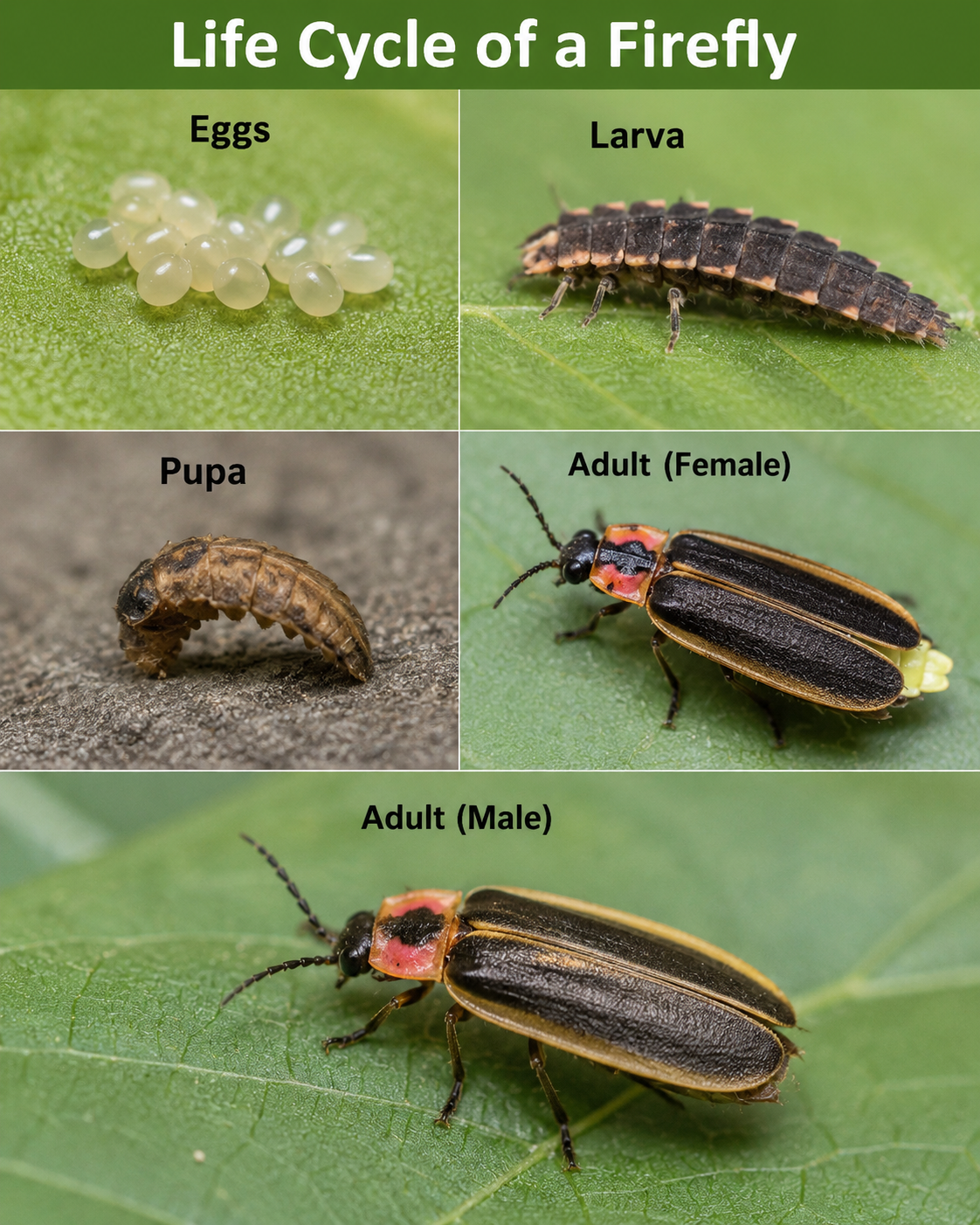
A firefly larva spends months, and often years, actively hunting prey beneath leaves and in moist soil.
The adult you see flashing across your yard on a summer evening may eat very little, or nothing at all, depending on the species.
Understanding what fireflies eat helps explain why they’re considered beneficial insects and why seeing them around your home is usually a good sign. Their role in the ecosystem is part of what makes fireflies so interesting, as this overview of why fireflies are beneficial explains.
If you’ve ever wondered what keeps these fascinating beetles alive, here’s everything you need to know.
The Short Answer
Fireflies eat different foods depending on their stage of life.
Firefly larvae commonly feed on:
- Slugs.
- Snails.
- Earthworms.
- Soft-bodied insects.
- Other small invertebrates.
Adult fireflies are much more variable.
Some species feed on nectar and pollen.
Some drink water or dew.
Some prey on other fireflies.
Others don’t appear to feed at all during their short adult lives.
Firefly Larvae Are Hungry Predators
When I first learned about fireflies, I assumed the glowing adults were the most active stage of their lives.
They’re not.
The larval stage is where most of the eating happens.
Firefly larvae spend one to two years living beneath leaf litter, inside moist soil, beneath logs, or in other damp places where prey is abundant.
Unlike the peaceful adults, larvae are active hunters.
They search for slow-moving prey before injecting digestive fluids that help immobilize and break down their meal.

Slugs Are One of Their Favorite Foods
If you grow flowers or vegetables, this is excellent news.
Slugs are among the favorite meals of many firefly larvae.
Since slugs feed on leaves, seedlings, and garden plants, firefly larvae provide a natural form of pest control.
Instead of reaching for slug bait immediately, nature often has its own predators already at work beneath the soil.
It’s one of the reasons I consider fireflies some of the most beneficial insects you can have around your property.
They Also Hunt Snails
Snails are another important food source.
Much like slugs, they’re slow-moving, soft-bodied animals that make excellent prey for developing firefly larvae.
Several firefly species specialize in hunting snails, making them valuable allies in gardens where snails damage flowers, vegetables, and ornamental plants.
Earthworms and Other Small Invertebrates
Although slugs and snails receive most of the attention, they aren’t the only things on the menu.
Depending on the species, larvae may also feed on:
- Earthworms.
- Small insect larvae.
- Soft-bodied insects.
- Other tiny soil-dwelling invertebrates.
Their exact diet often depends on what naturally lives in the habitat around them.
Adult Fireflies Eat Very Differently
Once fireflies become adults, something interesting happens.
Their eating habits change dramatically.
Unlike the constantly feeding larvae, adult fireflies often spend most of their short lives focused on finding a mate rather than searching for food.
Depending on the species, adults may:
- Feed on flower nectar.
- Drink pollen.
- Consume small amounts of plant sap.
- Drink dew or water droplets.
- Eat other fireflies.
- Not feed at all.
That last point surprises many people.
Scientists believe many adult firefly species rely almost entirely on the energy they stored while they were larvae, allowing them to spend their brief adult lives reproducing instead of feeding.

Some Fireflies Eat Other Fireflies
This may be the most surprising firefly fact I’ve ever learned.
Not every firefly is as peaceful as it appears.
Females in the genus Photuris have earned the nickname “femme fatale fireflies.”
Instead of simply waiting for males of their own species, they imitate the flash patterns of females from other firefly species.
Unsuspecting males fly over expecting to mate.
Instead…
They’re captured and eaten.
Scientists believe these predatory females gain valuable nutrients and defensive chemicals by consuming other fireflies. It’s one of the most fascinating examples of mimicry found among insects.
Do Fireflies Eat Plants?
Not in the way most people think.
Fireflies aren’t considered plant pests.
They don’t chew leaves.
They don’t strip flowers.
They don’t damage vegetable gardens.
Some adults may sip nectar or feed on pollen, but that’s completely different from insects that actively damage plants.
If you’ve been wondering whether fireflies are harming your flowers, the answer is almost certainly no.

In fact, as I explained in my article about Are Fireflies Good or Bad? What Every Homeowner Should Know, they’re actually considered beneficial insects in most landscapes because their larvae help reduce slug and snail populations.
Do Fireflies Eat Mosquitoes?
This is probably the question I get asked most often.
Unfortunately, not really.
Many people hope fireflies are natural mosquito control.
While larvae may occasionally consume tiny soft-bodied invertebrates, mosquitoes aren’t considered a significant part of their diet.
Adult fireflies certainly aren’t flying around your yard hunting mosquitoes.
If your goal is mosquito control, dragonflies are much more effective predators than fireflies.
Do Fireflies Need to Eat Every Day?
Larvae certainly do.
They’re actively growing for months or even years and require a steady food supply.
Adults are different.
Many species live only a few weeks, and some survive for an even shorter period.

Because of their brief adult lifespan, many species either feed very little or not at all, relying instead on the energy they stored during the larval stage. That short adult period is part of the larger story covered in this guide to how long fireflies live.

Should You Feed a Firefly?
Generally…
No.
If you find a healthy firefly outdoors, the best thing you can do is simply leave it where it is.
It already knows where to find food, moisture, and suitable habitat.
If you’re observing one for a few minutes, I recommend releasing it exactly where you found it rather than trying to keep it.


If you’d like a closer look without harming the insect, I recommend using a Carson BugView 5X Magnifying Bug Catcher. It allows you to safely observe fascinating insects before releasing them, and I explain why it’s my favorite option in my review of the Best Catch and Release Bug Catcher.
Why Their Diet Makes Fireflies Beneficial
When you look at everything fireflies eat throughout their lives, it’s easy to understand why gardeners enjoy having them around.
Firefly larvae naturally help reduce populations of:
- Slugs.
- Snails.
- Small soft-bodied insects.
- Other garden invertebrates.
At the same time, adults don’t become pests.
They don’t damage your flowers.
They don’t attack vegetables.
They don’t invade your pantry.
Instead, they simply spend a few short weeks finding mates before the next generation begins.
That’s one of the reasons I always consider fireflies a welcome sight around my property.
Frequently Asked Questions
What do adult fireflies eat?
It depends on the species. Some adults feed on nectar, pollen, or other insects, while many appear to eat very little or nothing at all during their short adult lives.
What do baby fireflies eat?
Firefly larvae are predators that commonly feed on slugs, snails, earthworms, and other soft-bodied invertebrates living in moist soil and leaf litter.
Do fireflies eat plants?
No. Fireflies aren’t considered plant pests. Although some adults may sip nectar or pollen, they don’t damage flowers, vegetables, or landscape plants.
Do fireflies eat mosquitoes?
Not to any meaningful extent. Fireflies aren’t considered effective mosquito predators, and mosquitoes are not a major part of their diet.
Should I feed a firefly I found?
No. Healthy fireflies are best left in their natural habitat. If you temporarily observe one, release it where you found it so it can continue its normal life cycle.