
Whenever I suddenly notice several large metallic blue or green flies buzzing around my house, I immediately know I’m probably dealing with something different than ordinary house flies.
Blow flies almost always send me looking in completely different places.
Over the years, I’ve learned that these flies are excellent clues.
They’re usually telling me that something nearby is beginning to decompose.
Sometimes the answer is simple.
Other times it takes a little detective work.
Either way, finding the source is far more important than chasing the adult flies around the house.
If you’re still trying to figure out exactly which species you’re dealing with, I recommend comparing them with my guide on how to identify blow flies before going any further. Several fly species can look similar from across the room, and identifying them correctly completely changes where I begin my search.
The First Thing I Think About Is a Dead Animal
The number one cause of blow flies I encounter is a dead animal.
That doesn’t necessarily mean something large.
In fact, it’s often surprisingly small.
I’ve found dead mice inside wall cavities, birds trapped inside chimneys, squirrels in attics, rabbits beneath decks, and chipmunks inside crawl spaces that homeowners never even knew were there.
Many people assume they’d immediately notice a terrible smell.
That’s not always true.
Sometimes the flies arrive before any noticeable odor develops.
Other times the carcass is hidden well enough that the smell never reaches the living area at all.
The flies simply become the first clue that something needs attention.

Outdoor Sources Can Produce Indoor Problems
One mistake I see homeowners make is assuming every blow fly they find inside must have developed inside the house.
That’s often not the case.
Adult blow flies are excellent fliers.
I’ve tracked indoor fly problems back to:
- Dead birds beneath shrubs.
- Rabbits hidden under decks.
- Rodents beside foundations.
- Roadkill near the driveway.
- Hunting remains.
- Garbage containing meat scraps.
- Animal carcasses in nearby woods.
Even though the breeding source is outside, adult flies eventually find their way indoors through open doors, garages, damaged screens, attic vents, or tiny gaps around windows.
That’s why I always inspect both inside and outside the property before deciding where the problem started.


Garbage Usually Isn’t My First Suspect
When someone tells me they’re seeing ordinary gray house flies, garbage is one of the very first places I inspect.
Blow flies are different.
While they certainly can breed in garbage that contains meat or animal products, they’re much more strongly attracted to decaying animal tissue.
That’s one of the easiest ways I separate the two problems.

If your flies look like ordinary gray house flies, you’ll probably find my article explaining why house flies suddenly appear inside homes much more helpful because the causes are often completely different.
Correct identification saves a tremendous amount of time.
Why They Seem to Appear Overnight
One of the things that confuses homeowners most is how quickly blow flies seem to show up.
Yesterday there weren’t any.
Today there are fifteen.
It feels almost impossible.
The reality is much different.
The flies have been developing for days.
You simply weren’t seeing them yet.
Once the pupal stage finishes, many adults emerge within a fairly short period.
That’s why the problem feels so sudden.
Understanding that timing also explains why spraying the adults rarely solves anything if the breeding source is still present.
New flies simply keep emerging.


I Pay Close Attention to Where They’re Flying
Another clue I rely on is where the flies are spending their time.
If nearly every blow fly is gathering around one upstairs window, I begin searching nearby.
If they’re concentrated in the basement, my inspection starts there instead.
The flies aren’t always directly above the source, but their behavior often narrows the search considerably.
I’ve solved more than one difficult infestation simply by paying attention to which windows attracted the most flies each afternoon.
Their behavior frequently points me in the right direction.
Understanding Their Life Cycle Helps Me Find the Problem
One reason blow flies can seem so persistent is that adults aren’t the only stage present.
While you’re seeing flies on the windows today, there may still be eggs, larvae, and pupae hidden near the breeding source.
That’s why I always think about the entire development process instead of only the adults flying through the house.

If you’ve already read my guide explaining the complete house fly life cycle from egg to adult, you’ll notice many similarities. Although blow flies develop somewhat differently, they still pass through the same basic stages of egg, larva, pupa, and adult.
Knowing that helps explain why flies sometimes continue appearing for several days after the original source has already been removed.


Why I Don’t Panic Over One Blow Fly
Finding a single blow fly inside my house doesn’t immediately make me think I have a serious problem.
Adult blow flies are strong fliers, and it’s entirely possible for one to wander indoors through an open garage door, a damaged window screen, or a door that’s been left open for a few minutes.
What gets my attention is a pattern.
If I find several blow flies every day or continue seeing them for a week or more, I know it’s time to start looking for an active breeding source instead of assuming they simply flew in from outside.
The frequency of the sightings usually tells me much more than the number I see on any given day.
Places I Inspect That Most Homeowners Never Think About
When the obvious areas don’t reveal the source, I start checking places that are easy to overlook.
Some of the locations that have surprised me over the years include:
- Behind attic insulation where rodents died.
- Inside chimney chases where birds became trapped.
- Beneath decks where wildlife sought shelter.
- Window wells that collected small animal carcasses.
- Crawl spaces with poor visibility.
- Basement storage rooms that are rarely entered.
- Sheds and detached garages.
- Under bushes where neighborhood cats leave prey.
I’ve learned that blow flies usually have a logical explanation. Sometimes it just takes patience to find it.
Why Killing the Flies Doesn’t Solve the Problem
One mistake I see over and over is homeowners grabbing a can of insect spray as soon as they notice blow flies.
That certainly kills the adults.
The problem is that it rarely addresses the reason they’re there.
If larvae are still developing nearby, new adults will continue emerging for days.
That’s why I spend much more time searching than spraying.
Once the breeding source disappears, the remaining adult flies eventually die without being replaced.
It’s a much more permanent solution than chasing flies around the windows every afternoon.
What I Do While I’m Searching
Sometimes finding the source takes a little time, especially if it’s hidden inside a wall or somewhere difficult to access.
While I’m investigating, I still like reducing the number of adult flies around the house.

For outdoor activity around garages, trash areas, and outbuildings, I’ve had excellent success using the Rescue! Outdoor Disposable Fly Trap because it attracts flies away from doors and outdoor living areas. I always position it well away from where people spend time so it pulls flies away from the house rather than toward it.
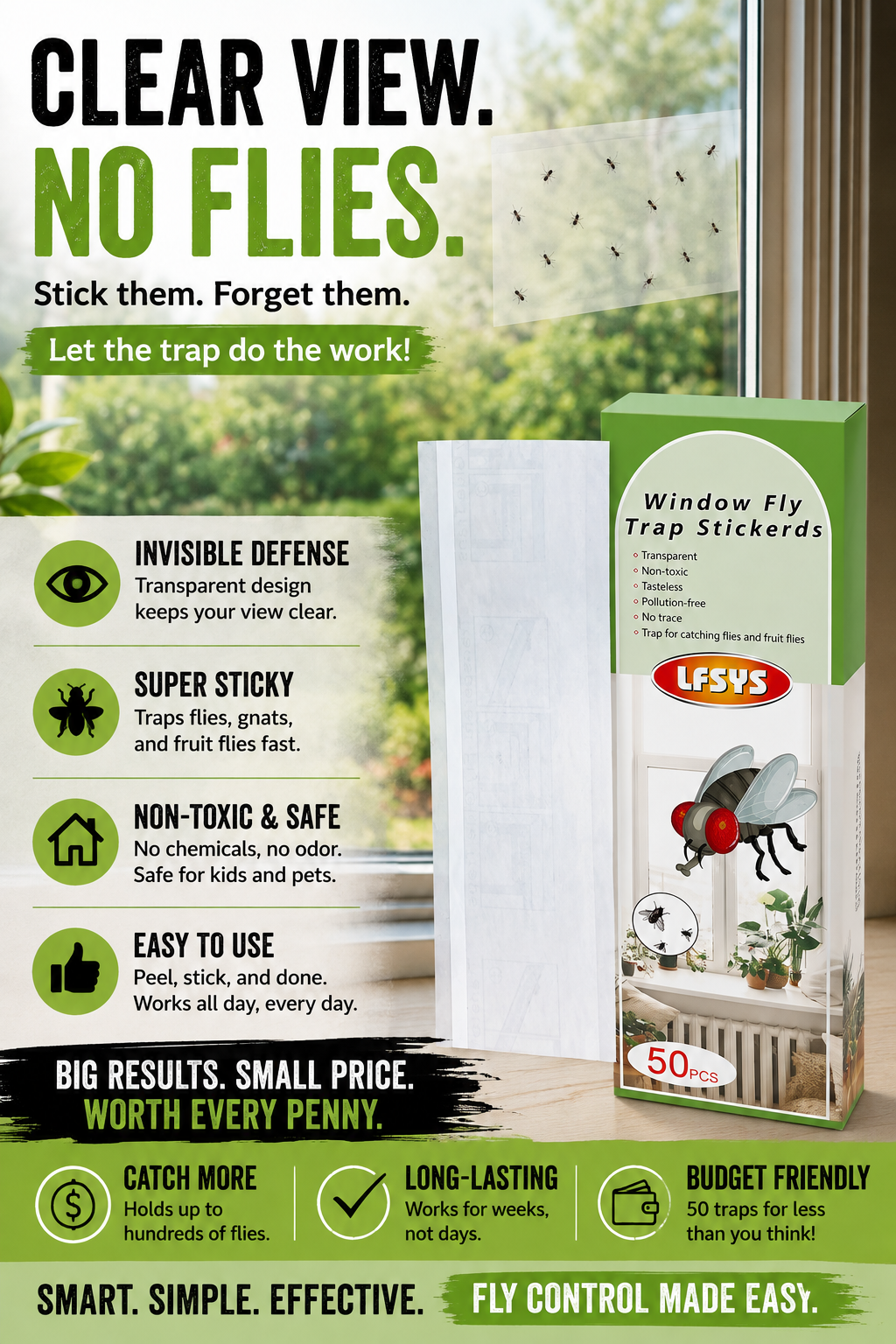
Inside the home, blow flies almost always end up gathering on bright windows after they become trapped indoors. That’s one reason I’ve had good results with the products I covered in my window fly trap review. They’re an easy way to reduce the remaining adults while I’m tracking down the real source.

If you’re still trying to decide which option makes the most sense for your situation, I also put together a guide comparing the best fly traps for different situations so you can choose the style that fits your home.


Don’t Confuse Blow Flies With House Flies
I’ve seen plenty of homeowners assume every fly is the same.
That often leads them in the wrong direction.
House flies usually send me looking for garbage, pet waste, compost, or food spills.
Blow flies make me think about animal carcasses and decaying meat instead.
That’s why I always identify the fly before I begin searching.
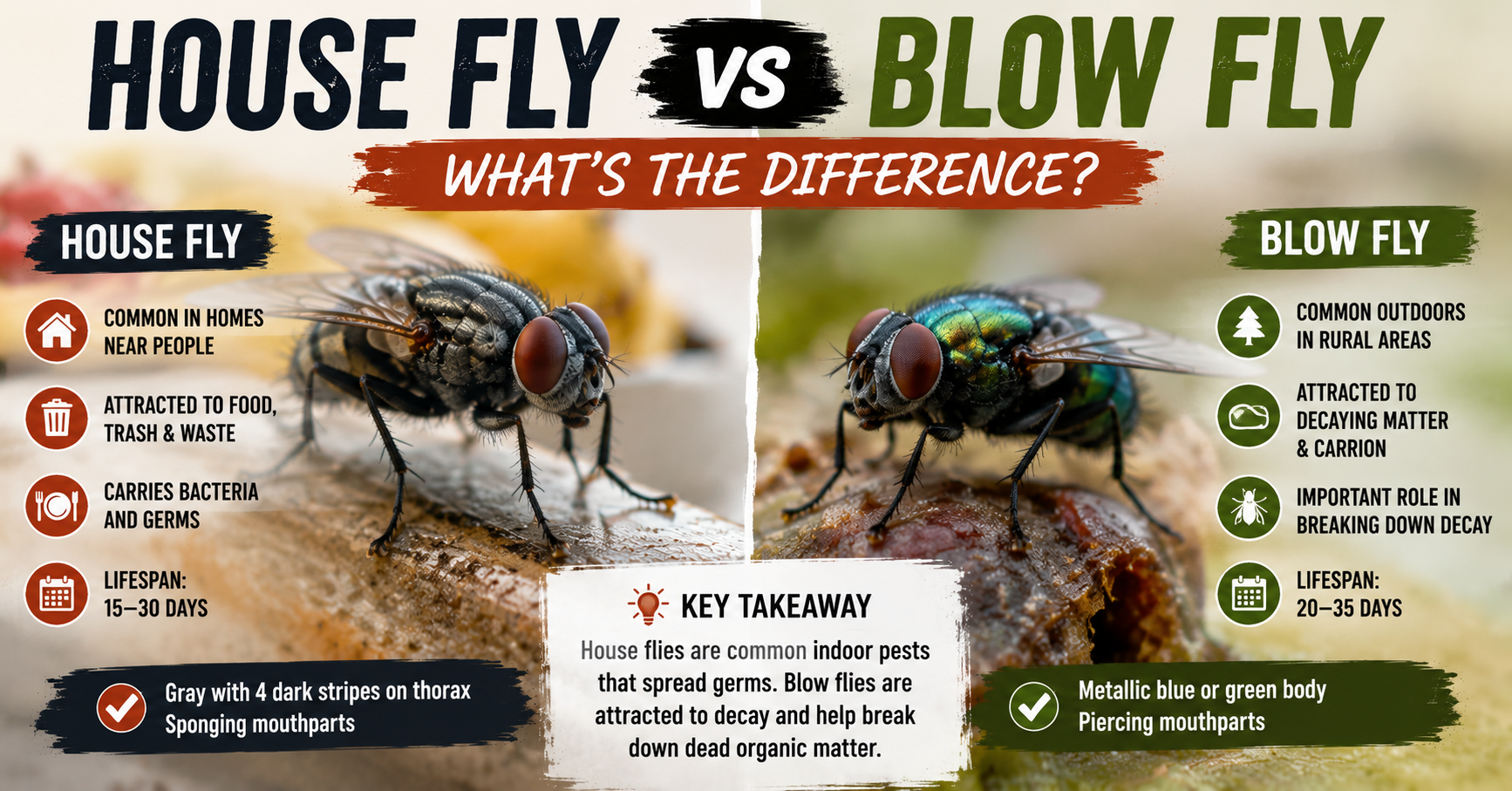
If you’re still deciding between the two, my comparison of house flies versus blow flies explains the differences I use during my own inspections and why each species points me toward a completely different source.
My Goal Is Always to Find the Story Behind the Flies
Every blow fly I find is giving me information.
Instead of asking, “How do I kill this fly?” I ask, “Why is this fly here?”
That one question has solved countless fly problems for me over the years.
Sometimes the answer is a forgotten bag of meat in an outdoor trash can.
Other times it’s a mouse that died inside a wall or a bird trapped in the attic.
Once I uncover that story, the flies usually disappear on their own because I’ve removed the reason they were there in the first place.
Frequently Asked Questions
Why did blow flies suddenly appear in my house?
A sudden appearance usually means a nearby breeding source has finished producing adult flies. In my experience, the most common causes are dead animals, decaying meat, or garbage containing animal products.
Can blow flies come from outside?
Absolutely. Many blow flies develop outdoors before flying into homes through open doors, damaged screens, attic vents, or other openings.
How long will blow flies stay around?
If the breeding source remains, new adults may continue emerging for several days or even weeks. Once the source is removed, the remaining adults gradually die off and the problem usually comes to an end.
Should I spray blow flies?
Sprays may kill the adult flies you can see, but they rarely solve the infestation by themselves. Finding and removing the breeding source is almost always the most effective long-term solution.
What’s the first place I should check?
I usually begin by inspecting areas where small animals commonly hide, including attics, crawl spaces, chimneys, sheds, under decks, and around the home’s exterior. If those areas don’t reveal the source, I continue expanding my search until I find what’s attracting the flies.
About the Author
Mark Sullivan has spent years helping homeowners identify fly species and trace infestations back to their source. He believes that correctly identifying blow flies is often the key to finding hidden problems before they become much larger and more difficult to solve.