Harris food grade DE kills bugs without chemicals — but only if you use it right. Honest review covering what it works on, where to apply it, and what to expect.
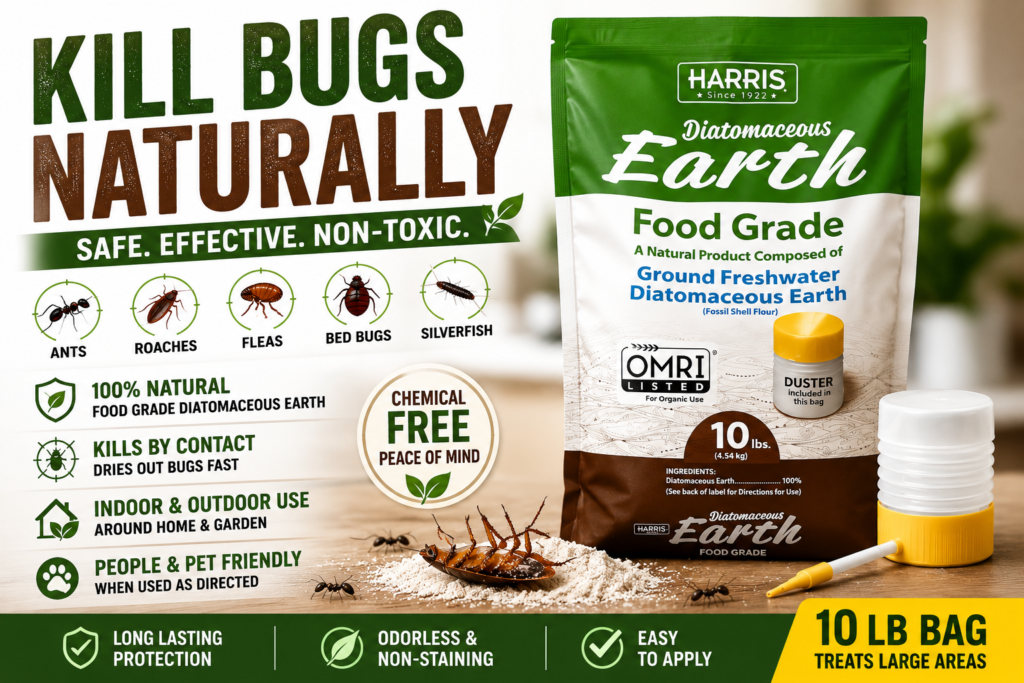
If you’ve been down the pest control rabbit hole for any amount of time, you’ve heard about diatomaceous earth. It sounds almost too simple — a powder made from fossilized algae that kills bugs. No harsh chemicals, no strong smell, safe around kids and pets. People either swear by it or write it off as hippie nonsense. The truth is somewhere more specific than either of those takes.
This review covers what diatomaceous earth actually is, how it works, where it performs well, where it falls short, and whether the Harris 10lb bag with the powder duster included is the right buy for your situation.
The Short Answer
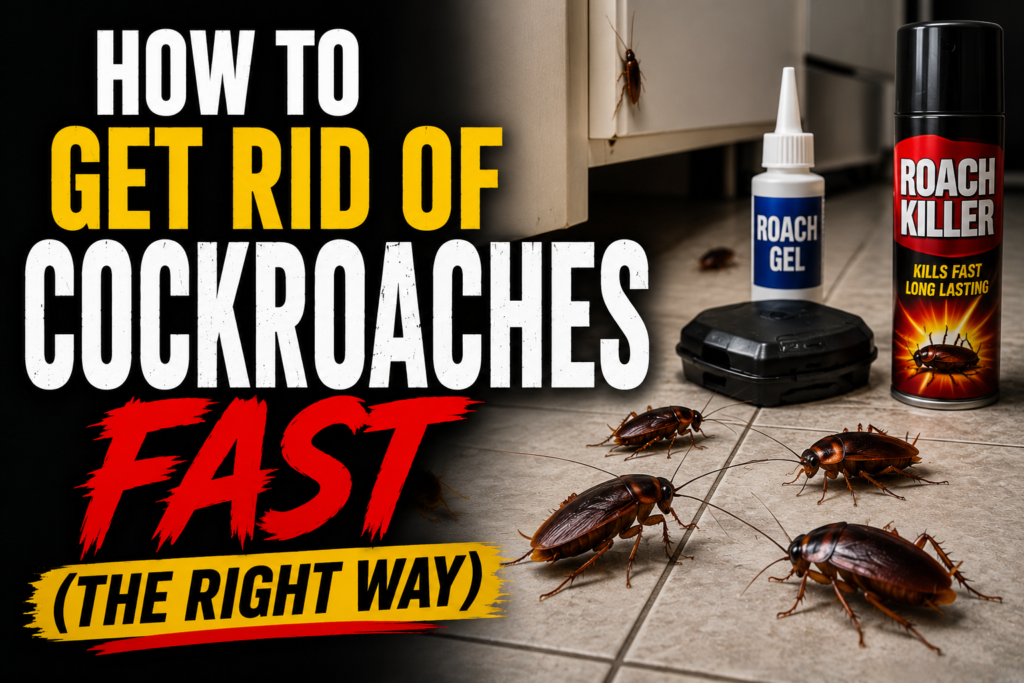
Harris Food Grade Diatomaceous Earth is a legitimate pest control product that works — but it works differently than most people expect. It’s a physical killer, not a chemical one, and it’s most effective as a long-term barrier and harborage treatment rather than a fast knockdown solution. For crawling bugs like roaches, ants, silverfish, bed bugs, and earwigs, it’s an excellent complement to bait treatments and a strong preventive tool. The 10lb bag with duster included is good value and gives you enough product to treat your whole home thoroughly. For a complete roach plan that combines bait with residual treatments, use this How to Get Rid of Cockroaches Fast (The Right Way).
What Is Diatomaceous Earth?
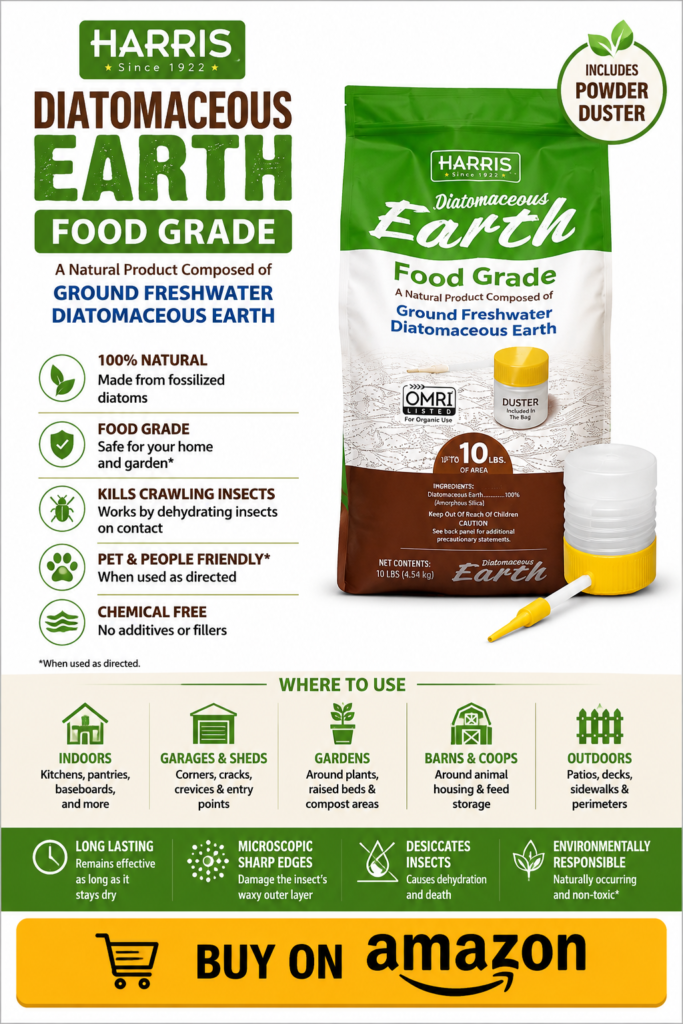
Diatomaceous earth — DE for short — is made from the fossilized remains of diatoms, which are tiny aquatic organisms with hard silica shells. When those shells fossilize and get ground into powder, the result looks like fine white dust but at a microscopic level is razor-sharp.
The food grade designation matters. Food grade DE is safe for use around humans and pets. Pool grade DE is chemically treated and should never be used for pest control indoors — it’s a different product entirely. Harris’s version is food grade, which is what you want.
It has no active chemical ingredients, no smell, and no toxicity to mammals at normal exposure levels. The EPA classifies food grade DE as generally recognized as safe. It’s one of the genuinely low-risk pest control options available.
→ Check the current price on Harris Diatomaceous Earth 10lb with Duster on Amazon — the included duster makes application significantly easier and more precise.


How Does It Work?
DE kills bugs through physical action, not chemistry. This is important to understand because it changes everything about how and where you use it.
When an insect walks through diatomaceous earth, the microscopic sharp edges of the fossilized silica particles scratch and penetrate the waxy outer layer of the bug’s exoskeleton. That waxy layer is what keeps the insect from drying out. Once it’s damaged, the bug loses moisture rapidly and dies from dehydration.
There’s no resistance possible. Bugs can’t evolve immunity to getting dehydrated. That’s one of DE’s most significant long-term advantages over chemical pesticides — it works the same way on the thousandth generation of roaches as it does on the first. DE can provide a resistance-bypassing barrier, while a complementary bed bug spray addresses bed bugs in room harborage sites with contact and residual treatment.
The tradeoff is speed. This is not a fast kill. Death from DE typically takes 24–72 hours after contact, sometimes longer depending on the bug and conditions. If you’re expecting to dust your baseboards and find dead bugs in the morning, you’ll be disappointed. DE is a slow grind, not a rapid response.
What Bugs Does It Work On?
DE works on any insect with an exoskeleton that crawls through it. It’s most commonly used against:
- Cockroaches — excellent in wall voids, under appliances, and behind outlets where roaches travel
- Ants — effective at entry points and along foraging trails
- Bed bugs — one of the few non-chemical options with solid evidence behind it for bed bug control
- Silverfish — ideal since they live in exactly the dark dry spots where DE performs best
- Earwigs — works well along exterior perimeters and in basement entry areas
- Fleas — effective in carpets and along baseboards where fleas travel
- Carpet beetles and stored product pests — useful in pantries and closets
It does not work on flying insects, since they don’t walk through it. It’s also less effective on soft-bodied insects like caterpillars that don’t have a hard exoskeleton to scratch. For flying insects that will not contact a floor-level powder barrier, a trap designed for flying insects examines a light-based trap made specifically for indoor capture.
Where DE Performs Best — and Where It Doesn’t
This is the part most reviews skip, and it’s the most important thing to understand about diatomaceous earth.
DE works best in dry conditions. When it gets wet, it clumps and loses its effectiveness. A dusting under your sink that gets splashed regularly isn’t going to do much. DE is ideal for:
- Wall voids and inside electrical outlet boxes
- Under and behind appliances where moisture doesn’t reach
- In attic spaces and crawl spaces
- Along dry baseboards in bedrooms and living areas
- Inside cabinet voids
- Under furniture and along bed frames for bed bug treatment
- In pantries and around stored food areas
It performs poorly in:
- High-moisture areas like under active sinks or in bathrooms with regular water exposure
- Outdoor applications where rain will wash it away
- Open floor areas where it gets disturbed and vacuumed up regularly
Think of DE as a hidden long-term barrier, not a visible surface treatment. Applied in the right spots and left undisturbed, it keeps working indefinitely. It doesn’t break down chemically, doesn’t evaporate, and doesn’t go stale — as long as it stays dry.
The Powder Duster — Why It’s Included and Why It Matters
Harris includes a powder duster in the bag, and this is genuinely useful rather than just a gimmick. Applying DE correctly requires getting a very light, even layer — almost like a dusting of powdered sugar. Too much in one spot wastes product and can actually deter bugs from walking through it.
Trying to do that with a spoon or by shaking the bag directly is messy and imprecise. The duster lets you puff small amounts exactly where you need them — into outlet boxes, along the back of cabinet shelves, into the gap under your refrigerator, into wall voids through small openings.
The thin application also matters for safety. A thick visible layer of DE is a fine particle dust that you don’t want to be inhaling regularly. Applied correctly as a thin hidden layer in cracks and voids, exposure is minimal. The duster helps you get the application right.
Tip: When applying DE in enclosed spaces like outlet boxes or wall voids, turn off nearby fans and HVAC first. You don’t want fine dust getting pulled into your air system. Apply, wait a minute for it to settle, then turn things back on.
How to Apply Harris DE for Maximum Effect
For Cockroaches
Focus on the places roaches actually travel. Behind the refrigerator, under the stove, inside cabinet hinges, along the back wall of under-sink cabinets, and inside electrical outlet boxes along the kitchen and bathroom walls. Apply a thin visible dusting — you should be able to see it but it shouldn’t be piling up.
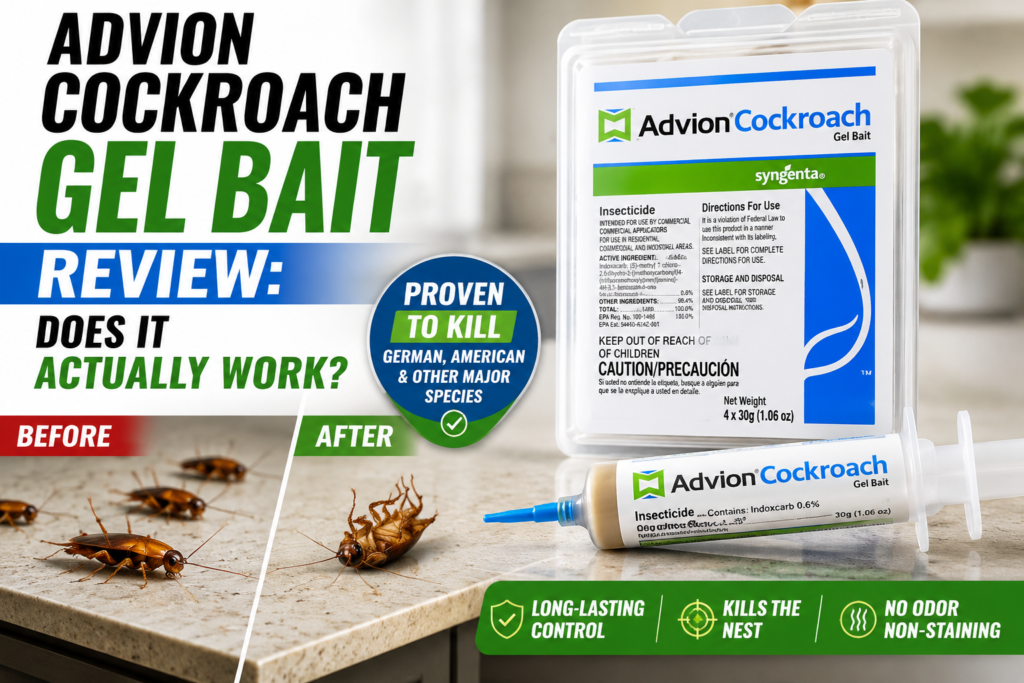
DE pairs extremely well with gel bait like Advion cockroach gel — bait kills the colony via cascade, DE kills stragglers and maintains a long-term barrier in harborage areas. Use bait in cracks and crevices, DE in the voids and pathways around them.
For Ants
Apply along baseboards in active areas, around window frames, along the exterior foundation where it stays dry, and at any entry points you’ve identified. For outdoor perimeter use, focus on areas protected from rain — under eaves, along the house foundation under an overhang, around the base of the garage door. For exposed areas where a spray barrier is more practical, compare this with Ortho exterior perimeter treatment.
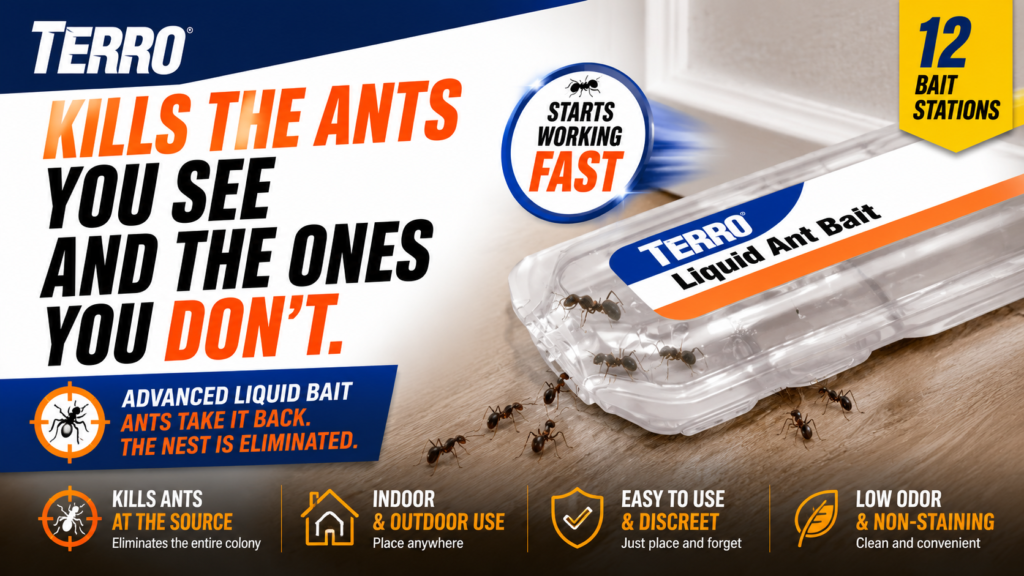
DE works well as a companion to TERRO ant bait stations — bait collapses the colony, DE handles ants at entry points. Same rule applies: keep DE away from your bait stations so it doesn’t deter ants from feeding on the bait.
For Bed Bugs
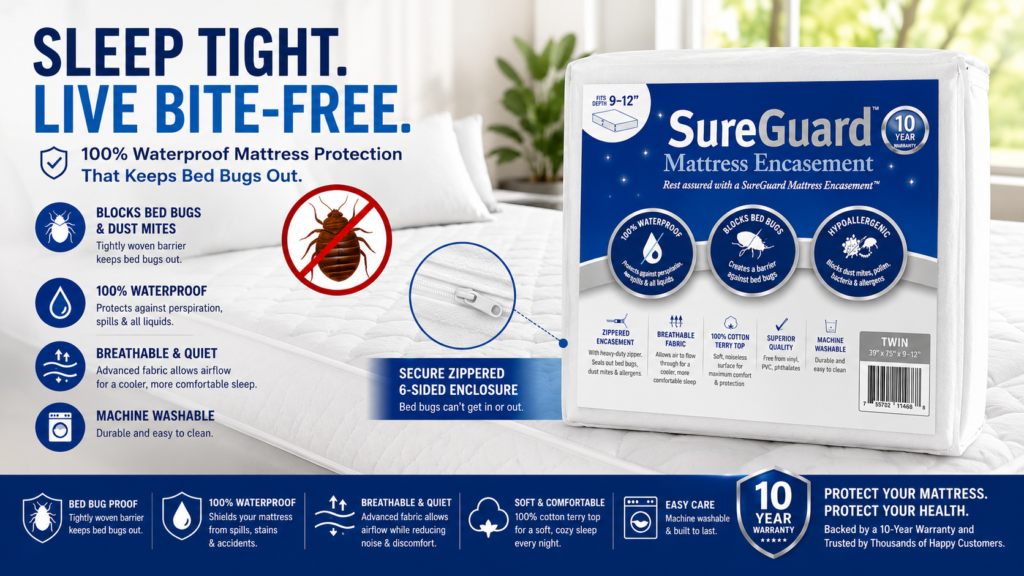
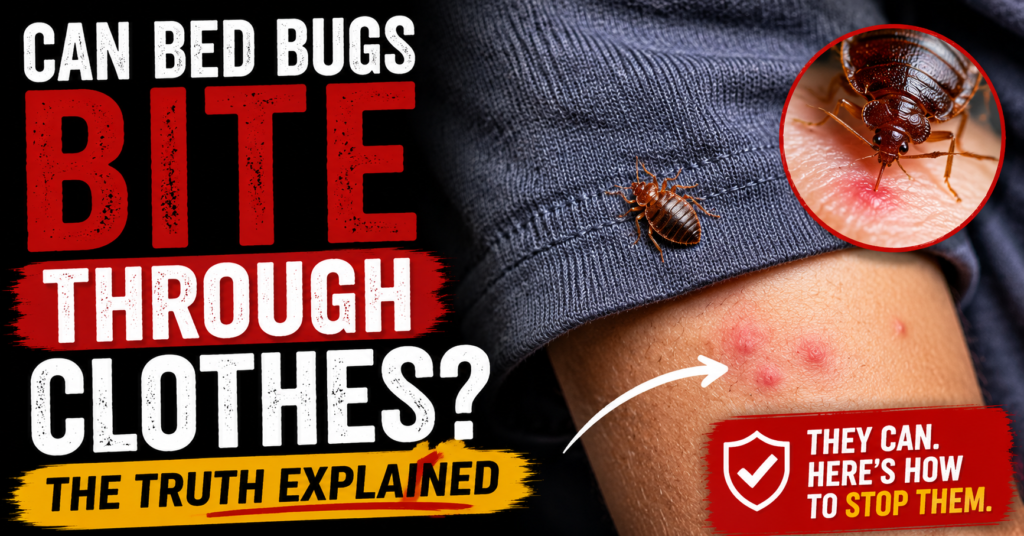
Apply a thin layer along the bed frame, under the box spring, along baseboards in the bedroom, and in any cracks in the bed frame itself. DE is one of the most recommended non-chemical options for bed bug treatment specifically because bed bugs have developed resistance to many common pesticides — and DE bypasses resistance entirely. Pair this treatment with a sealed mattress barrier to protect the mattress itself while addressing surrounding bed bug hiding places.
For Silverfish and Stored Product Pests
Apply in pantry corners, along the back of shelves, inside closets along the floor edge, and in any dark dry storage areas where silverfish are active. These bugs thrive in exactly the conditions where DE performs best — dry, undisturbed, hidden spaces.
Is Harris DE Safe Around Kids and Pets?
Food grade diatomaceous earth has one of the best safety profiles of any pest control product available. It’s non-toxic to mammals, doesn’t off-gas, has no chemical residue, and the EPA classifies it as safe for household use.
The main caution is inhalation. DE is a fine silica dust, and like any fine dust, you don’t want to be breathing large amounts of it repeatedly. Apply it in a way that minimizes airborne particles — use the duster rather than pouring, don’t apply in high-traffic breathing zones, and consider a simple dust mask if you’re doing a large application in an enclosed space.
Once applied and settled in place, it poses no meaningful inhalation risk during normal activity. Pets walking past a treated baseboard, kids playing in a room with DE applied under the fridge — that’s not a concern. The risk is during heavy application, not after.
Warning: Don’t apply DE where it will become airborne regularly — near air vents, in front of fans, or in areas with constant foot traffic that will kick it back into the air. Applied correctly in cracks and hidden spots, this isn’t an issue.
Harris vs. Other DE Brands
Diatomaceous earth is a commodity — the product itself is largely the same across brands as long as it’s food grade. What differentiates Harris is reliability, availability, the included duster, and the 10lb quantity which gives you serious coverage.
Some cheaper DE bags don’t include an applicator, which means you’re improvising your application and usually getting it wrong — too much in some spots, none where it matters, dust everywhere. The duster inclusion is a practical advantage that justifies Harris over a slightly cheaper bag-only option.
The 10lb quantity sounds like a lot but it goes faster than expected once you start treating wall voids, outlet boxes, and multiple rooms properly. Having more than you think you need means you treat thoroughly rather than rationing it.
What DE Won’t Do
Worth being direct about the limits so you have the right expectations.
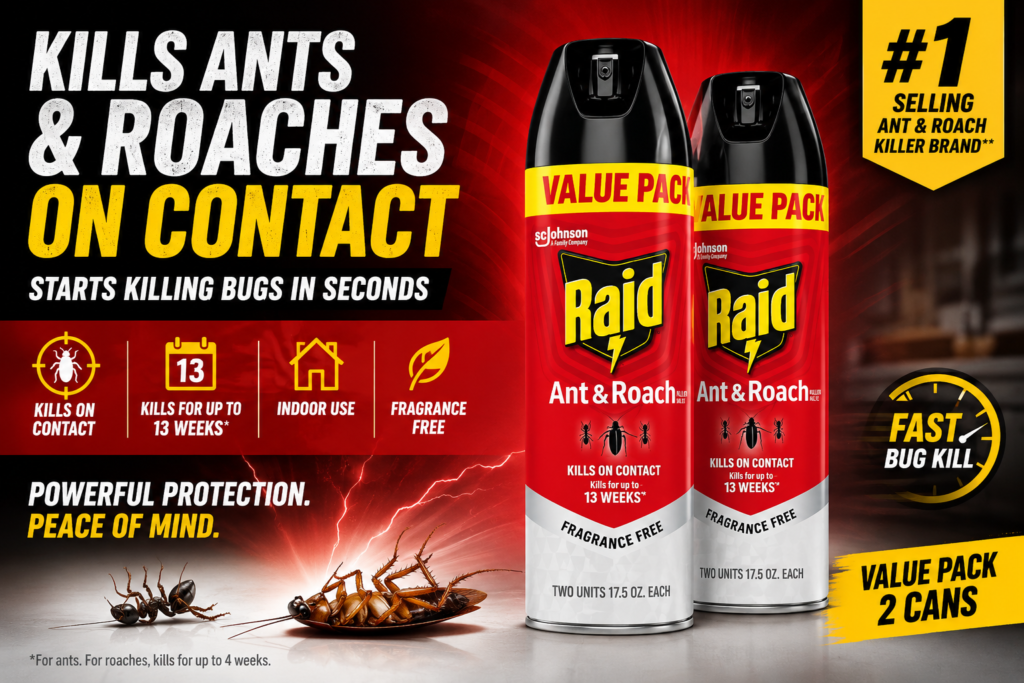
DE will not solve an active infestation quickly. If you have roaches running across your counter right now, DE is not going to fix that this week. It’s a slow-kill barrier treatment. For immediate knockdown you need a contact spray. For colony elimination you need bait. DE fills the long-term prevention and harborage barrier role in your pest control toolkit. When a bug needs to be dealt with immediately, Raid immediate-response spray covers the contact-spray option that complements longer-term treatments.
It also won’t stay effective in wet spots. High-moisture areas need to be addressed with other methods — DE is for the dry hidden zones.
And it won’t work if applied too heavily in areas bugs need to walk through. A thick pile of DE can actually deter insects from crossing it rather than killing them when they do. Thin layers in the right places outperform thick layers everywhere.
How to Keep Bugs From Coming Back
DE is most powerful as a permanent part of your home’s pest defense — not something you apply once and forget.
Apply it in your permanent harborage zones and leave it. Behind the fridge, in outlet boxes, in wall voids — spots that don’t get cleaned or disturbed. Applied correctly in those locations, DE keeps working indefinitely without reapplication.
Reapply anywhere that gets wet or disturbed. After plumbing work under the sink, after cleaning behind appliances, after any renovation — refresh your DE application in those areas.
Combine it with bait for maximum coverage. DE handles the pathways and barriers. Bait handles the colony. Together they cover what neither does alone.
Seal entry points. DE at an entry point slows bugs down. A sealed entry point stops them. Use both — caulk the gap, then dust DE around it for anything that finds its way through.
Building a long-term pest defense means having the right tools for different jobs. DE is the slow-burn barrier layer that keeps working after your bait treatment is done and keeps new invaders from establishing. Grab the Harris Diatomaceous Earth 10lb with Duster on Amazon and get it into the spots bugs travel before they become a problem you’re chasing.