Few insects capture people’s attention quite like fireflies.
Whether you call them fireflies or lightning bugs, seeing dozens of tiny lights blinking across a summer field is something most people never forget.
As a kid, I remember trying to catch them in a jar just to watch them glow before letting them go again. A dedicated catch-and-release bug catcher can make that kind of close observation easier without handling the firefly directly.
Today, I appreciate them for an entirely different reason.
The more I’ve learned about fireflies, the more I’ve realized they’re far more than beautiful summer insects.
They’re important predators, valuable indicators of healthy habitats, and one of the most remarkable examples of bioluminescence found anywhere in nature.
If you’ve ever wondered why they glow, whether they’re actually flies, what they eat, or why they seem less common than they once were, this guide covers everything you need to know.
What Is a Firefly?
Despite the name, a firefly isn’t actually a fly.
It’s a beetle.
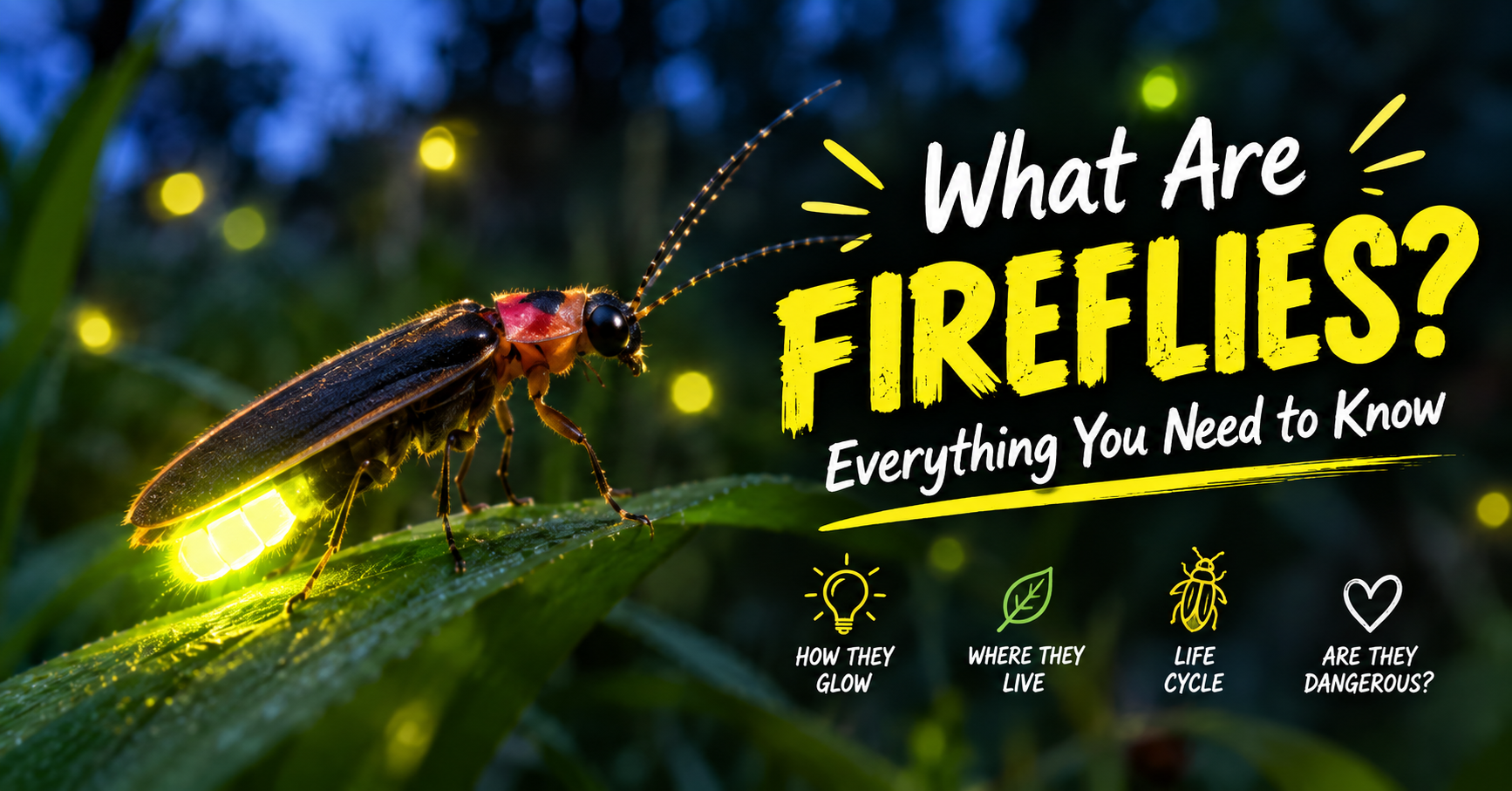
Fireflies belong to the beetle family Lampyridae, which includes more than 2,000 known species worldwide and roughly 170 to 175 species in North America.
That surprises a lot of people.

When most people hear the word “fly,” they picture insects like house flies or fruit flies.
Fireflies are much more closely related to beetles than they are to any true fly.
One of their most recognizable features is the light-producing organ located near the end of the abdomen.
Depending on the species, the light may appear:
- Yellow.
- Yellow-green.
- Green.
- Orange.
Different species produce different flash patterns, and those patterns play a major role in helping males and females find each other.


Fireflies Are Beetles, Not Flies
This is probably the biggest misconception surrounding these insects.
The name “firefly” has been around for centuries, but scientifically it’s misleading.
Fireflies share the defining characteristics of beetles.
They have:
- Hardened front wings called elytra.
- Folding flight wings underneath.
- Chewing mouthparts.
- Complete metamorphosis.
- A hard exoskeleton.
Once I learned that, their appearance made much more sense.
If you look closely, the wing covers are very similar to those of many other beetles.
The biggest difference is the glowing abdomen.



Why Do Fireflies Glow?
This is the question almost everyone asks first.
The answer is one of the coolest chemical reactions in nature.
Fireflies produce light through a process called bioluminescence.
Inside special cells located in the abdomen, a chemical called luciferin reacts with oxygen in the presence of an enzyme called luciferase.
The result is an incredibly efficient form of light that produces almost no heat.
Scientists often call it cold light because nearly all of the energy becomes visible light instead of being wasted as heat.
Even more fascinating is that each species has its own unique flash pattern.
Some flash once every few seconds.
Others produce quick double flashes.
Some even synchronize their flashes with thousands of other fireflies at the same time.
Those patterns act like a language, helping males and females recognize members of their own species.
Where Do Fireflies Live?
Fireflies are found throughout much of North America, although different species prefer different habitats.
The places where I most often expect to find them include:
- Meadows.
- Forest edges.
- Backyards.
- Fields.
- Wetlands.
- Near ponds.
- Along streams.
- Around lakes.
Moist environments are especially important because the larvae require damp soil and abundant prey to survive.
That’s one reason fireflies are often much more common in rural areas than in heavily developed neighborhoods.


What Do Fireflies Eat?
One thing many people don’t realize is that adult fireflies and firefly larvae often eat completely different foods.
The larvae are active predators.
They feed on:
- Slugs.
- Snails.
- Earthworms.
- Soft-bodied insects.
- Other small invertebrates.

In fact, firefly larvae can be surprisingly beneficial in gardens because they naturally help reduce slug and snail populations. If you're wondering whether these insects are helpful overall, whether fireflies are good for your yard explains what homeowners should know.
Adults are much more variable.
Depending on the species, adults may:
- Feed on nectar.
- Feed on pollen.
- Consume small amounts of plant material.
- Eat other fireflies.
- Not feed at all.
That variety surprises many people because no single answer applies to every species.
Fireflies Spend Most of Their Lives as Larvae
One thing that surprised me the most was learning that the glowing adult is actually the shortest part of a firefly’s life.
Most fireflies spend one to two years living as larvae beneath leaf litter, in moist soil, or under decaying logs.
During this stage they’re active hunters.
Rather than feeding on plants, they search for soft-bodied prey like:
- Slugs.
- Snails.
- Earthworms.
- Small insect larvae.
Because of this, firefly larvae are actually beneficial to gardens and landscapes, helping control several common pests naturally.

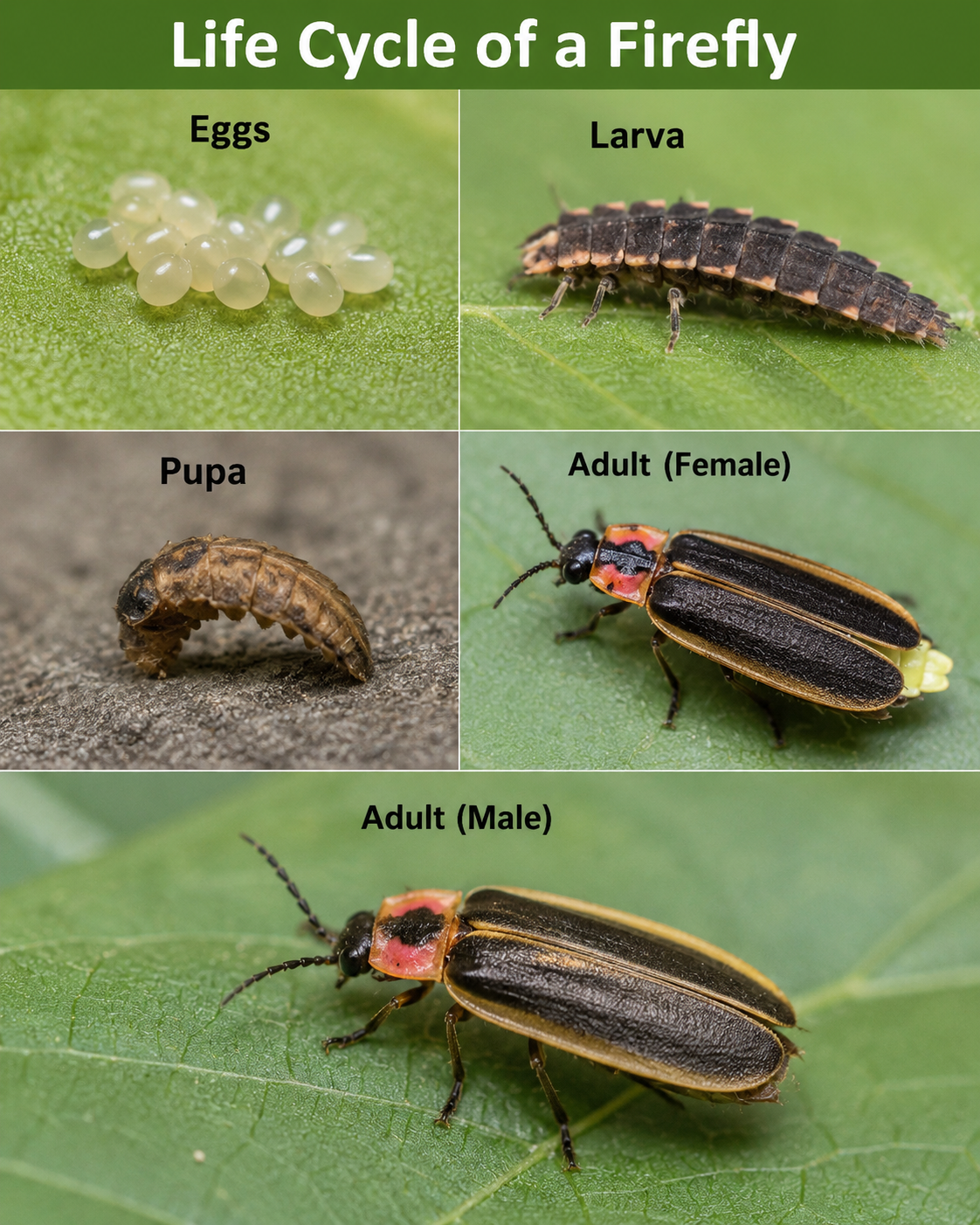
The Firefly Life Cycle
Like every beetle, fireflies undergo complete metamorphosis.
Their life cycle includes four stages:
- Egg.
- Larva.
- Pupa.
- Adult.
Female fireflies lay their eggs in moist soil, leaf litter, or low vegetation during the summer.
A few weeks later the larvae hatch and begin the longest stage of their lives.
After many months, and sometimes nearly two years depending on the species, the larvae pupate before emerging as adults during late spring or summer.
Why Are Fireflies Good for Your Yard?
Unlike many insects homeowners worry about, I actually enjoy seeing fireflies around my property.
They’re one of the few insects that almost always signal something positive.
Fireflies help because:
- Their larvae eat garden pests.
- They don’t damage plants.
- They don’t chew wood.
- They don’t infest homes.
- They’re part of a healthy ecosystem.

If I notice plenty of fireflies during the summer, I usually take it as a sign that my yard still has healthy habitat with adequate moisture, leaf litter, and relatively low pesticide use. Those habitat features are among the main reasons discussed in healthy firefly habitat.


Why Are Fireflies Becoming Less Common?
One question I hear more every year is:
“Where did all the fireflies go?”
Many people remember seeing hundreds of flashing lights during childhood but only a handful today.
Researchers believe several factors are contributing to declines in some firefly populations.
Habitat Loss
As fields, forests, wetlands, and meadows disappear, so do the damp habitats that fireflies need throughout their life cycle.
Larvae are especially vulnerable because they spend months or years developing in the soil.
Light Pollution
Artificial lighting has become one of the biggest modern challenges for fireflies.
Since males and females communicate using species-specific flash patterns, excessive outdoor lighting can interfere with courtship.
Bright porch lights, security lights, parking lots, and commercial developments can make it much harder for fireflies to locate potential mates.
Pesticides
Broad-spectrum insecticides don’t just kill pest insects.
They can also reduce beneficial insects like fireflies.
Because larvae spend so much time in the soil, repeated pesticide applications may affect them long before homeowners ever notice fewer adults the following summer.
How You Can Help Fireflies
Fortunately, there are several simple ways homeowners can make their yards more welcoming to fireflies.
I recommend:
- Turning off unnecessary outdoor lights during summer evenings.
- Leaving some leaf litter beneath trees and shrubs.
- Avoiding broad-spectrum insecticides whenever possible.
- Planting native grasses, shrubs, and wildflowers.
- Maintaining areas of moist soil instead of removing every natural habitat.
- Allowing parts of your lawn to remain a little taller during firefly season.
These small changes not only help fireflies but also benefit many other pollinators and beneficial insects.



Fascinating Firefly Facts
The more I learn about fireflies, the more amazed I become.
Some of my favorite facts include:
- Fireflies are beetles, not flies.
- More than 2,000 species have been identified worldwide.
- Not every firefly species glows as an adult.
- Nearly all firefly larvae produce light.
- Some adult fireflies actually hunt and eat other fireflies.
- Their light is one of the most energy-efficient forms of light in nature, producing almost no heat.
- They have existed for millions of years and remain one of the most recognizable insects of summer.
Frequently Asked Questions
Are fireflies actually flies?
No. Despite their name, fireflies are beetles belonging to the family Lampyridae.
Why do fireflies glow?
They glow through a chemical reaction called bioluminescence. Different flash patterns help males and females locate members of their own species for mating.
Are fireflies good for gardens?
Yes. Firefly larvae are beneficial predators that feed on slugs, snails, earthworms, and other soft-bodied invertebrates that can become garden pests.
Do fireflies bite people?
Fireflies rarely bite, and they aren’t considered dangerous to people or pets. Most adults don’t feed at all, while a few predatory species feed on other insects rather than humans.
Why don’t I see as many fireflies as I used to?
Habitat loss, light pollution, and pesticide use are considered some of the biggest reasons certain firefly populations have declined in many areas.
About the Author
Dr. Emily Carter is a freshwater ecologist and insect researcher who has spent years studying the ecology of beneficial insects and their role in healthy ecosystems. Her work focuses on helping homeowners better understand insects like fireflies, mayflies, and other native species through science-backed, practical education that encourages conservation while answering the questions people ask most.