Cicadas are often called locusts, especially when they emerge in huge numbers and make the trees sound like they are roaring. But cicadas are not locusts. They are completely different insects with different bodies, diets, behaviors, and life cycles.
The mix-up is understandable. Both can appear in noticeable numbers, both are associated with warm weather, and both have been part of American summertime language for generations. Still, if you see a loud insect with clear wings and big eyes on a tree trunk, you are looking at a cicada, not a locust.
Are Cicadas Locusts?
No. Cicadas are not locusts.
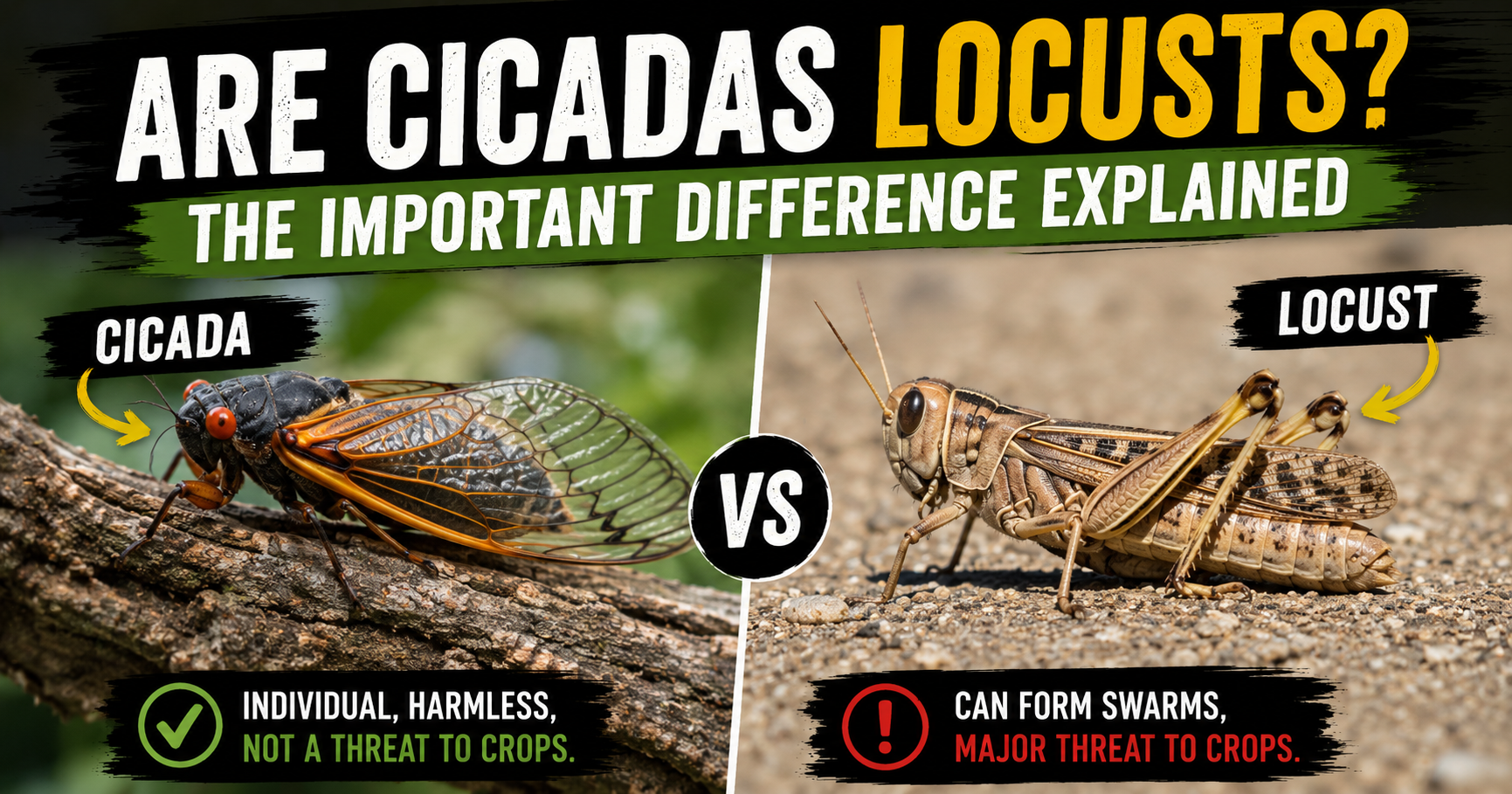
Cicadas belong to a group of insects that includes leafhoppers, aphids, and stink bugs. Locusts are a type of grasshopper.
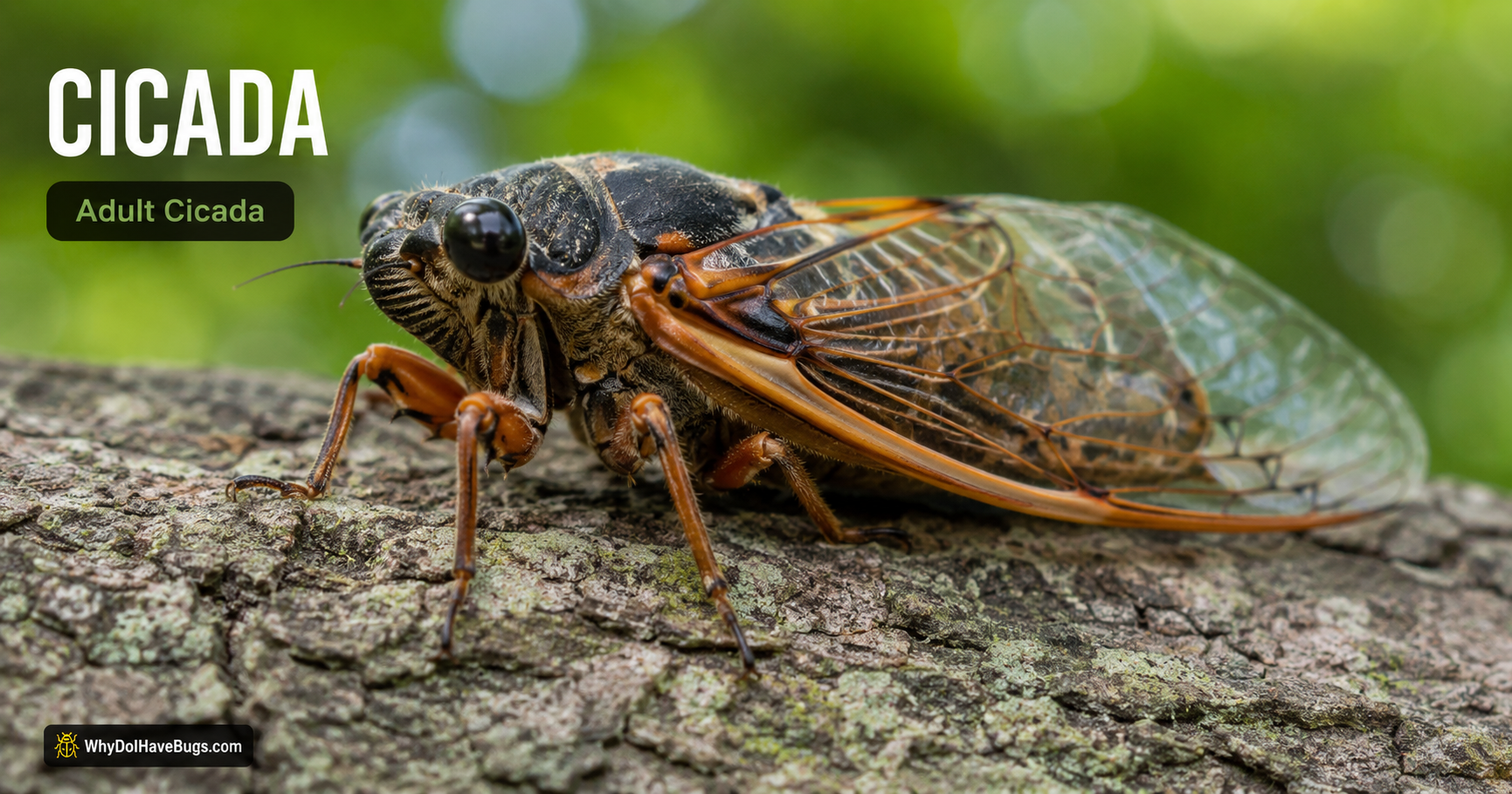
A true locust has the long hind legs of a grasshopper and can jump powerfully. Cicadas have thick bodies, clear veined wings, wide-set eyes, and are much better known for their loud calls than for jumping.
The word “locust” became a common nickname for cicadas long ago, especially during huge periodical cicada emergences. It is still used casually in many parts of the United States, but it is not the correct insect name.


Why Do People Call Cicadas Locusts?
The name confusion goes back generations. When periodical cicadas emerged by the millions, people saw enormous numbers of insects all at once and compared them to the locust plagues described in history and religious stories.
The comparison made sense from a distance because a large cicada emergence can be loud, messy, and impossible to ignore. Cicadas cover trees, sidewalks, porch screens, and vehicles. Their shed shells can seem like they are everywhere.
But cicadas do not behave like locusts. They do not move in plant-eating swarms, and they do not strip fields or gardens bare.
What Is a True Locust?
A locust is a grasshopper that can change its behavior under certain conditions. Some species gather into large moving groups and can travel long distances while feeding heavily on vegetation.
Locusts have the body shape most people expect from a grasshopper:
- Long, narrow body.
- Large hind legs designed for jumping.
- Strong chewing mouthparts.
- Wings that fold along the back.
- A diet made up largely of leaves, grasses, crops, and other plant material.
True locust outbreaks can cause major agricultural damage because the insects eat as they move through an area.
What Is a Cicada?
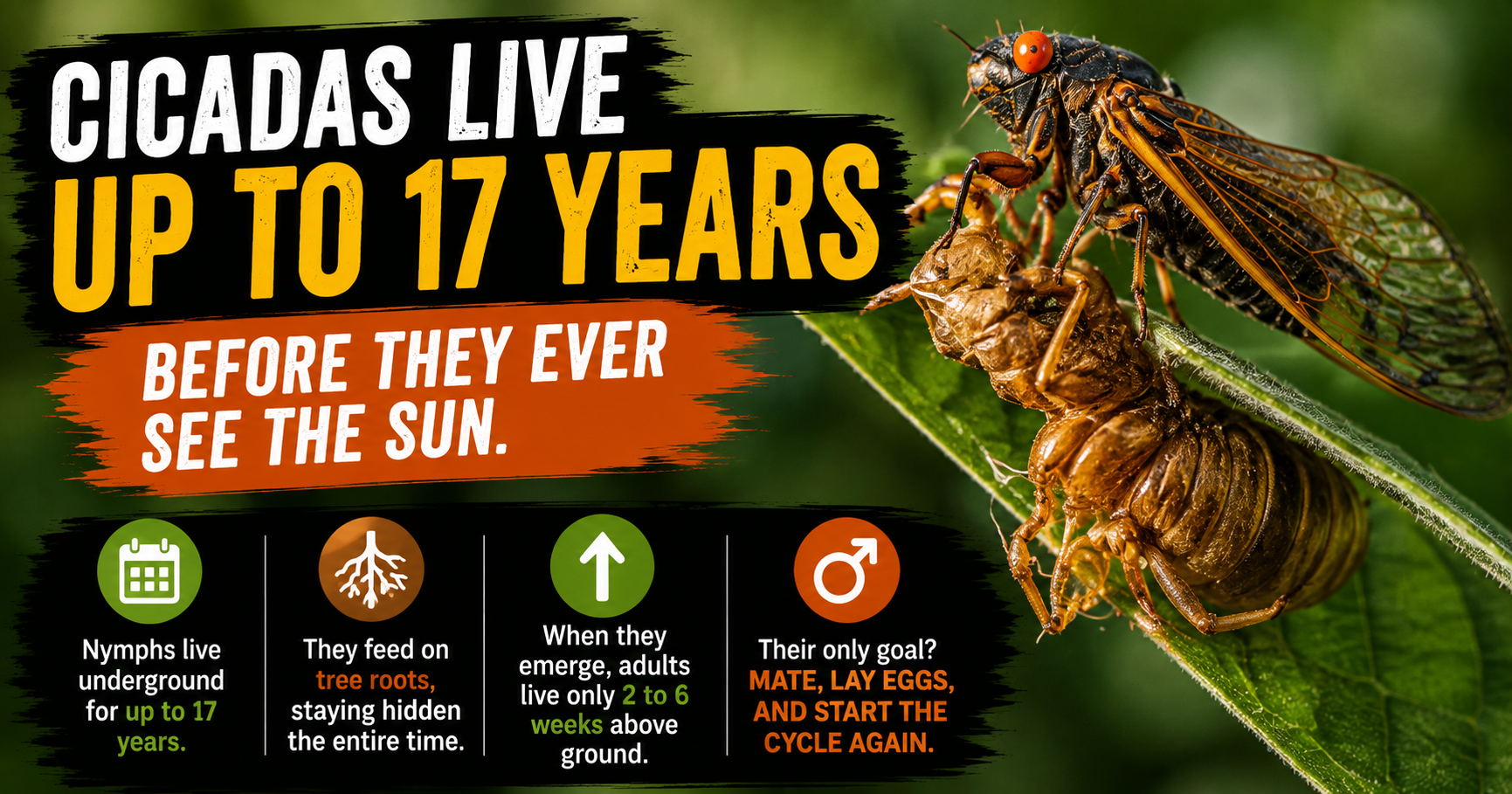
A cicada is a stout-bodied insect that spends most of its life underground as a nymph. When it emerges, it climbs a tree or other vertical surface, sheds its skin, grows clear wings, and spends several weeks above ground as an adult. The stages described here are part of the cicada development from nymph to adult, from underground growth through the brief adult period.
Cicadas have a piercing, straw-like mouthpart that lets them feed on fluids from plant tissue. They do not have chewing mouthparts, so they cannot eat ragged holes through leaves like a grasshopper or locust.
For a close look at their body shape, shells, sounds, and unusual underground life cycle, see this easy cicada identification guide.
Cicadas and Locusts Look Very Different
The easiest way to separate cicadas from locusts is to look at their body shape.
A cicada has a broad head, obvious eyes, short antennae, and wide clear wings with visible veins. It can look a little like a large fly at first glance, but its wings are longer and more transparent.
A locust looks like a grasshopper. Its back legs are long and muscular, its antennae are more noticeable, and its body is slimmer and more angular.
Cicadas sit on trees, fences, and screens. Locusts and grasshoppers are more often found hopping through grass, fields, gardens, and low vegetation.
Cicadas Are Loud, but Locusts Are Not Known for the Same Sound
The loud sound of summer cicadas comes from males calling to attract females. They make sound with special structures on their abdomen, and a group of males calling together can be remarkably loud.
Locusts can make noise by rubbing body parts together or snapping their wings in flight, but they do not produce the powerful steady tree-top chorus cicadas are known for.
If the sound seems to be coming from high in the trees and gets louder in hot sunshine, cicadas are the likely source.

Do Cicadas Eat Crops Like Locusts?
No. Cicadas do not eat crops the way locusts do.
Locusts and grasshoppers chew leaves, stems, flowers, and fruit. A heavy grasshopper problem can leave missing leaf edges, ragged holes, and plants that look stripped.
Cicadas feed from twigs and roots, so they do not chew leaves. Adult cicadas can cause injury to young trees when females cut narrow slits in small branches to lay eggs, but that is different from leaf feeding.
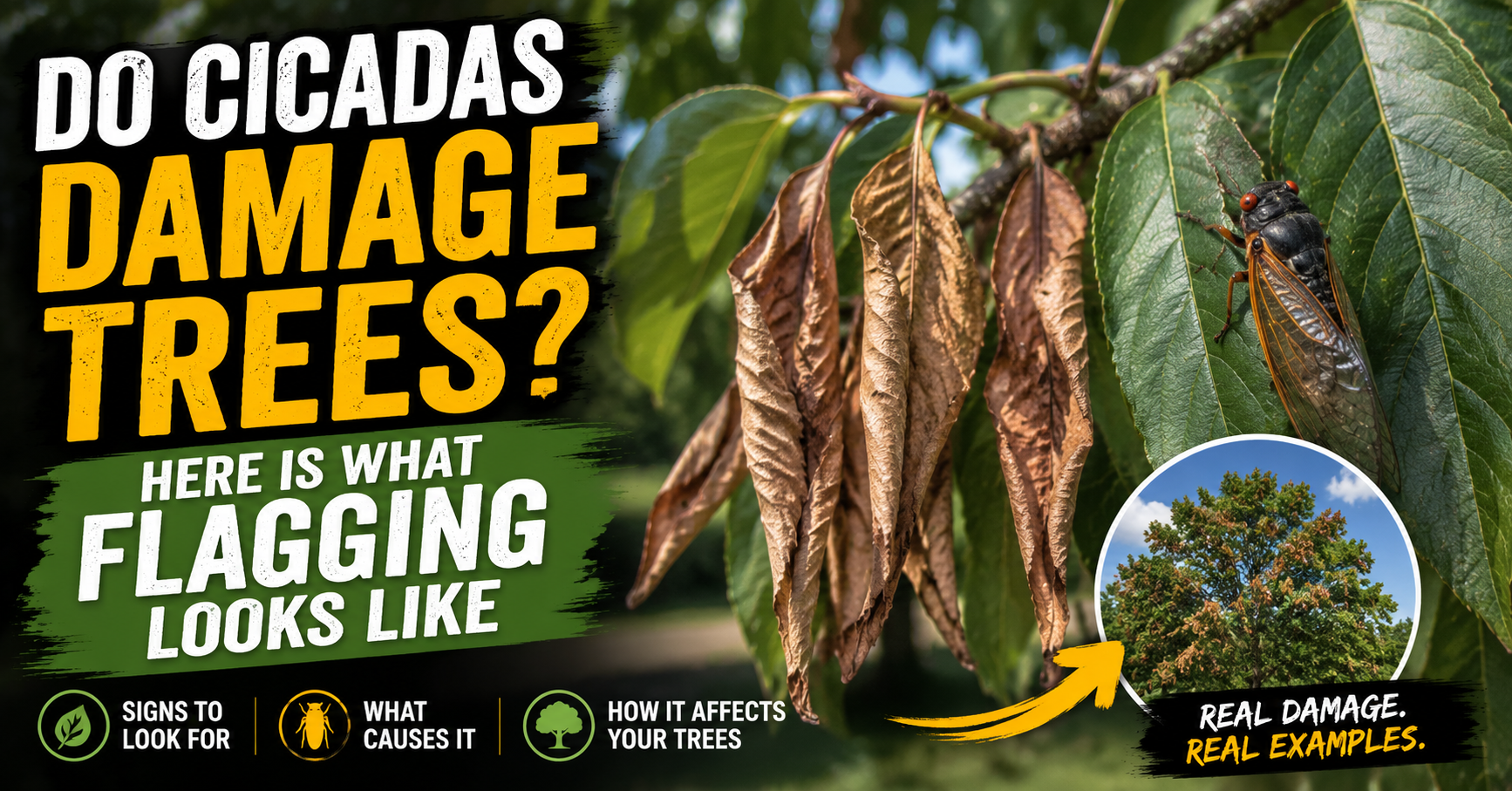
The resulting damage is called flagging. The leaves past the injured twig turn brown and remain attached in a little dead clump. It can look serious, but established trees normally recover. This guide to cicada tree flagging shows exactly what to look for.
Do Cicadas Swarm?
Cicadas can gather in enormous numbers during a periodical emergence, but they do not swarm like locusts.
A periodical brood may emerge in the millions from the ground beneath wooded areas. They climb nearby trees, mate, lay eggs, and die within a few weeks. It can feel overwhelming because the insects are so numerous, but they are not flying across the landscape as a coordinated crop-eating group.
Locust swarms travel to find food. Cicadas emerge where they have already been living underground.


Are Cicadas Worse Than Locusts?
For most homeowners, no. Cicadas are mostly a temporary noise and cleanup issue. They do not infest houses, sting people, or eat vegetable gardens.
A large emergence can be rough on very young trees because of egg-laying injury, but mature trees usually handle it without lasting trouble.
Locusts can be much more destructive to plants because they chew foliage and crops. Fortunately, the large locust swarms people picture are not a normal backyard problem in most of the United States.
Are Periodical Cicadas Locusts?
No. Periodical cicadas are still cicadas.
They are the black insects with red eyes that emerge on a 13-year or 17-year schedule in certain parts of the eastern and central United States. Their unusual timing and huge numbers are the main reason people call them locusts.
The name is common, but periodical cicadas do not become grasshoppers or act like true locusts.



What Should You Do if You Have Cicadas?
Most of the time, enjoy them while they are around. Their adults only live above ground for a few weeks, and they are an important food source for birds and wildlife.
If you have newly planted fruit trees, young ornamental trees, or nursery stock during a heavy emergence, fine mesh netting is the most dependable way to prevent females from reaching small twigs. It needs to cover the canopy and be secured around the trunk.
There is no reason to spray an established tree just because cicadas are calling in it. Sprays do not stop the noise, and they can harm beneficial insects.
Frequently Asked Questions
Why are cicadas called 17-year locusts?
They are called 17-year locusts because some periodical cicadas emerge every 17 years. They are still cicadas, not locusts.
Do cicadas turn into locusts?
No. A cicada stays a cicada throughout its life. It begins as a nymph underground, then becomes a winged adult cicada.
Are locusts found in the United States?
Yes, but the word is often used loosely. Several grasshopper species can show locust-like behavior, although massive destructive swarms are not a typical backyard event across most of the country.
Which one is louder, a cicada or a locust?
Cicadas are much louder. Their mating calls are one of the loudest insect sounds heard outdoors in summer.
Do cicadas damage gardens?
Cicadas do not chew vegetable leaves or devour gardens. Their main plant concern is egg-laying injury to small twigs on young trees.
Can cicadas bite or sting?
No. Cicadas do not sting and are not known for biting people.
Caleb Warren is a longtime gardener and backyard insect researcher who writes practical pest guides for WhyDoIHaveBugs.com, helping homeowners identify insects accurately before choosing a treatment.