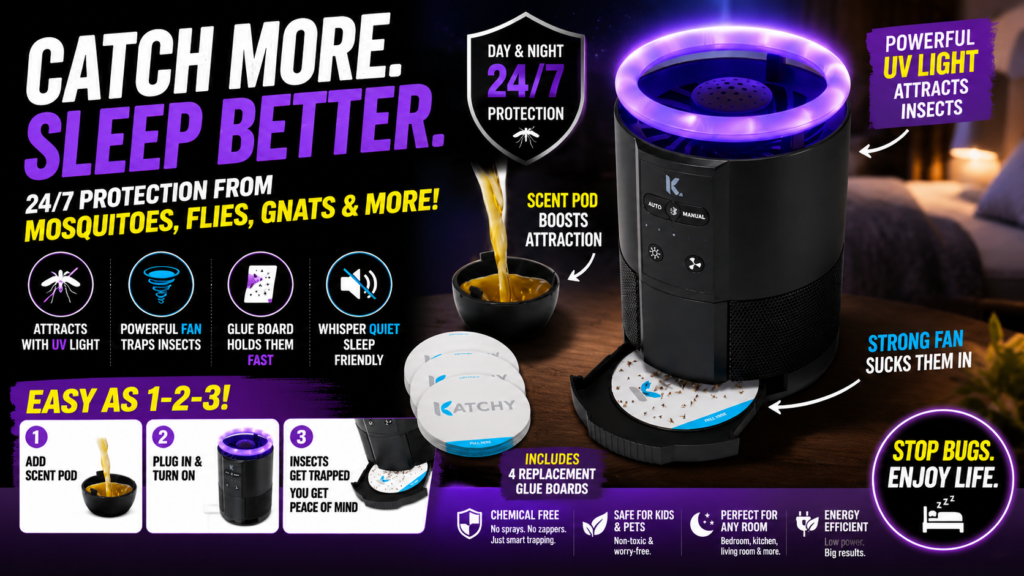
If you’ve been researching indoor fly traps you’ve almost certainly landed on two names — Zevo and KATCHY. They both promise to catch gnats, fruit flies, and other small flying insects without chemicals or zappers. They both use light to attract bugs. And they both have thousands of reviews from people who swear by them.
So which one actually works better — and is the KATCHY Duo specifically worth the price over the standard KATCHY or the competition? This review digs into exactly how the Duo works, what the scent pod adds, where it performs best, and who should buy it.
Bottom Line Up Front

The KATCHY Duo is a genuinely effective indoor flying insect trap that outperforms a lot of the competition through its combination of UV light attraction, fan suction, sticky glue board capture, and the addition of a scent pod that makes it effective in both daylight and dark conditions. It’s the most capable version of the KATCHY lineup and a strong choice for anyone dealing with persistent gnats, fruit flies, or small moths indoors. It won’t solve a heavy infestation without also addressing the breeding source, but as a continuous passive trap it’s one of the better products in this category. When the problem is concentrated outside rather than indoors, an outdoor option for heavy fly activity takes a different approach for managing heavy fly activity.
What Is the KATCHY Duo?
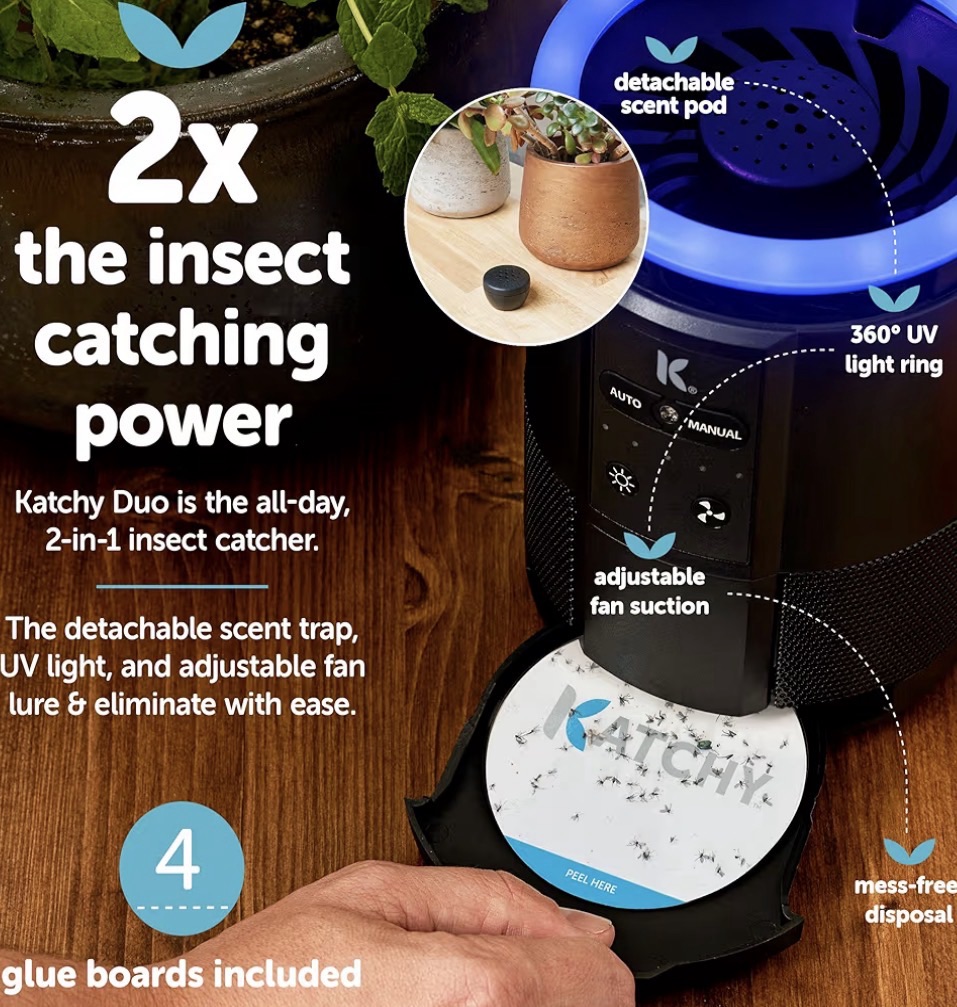
KATCHY makes a range of indoor insect traps and the Duo is their most advanced model. Where the standard KATCHY relies on UV light alone to attract insects, the Duo adds a scent pod system — a replaceable cartridge that emits an attractant scent alongside the light, making the trap effective even when ambient light in the room competes with the UV output.

The capture mechanism uses a fan rather than a sticky surface at the entry point. When an insect flies toward the light and scent, the fan creates suction that pulls them down onto a sticky glue board inside the unit. Bugs that get close get pulled in — they don’t just have to land on a sticky surface. That active suction element is a meaningful advantage over passive sticky traps. That comparison is useful when weighing active suction against the simpler design discussed in passive sticky fly traps.
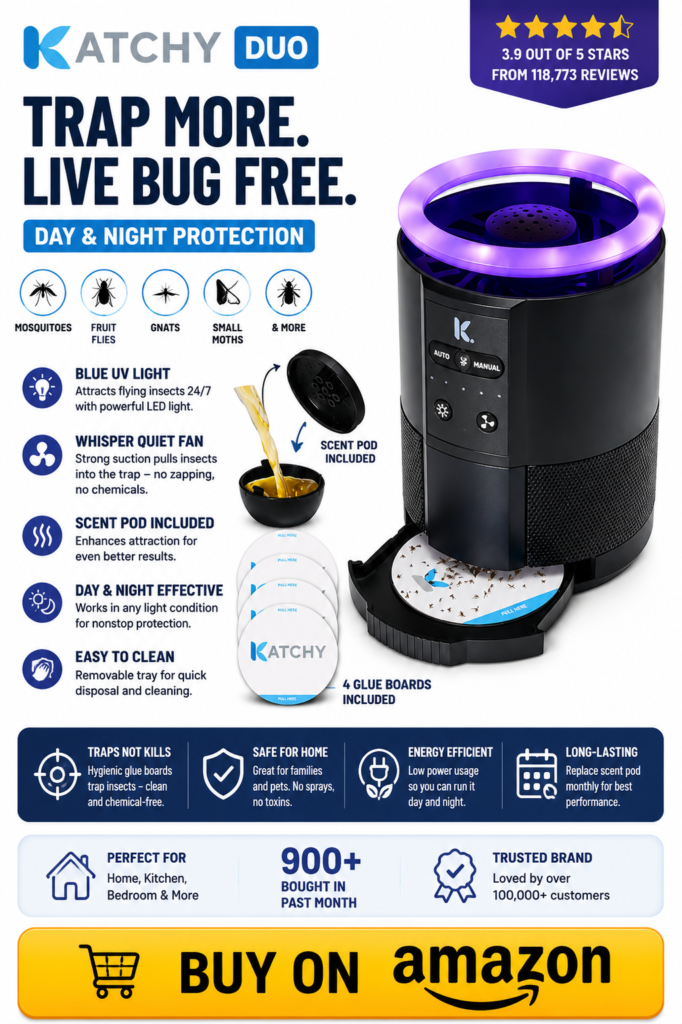
→ Check the current price on the KATCHY Duo on Amazon — includes the trap unit, scent pod, and glue boards to get started.
How the Three-Way Attraction System Works
Most light-based traps rely on a single attractant — UV or blue light. KATCHY Duo uses three simultaneously, and that combination is what makes it noticeably more effective than single-mechanism traps.
UV light attracts flying insects that navigate by light — gnats, fruit flies, fungus gnats, and small moths are all drawn to UV wavelengths. This is the same mechanism that makes bug zappers work outdoors, applied in a form factor designed for indoor use.
Scent pod — this is the Duo’s distinguishing feature. The scent pod emits an attractant that draws insects even in brightly lit rooms where the UV light is competing with overhead lighting and daylight from windows. This is the reason the Duo is marketed as day and night effective while the standard KATCHY is primarily a nighttime trap. During the day when room lights are on, the scent pod keeps drawing bugs toward the unit even when the UV light is less visible.
Fan suction — once an insect gets close enough, the internal fan creates downward airflow that pulls it onto the glue board. This active suction element catches bugs that hover near the trap without landing, which passive sticky surfaces miss entirely.
All three working together create a trap that’s effective around the clock rather than only in low-light conditions — which is the main upgrade the Duo offers over the standard model and over competitors like the Zevo Flying Insect Trap.
KATCHY Duo vs. Zevo — The Real Comparison
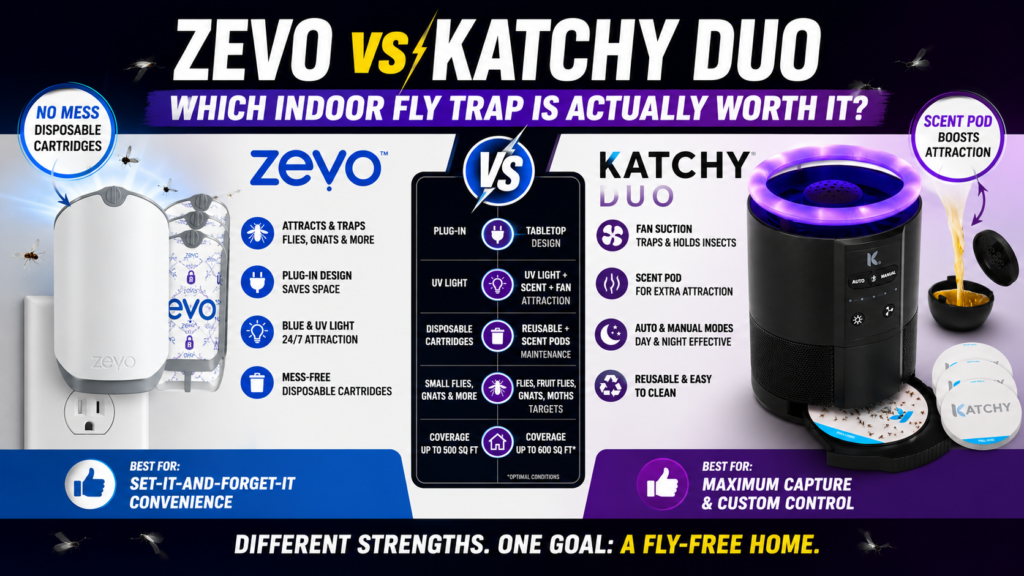
Since you’re almost certainly comparing these two, here’s the honest breakdown. The Zevo vs KATCHY Duo: Which Indoor Fly Trap Is Actually Worth It? breaks down which trap fits different rooms, lighting conditions, and insect problems.
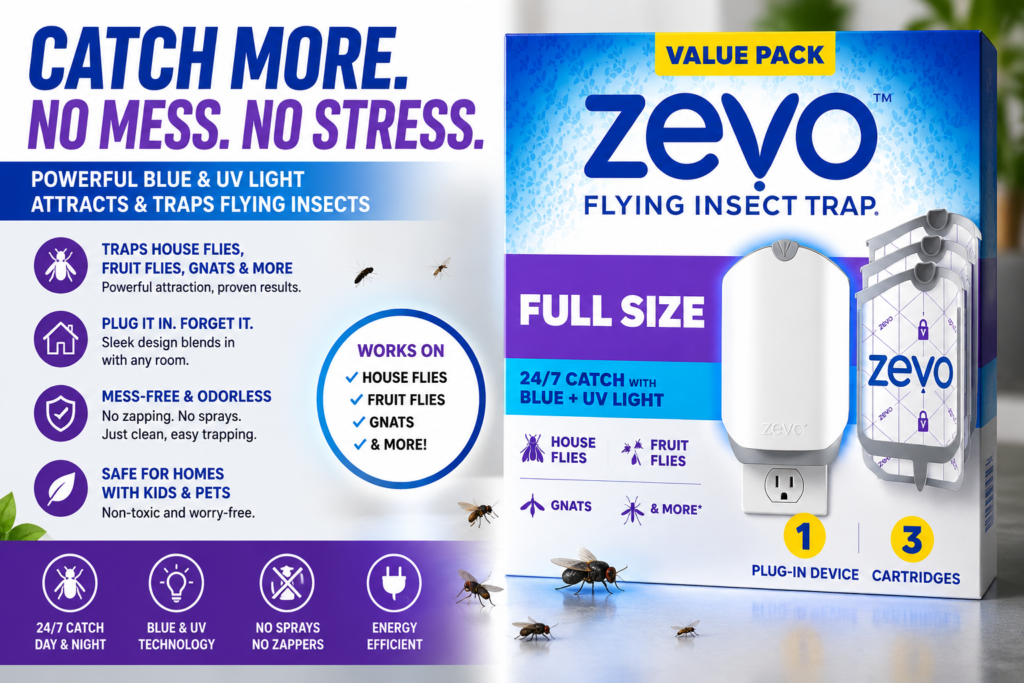
Zevo is a plug-in unit — it goes directly into an outlet, takes up no counter or table space, and runs completely passively with no moving parts. It uses blue and UV light to attract insects onto a sticky cartridge. Simple, silent, low-profile. Cartridges last about 30 days and replacement is quick. Its main limitation is daytime effectiveness — in a brightly lit room the light attraction is weaker.
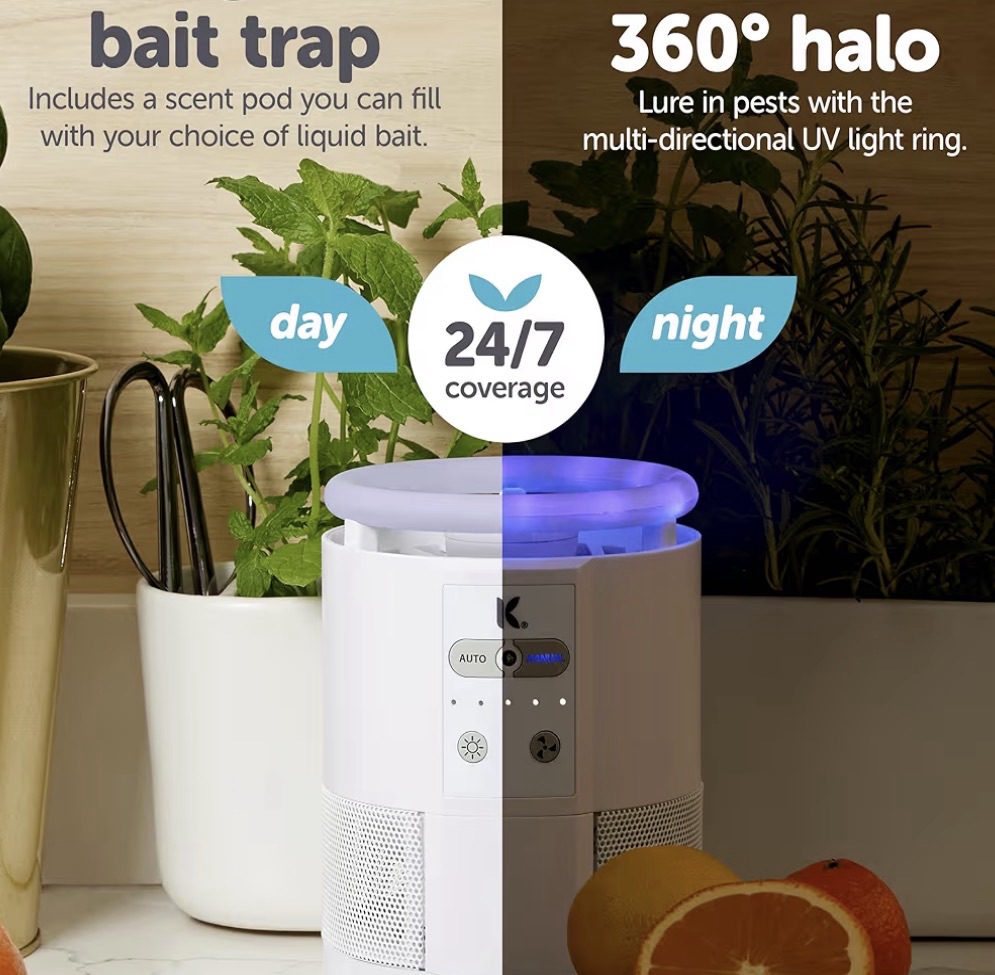
KATCHY Duo is a freestanding unit that sits on a counter or floor. It’s larger, has a fan that creates a low hum, and uses the three-way UV plus scent plus suction system. The scent pod gives it meaningful daytime effectiveness that Zevo doesn’t match. It also actively pulls insects in with the fan rather than relying purely on passive attraction to a sticky surface.
Who should buy which:
- Buy Zevo if you want something that plugs into the wall, takes up zero space, runs silently, and handles primarily nighttime flying insect activity in a specific zone
- Buy KATCHY Duo if you want daytime effectiveness, active fan suction, and a more powerful overall catch rate — particularly if your problem is in a well-lit room or during daylight hours
- Buy both if you have activity in multiple areas of the home — Zevo in a hallway or low-traffic spot, KATCHY Duo in the kitchen where the activity is heaviest and the lights are brightest

Neither one is definitively better — they solve slightly different versions of the same problem. The KATCHY Duo has the edge on raw catch rate and daytime performance. The Zevo has the edge on simplicity and form factor. Those tradeoffs make matching a trap to the situation a helpful next step before choosing between competing indoor and outdoor designs.


What Bugs Does It Catch?
- Fungus gnats — the black gnats that come from overwatered houseplants, highly attracted to both UV light and the scent pod
- Fruit flies — the small tan flies hovering around produce and drains
- House flies — standard flies, though larger house flies are less consistently drawn than smaller species
- Small moths — pantry moths and clothes moths drawn by the UV light component
- Drain flies — small moth-like flies that breed in slow drains
The mosquito claim on the packaging deserves honest comment. KATCHY Duo will catch some mosquitoes — UV light does attract them to a degree — but mosquitoes navigate primarily by CO2 and body heat, not light. Don’t buy this as a mosquito solution. It’ll catch incidental mosquitoes that happen to fly near it, but if mosquitoes are your primary problem you need a different approach. Check our mosquito guide for treatments that specifically target that species.
For gnats, fruit flies, and small moths, though — this is exactly the right tool. See our gnat and fruit fly guide and moth guide for the full picture on eliminating those problems.
Placement — Where It Performs Best
Placement matters with any insect trap. Get it right and the catch rate climbs significantly.
Best Locations
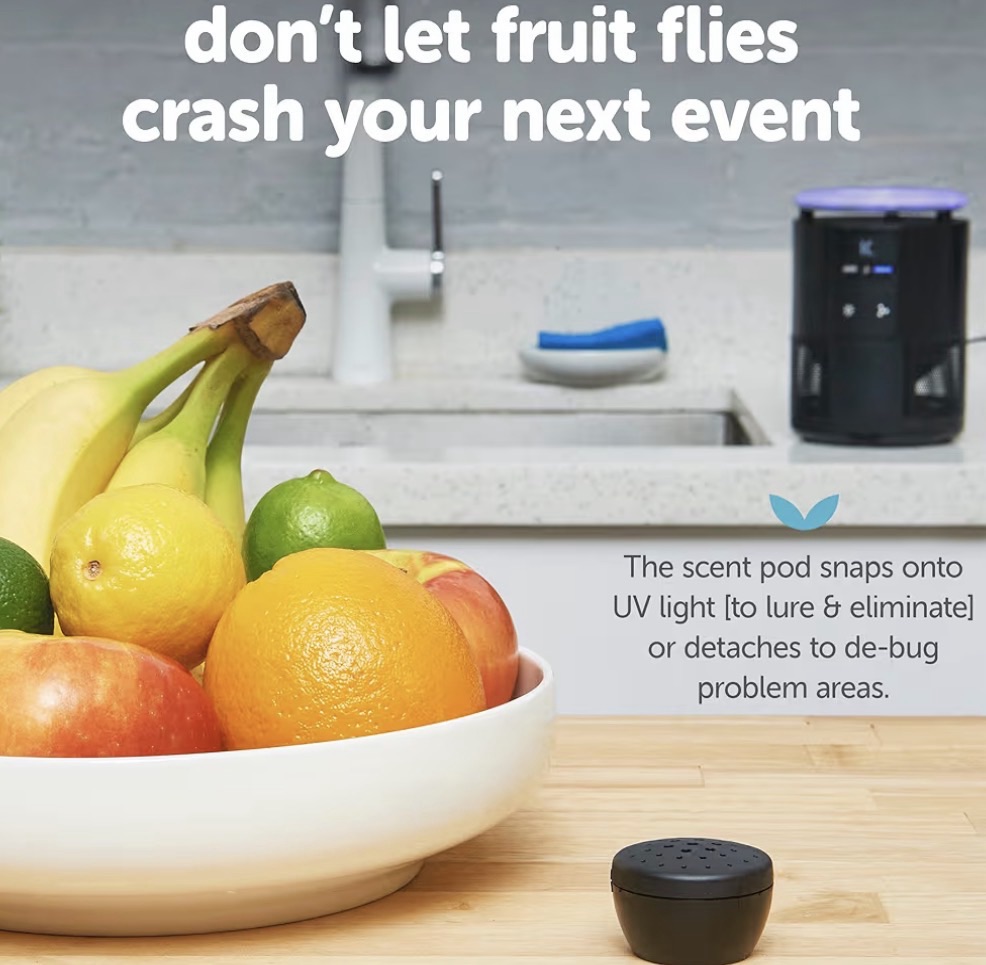
- Kitchen counter near the sink or produce. This is where fruit flies and gnats concentrate. Putting the trap right in their activity zone maximizes catches.
- Near houseplants. Fungus gnats breed in damp soil and swarm around plants. A KATCHY Duo nearby intercepts them before they spread through the house.
- On the floor near trash cans. Fruit flies and gnats are low fliers. Floor placement near a trash area catches them in their natural flight zone.
- Pantry or food storage area. For small moths getting into dry goods, placement near the pantry puts the trap right at the source.
- Laundry room or basement. Low-traffic areas where gnat and drain fly populations build unnoticed. A KATCHY running continuously there catches them before they spread.
Placement Tips
Unlike the Zevo which is fixed to an outlet, the KATCHY Duo’s freestanding design lets you move it to wherever the activity is currently worst. Move it toward the problem rather than hoping insects find it from across the room. Closer to the activity equals more catches.
Lower is better for fruit flies and gnats — they fly close to surfaces and at counter height, not up near the ceiling. The KATCHY on a counter or on the floor outperforms the same unit placed on top of a refrigerator.
Tip: Run the KATCHY Duo overnight with room lights off for maximum catch rate. Even with the scent pod providing daytime effectiveness, UV light is at its most attractive in darkness. Leave it running 24 hours but expect the heaviest catches during overnight hours.
The Glue Boards — Replacement Schedule and What to Expect
The KATCHY Duo captures insects on sticky glue boards inside the unit. The boards need periodic replacement as they fill up and lose stickiness.
Under normal use, boards last approximately 2–4 weeks depending on catch volume. During a heavy infestation you may go through them faster. Replacement boards are available separately on Amazon and are worth having a supply on hand — running the trap on a worn-out board significantly reduces effectiveness.
Checking the board is also your monitoring tool. More bugs on the board means more activity. Declining catches over time — while you’re also addressing the breeding source — means the population is dropping and your approach is working.
Changing the board is straightforward. The unit opens, the old board slides out, the new one slides in. Takes under a minute and you don’t have to handle the insects directly.
The Scent Pod — How Long It Lasts and Whether It’s Worth It
The scent pod is what differentiates the Duo from the standard KATCHY and from most competitors. It’s a replaceable cartridge that sits inside the unit and emits an attractant scent alongside the UV light.
Each pod lasts approximately 30 days. Replacement pods are available separately. The cost of ongoing pod replacement is worth factoring into your total cost of ownership — the Duo costs more upfront and has ongoing pod costs that the standard KATCHY doesn’t.
Is the scent pod worth the added cost? Yes, if you have significant daytime flying insect activity. If your problem is primarily nocturnal — gnats appearing at night when lights are off — the standard KATCHY’s UV light alone may be sufficient. If you’re seeing fruit flies circling your produce bowl in the middle of the afternoon in a well-lit kitchen, the scent pod’s daytime effectiveness is the meaningful upgrade that justifies the Duo’s price.
What the KATCHY Duo Won’t Do
Worth being direct about the limits so expectations are calibrated correctly.
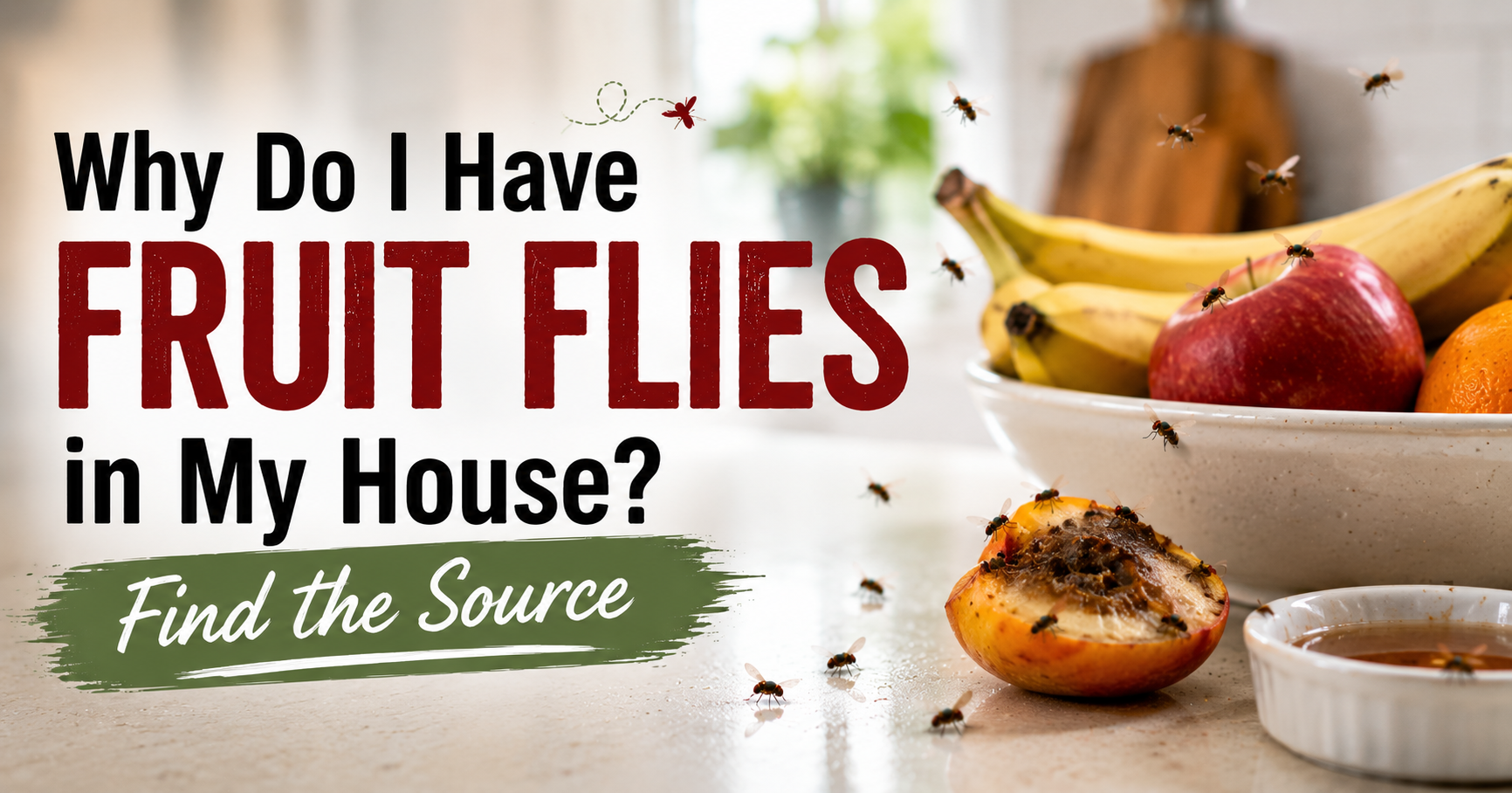
It won’t eliminate a heavy infestation without addressing the breeding source. This is the rule with every flying insect trap. If fruit flies are breeding in a forgotten piece of rotting produce under your sink, the KATCHY will catch flies but the population regenerates from the source faster than any trap can keep up. Find and eliminate the breeding source first — then the trap handles the remaining population effectively. Before relying on a trap, find the fruit fly source so you can stop the infestation at its origin.
The fan creates noise. It’s not loud — a low hum similar to a small fan — but it’s not silent the way the Zevo is. In a bedroom or quiet space this matters. In a kitchen it’s a non-issue.
It takes up counter space. The Zevo’s plug-in form factor is genuinely more convenient for small kitchens. The KATCHY is a freestanding unit that needs to sit somewhere. Not a dealbreaker but worth knowing before you buy.
It’s not a mosquito trap. Despite the packaging claim, UV light traps are not reliable mosquito catchers. If mosquitoes are part of your problem, address that separately.
How to Get the Most Out of It
Eliminate breeding sources first. Check every piece of produce, clean your drains, let houseplant soil dry out between waterings. The trap works best as a cleanup tool after you’ve cut off the supply, not as the sole solution to an active breeding population.
Place it close to the activity. Countertop near the sink or produce bowl for fruit flies. On the floor near plants for fungus gnats. Near the pantry for moths. Don’t put it in the corner and hope bugs find it from across the room.
Run it continuously. Flying insect populations build fast. Turning the trap off between visible outbreaks means you’re missing the low-level activity that becomes the next outbreak. Leave it running and let it work in the background.
Replace the glue board before it’s completely full. A packed board loses stickiness and catch rate drops. Replace at 80% full rather than waiting until it’s completely covered.
Keep the scent pod fresh. A depleted scent pod turns the Duo back into a standard UV-only trap. Replace on schedule — roughly every 30 days — to maintain the daytime effectiveness that makes the Duo worth the upgrade.
How to Keep Flying Insects From Coming Back
The trap handles the insects you have. Prevention handles the ones you’d otherwise get next month.
Store ripe fruit in the refrigerator. Fruit left in a bowl at room temperature is broadcasting a signal to every fruit fly in range. Especially in warm weather — anything that’s ripe goes in the fridge.
Clean drains monthly. Drains accumulate the organic buildup that drain flies and fruit flies breed in. A drain brush and a biological drain cleaner used monthly removes that breeding habitat before it becomes a problem.
Don’t overwater houseplants. Fungus gnats need consistently damp soil to breed. Letting the top inch or two of soil dry out between waterings eliminates their breeding conditions without harming most plants.
Check the back of cabinets and pantry shelves regularly. One forgotten potato or onion that’s started to turn is enough to sustain a fruit fly population for weeks. A quick check every couple of weeks prevents that.
Empty trash cans frequently. Kitchen trash with food waste sitting overnight is an invitation. Frequent emptying and a tight-fitting lid reduces the attractant significantly.
Flying insects are one of the more frustrating household pest problems because the population can rebound fast if you don’t address the root cause. But with the breeding source eliminated and the KATCHY Duo running continuously, most indoor flying insect problems are manageable within a week or two. Grab the KATCHY Duo on Amazon, put it where the bugs are, and let it run. It’s one of the more satisfying pest control purchases you’ll make — checking the glue board after a few days and seeing what it’s caught is genuinely gratifying.