Most people treat bugs reactively. They see a roach, they grab a spray. They find an ant trail, they wipe it down. They deal with whatever’s in front of them and hope it doesn’t come back. It always comes back. The reason is simple — they’re treating inside the house when the problem starts outside it. The article on Why Do I Have Roaches in My Clean House? explains the structural, moisture, and neighboring-unit conditions that can bring roaches indoors even when a home is clean.
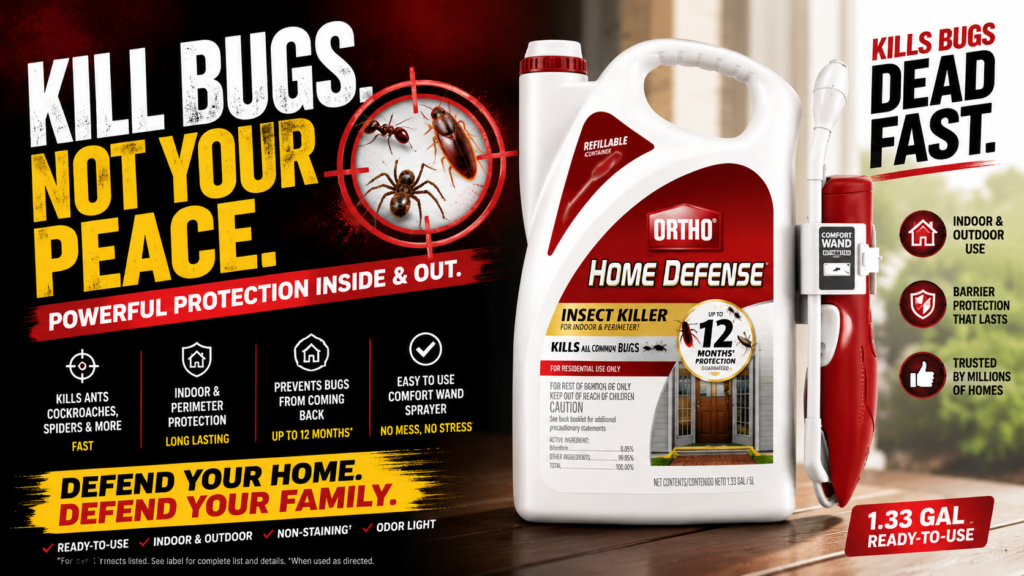
Ortho Home Defense is built around a different idea. Create a barrier around the perimeter of your home that bugs can’t cross without dying, and stop the infestation before it starts. It’s one of the best-selling pest control products in the country for a reason, and this review covers exactly how it works, how to apply it correctly, and whether the 1.33 gallon ready-to-use jug with the Comfort Wand is worth keeping in your garage year-round.
The REAL Answer
Ortho Home Defense works — and for perimeter pest control it’s one of the best consumer products available. It kills ants, roaches, spiders, and a long list of other crawling insects on contact and leaves a residual barrier that keeps killing for months after application. The ready-to-use formula with the Comfort Wand makes application genuinely easy, and the 1.33 gallon jug gives you enough to treat a full home perimeter multiple times. Used consistently as a preventive treatment, it’s the single most effective step most homeowners can take to keep bugs from getting inside in the first place.
What Is Ortho Home Defense?
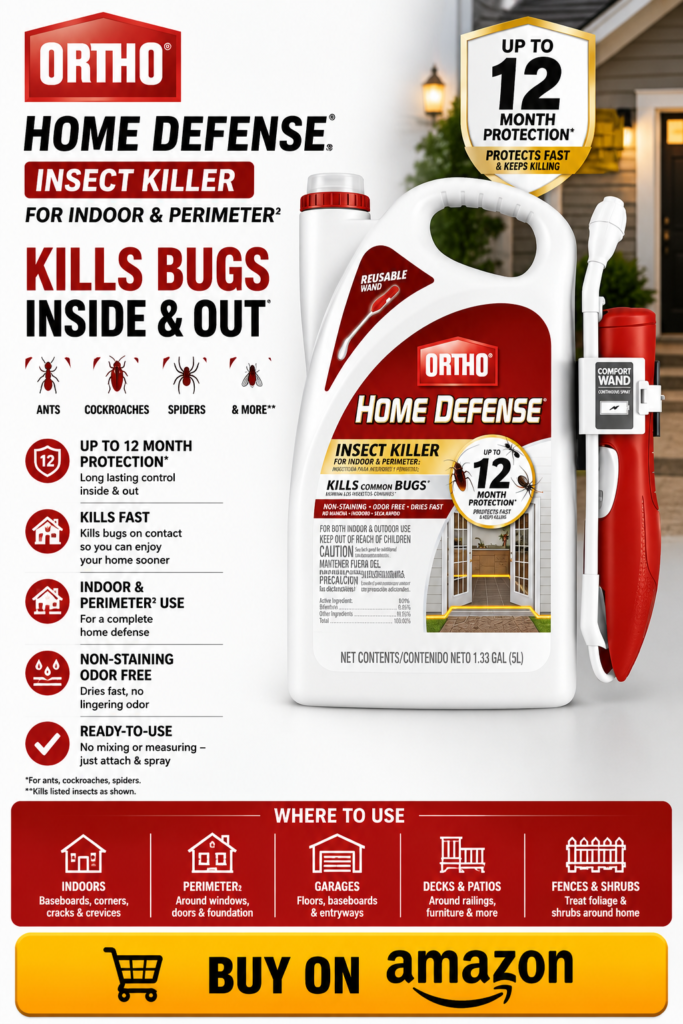
Ortho Home Defense Insect Killer for Indoor and Perimeter is a bifenthrin-based insecticide in a ready-to-use spray format. Bifenthrin is a synthetic pyrethroid — the same class of active ingredient used by many professional pest control services — at a concentration strong enough for serious pest control without requiring a license to purchase or apply.
The 1.33 gallon jug is the right buy for whole-home treatment. It comes with Ortho’s Comfort Wand — a battery-powered continuous spray wand that attaches directly to the jug and lets you apply a consistent even band without hand fatigue, bending constantly, or fighting with a trigger sprayer. For anyone who’s ever tried to spray a full home perimeter with a standard trigger bottle, the wand is a genuine quality-of-life upgrade.
→ Check the current price on Ortho Home Defense 1.33 Gallon with Comfort Wand on Amazon — this size covers your full home perimeter multiple times over.
How Does It Work?
Bifenthrin works by disrupting the nervous system of insects on contact, causing rapid paralysis and death. Applied as a spray to surfaces, it dries into a residual film that continues to kill insects that walk across it for weeks to months after application.
The dual action — contact kill plus residual barrier — is what makes perimeter treatment effective. You’re not just killing bugs you can see. You’re creating a treated zone around your home’s foundation that kills bugs as they approach, before they find a way inside.
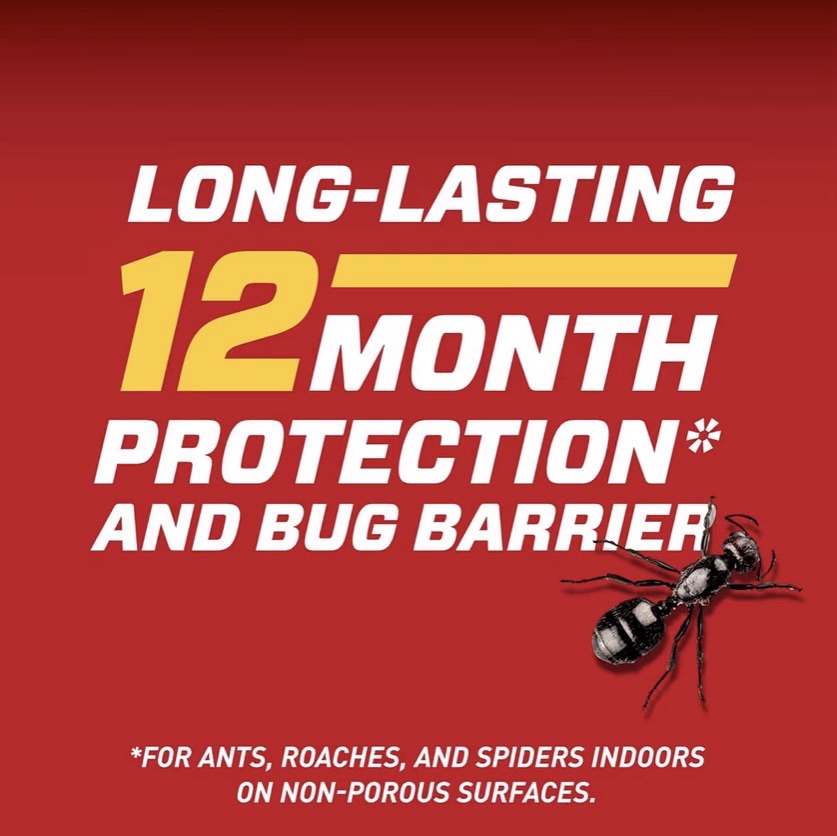
Ortho claims up to 12 months of indoor residual protection on non-porous surfaces. Outdoor residual is shorter depending on weather, sun exposure, and rain — realistically expect 1–3 months outdoors before reapplication is needed. That’s still excellent value for a single application of a consumer product.
What Bugs Does It Kill?
Ortho Home Defense kills over 130 insect species. The ones most relevant to homeowners:
- Ants — including carpenter ants, fire ants at contact, pavement ants, and odorous house ants
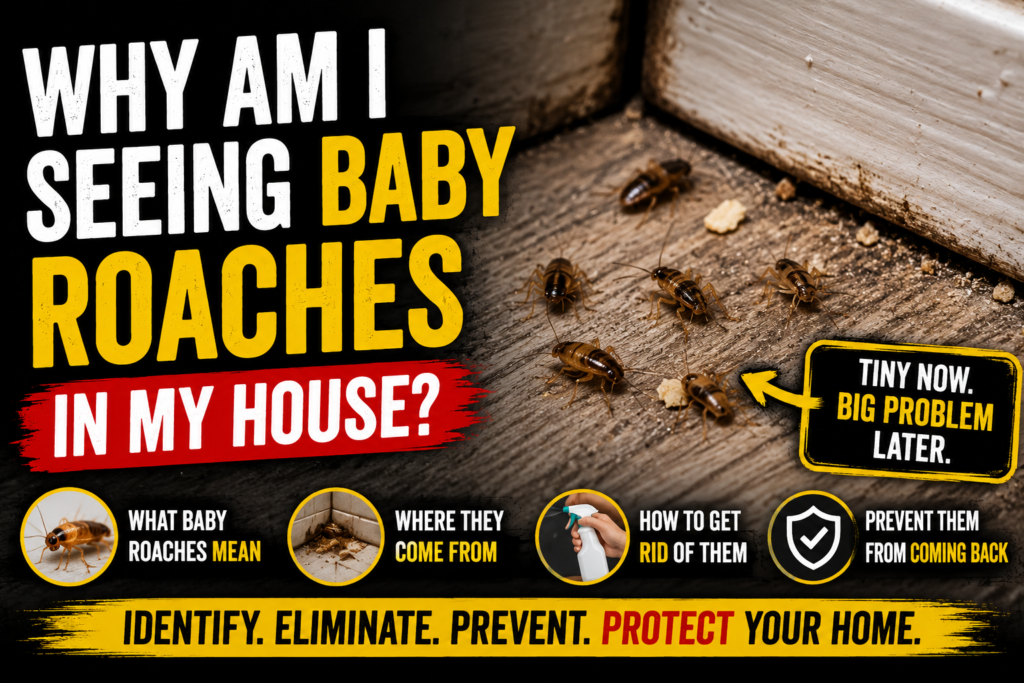
- Cockroaches — German, American, and other major species
- Spiders — including black widows and brown recluses
- Silverfish
- Earwigs
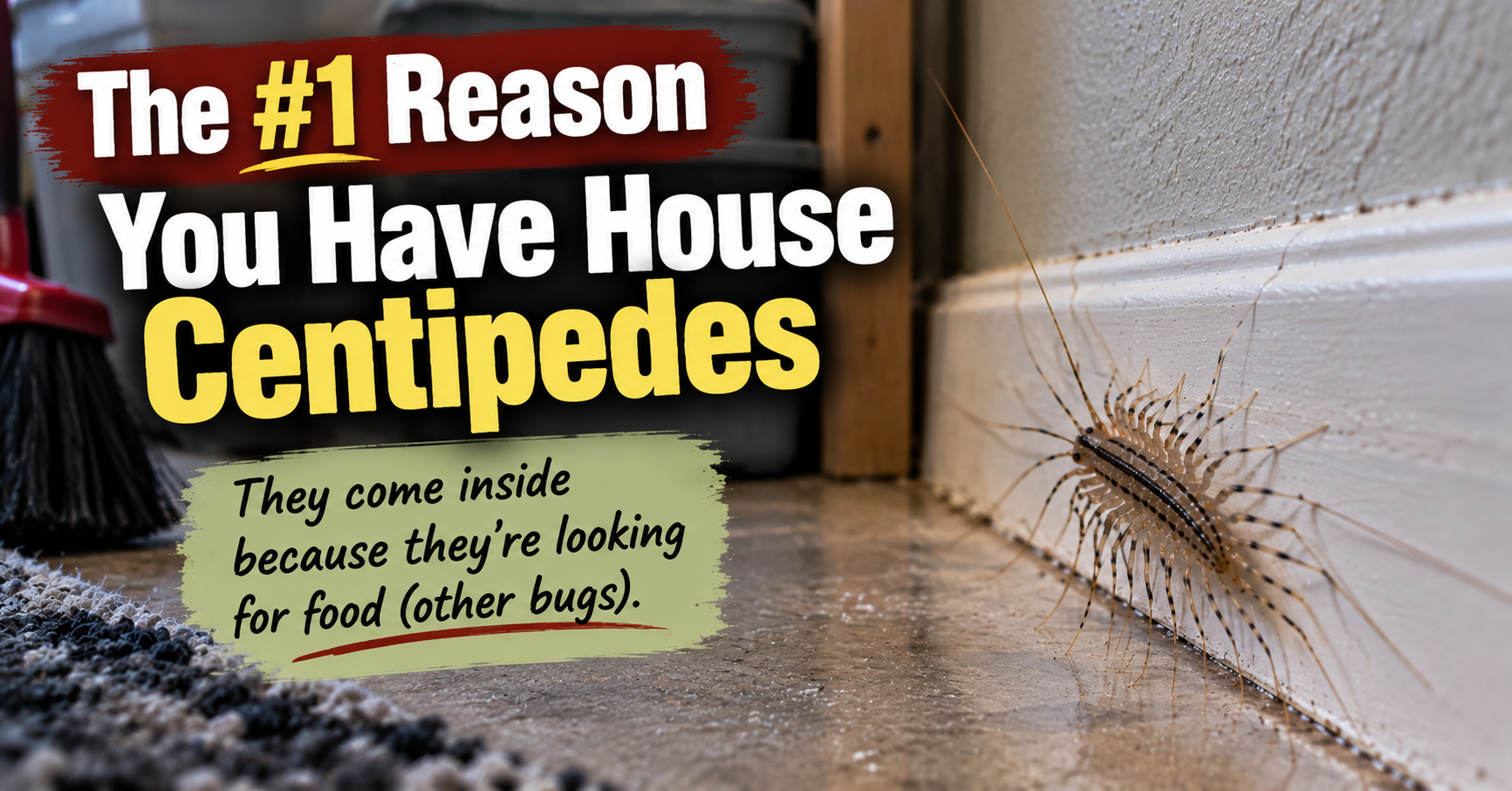
- Centipedes and millipedes
- Crickets
- Beetles
- Stink bugs
- Fleas and ticks in treated areas
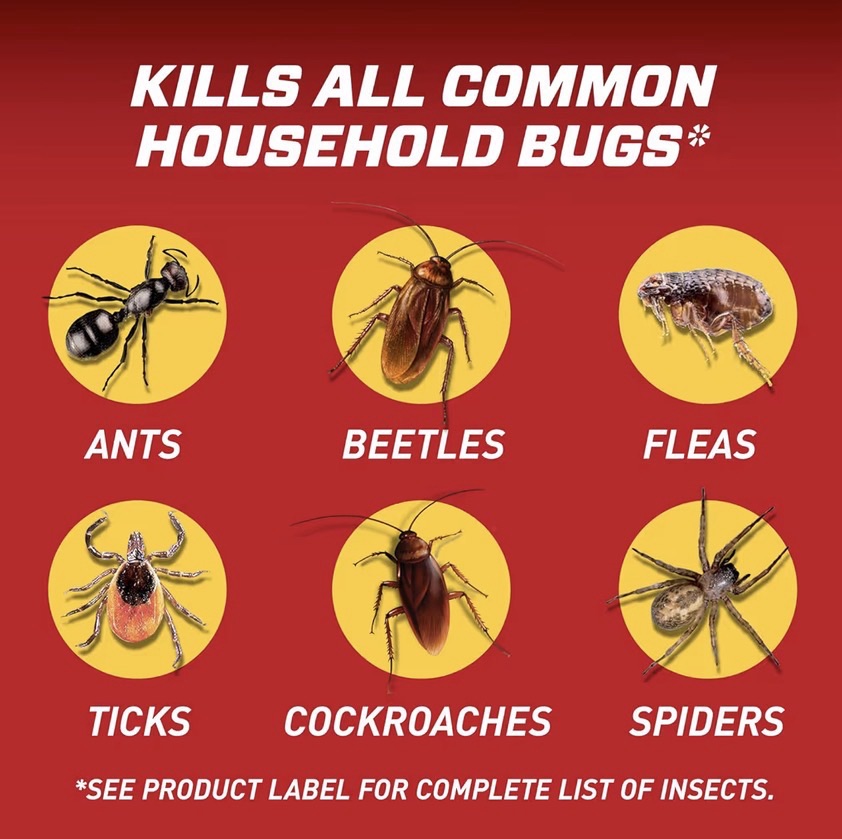
If it crawls and tries to enter your home, Ortho Home Defense is likely on the label. This broad-spectrum coverage is one of its biggest advantages — one product handles the full range of crawling invaders rather than requiring a different treatment for each species.



Indoor vs. Outdoor Application — Know the Difference
Ortho Home Defense is labeled for both indoor and outdoor use, but the strategy is different for each and understanding that makes your application significantly more effective.
Outdoor Perimeter Treatment — This Is the Priority
This is where Ortho Home Defense earns its reputation. The goal is to create a continuous treated band around the entire exterior of your home — along the foundation, around doors and windows, and across any other entry point bugs use to get inside. The protective bug barrier approach focuses on the same strategy of stopping insects at common entry points before they get indoors.
Apply a 4-inch band along the ground adjacent to the foundation and a 4-inch band up the foundation wall itself. This creates an L-shaped barrier at ground level that bugs have to cross to enter. Also treat around every door frame, window frame, garage door, and any utility penetration you can find.
This is stop-the-problem-at-the-source pest control. Bugs that never get inside are bugs you never have to deal with. One perimeter treatment applied correctly does more than months of reactive indoor spraying.
Indoor Application — Entry Points and Problem Areas
Indoors, focus on entry points and known problem areas rather than treating walls and floors broadly. Along baseboards in kitchens and bathrooms, around pipe penetrations under sinks, along window sills, around door frames inside, and in any crack or gap where you’ve seen insects entering or traveling.
Do not apply broadly to open floor areas, food prep surfaces, or anywhere that gets regular foot traffic and cleaning. Indoor application is targeted — entry points and travel routes, not the entire room.
Tip: Apply outdoor perimeter treatment on a dry day with no rain in the forecast for at least 24 hours. Rain immediately after application washes the product off before it has time to bind to the surface and cuts your residual time significantly.
The Comfort Wand — Is It Actually Worth It?
Yes, and meaningfully so. Treating a full home perimeter with a trigger sprayer means hundreds of trigger pulls, constant bending to reach the foundation level, and an uneven spray pattern that leaves gaps in your barrier. The Comfort Wand eliminates all of that.
It attaches directly to the jug, has a battery-powered continuous spray mechanism, and an extended wand that lets you reach the foundation and the ground band without bending over for the entire application. You can walk your full perimeter at a steady pace and apply an even consistent band the whole way.
The spray pattern is also more consistent than a hand trigger, which matters for residual barrier effectiveness. Gaps in your spray band are gaps bugs can walk through untouched. Even coverage means a complete barrier.
For a full 1.33 gallon application — which is what a whole-home perimeter treatment takes — the wand makes the job something you actually want to do rather than something you put off because it’s a pain. And pest control you put off doesn’t protect anything.
How to Apply Ortho Home Defense for Maximum Effect
Step 1: Walk Your Perimeter First
Before you spray, walk around your home and identify every entry point you can find. Gaps around pipes, cracks in the foundation, spaces under doors, gaps around utility boxes, weep holes in brick — note them all. These are your priority treatment points beyond the standard foundation band.
Step 2: Treat the Outdoor Perimeter
Starting at one corner of your home, apply a continuous band along the foundation — 4 inches out on the ground and 4 inches up the wall. Work around the entire perimeter without breaking the band. Then go back and treat every door frame, window frame, and entry point you identified in step one.
Extend treatment to any attached structures — garage, deck, porch. Bugs don’t distinguish between your house and your garage. A gap in your perimeter treatment is an invitation.
Step 3: Treat Indoor Entry Points
Move inside and treat along baseboards in kitchens and bathrooms, around under-sink pipe gaps, along window sills, and around interior door frames. Keep it targeted — you don’t need to spray every baseboard in every room, just the high-risk entry and travel zones.
Step 4: Reapply on Schedule
Outdoor residual degrades with weather exposure. Reapply the exterior perimeter every 1–3 months during active bug season — more frequently after heavy rain. The indoor residual lasts longer but reapply seasonally in high-activity areas. Consistent scheduled treatment beats reactive emergency treatment every time.
Ortho Home Defense vs. The Competition
Ortho vs. Indoor-Only Sprays Like Raid
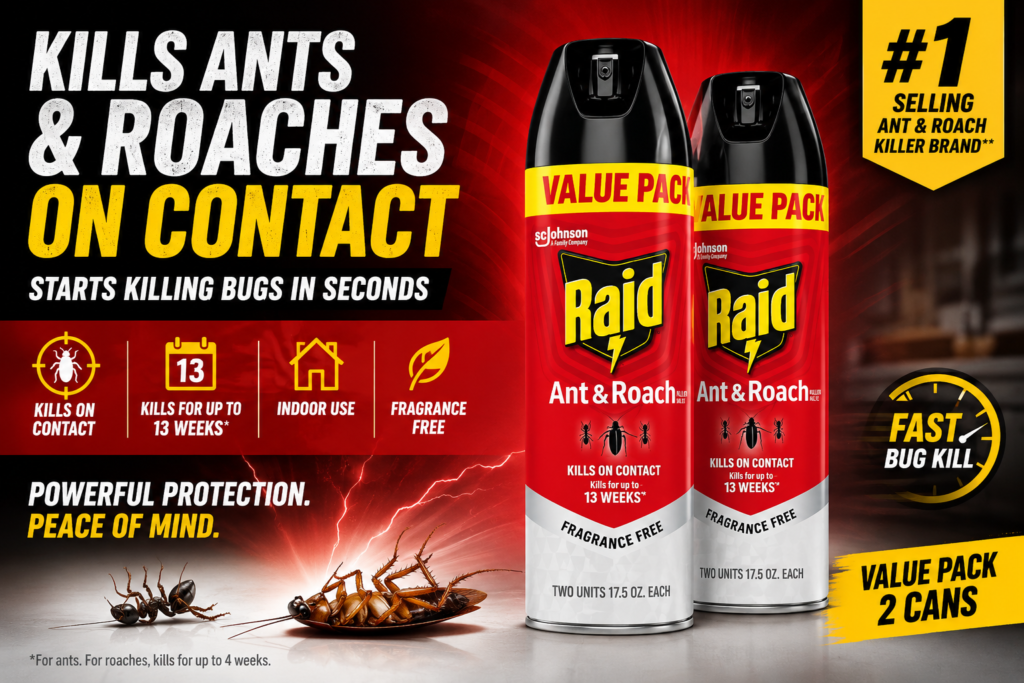
Raid and similar contact sprays handle bugs you can already see inside your home. Raid kills on contact and has some residual effect but it’s not designed for perimeter barrier treatment. Ortho Home Defense stops bugs before they get in. Raid deals with them after they’re already there. Ideally you use both — Ortho for perimeter prevention, Raid for immediate response to anything that gets through.
Ortho vs. Bait Products
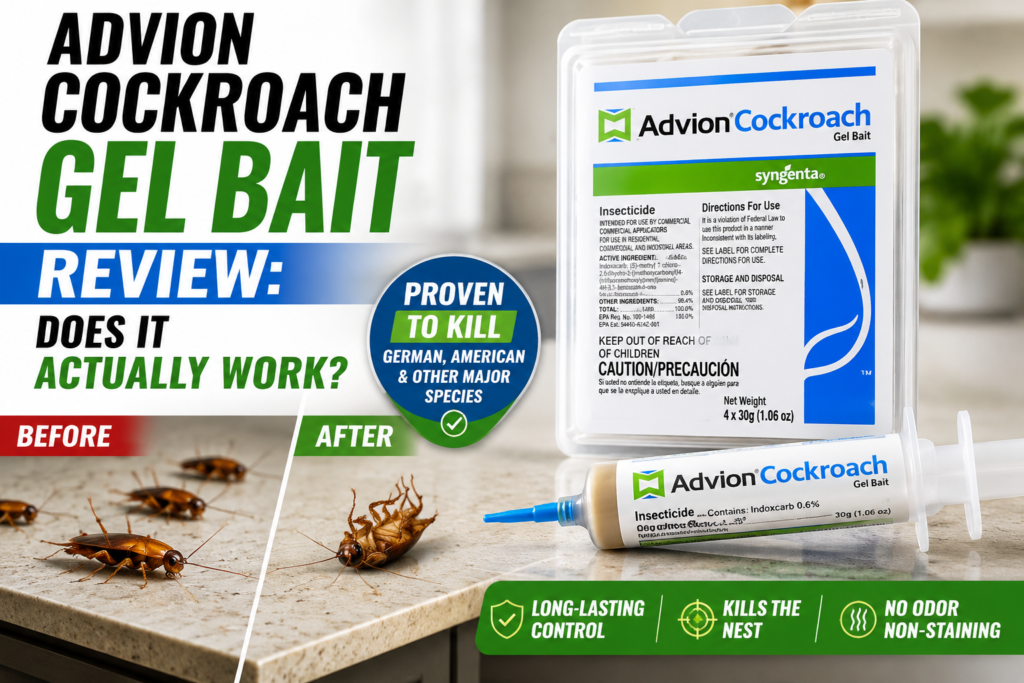
Bait products like Advion roach gel and TERRO ant bait work by eliminating colonies from the inside out. Ortho Home Defense works by killing bugs at the perimeter before they establish. These aren’t competing approaches — they’re complementary ones. Bait for active indoor infestations, Ortho for perimeter prevention. Running both gives you the most comprehensive coverage.
Ortho vs. Powder Treatments
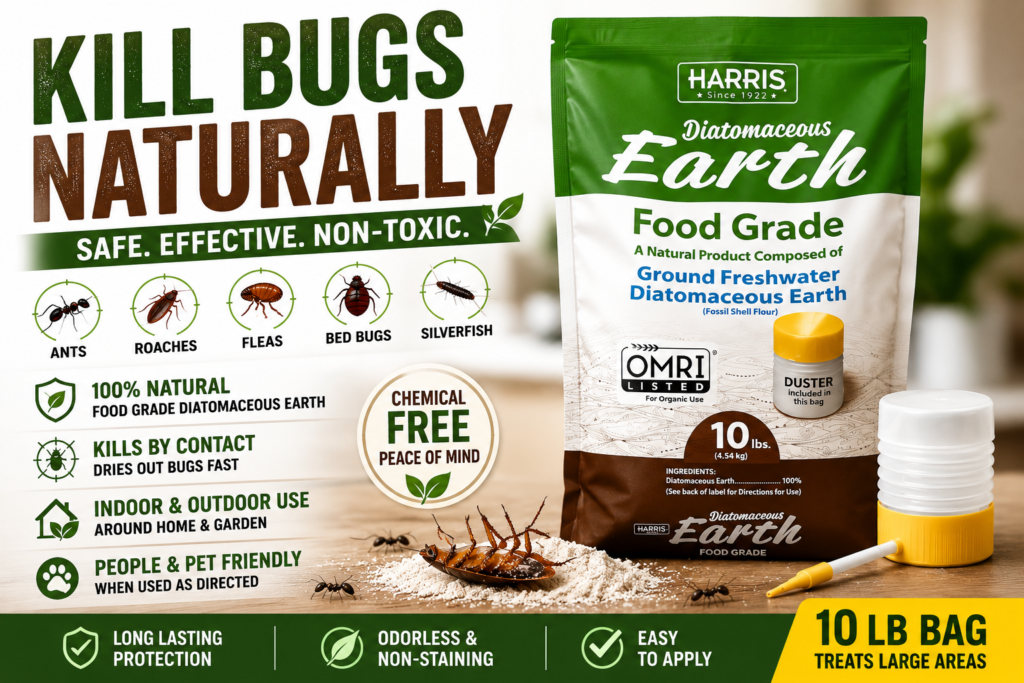
Products like diatomaceous earth and boric acid are excellent long-term residual treatments in hidden indoor zones — wall voids, outlet boxes, under appliances. Ortho handles the outdoor perimeter and indoor entry points. Different tools, different zones, work best together.
Ortho vs. Professional Pest Control
Professional pest control services often use bifenthrin-based perimeter sprays — the same active ingredient as Ortho Home Defense. You’re applying the same class of product at a fraction of the cost. A quarterly pest control service runs $100–$150 per visit or more. A 1.33 gallon jug of Ortho covers the same ground multiple times for a fraction of that. For routine preventive perimeter treatment, DIY with Ortho is hard to argue against.
Is It Safe Around Kids and Pets?
Bifenthrin is toxic to insects and has a low to moderate toxicity profile for mammals. The practical guidance is straightforward.
Keep people and pets off treated surfaces until completely dry — typically 30–60 minutes outdoors, longer indoors. Once dry, the residual film is much lower risk during normal contact. Don’t let pets walk on a freshly treated surface and then lick their paws.
For outdoor perimeter treatment, by the time anyone is walking near the foundation the product has typically dried. The treated zone is also along the foundation wall and at ground level along the exterior — not in the middle of your yard or anywhere children and pets typically play.
Bifenthrin is highly toxic to fish and aquatic invertebrates. Do not apply near ponds, water features, or storm drains. Keep runoff away from any water source.
Warning: Bifenthrin is highly toxic to bees and other beneficial insects. Avoid applying to flowering plants or areas with active pollinator activity. Treat in early morning or evening when bees are less active if application near plants is unavoidable.
Common Application Mistakes
Breaking the perimeter band. A gap in your spray line is a gap bugs walk through untreated. Maintain a continuous band around the full perimeter — no skipping sections because they look clean or seem less likely to have activity.
Only treating where you’ve seen bugs. Bugs don’t announce their entry points in advance. Treat the entire perimeter, not just the corner where you saw ants last week.
Applying before rain. Rain washes bifenthrin off surfaces before it can bind and form a proper residual. Check the forecast and apply on a dry weather window.
Skipping reapplication. Outdoor residual degrades. A single spring application doesn’t protect you through summer and fall. Schedule reapplication and stick to it.
Not treating the garage. Garage doors are one of the most common insect entry points — gaps at the bottom, gaps at the sides, gaps where utilities enter. Treat the garage perimeter the same as the house.
How to Build a Complete Pest Defense System
Ortho Home Defense is the outer layer of a complete pest defense. Here’s how the full system fits together.
Layer 1 — Outdoor perimeter barrier. Ortho Home Defense applied consistently along the foundation and entry points. This is your first line of defense. Bugs that never get in are bugs you never fight inside.
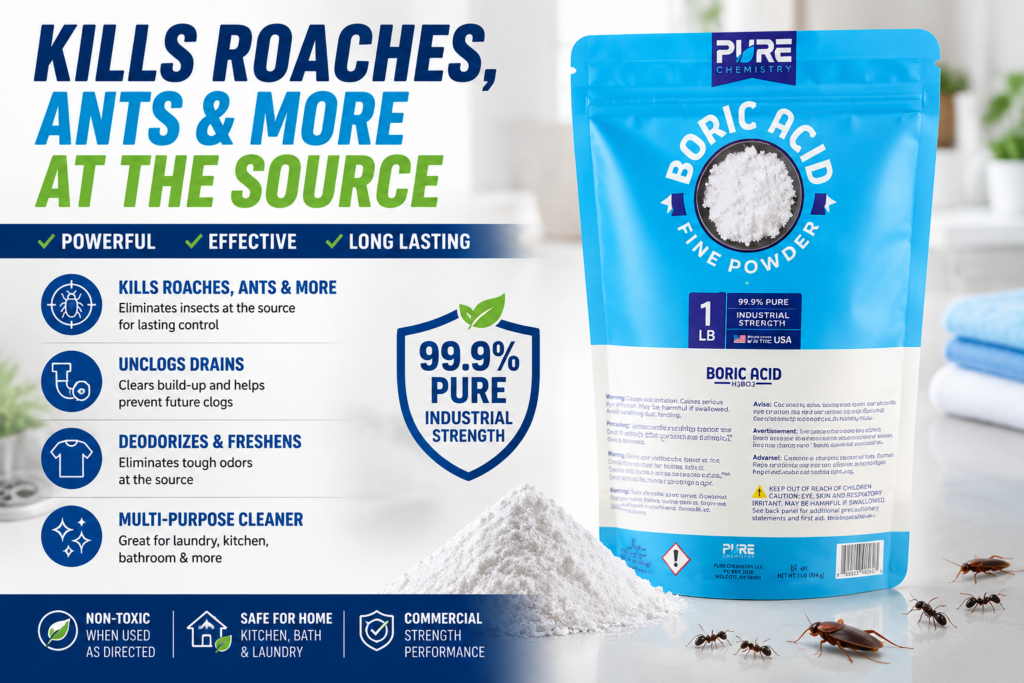
Layer 2 — Indoor entry point treatment. Ortho applied at indoor entry points, plus powder treatments in hidden zones. Boric acid in wall voids and outlet boxes, diatomaceous earth along surface pathways — these create permanent residual barriers in the spots Ortho’s spray doesn’t reach.
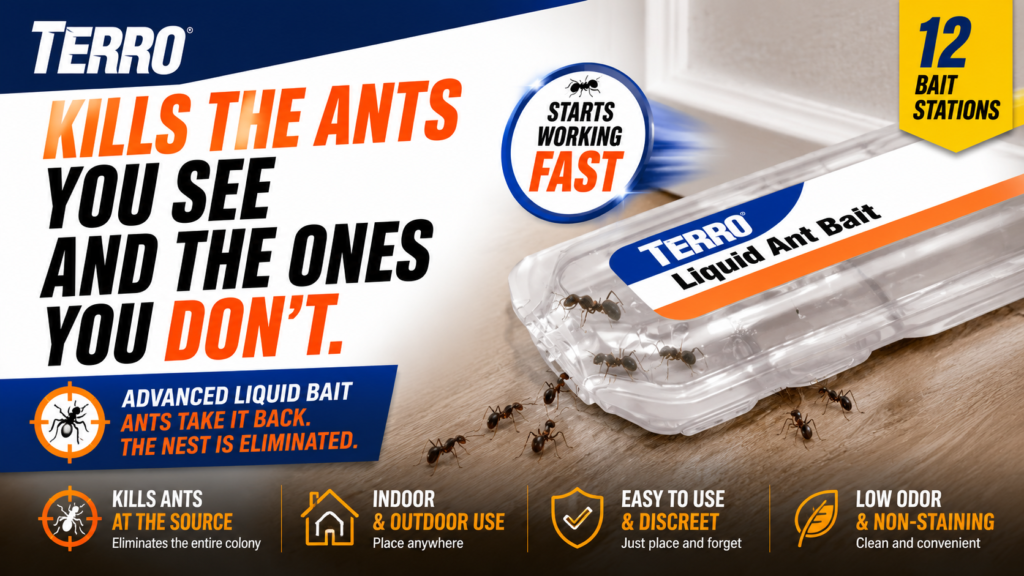
Layer 3 — Active infestation treatment. If bugs have established inside, bait eliminates the colony. Advion for roaches, TERRO for ants — these reach the colony where spray can’t.
Layer 4 — Physical exclusion. Seal the gaps. Caulk pipe penetrations, weatherstrip doors, fix screens. No spray or bait is as effective as physically closing the entry point. Spray and seal — do both.
Running all four layers means you’re stopping bugs at the perimeter, killing stragglers at entry points, eliminating any colonies that establish inside, and physically blocking as many entry points as possible. That’s a pest defense that actually holds instead of one you’re constantly reacting to.
Stop fighting bugs inside your home and start stopping them before they get there. Grab the Ortho Home Defense 1.33 gallon with Comfort Wand on Amazon, treat your perimeter this weekend, and set a reminder to reapply in 90 days. That one habit changes your whole relationship with household bugs.