
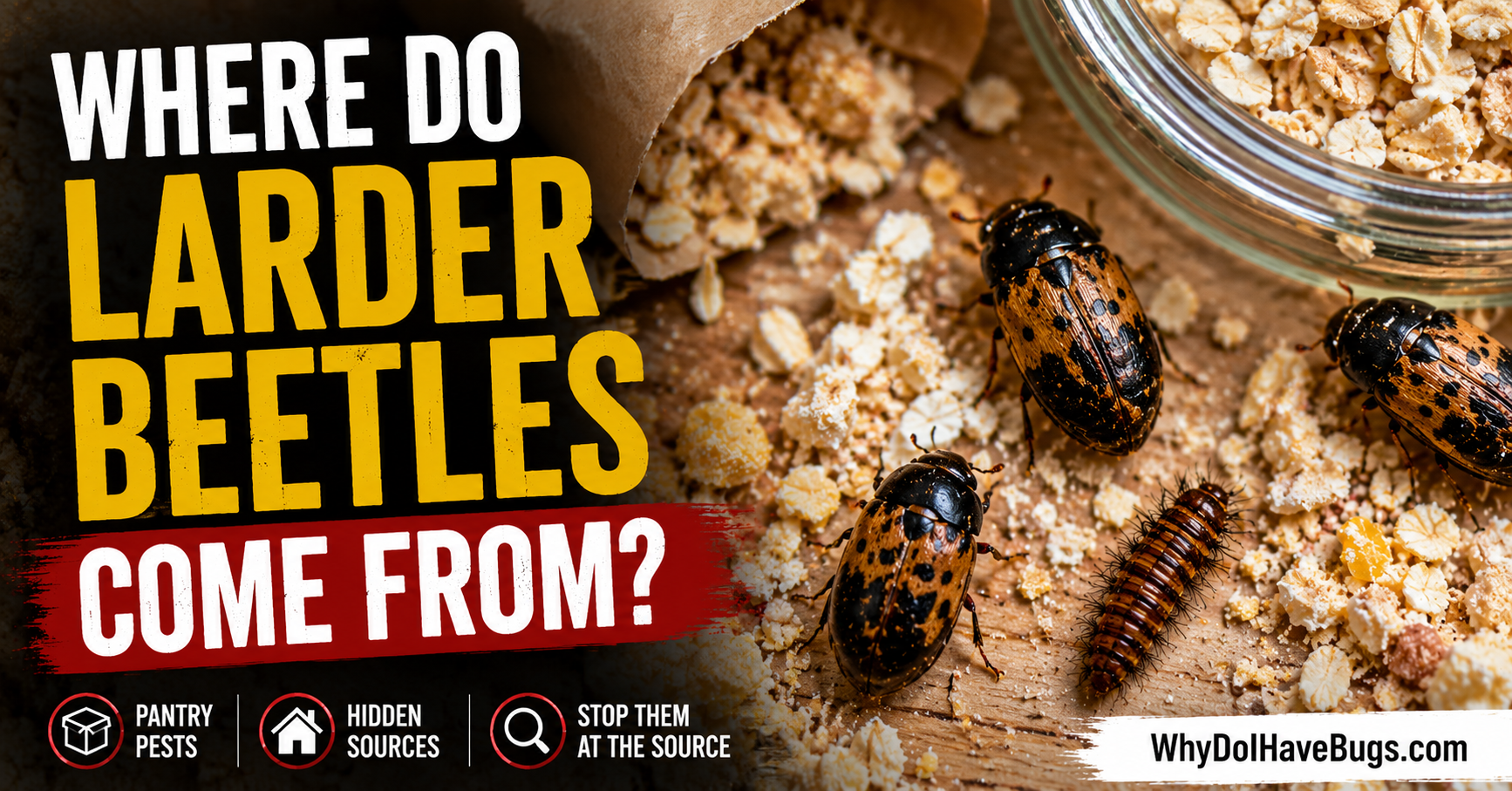
When I first realized I wasn’t dealing with carpet beetles but larder beetles instead, I made the same mistake most homeowners make.
I immediately started thinking about insecticides.
It seemed logical.
Kill the beetles.
Problem solved.
The more I researched these beetles, however, the more I realized that spraying the adults is actually one of the least important parts of getting rid of them.
Larder beetles don’t randomly decide to invade houses.
They’re there because they’ve found something worth eating.
Until that food source is removed, new adults can continue appearing even if every beetle you currently see dies. University extension specialists consistently emphasize that locating and eliminating the food source is the single most important step in successful control.

Over the years, I’ve found that the homeowners who permanently solve a larder beetle problem aren’t necessarily the ones who spray the most insecticide.
They’re the ones who become detectives.
That’s exactly how I approach every infestation.
Step 1 Never Skip Proper Identification
Before I do anything else, I make absolutely sure I’m dealing with larder beetles.
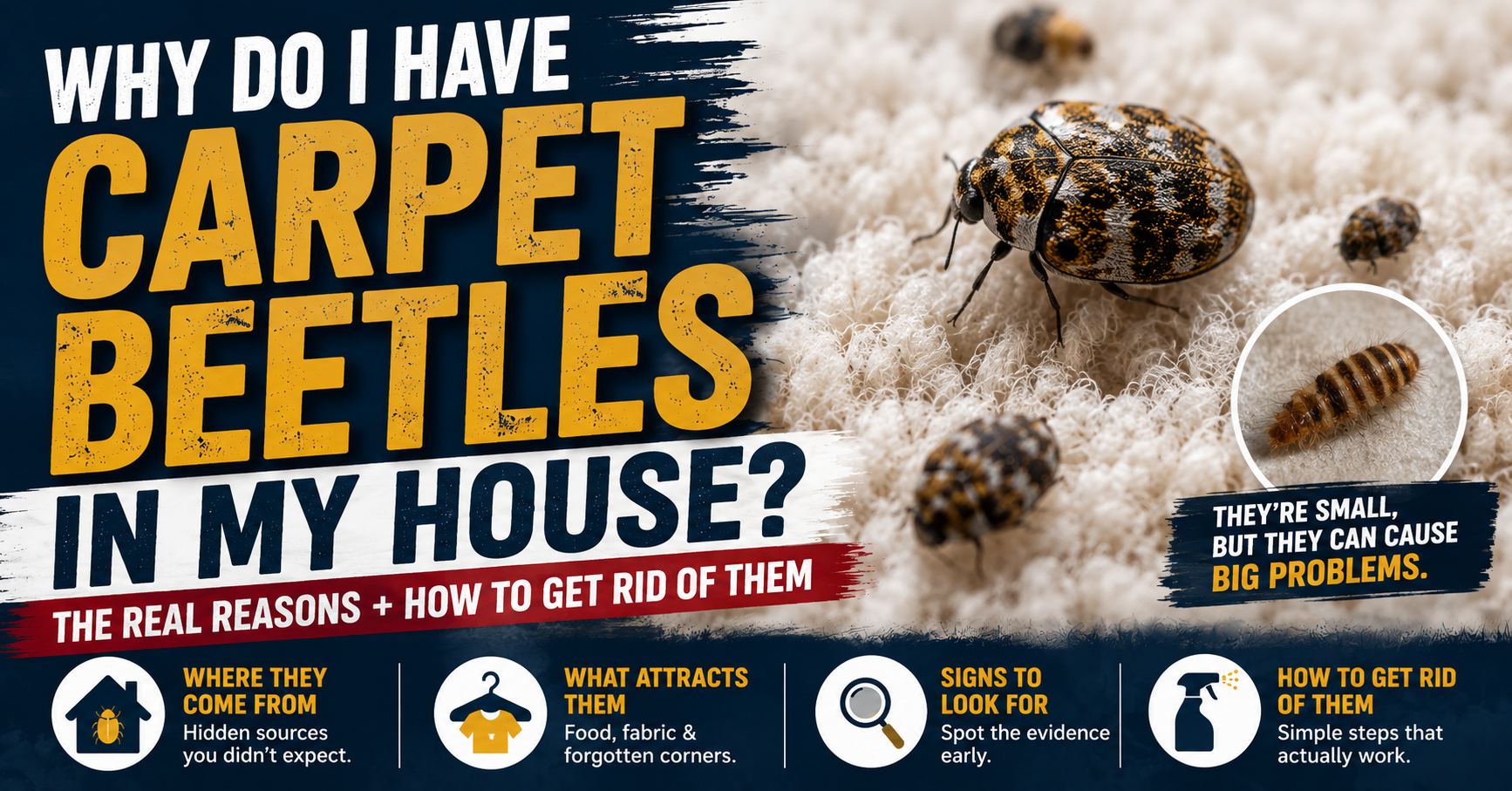
This sounds obvious, but it’s surprisingly easy to confuse them with carpet beetles because they’re both members of the dermestid beetle family.
In fact, I originally thought the beetles in my own house were carpet beetles until I looked much closer at their markings.

If you haven’t positively identified yours yet, compare it with my guide showing what larder beetles look like.
I also put together a detailed carpet beetle vs larder beetle comparison because these two insects are confused more than almost any other household beetles.
Getting the identification right changes everything.
It tells me where I should start looking.

Step 2 Find Out Why They’re There
This is where I spend most of my time.
Not spraying.
Not vacuuming.
Not buying products.
Simply looking for the reason the beetles moved in.
Larder beetles are almost always feeding on something rich in animal protein.
Until that source disappears, the infestation usually continues.
I slowly inspect every area where those food sources could exist.
I don’t rush.
The better my inspection, the easier the rest of the job becomes.
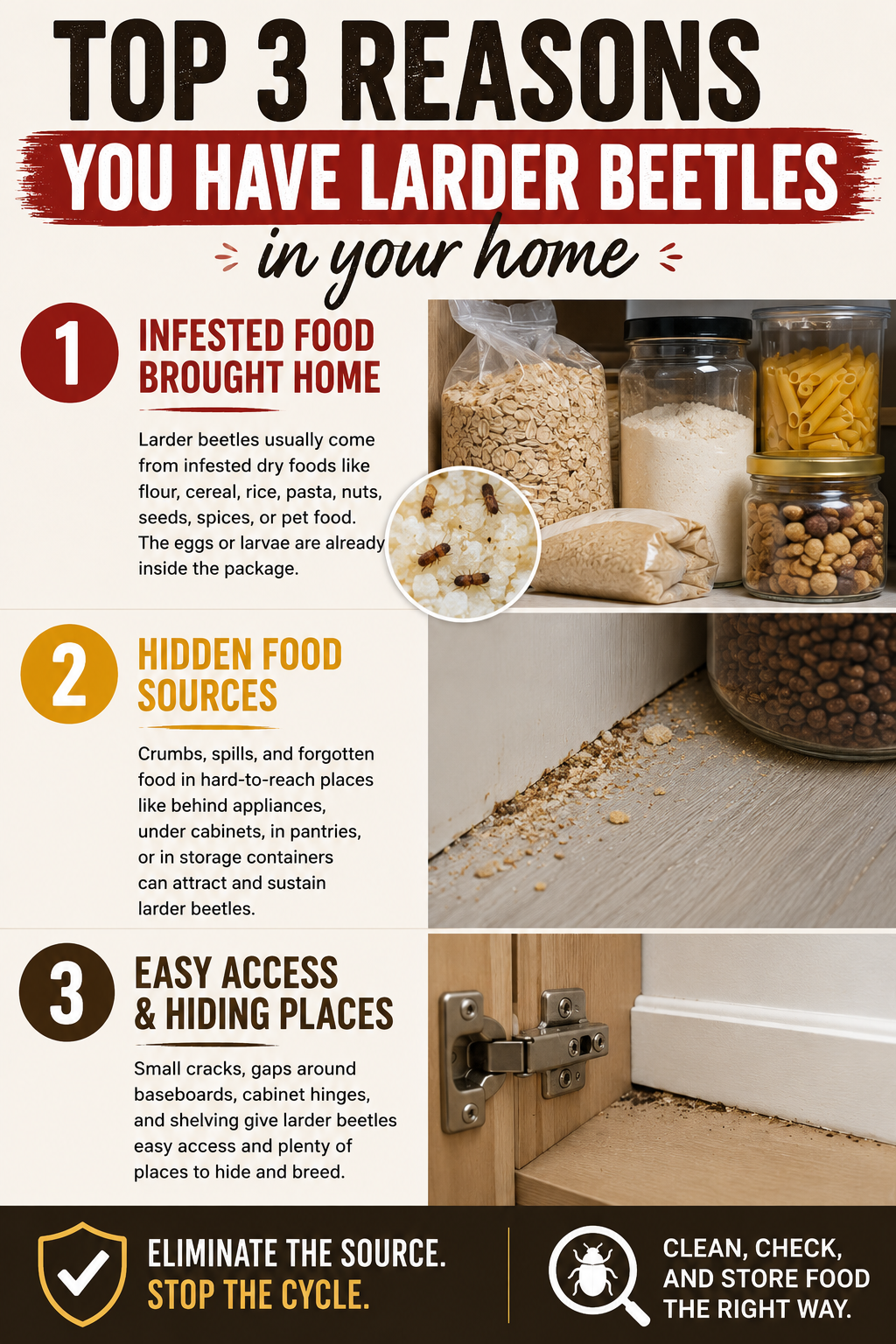
That’s why I always recommend reading why larder beetles show up in homes before beginning treatment.
Understanding what attracted them is often more valuable than anything you can buy in a spray bottle.
Step 3 Inspect Every Possible Food Source
This is where most infestations are won or lost.
I start with the obvious places before moving into hidden areas.
The first things I inspect are:
- Open bags of dog food.
- Dry cat food.
- Pet treats.
- Bird seed.
- Animal feed.
- Taxidermy.
- Hunting trophies.
- Dried meat products.
- Dead insects around windows.
- Storage shelves in garages and basements.
If none of those reveal the problem, I begin thinking about sources I can’t immediately see.

That includes dead mice inside walls, bird nests in attics, insects that died while overwintering in wall voids, and other hidden animal material. Those concealed sources are some of the hardest to locate, but they are also among the most common reasons homeowners continue seeing beetles after cleaning everything else. The same inspection approach can help identify where blow flies develop before relying on treatment.
Step 4 Throw Away Anything That’s Infested
Once I find the source, I don’t try to save it.
If dry pet food is crawling with larvae, it goes in the trash.
If bird seed is infested, I replace it.
If I discover a forgotten container of animal treats filled with beetles, I throw the entire thing away.
Trying to salvage heavily infested products almost always leads to more problems later.
Some extension services note that valuable non-food items can sometimes be treated by freezing or carefully heating them, but disposable food products are usually best discarded once heavily infested.


Step 5 Vacuum Far More Than You Think You Need To
This is probably the most underrated step in the entire process.
Vacuuming removes much more than adult beetles.
It also removes:
- Larvae.
- Shed skins.
- Dead insects.
- Hair.
- Dust.
- Pet dander.
- Food debris.
Those materials can continue supporting beetles even after the primary infestation has been removed.
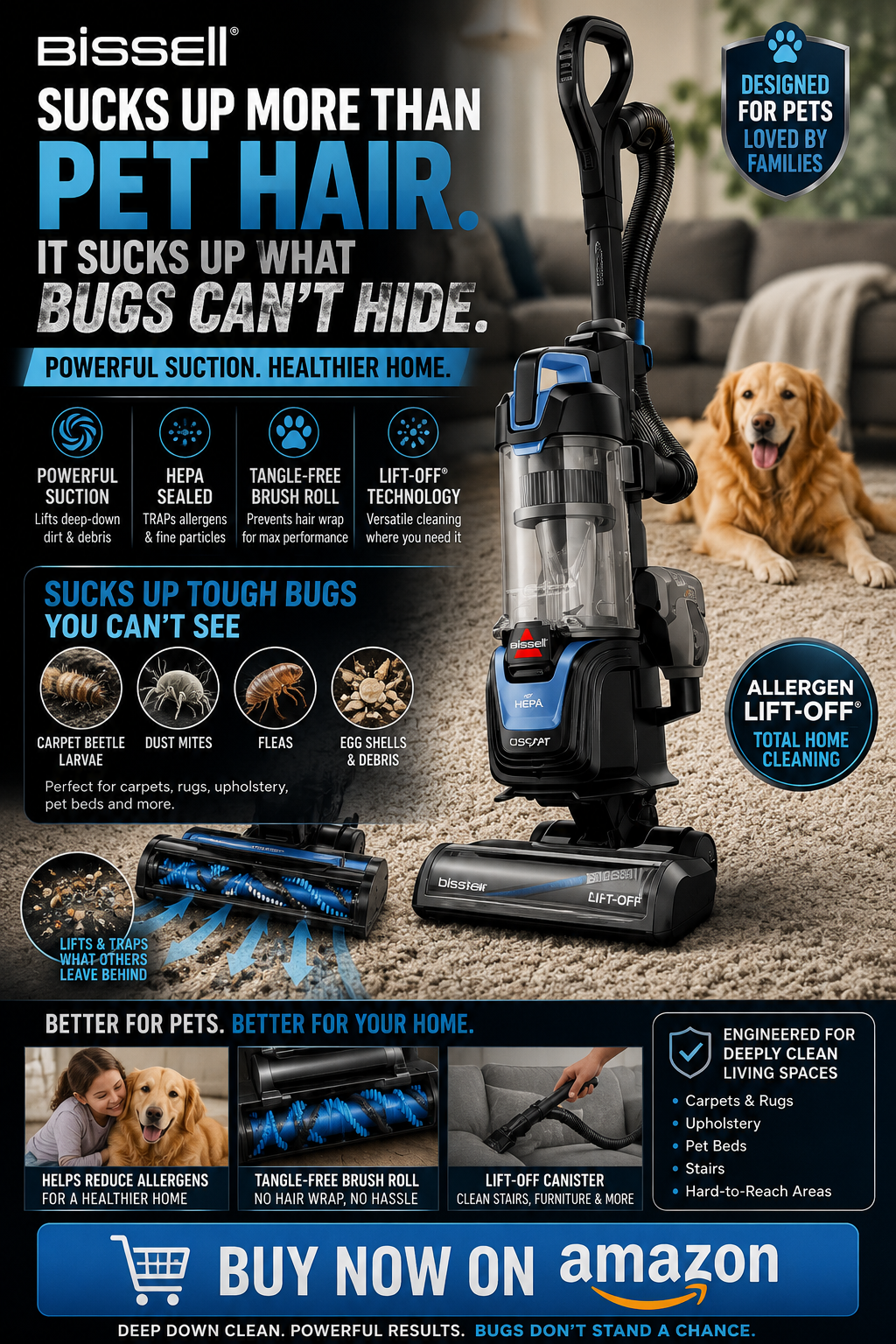
I vacuum slowly along every baseboard.
I move furniture.
I clean behind shelving.
I use crevice tools inside corners.
The more debris I remove, the fewer places remain for larvae to hide.
University extension programs consistently recommend thorough cleaning and vacuuming as a core part of larder beetle control before relying on insecticides.
Step 6 Apply a Residual Insecticide the Right Way
Only after I’ve completed all the cleaning and removed the food source do I reach for an insecticide.
This is where many homeowners get the order backwards.
If larvae are still feeding on a dead mouse, old dog food, or a pile of dead insects hidden in an attic, spraying adults won’t stop new beetles from emerging.

Instead, I use a residual insecticide to kill the beetles that continue moving through the house while the infestation winds down.

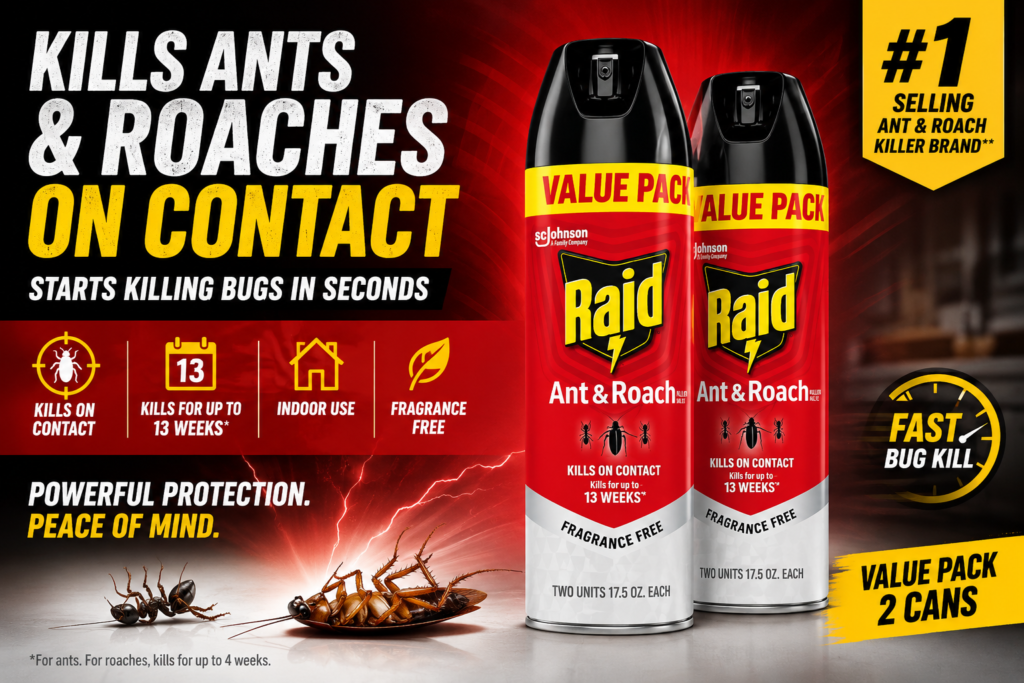
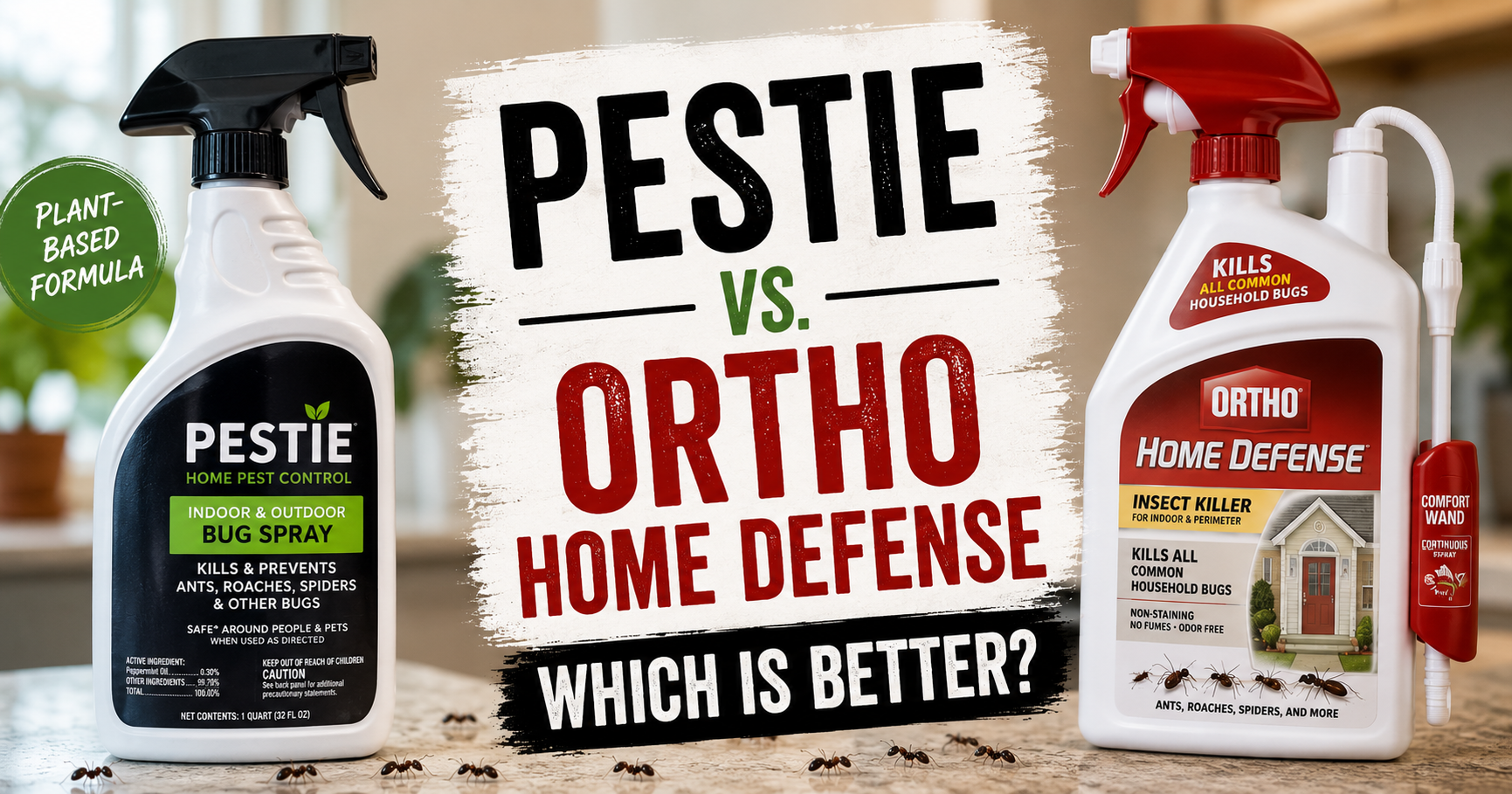
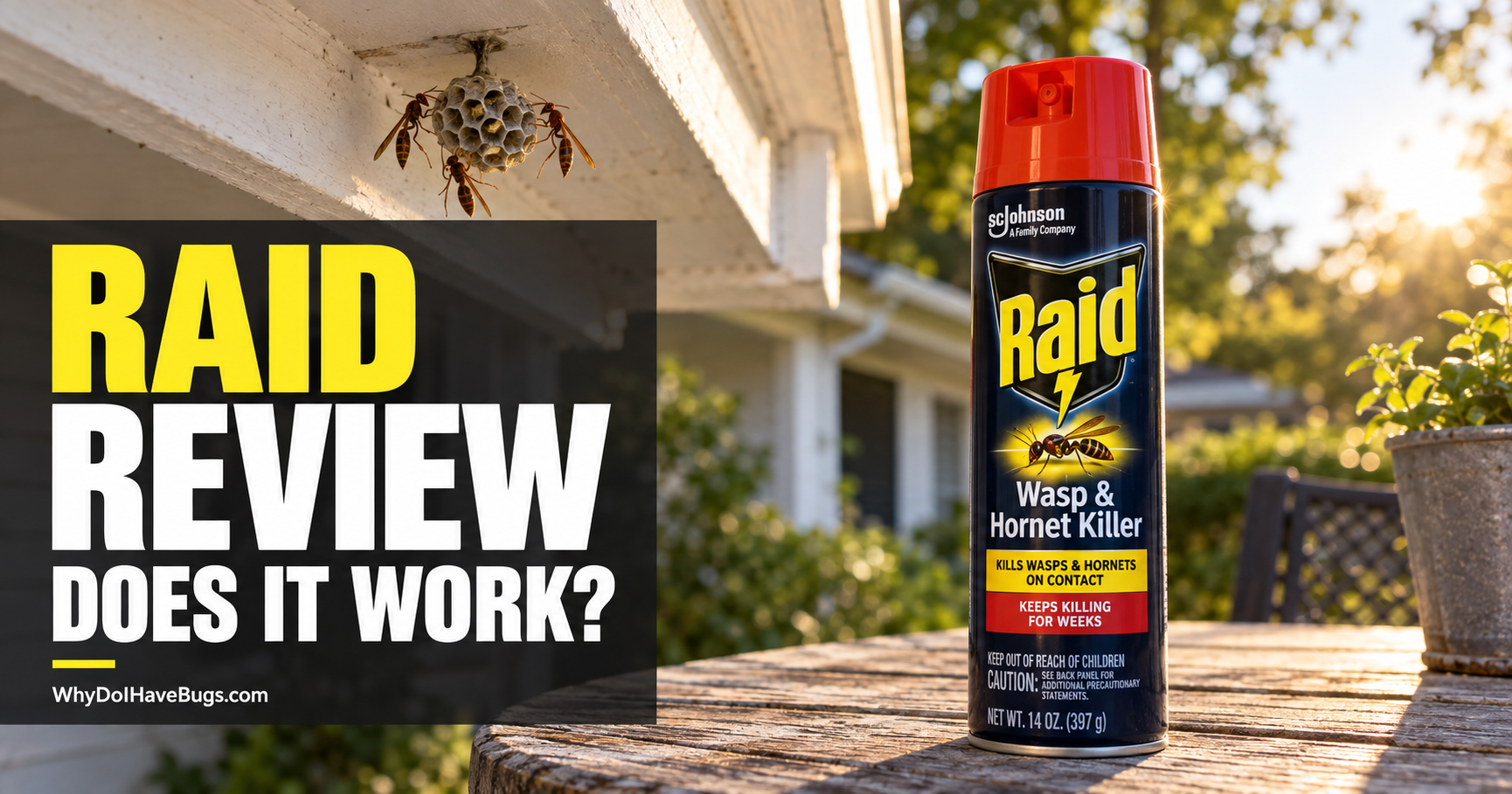
For most homeowners, I recommend Ortho Home Defense Insect Killer for Indoor & Perimeter² because it’s ready to use, leaves a residual barrier after drying, and is designed for crack-and-crevice and perimeter applications. I explain exactly why I chose it in my Best Larder Beetle Killer My Honest Review.
I focus my treatment on places like:
- Baseboards.
- Cracks and crevices.
- Around storage shelving.
- Basement walls.
- Garage walls.
- Utility rooms.
- Door thresholds.
- Window frames.
- Areas where I’ve repeatedly seen beetles.
Extension specialists recommend treating cracks, crevices, and other beetle travel routes rather than indiscriminately spraying entire rooms. They also stress that insecticides are far less effective if the food source remains.
Step 7 Keep Watching for New Activity
One thing I always remind homeowners is that you probably won’t eliminate every beetle in a single day.
Even after removing the source, there may still be:
- Adult beetles already wandering through the house.
- Mature larvae preparing to pupate.
- Newly emerged adults that developed before you found the infestation.
That doesn’t necessarily mean your treatment failed.
I usually continue checking the same areas every few days.
If I notice fewer beetles each week, that’s a good sign I’m winning.
If the numbers stay the same or continue increasing, I know I’ve probably missed the real food source.
Don’t Forget Hidden Areas
Some of the toughest infestations I’ve researched involve food sources homeowners never actually see.
Those include:
- Dead rodents inside walls.
- Bird nests in attic vents.
- Dead overwintering insects in attics.
- Animal remains in crawl spaces.
- Dead insects trapped behind insulation.
Unfortunately, these hidden sources can keep feeding larvae long after everything visible has been cleaned.
Extension publications frequently identify dead insects inside wall voids and attics as one of the most overlooked reasons larder beetles continue appearing inside homes.
That’s why I don’t immediately assume the beetles are coming from my pantry just because I can’t find anything else.
Common Mistakes I See Homeowners Make
Over time I’ve noticed the same mistakes happen again and again.
Spraying Before Looking
This is probably the biggest one.
Killing the beetles you see doesn’t matter much if dozens more are developing somewhere else.
Keeping Infested Food
I’ve seen people try to save bags of dog food by removing only the visible beetles.
Unfortunately, eggs and larvae are often hidden much deeper inside.
If I confirm a food source is heavily infested, I replace it.
Vacuuming Too Quickly
Most people spend two minutes vacuuming.
I may spend thirty.
I move storage bins.
I remove shelving if necessary.
I vacuum corners, cracks, window tracks, and underneath appliances.
That extra effort removes enormous numbers of larvae and food debris.
Ignoring the Garage
Garages are one of my favorite places to inspect because homeowners often forget what’s stored there.
Old pet food.
Bird seed.
Animal feed.
Rodent bait.
Dead insects.
All of those can support larder beetles.
Thinking One Beetle Means Failure
Finding one adult beetle a week after treatment doesn’t automatically mean the infestation is still active.
Sometimes that beetle completed its development before you removed the source.
I pay much more attention to trends than individual beetles.
If the numbers continue decreasing, I stay patient.
How Long Does It Take to Get Rid of Larder Beetles?
This depends almost entirely on how quickly you locate the food source.
If the source is obvious, such as an infested bag of dog food, you may notice a dramatic reduction within a couple of weeks after removing it and cleaning thoroughly.
If the beetles are feeding on dead insects inside a wall or attic, it can take much longer because the food source isn’t easily accessible.
The important thing is that once the larvae no longer have food, the life cycle eventually ends instead of continually producing new adults.
Can You Get Rid of Larder Beetles Without an Exterminator?
In many cases, yes.
If you can locate and eliminate the food source yourself, thoroughly clean the affected areas, and apply a residual insecticide where appropriate, many infestations can be brought under control without professional help.
However, if you strongly suspect:
- A dead animal inside a wall.
- Heavy rodent activity.
- A large hidden infestation.
- Beetles continuing for months despite repeated cleaning.
…it may be worth calling a professional pest control company.
Sometimes the hardest part isn’t killing the beetles.
It’s finding what they’re feeding on.
Prevention Is Much Easier Than Treatment
After dealing with larder beetles once, I don’t want to go through it again.
The habits I follow now are simple:
- Store pet food in airtight containers.
- Clean spilled kibble promptly.
- Vacuum garages and storage rooms regularly.
- Remove dead insects from windows and attics when possible.
- Check for signs of rodents.
- Inspect bird nests attached to the house after nesting season has ended, where legal and safe to do so.
- Rotate stored pet food so it doesn’t sit for months.
Those small habits remove many of the food sources larder beetles depend on before they ever become a problem.
Frequently Asked Questions
What’s the fastest way to get rid of larder beetles?
The fastest approach is to locate and remove the food source first, vacuum thoroughly, and then treat beetle travel routes with a residual insecticide if needed. Spraying alone rarely solves the infestation.
Will larder beetles eventually go away on their own?
Sometimes they will if the food source is exhausted, but that process can take weeks or even months. Removing the source yourself is much faster and prevents additional generations from developing.
Do I need to throw away dog food if it’s infested?

Yes. If I find larvae or large numbers of beetles inside a bag of dry pet food, I replace it rather than trying to save it.
Should I spray the entire house?
No. I concentrate on cracks, crevices, baseboards, and other travel routes after cleaning. Broad, unnecessary spraying is generally less effective than targeted treatment.
Why am I still seeing beetles after cleaning?

It’s common to continue seeing adults for a short time because some completed development before the food source was removed. The important thing is that the overall number should steadily decline if you’ve eliminated the source. Their ability to fly after emerging can make these remaining adults appear in rooms away from the original food source; adult larder beetle behavior explains why.
About the Author
Mark Sullivan has spent years researching household beetles and helping homeowners trace infestations back to their source. Through firsthand experience identifying larder beetles in his own home, he learned that long-term control comes from finding what the beetles are feeding on first, then combining thorough cleaning with targeted treatment instead of relying on insecticides alone.