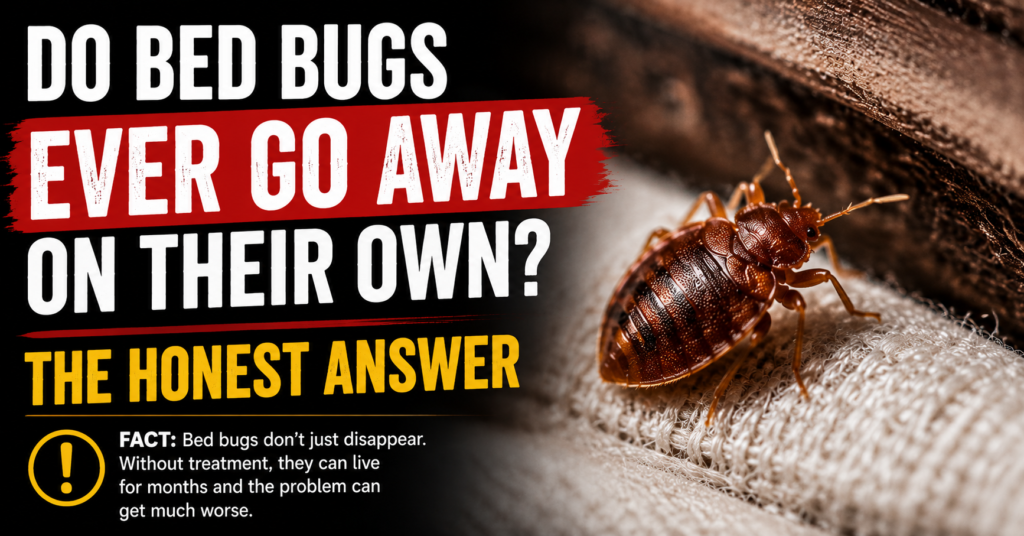
One of the most common questions I hear after someone discovers bed bugs is one I completely understand.
“If I just leave them alone, will they eventually go away?”
I wish the answer were yes.
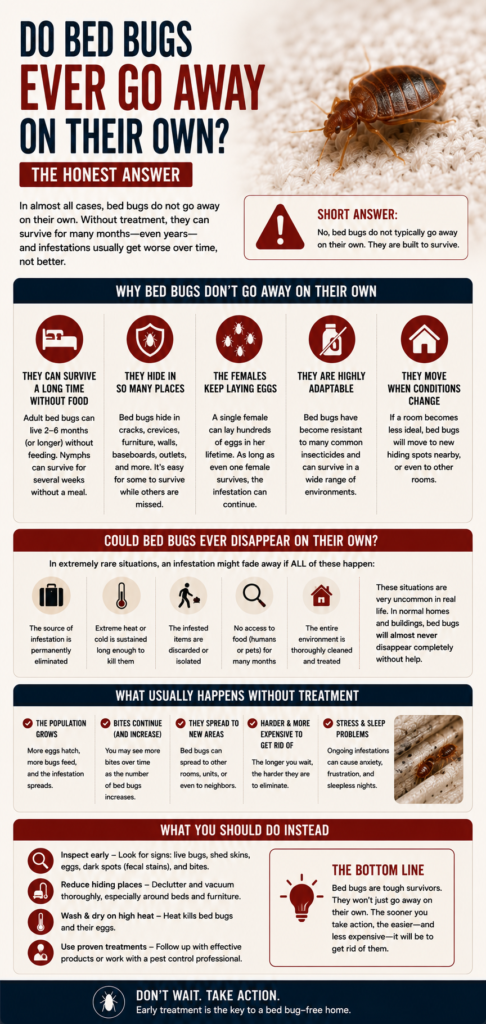
Unfortunately, in most homes, that’s not how bed bugs work.
I’ve talked to homeowners who hoped the bugs would simply die off after a few weeks or disappear once nobody slept in the room anymore.
Most of the time, that only allows the infestation more time to grow.
If bed bugs have established themselves inside your home, waiting is usually the one thing I don’t recommend.
Sarah’s First Impression
When someone asks me whether bed bugs will go away on their own, I don’t immediately think about treatment.
I think about evidence.
How many bugs have been found?
Have eggs been discovered?
Are there bites every morning?
Did someone recently travel?
The answers help me determine whether we’re looking at a single hitchhiker or an established infestation.
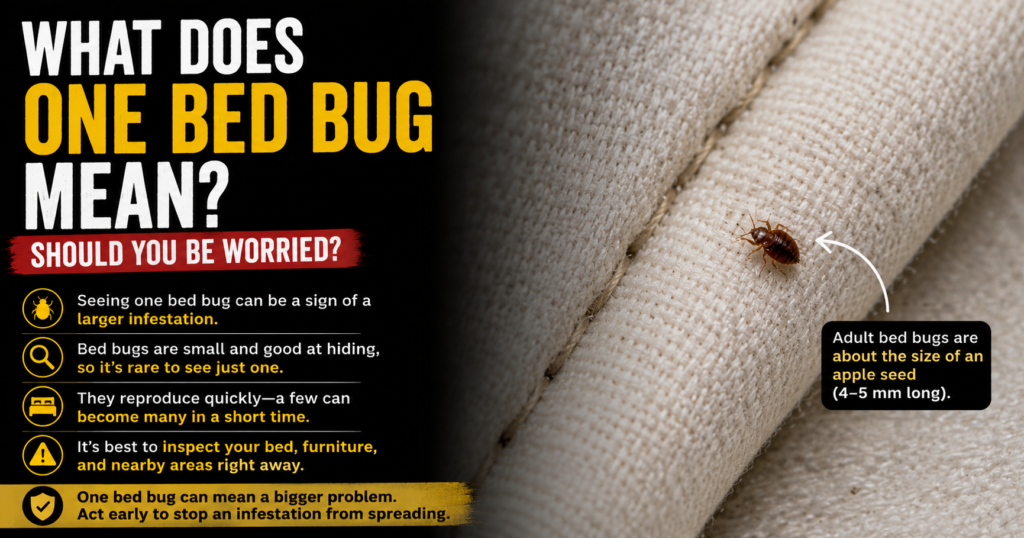
Our guide on what finding one bed bug really means explains why one bug doesn’t always tell the whole story.
Why Bed Bugs Usually Don’t Disappear
Bed bugs survive by feeding on people while they sleep.
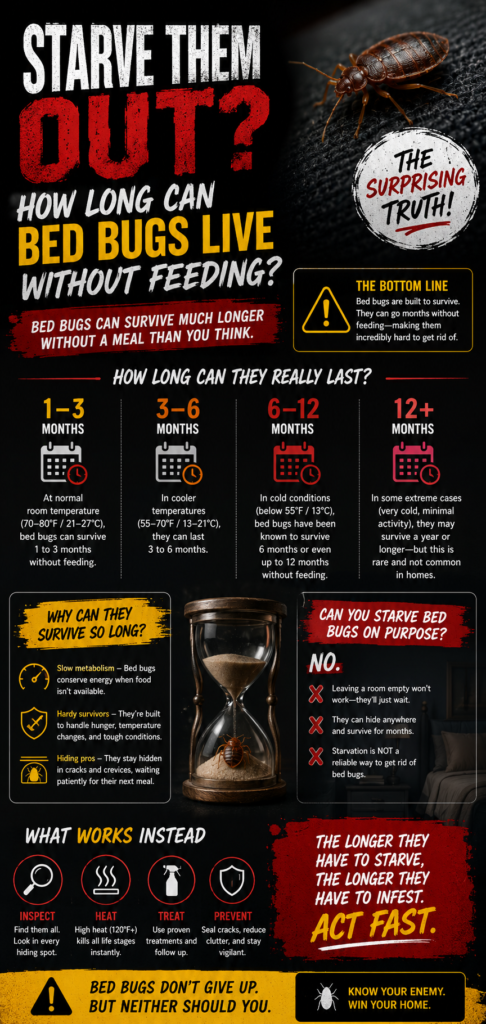
As long as a host is available, they have what they need to continue living and reproducing. Their ability to survive between meals is explained in How Long Can Bed Bugs Live Without Feeding?, which is why waiting rarely solves an established infestation.
Unlike some household pests that may leave when food becomes scarce, bed bugs are highly adapted to living close to humans.
That’s why they often remain hidden for weeks or even months before homeowners realize they’re there.
What Happens If You Sleep in Another Room?
This is one of the biggest mistakes I see.
Many people move to a guest bedroom hoping the bed bugs will stay behind.
Unfortunately, bed bugs are capable of following their food source.
In some cases, sleeping elsewhere can actually increase the chance of spreading the infestation into another room.
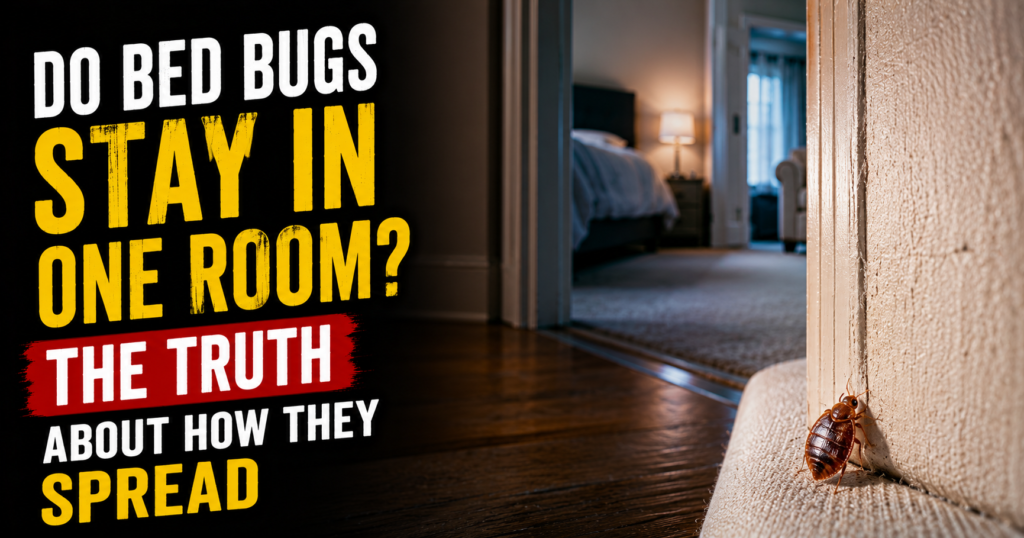
Our article on whether bed bugs stay in one room or spread throughout the house explains why this can happen.
What If You Stop Sleeping in the House?
Some homeowners believe leaving the home vacant will eliminate bed bugs.
The problem is that bed bugs can survive for surprisingly long periods without feeding, especially under favorable conditions.
That means temporarily leaving the home usually isn’t an effective solution.
I’ll be covering this in much more detail in our upcoming article about how long bed bugs can live without feeding.



The Bigger Problem Is Reproduction
What concerns me most isn’t the bugs you see today.
It’s the ones you don’t see yet.
A small infestation can gradually grow if reproducing adults continue laying eggs.
That’s why I encourage homeowners to inspect for more than just live insects.
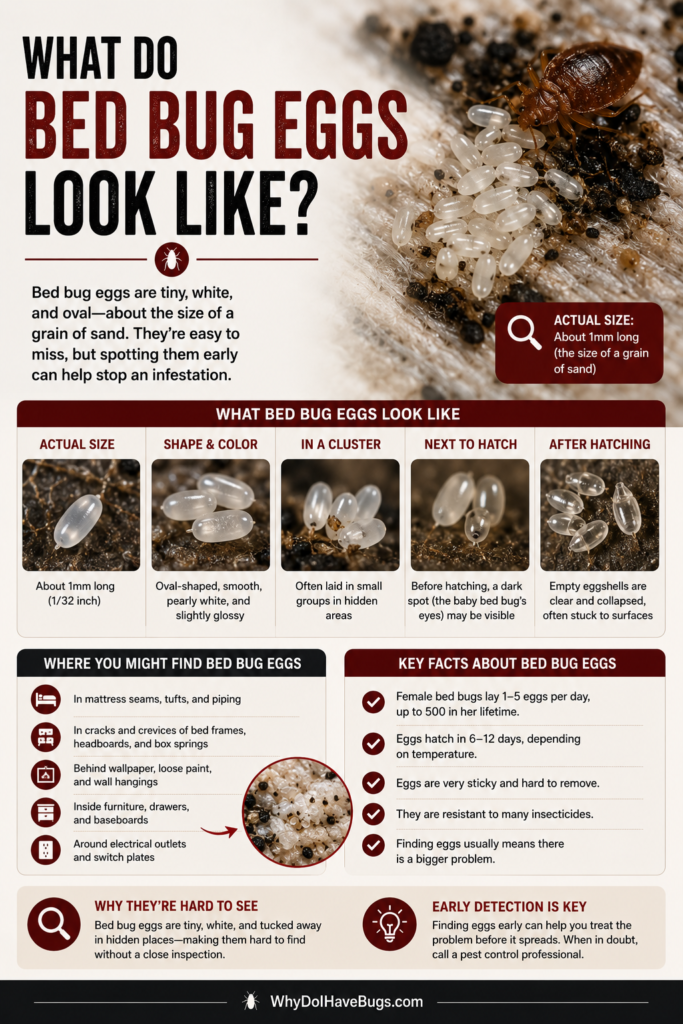
If you’re unsure what to look for, our guide on what bed bug eggs really look like explains one of the earliest warning signs of an active infestation.
What I’d Check Before Assuming They’re Gone
If someone told me they hadn’t seen a bed bug for a week, I wouldn’t automatically assume the problem was solved.
I’d inspect:
- Mattress seams.
- Box spring.
- Bed frame.
- Headboard.
- Nightstands.
- Upholstered furniture.
Those areas usually tell me much more than simply waiting to see another bug.
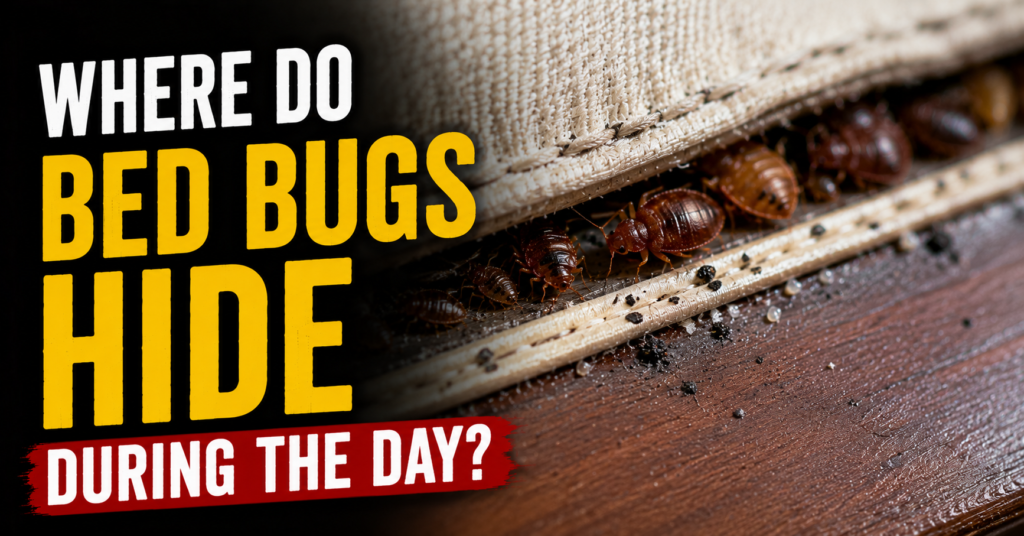
Our guide on where bed bugs hide during the day walks through the exact locations I inspect first.
The Biggest Myth I Hear
One myth I hear constantly is:
“If I don’t get bitten anymore, the bed bugs must be gone.”
Not necessarily.
Bed bugs are incredibly good at staying hidden.
Changes in sleeping habits, bite reactions, or feeding patterns can all make an infestation seem like it disappeared when it really didn’t.
That’s why I rely on inspections, not assumptions.
What I Would Do If This Were My House
If I thought I had bed bugs, I wouldn’t wait to see whether they disappeared.
I’d spend my time confirming whether they’re still active.
I’d inspect the bed carefully, look for eggs and shed skins, and monitor the sleeping area over the next several weeks.
The sooner I understood what I was dealing with, the easier it would be to stop the problem before it became much larger.


Products That Can Help

If bed bugs are confirmed, one of the first products I recommend is a SureGuard Mattress Encasement. It won’t eliminate an infestation by itself, but it removes one of the insects’ favorite hiding places while making future inspections much easier.
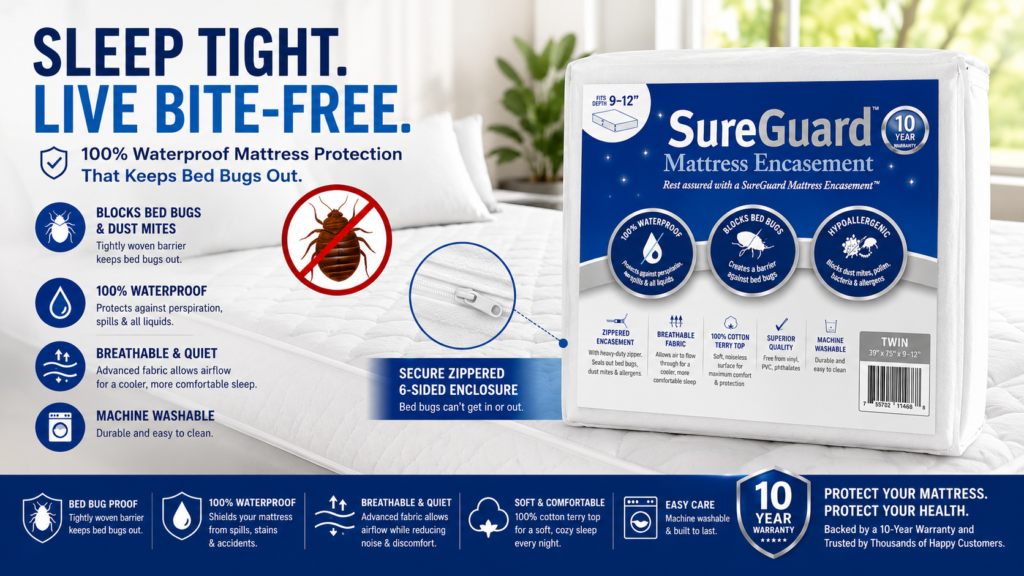
Our guide on whether mattress encasements really work for bed bugs explains exactly what they can and can’t do.
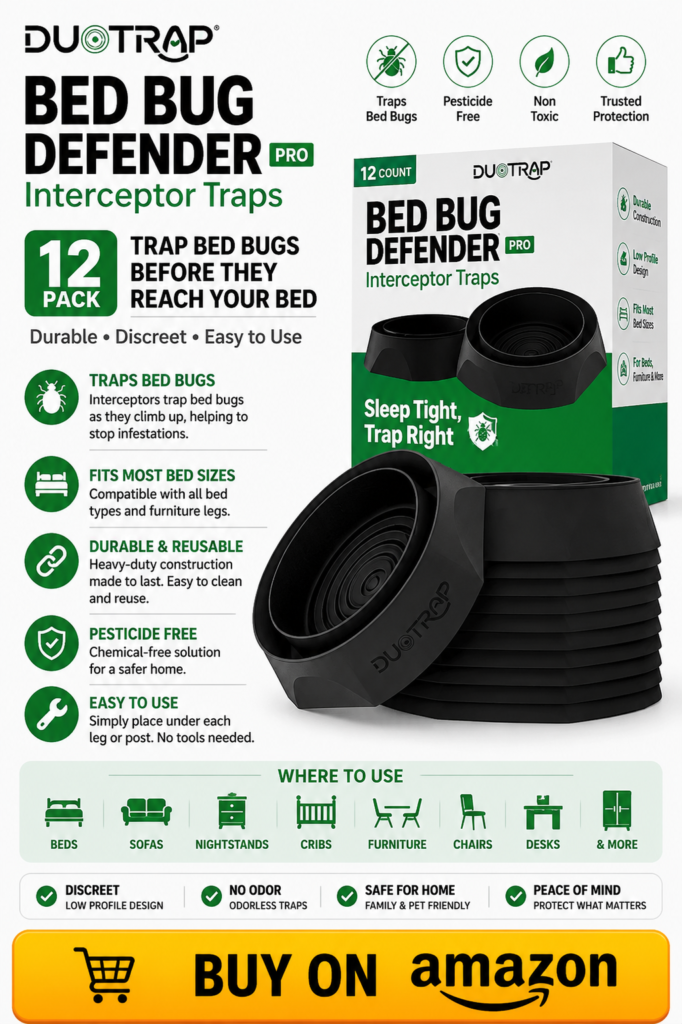
To monitor whether bed bugs are still active, many homeowners also use bed bug interceptor cups. Our review of bed bug interceptor cups explains why they’re one of my favorite monitoring tools.
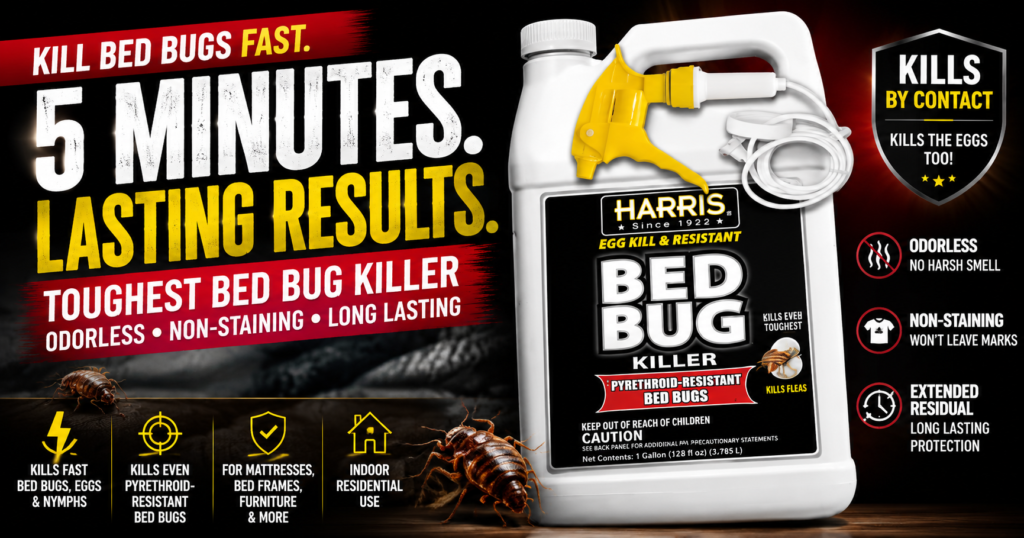
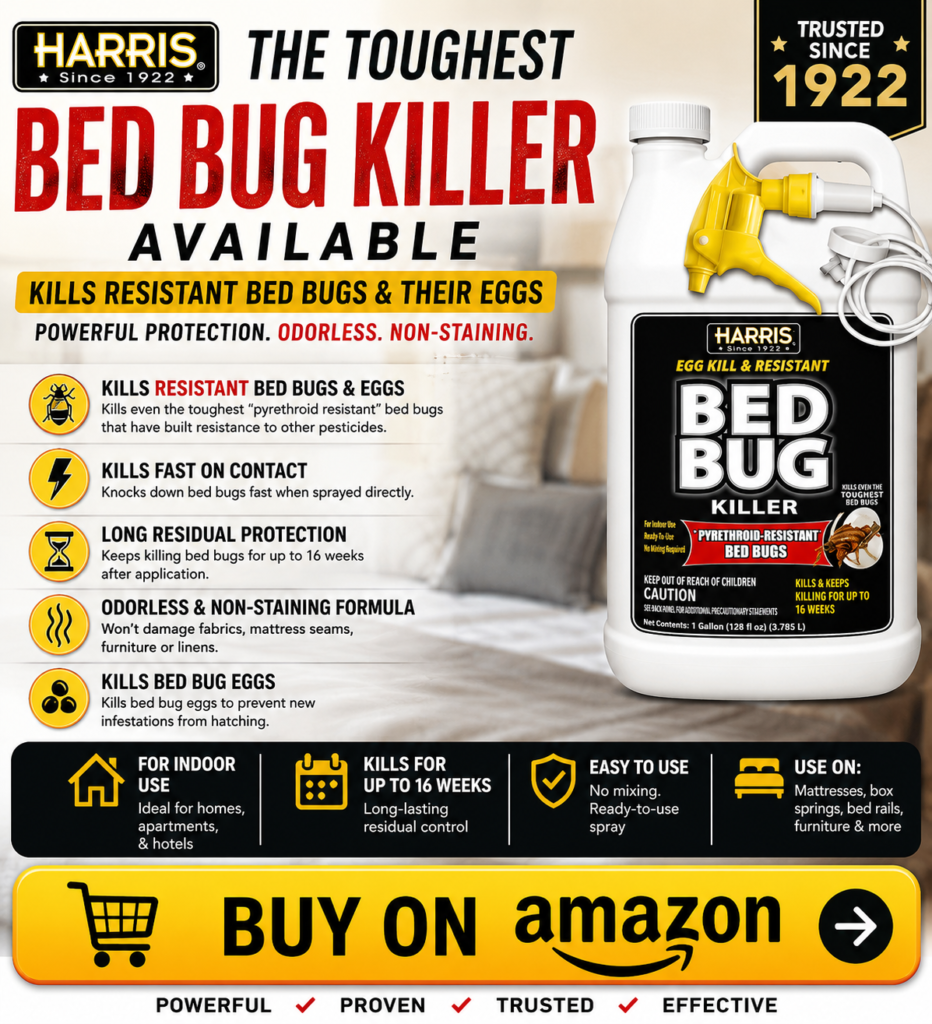
If treatment becomes necessary, many homeowners choose Harris Toughest Bed Bug Killer. We explain where it fits into a treatment plan in our review of Harris Toughest Bed Bug Killer.
Frequently Asked Questions
Can bed bugs disappear without treatment?
In most cases, no. Once bed bugs establish themselves, they usually continue surviving and reproducing unless effective control measures are taken.
Will bed bugs leave if nobody sleeps in the room?
Not necessarily. They can survive for extended periods without feeding and may move if they detect a host elsewhere.
Can a small bed bug problem become a large one?
Yes. Early infestations can grow over time as bed bugs reproduce, which is why early detection is important.
How do I know if bed bugs are really gone?
The best way is through careful inspections and ongoing monitoring rather than relying only on whether you’ve seen another bug or noticed new bites.
Should I wait before treating bed bugs?
I wouldn’t. Acting early generally gives you the best chance of preventing a small problem from becoming a much larger infestation.

About the Author
Sarah Bennett researches bed bugs, household pests, and practical home inspection methods. She focuses on helping homeowners identify infestations early, understand bed bug behavior, and choose realistic solutions based on evidence rather than fear.