
When we were dealing with carpet beetles ourselves, one thing kept crossing my mind.
If these larvae love pet hair, why wouldn’t they end up in a pet bed?
The more I looked into it, the more obvious the answer became.
Pet beds can be one of the most attractive places in an entire house for carpet beetle larvae.
That doesn’t mean every dog bed or cat bed is hiding an infestation.
But if carpet beetles are already inside your home, a pet bed is absolutely one of the first places I’d inspect.
Why Pet Beds Attract Carpet Beetles
Adult carpet beetles don’t choose random places to lay eggs.
They’re looking for locations where their larvae will have plenty to eat after hatching.
A pet bed often provides exactly that.
Over time, it naturally collects:
- Pet hair.
- Dander.
- Dust.
- Lint.
- Dead skin cells.
- Tiny organic debris.
Most of us wash pet bedding occasionally, but hair and debris still work their way into seams, stuffing, and underneath the bed where they can be difficult to remove completely.

It Isn’t Your Pet They’re Interested In
This is something that’s worth clearing up right away.
Carpet beetles are not parasites.
They don’t live on dogs.
They don’t live on cats.
They aren’t feeding on your pet.
They’re interested in the environment around your pet.
Hair that sheds into bedding becomes food for developing larvae.
That’s a very different situation than fleas or ticks, which actually live on animals.

Older Pet Beds Are Usually the Biggest Risk
Think about the oldest dog bed in your house.
Maybe it’s in the corner of the living room.
Maybe it’s in the laundry room.
Maybe your dog sleeps there every night.
Over months and years, those beds can collect an incredible amount of hair inside the fabric, around zippers, beneath removable covers, and underneath the bed itself.
That’s why I wouldn’t just inspect the surface.
I’d inspect everything around it.
Don’t Forget the Floor Underneath
If you’ve ever picked up a dog bed that hasn’t been moved for a while, you already know what I’m talking about.
Hair.
Dust.
Lint.
Sometimes enough to fill your hand.
Those quiet areas underneath the bed often provide even better conditions than the pet bed itself.
If carpet beetles are active, that’s one of the first places I’d vacuum and inspect.

What I’d Look For
I wouldn’t expect to find dozens of carpet beetles crawling around in the open.
They’re much better at staying hidden than that.
Instead, I’d watch for signs like:
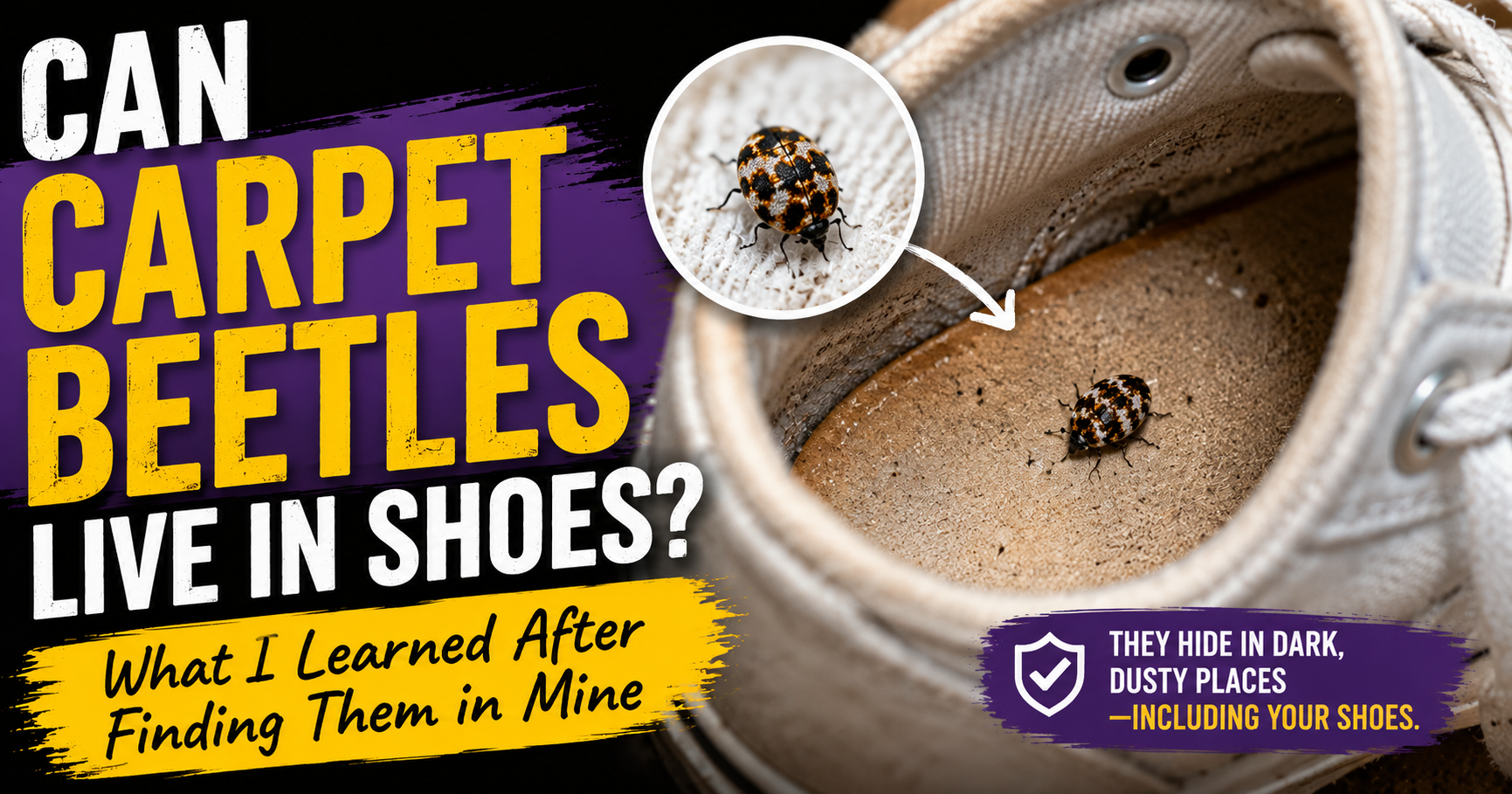
- Fuzzy carpet beetle larvae.
- Shed skins.
- Adult carpet beetles nearby.
- Hair collecting in seams.
- Fine debris underneath the bed.
- Damage to blankets or natural-fiber covers used with the bed.
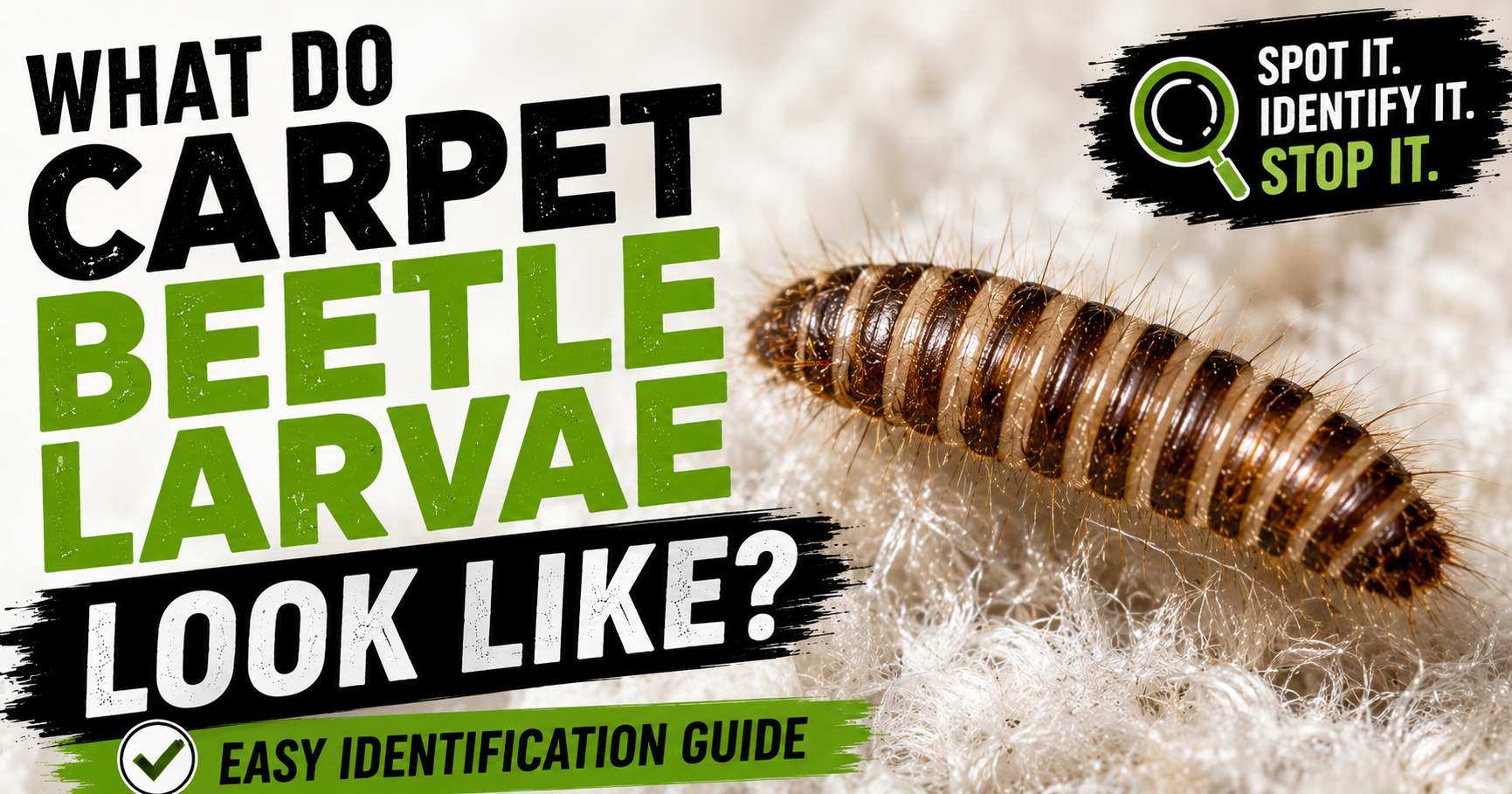
If you’re not sure whether you’ve found a larva, compare it with What Do Carpet Beetle Larvae Look Like? Easy Identification Guide before assuming it’s something else.
Washing the Cover Helps, But It Isn’t Everything
One mistake I think a lot of people make is washing only the removable cover.
That’s definitely a good start.
But it doesn’t solve the entire problem.
Hair often works its way into:
- The inner cushion.
- Fabric seams.
- Zippers.
- The floor underneath.
- Nearby baseboards.
If those places are ignored, carpet beetle larvae may still have everything they need to survive.


Vacuuming Is Just as Important as Washing
If I had to choose between washing a pet bed once and vacuuming around it every week, I’d probably choose the vacuum.
Regular vacuuming removes the pet hair, lint, and debris that carpet beetle larvae depend on.
When I vacuum around pet bedding, I don’t stop at the edges of the bed.
I’d clean underneath it, around nearby furniture, along the baseboards, and even a few feet beyond it because hair has a way of spreading much farther than most people realize.

I go into much more detail in Best Vacuum for Carpet Beetles Why Powerful Suction Matters.
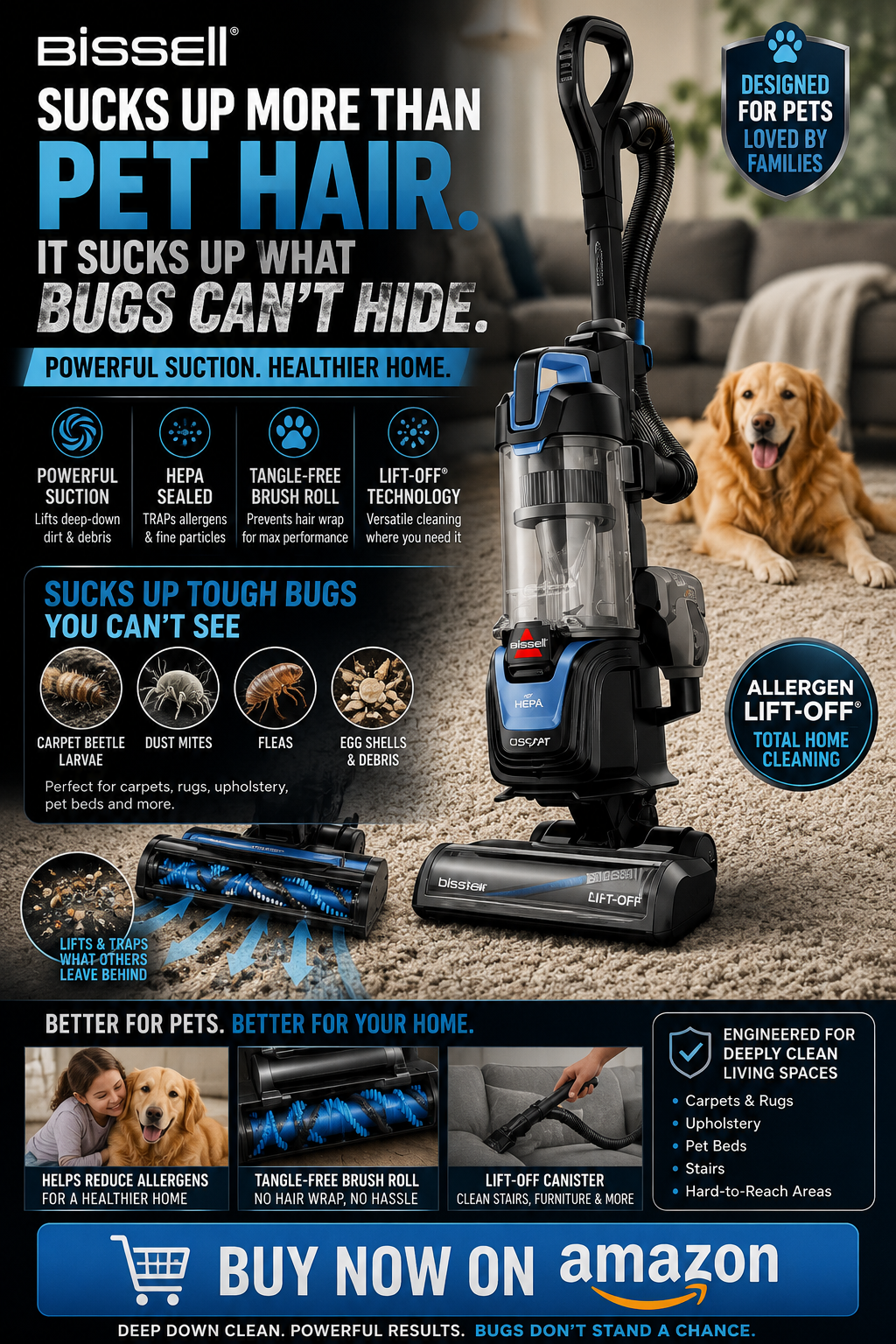
One reason I recommend the Bissell Pet Hair Eraser Allergen Lift-Off is because it’s designed to handle pet hair extremely well, and the detachable Lift-Off pod makes it much easier to clean pet beds, upholstery, stairs, corners, and other places where carpet beetle larvae like to hide.
Pet Beds Usually Aren’t the Only Hiding Place
If I found carpet beetles in a dog bed today, I wouldn’t assume that’s the entire infestation.
I’d immediately start checking nearby:
- Rugs.
- Upholstered furniture.
- Blankets.
- Closets.
- Shoes.
- Baseboards.
- Heating vents.
Carpet beetles almost always have more than one suitable hiding place if the conditions are right.
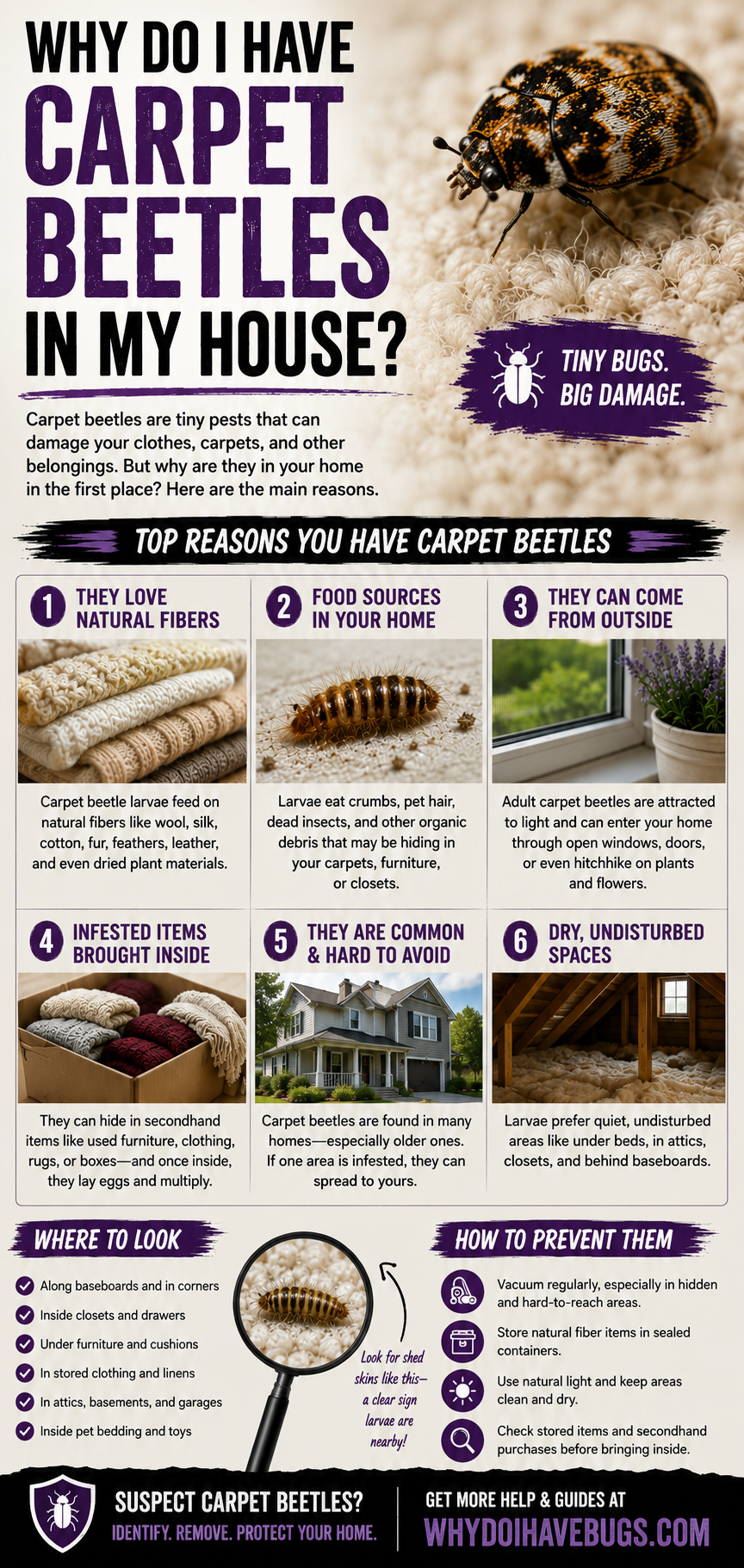
That’s why I also recommend reading Where Do Carpet Beetle Larvae Hide? Common Hiding Places if you’ve confirmed activity around your pet’s bedding.
Should You Throw the Pet Bed Away?
Usually, no.
I know that’s one of the first questions people ask because nobody wants insects where their dog or cat sleeps.
Most of the time, replacing the bed isn’t necessary.
I’d start by washing the removable cover according to the care label, vacuuming the entire bed thoroughly, and cleaning the floor underneath it.
If the bed is old, heavily damaged, or impossible to clean well, replacing it might make sense.
Otherwise, a good cleaning is often enough.
If You’ve Already Found Carpet Beetles Elsewhere
Let’s say you’ve already confirmed carpet beetles in a closet.
Or inside a pair of stored shoes.
Or underneath a rug.
At that point, I wouldn’t assume the pet bed is safe just because you haven’t noticed anything there yet.
I’d inspect it anyway.
It only takes a few minutes, and it’s one less hiding place you’ll have to wonder about later.
The sooner you check everything in the same room, the easier it is to break the life cycle before another generation develops.

What About Outdoor Pet Beds?
Outdoor pet beds are a little different.
Since adult carpet beetles naturally live outdoors, they may occasionally land on outdoor bedding.
The bigger concern is when that same bed gets carried back inside without being cleaned.
Before bringing outdoor bedding indoors, I’d shake it out, inspect it, and wash it if possible.
It’s a simple habit that can help reduce the chance of accidentally bringing insects or eggs into the house.
A Few Habits That Go a Long Way
You don’t have to make caring for a pet bed complicated.
The biggest improvements usually come from staying consistent.
I’d recommend:
- Washing removable covers regularly.
- Vacuuming the bed itself.
- Vacuuming underneath and around the bed.
- Brushing pets regularly to reduce loose hair indoors.
- Inspecting older beds every few months.
- Replacing beds that are badly worn or impossible to clean.
None of those steps guarantees you’ll never see another carpet beetle, but together they make the area much less attractive.
What I’d Do If I Found Carpet Beetles in a Pet Bed
If I lifted my dog’s bed tomorrow and found larvae or shed skins underneath, I wouldn’t panic.
I’d clean the bed thoroughly.
Vacuum the surrounding floor.
Inspect the nearby furniture and rugs.
Wash any blankets my dog uses.
Then I’d continue checking that area over the next few weeks.
One pet bed rarely tells the whole story.
It’s usually a clue that points toward other places worth inspecting.
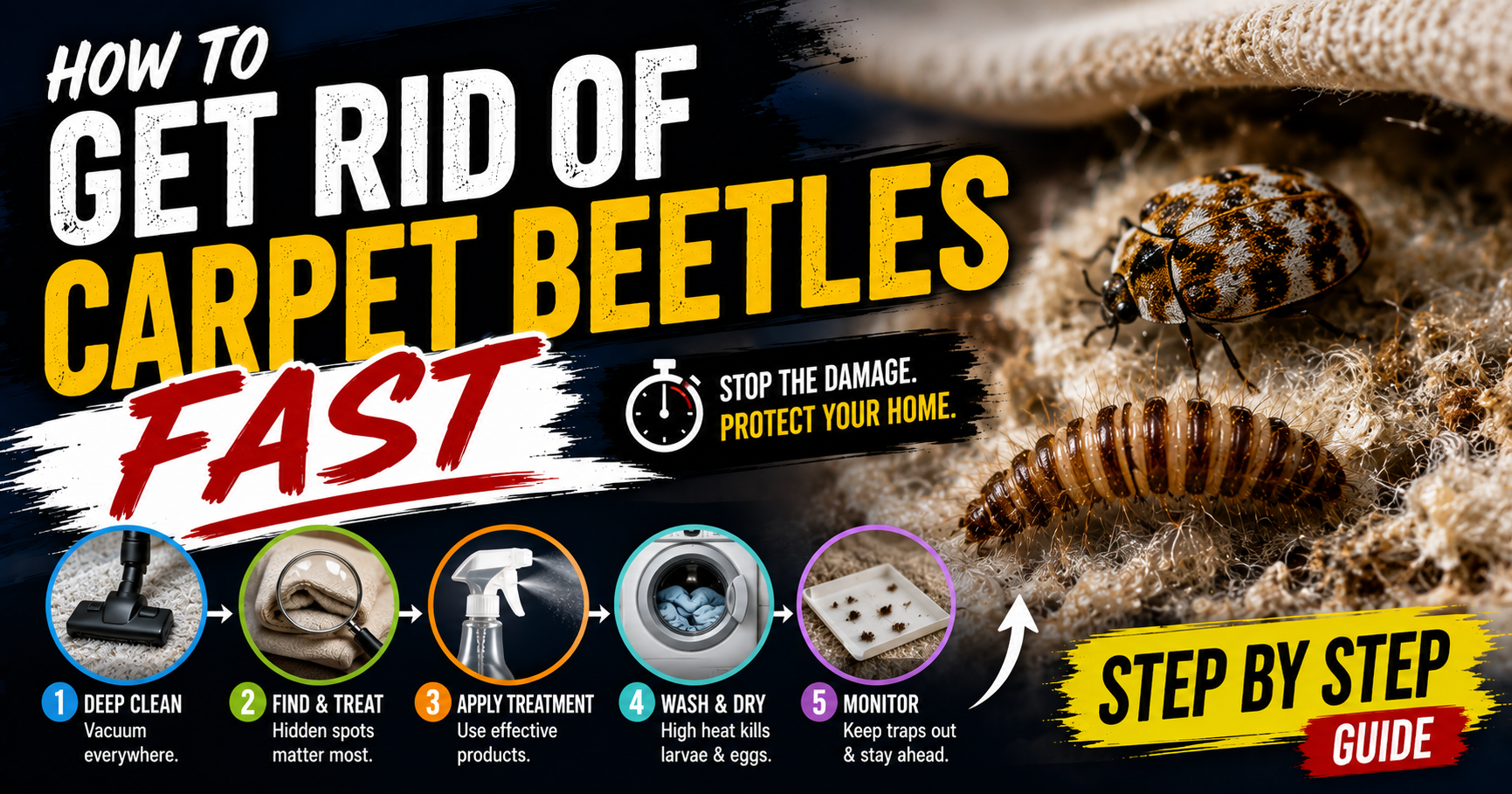
If you’re trying to eliminate carpet beetles throughout your home, my step-by-step guide to getting rid of carpet beetles fast explains the same process I’d follow from start to finish.
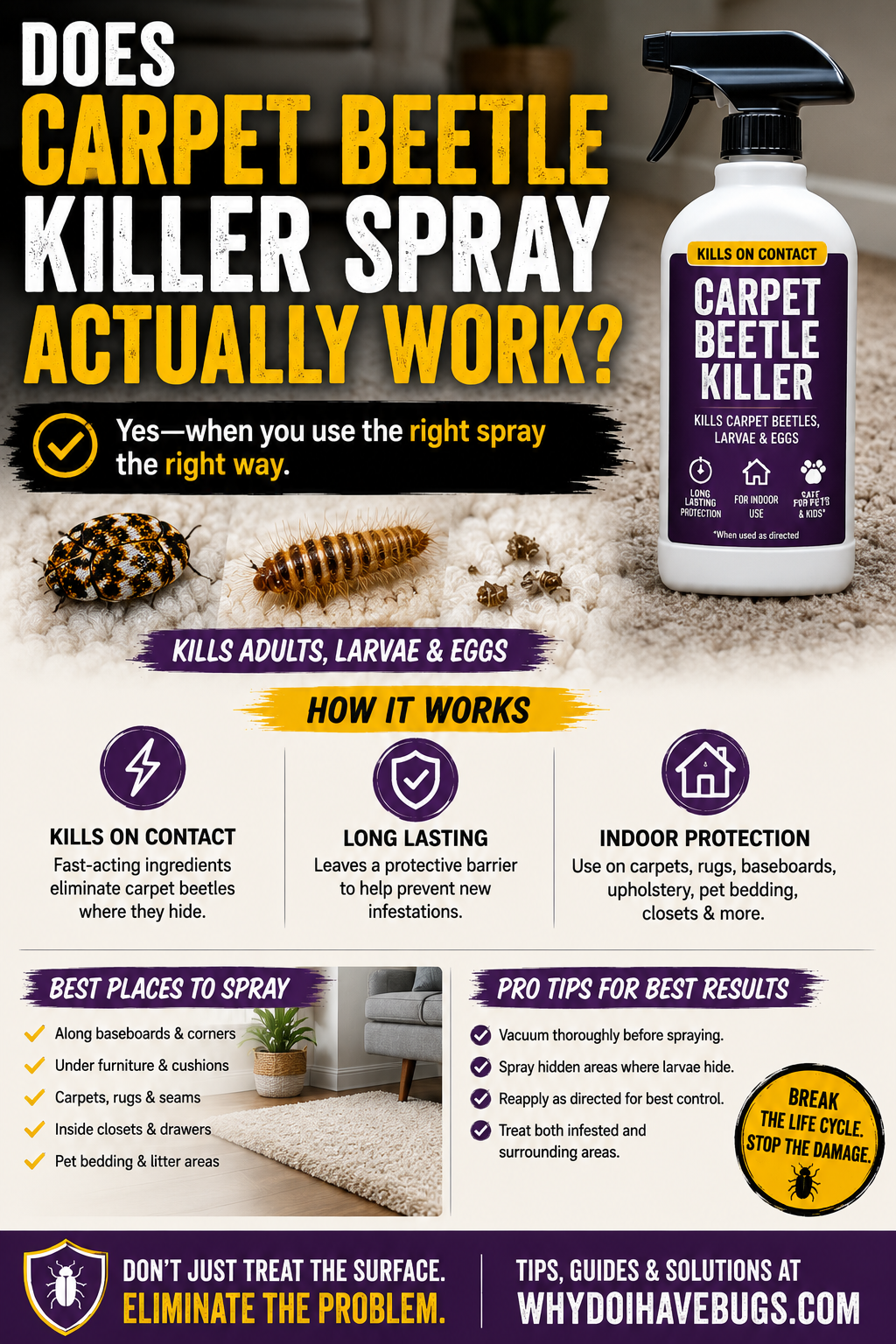

If you’re considering using an insecticide as part of your treatment plan, I’d also recommend reading Does Carpet Beetle Killer Spray Actually Work? before buying anything. If you decide a spray is appropriate for your situation, the Carpet Beetle Killer Spray for Indoor Use is designed specifically to target carpet beetles and their larvae when used according to the product label.
For more identification guides, prevention tips, and treatment advice, visit our growing Carpet Beetles category.
Frequently Asked Questions
Can carpet beetles live in dog beds?
Yes. Carpet beetle larvae can develop in dog beds if enough pet hair, lint, and organic debris are present. The dogs themselves aren’t the food source—it’s the material that collects in and around the bedding.
Can carpet beetles live in cat beds?
Yes. Cat beds can provide the same conditions as dog beds, especially if they’re rarely cleaned and collect large amounts of hair.
Should I replace my pet’s bed if I find carpet beetles?
Not usually. Most pet beds can be thoroughly cleaned and reused unless they’re badly damaged or impossible to clean effectively.
Are carpet beetles harmful to dogs or cats?
Carpet beetles don’t live on pets or feed on them like fleas or ticks. However, if you suspect your pet has skin irritation, hair loss, or other health concerns, it’s always a good idea to have your veterinarian evaluate the problem because many different conditions can cause similar symptoms.
How do I keep carpet beetles out of pet beds?
Wash pet bedding regularly, vacuum the bed and the surrounding floor, groom your pets to reduce loose hair, and inspect the area periodically for larvae or shed skins.
About the Author
Ryan Mitchell researches household pests and writes practical, easy-to-follow guides that help homeowners understand where insects hide, why they appear, and how to solve infestations without unnecessary stress. His goal is to provide honest advice that’s based on real-world situations and proven pest management principles.