
You spot a small brown insect racing across the basement floor.
Before it disappears beneath a shelf, you notice something unusual.
It has a pair of tiny pincers on its back end.
If that sounds familiar, you’re not alone.
Many people search for phrases like “little brown bug with pincers” because they don’t know the insect’s real name.
In most cases, the mystery bug turns out to be an earwig.
Despite their intimidating appearance, earwigs are far less dangerous than many homeowners believe. Their forceps look threatening, but they’re mainly used for defense, catching prey, and mating rather than attacking people.
The Short Answer
If you’ve found a small brown insect with obvious pincers, it’s most likely an earwig.
Earwigs typically have:
- A long, flattened body.
- Reddish-brown to dark brown coloring.
- Long antennae.
- Six legs.
- A pair of curved pincers at the end of the abdomen.
- A habit of hiding during the day and becoming active after dark.

Those rear pincers are the easiest feature to recognize because very few common household insects have anything similar.
Why Do They Have Pincers?
The first thing almost everyone notices is the pair of forceps on the back of the insect.
They certainly look intimidating.
But they’re not there to attack people.
Earwigs use their pincers to:
- Defend themselves.
- Capture small insects.
- Hold prey while feeding.
- Compete with other earwigs.
- Help during mating.
Most earwigs would rather run away than use those pincers on something as large as a person.



Are They Really Called “Pincher Bugs”?
Yes.
Across much of the United States, earwigs are commonly called pincher bugs because of their distinctive forceps.
They’re the same insect.
Whether someone says:
- Pincher bug.
- Pinching bug.
- Earwig.
They’re almost always referring to the European earwig, which is the species most often found around homes in North America.
Where Do People Usually Find Them?
Earwigs spend most of the day hidden in cool, damp locations.
Common places include:
- Bathrooms.
- Basements.
- Garages.
- Laundry rooms.
- Under flower pots.
- Beneath mulch.
- Around foundations.
- Under outdoor furniture.
They’re nocturnal, so it’s much more common to see them after sunset than during the middle of the day.



Are Earwigs Dangerous?
Most people think those pincers mean earwigs are aggressive.
The truth is almost the opposite.
Earwigs are shy insects that spend most of their lives hiding under objects where they won’t be disturbed.
If you uncover one beneath a rock or flower pot, its first reaction is almost always to run away.
The pincers are simply a last line of defense if escape isn’t possible.
Why Do Earwigs End Up Inside Homes?
Earwigs aren’t trying to invade your house.
They’re usually looking for the same things they search for outdoors:
- Moisture.
- Darkness.
- Shelter.
That’s why they’re commonly found in:
- Bathrooms.
- Basements.
- Laundry rooms.
- Garages.
- Crawl spaces.
During periods of heavy rain, earwigs may leave flooded hiding places outdoors.
During hot, dry weather, they may move inside because the air is cooler and more humid.
Either way, they’re usually accidental visitors rather than permanent indoor pests.



Bugs That Look Similar
Although earwigs are fairly easy to recognize once you know what to look for, homeowners still confuse them with a few other insects.
Rove Beetles
Rove beetles have a similar long body shape, but they don’t have the large rear pincers that make earwigs so distinctive.
When disturbed, rove beetles often raise the tip of their abdomen like a tiny scorpion.
Silverfish

Silverfish sometimes cause confusion because they’re also found in damp areas around homes. This silverfish home guide explains how to distinguish them from other insects and why they appear indoors.
The difference becomes obvious once you look at the back of the insect.
Silverfish have three thin tail-like filaments instead of two curved pincers.
They’re also silvery gray rather than brown and move with a fish-like wriggling motion.
Young Cockroaches
Some homeowners mistake juvenile cockroaches for earwigs because they’re similar in size.
However, cockroaches have:
- A broad oval body.
- No rear pincers.
- A shield-like plate behind the head.
Once you notice the forceps on an earwig, the difference becomes easy to see.
What If You Keep Finding Them?
Finding one earwig isn’t unusual.
Finding several every week usually means the conditions around your home are attracting them.
If that’s happening, it’s worth taking a closer look at your landscaping, moisture levels, and foundation.

My guide on How to Get Rid of Earwigs Step-by-Step Guide walks through the exact process I use to reduce earwig activity both indoors and outside.
My Advice
Whenever someone tells me they’ve found a little brown bug with pincers, I don’t automatically assume they have an infestation.
I ask two questions.
Where did you find it?
And how many have you seen?
One earwig that wandered into the garage isn’t much of a concern.
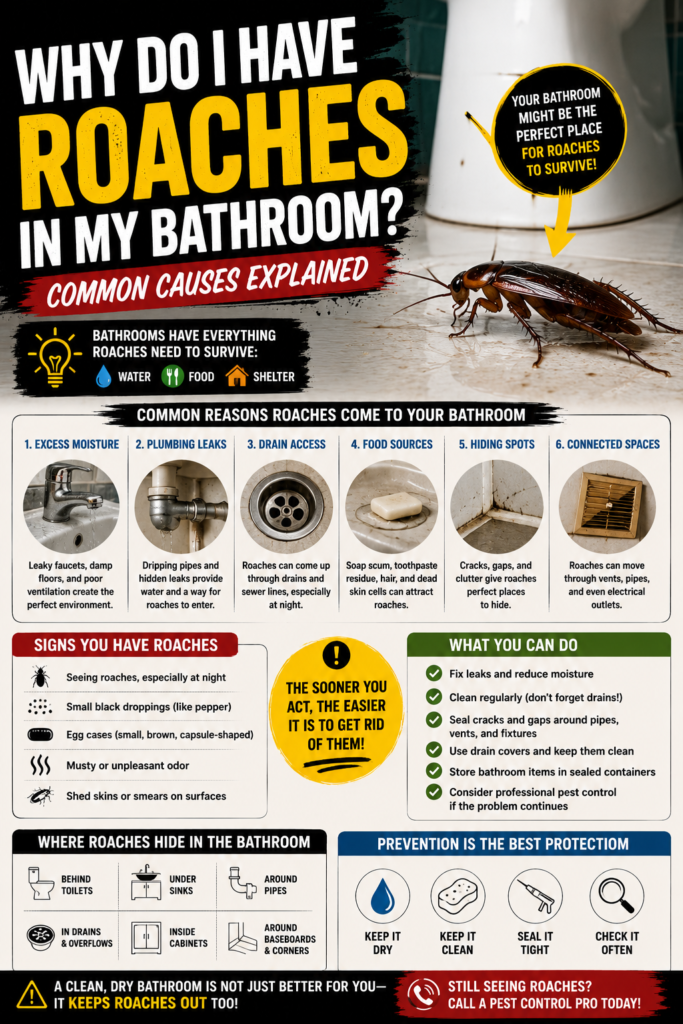
But repeated sightings inside bathrooms, basements, or laundry rooms usually mean your property is providing the moisture and shelter earwigs are looking for. If the insect may actually be a cockroach, why roaches appear in bathrooms explains which bathroom conditions attract them.
Fortunately, those are problems that can usually be corrected without much difficulty.
Frequently Asked Questions
What bug has pincers on its back?
The most common household insect with obvious pincers at the end of its body is the earwig. Those pincers, called cerci, are used for defense, mating, and handling prey.
Is a pincher bug the same as an earwig?
Yes. “Pincher bug” is simply a common nickname for an earwig because of the forceps on the end of its abdomen.
Should I worry if I find a brown bug with pincers?
Usually not. Earwigs are more of a nuisance than a danger. They don’t spread diseases, and they generally avoid people whenever possible.
Why did I find an earwig in my bathroom?
Bathrooms provide the cool, humid conditions earwigs prefer. If you’re seeing them regularly, excess moisture around your home may be attracting them.
What’s the best way to monitor earwigs indoors?


One of the easiest methods is placing Catchmaster Spider & Insect Traps Indoor Sticky Glue Boards (12 Pack) along baseboards and behind fixtures where earwigs naturally travel. They help confirm where the insects are entering while reducing the number wandering through the house. I explain exactly how I use them in my Best Indoor Bug Trap That Actually Works guide.
About the Author
Daniel Brooks is an urban entomology educator with more than 15 years of experience helping homeowners identify common household pests and understand why they’re invading their homes. He specializes in practical, science-backed prevention strategies and long-term pest control solutions that solve problems at their source.