
Fly strips aren’t exactly the most attractive way to get rid of flies.
Let’s be honest.
Nobody hangs one in their kitchen because it looks nice.
People buy them because they’re tired of swatting flies all day and want something that actually catches them.
The good news is that fly strips really can work.
The bad news is that they aren’t magic.
Like most pest control products, they work incredibly well in the right situation and disappoint people when they’re used in the wrong one.
After looking at how they’re designed and where they perform best, here’s what I think homeowners should know before buying them.

Yes, Fly Strips Really Do Work
The short answer is yes.
Fly strips have been around for decades because they’re simple and effective.
They’re coated with an extremely sticky adhesive that traps flies when they land on the surface.
Unlike electric traps, they don’t need batteries or an outlet.
Unlike sprays, they continue working around the clock.
As long as the strip remains sticky and is placed where flies naturally travel, it’ll keep catching insects day after day.

They’re Best for Heavy Fly Problems
If I walked into a garage with dozens of flies buzzing around, fly strips would probably be one of the first things I’d hang.
They’re especially useful in places like:
- Garages
- Barns
- Workshops
- Sheds
- Chicken coops
- Trash storage areas
- Covered patios
Those are areas where appearance usually isn’t the biggest concern.
They’re also places where flies naturally spend a lot of time.

They Aren’t My First Choice for Every Room
Would I hang one over my dining room table?
Probably not.
Fly strips work well, but once they start catching insects, they’re not something most people want hanging in the middle of their living space.
For kitchens, bedrooms, and family rooms, I usually prefer enclosed traps that hide the insects from view.
That’s one reason I often recommend comparing different trap styles before buying anything.
Placement Makes a Huge Difference
This is probably the biggest mistake people make.
They assume fly strips attract flies from across the room.
That’s not really how they work.
Flies still have to fly close enough to land on the sticky surface.
If you hang the strip in an area where flies rarely travel, you probably won’t catch very many.
The best locations are usually:
- Near windows.
- Near garage doors.
- Around trash cans.
- Near entry doors.
- In barns or animal buildings.
- Anywhere you’ve already noticed flies gathering.
Good placement is often more important than the brand of fly strip you buy.

They’re Surprisingly Affordable
One reason fly strips have remained popular for so many years is the price.
For just a few dollars, you can usually buy enough strips to cover several rooms or outdoor buildings.
That makes them one of the least expensive fly control options available.
If you’re looking for a simple, low-cost solution, the 40 Pack Sticky Hanging Fly Strips provide plenty of coverage for garages, barns, workshops, kitchens, and other areas where flies are becoming a problem.
They Keep Working While You’re Busy
One thing I like about fly strips is that they’re always working.
You don’t have to stand there with a fly swatter.
You don’t have to remember to spray every few hours.
Once the strip is hanging in a good location, it continues catching flies 24 hours a day until the adhesive is covered or loses its stickiness.
For busy homeowners, that’s hard to beat.

They Won’t Solve the Root Cause
This is where some people end up disappointed.
Fly strips catch flies.
They don’t eliminate whatever is attracting them in the first place.
If flies are breeding in a trash can, entering through an open door, or finding food somewhere inside your home, you’ll continue seeing new flies until that source is removed.
That’s why I look at fly strips as one piece of a complete solution rather than the entire answer.
If you’re dealing with an active infestation, my How to Get Rid of Flies Fast Step by Step Guide walks through the process I’d recommend from inspection to prevention.
They Work Better Than Constantly Swatting Flies
Most of us have spent way too much time chasing flies around the house with a fly swatter.
The problem is you’re only removing one fly at a time.
A properly placed fly strip keeps catching flies while you’re at work, sleeping, or doing something else entirely.
That’s one reason they’re especially helpful in garages, barns, workshops, and storage buildings where you aren’t constantly present.

Not Every Fly Will End Up on the Strip
It’s important to have realistic expectations.
Even the best fly strip won’t catch every single fly in your home.
Some flies may stay in another room.
Others may never fly close enough to land on it.
That doesn’t mean the strips aren’t working.
It simply means they’re most effective when combined with good sanitation and proper placement.
When I’d Choose Something Else
If flies were bothering me in the kitchen or living room, I’d probably skip the hanging strips.
Seeing dozens of trapped flies every day isn’t exactly pleasant where your family spends time.
For those rooms, I’d rather use a discreet plug-in trap.
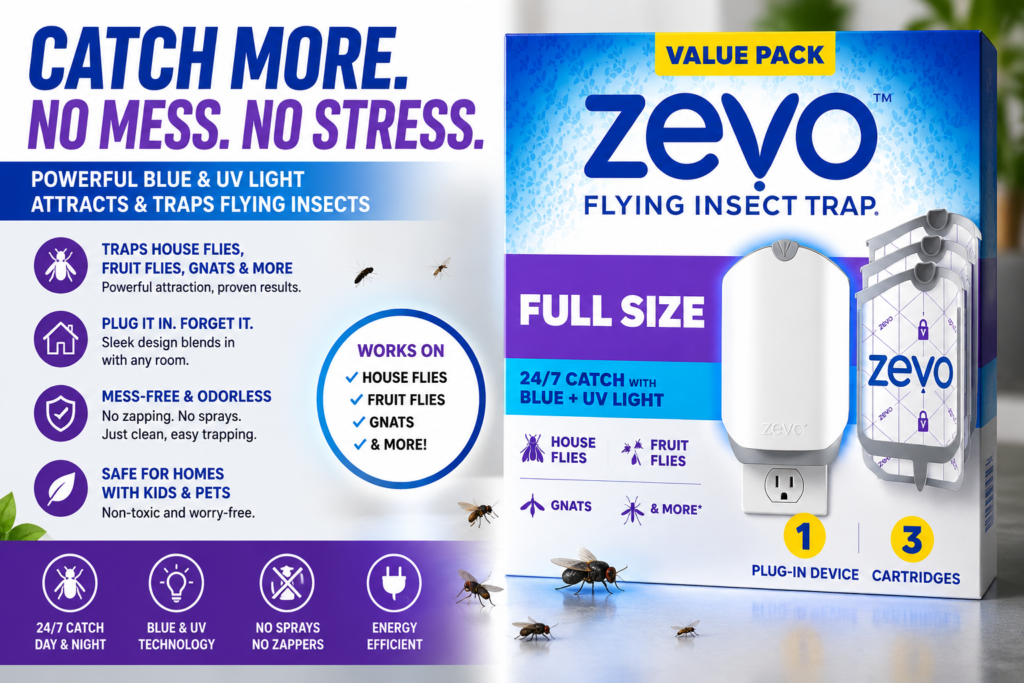
I’ve already reviewed both the Zevo Flying Insect Trap and the Katchy Duo if you’d like to compare enclosed indoor options.
What I Like Most
After looking at different fly control products, these are the biggest reasons I still recommend fly strips.
- They’re inexpensive.
- They don’t require electricity.
- They work around the clock.
- They’re easy to replace.
- They can catch surprisingly large numbers of flies.
- They’re excellent for garages, barns, sheds, and workshops.
As long as you don’t mind seeing the trapped insects, they’re one of the best values in fly control.
My Overall Opinion
If someone asked me whether fly strips are worth buying, my answer would be yes.
They’re not flashy.
They won’t win any design awards.
But they’ve remained popular for generations because they simply work.
I’d happily hang them in a garage, barn, workshop, or utility room without hesitation.
Inside my main living areas, I’d probably choose a more discreet trap, but I’d still keep fly strips on hand whenever fly numbers started getting out of control.
If you’re looking for an affordable solution that works without batteries or chemicals, I think the 40 Pack Sticky Hanging Fly Strips are a solid value and an easy product to keep on hand during fly season.
You can also browse all of our fly guides, product reviews, and prevention tips in our Flies category as we continue expanding our fly control library.
Frequently Asked Questions
Do fly strips really catch flies?
Yes. Fly strips are coated with a strong adhesive that traps flies when they land on the surface. When placed in areas with heavy fly activity, they can catch large numbers of flies over several days or weeks.
Where should I hang fly strips?

Hang them where flies naturally travel, such as garages, barns, workshops, near trash cans, or close to entry doors and windows. Avoid placing them where people frequently walk into them. For heavier outdoor fly activity, a RESCUE! outdoor fly trap can draw flies away from the areas where people spend time.
Are fly strips safe around pets?
Most fly strips don’t contain insecticides because they rely on sticky adhesive rather than poison. Even so, they should be hung where curious pets and children can’t reach them, since the adhesive can create quite a mess.
How long do fly strips last?
That depends on how many flies they’re catching and how dusty the area is. Most should be replaced once the sticky surface becomes covered with insects or no longer feels tacky.
Are fly strips better than plug-in fly traps?

It depends on where you’re using them. Fly strips usually work better in garages, barns, sheds, and other utility areas, while enclosed plug-in traps are often a better choice for kitchens, bedrooms, and living rooms because they hide the trapped insects from view. For larger outdoor fly problems around barns, sheds, or garbage areas, a dedicated outdoor fly trap may be a more suitable choice than relying on strips alone.
About the Author
Ryan Mitchell researches household pests and tests practical pest control products to help homeowners choose solutions that actually work. His goal is to provide honest, straightforward reviews that set realistic expectations while helping readers solve pest problems without wasting money.