
One of the first questions I had after learning we had carpet beetles was surprisingly simple.
Where are they actually laying their eggs?
At first, I pictured adult beetles carefully placing eggs inside carpet fibers because, well… they’re called carpet beetles.
It turns out they’re much less picky than I expected.
Adult carpet beetles don’t care nearly as much about where they lay eggs as they do what will be available after those eggs hatch.
If the newly hatched larvae will have something to eat, that’s often good enough.
They Choose Food for Their Babies, Not Convenience
Adult carpet beetles only live for a short time.
Their job is to find a place where the next generation has the best chance of surviving.
That means they look for areas containing things like:
- Pet hair
- Lint
- Wool
- Fur
- Feathers
- Silk
- Dead insects
- Dust mixed with natural fibers
If those materials are sitting undisturbed somewhere in your house, that location becomes much more attractive than a perfectly clean room.

Closets Are High on the List
Closets check almost every box.
They’re usually dark.
They’re quiet.
And many contain clothing made from natural fibers that sits untouched for months.
Seasonal coats, sweaters, scarves, and blankets are especially attractive because they aren’t disturbed very often. These stored items are worth inspecting alongside the other areas discussed in Can Carpet Beetles Live in Clothes? What Every Homeowner Should Know.

If you’ve already found carpet beetles there, my guide explaining Why Are Carpet Beetles in My Closet? Common Causes and Solutions walks through why closets become such a common hiding place.


Furniture Gives Them Plenty of Options
Most people vacuum the visible parts of a couch.
Far fewer people vacuum underneath the cushions or along the seams.
That’s where pet hair, lint, and dust quietly collect.
Adult carpet beetles don’t need much space.
If the larvae will have enough to feed on after hatching, upholstered furniture can become a suitable place to lay eggs.
That’s one reason I always check furniture when someone tells me they’ve found carpet beetles in the living room.
Rugs and Carpet Can Be Part of the Story
Despite their name, carpet beetles don’t limit themselves to carpet.
Still, rugs and carpet edges can become good egg-laying locations if enough lint, pet hair, or natural debris has built up.
Pay special attention to places that don’t get vacuumed often, including:
- Under large furniture
- Along baseboards
- Inside closets
- Behind dressers
- Under beds
It’s usually the quiet, forgotten spots that deserve the closest look.



Shoes and Stored Items Can Surprise You
One of the first signs I found during our own carpet beetle problem was inside a shoe that had been stored in the attic.
It wasn’t a live beetle.
It was a shed skin.
That discovery made me realize just how many overlooked places carpet beetles can use.
Shoes, storage boxes, blankets, and other rarely used belongings often stay undisturbed long enough for eggs to hatch and larvae to grow.

That’s exactly why I wrote Can Carpet Beetles Live in Shoes? What I Learned After Finding Them in Mine.
The Eggs Are Easy to Miss
If you’ve gone looking for carpet beetle eggs and couldn’t find them, you’re not alone.
They’re extremely small.
They’re light in color.
And they’re often tucked into fibers, seams, cracks, or dusty areas where they blend in with everything around them.
Most homeowners never actually see the eggs.
Instead, they notice the larvae weeks later.
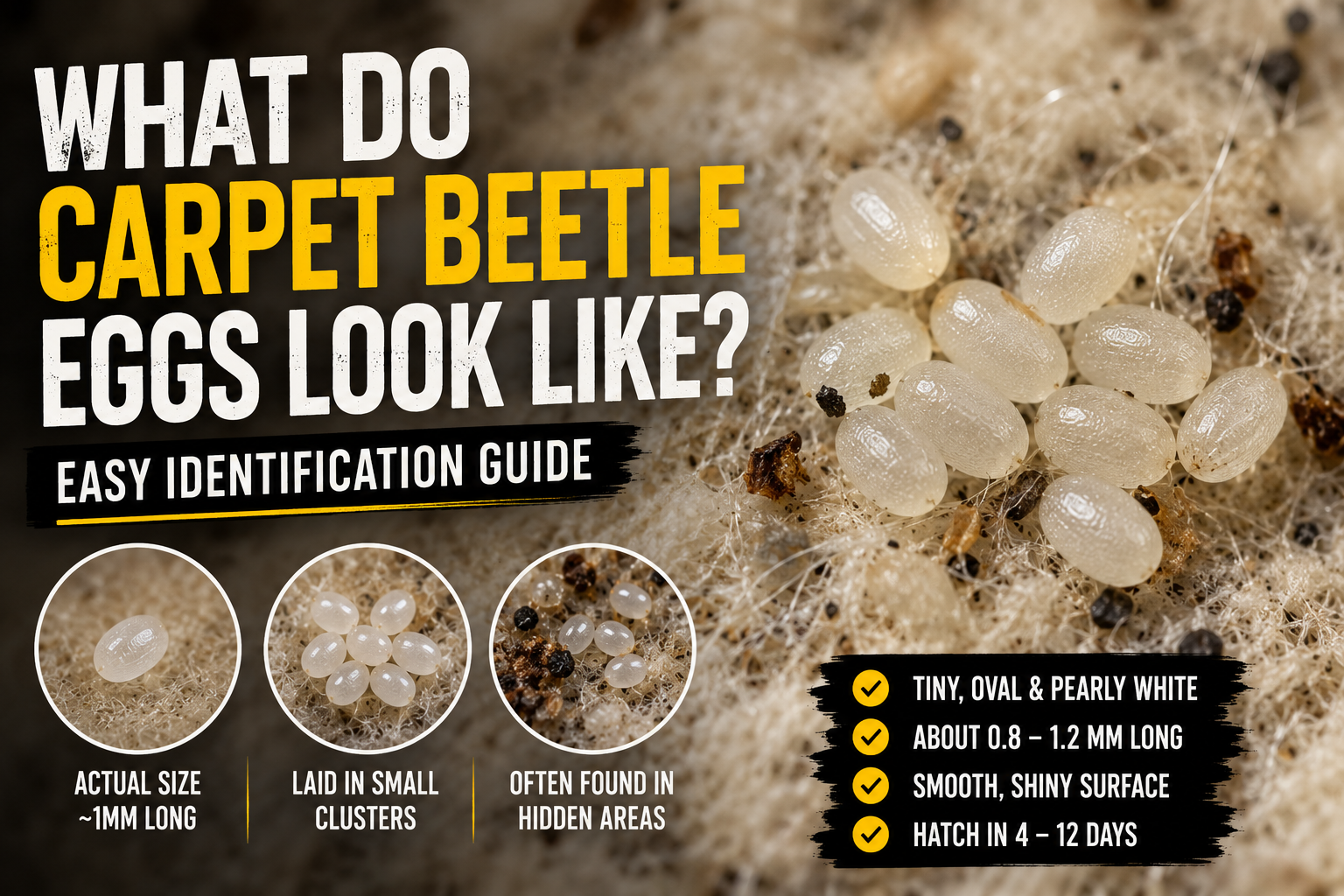
If you’re curious about what they look like, compare what you find with What Do Carpet Beetle Eggs Look Like? Easy Identification Guide.
Finding Eggs Usually Means There’s More to Inspect
If you ever do find carpet beetle eggs, I wouldn’t assume they’re limited to that one location.
Adult females don’t typically place every egg in one neat pile.
They often lay eggs anywhere they find suitable conditions.
That’s why discovering eggs in one closet or piece of furniture is a good reason to inspect nearby areas as well.
The sooner you find the other hiding spots, the easier the cleanup usually is.
What I’d Do If I Suspected Eggs Were Present
I wouldn’t spend hours trying to locate every tiny egg.
That’s almost impossible.
Instead, I’d focus on removing the places where those eggs are most likely to survive.
That means vacuuming thoroughly, washing washable fabrics, cleaning out lint and pet hair, and inspecting the quiet places that rarely get attention.
A strong vacuum does more than remove visible debris.
It can also remove many eggs resting on accessible surfaces before they ever hatch.

I explain why I think vacuuming is one of the most important parts of treatment in Best Vacuum for Carpet Beetles: Why Powerful Suction Matters.

If you’re shopping for one, the Bissell Pet Hair Eraser Allergen Lift-Off is still my favorite recommendation because it makes cleaning closets, furniture, stairs, shelves, and other difficult areas much easier than a standard upright vacuum.


The Good News
The encouraging part is this…
Carpet beetle eggs don’t move.
Once they’re laid, they’re completely dependent on the environment around them.
If you remove the food sources, clean thoroughly, and keep up with regular inspections, many of those eggs will never have the chance to develop into another generation of larvae.
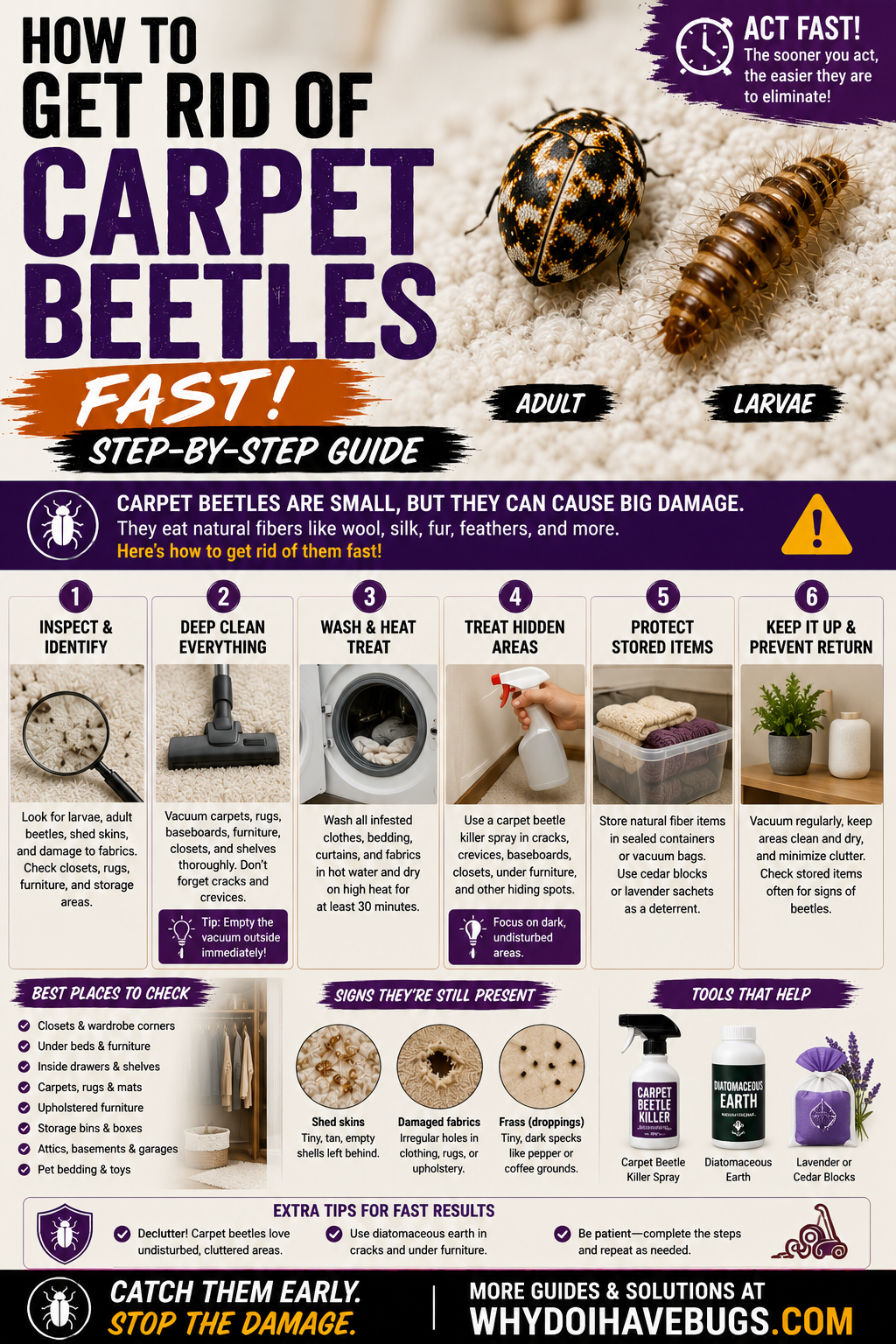
If you’re trying to work through the entire infestation from beginning to end, my step-by-step guide to getting rid of carpet beetles fast ties everything together into one complete plan.
You can also explore our growing Beetles resource center for more practical guides on identifying, treating, and preventing carpet beetles.
One Place Usually Leads to Another
Finding eggs in one area doesn’t necessarily mean that’s the only place adult carpet beetles have been active.
If I found eggs in a closet, I wouldn’t stop there.
I’d take a few extra minutes to check the next room, nearby furniture, stored blankets, and anything else made from natural fibers.
Carpet beetles don’t recognize room boundaries the way we do. If suitable places to lay eggs are close together, they’ll use more than one of them.
That’s why it’s common for someone to clean one closet only to discover carpet beetles somewhere else a few weeks later.



You Don’t Have to Find Every Egg
I think this is where a lot of people get overwhelmed.
They imagine having to locate every single egg before they’ll ever get rid of carpet beetles.
Thankfully, that’s not how it works.
The goal isn’t to find every egg by sight.
The goal is to make your home a place where those eggs are unlikely to survive after they hatch.
That means:
- Vacuuming regularly.
- Removing lint and pet hair.
- Washing stored clothing before putting it away.
- Cleaning underneath furniture.
- Checking areas that rarely get disturbed.
When you remove the food, you make life much harder for the larvae that eventually hatch.
Don’t Be Surprised if You Never Actually See the Eggs
During our own carpet beetle problem, I never found a single egg.
What I did find were the clues they left behind.
A shed skin.
A larva.
An adult beetle on a window.
Those signs told me everything I needed to know without ever seeing the eggs themselves.
That’s pretty common.
Most homeowners discover carpet beetles because they notice the larvae or the damage—not because they spot the eggs.
It’s Worth Looking Beyond the Obvious
If someone asked me where carpet beetles lay eggs, I wouldn’t point to one specific place.
I’d point to the places people forget about.
The back corner of a closet.
Under a couch.
Inside an old pair of boots.
Behind storage bins.
Beneath a pet bed.
Those quiet spots don’t get much attention, which is exactly why carpet beetles like them.
Once you know where to look, they’re a lot less mysterious than they first seem.
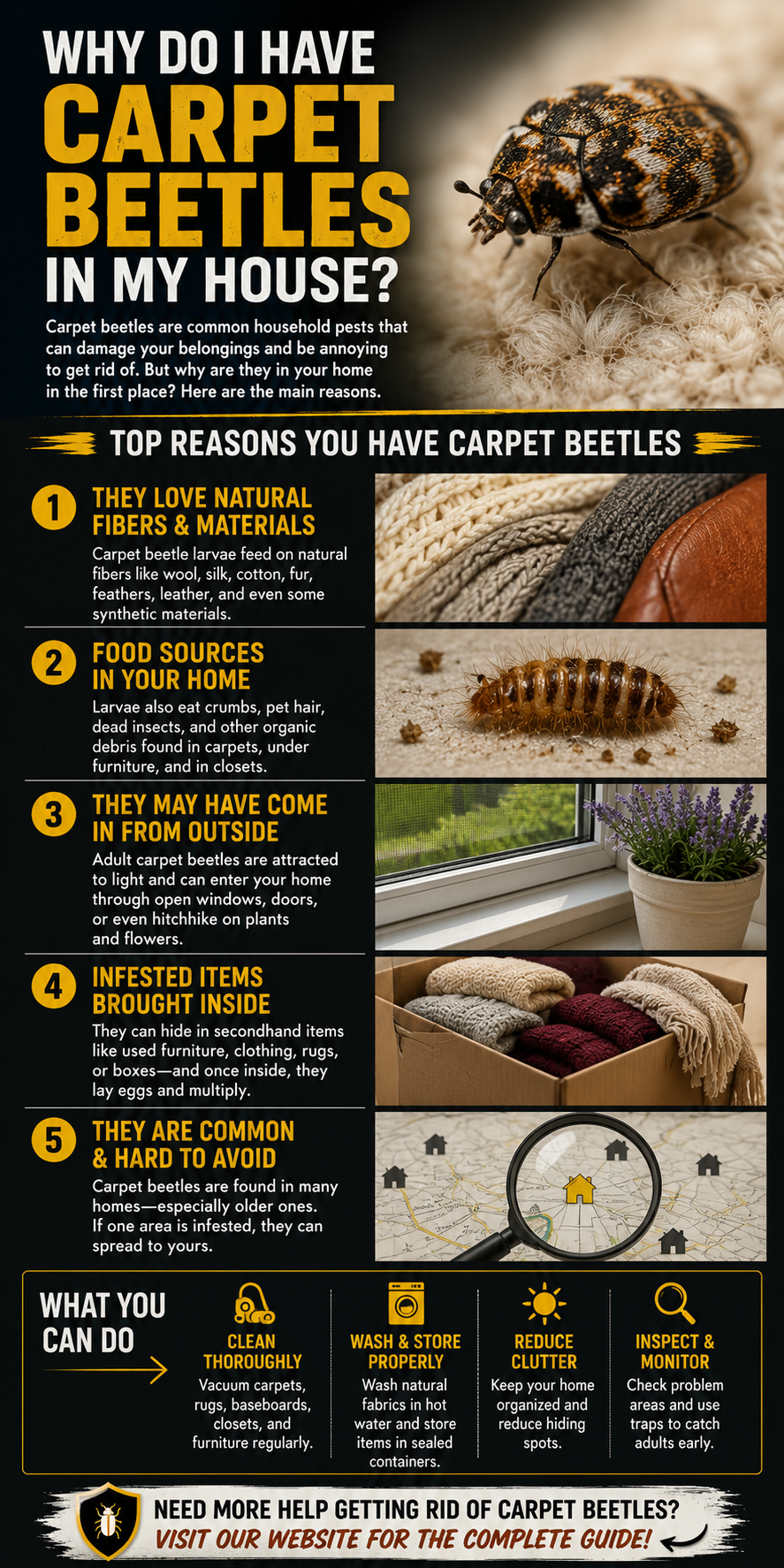
If you’re still trying to figure out where your infestation started, my guide explaining why carpet beetles are in your house is a good place to start because it walks through the most common ways they end up indoors in the first place.
For even more identification guides, treatment advice, and prevention tips, you can also browse our growing Beetles resource center.
Frequently Asked Questions
Do carpet beetles lay eggs in carpet?
They can, especially if carpet contains pet hair, lint, or other natural debris. However, they also lay eggs in closets, furniture, storage boxes, and many other quiet areas around the home.
How many eggs does a carpet beetle lay?
A single adult female can lay dozens of eggs during her lifetime, which is why small infestations can grow surprisingly quickly if they’re not discovered.
Can you see carpet beetle eggs?
Sometimes, but they’re extremely small and often blend into fabrics, dust, and carpet fibers. Most homeowners notice larvae long before they ever spot the eggs.
Do carpet beetles lay eggs on clothes?
Yes. Clothing made from natural fibers, especially items stored for long periods, can be attractive places for females to lay eggs if the larvae will have food available after hatching.
Should I worry if I find carpet beetle eggs?
Finding eggs is a sign that adult carpet beetles have been active in the area. It’s a good idea to inspect nearby closets, furniture, rugs, and storage areas so you can remove food sources and interrupt the life cycle before more larvae develop.
About the Author
Ryan Mitchell researches household pests and writes practical guides that help homeowners understand why insects show up, where they hide, and what steps actually make a difference. His goal is to replace panic with straightforward, realistic advice that anyone can follow.