

Finding a cluster of tiny white eggs beneath a flower pot, landscaping stone, or piece of firewood can leave you wondering what insect laid them. If the eggs are indoors or have a darker, capsule-like appearance, cockroach egg cases can help you compare the possibilities.
One possibility many homeowners never consider is the earwig.
Unlike many insects that scatter their eggs and disappear, earwigs are surprisingly devoted parents. In fact, female earwigs are among the few insects that actively guard, clean, and protect their eggs until they hatch.
Knowing what earwig eggs look like and where they’re usually hidden can help you identify them before they hatch into young earwigs.
The Short Answer
Earwig eggs are:
- Small and oval.
- Pearly white or creamy white.
- About 1 millimeter across.
- Smooth and slightly shiny.
- Usually found in clusters of 30 to 60 eggs.
- Hidden beneath the soil rather than out in the open.
Unlike many insect eggs that are attached to leaves or stems, earwig eggs are almost always hidden underground in a small chamber built by the female.
They’re Much Smaller Than Most People Expect
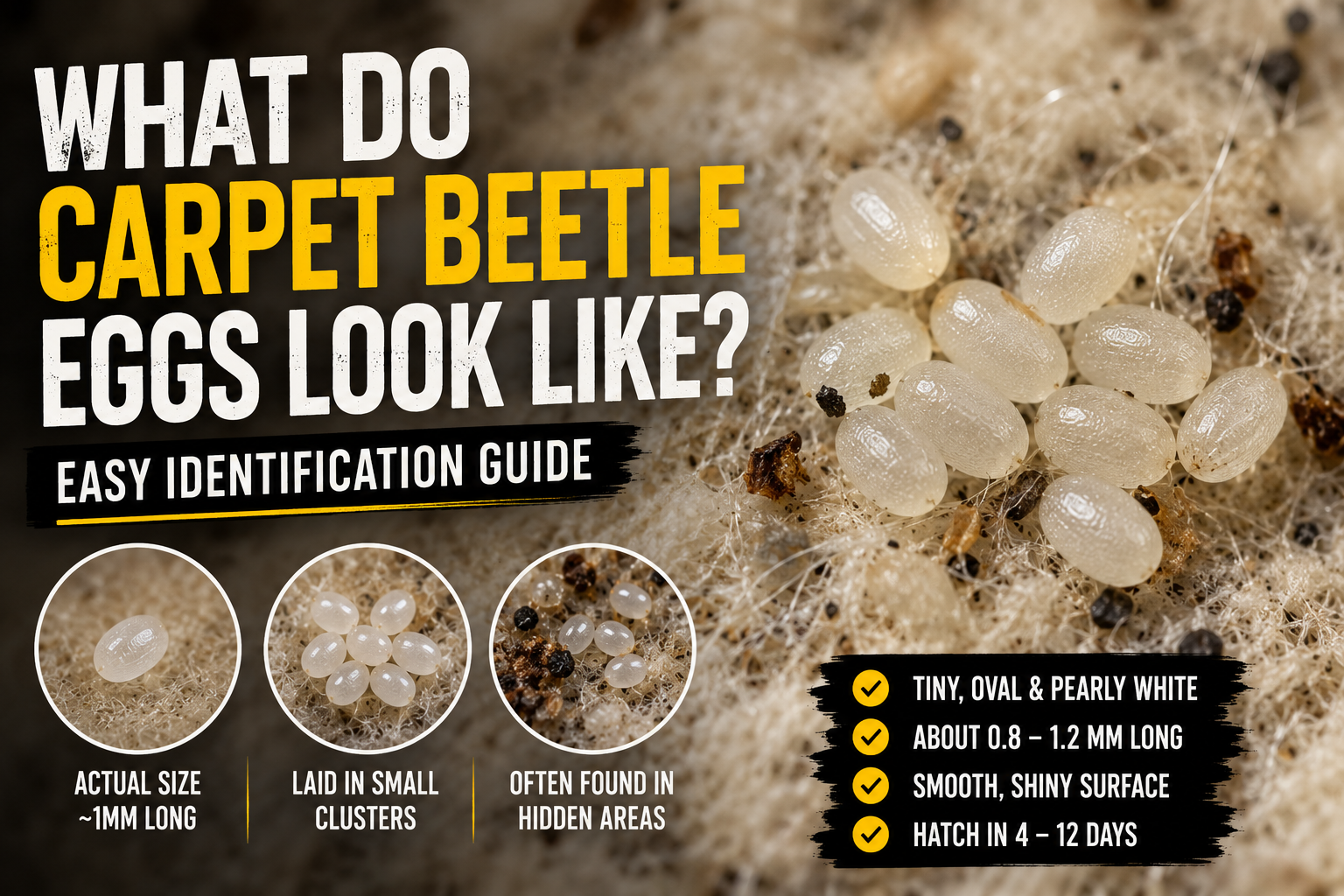
The biggest surprise for most homeowners is just how tiny earwig eggs are. If you're comparing tiny household insect eggs, carpet beetle egg identification guide explains their appearance and where to look for them.

Each egg is only about the size of:
- A coarse grain of salt.
- A tiny white seed.
- A small bead.
Because they’re so small, they’re easy to mistake for fertilizer granules, bits of perlite, or other debris mixed into the soil.



What Color Are Earwig Eggs?
Fresh earwig eggs are usually:
- Bright white.
- Cream colored.
- Slightly pearly.
As they mature, they may become a little duller in appearance, but they generally stay very light in color until hatching.
Their smooth surface also gives them a slight shine when viewed with a flashlight.
Where Do Earwigs Lay Their Eggs?
One reason most people never see earwig eggs is because they’re extremely well hidden.
Female earwigs dig a small chamber just below the surface where the eggs remain protected from predators and changing weather conditions.
Common nesting locations include:
- Beneath landscape stones.
- Under flower pots.
- Beneath mulch.
- Under logs.
- Beneath boards.
- Inside compost piles.
- Under leaf litter.
- In loose garden soil.
It’s very unusual to find earwig eggs sitting out in the open.


Earwigs Don’t Build Large Nests
When people hear the word “nest,” they often imagine something like an ant colony or a wasp nest.
Earwigs are completely different.
The female simply creates a small underground chamber where she lays and protects her eggs.
There are no tunnels, large colonies, or thousands of insects living together.
Most earwig mothers care for their eggs alone.
One of the Best Mothers in the Insect World
This is probably my favorite fact about earwigs.
Despite their scary reputation, female earwigs are actually exceptional mothers.
After laying their eggs, they don’t abandon them.
Instead, they:
- Guard the eggs from predators.
- Clean them regularly.
- Move them if conditions become unfavorable.
- Protect newly hatched young.
Scientists believe this grooming helps reduce mold and fungal growth while improving the eggs’ chances of survival. Maternal care like this is surprisingly rare among insects.



How Long Do Earwig Eggs Take to Hatch?
That depends on the species and the surrounding temperature.
In favorable conditions, earwig eggs usually hatch in about one to three weeks, although cooler weather can extend development. Once they hatch, the tiny nymphs remain with their mother for a short time before eventually leaving the nest on their own.
Unlike butterflies or beetles, earwigs don’t have a pupal stage.
Instead, they gradually grow larger through a series of molts until they become adults.
What Do Baby Earwigs Look Like?
Freshly hatched earwigs look like miniature versions of the adults.
They already have:
- Six legs.
- Long antennae.
- Tiny pincers.
- A flattened body.
The biggest differences are their size and color.
Young earwigs are much smaller, lighter brown or cream colored, and their pincers are shorter and straighter than those of adults. As they molt several times, they gradually darken and develop the more noticeable forceps adults are known for.


Should You Destroy Earwig Eggs?
That depends on where you find them.
If they’re in a flower bed or beneath a rock in the yard, I usually leave them alone unless earwigs are already causing noticeable damage to plants.
However, if you find eggs near your home’s foundation, beneath a flower pot against the house, or anywhere earwigs are becoming an indoor nuisance, removing the eggs can help reduce the local population before they hatch.
The key is also addressing the damp hiding places that attracted the female in the first place.
What If You Keep Finding Earwig Eggs?
If you repeatedly discover earwig eggs around your home, it’s usually a sign that the surrounding environment is ideal for them.
Rather than focusing only on the eggs, I recommend reducing the conditions that encourage earwigs to stay nearby.
Common improvements include:
- Pulling mulch back from the foundation.
- Cleaning up leaf litter.
- Moving firewood away from the house.
- Improving drainage around landscaping.
- Reducing excessive watering near the foundation.


If adult earwigs are already wandering indoors, placing a few Catchmaster Spider & Insect Traps Indoor Sticky Glue Boards (12 Pack) along baseboards and beneath sinks is an easy way to monitor where they’re entering while catching the occasional wanderer. I explain how I use them in my Best Indoor Bug Trap That Actually Works guide.
Frequently Asked Questions
What color are earwig eggs?
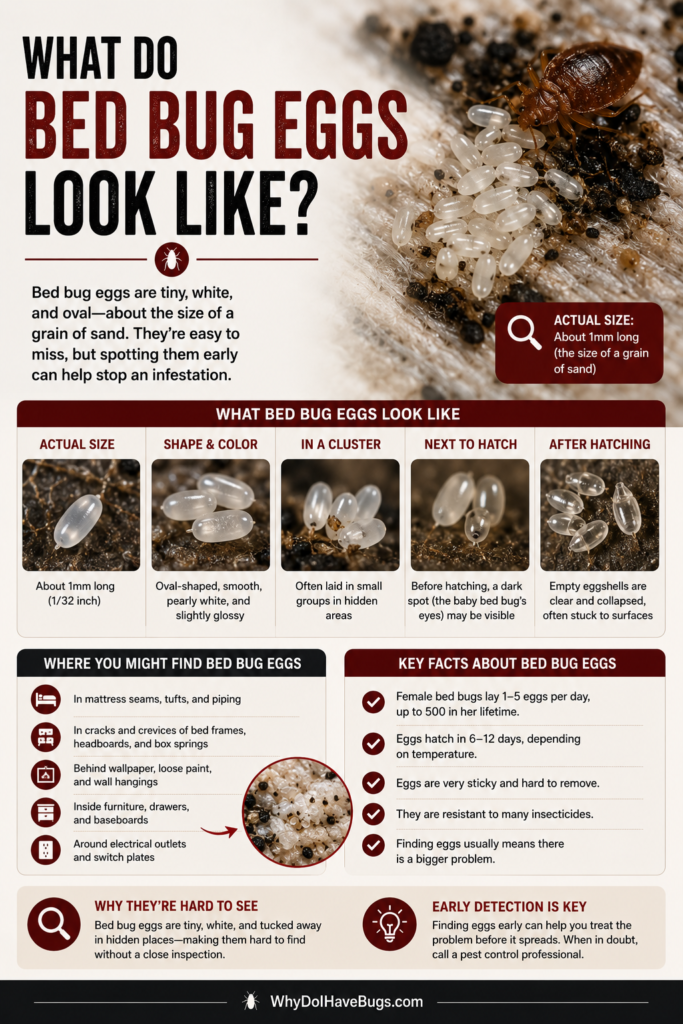
Earwig eggs are usually bright white or creamy white with a smooth, slightly shiny surface. As they mature, they may become a little duller, but they generally remain light in color until they hatch. For a useful comparison with another small, pale egg found indoors, see what bed bug eggs look like.
How many eggs does an earwig lay?
A female earwig commonly lays 20 to 60 eggs in a single clutch, depending on the species and environmental conditions.
Do earwigs stay with their eggs?
Yes. Female earwigs are unusual because they guard, clean, and protect their eggs until they hatch. They also continue caring for the newly hatched nymphs for a short period.
Where are earwig eggs usually found?
Earwig eggs are most often hidden in small underground chambers beneath rocks, mulch, flower pots, logs, boards, compost piles, or loose soil where conditions stay cool and moist.
Can earwig eggs survive indoors?
Earwig eggs need moisture to develop successfully. Dry indoor environments are generally much less favorable than the damp soil and sheltered outdoor locations where females normally lay them.
About the Author
Daniel Brooks is an urban entomology educator with more than 15 years of experience helping homeowners identify common household pests and understand why they’re invading their homes. He specializes in practical, science-backed prevention strategies and long-term pest control solutions that solve problems at their source.