
One of the most frustrating things about finding carpet beetles is realizing you never invited them in.
You keep your house clean.
You vacuum.
You don’t leave food sitting around.
So how did they end up inside in the first place?
I wondered the same thing.
The answer is that carpet beetles are surprisingly good at finding their way indoors, and many of the ways they get inside have nothing to do with whether your home is clean or dirty. For the reasons an indoor infestation can take hold after they arrive, see Why Do I Have Carpet Beetles in My House?.
Once I learned where they actually come from, a lot of things started making more sense.
Most Carpet Beetles Start Outside
One thing that surprised me is that carpet beetles aren’t primarily indoor insects.
Adult carpet beetles spend much of their lives outside where they feed on pollen and nectar from flowering plants.
Your home simply becomes another place they explore.
If an adult beetle finds its way inside and discovers a good place to lay eggs, that’s when an indoor infestation can begin.

Open Doors and Windows Make It Easy
Sometimes the answer really is that simple.
An adult carpet beetle can fly through an open door or window just like any other small flying insect.
Most people never notice because the beetles are tiny and don’t attract much attention.
If you’ve ever found carpet beetles crawling across a sunny windowsill, there’s a good chance you’ve already seen this behavior.

I explain why that happens in Why Are Carpet Beetles on My Windows? Here’s What It Usually Means.
They Can Hitch a Ride on Things You Bring Home
Not every carpet beetle walks through the front door on its own.
Sometimes we accidentally carry them inside.
Common examples include:
- Fresh flowers
- Used furniture
- Secondhand clothing
- Area rugs
- Blankets
- Boxes from storage
- Decorative items made from natural materials
Most of the time you won’t even know they’re there.
The eggs are tiny, and the larvae like to stay hidden.
Bird Nests Can Be a Source
This isn’t something most homeowners think about.
Bird nests naturally contain feathers, twigs, hair, and other organic material that carpet beetles love.
If a nest is built in an attic vent, chimney, soffit, or another part of the house, adult beetles may eventually find their way indoors from there.
That doesn’t mean every bird nest will cause carpet beetles, but it’s one possible source that’s often overlooked.

They Don’t Need a Huge Opening
Carpet beetles are small enough to take advantage of tiny gaps around a home.
They may enter through:
- Damaged window screens
- Gaps around doors
- Attic vents
- Crawl space vents
- Utility penetrations
- Garage doors that don’t seal tightly
It’s impossible to seal every tiny opening, but fixing obvious gaps can reduce the chances of insects wandering inside.
They May Already Be Inside Before You Notice Them
This is one of the biggest reasons carpet beetles seem to appear out of nowhere.
An adult beetle may lay eggs weeks—or even months—before you ever notice a problem.
During that time, the larvae stay hidden while they feed.
The first thing many people actually see isn’t an adult beetle.
It’s a shed skin.
A damaged sweater.
Or a beetle crawling across a window after it’s already completed most of its life cycle.
That’s why infestations often feel sudden even though they’ve been developing quietly for quite a while.


Pets Can Bring More Than Mud
Your dog or cat probably isn’t carrying carpet beetles into the house on their fur.
What pets do contribute is something the larvae love.
Hair.
Pet hair collects under furniture, along baseboards, inside closets, and around pet beds.
Over time, those quiet areas can become excellent places for larvae to grow if adult beetles have already laid eggs nearby.
If you share your home with pets like we do, it’s one more reason regular vacuuming makes such a difference.
The Garage and Attic Deserve a Look Too
When people inspect for carpet beetles, they usually head straight to the bedroom or living room.
I’d also spend a few minutes checking the garage and attic.
Stored holiday decorations.
Old blankets.
Boxes of clothing.
Unused shoes.
Those are exactly the kinds of things that sit undisturbed for long periods.

During our own carpet beetle problem, one of the first clues I found was inside a shoe that had been stored in our attic for quite a while. Stored footwear can be an early warning sign, so carpet beetles in clothing and shoes explains what to inspect and why larvae target certain fabrics.
That experience taught me not to overlook the parts of the house I visit the least.
Finding Them Doesn’t Mean Your House Is Dirty
This is probably the biggest myth I’d like to put to rest.
I’ve seen spotless homes with carpet beetles.
I’ve also seen cluttered homes without them.
The difference usually isn’t how clean the house looks.
It’s whether adult carpet beetles found a place where their larvae could survive.
A clean home can still have:
- Wool blankets
- Pet hair under furniture
- Feather pillows
- Stored clothing
- Natural fiber rugs
Those are all things carpet beetle larvae can use if the conditions are right.
Keeping your home clean absolutely helps reduce the risk, but finding carpet beetles isn’t automatically a sign of poor housekeeping.
Once They’re Inside, They Start Looking for the Right Spot
Adult carpet beetles don’t usually wander around your house randomly.
They’re searching for somewhere to lay eggs.
That might be:
- A quiet closet.
- Under a couch.
- Along a baseboard.
- Inside stored blankets.
- Around pet bedding.
- Inside a rarely used pair of boots.
They’re thinking about what their larvae will need after they hatch.
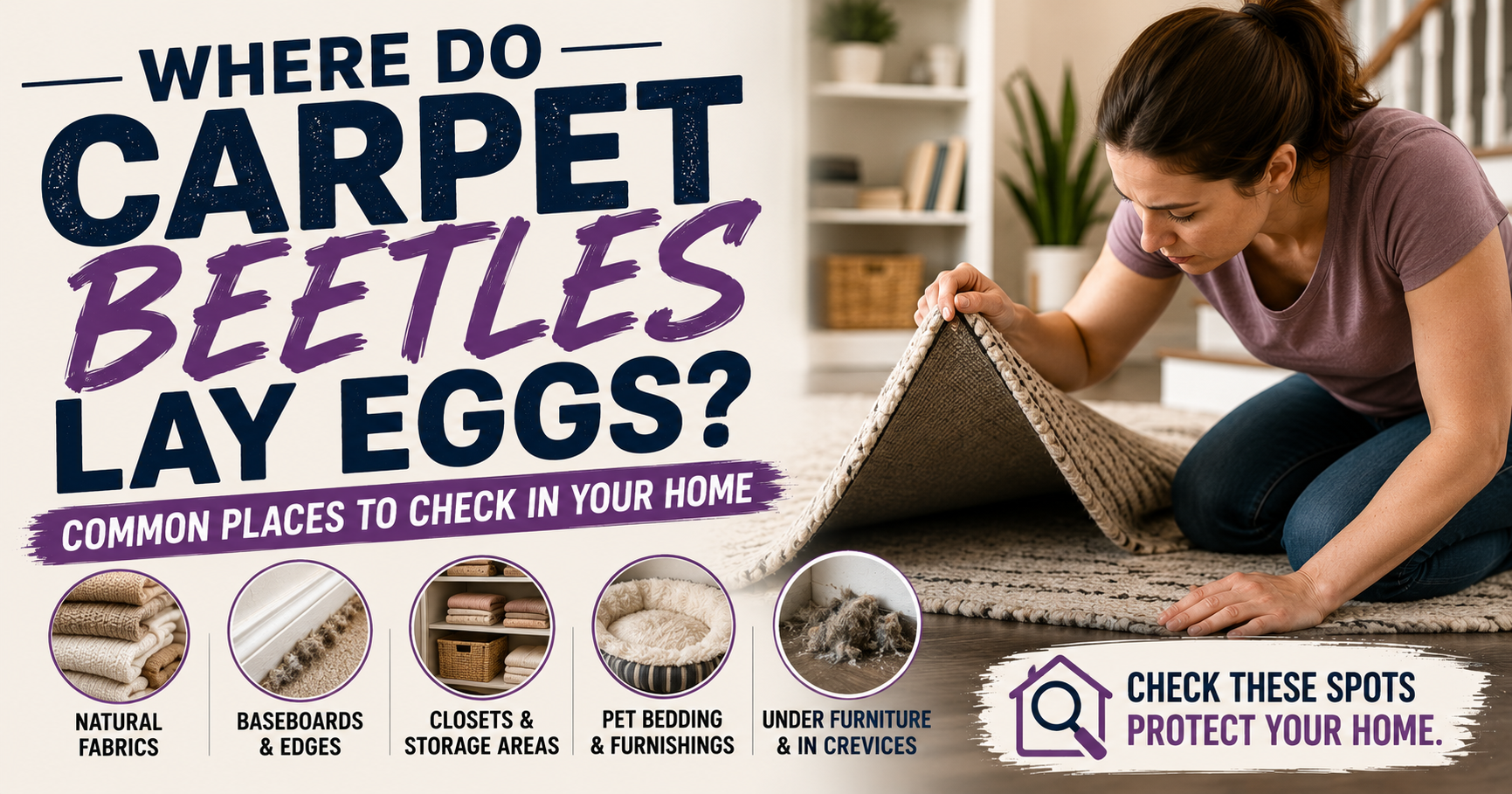
If you’d like to know where those eggs usually end up, I put together a guide explaining where carpet beetles lay eggsand the places I’d inspect first.
You May Never Figure Out Exactly How They Got In
I know that’s probably not the answer most people want.
Sometimes there’s an obvious explanation.
An old chair from a garage sale.
A bird nest in the attic vent.
An open window during the spring.
Other times, there’s simply no way to know.
A single adult beetle could have flown inside months ago, laid eggs, and disappeared long before you noticed anything was wrong.
Instead of trying to solve the mystery of exactly how they entered, I’d spend my energy figuring out where they’re living now.
That’s what actually helps solve the problem.
Keeping Them Out Is Mostly About Reducing Opportunities
You’ll probably never make your home completely inaccessible to every carpet beetle.
They’re small, they can fly, and they’re common outdoors.
What you can do is make your house a much less attractive place for them to reproduce.
A few habits go a long way:
- Vacuum regularly, especially along baseboards and under furniture.
- Clean pet hair before it builds up.
- Wash seasonal clothing before storing it.
- Inspect secondhand furniture before bringing it inside.
- Store valuable natural-fiber items in sealed containers when possible.
- Repair damaged window screens and obvious gaps around doors.
None of those steps are complicated on their own, but together they make it much harder for carpet beetles to establish themselves.
If I Found Carpet Beetles Today
I honestly wouldn’t spend hours trying to figure out whether they came through a window or hitched a ride home on a blanket.
I’d focus on the things I can actually control.
I’d inspect the places where larvae like to hide.
I’d vacuum thoroughly.
I’d clean stored fabrics.
And I’d keep checking over the next few weeks.
That’s a much better use of time than chasing theories about how they first got inside.
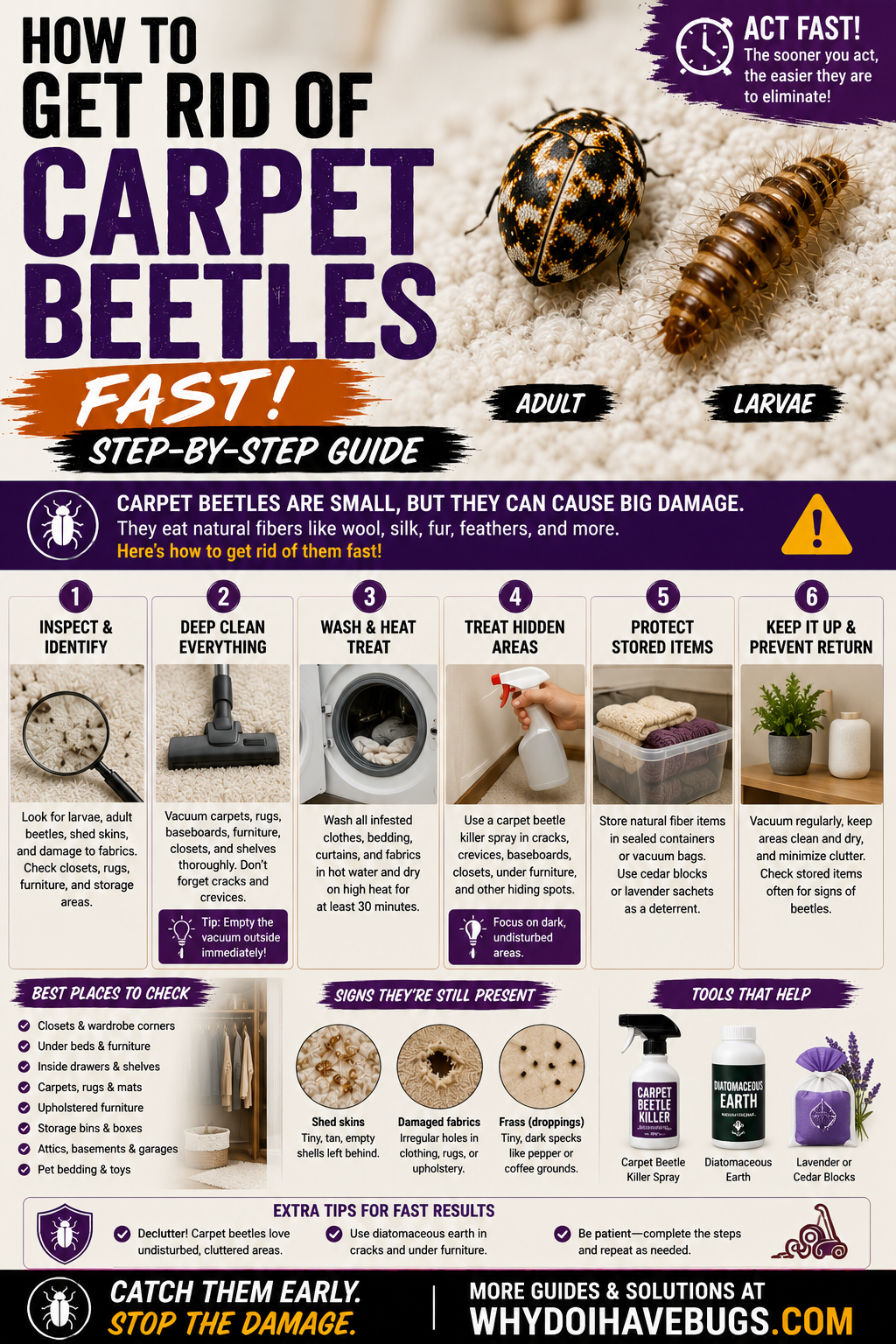
If you’re trying to eliminate an active infestation, my step-by-step guide to getting rid of carpet beetles fast walks through the entire process from inspection to prevention.
For more identification guides, treatment advice, and prevention tips, explore our growing Carpet Beetles category.
Frequently Asked Questions
Do carpet beetles come from outside?
Yes. Adult carpet beetles normally live outdoors, where they feed on pollen and nectar. They occasionally fly into homes or are carried inside on items such as flowers, clothing, or secondhand furniture.
Can carpet beetles get in through open windows?
Absolutely. Adult carpet beetles are capable of flying and may enter through open windows, doors, or damaged window screens.
Do carpet beetles spread from one house to another?
They can. Carpet beetles may move between nearby homes by flying outdoors, or they can be transported on infested furniture, clothing, rugs, or other household items.
Can you completely prevent carpet beetles from getting inside?
Probably not. Because carpet beetles are common outdoors, it’s impossible to guarantee they’ll never enter. However, regular cleaning, reducing food sources, inspecting secondhand items, and sealing obvious entry points can greatly reduce the chances of an infestation developing.
Why did I suddenly get carpet beetles?
In many cases, they weren’t actually sudden. Adult beetles may have entered your home weeks or even months earlier, laid eggs in a quiet location, and disappeared before the larvae became noticeable. By the time you see adults, shed skins, or damaged fabrics, the infestation has often been developing for some time.
About the Author
Ryan Mitchell researches household pests and writes practical guides that help homeowners understand where insects come from, why they choose certain hiding places, and what realistic steps make the biggest difference. His goal is to make pest problems feel less overwhelming by focusing on clear, useful advice instead of unnecessary panic.