Finding a carpet beetle today and another one a month from now can make it feel like they’re impossible to get rid of.
I remember wondering the same thing.
“How can these things still be showing up?”
The answer usually comes down to one important fact that many homeowners don’t realize…
You’re often seeing different generations of carpet beetles rather than the same insect surviving for months.
Once I understood how their life cycle worked, it became much easier to understand why infestations can seem to drag on even after you’ve started cleaning.
Let’s walk through what actually happens from the moment an egg is laid until a new adult carpet beetle emerges.
The Short Answer
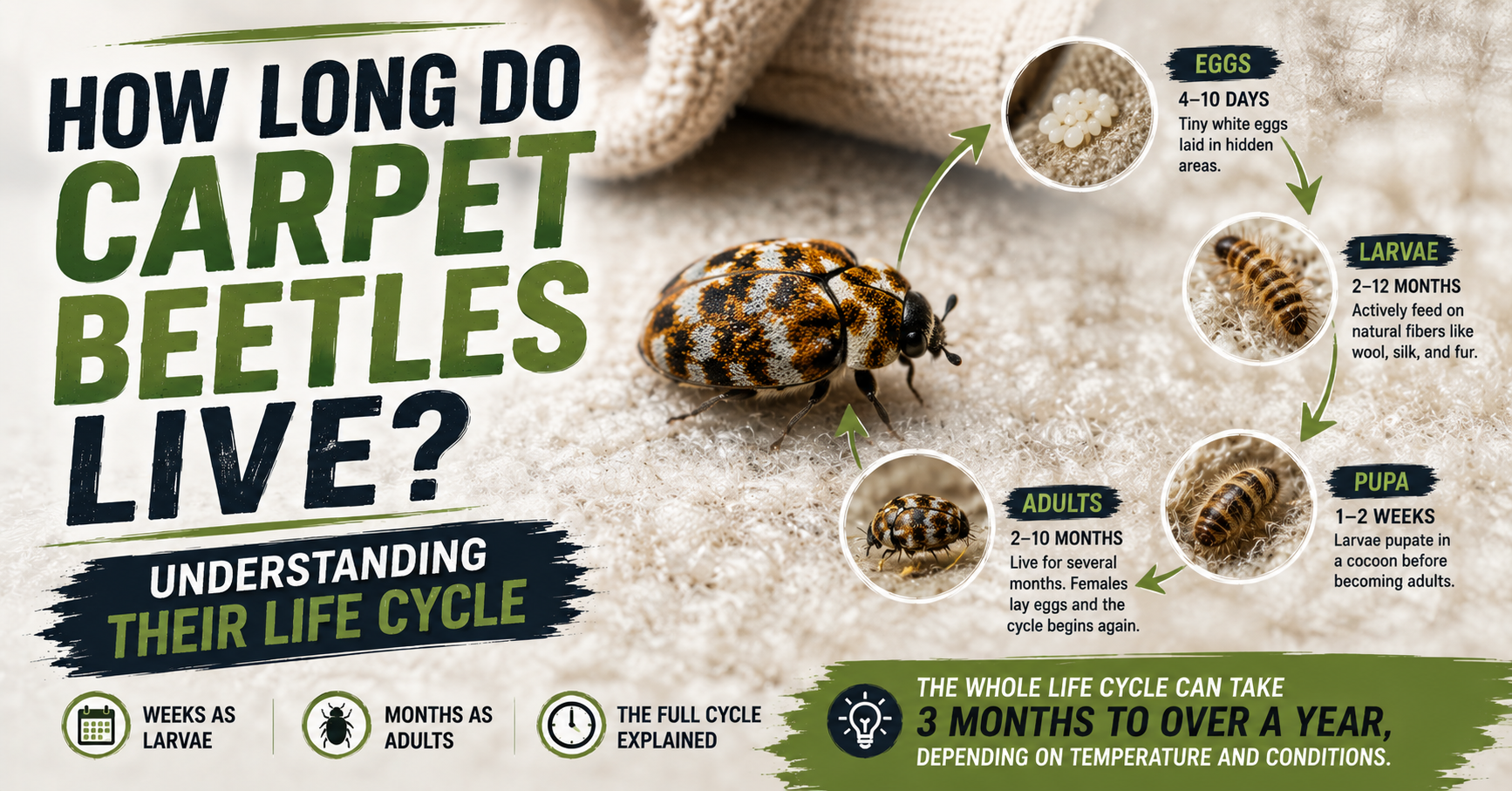
Adult carpet beetles usually live only a few weeks, but the complete life cycle—from egg to adult—can take several months to more than a year, depending on the species and indoor conditions.
The longest stage isn’t the adult beetle at all.
It’s the larva.
That’s also the stage responsible for nearly all of the damage people find in their homes.
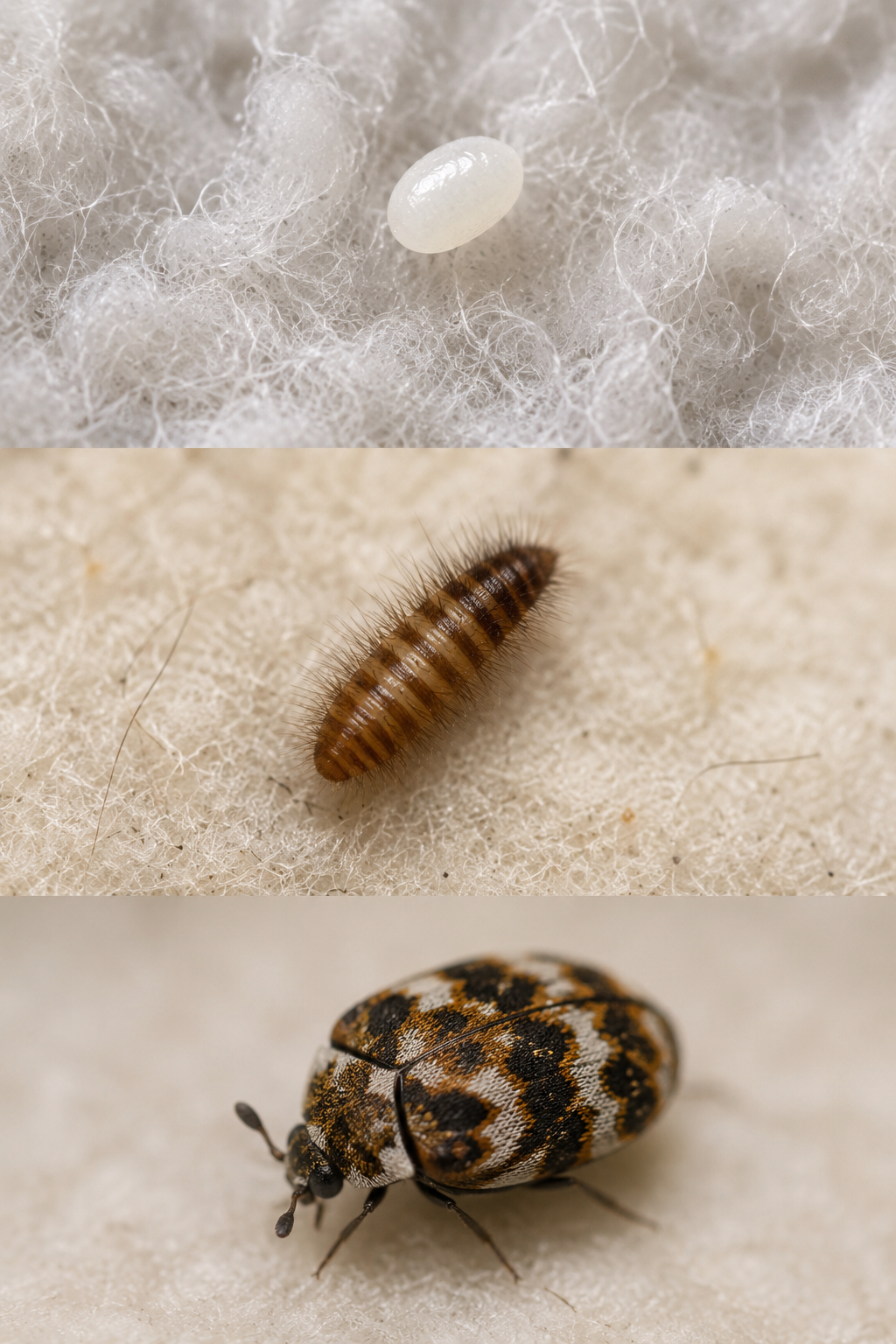
If you’re still learning to identify each stage, my guide on Everything You Need to Know About Carpet Beetles is a great place to start.
It All Starts With Tiny Eggs
The life cycle begins when an adult female lays her eggs near a food source that the larvae can feed on after hatching.
Instead of laying eggs out in the open, she chooses quiet, protected places like closets, stored blankets, rugs, upholstered furniture, pet bedding, or boxes that haven’t been disturbed for a while.
Each female can lay dozens of eggs, which is one reason carpet beetle populations can grow surprisingly fast if they’re left alone.
The eggs themselves are incredibly difficult to spot because they’re so small.
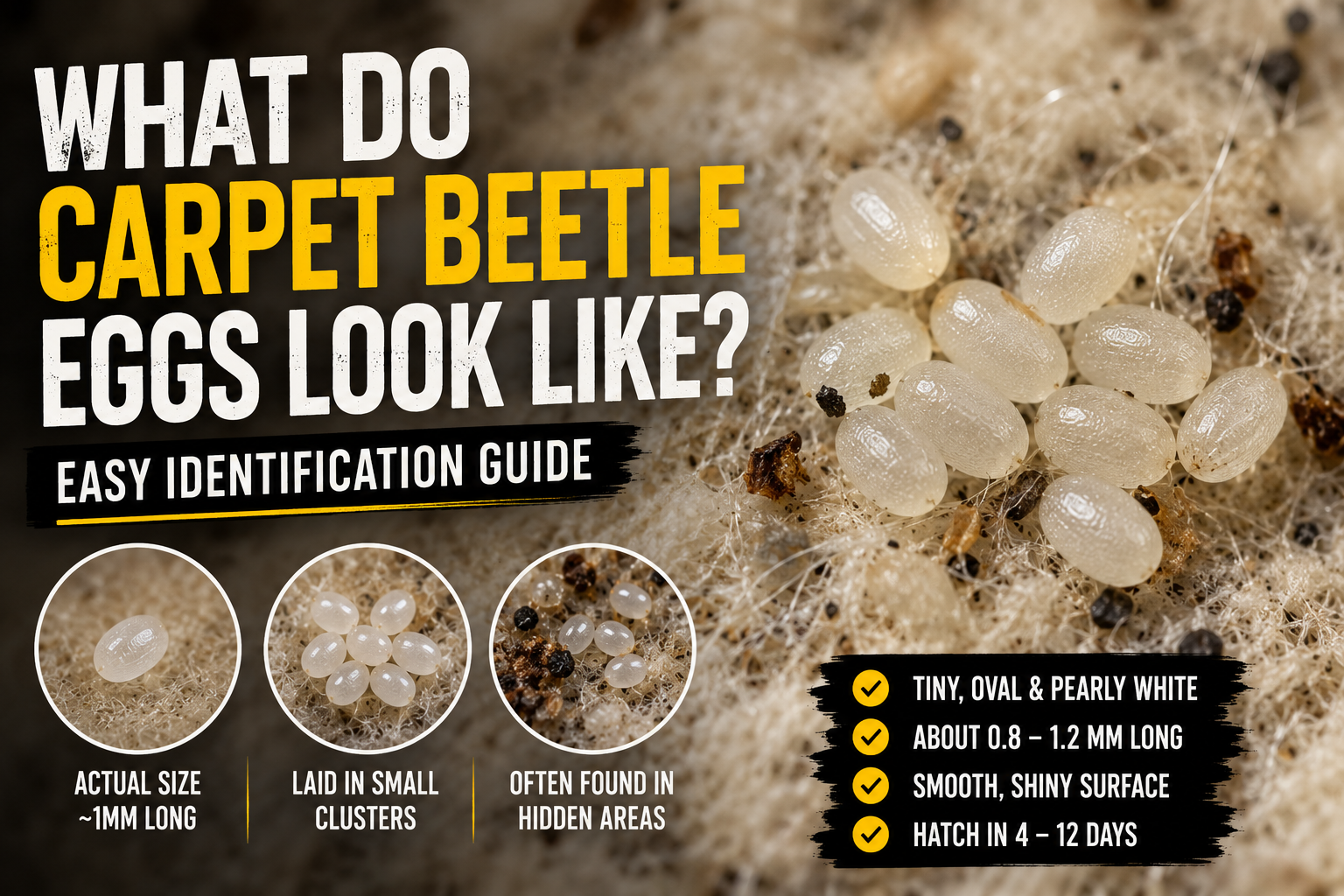
If you’re curious about what they actually look like, I put together a complete guide showing what carpet beetle eggs look like and where you’re most likely to find them.



The Larval Stage Lasts the Longest
After the eggs hatch, tiny larvae emerge and immediately begin searching for food.
This is the stage that homeowners should worry about the most.
Unlike adult carpet beetles, the larvae feed on natural materials like wool, feathers, leather, pet hair, fur, and other animal-based fibers.
As they grow, they’ll molt multiple times, leaving behind the fuzzy shed skins that many people mistake for dead insects.
In fact, the very first sign I found wasn’t a live carpet beetle at all—it was a shed skin tucked inside a shoe that had been stored in our attic.
If you’ve discovered something similar, these guides can help:
Why Do They Shed Their Skin?
One thing that surprised me while researching carpet beetles is that the larvae don’t simply grow larger overnight.
Instead, they molt repeatedly.
Each time they outgrow their outer skin, they shed it and continue developing.
That’s why it’s common to find several shed skins even when you rarely see a live larva.
If you’re finding shed skins but no insects, don’t assume the problem has disappeared.
The larvae are often hiding nearby.
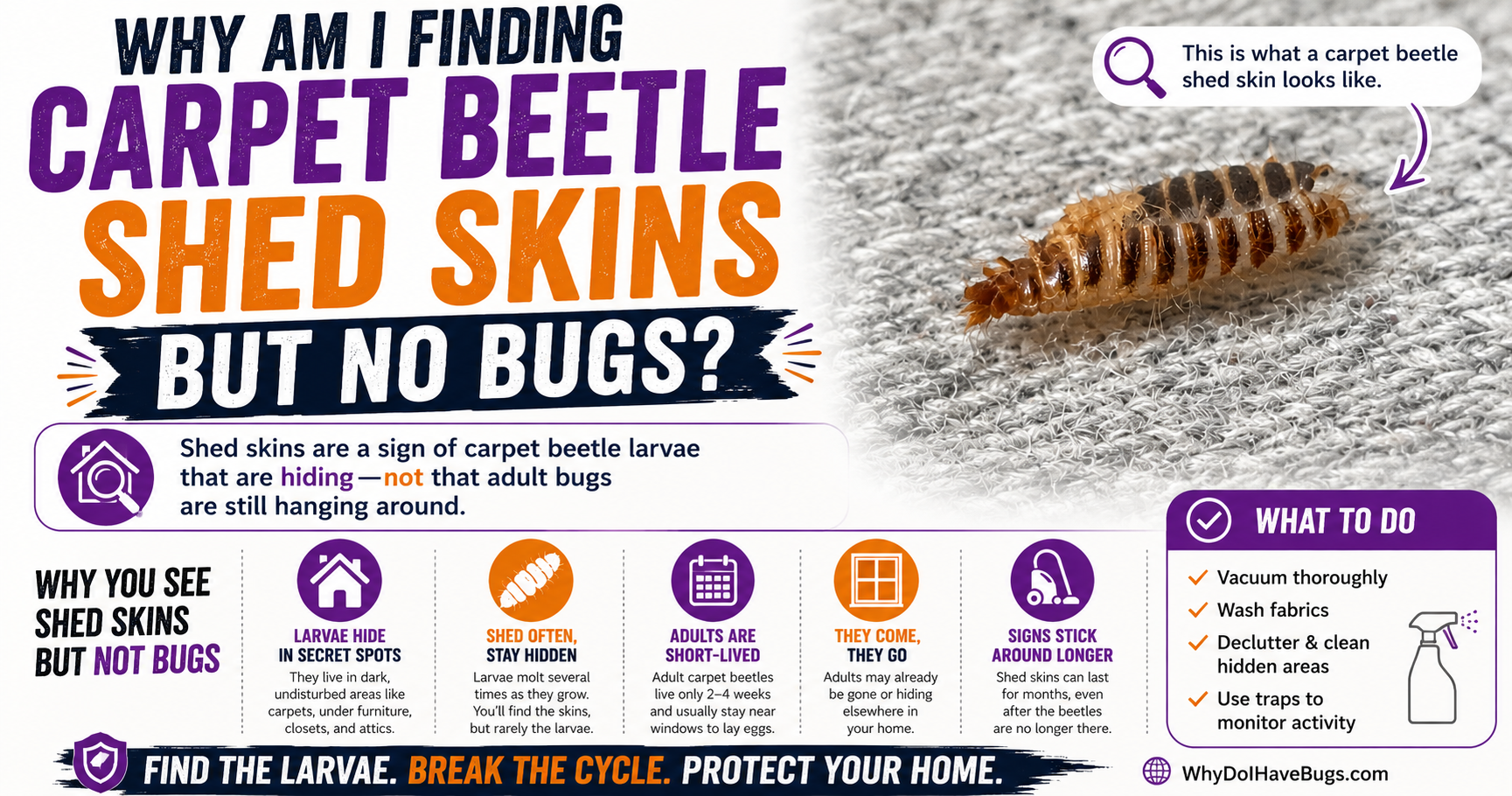
I explain more in Why Am I Finding Carpet Beetle Shed Skins but No Bugs?.
Where Are the Larvae While They’re Growing?
Most larvae spend their time hidden in places people rarely inspect.
That includes:
- Closets
- Under furniture
- Along baseboards
- Inside storage boxes
- Beneath area rugs
- Pet bedding
- Attics
- Behind furniture
These protected areas provide both food and shelter while the larvae slowly develop.
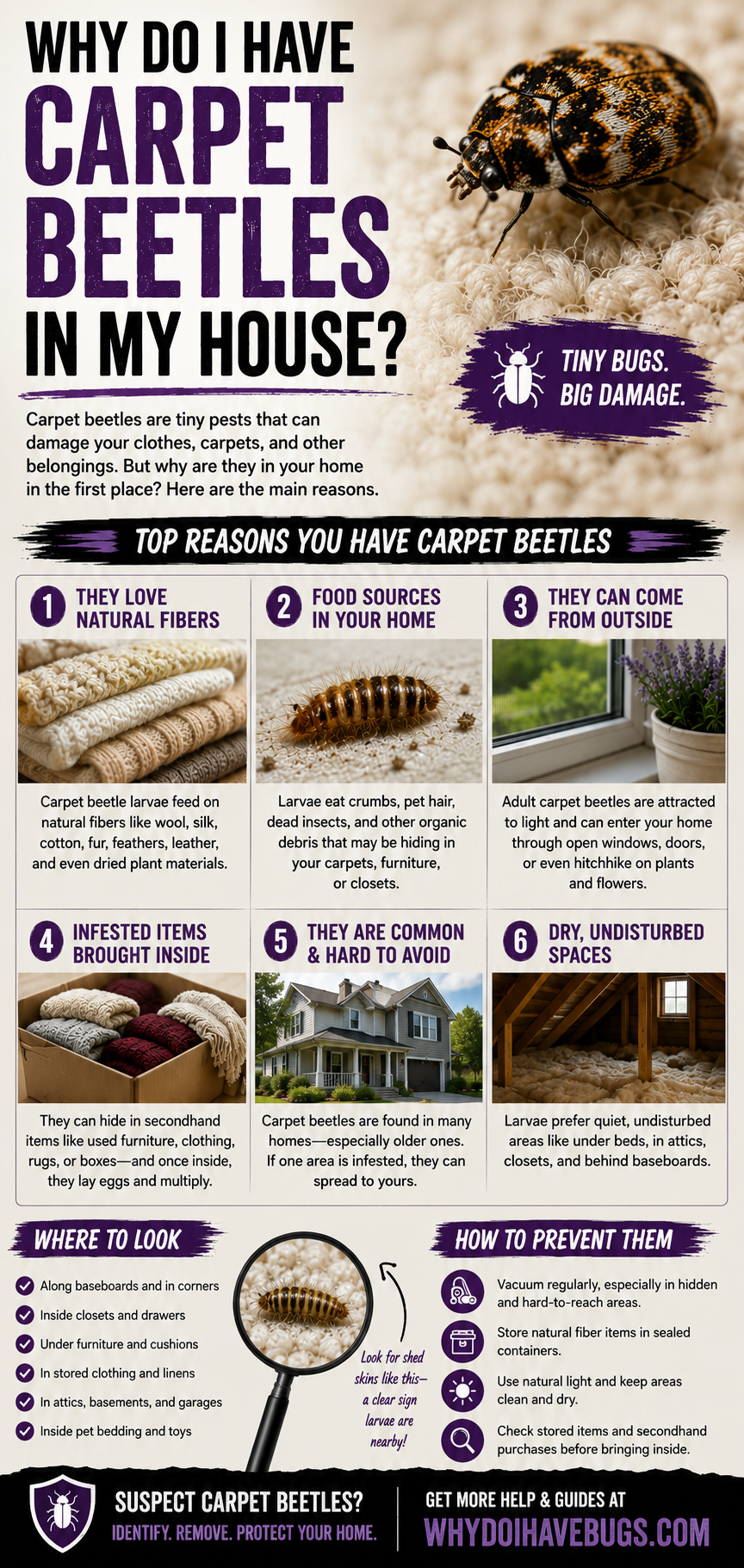
If you’re trying to locate them, my guide to where carpet beetle larvae hide covers the most common hiding places homeowners overlook.
The Pupal Stage
Once the larva has finished growing, it forms a pupa.
During this stage, the insect isn’t feeding or causing damage.
Instead, it’s transforming into an adult beetle.
Most homeowners never notice this stage because it usually happens inside protected areas where the larvae have already been hiding.

Adult Carpet Beetles
Eventually, an adult beetle emerges.
Ironically, this is the stage people notice the most even though it’s usually the least destructive.
Adults are commonly found crawling on windows, walls, or around light sources because they’re trying to leave the house to feed on pollen and flowers outdoors.
Finding an adult beetle doesn’t necessarily mean it’s causing damage right now.
The damage usually happened weeks or months earlier while it was still a larva.
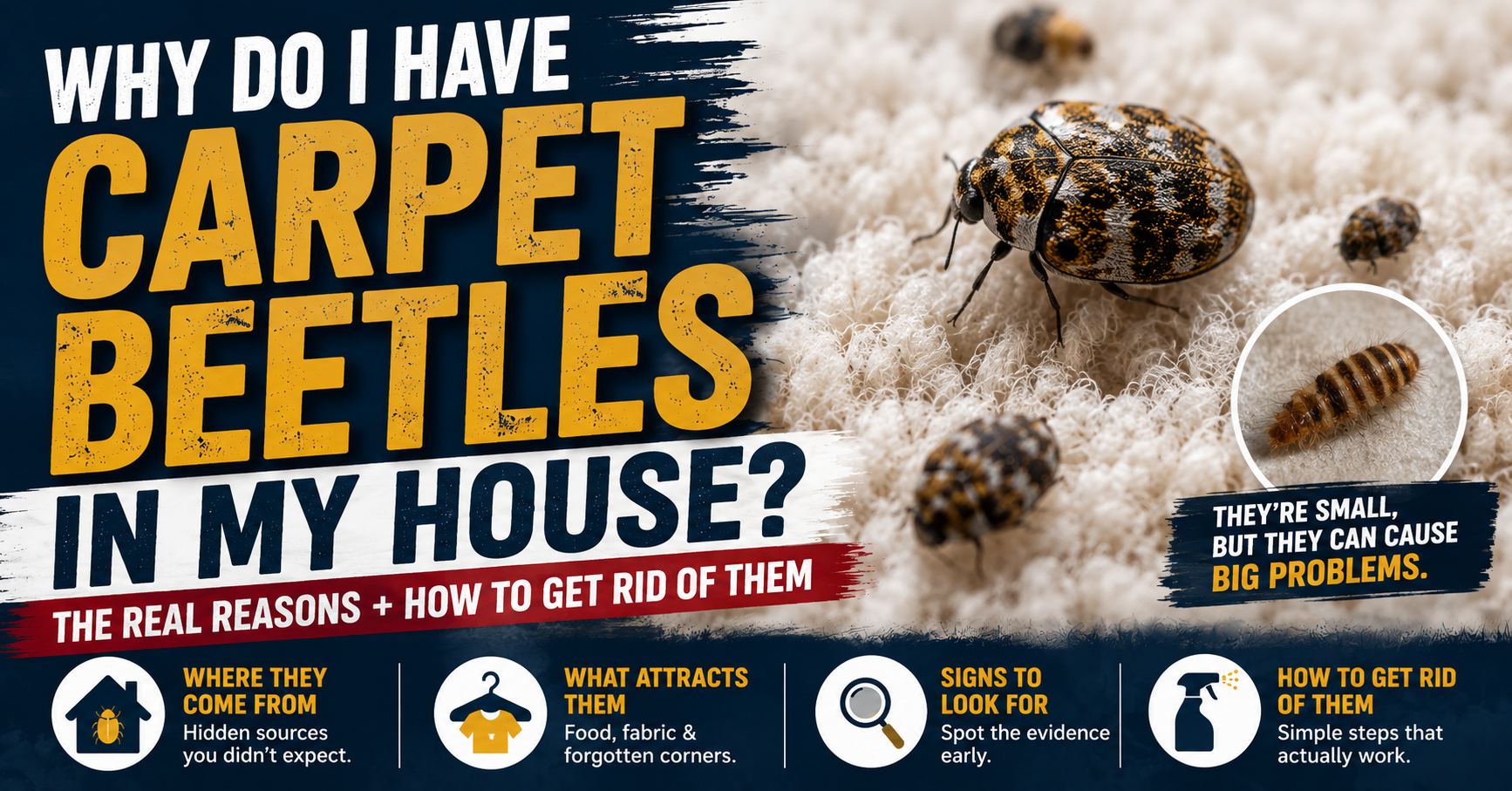
That’s one reason I encourage people to figure out why carpet beetles are in their house instead of simply killing the adults they see.
Why Carpet Beetles Seem to Last Forever
One of the biggest misconceptions is that you’re dealing with the same carpet beetles month after month.
In reality, different life stages often overlap.
While one group of adults is laying eggs…
Another group of eggs is hatching.
Older larvae are still feeding.
Some larvae are becoming pupae.
And new adults are emerging.
That’s why infestations can appear to continue indefinitely unless you interrupt the entire cycle.

Breaking the Cycle
Once I understood the life cycle, my focus shifted from chasing adult beetles to eliminating the stages that actually matter.
That meant:
- Vacuuming thoroughly and often.
- Removing pet hair and lint.
- Washing or cleaning vulnerable fabrics.
- Inspecting closets and storage areas.
- Eliminating hidden food sources.
During our own cleanup, consistent vacuuming made the biggest difference.
A strong vacuum removes larvae, shed skins, pet hair, lint, and many eggs before they ever have the chance to continue the cycle.
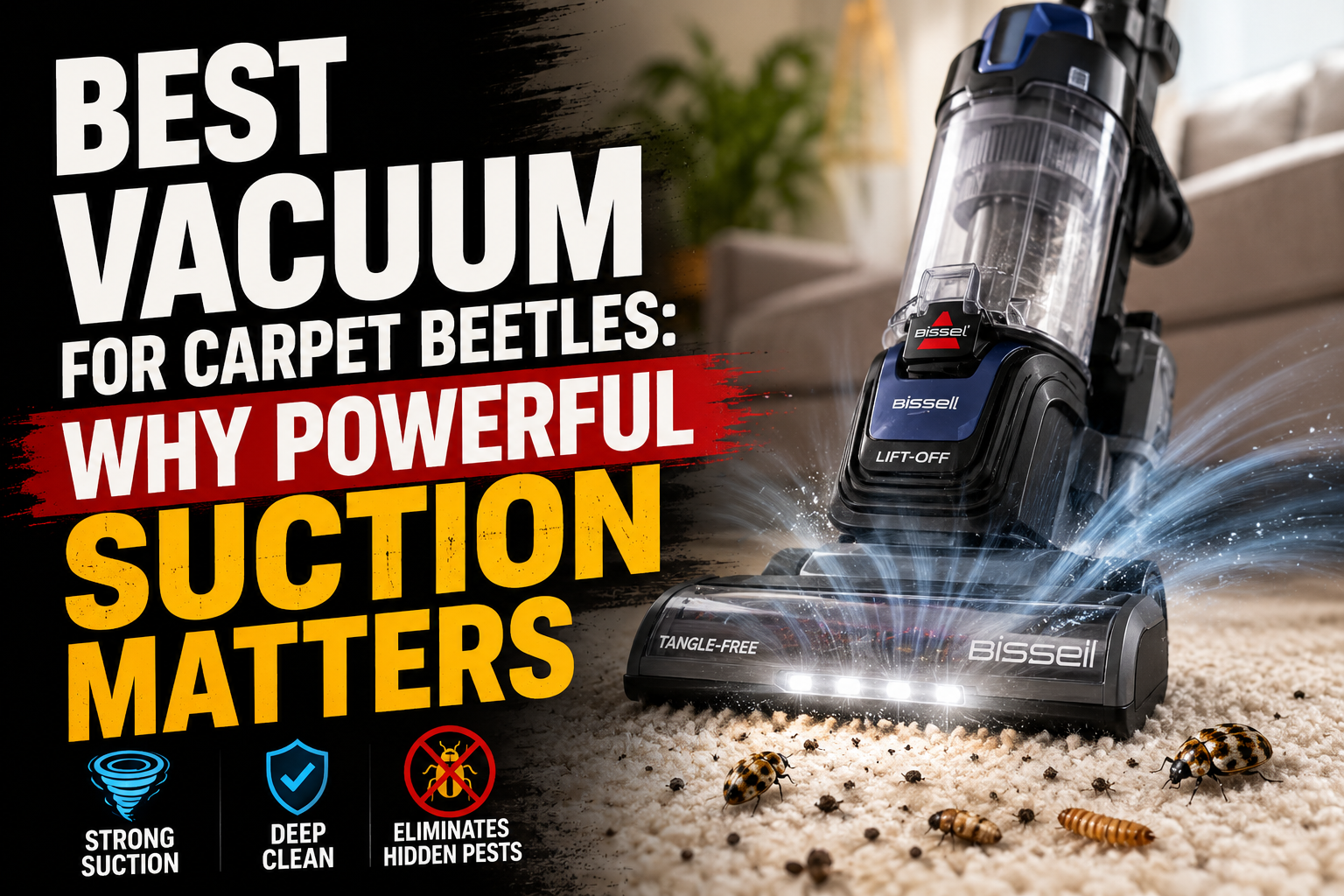
If you’re shopping for one, I explain why suction matters so much in Best Vacuum for Carpet Beetles: Why Powerful Suction Matters.
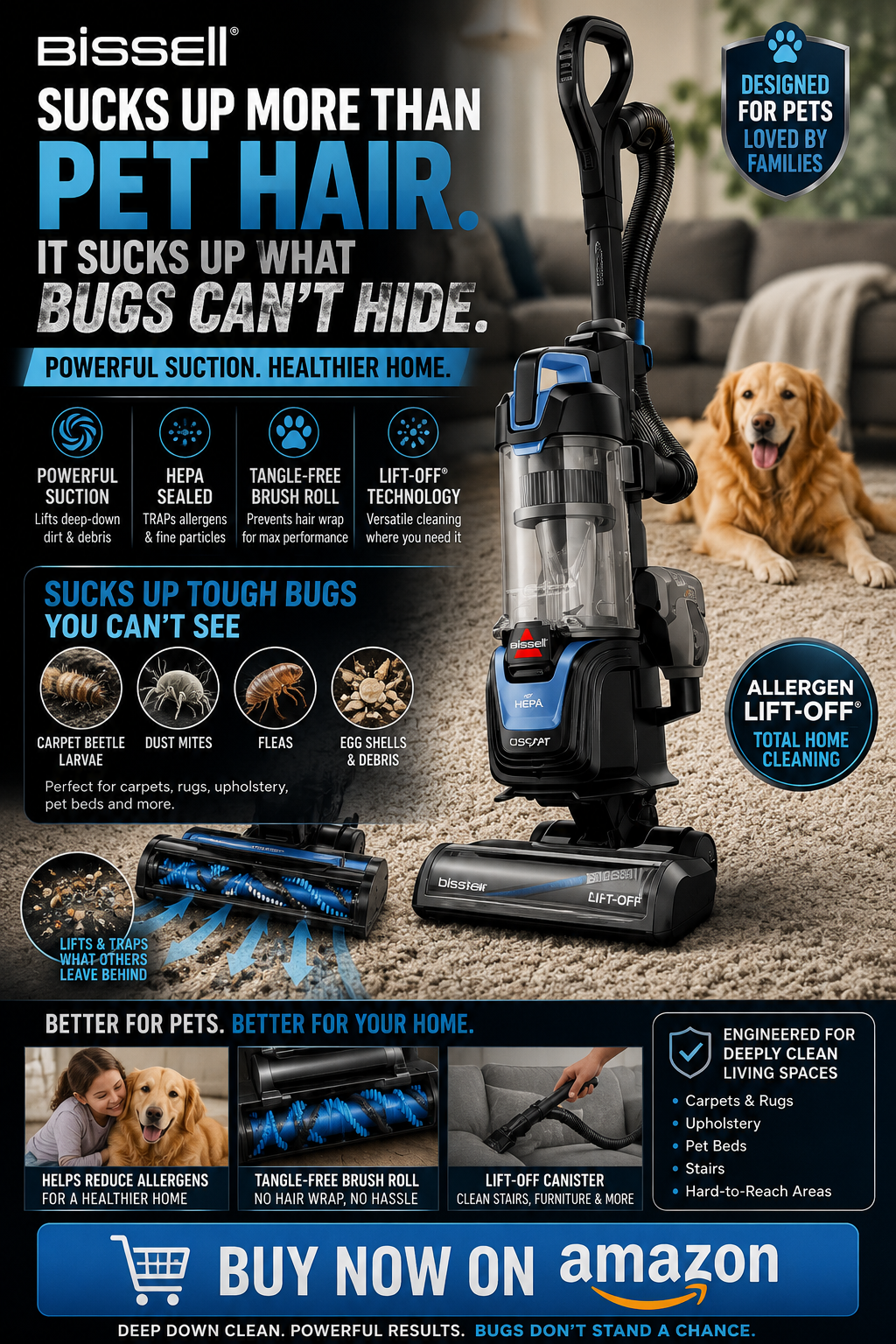
One model I’d strongly consider is the Bissell Pet Hair Eraser Allergen Lift-Off because its powerful suction, HEPA filtration, and Lift-Off design make it much easier to clean baseboards, furniture, closets, stairs, and other places where carpet beetle larvae tend to hide.
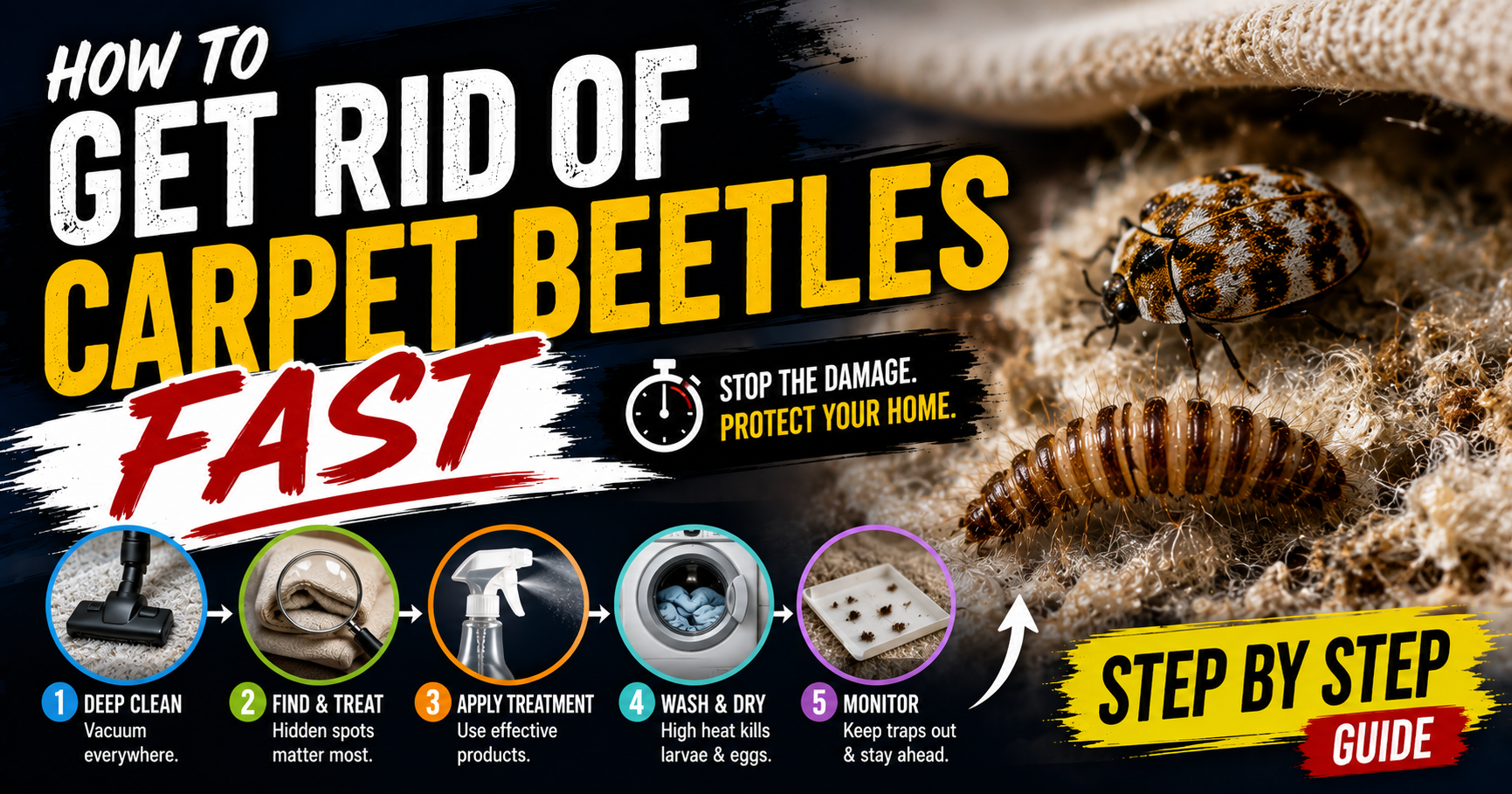
If you’re dealing with an active infestation, I also recommend reading How to Get Rid of Carpet Beetles Fast Step-by-Step Guide for a complete cleanup strategy. If you’re considering insecticides, my review of Does Carpet Beetle Killer Spray Actually Work? explains when a spray can help and when cleaning should remain the priority.
Why Understanding the Life Cycle Matters
Learning how long carpet beetles live isn’t just an interesting fact.
It explains why simply killing the adult beetles you see rarely solves the problem.
By the time an adult appears on your windowsill, the larvae that caused the damage may have been feeding in your home for months.
Understanding each stage helps you focus your efforts where they’ll have the biggest impact and gives you a much better chance of breaking the cycle for good.
If you’re looking for more identification guides, treatment advice, and prevention tips, visit our Beetles resource center.



Frequently Asked Questions
How long do carpet beetles live?
Adult carpet beetles usually live only a few weeks, but the complete life cycle from egg to adult can take several months to more than a year depending on the species and environmental conditions.
Which stage causes the most damage?
The larval stage causes nearly all of the damage to clothing, rugs, upholstery, and other natural materials.
Do adult carpet beetles eat fabric?
No. Adult carpet beetles primarily feed on pollen and nectar outdoors. The larvae are responsible for damaging fabrics and other household items.
Why do carpet beetles keep coming back?
Because different life stages overlap. While you’re seeing adults, eggs may still be hatching and larvae may still be feeding in hidden areas.
Can you stop the carpet beetle life cycle?
Yes. Thorough cleaning, frequent vacuuming, reducing food sources, and treating active infestations when necessary can interrupt the life cycle and greatly reduce future generations.
About the Author
Ryan Mitchell enjoys researching household pests and turning complex pest problems into practical, easy-to-follow advice. His goal is to help homeowners identify infestations early, understand what’s happening inside their homes, and solve problems using proven, realistic strategies.