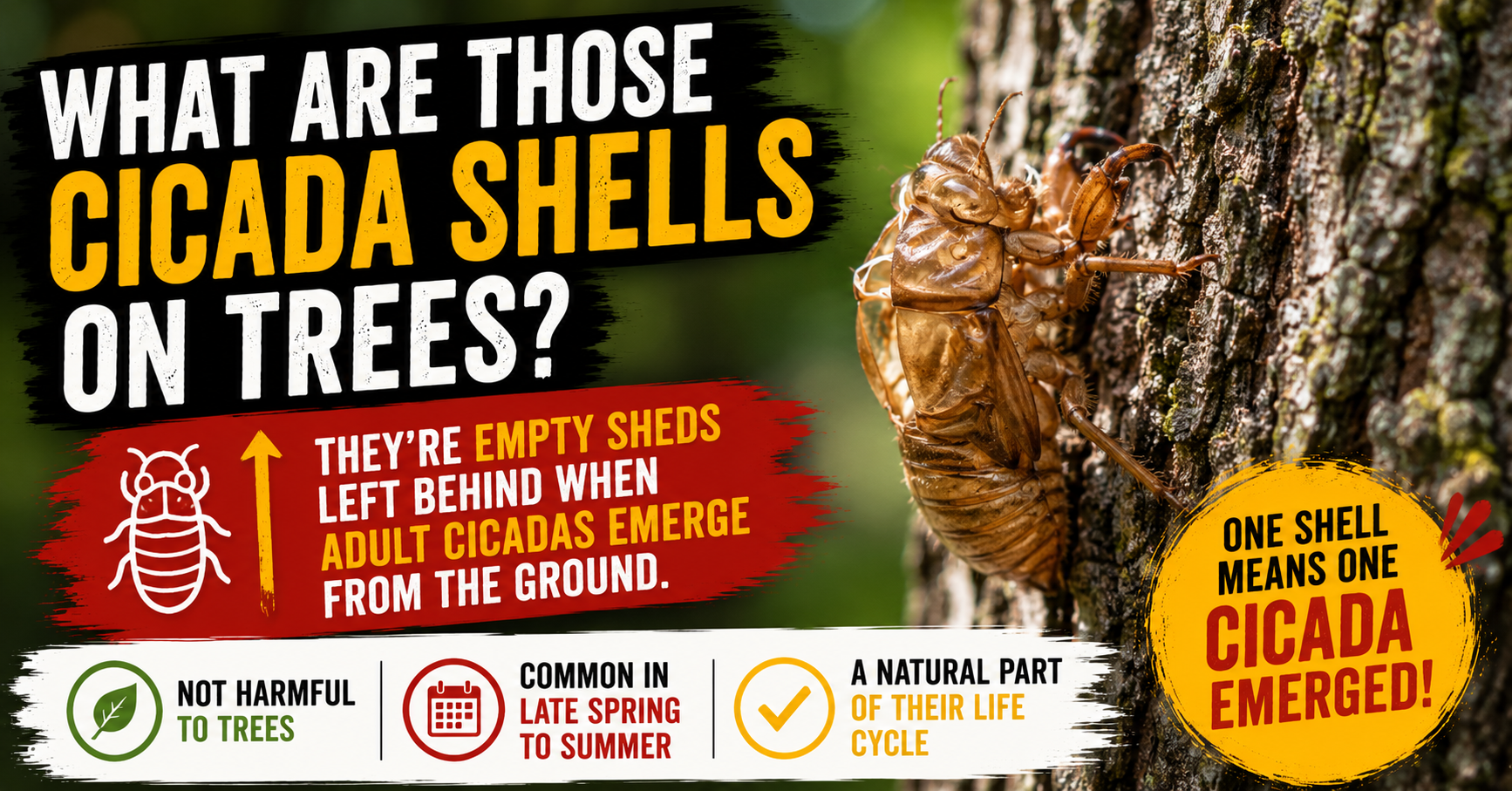
Finding dozens of brown cicada shells stuck to a tree trunk can look a little creepy at first. They have legs, empty eye sockets, and a split down the back that makes them look almost alive. The good news is that those shells are harmless, empty, and actually one of the coolest signs of a cicada’s life cycle.
The shell is not a dead cicada. It is the outer skin a young cicada left behind after climbing out of the ground and becoming a winged adult.
What Are Cicada Shells?
Cicada shells are the shed outer skins of cicada nymphs. Before becoming adults, cicadas live underground for years and have no wings.
When it is time to emerge, a nymph tunnels out of the soil, climbs a tree, fence post, porch step, or other upright surface, and splits its skin open down the back. The soft adult cicada slowly pulls itself out, expands its wings, and hardens over the next several hours.
The empty shell stays attached to the surface after the adult flies away.



Are Cicada Shells Empty?
Yes. A cicada shell is empty.
The brown shell is called an exuvia, which is the scientific name for the shed skin left behind after an insect molts. It cannot move, bite, sting, reproduce, or turn back into a cicada.
If you gently pick one up, you can usually see the opening along its back where the adult came out.


Why Are Cicada Shells on Trees?
Cicada nymphs need something vertical to climb when they emerge from the ground. Trees are perfect because the bark gives them a solid surface to grip while they shed their skin.
You may also find shells on:
- Fence posts.
- Deck railings.
- Siding.
- Outdoor furniture.
- Garden stakes.
- Shrubs.
- Playground equipment.
- Vehicle tires.
The cicada is not choosing your house because it wants to come indoors. It simply found a nearby surface that was safe enough to climb.
What Happens After a Cicada Leaves Its Shell?
The newly emerged adult starts out pale, soft, and wrinkled. Its wings are folded and its body may look almost white or light green for a while.
Over the next few hours, the adult pumps fluid into its wings until they expand fully. Its body and wings then harden, its normal color develops, and it eventually flies into nearby trees.
That adult cicada will spend the rest of its short above-ground life mating, laying eggs, and calling from the trees.
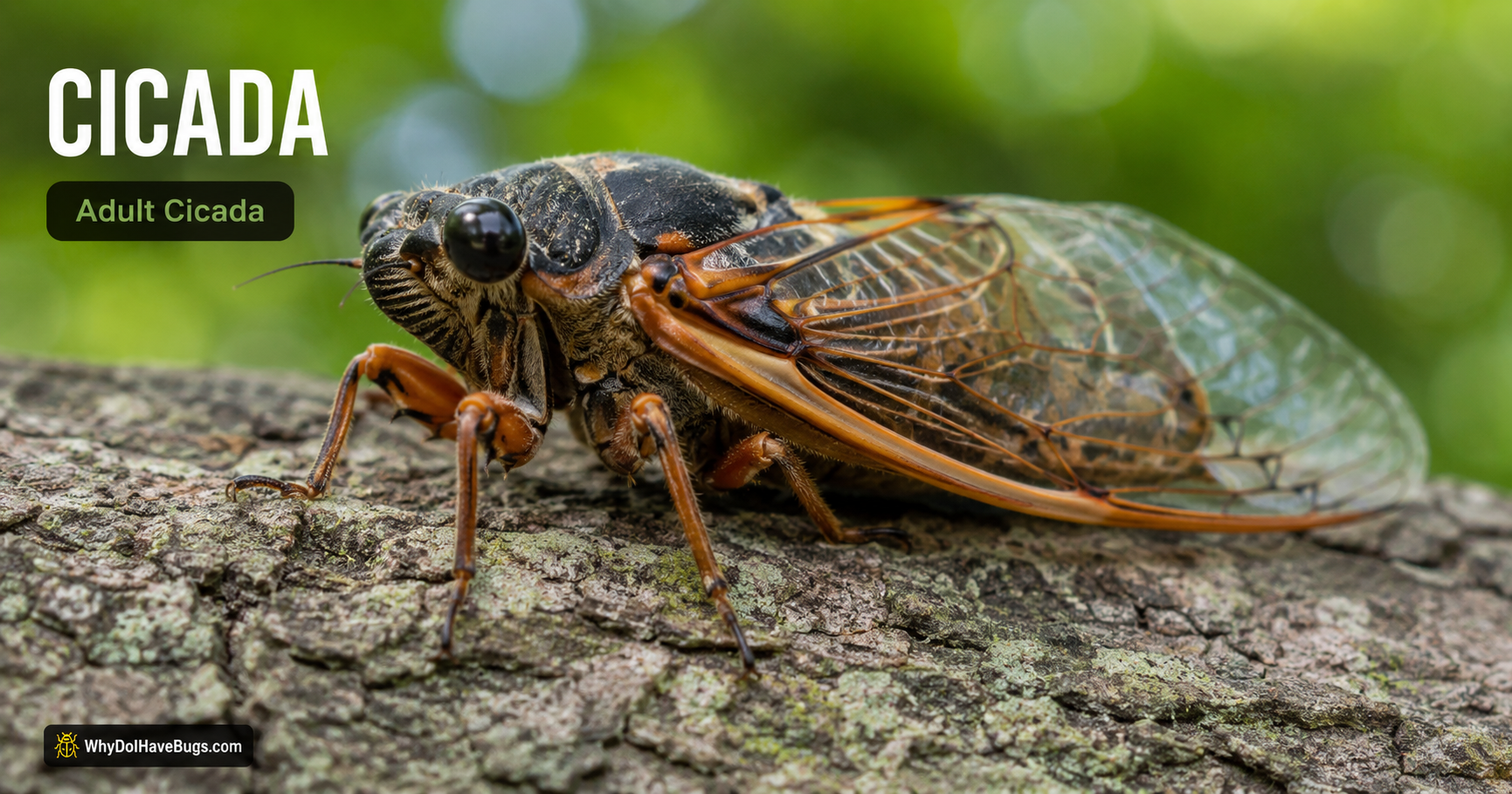
If you are curious about the adult that came from the shell, this complete cicada identification guide shows the body features, wings, eyes, and life cycle to look for.
Why Are There So Many Cicada Shells at Once?
A large number of shells means many cicada nymphs emerged from the soil nearby. Annual cicadas can leave shells every summer, while periodical cicadas can create an overwhelming number during their 13-year or 17-year emergence.
The shells often appear suddenly because cicadas tend to emerge after the soil has warmed enough. Warm rain can also trigger a burst of activity, so you may go from seeing none to finding shells everywhere almost overnight.
How Long Do Cicada Shells Stay on Trees?
They can stay attached for days, weeks, or even longer if they are protected from rain and wind. Eventually, weather breaks them down or knocks them to the ground.
A shell stuck tightly to bark may stay in place long after the adult cicada is gone. This is normal and does not mean the tree has an active infestation.



Are Cicada Shells Dangerous to Touch?
No. Cicada shells are safe to touch.
They do not sting, bite, spread disease, or contain venom. Children often enjoy collecting them because they are lightweight and detailed enough to see the legs, claws, eyes, and empty back opening.
I would still wash hands after handling them, just as a normal outdoor habit.
Can Cicada Shells Hurt Pets?
No. A cicada shell itself is not dangerous to dogs or cats.
A dog that chews or eats a few shells may have no trouble, but eating a large amount of any hard insect material can upset a pet’s stomach. The bigger issue is usually a dog eating lots of adult cicadas during a heavy emergence.
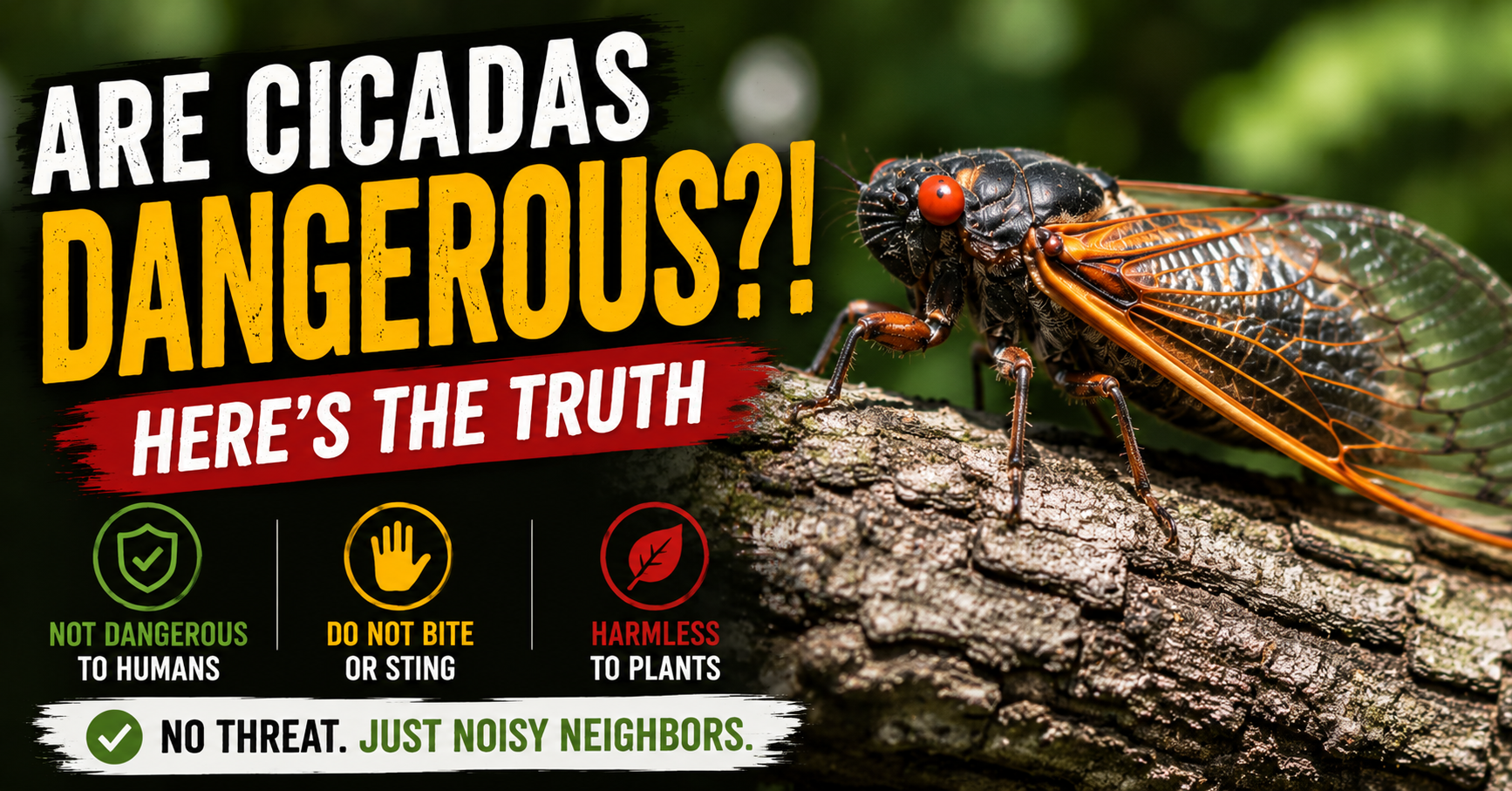
Cicadas are not poisonous or venomous, but their hard outer material can be rough on a pet’s digestive system in large amounts. Here is more on whether cicadas are dangerous to pets and the small situations worth watching.


Do Cicada Shells Mean Cicadas Are Still Around?
Usually, yes, at least for a while. A fresh shell means an adult cicada recently emerged nearby.
However, shells can remain on trees long after the adult cicadas have died or moved away. Seeing old dry shells in late summer does not mean you will continue hearing cicadas for months.
Adult cicadas generally live above ground for only a few weeks.
Should You Remove Cicada Shells?
You do not have to remove them. They are harmless and will break down naturally outdoors.
If they collect on a porch, patio, deck, or walkway, sweeping them up is fine. You can toss them into a compost pile, garden bed, or yard waste. They are made mostly of chitin, the same natural material that forms many insect outer shells.
I would leave shells on trees if they do not bother you. They are a simple reminder of an unusual transformation happening right in the yard.

Why Do Cicada Shells Have Claws?
The nymph needs strong front claws to dig through soil and climb a tree after it emerges. Those claws are especially noticeable on the empty shell because they stay locked in the same position.
The shell may look like it is gripping the bark with determination, but it is completely empty. The adult cicada has already pulled free and flown away.
Are Cicada Shells a Sign of Tree Damage?
Not by themselves. A tree covered in shells does not mean cicadas are hurting it.
Cicada egg laying can damage small twigs, especially on young trees, but the shells only show where nymphs climbed out of the ground. They do not harm bark, leaves, or roots.
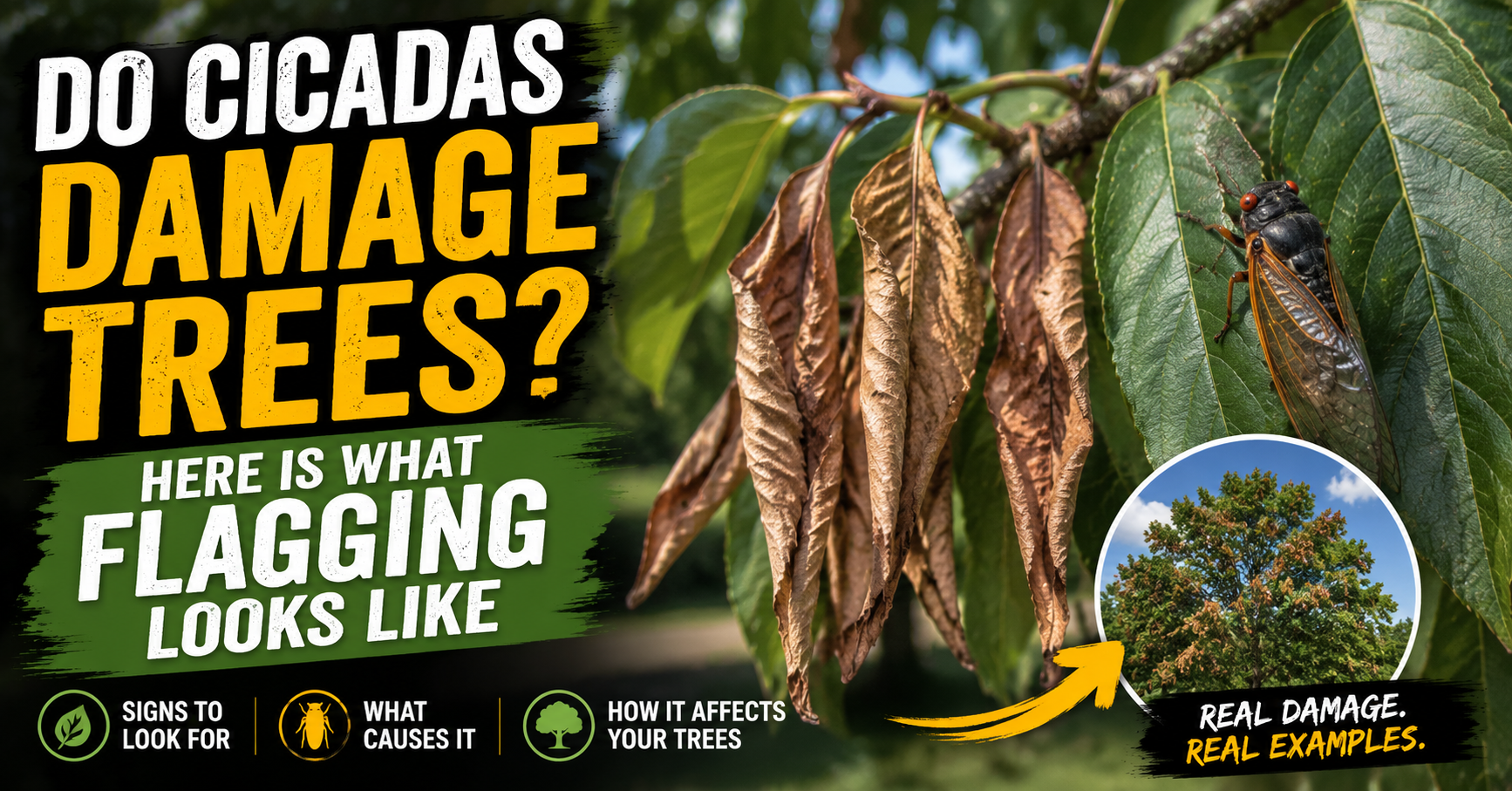
If you see brown clusters of leaves still hanging from otherwise healthy branch tips, that is a different issue called flagging. You can see how to recognize cicada egg-laying damage on trees.
Frequently Asked Questions
Are cicada shells dead cicadas?
No. They are empty skins left behind after a cicada nymph becomes a winged adult.
Can cicada shells come back to life?
No. The shell is completely empty and cannot move or become another insect.
Why do cicada shells split down the back?
The adult cicada leaves through that split as it emerges. Its soft body pulls out first, followed by its legs and wings.
Are cicada shells safe for kids to collect?
Yes. They are harmless to collect and examine. Washing hands afterward is a good normal outdoor habit.
How long after leaving the shell can a cicada fly?
A newly emerged cicada usually needs several hours for its wings and body to expand and harden before it can fly normally.
Why are cicada shells all over my porch?
Cicada nymphs climbed the nearest upright surface after emerging from the soil. Porch posts, railings, siding, and outdoor furniture are common places to find them.
Caleb Warren is a longtime gardener and backyard insect researcher who writes practical pest guides for WhyDoIHaveBugs.com, helping homeowners identify insects accurately before choosing a treatment.