
When someone tells me they’re suddenly seeing house flies, I don’t immediately start recommending sprays or fly traps.
The first thing I want to know is why they’re there in the first place.
House flies don’t randomly decide to move into a home.
They’re almost always following something they need.
In my experience, that usually comes down to food, moisture, breeding material, or an easy way inside.
Finding the source is almost always more effective than killing the flies you can already see.
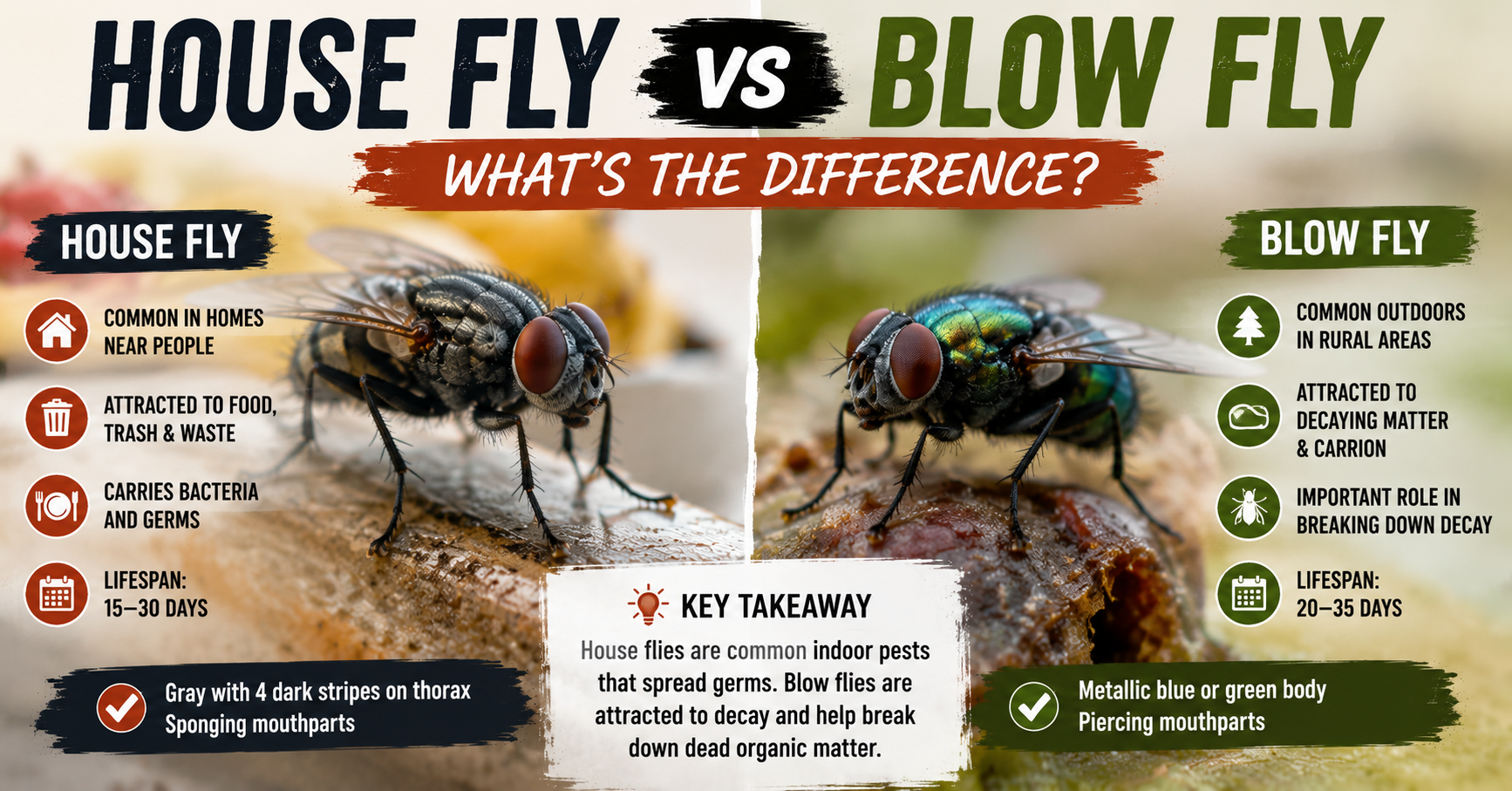
If you’re not completely sure the insects are actually house flies, I recommend starting with What Do House Flies Look Like? Easy Identification Guide before trying to solve the problem.
I Always Start by Looking for Food
House flies are excellent at finding food.
Even small amounts can attract them.
The first places I inspect include:
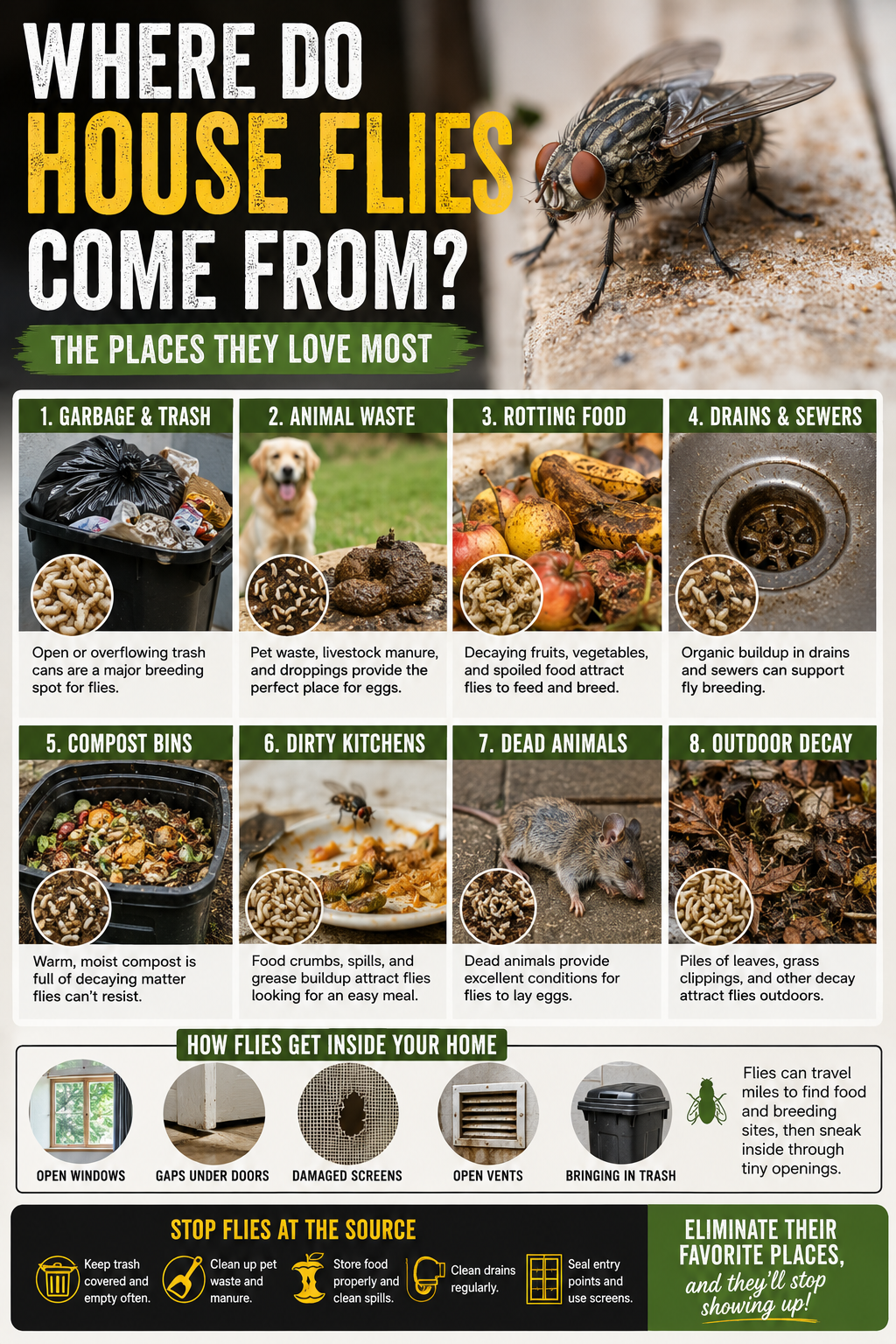
- Kitchen trash cans.
- Recycling bins.
- Pet food bowls.
- Dirty dishes.
- Food spills under appliances.
- Compost containers.
- Forgotten produce.
- Outdoor garbage cans near doors.
Many times, homeowners clean the obvious areas but overlook food that’s fallen behind the stove or underneath the refrigerator.
Those hidden food sources can keep attracting flies long after the countertops are spotless.
Garbage Is One of the Biggest Attractants
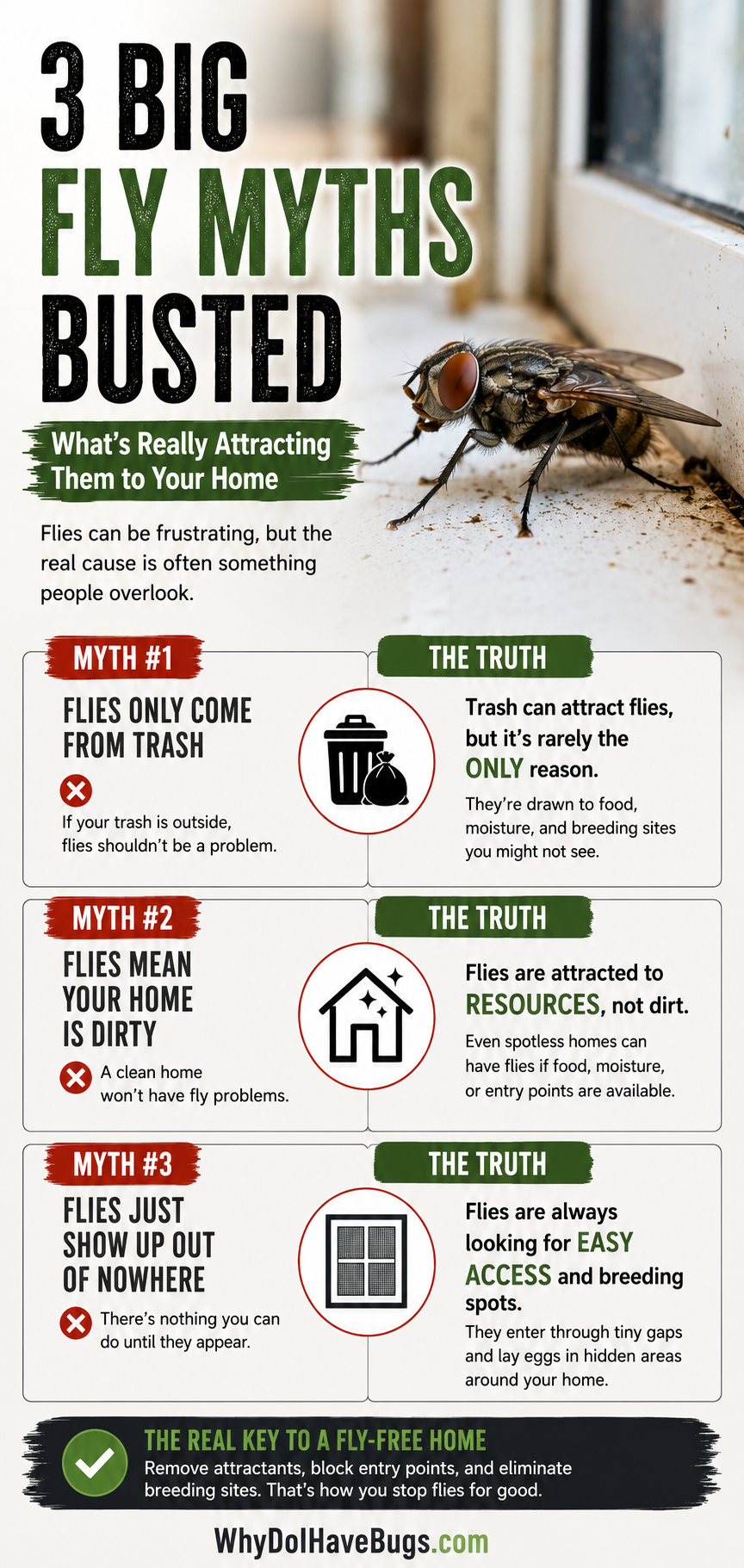
One thing I’ve noticed is that people often empty the trash but forget about the trash can itself.
Food residue collecting along the inside of the container can continue attracting flies.
Outdoor garbage cans are another common source.
If they’re sitting close to the back door or garage entrance, adult house flies can easily make their way inside every time someone opens the door.
That’s one reason I always inspect both indoor and outdoor trash areas during an investigation.

Sometimes They’re Breeding Nearby
Finding adult flies doesn’t always mean the problem is inside your house.
Sometimes they’re developing somewhere nearby and simply flying indoors after they emerge.
Possible breeding locations include:
- Animal waste.
- Rotting organic material.
- Garbage.
- Dead wildlife.
- Compost piles.
- Manure.
- Soiled pet bedding.
If I’m suddenly seeing far more flies than normal, I start looking beyond the kitchen and consider what’s happening outside as well.
Doors and Windows Often Explain Everything
Sometimes there isn’t an infestation at all.
I’ve inspected homes where flies were simply entering through:
- Doors left open.
- Damaged window screens.
- Garage doors.
- Gaps around utility lines.
- Torn screen doors.
If the weather suddenly turns warm, it doesn’t take long for a few flies outside to become several flies inside.
That’s why I always inspect entry points before assuming they’re breeding indoors.
Seasonal Changes Can Increase Fly Activity
House fly activity usually increases during the warmer months.
As temperatures rise, flies become more active, reproduce faster, and spend more time searching for food.
I’ve noticed homeowners often think they suddenly have a fly problem when, in reality, the same small opening or outdoor attraction simply becomes much more noticeable during late spring and summer.
Seasonal activity is one more clue I consider while looking for the source.
Why I Don’t Start With Fly Traps
Fly traps can absolutely help reduce the number of adult flies you’re seeing.
I use them myself.
But I don’t rely on them as the only solution.
If flies are continuously breeding nearby or entering through an open pathway, traps simply catch the insects that have already arrived.
The source of the problem remains.
That’s why I always recommend finding the attraction first and then using traps to reduce the remaining adult population.

If you’re comparing the different types available, my guide Best Fly Traps That Actually Work for Every Situationexplains where each style works best and when I choose one over another.


Here’s How I Investigate House Flies
Whenever I’m trying to figure out why house flies are showing up, I work through the same checklist.
I inspect food sources first.
Then garbage.
Next I look for moisture, breeding material, and possible entry points.
Finally, I pay attention to where I’m actually seeing the flies.
Flies gathering around windows often tell a different story than flies hovering around the kitchen trash can.
Looking at all those clues together usually points me toward the real source much faster than trying random treatments.
House Flies Usually Have a Reason for Being There
One thing I’ve learned after years of dealing with flies is that they rarely appear without a reason.
Whether it’s an overflowing garbage can, forgotten pet waste, damaged window screen, or something much less obvious, there’s almost always an explanation.
Once I identify what’s attracting them, getting rid of the flies becomes much easier because I’m solving the cause instead of only treating the symptoms.
If the number of flies keeps increasing even after cleaning, my next step is usually to determine where they’re breeding, since eliminating that source often has the biggest impact on the overall problem. A detailed look at where house flies are breeding can help narrow down the source before you focus on control methods.


Frequently Asked Questions
Why do I suddenly have house flies?
Sudden increases are often caused by warmer weather, nearby breeding sites, food waste, garbage, pet waste, or new entry points that allow flies to get indoors.
Can a clean house still get house flies?
Yes. Even very clean homes can attract house flies if they’re entering from outdoors or if there’s a nearby breeding source such as outdoor trash, compost, or animal waste.
Why are house flies always near my windows?
House flies are naturally attracted to light. After entering a home, they often gather around windows because they’re trying to get back outside, which is why you’ll frequently find them buzzing against the glass.

If you’re noticing that behavior, you may also want to read Why Are Flies on My Windows? Here’s What It Means.
Will fly traps solve a house fly problem?
Fly traps are excellent for reducing adult flies, but they work best when used alongside finding and eliminating whatever is attracting or breeding the flies.
What’s the first place I should check?
I usually begin with trash cans, pet waste, forgotten food, recycling bins, and any nearby outdoor garbage before moving on to possible entry points like damaged window screens or frequently opened doors.
About the Author
Mark Sullivan has spent years helping homeowners identify the real causes behind household pest problems. He believes the fastest way to eliminate house flies is to understand why they’re showing up in the first place, then remove the source before focusing on the insects themselves.