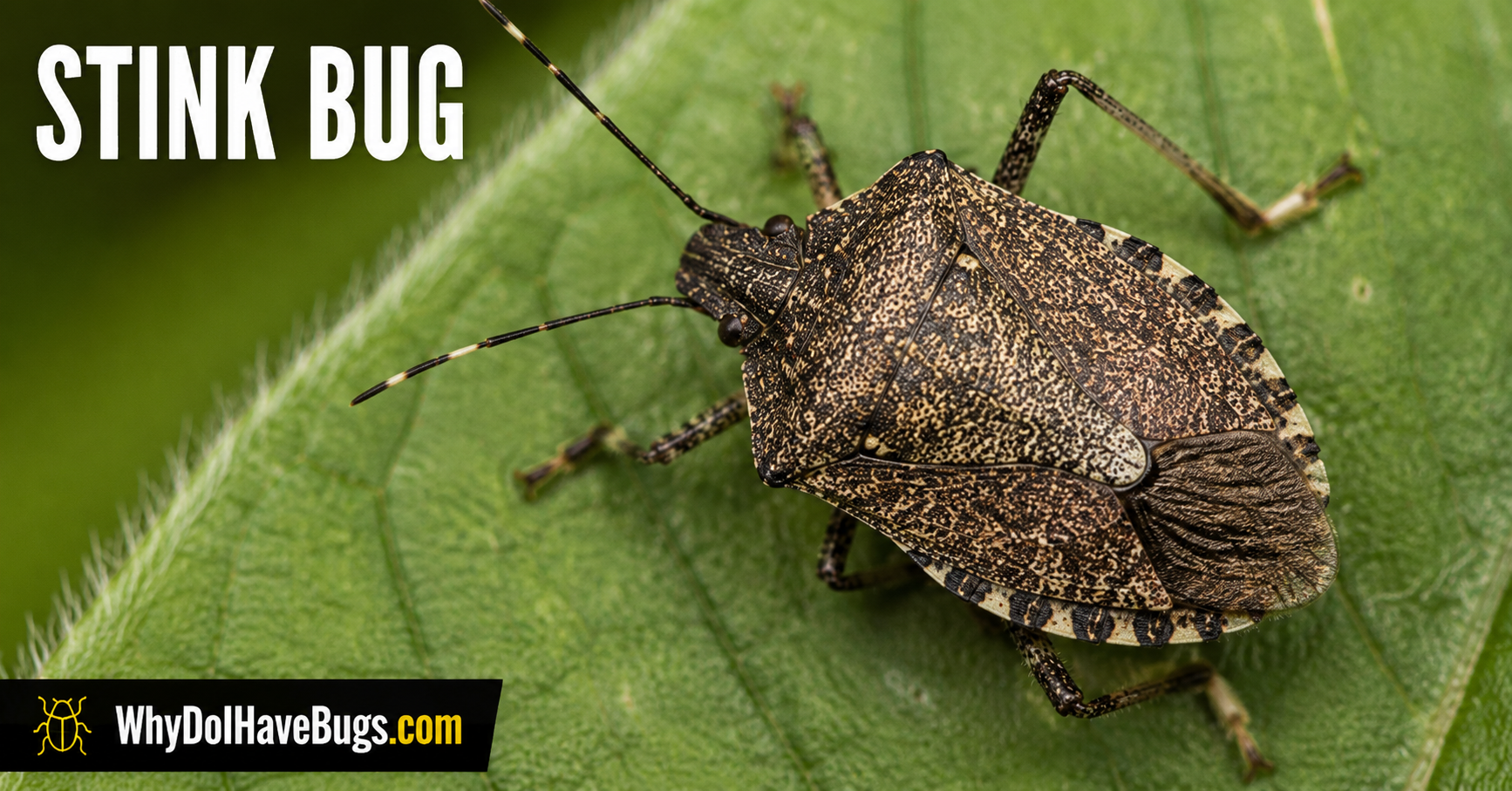
A stink bug is a shield-shaped insect best known for releasing a strong odor when it feels threatened. Some stink bugs feed on tomatoes, fruit, vegetables, and other plants, while others prey on insects and can actually be helpful in a garden.
The stink bugs most people notice are brown, green, or gray and measure roughly half an inch long. They have six legs, long antennae, a wide body, and a small triangular section in the center of their back.
Finding one stink bug does not automatically mean you have an infestation. The time of year and where you found it can tell you much more about why it is there.
What Does a Stink Bug Look Like?
An adult stink bug has a broad body that resembles a shield when viewed from above. The front of its body is wide, while the abdomen gradually narrows toward the rear.
The most helpful identification features include:
- A broad shield-shaped body
- Six relatively slender legs
- Long, segmented antennae
- A small head compared with the body
- A triangular plate in the center of the back
- Overlapping wings lying flat over the abdomen
- A piercing and sucking mouthpart underneath the body
- A brown, green, gray, black, or patterned appearance
Most adult stink bugs are about half an inch to three-quarters of an inch long. Their exact color, markings, and size depend on the species.
The triangular plate on the back is called the scutellum. It sits between the bases of the wings and is an important feature when identifying stink bugs and related insects.


Why Are They Called Stink Bugs?
Stink bugs get their name from the defensive odor they release when threatened, disturbed, handled, or crushed.
The smell comes from specialized scent glands. It helps make the insect less appealing to birds, reptiles, spiders, and other predators that might otherwise eat it.
People describe the odor in several ways. I have heard it compared to strong herbs, cilantro, dirty socks, burnt rubber, or an unpleasant chemical smell. The exact way it smells can vary by stink bug species and from one person to another.
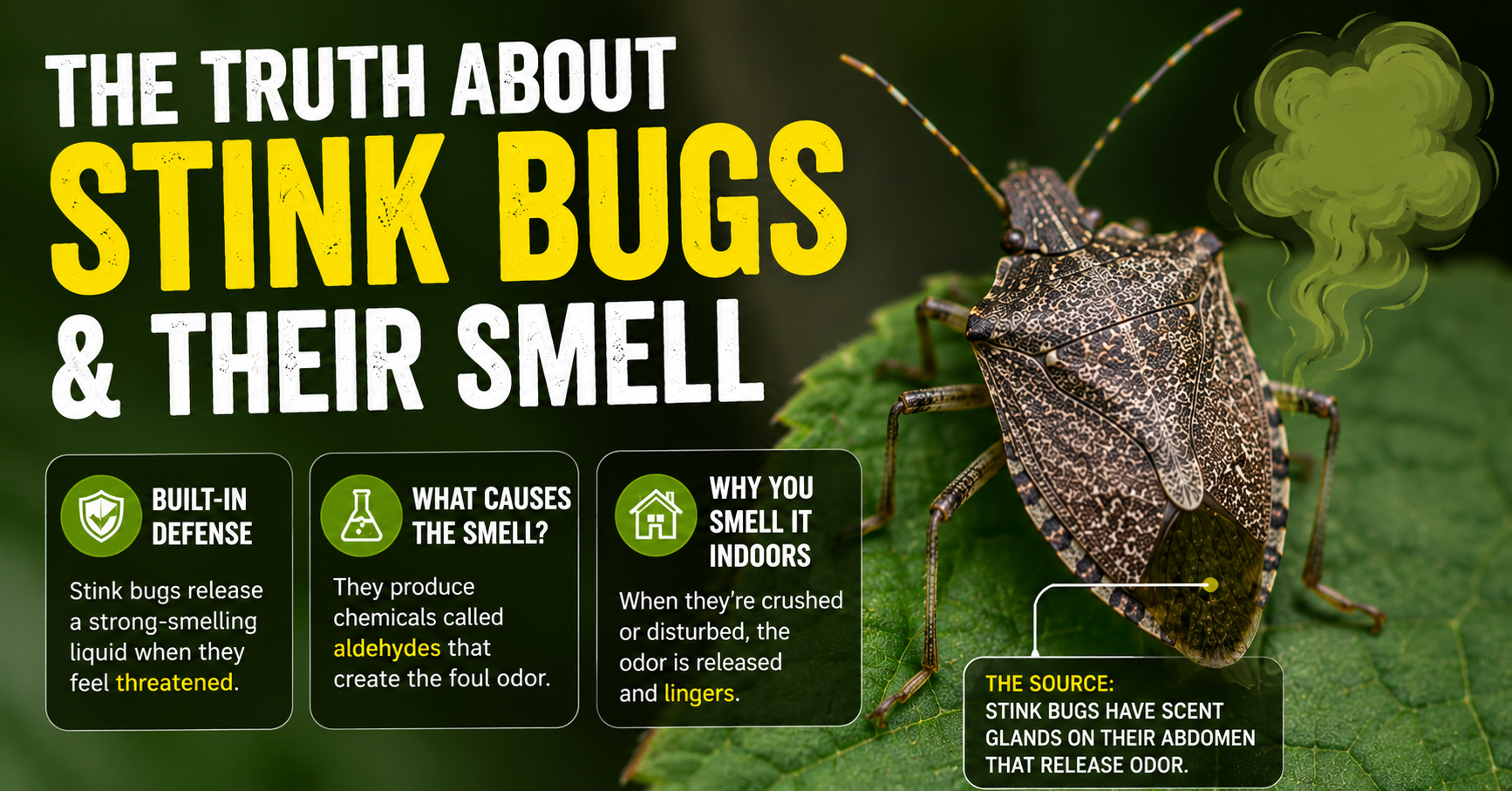
A stink bug does not constantly release this odor. One sitting quietly on a wall may produce no noticeable smell at all. The odor is much more likely to appear if someone grabs, frightens, or crushes it.
This is why smashing a stink bug inside the house is usually a bad idea. Catching it gently or vacuuming it up avoids creating a difficult smell on a wall, curtain, piece of furniture, or carpet.


Are All Stink Bugs Brown?
Stink bugs come in several colors. Brown may be the color most commonly associated with them, especially inside homes, but it is not the only possibility.
Depending on the species, a stink bug may be:
- Mottled brown
- Bright green
- Grayish brown
- Dark brown or nearly black
- Brown with red, orange, yellow, or cream markings
- Green with colored borders
Color alone is not enough to identify a stink bug species. Several unrelated insects are also brown or green and may have a somewhat similar body shape.
I look at the antennae, legs, shoulders, abdomen edges, and overall markings before deciding which species I have found.
The Brown Marmorated Stink Bug
The brown marmorated stink bug is one of the most frequently encountered stink bugs around American homes. It is an invasive species originally from Asia and is now established across much of the United States.
An adult brown marmorated stink bug is mottled brown and approximately the size of a dime. The word marmorated refers to its marbled or mottled pattern.
The best features to look for are alternating light and dark bands along the exposed edges of the abdomen and pale bands on the antennae. Its shoulders are generally smooth and rounded rather than sharply pointed.
Brown marmorated stink bugs feed on a wide variety of plants. They are also the stink bugs most likely to gather on buildings and enter houses during fall.
They do not enter because they want to eat food from your kitchen. They are searching for a protected place to remain during cold weather.


Green Stink Bugs
Green stink bugs are typically bright green as adults, although their exact coloring and markings vary. Their shield-shaped bodies make them fairly easy to recognize when viewed from above.
Several species may be described as green stink bugs. This is one reason I avoid identifying a species based only on a quick look at its color.
Green stink bugs usually remain outdoors and feed on plants. They can damage fruit, seeds, beans, vegetables, and other crops with their piercing mouthparts.
They may occasionally land on a house or wander indoors, but they are not as strongly associated with large fall home invasions as brown marmorated stink bugs.
Brown Stink Bugs
The brown stink bug is a native species found in much of North America. It should not automatically be confused with the invasive brown marmorated stink bug.
A typical brown stink bug has a dull brown or yellowish-brown body. Its overall appearance is less marbled, and it does not have the same combination of pale antenna bands and alternating abdominal markings found on the brown marmorated species.
Both can feed on crops and garden plants. Correct identification matters because their distribution, seasonal behavior, and importance as agricultural pests can differ.

Some Stink Bugs Are Beneficial Predators
Not every stink bug is a plant pest. Predatory stink bugs hunt caterpillars, beetle larvae, and other insects.
The spined soldier bug is one of the better-known beneficial species. It has pointed shoulders and a dark marking on the clear tips of its wings.
A predatory stink bug uses its piercing mouthpart to feed on other insects rather than relying mainly on plant juices. These species can help reduce populations of garden pests.
This is why I do not recommend killing every shield-shaped insect found on a plant. Identifying it first can prevent the accidental removal of a helpful predator.
Are Stink Bugs Beetles?
Stink bugs are not beetles. They belong to an insect group known as true bugs.
Beetles have hardened front wings that meet in a straight line down the back. A stink bug’s front wings overlap and have both leathery and membranous sections.
Stink bugs also have a straw-like mouthpart designed for piercing and sucking. Beetles have chewing mouthparts.
Calling every small hard-bodied insect a beetle is an easy mistake, but their feeding behavior and life cycles can be very different.


What Do Stink Bugs Eat?
Most of the stink bugs that cause problems in gardens feed on plants. They insert a thin mouthpart into plant tissue and remove fluids.
Depending on the species, stink bugs may feed on:
- Tomatoes
- Peppers
- Beans
- Corn
- Soybeans
- Apples
- Peaches
- Pears
- Cherries
- Grapes
- Berries
- Seeds and developing pods
- Ornamental plants
- Weeds
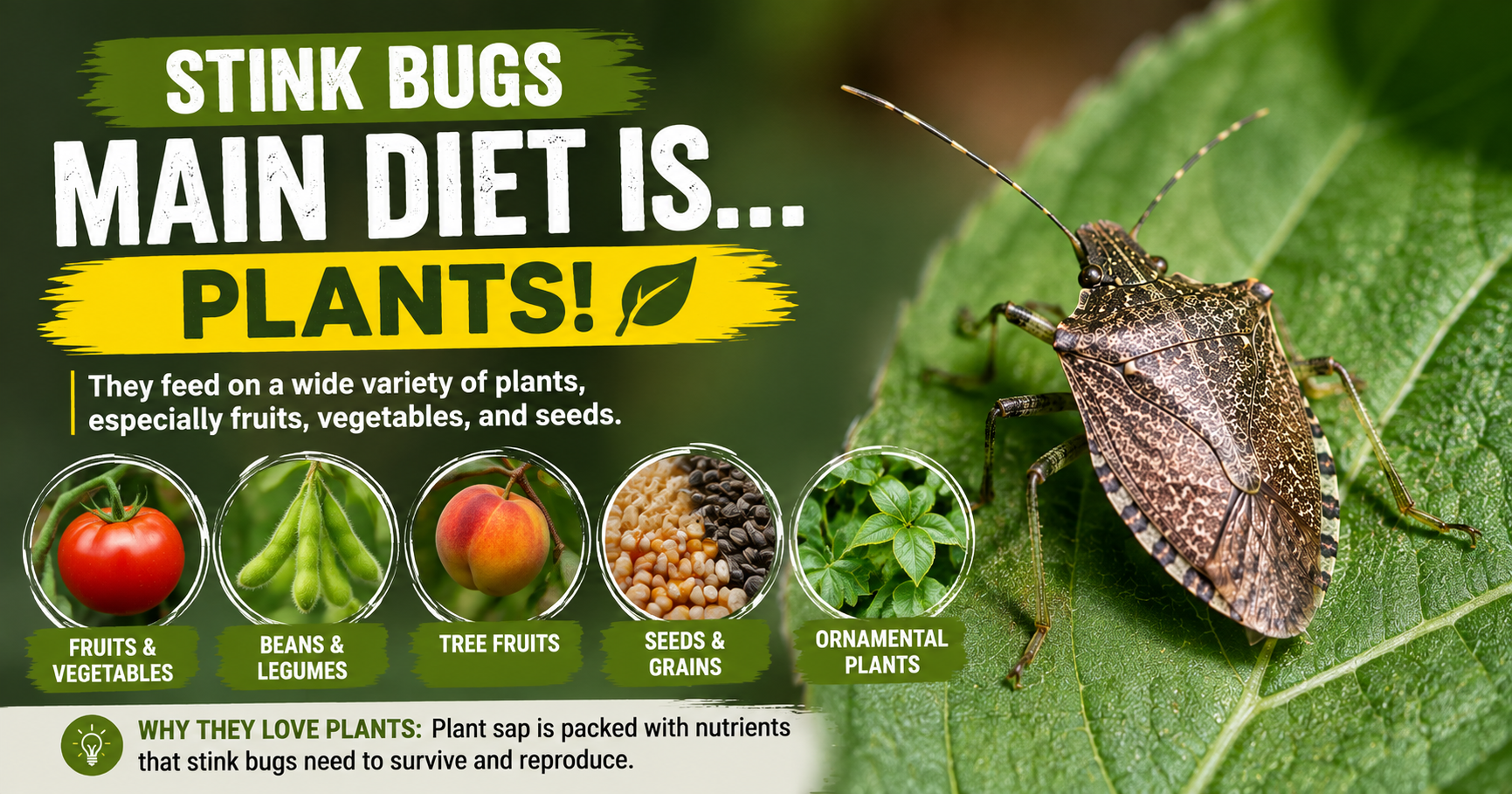
Brown marmorated stink bugs are especially flexible feeders and can use a large number of host plants. Both adults and nymphs may damage crops. A detailed breakdown of the broad range of plants stink bugs eat can help explain which crops may be at risk.
Predatory stink bug species have a different diet. They may feed on caterpillars, beetle larvae, sawfly larvae, and other soft-bodied insects.
How Do Stink Bugs Damage Plants?
A plant-feeding stink bug pushes its mouthpart through the surface of a leaf, stem, seed, pod, or fruit. It then removes fluids from the tissue.
The feeding injury may produce:
- Small pale or cloudy spots
- Tiny puncture marks
- Discolored areas
- Dimpled or sunken sections
- Misshapen fruit
- Corky or white tissue under the skin
- Shriveled seeds and kernels
- Unevenly ripened fruit
- Scarring or pitting
The amount of damage depends on the stink bug species, the number of insects, the crop, and the stage of fruit development when feeding occurs.
A few stink bugs passing through a garden may cause little noticeable harm. A larger population feeding repeatedly can seriously reduce fruit quality.

What Does Stink Bug Damage Look Like on Tomatoes?
Stink bug damage on tomatoes often appears as pale yellow, white, or cloudy spots beneath the skin. The damaged area may feel slightly firm or have a corky texture when the tomato is cut open.
Some affected tomatoes develop small pinprick marks at the feeding sites. Others ripen unevenly or have faded areas that remain lighter than the surrounding fruit.
The damage can be easy to confuse with sunscald, cloudy spot, disease, or uneven ripening. Finding stink bugs, nymphs, or egg clusters on nearby leaves makes stink bug feeding more likely.
A damaged tomato is not necessarily rotten. Light feeding may only affect its appearance and texture, while severe feeding can make larger sections tough, dry, or unpleasant to eat.
We will cover tomato damage closely in its own article because it is one of the most useful stink bug topics for gardeners.
Why Do Stink Bugs Come Inside Houses?
Stink bugs usually enter houses because they are looking for protected winter shelter.
As the days shorten and temperatures begin dropping in late summer and fall, adult brown marmorated stink bugs start gathering on sunny exterior walls. Light-colored buildings and warm south-facing or west-facing walls may attract especially noticeable numbers.
The insects can enter through surprisingly small openings around:
- Windows
- Doors
- Utility lines
- Siding
- Roof edges
- Soffits
- Fascia boards
- Chimneys
- Foundation gaps
- Window air conditioners
- Damaged screens
- Attic and crawlspace vents
Once inside, they settle into wall voids, attics, cracks, and other protected spaces. This overwintering behavior is similar to hibernation, although diapause is the more accurate biological term.
A stink bug found indoors during winter is not normally searching for food or trying to reproduce. Warm indoor air may have simply caused it to become active and emerge from its hiding place.
Do Stink Bugs Infest Houses?
Stink bugs can enter a house in large numbers, but they do not create a typical indoor infestation.
They do not eat wood, drywall, clothing, carpet, or stored food. They also do not lay eggs and establish reproducing populations inside ordinary homes.
The adults that enter during fall are using the building as winter shelter. They generally remain hidden until warmer conditions cause them to become active.
This distinction matters. Seeing repeated stink bugs indoors can be frustrating, but it does not mean they are multiplying somewhere behind the wall.
The long-term solution is finding and sealing exterior entry points. Spraying the visible insects inside does not close the openings that allowed them to enter.
Why Do Stink Bugs Appear Indoors During Winter?
Stink bugs may remain hidden for weeks or months after entering a building. They can suddenly emerge when sunlight warms a wall or indoor heating raises the temperature around their hiding place.
Once active, they often move toward windows, ceilings, lamps, and other bright areas. This can make it seem as if they recently entered, even though they may have been inside since fall.
A stretch of warm winter weather can also bring several out at once. When temperatures drop again, the remaining stink bugs may become inactive.
Their appearance is annoying, but it does not indicate that they are feeding or breeding indoors.
Can Stink Bugs Fly?
Adult stink bugs can fly. Their wings are folded flat over their backs when not in use, which can make the wings difficult to notice.
When a stink bug takes off, it may produce a loud buzzing sound. Its flight can appear slow, awkward, and poorly controlled, especially inside a house.
This clumsy flight is one reason stink bugs may bump into walls, windows, people, and furniture. They are not intentionally flying toward someone to attack.
Baby stink bugs, called nymphs, cannot fly because their wings are not fully developed. Functional wings appear only when the insect becomes an adult.
Do Stink Bugs Bite People?
Common plant-feeding stink bugs do not normally bite people or pets. They are not blood-feeding insects and have no reason to seek out a person.
Their piercing mouthparts are made for feeding on plants. A stink bug may release its odor or move its legs defensively when handled, but biting is not its usual response.
There are other true bugs with somewhat similar body shapes that can bite or jab when handled. Assassin bugs and wheel bugs are examples, which is another reason accurate identification is important.
If an insect caused an obviously painful bite, I would not assume it was a common brown marmorated stink bug based only on its brown color.
Are Stink Bugs Dangerous?
Stink bugs are not considered dangerous to people or pets. They are not venomous, do not have stingers, and are not known for transmitting diseases to people.
Their main indoor problems are nuisance numbers, buzzing flight, droppings, and odor when disturbed.
Some people may be sensitive to material released by stink bugs. Direct contact with their defensive secretions may irritate the skin or eyes, and indoor accumulations may bother people with certain allergies.
It is still a good idea to wash your hands after handling one and avoid touching your eyes. This is a basic precaution rather than evidence that stink bugs are seriously poisonous.
Stink bugs are much more threatening to certain plants and crops than they are to people.
Are Stink Bugs Poisonous to Dogs and Cats?
A dog or cat may chase, mouth, or eat a stink bug. The insect’s unpleasant taste and defensive chemicals can cause drooling, gagging, vomiting, or mouth irritation.
Stink bugs are not generally considered dangerously poisonous to pets, but eating several could lead to more noticeable stomach upset.
I would offer water, remove any remaining insects, and watch the pet for persistent vomiting, trouble breathing, unusual weakness, or severe discomfort. A veterinarian should be contacted if symptoms are significant or do not improve.
The odor itself is usually more offensive than medically dangerous.
What Do Stink Bug Eggs Look Like?
Stink bug eggs are small and shaped somewhat like tiny barrels or cups. They are commonly arranged in tight clusters on the undersides of leaves.
Depending on the species and age of the eggs, they may appear:
- Pale green
- Cream-colored
- White
- Yellowish
- Gray
- Darker shortly before hatching
Brown marmorated stink bugs often lay approximately 20 to 30 eggs in a cluster. Other stink bug species may produce clusters of different sizes.
The orderly arrangement is one useful clue. A cluster often resembles a group of miniature beads or barrels placed side by side.
Egg identification deserves its own article because beneficial and plant-damaging stink bugs can lay similar-looking eggs.
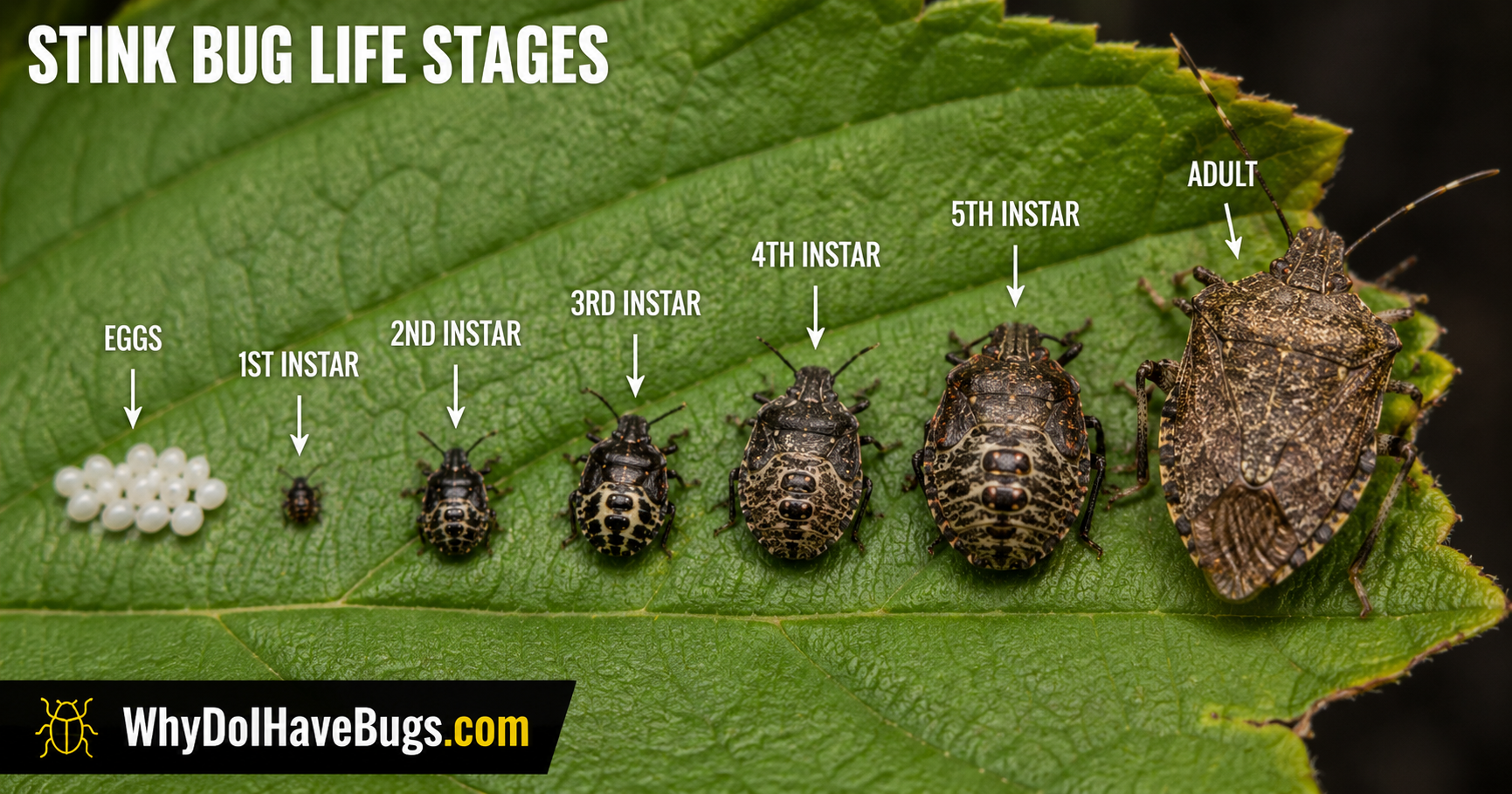
What Do Baby Stink Bugs Look Like?
A baby stink bug is called a nymph. It has six legs and a rounded body but does not yet have fully developed wings.
Young nymphs do not always resemble the brown or green adults people recognize. Some are brightly marked with red, orange, black, yellow, or white.
Newly hatched brown marmorated stink bug nymphs have reddish or yellowish coloring with dark markings and red eyes. Older nymphs become darker and develop stronger black and white markings on their legs and antennae.
A nymph grows through several stages, shedding its outer covering between each one. Its developing wing pads become more noticeable as it approaches adulthood.
Groups of tiny nymphs may remain near an egg cluster shortly after hatching. They eventually spread out and begin feeding on nearby plants.
The Stink Bug Life Cycle
Stink bugs go through incomplete metamorphosis. Their development has three primary stages:
- Egg
- Nymph
- Adult
They do not have a caterpillar, grub, cocoon, or pupal stage.
The female lays clusters of eggs on host plants, commonly on leaf undersides. Nymphs hatch from the eggs and pass through several growth stages before becoming winged adults.
The number of generations produced each year depends on the stink bug species and climate. Cooler regions may have one generation or a partial second generation, while warmer areas can support additional generations.
Adult brown marmorated stink bugs are the stage that normally enters homes to spend the winter.
How Long Do Stink Bugs Live?
A stink bug’s lifespan depends on its species, climate, food availability, and whether it survives predators and winter conditions.
Many stink bugs complete their development within one growing season. Adults produced later in the year may survive through winter in protected locations and become active again during spring.
An individual brown marmorated stink bug may live for several months. The adults emerging from winter shelter feed, mate, and lay eggs that begin the next generation.
The stink bugs inside a house are not necessarily new insects. Some may have been hidden in the structure for much of fall and winter.
Where Do Stink Bugs Live Outside?
Stink bugs spend the active season on plants and in areas where food is available.
They may be found in:
- Vegetable gardens
- Tomato patches
- Orchards
- Crop fields
- Flower beds
- Shrubs
- Weedy areas
- Wooded edges
- Fruit trees
- Ornamental trees and plants
Their exact habitat depends on the species. Plant-feeding stink bugs gather around suitable host plants, while predatory species go where they can find insect prey.
During fall, overwintering adults may leave these feeding areas and gather on buildings, tree bark, dead vegetation, and other protected surfaces.
What Attracts Stink Bugs?
Stink bugs are attracted to different things at different times of the year.
During spring and summer, plant-feeding species are drawn to suitable food. Fruit, developing seeds, vegetables, weeds, and certain ornamental plants may all support them.
During fall, brown marmorated stink bugs respond to seasonal changes and seek sheltered overwintering sites. Warm exterior walls and small openings into buildings make some homes especially vulnerable.
Outdoor lights may also attract flying stink bugs, although light is not the only reason they gather around a building.
A house does not have to be dirty to have stink bugs. Their presence is connected to outdoor populations, nearby vegetation, seasonal behavior, and available entry points.
Do Stink Bugs Have Natural Predators?
Stink bugs are eaten by several animals and other insects despite their defensive odor.
Potential predators and natural enemies include:
- Birds
- Spiders
- Praying mantises
- Assassin bugs
- Predatory beetles
- Parasitic wasps
- Some flies
- Reptiles and amphibians
Tiny parasitoid wasps can attack stink bug eggs. The wasp lays its own eggs inside the stink bug eggs, preventing the stink bug nymphs from developing normally.
These natural enemies help reduce stink bug populations, although they may not eliminate heavy numbers by themselves.
Broad insecticide spraying can kill helpful predators and parasitoids along with stink bugs. This can make long-term garden pest management more difficult.
Stink Bug Versus Squash Bug
Squash bugs are frequently mistaken for stink bugs. Both are true bugs, but they belong to different insect families and have different body shapes.
A squash bug is usually longer and narrower than a stink bug. It has a flatter, more elongated body rather than the broad shield shape.
Squash bugs are strongly associated with squash, pumpkins, and related plants. They often hide near the base of the plant and may gather beneath leaves or garden debris.
Their eggs also look different. Squash bug eggs are usually coppery brown and commonly placed in groups along leaf veins.
Stink Bug Versus Leaf-Footed Bug
Leaf-footed bugs have longer, narrower bodies than stink bugs. Many adults also have flattened or widened sections on their hind legs that resemble small leaves.
Both insects use piercing mouthparts to feed on plants and can cause similar damage to tomatoes and other fruit.
When I see a long-legged insect on a tomato, I check the hind legs and body width. A broad shield-shaped body points toward a stink bug, while an elongated body with expanded hind legs suggests a leaf-footed bug.
Young leaf-footed bugs may not yet have the obvious widened legs, which can make nymph identification more challenging.
Stink Bug Versus Assassin Bug
Assassin bugs are predators with narrow heads and strong piercing mouthparts used to capture insects. Some species have a broad shape that may cause confusion with stink bugs.
A wheel bug is a large assassin bug with a distinctive gear-shaped crest on its back. It can deliver a painful defensive bite if handled.
Predatory stink bugs generally retain the broad shield-shaped appearance. Assassin bugs tend to have more visible necks, narrower heads, and differently shaped front bodies.
I would avoid picking up an unidentified true bug with bare hands. A close photograph is safer and often more useful for identification.
Should You Kill Stink Bugs Outside?
I would not kill every stink bug I notice outdoors. A single plant-feeding stink bug may cause little damage, and the insect could be a beneficial predatory species.
The first step is identifying the bug and checking the plants for actual injury, eggs, and nymphs.
Control becomes more reasonable when damaging stink bugs are repeatedly feeding on vegetables or fruit. Hand removal, egg removal, physical barriers, weed management, and targeted treatments can all play a role.
The correct approach depends on the plant, stink bug species, and severity of the problem. Treating an entire garden because of one insect is rarely necessary.
What Should You Do With a Stink Bug Inside?
Avoid smashing it. Crushing a stink bug can release its odor and leave a stain or smell on the surface.
For one or two stink bugs, I usually place a cup over the insect, slide a stiff piece of paper underneath, and remove it. It can then be released well away from the house or dropped into soapy water if removal is necessary.
A vacuum can handle larger numbers, but the odor may remain inside the vacuum or collection chamber. Using a disposable bag or a dedicated shop vacuum can make cleanup easier.
Indoor bug sprays may kill exposed stink bugs, but they do not stop others from emerging from walls or entering through exterior gaps. Sealing the building is the more dependable long-term strategy.
Frequently Asked Questions
What is a stink bug?
A stink bug is a shield-shaped true bug with specialized scent glands that release an unpleasant odor when the insect feels threatened. Many species feed on plants, while some are predators of other insects.
Why did I suddenly find a stink bug in my house?
The stink bug may have entered during fall and remained hidden inside a wall, attic, or crack. Indoor heat or sunlight can cause it to become active and appear during winter.
Does one stink bug mean there are more?
Not always. One may have entered accidentally. However, brown marmorated stink bugs sometimes enter buildings in groups, so additional insects may be hidden nearby.
Do stink bugs reproduce indoors?
The stink bugs that overwinter in homes do not normally reproduce there. They use the structure as shelter and begin their reproductive activity after returning outdoors.
Will stink bugs damage my house?
Stink bugs do not eat wood, insulation, drywall, carpet, or clothing. They can create odor, spots, and general annoyance, but they do not cause structural damage.
Are stink bugs harmful to gardens?
Plant-feeding stink bugs can damage tomatoes, peppers, beans, fruit, seeds, and other crops. The seriousness of the damage depends on the species and number of bugs present.
Are there good stink bugs?
Yes. Predatory stink bugs feed on caterpillars and other plant pests. The spined soldier bug is one example of a beneficial stink bug that gardeners may want to leave alone.
What month do stink bugs come inside?
Indoor invasions commonly begin during late summer and fall as adults search for protected winter shelter. The timing varies with local temperatures and climate.
Why should I not crush a stink bug?
Crushing it can trigger the release of a strong defensive odor. The smell may linger on skin, furniture, walls, carpeting, or inside a vacuum.
Can stink bugs fly toward people?
Adult stink bugs can fly and may accidentally bump into people indoors. Their flight can be clumsy, but they are not chasing or trying to attack anyone.
Caleb Warren is a longtime gardener and backyard insect researcher who writes practical identification guides for WhyDoIHaveBugs.com, helping homeowners understand the insects they find before deciding whether any action is needed.