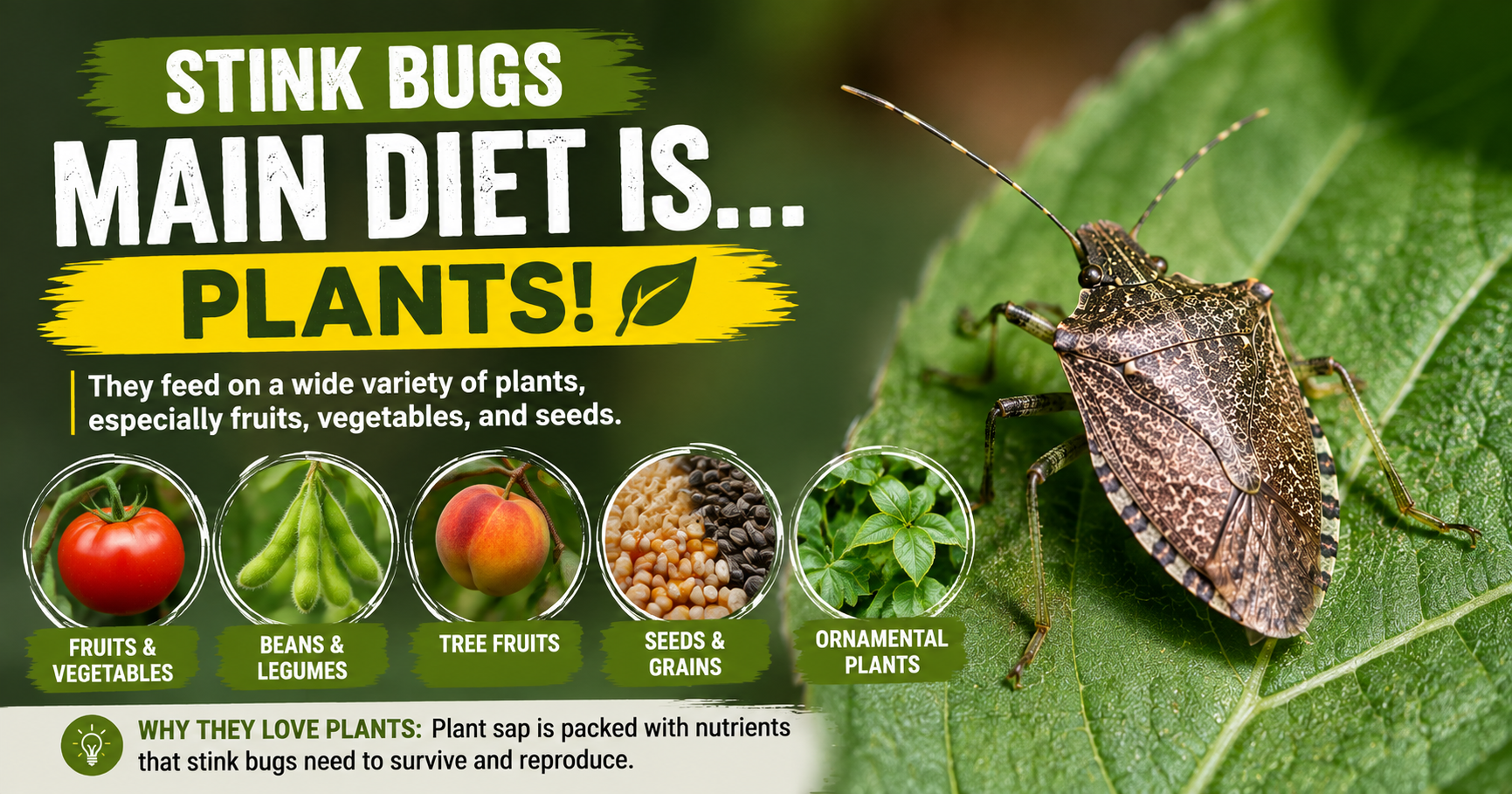
Most stink bugs eat plants. They use a straw-like mouthpart to pierce fruit, vegetables, leaves, pods, seeds, and stems, then pull juices from the plant tissue.
The brown marmorated stink bug, the species that commonly enters houses in fall, feeds on more than 200 plant species. Tomatoes, peppers, beans, apples, peaches, corn, grapes, and soybeans are all on its long menu.
Not every stink bug is a plant eater, though. Some species are predators that hunt caterpillars and other garden insects. That is why I always look closely before killing every shield-shaped bug in a garden.
What Do Brown Marmorated Stink Bugs Eat?
Brown marmorated stink bugs are broad generalist feeders. They can use many different plants as food instead of depending on only one crop.
They feed on fruit trees, vegetables, field crops, ornamental plants, weeds, shrubs, and some shade trees.
Their most common foods include:
- Tomatoes
- Peppers
- Beans
- Corn
- Soybeans
- Apples
- Peaches
- Pears
- Cherries
- Grapes
- Raspberries and other berries
- Eggplant
- Sweet corn
- Lima beans
- Ornamental plants
- Various weeds
Both nymphs and adults feed on plants. A small immature stink bug can damage a plant just as an adult can, although the type and amount of damage depends on the crop and number of insects present.
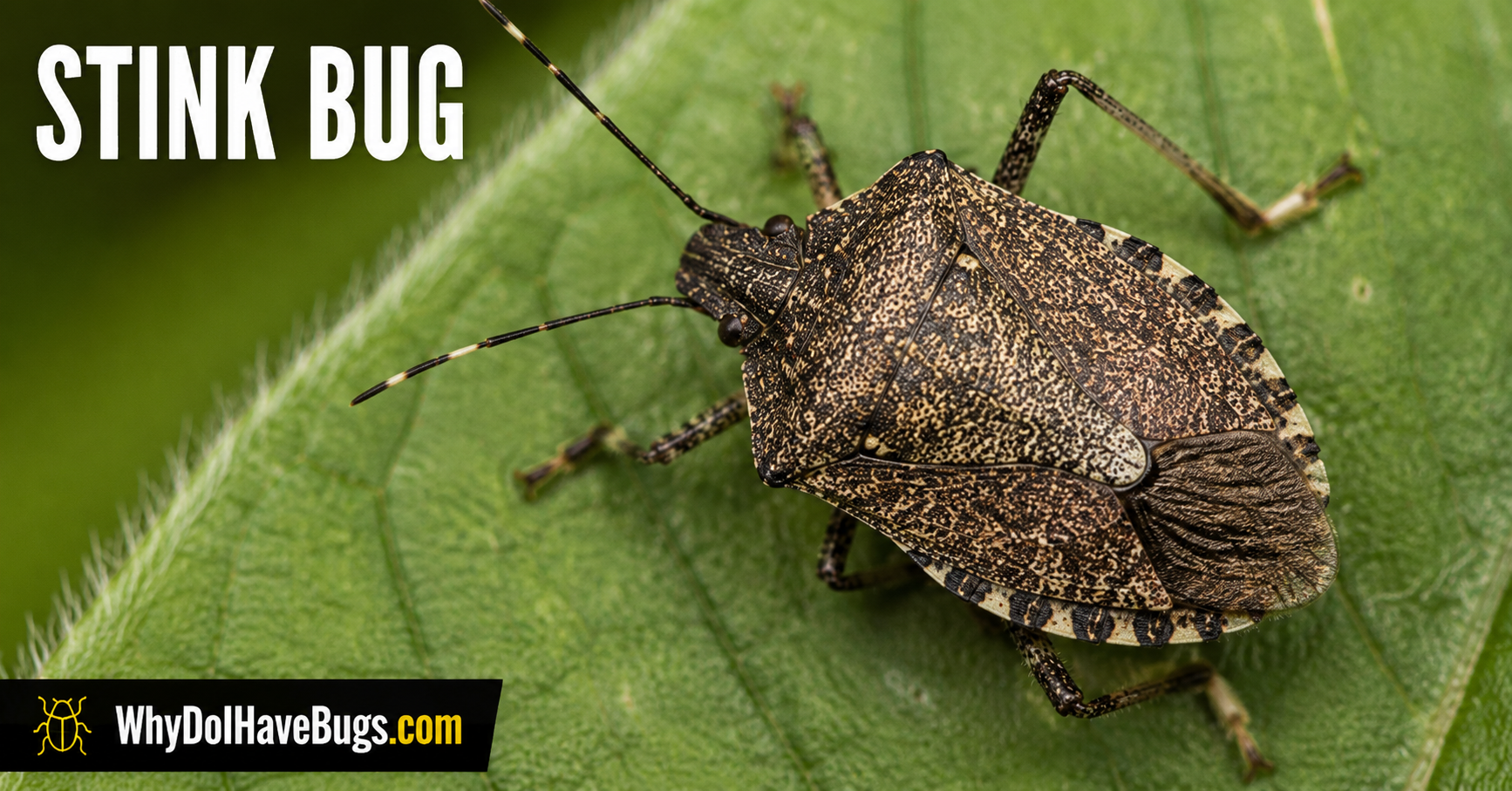
The brown marmorated stink bug is the species most likely to become a major nuisance around houses. If you are unsure whether that is what you found, use my easy guide to identifying a stink bug before deciding whether it is a plant pest or a beneficial species.
How Do Stink Bugs Eat?
Stink bugs do not chew holes in leaves the way caterpillars, beetles, and grasshoppers do.
Instead, they use a pointed beak-like mouthpart called a rostrum. The rostrum functions like a thin drinking straw.
The insect pushes the mouthpart into plant tissue, releases digestive material, and draws out fluids. The feeding site may be nearly invisible at first.
As the damaged tissue develops, it may turn pale, hard, misshapen, sunken, corky, or discolored.
This feeding method explains why people can find a tomato that looks mostly normal from the outside but has firm white patches or damaged tissue under the skin.


Do Stink Bugs Eat Tomatoes?
Yes. Brown marmorated stink bugs and several native plant-feeding stink bug species can feed on tomatoes.
They may feed on green tomatoes, ripening tomatoes, and fully colored fruit. Damage often appears as pale, cloudy, yellowish, or whitish areas beneath the skin.
A tomato may also develop:
- Tiny puncture marks
- Uneven ripening
- Dimpled sections
- Corky white tissue
- Hard spots below the skin
- Misshapen fruit
- Faded or blotchy color
A few feeding marks may be mostly cosmetic. Heavy feeding can make tomatoes unpleasant to eat or unsuitable for sale.
I will cover the damage patterns in detail in our upcoming article about what stink bug damage looks like on tomatoes. That page will help gardeners separate stink bug feeding from sunscald, disease, catfacing, and other tomato problems.
Do Stink Bugs Eat Peppers?
Stink bugs can feed on sweet and hot peppers.
Their mouthparts pierce the pepper skin and remove fluids from the tissue inside. A damaged pepper may develop soft spots, sunken areas, discoloration, or uneven ripening.
Young peppers may become misshapen as they continue developing around a feeding injury.
The damage can create an opening that makes the fruit more vulnerable to rot-causing organisms. This does not mean the stink bug itself is spreading a disease, but the injured tissue may be less protected.


Do Stink Bugs Eat Beans?
Stink bugs can feed on bean leaves, pods, and developing seeds.
Damage to bean pods may be hard to see from the outside. Inside, the seeds may become shriveled, discolored, distorted, or underdeveloped.
Lima beans, snap beans, soybeans, and other legumes can all be affected by different stink bug species.
A few insects may not cause enough injury to justify treatment. Repeated feeding across several plants is more concerning, especially when pods are forming.
Do Stink Bugs Eat Corn?
Stink bugs can feed on corn, particularly developing kernels.
They may pierce kernels through the husk and remove plant fluids. The result can be shriveled kernels, poor seed development, or discolored areas.
In field corn and sweet corn, stink bug injury may be difficult to notice until the husk is pulled back.
Brown marmorated stink bugs are one of several insects that can affect corn, so the presence of poor kernels alone does not prove they are responsible.


Do Stink Bugs Eat Apples and Other Fruit?
Stink bugs can cause serious problems in apples, peaches, pears, cherries, grapes, and other fruit crops.
Their feeding may leave pitting, dimples, scarring, hard spots, discolored areas, or misshapen fruit. Injury can become more noticeable as the fruit grows.
An apple or peach can look fine at first but develop a depressed area or internal damage later.
Fruit growers are especially concerned about brown marmorated stink bugs because the insects can feed on many crops throughout the growing season. When one food source becomes less available, they may move to another nearby crop.
Do Stink Bugs Eat Grapes?
Stink bugs can feed on grapes, especially as berries begin to soften and ripen.
Their feeding can damage berries directly and may make the injured tissue more vulnerable to late-season rot.
Stink bugs in harvested grape clusters can also create flavor and odor problems in juice or wine because of their strong defensive chemicals.
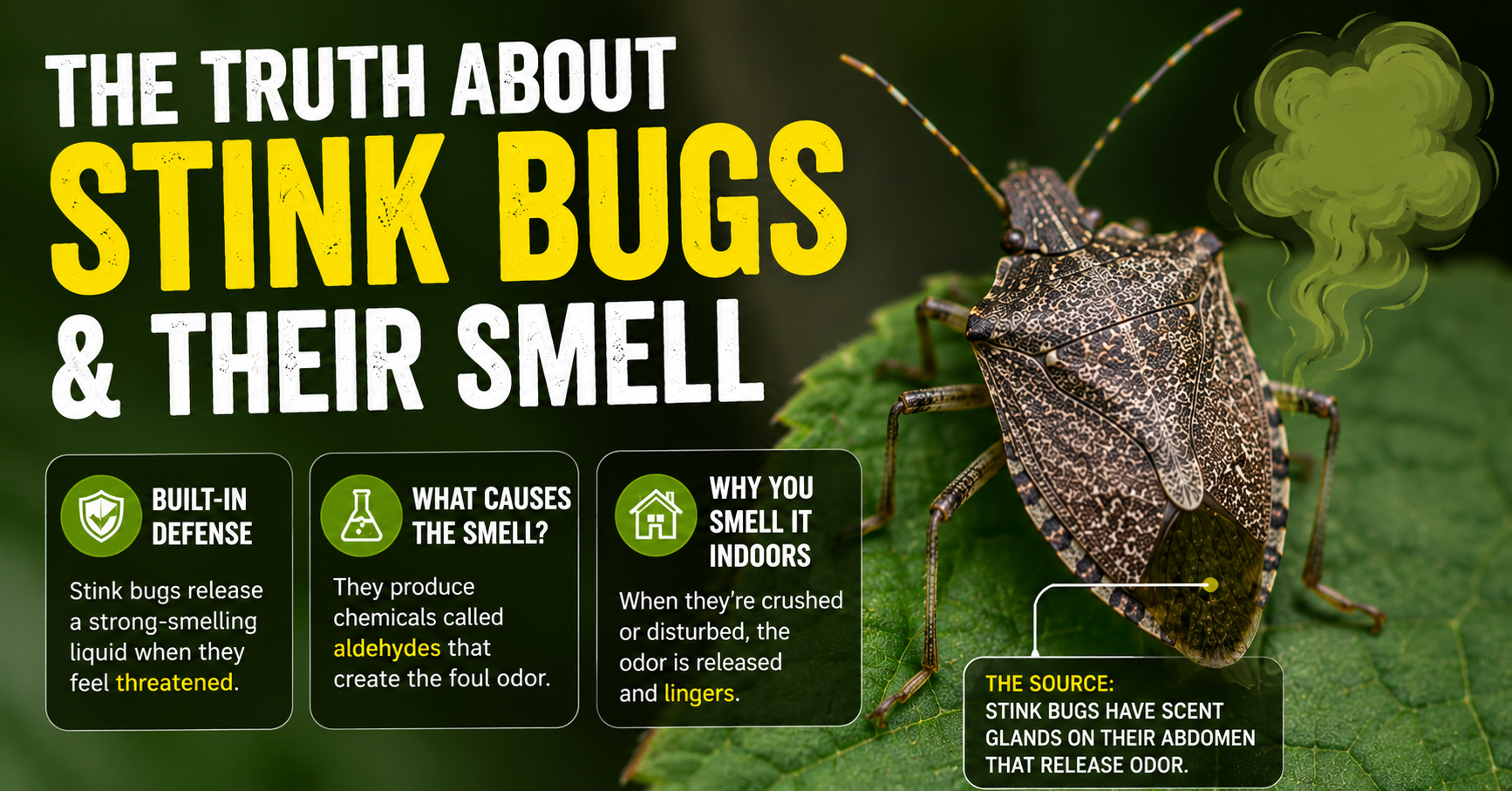
This is one reason their smell is more than a simple household annoyance. My guide to why stink bugs smell so strongexplains how those defensive chemicals work and why crushing them creates such a noticeable odor.

Do Stink Bugs Eat Leaves?
Yes. Stink bugs may feed on leaves as well as fruit and seeds.
Leaf feeding can create small pale, stippled, or yellowed spots. The spots may be subtle and are sometimes mistaken for disease, mite feeding, or nutrient stress.
Serious leaf damage is less common than fruit injury on many garden plants. However, heavy feeding can reduce the plant’s ability to make energy and may weaken new growth.
Inspect both sides of the leaves for adults, nymphs, eggs, and other signs before assuming a stink bug is responsible.
Do Stink Bugs Eat Flowers?
Plant-feeding stink bugs may feed on flower buds and blossoms.
Damage to buds can sometimes lead to bud drop, poor fruit set, or oddly shaped fruit. This is especially frustrating on fruiting vegetables and ornamental plants.
A stink bug may also simply rest on a flower without feeding. Its presence does not always mean damage is occurring.
Predatory stink bugs may visit flowers to hunt insects. Those species should generally be left alone when possible.

Do Stink Bugs Eat Weeds?
Yes. Weeds can provide stink bugs with food and shelter throughout the growing season.
This is one reason stink bugs may be found along field borders, fencerows, wooded edges, overgrown gardens, and unmanaged patches of vegetation.
Weeds do not cause every stink bug problem, and removing every wild plant from a property is neither realistic nor necessary. Still, reducing thick weed growth directly around a vegetable garden can make monitoring easier and remove some nearby host plants.
Good garden sanitation also makes it easier to notice eggs and nymphs before a large population develops.
Do Stink Bugs Eat Houseplants?
A plant-feeding stink bug can feed on a houseplant if it is active indoors and finds a suitable plant.
This is not usually its main reason for entering a house. Brown marmorated stink bugs move indoors for protected winter shelter, not because they are searching for houseplants.
One active insect is unlikely to destroy a healthy houseplant. Repeated feeding may leave pale spots, damaged leaves, or small discolored areas.

Remove the bug gently, check the plant for other insects, and inspect windows, screens, and nearby gaps where it may have entered. A safe catch-and-release bug catcher can make gentle removal easier when you find one indoors.
Do Stink Bugs Eat Pantry Food?
Stink bugs do not normally eat pantry food.
They are not pantry pests like Indianmeal moths, flour beetles, grain weevils, or certain stored-product beetles. They do not infest flour, cereal, rice, pasta, pet food, or other dry goods.
A stink bug may accidentally land on a counter or crawl near a food container, but it is not living in the pantry because it found something to eat.
The adults found indoors during winter are generally living off stored energy while they wait for warmer weather. They are not searching through cabinets for food.
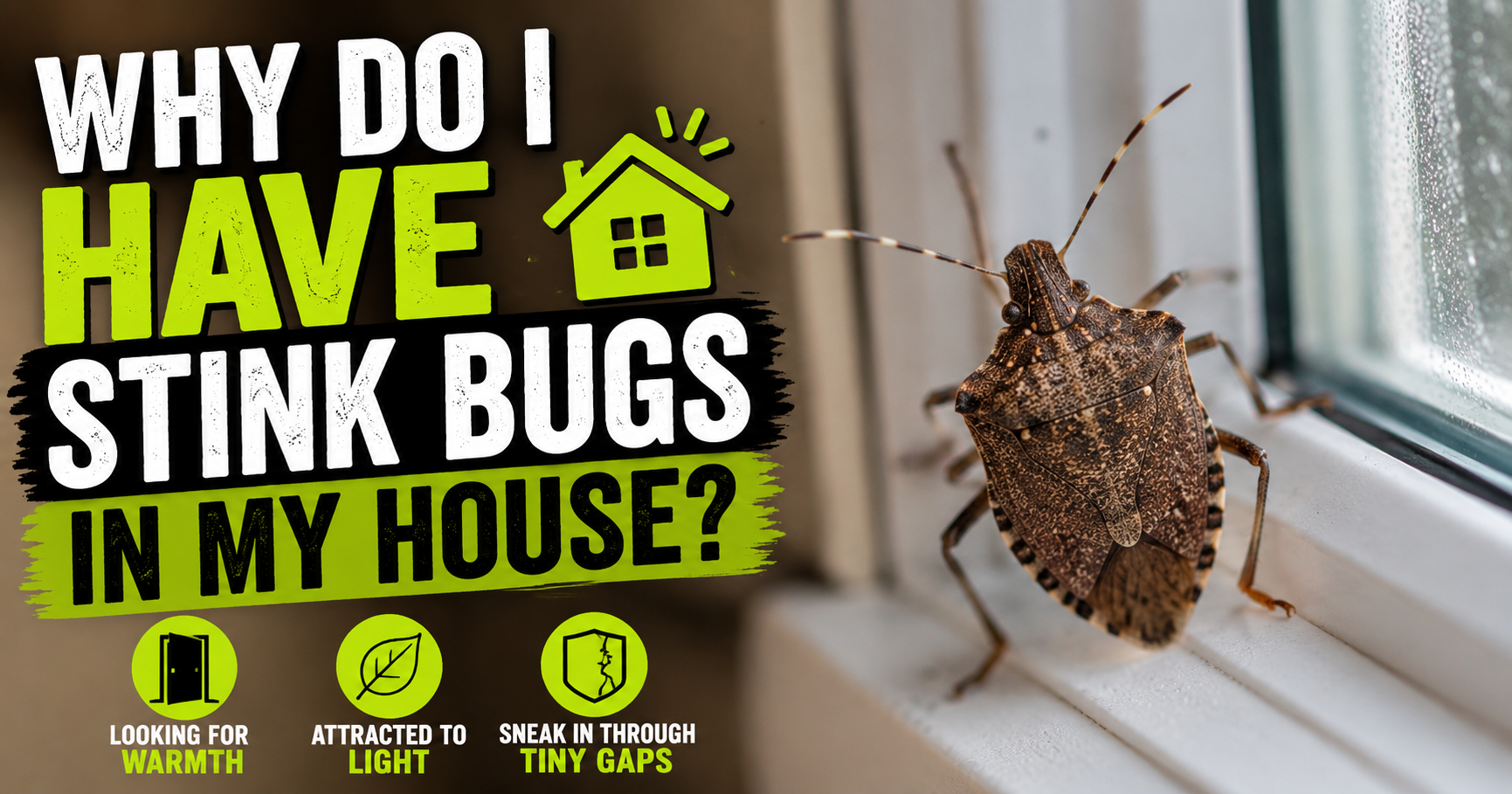
The reason stink bugs are inside your house has much more to do with shelter and exterior gaps than kitchen cleanliness.
Do Stink Bugs Eat Wood, Paper, or Clothing?
Stink bugs do not eat wood, paper, drywall, insulation, clothing, carpet, or furniture.
They do not cause structural damage and are not fabric pests.
A stink bug can leave an odor or spot if it is crushed on upholstery, curtains, bedding, or walls. That is a nuisance problem, not feeding damage.
If clothing, fabric, wood, or stored paper is being damaged, another pest is more likely responsible.
Do Stink Bugs Eat Other Bugs?
Some stink bugs do.
Most of the stink bugs homeowners see on tomatoes and fruit are plant feeders, but predatory stink bugs hunt other insects.
These beneficial stink bugs may eat:
- Caterpillars
- Beetle larvae
- Sawfly larvae
- Armyworms
- Cutworms
- Colorado potato beetle larvae
- Other soft-bodied garden pests
- Small insects and eggs
The spined soldier bug is a familiar predatory stink bug. It has a shield-shaped body like other stink bugs but has pointed shoulders and a stronger beak for catching prey.
A predatory stink bug may spend time on tomatoes, flowers, beans, or other plants because it is hunting insects there, not feeding on the plant itself.
Are All Stink Bugs Bad for Gardens?
No. Some stink bugs can be useful natural predators.
The problem is that a beneficial predatory stink bug can look similar to a damaging plant-feeding species.
I would inspect the insect before treating it. Plant-feeding species often have a more delicate-looking mouthpart and may be found actively feeding on fruit, pods, seeds, or leaves.
Predatory species often have more robust mouthparts, pointier shoulders, and are more likely to be seen carrying or feeding on another insect.
Exact identification can be difficult, so a clear close-up photo is useful when you are unsure.
Do Stink Bugs Eat Aphids?
Predatory stink bugs may eat aphids, but aphids are not the main food for all stink bug species.
A plant-feeding brown marmorated stink bug does not help control aphids. It uses plants as its food source.
Some predatory stink bugs will eat smaller insects when they can catch them. They are general hunters and may take a variety of caterpillars, larvae, and other insects.
This is why it is not accurate to call every stink bug either completely good or completely bad. The species and its behavior matter.
Do Stink Bugs Eat Mosquitoes?
Plant-feeding stink bugs do not eat mosquitoes.
A predatory stink bug might catch a very small flying insect under the right conditions, but mosquitoes are not a dependable or important part of their diet.
Stink bugs should not be considered mosquito control.
Do Stink Bugs Eat Ants?
Most plant-feeding stink bugs do not eat ants.
Predatory stink bugs may occasionally catch a small insect, but ants are not their main food and are often difficult prey because they can defend themselves and recruit others.
If you have an ant problem, do not rely on stink bugs for control.
Do Stink Bugs Eat Bed Bugs?
Stink bugs do not provide dependable bed bug control.
Brown marmorated stink bugs are plant feeders. Predatory stink bugs generally hunt outdoors on vegetation and are not adapted to search inside mattresses, furniture seams, or wall cracks for bed bugs.
A stink bug found in a bedroom is not a natural solution to a bed bug problem.
Do Stink Bugs Eat Spiders?
Most plant-feeding stink bugs do not eat spiders.
Predatory stink bugs may occasionally attack a very small or vulnerable spider, but spiders are not their normal target.
Many spiders are actually capable of catching stink bugs. Their defensive odor may discourage some predators, but it does not make stink bugs invincible.
Do Stink Bugs Eat Each Other?
Cannibalism can occur among some stink bugs, especially where food is limited or one insect is injured and vulnerable.
It is not their main diet and should not be viewed as a useful population-control method in a garden or house.
A large group of brown marmorated stink bugs inside a building is not gathering there to eat each other. They are using the structure as winter shelter.
What Do Baby Stink Bugs Eat?
Baby stink bugs are called nymphs. They generally feed on plants in the same broad way adults do.
Young nymphs may remain near the egg mass briefly after hatching. As they grow, they spread out to feed on leaves, stems, fruit, pods, and seeds.
Nymphs are small, wingless, and often more colorful than adults. They may be black, red, orange, cream, brown, or patterned.
Older nymphs can cause the same kind of crop damage as adults. A garden should be checked for both life stages.
What Do Stink Bugs Drink?
Plant-feeding stink bugs get most of their moisture from the plant fluids they consume.
They do not need to visit a water dish inside the house, and they are not attracted to indoor plumbing in the way moisture-loving pests can be.
They may occasionally drink free water from dew, rain, droplets, or moist surfaces outdoors.
A stink bug near a sink or bathroom is more likely following light, warmth, or an accidental indoor route than searching for water.
What Eats Stink Bugs?
Stink bugs have predators despite their smell.
Animals and insects that may eat them include:
- Birds
- Spiders
- Praying mantises
- Assassin bugs
- Predatory beetles
- Parasitoid wasps
- Frogs
- Toads
- Lizards
- Small mammals
Tiny parasitoid wasps may lay eggs inside stink bug eggs. The developing wasps prevent the stink bug nymphs from growing normally.
Natural predators can help reduce stink bug numbers, though they may not eliminate a serious garden problem by themselves.
Why Do Stink Bugs Move Between Different Plants?
Brown marmorated stink bugs can move between food sources throughout the season.
They may feed on early-season plants, move to fruit trees or garden vegetables as crops develop, then shift again when nearby food is harvested or dies back.
This ability to use so many plants makes them difficult garden pests. Removing one crop does not necessarily remove the stink bugs because they may simply use another host nearby.
Late summer and early fall often bring high stink bug activity as adults and older nymphs feed, move between plants, and begin searching for winter shelter.
Does the Food Stink Bugs Eat Make Them Smell?
Their odor is not simply the smell of whatever plant they last ate.
Stink bugs produce defensive chemicals in specialized glands. The chemical mixture is part of the insect’s natural defense system.
The smell can become more noticeable when a stink bug is disturbed, grabbed, crushed, or vacuumed.
My guide to what causes the stink bug smell explains why even a healthy insect can release such a strong odor.
Should You Remove Stink Bugs From Garden Plants?
It depends on the species, number of insects, crop, and amount of visible damage.
One stink bug on a plant does not always justify treatment. It may be a beneficial predatory species, or it may not be causing enough damage to matter.
I would start by checking several plants for:
- Adults
- Nymphs
- Egg clusters
- Fresh feeding injury
- Damaged fruit
- Discolored seeds or pods
- Repeated activity in one area
Hand removal can be reasonable for a small garden population. More serious problems may require crop-specific control methods that protect pollinators and beneficial insects.
Do not use an insecticide on edible plants unless the product label specifically lists the plant, stink bugs, and the application method you plan to use.
Can You Keep a Stink Bug as a Pet?
A stink bug can survive briefly in a container with suitable plant material, but it is not an especially simple or rewarding pet.
Plant-feeding species need fresh host plants, ventilation, appropriate humidity, and room to move. Predatory species require live insect prey.
Stink bugs may release odor when handled or stressed. They also need separate care based on the species.
A healthy wild stink bug is usually better left outdoors unless it is being kept briefly for identification or educational observation.
Frequently Asked Questions
What is a stink bug’s favorite food?
There is no single favorite food for all stink bugs. Brown marmorated stink bugs feed on many fruits, vegetables, field crops, ornamentals, and weeds.
Do stink bugs eat tomatoes?
Yes. They can puncture tomatoes and cause pale spots, corky tissue, uneven ripening, pitting, and misshapen fruit.
Do stink bugs eat vegetables?
Many plant-feeding stink bugs eat vegetables, including peppers, beans, corn, tomatoes, eggplant, and other crops.
Do stink bugs eat fruit?
Yes. Apples, peaches, pears, cherries, grapes, berries, and other fruit can be damaged by stink bug feeding.
Do stink bugs eat plants in the house?
They may feed on a houseplant if they are active and find one, but houseplants are not why brown marmorated stink bugs enter homes.
Do stink bugs eat pantry food?
No. Stink bugs do not infest cereal, flour, pasta, rice, pet food, or other dry pantry goods.
Do stink bugs eat wood?
No. They do not eat wood, drywall, paper, furniture, or clothing.
Do all stink bugs eat plants?
No. Some stink bugs are predators that eat caterpillars, larvae, and other garden insects.
Do stink bugs eat other insects?
Predatory stink bugs do. Brown marmorated stink bugs and many other common species are plant feeders.
What do stink bugs eat in winter?
Brown marmorated stink bugs hiding in houses during winter generally survive on energy stored in their bodies. They are not eating household food or building materials.
For a broader explanation of why the wintering adults show up indoors at all, read why stink bugs come into your house.
Caleb Warren is a longtime gardener and backyard insect researcher who writes practical identification and pest guides for WhyDoIHaveBugs.com, helping homeowners understand the insects they find before deciding whether control is actually needed.