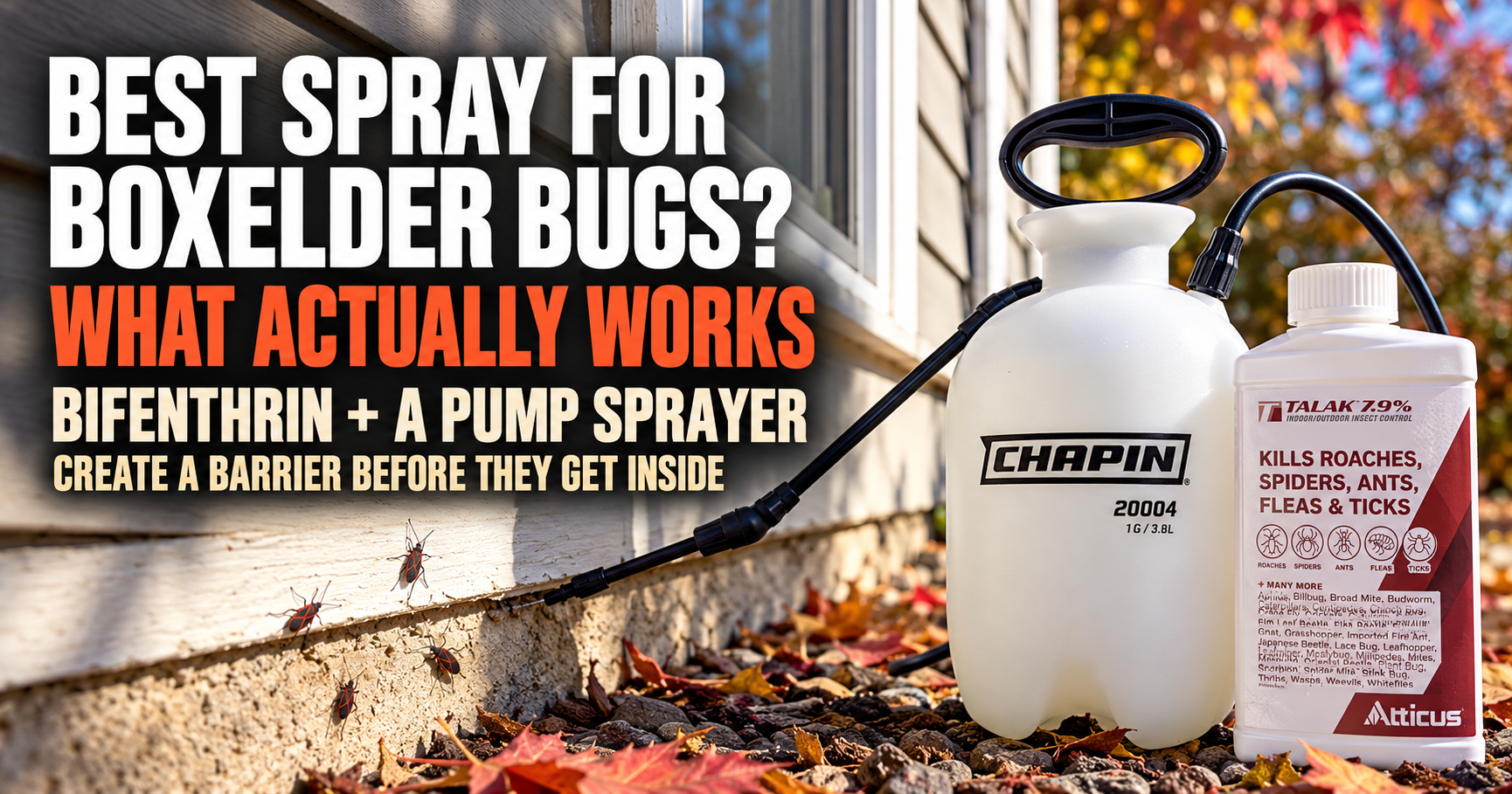
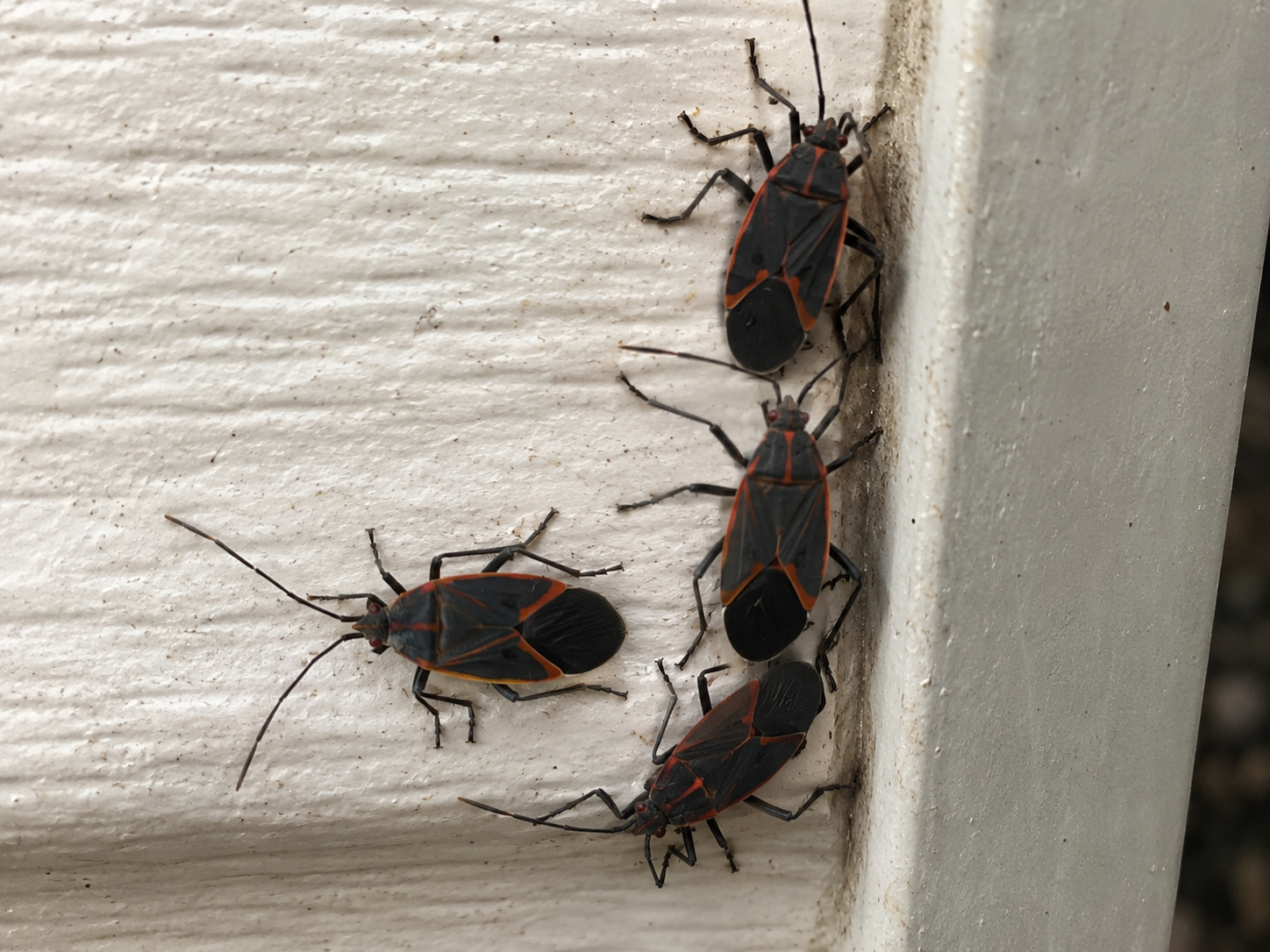
When boxelder bugs are covering your sunny siding or slipping in around windows, it is natural to want a spray that knocks them down fast. The right answer depends on where the bugs are. Outdoors, a properly labeled perimeter treatment can reduce a heavy gathering. Inside, spraying the room is usually not the best move. Vacuuming the bugs and sealing how they got in will solve more of the problem.
The biggest mistake I see people make is treating this like an indoor infestation. Boxelder bugs do not breed in your living spaces. They gather outside in fall, slip into cracks around the home for winter shelter, and then wander indoors when warmth wakes them up. A good spray can help with the outdoor numbers, but it will not replace fixing those access points.
What Is the Best Spray for Boxelder Bugs?
For a heavy exterior problem, I would look for a liquid insecticide labeled for boxelder bugs and exterior perimeter use. Bifenthrin is one common active ingredient used in residential perimeter pest control products.
A concentrate can make sense when you have repeated outdoor issues and need to treat the foundation, exterior cracks, door frames, window trim, and the surfaces where bugs gather. It gives you more control over where the product goes than blindly spraying an aerosol around the house.
The product must specifically allow the use you have in mind. Read the current label before buying or mixing anything. A product can be effective against many insects and still not be labeled for boxelder bugs, the surface you want to treat, or indoor use.
My Pick for Heavy Outdoor Gatherings
For homeowners who want a concentrate rather than a small ready-to-use bottle, Atticus Talak 7.9% Indoor/Outdoor Bifenthrin Insecticide Concentrate is the kind of product worth considering for an exterior perimeter treatment.
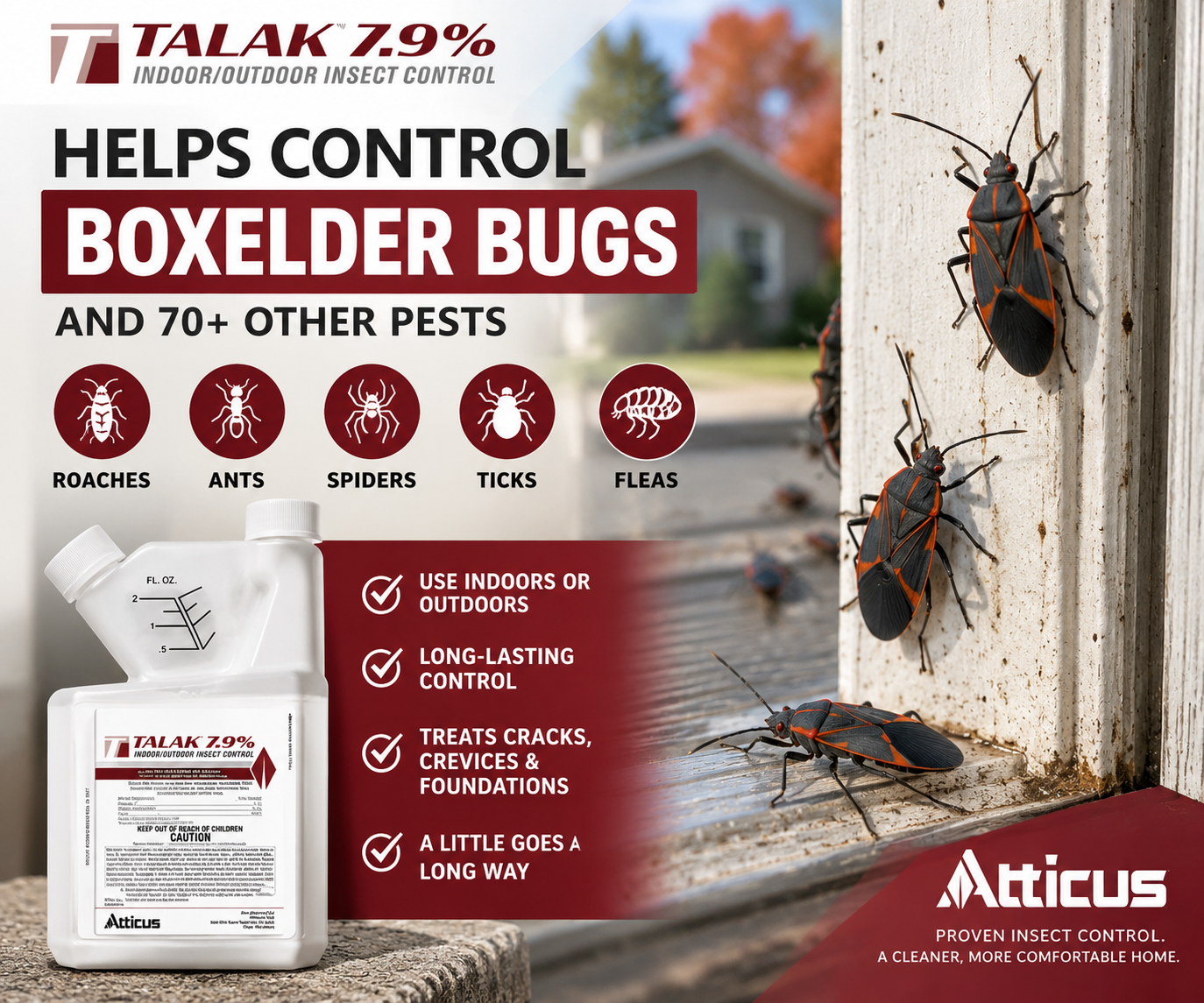
Its value is that it is concentrated, so one bottle can handle more than one application area when mixed according to its label. That makes it a more practical option for someone dealing with large groups on siding, around the foundation, near a detached garage, or along several exterior doors and windows.
Do not buy a concentrate just because the active ingredient sounds right. Before using it for boxelder bugs, confirm that the current product label lists boxelder bugs and permits the exact treatment location. The label determines where it can go, how much to mix, how often it can be used, and the safety steps you need to follow.
Why a Pump Sprayer Matters
A concentrate is only useful if you can apply it evenly and accurately. Using an old bottle with no measurement markings or trying to pour a diluted insecticide along the foundation is a good way to waste product and create unnecessary exposure.
For this type of work, the CHAPIN 20004 SureSpray 1-Gallon Pump Sprayer is a practical companion product. The one-gallon size is manageable for most homeowners, and the visible fluid level, adjustable nozzle, and longer hose make it useful around foundations, siding edges, sheds, fence lines, and larger exterior areas.
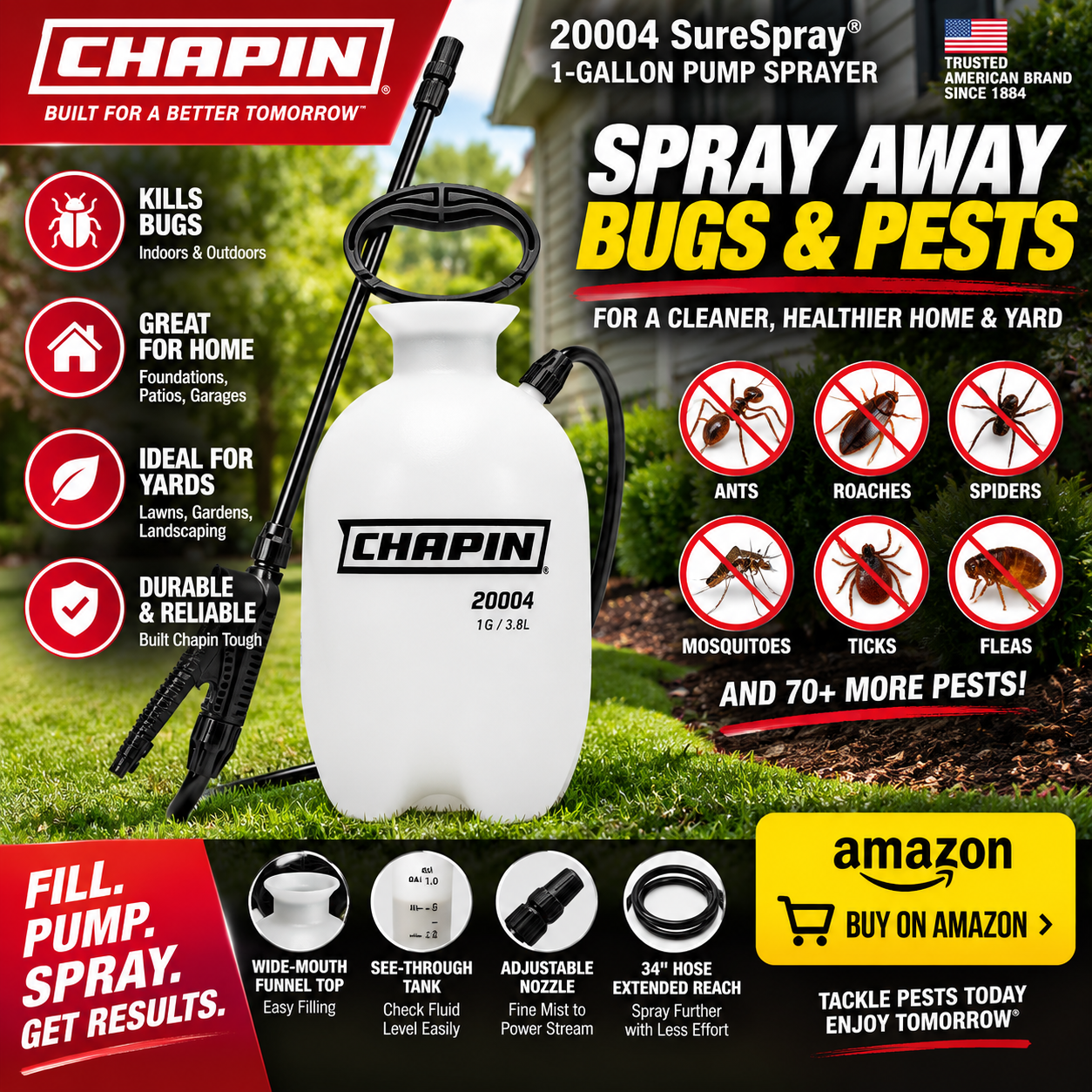
I like the one-gallon format for perimeter work because it is big enough to finish a normal job without constant refilling but not so large that it becomes awkward or encourages mixing more chemical than you can safely use. Mix only what the label says you need for that application.
Where to Spray for Boxelder Bugs
The best treatment targets are outside, before the bugs slip into protected gaps. Think about the areas where they gather and the places they use to reach wall voids.
Focus on exterior cracks and crevices around windows, doors, siding, utility penetrations, and the foundation only when the label permits those surfaces. Pay close attention to south- and west-facing walls, which often get the warmest afternoon sun and draw the heaviest groups.
Treat the actual congregation area when bugs are visibly massing there. If they are piled around one garage corner or under a particular window, that tells you where the pressure is highest.
Do not treat broad areas of the yard just because boxelder bugs are present. Spraying grass, shrubs, flower beds, or every tree on the property is rarely the efficient answer. The goal is to reduce the bugs where they gather near the structure and to keep them from crossing into the home.



When to Spray for the Best Result
Timing matters more than people think. The most useful window is when adult boxelder bugs are gathering outside in late summer or fall and before many have entered cracks around the home.
If you wait until they are already appearing on indoor window sills, a spray outside can still reduce new arrivals, but it cannot pull the bugs back out of walls. At that point, vacuum the indoor bugs and focus on sealing the openings that allowed them in.
Mild winter and early spring days can bring hidden bugs back out around windows and sunny walls. Treating the exterior at that point may provide some relief if the label allows it, but exclusion is still the long-term fix.
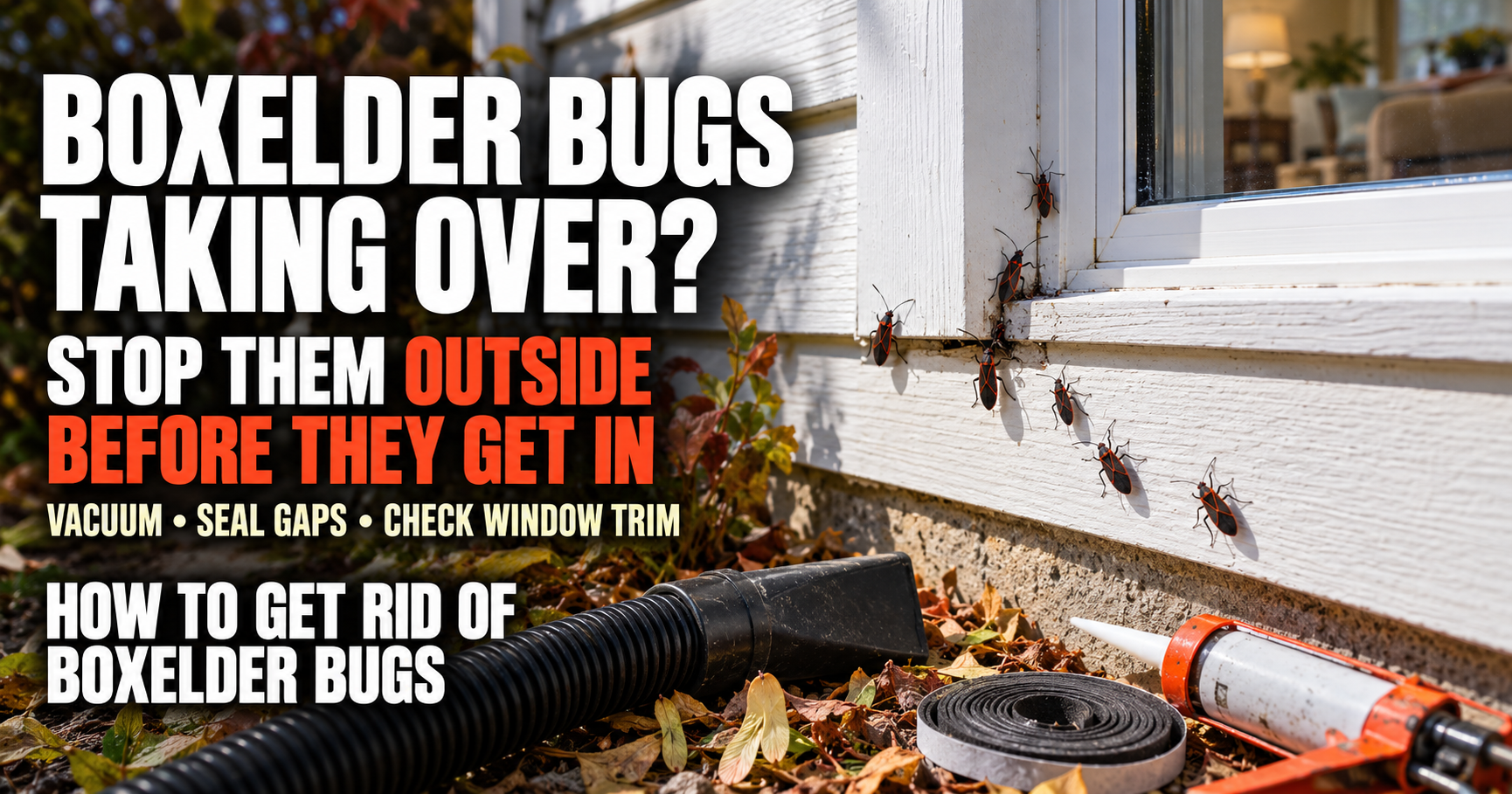
For the full non-chemical plan that goes with any treatment, see how to get rid of boxelder bugs in your house and outside.
How to Mix Concentrated Bifenthrin Safely
Never guess at a mixing ratio. The right amount depends on the specific product label, target pest, and treatment location.
Read the label before opening the bottle. Find the section for the pest you are treating, then use only the rate listed there. Measure carefully, add the amount of water the sprayer instructions call for, and keep children and pets away while you work.
Wear the protective clothing listed on the label. At a minimum, that often means gloves and eye protection, but the exact product directions control. Avoid getting concentrate on your skin, clothing, tools, or nearby surfaces.
Do not mix leftover chemicals together, use more than the stated rate, or save a mystery mixture in an unlabeled container. More insecticide does not automatically mean better control. It can increase risk without fixing the actual entry points.
Do Not Spray These Places
I would not spray inside living rooms, bedrooms, kitchens, closets, or along indoor baseboards just because a few boxelder bugs emerge near a window. Indoor spraying does not solve the wall-void problem and exposes your family to pesticide where it is least useful.
Do not spray food-preparation surfaces, toys, pet dishes, children’s play areas, open flowers, vegetable plants, fruit you will harvest, ponds, drains, or any surface the label excludes.
Avoid spraying directly onto bees, butterflies, or other pollinators. If bugs are gathering near flowering plants, use physical removal and exclusion instead of spraying the blossoms.
The same common-sense rule applies to a house with a well, cistern, creek, pond, or livestock water nearby. Read the label carefully and keep pesticide away from water sources.
Should You Spray Boxelder Bugs Inside the House?
Usually, no.
The bugs found indoors are often adults that were hiding in wall voids or other protected spaces. They are not reproducing in the bedroom, building a nest in the closet, or creating an indoor colony that needs a fogger.
Vacuum the bugs as you see them. Use a hose attachment around window frames, baseboards, curtains, and light fixtures. Empty the vacuum outside promptly so the bugs do not crawl back out.
If they keep appearing, inspect the exterior of that room. Look for worn weatherstripping, cracked caulk, torn screens, gaps around trim, utility lines, siding, or foundation openings. A repair there usually matters more than another indoor spray.


Why Bug Bombs Are a Bad Choice
Bug bombs and foggers are a poor fit for boxelder bugs. They release pesticide into open room air, but boxelder bugs often shelter inside wall voids, attic spaces, behind trim, and other protected places the fog does not reach well.
They can also leave residue over surfaces throughout a room while failing to stop new bugs from entering through the same exterior crack. That is a lot of exposure for very little long-term benefit.
Save indoor chemicals for a pest problem where the product is specifically designed and labeled for indoor use. For boxelder bugs, physical removal plus exterior exclusion is the much more sensible route.
Will Soapy Water Kill Boxelder Bugs?
Soapy water can kill bugs it contacts directly, especially on hard outside surfaces. It can be useful when you have a small group on a patio, porch, or the side of a shed and want a quick, low-cost knockdown.
The limitation is that it has little to no residual effect. Once it dries, it is not protecting the siding or preventing other bugs from crawling over later.
I would not use homemade soap mixtures as a substitute for sealing gaps or as a routine treatment on painted siding and plants. They can leave residue, affect foliage, and turn into a daily chore during a heavy fall gathering.
Do You Need to Treat the Boxelder Tree?
Usually not. Boxelder bugs feed on boxelder trees and may also use maples, ash trees, and some other plants. Seeing them on a tree does not mean the tree needs to be sprayed.
Treating a host tree rarely solves a home problem by itself because the insects can fly in from surrounding vegetation. Removing a healthy tree solely because it has boxelder bugs is also a bigger decision than most people need to make.
Put your effort into protecting the house first. Seal entry points, clean up debris near the foundation, and treat the exterior gathering areas only when a label-supported product is truly needed.
How to Get Better Results From an Outdoor Spray
A perimeter treatment works best as one part of a larger plan. If you spray a wall full of bugs but leave a gap under the garage door or around the window trim, more may still find their way inside.
Walk the outside of the house while the bugs are active. Look at the exact surfaces they are using, then look just beside them for the opening. Caulk narrow cracks, repair loose screens, replace damaged door sweeps, and make sure vents are properly screened.
Also clear away leaves, stacks of boards, pots, dense weeds, and clutter beside the foundation. Those hiding places make it easier for bugs to stay close to the house.
Is This the Same Spray You Would Use for Stink Bugs?
Sometimes the same active ingredient may be on a product label for both pests, but you should never assume. Labels differ by product, location, and pest.
Boxelder bugs are often confused with stink bugs because both can gather around homes in fall. They look and behave differently, and the best control approach for both starts with exclusion.
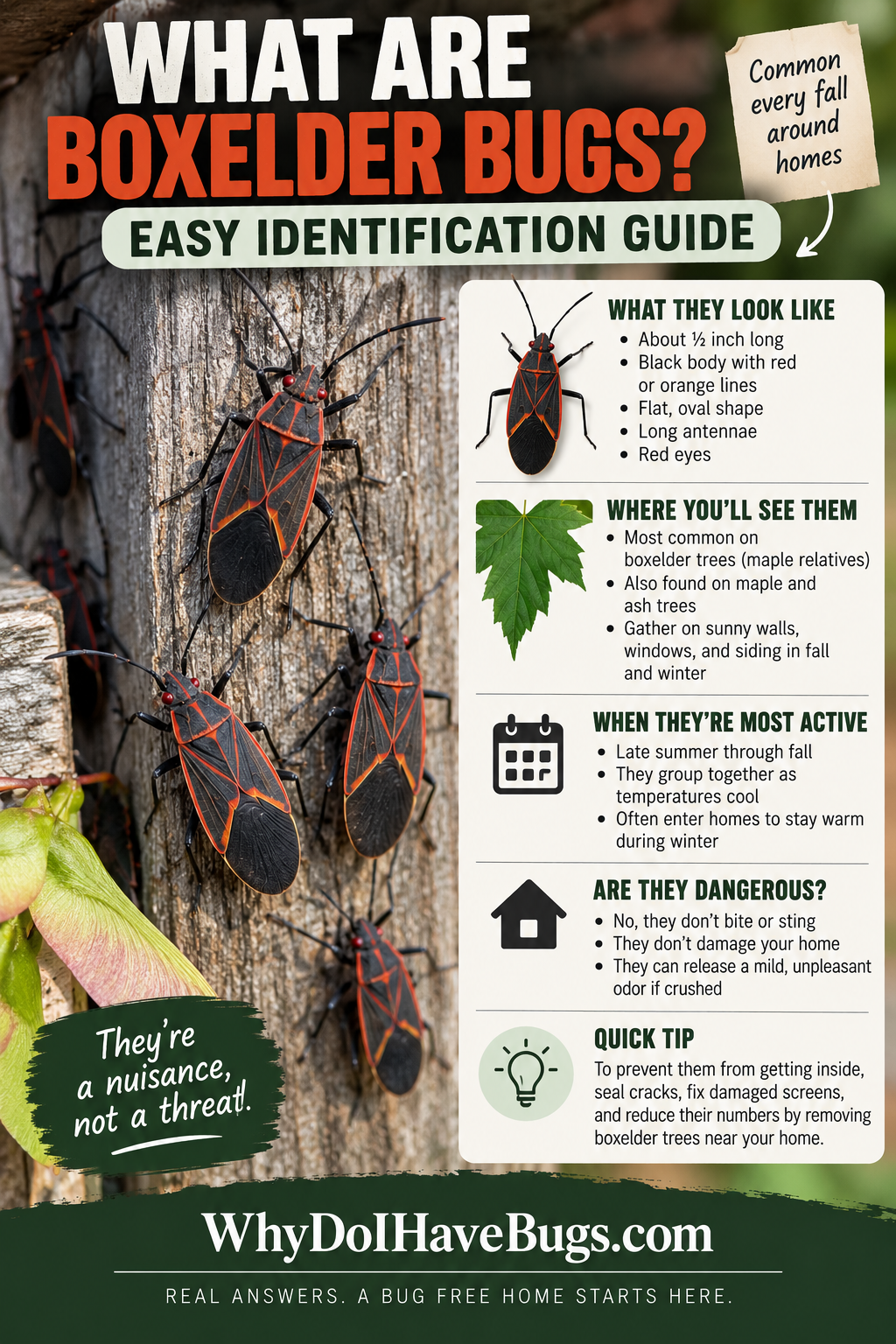
If you are not completely sure which bug you have, compare it with this boxelder bug identification guide before treating. A few minutes of identification can prevent wasted money and an unnecessary pesticide application.
What if You Already Have Bugs Inside?
Do not panic and do not start spraying every room. Boxelder bugs are mostly a nuisance, not a dangerous indoor pest.
Vacuum or sweep up the ones you see, empty the vacuum outdoors, and wipe up any marks they left behind. Then check the exterior around the nearest windows, doors, and trim. That is where your attention belongs.
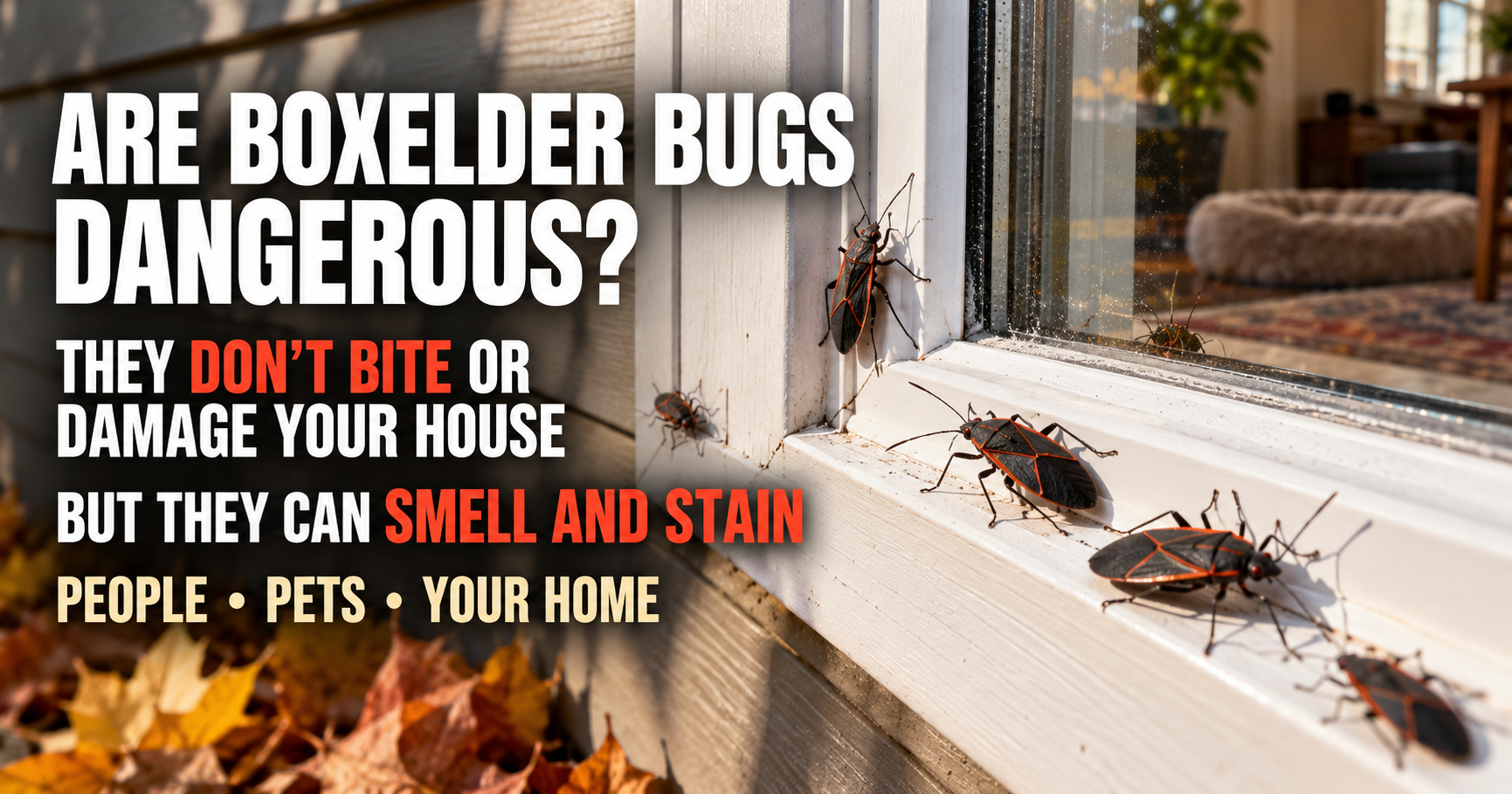
If you are worried about whether they can harm people, pets, or the structure of the house, read whether boxelder bugs are actually dangerous. Their appearance is more dramatic than their real level of risk.
When to Call a Pest Professional
A do-it-yourself exterior treatment is reasonable for many homeowners, but there are times when professional help is the better choice.
Call a pest professional when you have a very large recurring problem, bugs emerging from hard-to-reach wall areas, damaged siding or soffits you cannot safely repair, or a high exterior area that would require working from a ladder.
A good service should not only offer a spray. They should help identify where the bugs are getting in and explain what repairs will reduce next year’s problem.
What kills boxelder bugs the fastest?
A labeled exterior insecticide can kill bugs it contacts, while soapy water can kill small groups on direct contact. For bugs already inside, vacuuming is usually the quickest and cleanest option.
Is bifenthrin good for boxelder bugs?
Bifenthrin is commonly used in exterior perimeter insecticides, but the current product label must specifically list boxelder bugs and allow the treatment location. Always follow that label instead of relying on an active ingredient alone.
Can I spray boxelder bugs on my siding?
You can treat siding only if the product label allows it. Focus on the spots where bugs are gathering and the nearby permitted cracks or entry points. Avoid overspraying flowers, gardens, windows, and surfaces the label excludes.
How often should I spray for boxelder bugs?
Use only the frequency allowed on the product label. Repeated spraying is not a substitute for sealing gaps around the home, and spraying too often can create unnecessary exposure.
Is a pump sprayer worth buying for boxelder bug treatment?
Yes, if you are applying a concentrate outdoors and the label allows it. A dedicated pump sprayer helps you mix accurately and apply a controlled treatment around the perimeter instead of wasting product.
Why are boxelder bugs still coming inside after I sprayed?
They may already be hiding in wall voids, attic spaces, or trim gaps. Outdoor treatment can reduce new arrivals, but you also need to vacuum the indoor bugs and seal the openings they used.
Caleb Warren writes practical pest guides for WhyDoIHaveBugs.com, helping homeowners use products carefully and fix the reason pests keep returning.