You finally work up the courage to get a closer look at the large green insect sitting on your porch railing.
As you reach toward it, one question immediately comes to mind.
Can this thing bite me?
It’s a fair question.
Katydids have large chewing mouthparts, long legs, and an appearance that can be intimidating if you’ve never seen one before.
Fortunately, they’re much gentler than they look.
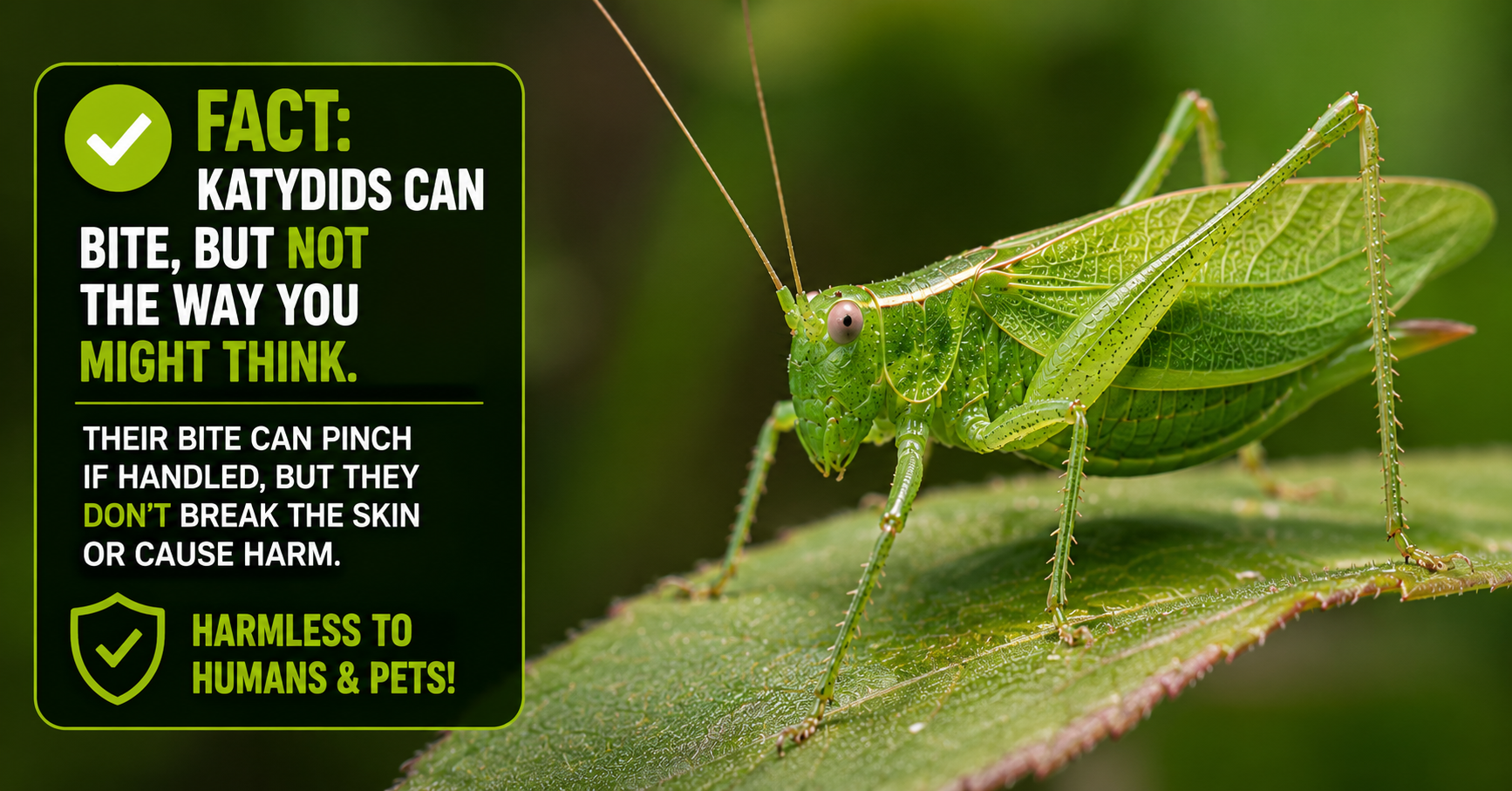
Although a katydid can give a defensive pinch if it’s handled roughly or feels trapped, it’s uncommon. Most katydids rely on camouflage, jumping, or flying away instead of trying to defend themselves.
The Short Answer
Yes…
But probably not the way you’re imagining.
Katydids can pinch with their chewing mouthparts if they feel threatened.
However, they don’t:
- Hunt people.
- Feed on blood.
- Inject venom.
- Spread diseases.
- Attack without being disturbed.
For most homeowners, the chances of being pinched by a katydid are extremely low because the insect almost always chooses to escape instead.


Why Do Katydids Have Strong Mouthparts?
Katydids are plant eaters.
Their jaws, called mandibles, are built for chewing:
- Leaves.
- Flowers.
- Tender stems.
- Seeds.
- Occasionally small insects, depending on the species.
They’re not designed to bite mammals.
If one pinches your finger, it’s simply using the same mouthparts it normally uses to chew vegetation.

When Would a Katydid Bite?
Almost always for one reason.
It thinks it’s in danger.
Situations that might trigger a defensive pinch include:
- Grabbing it with your hand.
- Holding it tightly.
- Trapping it against clothing.
- Accidentally squeezing it.
Simply walking near a katydid or watching one on your porch isn’t enough to make it bite.
Given the opportunity, it’ll usually jump or fly away first.
What Does a Katydid Bite Feel Like?
Most people who have experienced one describe it as more of a firm pinch than a true bite.
Depending on the size of the katydid, you may feel:
- A quick pinch.
- Mild discomfort.
- Slight tenderness for a few minutes.
Most bites don’t even break the skin.
Larger species may pinch harder than smaller ones, but serious injuries are extremely uncommon.

Are Katydid Bites Dangerous?
No.
Even if a katydid pinches you, there’s very little reason for concern.
Katydids are not:
- Venomous.
- Poisonous.
- Disease carriers.
In most cases, washing the area with soap and water is all that’s needed if the skin is broken, though many defensive pinches don’t even leave a mark.
Can Katydids Bite Dogs or Cats?
They can, but it’s extremely uncommon.
A curious dog or cat that repeatedly noses or mouths a katydid could receive a quick defensive pinch.
Most pets lose interest almost immediately after the insect jumps away.
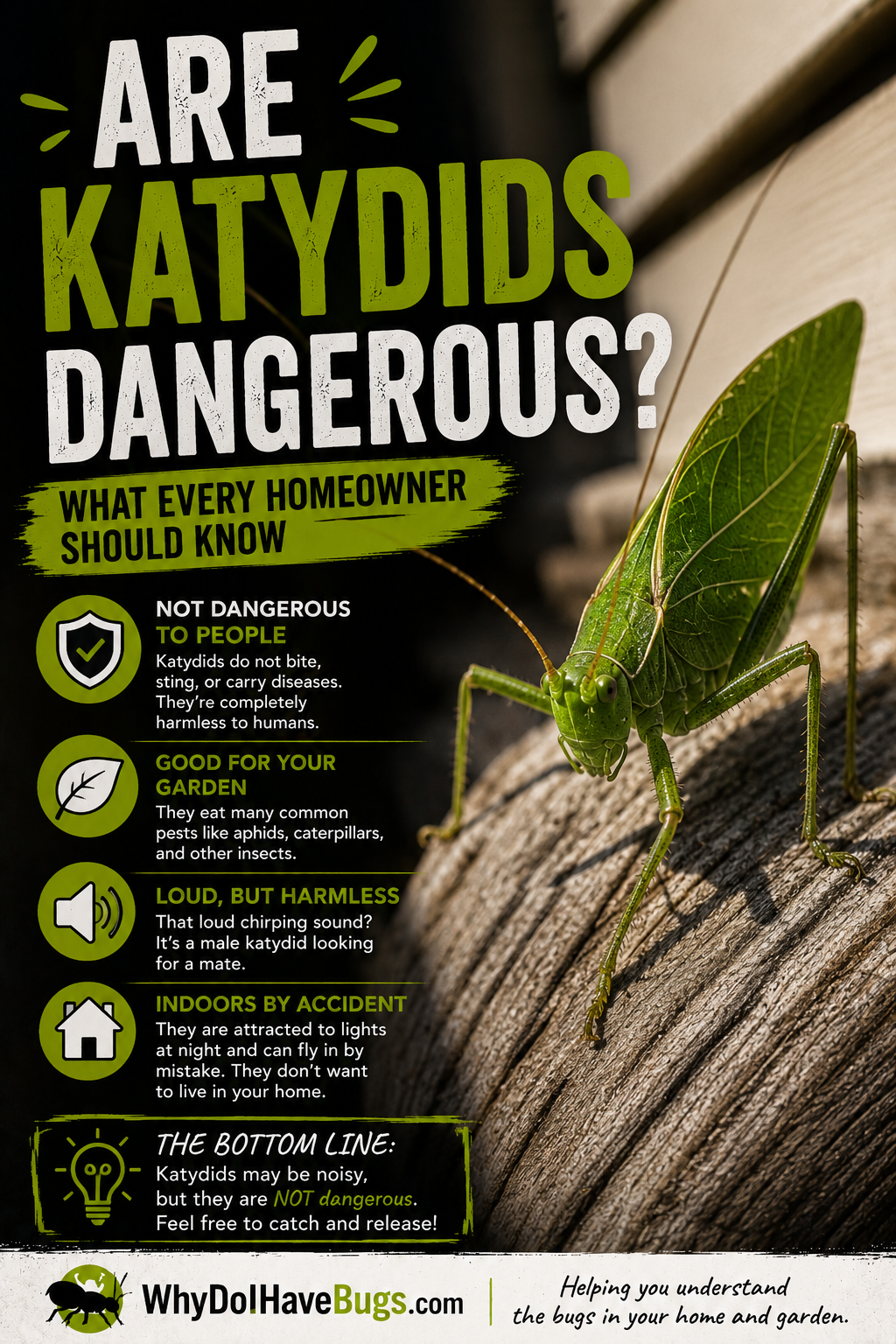
Katydids aren’t considered dangerous to household pets and don’t inject venom or toxins. The broader question of whether katydids are dangerous to people, pets, and homes is covered in the homeowner safety guide.

Why Do People Think Katydids Bite More Often Than They Actually Do?
Their appearance has a lot to do with it.
Large insects naturally make people cautious.
Katydids also have:
- Strong-looking jaws.
- Powerful back legs.
- Large bodies.
- Long antennae.
Those features make them seem intimidating.
In reality, they’re among the calmest insects you’ll find around your yard.
Most homeowners can live their entire lives around katydids without ever being pinched once.
How to Handle a Katydid Safely
If you need to move one away from your porch or inside your house, don’t grab it.
Instead:
- Place a cup or container over it.
- Slide a stiff piece of paper underneath.
- Carry it outside.
- Release it onto a nearby shrub or tree.
This protects both you and the katydid while avoiding unnecessary stress on the insect.


My Experience
I’ve handled and photographed quite a few katydids over the years, and one thing stands out every time.
Their first instinct is almost always to disappear.
Sometimes they’ll slowly walk to the other side of a leaf.
Sometimes they’ll leap several feet away.
Sometimes they’ll simply fly off into a nearby tree.
A defensive pinch is truly their last resort.
If you simply leave them alone or gently relocate them, they’re remarkably peaceful insects.
Frequently Asked Questions
Can a katydid bite hurt?
Most people describe it as a quick pinch rather than a painful bite. Any discomfort is usually minor and temporary.
Will a katydid bite break the skin?
Usually not. Larger species may occasionally leave a small mark, but serious injuries are very uncommon.
Are katydid bites poisonous?
No. Katydids aren’t venomous or poisonous and don’t inject toxins when they pinch.
Why did a katydid bite me?
Almost always because it felt trapped or threatened. Their normal response is to escape, not defend themselves.
Should I worry if a katydid pinches me?
No. Wash the area if the skin is broken and monitor it like any other minor scrape, but medical treatment is rarely needed.
About the Author
Nathan Reynolds is an outdoor naturalist and insect educator with more than 18 years of experience photographing and studying insects commonly found around homes, gardens, and wooded landscapes. He enjoys helping homeowners identify unfamiliar insects and understand the important role they play in nature.