
You walk into your bathroom and notice what looks like tiny specks crawling across the floor.
Then one jumps.
Your first thought is usually fleas.
After all, fleas are famous for jumping.
But if nobody in your house has bites and your pets aren’t scratching, you’re probably dealing with something else entirely. If people in the home do have unexplained marks, bed bug bite identification can help separate suspicion from reliable evidence.
In many homes, tiny jumping bugs found in bathrooms turn out to be springtails. These moisture-loving arthropods are commonly found around sinks, tubs, toilets, shower doors, and damp baseboards because bathrooms provide exactly what they need to survive: moisture.
The Short Answer
Most tiny jumping bugs found in bathrooms are springtails.
They’re attracted to:
- High humidity.
- Condensation.
- Plumbing leaks.
- Damp grout.
- Wet caulking.
- Mold and mildew.
- Standing moisture.
Unlike fleas, springtails don’t bite people or pets.
Instead, they feed on fungi, algae, bacteria, and decaying organic matter that develops in damp environments.


Why Your Bathroom Is the Perfect Place for Springtails
Bathrooms naturally stay more humid than almost any other room in the house.
Think about everything that happens in a typical bathroom every day.
- Hot showers.
- Running sinks.
- Wet towels.
- Toilet condensation.
- Steam.
- Splashing water.
All of that moisture creates conditions springtails love.
Even if the room looks clean, moisture can remain trapped beneath bath mats, behind toilets, around shower tracks, inside vanity cabinets, or along worn caulk. Those hidden damp areas are often enough to support springtails.
How Can You Tell If They’re Springtails?
Springtails have a few characteristics that make them fairly easy to recognize.
Look for insects that are:
- Extremely small.
- Gray, black, brown, or white.
- Wingless.
- Found in damp locations.
- Able to jump when disturbed.
One clue is where you find them.
Springtails usually gather around moisture instead of carpeting or pet bedding.
That’s a major difference between springtails and fleas.
If you’d like to learn more about identifying them, my Everything You Need to Know About Springtails guide explains their appearance, behavior, and why they often end up indoors.
Why They Suddenly Appear
Many homeowners swear the bugs showed up overnight.
In reality, the conditions attracting them have often been developing for weeks.
Common causes include:
- A slow plumbing leak.
- High indoor humidity.
- Condensation around pipes.
- Damp drywall.
- Wet grout.
- Poor bathroom ventilation.
- Water collecting beneath flooring.
Springtails are usually one of the first signs that excess moisture has become a problem.

Could They Be Fleas Instead?
Sometimes.
But there are several easy ways to tell the difference.
Fleas usually:
- Bite people and pets.
- Stay close to carpeting and pet resting areas.
- Feed on blood.
- Are commonly associated with scratching pets.
Springtails usually:
- Don’t bite.
- Gather around damp surfaces.
- Feed on fungi and mold.
- Appear in bathrooms, basements, sinks, and around houseplants.
If your pets are perfectly comfortable and the bugs are clustered near the shower or sink, springtails are much more likely than fleas.
Why Are They Always Around the Sink or Shower?
Springtails don’t randomly choose your bathroom.
They’re following the moisture.
Bathrooms provide almost everything they need:
- High humidity after showers.
- Condensation around plumbing.
- Damp grout.
- Water trapped beneath bath mats.
- Small amounts of mold or mildew.
- Tiny gaps where moisture collects.
Even if the floor looks dry, hidden moisture behind the toilet, beneath the vanity, or inside wall voids can keep springtails active for weeks.

Why Do They Suddenly Appear Overnight?
This is one of the most confusing parts.
Many homeowners tell me they didn’t see a single bug yesterday, then suddenly found dozens today.
Usually, the springtails didn’t suddenly arrive.
The moisture problem reached a point where the population grew large enough to become noticeable.
Other times, weather plays a role.
Heavy rain or extremely dry outdoor conditions can push springtails away from their normal habitat, causing them to wander indoors looking for better moisture conditions.
How to Get Rid of Tiny Jumping Bugs in Your Bathroom
If the bugs are springtails, the solution isn’t just killing the ones you can see.
You have to remove what they’re attracted to.
I recommend starting with these steps:
- Repair any plumbing leaks.
- Run the bathroom exhaust fan during and after showers.
- Wipe away standing water around sinks and tubs.
- Replace old or moldy caulk if needed.
- Reduce indoor humidity.
- Check beneath the vanity for hidden moisture.

If you’re seeing springtails throughout the house instead of only the bathroom, my How to Get Rid of Springtails Step-by-Step Guide walks through the complete process I recommend for eliminating them.

Lowering Humidity Makes a Huge Difference
One thing I see over and over is homeowners focusing only on the bugs.
The real issue is often the environment.
Bathrooms naturally become humid after showers, and if that moisture doesn’t have a chance to dry out, springtails can continue finding the room attractive.

If your bathroom stays damp for hours after every shower, it’s worth reading Does a Dehumidifier Help Get Rid of Bugs? Here’s the Truth. Reducing humidity is one of the most effective long-term ways to discourage springtails and many other moisture-loving pests.
When Should You Be Concerned?
The springtails themselves usually aren’t the problem.
What concerns me is why they’re there.
Large numbers often point to:
- A hidden plumbing leak.
- Poor ventilation.
- Excess humidity.
- Water intrusion.
- Mold growth.
Treat springtails like an early warning sign.
Fixing the moisture issue now may prevent much larger problems later.

My Advice
If you find tiny jumping bugs in your bathroom, don’t automatically assume you have fleas.
Take a closer look at where they’re gathering.
If they’re clustered around the sink, shower, toilet, or damp baseboards and nobody in your house has bites, there’s a very good chance they’re springtails.
The good news is they’re one of the easiest household pests to eliminate once you remove the moisture they’re depending on.
Frequently Asked Questions
What are tiny jumping bugs in my bathroom?
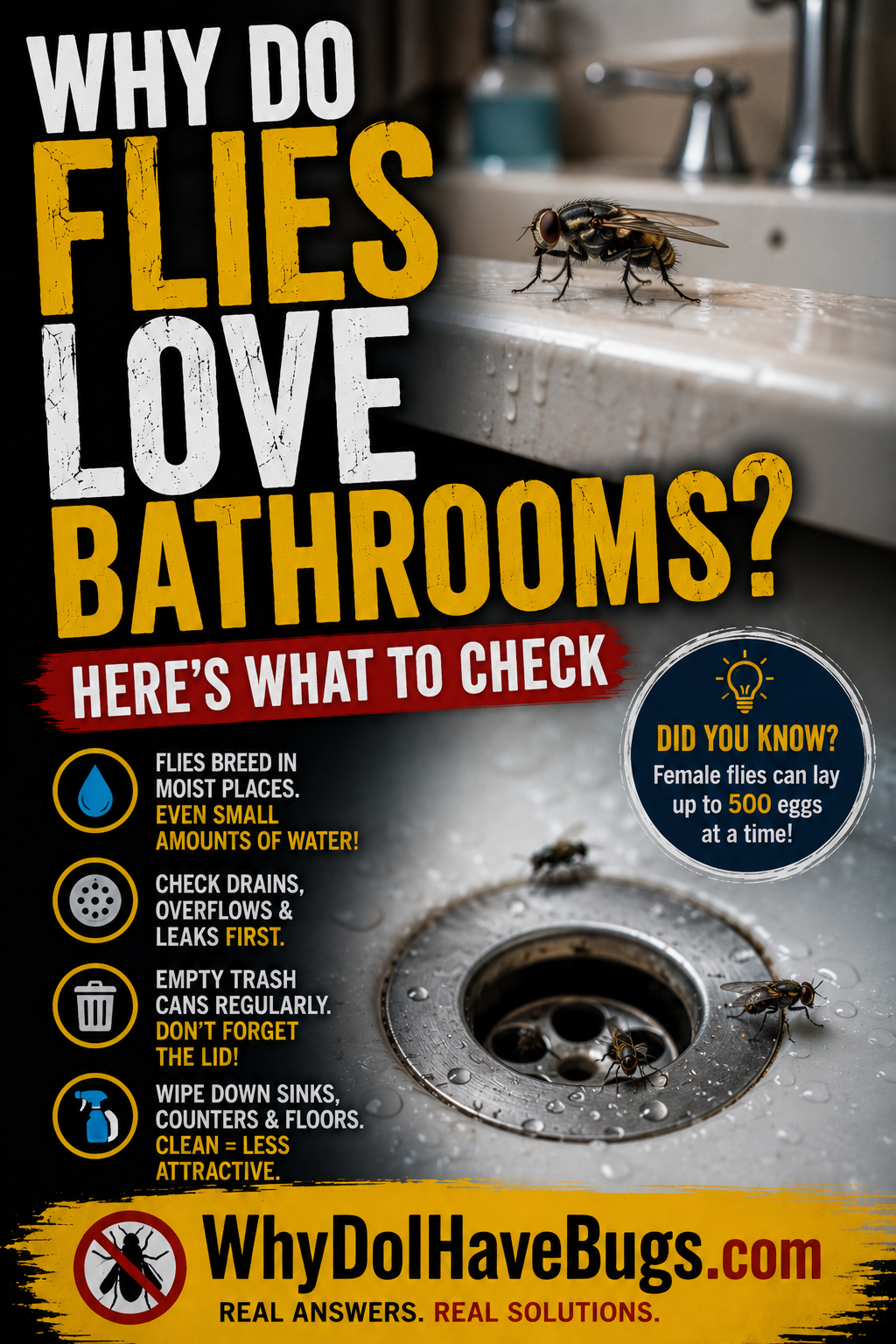
In many homes, they’re springtails. These tiny, moisture-loving arthropods commonly gather around sinks, tubs, drains, and other damp areas where humidity stays high. If the insects around those damp fixtures are flying instead of jumping, other insects found around bathroom drains covers the bathroom clues that can narrow down the cause.
Are bathroom springtails dangerous?
No. Springtails don’t bite people or pets, don’t spread disease, and don’t damage your home. They’re mainly considered nuisance pests that indicate excess moisture.
Why are springtails only in my bathroom?

Bathrooms provide high humidity, condensation, and occasional mold or mildew, all of which create ideal conditions for springtails to survive. A dehumidifier for excess bathroom humidity may be a practical way to help lower the humidity that keeps these moisture-loving bugs active.
Will bleach get rid of springtails?
Bleach may kill some springtails it contacts, but it won’t solve the underlying moisture problem that’s attracting them. Long-term control comes from reducing humidity and fixing leaks.
Why do I keep seeing more springtails after cleaning?
Cleaning removes the bugs you can see, but if excess moisture remains, more springtails can continue emerging from nearby damp areas. Addressing the source of the moisture is the key to preventing them from coming back.
About the Author
Emily Carter is a home pest prevention specialist with more than 14 years of experience helping homeowners identify moisture-related pest problems. She focuses on practical, science-backed solutions that address the conditions attracting insects instead of relying on unnecessary pesticide treatments.