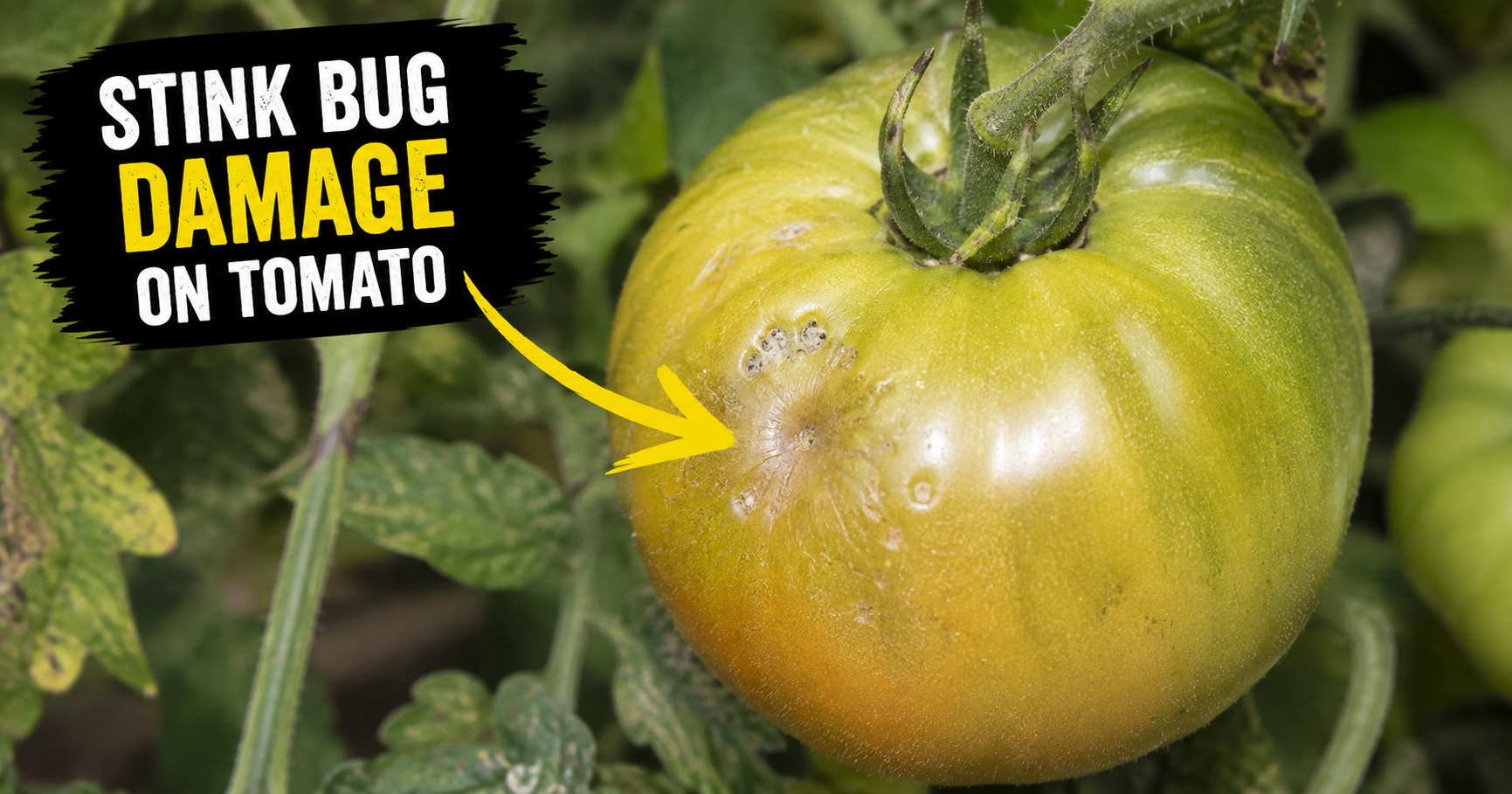
Stink bug damage on tomatoes usually looks like pale, cloudy spots on the fruit. Green tomatoes often develop whitish blotches, while ripe red tomatoes may have golden-yellow spots, tiny dark punctures, or shallow starburst-shaped marks.
When I peel back the skin beneath one of these spots, I often find white, shiny, spongy, or corky-looking tissue. This is the classic sign of stink bug feeding, commonly called cloudy spot.
The tomatoes may look close to normal at first, which is why this damage is easy to miss until harvest.
What Does Stink Bug Damage Look Like on a Tomato?
The most common signs of stink bug feeding include:
- Pale white or cloudy patches on green fruit
- Yellow, golden, or pale blotches on ripe tomatoes
- A tiny black, brown, or dark puncture near the center of the spot
- Small shallow starburst patterns, especially from nymph feeding
- White, shiny, spongy tissue beneath the tomato skin
- Corky or firm areas inside the fruit
- Dimpled or slightly sunken spots
- Uneven ripening around the damaged area
- Misshapen fruit when feeding happened early in development
The outside mark may be only a fraction of an inch wide, or several spots may merge into a much larger damaged patch.
A close look at the skin and a quick cut into the tomato are usually the fastest ways to confirm cloudy spot.
What Is Cloudy Spot on Tomatoes?
Cloudy spot is the name used for the pale feeding injury stink bugs create in tomatoes and peppers.
A stink bug inserts its narrow mouthpart into the tomato and removes fluids from the tissue. The feeding injury leaves air pockets and damaged cells beneath the skin.
On a green tomato, cloudy spot usually appears white or pale. As the fruit ripens, the affected spot may become yellow or golden while the rest of the tomato turns red.
When you peel or cut through the area, the tissue below can look white, soft, spongy, shiny, corky, or slightly watery.
Cloudy spot is different from a surface scar. The injury begins inside the tomato where the insect fed.
Why Is There a Tiny Black Dot in the Middle of the Spot?
A small dark dot may mark the place where the stink bug’s mouthpart entered the tomato.
Not every cloudy spot will have an easy-to-see puncture. The mark can be tiny, become hidden as the tomato grows, or disappear into the discolored area.
When the dark puncture is present beside pale, cloudy tissue, it is a strong clue that a piercing and sucking insect caused the damage.
Stink bug nymphs and adults can both create these spots. Young nymph feeding may leave shallower starburst-like marks, while adults can feed more deeply into the fruit.
What Does Stink Bug Damage Look Like Inside a Tomato?
The inside is often more revealing than the skin.
Cut through the pale or yellow area and look for:
- White spongy tissue
- Shiny pale masses beneath the skin
- Firm corky sections
- Discolored internal flesh
- Small air-filled pockets
- Brown tissue in more severely damaged fruit
- A localized damaged area directly beneath the outer mark
The rest of the tomato may still be red, juicy, and normal. Stink bug damage can remain very localized.
When the internal tissue is white and spongy under a cloudy outer spot, stink bug feeding is much more likely than a typical fungal fruit disease.

Can Stink Bugs Damage Green Tomatoes?
Yes. Stink bugs commonly feed on green tomatoes.
On immature fruit, feeding marks are often pale white, cloudy, or irregularly shaped. The damaged tissue may become more visible as the tomato enlarges and ripens.
Early feeding can also interfere with normal development. A tomato may become misshapen, develop a sunken area, or ripen unevenly around the injury.
Some damage that occurred when the tomato was very small may not become obvious until later in the season.
Checking green fruit regularly helps catch a problem before most of the crop has been affected.
Can Stink Bugs Damage Ripe Tomatoes?
Yes. Ripe and nearly ripe tomatoes can also be damaged.
On red tomatoes, stink bug feeding often appears as golden-yellow spots or blotches. These may be shallow and irregular rather than deeply rotten.
The skin can remain mostly intact, which makes the tomato look better than it really is until it is cut open.
A mature tomato with a pale yellow spot and white spongy tissue below the skin is a classic stink bug damage pattern.
Do Stink Bugs Make Tomatoes Turn White Inside?
They can.
Stink bug feeding can create pale white, spongy, or corky tissue just beneath the tomato skin. This is different from a tomato that is broadly white and hard throughout the center because of ripening problems or nutrient-related issues.
The stink bug injury is usually localized near a visible outer spot. It does not usually affect the entire tomato evenly.
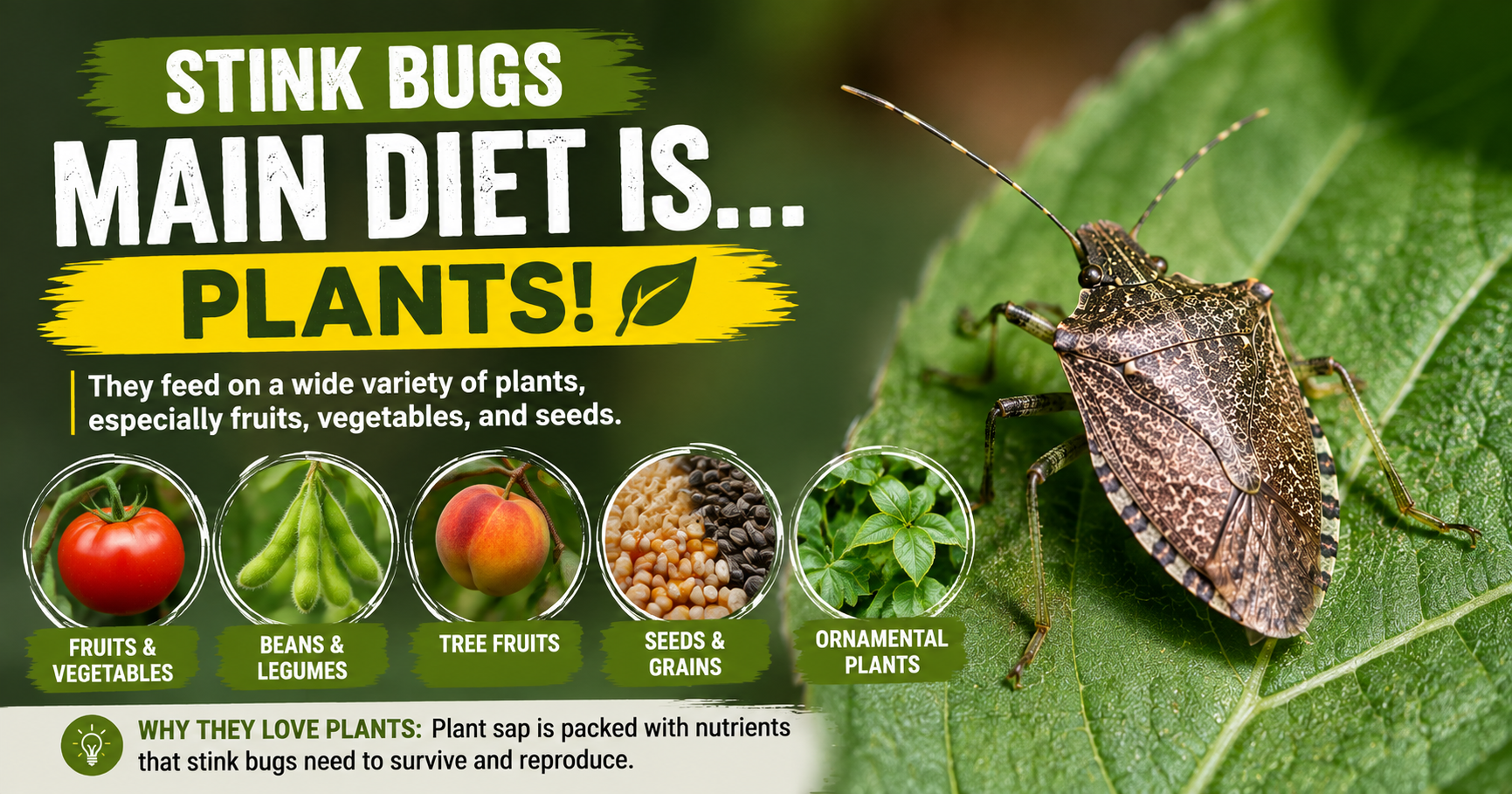
The plants and crops stink bugs feed on explains why tomatoes are one of the many foods these plant-feeding insects use.
Can You Eat a Tomato With Stink Bug Damage?
A tomato with mild cloudy spot is often still safe to eat after the damaged tissue is cut away.
If the tomato has only a small pale spot and the remaining fruit looks and smells normal, I would remove the affected area generously and use the good portion.
Discard the tomato if it has:
- Mold
- A sour or rotten smell
- Soft wet decay spreading beyond the feeding spot
- Extensive brown or black internal breakdown
- Deep cracks filled with rot
- Insect larvae or other contamination
- Damage covering most of the fruit
Stink bug feeding itself does not automatically make a tomato unsafe. The bigger concern is whether the injury has allowed rot to develop.


Can Stink Bug Damage Cause Tomato Rot?
Feeding creates a wound in the fruit, and damaged tissue can become more vulnerable to secondary decay.
The stink bug itself may not be the only issue. Bacteria, yeasts, fungi, and other organisms can take advantage of injured tissue.
A tomato with a small stable cloudy spot may remain usable. One with wet rot, sour odor, spreading soft tissue, or mold should be discarded.
This is why it helps to harvest ripe tomatoes regularly. Leaving damaged fruit on the plant longer gives decay organisms more time to grow.
What Kind of Stink Bugs Damage Tomatoes?
Several plant-feeding stink bugs may damage tomatoes.
Common culprits include:
- Brown marmorated stink bugs
- Brown stink bugs
- Green stink bugs
- Southern green stink bugs in warmer regions
- Other plant-feeding stink bug species
The brown marmorated stink bug gets the most attention because it feeds on a wide range of crops and also enters homes to spend winter.
It is mottled brown, shield-shaped, and has pale bands on its antennae. The exposed edges of its abdomen also show alternating light and dark markings.
Not every shield-shaped bug on a tomato is a plant pest. Some stink bugs are predators that hunt caterpillars and other insects.
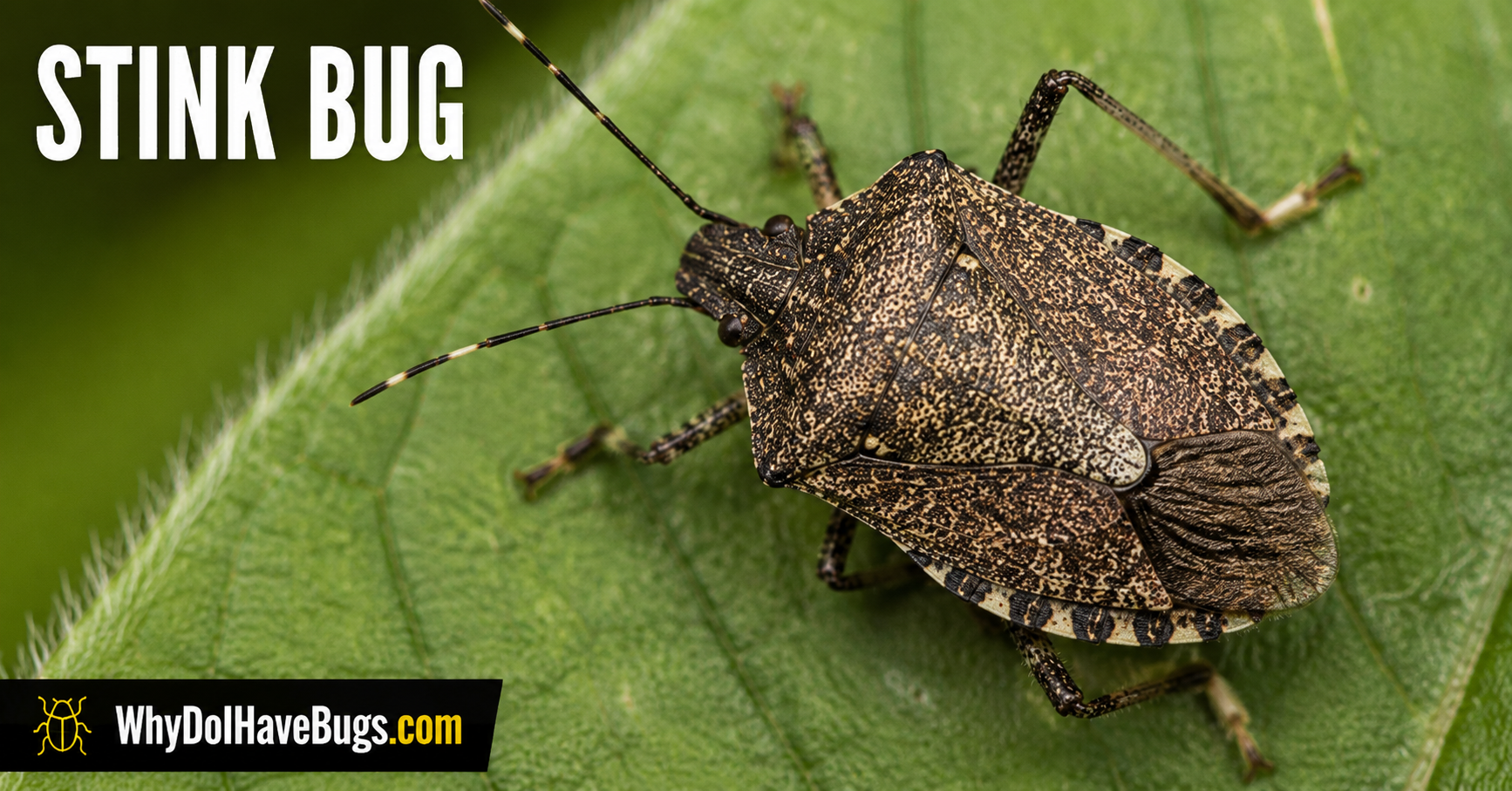
My stink bug identification article can help you look for the markings that separate common plant feeders from lookalikes.
Why Can’t I Find the Stink Bugs Damaging My Tomatoes?
Stink bugs can be frustratingly hard to spot.
They often hide deep inside tomato plants, beneath leaves, under dense foliage, along stems, or near the lower parts of the plant. When the plant is bumped, they may drop to the ground and hide in mulch, weeds, or debris.
You may find feeding damage before you ever see an adult stink bug.
Check early in the morning or later in the evening when temperatures are milder. Look beneath leaves, around fruit clusters, along plant stems, and on the ground around the base of the plant.
Also inspect for colorful wingless nymphs. Young stink bugs can be black, red, orange, cream, brown, or patterned, depending on the species and growth stage.
Are Stink Bug Nymphs Worse Than Adults on Tomatoes?
Both nymphs and adults can damage tomatoes.
Nymphs are smaller and cannot fly, but they still have piercing mouthparts. Their feeding may create shallow starburst marks with a tiny dark center.
Adults can feed deeper into the fruit and may create larger or more severe internal injury.
The best time to reduce damage is before there are many nymphs and adults feeding at once. Finding and removing egg clusters early can prevent a larger group of young stink bugs from spreading through the garden.
What Time of Year Is Stink Bug Damage Worst on Tomatoes?
Tomato damage is often most noticeable from mid-summer through the end of the growing season.
In many areas, the problem becomes more common from July into August and September as nymphs and adults feed on ripening fruit.
The exact timing depends on the stink bug species, local climate, nearby crops, weeds, and seasonal temperatures.
Stink bugs can move among host plants as food becomes available. When nearby corn, soybeans, fruit, weeds, or other crops change, they may move into a tomato patch.
Gardeners should watch especially closely along the edges of a garden near tall weeds, field borders, orchards, or wooded areas.
Does Stink Bug Damage Start at the Bottom or Top of the Plant?
Stink bug damage can occur anywhere fruit is accessible.
It is not restricted to the lowest tomatoes or the topmost fruit clusters. Stink bugs may feed on tomatoes throughout the plant, especially where dense foliage gives them cover.
Damage sometimes appears worse on plants near the outside edges of a garden. Stink bugs often move in from nearby vegetation, fields, weeds, trees, or fence rows.
Start your inspection with edge plants, then move inward.
How Is Stink Bug Damage Different From Sunscald?
Sunscald usually develops on the side of a tomato exposed to strong direct sunlight.
It often looks like a large pale, whitish, yellowed, blistered, or sunken patch. The skin may become thin or papery, and the fruit may later develop decay in that exposed area.
Stink bug damage is usually more localized. It often has a cloudy pale spot, a tiny puncture, and white spongy tissue under the skin.
Sunscald is more likely after leaves are removed or disease causes major foliage loss. Stink bug damage can occur on well-leafed plants where fruit remains shaded.
How Is Stink Bug Damage Different From Blossom-End Rot?
Blossom-end rot begins at the blossom end of the tomato, opposite the stem.
It creates a large dark brown or black, leathery, sunken patch. The affected area becomes increasingly obvious as the fruit grows.
Stink bug damage can appear anywhere on the tomato. It is usually pale or yellow at first rather than dark, leathery, and confined to the blossom end.
Blossom-end rot is associated with calcium movement problems in the developing fruit, often made worse by uneven soil moisture. A stink bug problem is caused by insect feeding.
How Is Stink Bug Damage Different From Tomato Cracking?
Tomato cracking produces visible splits in the skin.
The cracks may radiate from the stem end, circle around the shoulders, or open along the fruit. Rapid changes in soil moisture are often involved.
Stink bug damage normally does not create a long open split. It creates cloudy, pale, punctured, or spongy spots beneath mostly intact skin.
A cracked tomato can also have stink bug damage, so finding one issue does not completely rule out another.
How Is Stink Bug Damage Different From Catfacing?
Catfacing causes major distortion, deep scars, folds, and oddly shaped fruit, often near the blossom end.
It usually develops after cool weather, poor pollination, or other stress during early flower and fruit formation.
Early stink bug feeding can also deform a young tomato, but it is more likely to leave cloudy spot, punctures, pitting, or localized internal tissue damage.
Catfacing is not caused by a stink bug feeding on a mature tomato.
How Is Stink Bug Damage Different From Anthracnose?
Anthracnose is a fungal disease that creates circular sunken spots, usually on ripe or overripe tomatoes.
The center may become dark, soft, or covered with fungal growth under humid conditions.
Stink bug damage is usually pale, yellow, white, or cloudy and has white spongy tissue beneath the skin. It does not typically begin as a dark circular depression.
A stink bug wound can make a tomato more vulnerable to decay, so both issues can occasionally appear on the same fruit.
How Is Stink Bug Damage Different From Bacterial Spot?
Bacterial spot can cause small raised, scabby, dark spots on tomato fruit. It also commonly produces leaf spots, yellowing, and defoliation.
Stink bug feeding usually creates a pale cloudy patch with internal white or spongy tissue rather than a cluster of dark scabby lesions.
Check the leaves as well as the fruit. If the plant has widespread leaf spotting and several fruit lesions, a disease may be involved.
How Is Stink Bug Damage Different From Tomato Fleck?
Tomato fleck is a ripening disorder that can create pale golden or yellowish spots on ripe fruit.
It may resemble stink bug injury from the outside. However, stink bug damage typically occurs in patches and has white spongy tissue beneath the feeding site.
Tomato fleck can appear more broadly and may begin near the stem end. It is associated with internal ripening and nutrient balance rather than a tiny puncture from an insect.
When in doubt, cut through the spot. The internal white spongy tissue beneath a localized cloudy mark strongly points toward stink bug feeding.
How to Check Tomatoes for Stink Bug Damage
Start by looking over both green and ripening tomatoes every few days.
Use this quick inspection process:
- Look for pale, cloudy, yellow, or golden spots.
- Search for tiny dark punctures near the center of the spots.
- Check fruit on the outer garden edges first.
- Look beneath leaves and around dense fruit clusters.
- Examine plant stems, nearby weeds, and the ground around the plants.
- Cut open suspicious tomatoes.
- Look for white shiny, spongy, or corky tissue beneath the skin.
- Check nearby peppers, beans, corn, and fruit for similar feeding injury.
- Photograph both the insect and the damaged tomato when possible.
- Remove badly damaged fruit so it does not rot on the plant.
You do not need to cut open every tomato. Focus on fruit with pale spots, uneven ripening, dimples, or other suspicious changes.
Can You Prevent More Stink Bug Damage This Season?
You cannot reverse a spot that has already formed, but you can reduce additional feeding.
Start with close monitoring. Hand-pick visible plant-feeding stink bugs and place them in soapy water. Check leaves for egg clusters and remove them carefully.
Keep weeds and heavy debris trimmed around the immediate garden area. This can reduce hiding places and make the plants easier to inspect.
Avoid spraying every shield-shaped insect without identification. Predatory stink bugs can help control caterpillars and other pests.
The diet of the plant-feeding stink bugs in gardens can help explain why tomatoes, peppers, beans, and nearby vegetation may all be involved in the same problem.
Should You Spray Tomatoes for Stink Bugs?
An insecticide may be appropriate when confirmed plant-feeding stink bugs are causing repeated, significant tomato damage.
However, the product must specifically list tomatoes, stink bugs, and the use instructions you plan to follow. It must also be applied according to its label, including the pre-harvest interval.
Never use an indoor household spray, including Raid Ant and Roach Killer, directly on tomato plants or fruit unless the exact label specifically permits edible-crop use. The saved Raid product belongs in the house-removal article, not on food plants.
Spraying during open bloom can harm pollinators. Avoid broad applications when bees are actively visiting flowers.
Our next stink bug article will give the full practical plan for reducing stink bugs on tomato plants while protecting pollinators and beneficial insects.
Will Row Covers Protect Tomatoes From Stink Bugs?
Row cover can help exclude stink bugs when it is installed early and sealed around the edges.
The challenge is that tomatoes need pollination. Covers should not stay over flowering plants in a way that blocks pollinators unless you are hand-pollinating or using another appropriate method.
Once large fruit is already developing and stink bugs are present, covering tall tomato plants can be difficult.
For small plantings, physical exclusion may still be useful during key periods if it is planned before the infestation becomes heavy.
Is Stink Bug Damage More Common Near Weeds?
It can be.
Weeds, field edges, tall grass, shrubs, and unmanaged borders may provide food and cover for plant-feeding stink bugs.
The insects may then move into tomato plants when fruit becomes available.
Do not assume every weed is the cause of your damage. But keeping the immediate garden edge manageable makes it easier to inspect plants and reduces some nearby shelter.
Focus on the first few tomato plants along the garden perimeter. They may show the earliest cloudy spot injury.
Will Damaged Tomatoes Recover?
A tomato cannot repair the tissue already damaged by stink bug feeding.
The fruit may continue ripening around the injured area, but the white, spongy, corky, or scarred tissue will remain.
Mildly damaged fruit can sometimes be trimmed and used. Severe damage may make the tomato unappealing or allow rot to develop.
The more useful goal is protecting the fruit that has not yet been fed on.
Can Stink Bug Damage Affect Seeds?
Stink bugs can feed on developing seeds and fruit tissues.
In tomatoes, the most visible issue is often the damaged flesh beneath the skin. Severe feeding may also affect seed development within the injured section.
For gardeners saving tomato seed, choose undamaged fruit from healthy plants whenever possible.
Do not save seed from fruit that is rotting or heavily damaged, even if the outside damage appears limited.
Frequently Asked Questions
What are the white cloudy spots on my tomatoes?
White cloudy spots are often stink bug feeding damage, especially when the tissue underneath is white, shiny, spongy, or corky.
What causes yellow spots on red tomatoes?
Golden-yellow spots can be caused by stink bug feeding. Look for a tiny dark puncture and pale spongy tissue beneath the skin.
Can I eat a tomato with stink bug damage?
Usually, yes, if the damage is minor and the tomato has no mold, rotten smell, or spreading soft decay. Cut away the affected portion generously.
Do stink bugs make holes in tomatoes?
They make tiny punctures with their mouthparts rather than large visible holes. The puncture may appear as a small dark dot near a cloudy spot.
Why are my tomatoes white and hard inside?
Localized white spongy or corky tissue under a pale spot often indicates stink bug feeding. Broad white, hard areas throughout the fruit may have another cause.
Do stink bugs damage green tomatoes?
Yes. Green tomatoes may develop white or cloudy patches that turn yellow or golden as the fruit ripens.
Can stink bug damage spread from tomato to tomato?
The existing feeding injury does not spread by itself. However, more stink bugs can feed on additional tomatoes, and damaged fruit may develop secondary rot.
Is stink bug damage the same as blossom-end rot?
No. Blossom-end rot creates a dark leathery patch at the blossom end. Stink bug injury usually creates pale or yellow cloudy spots anywhere on the tomato.
How do I know if it is sunscald or stink bug damage?
Sunscald usually occurs on heavily sun-exposed fruit and creates a broad pale or blistered area. Stink bug damage is more likely to have a small puncture and white spongy tissue beneath the skin.
Do I need to throw away every damaged tomato?
No. A mildly damaged tomato can often be trimmed and used if the rest of the fruit is firm, clean, and free of mold or decay.
Caleb Warren is a longtime gardener and backyard insect researcher who writes practical garden pest guides for WhyDoIHaveBugs.com, helping homeowners identify the real cause of plant damage before spending money on treatments.