
Finding one larder beetle is surprising.
Finding several makes most homeowners start asking the same question.
“How are these things getting into my house?”
When I first found them, I immediately started looking around my doors and windows.
Surely there had to be a gap somewhere.
While that certainly can happen, I eventually learned something that completely changed how I looked at the problem.
Sometimes larder beetles aren’t getting into your house at all.
They’re already inside it.
Understanding that difference can save you hours of frustration and keep you from sealing every crack in your home while completely missing the real problem.
Sometimes They Really Do Fly Inside
Adult larder beetles are capable of flying.
During warmer months they naturally search for new places to find food and lay eggs.
That means they can occasionally enter through:
- Open doors.
- Open garage doors.
- Damaged window screens.
- Open basement windows.
- Gaps around attic vents.
Finding one beetle near an entry door isn’t usually enough to convince me I have an infestation.
Adult beetles sometimes simply wander indoors from outside, especially during spring when they become active again.



Most Homeowners Focus on the Wrong Question
Here’s something I wish I had understood sooner.
Instead of asking:
“How did they get inside?”
I should have been asking:
“Why are they staying?”
That’s a much more important question.

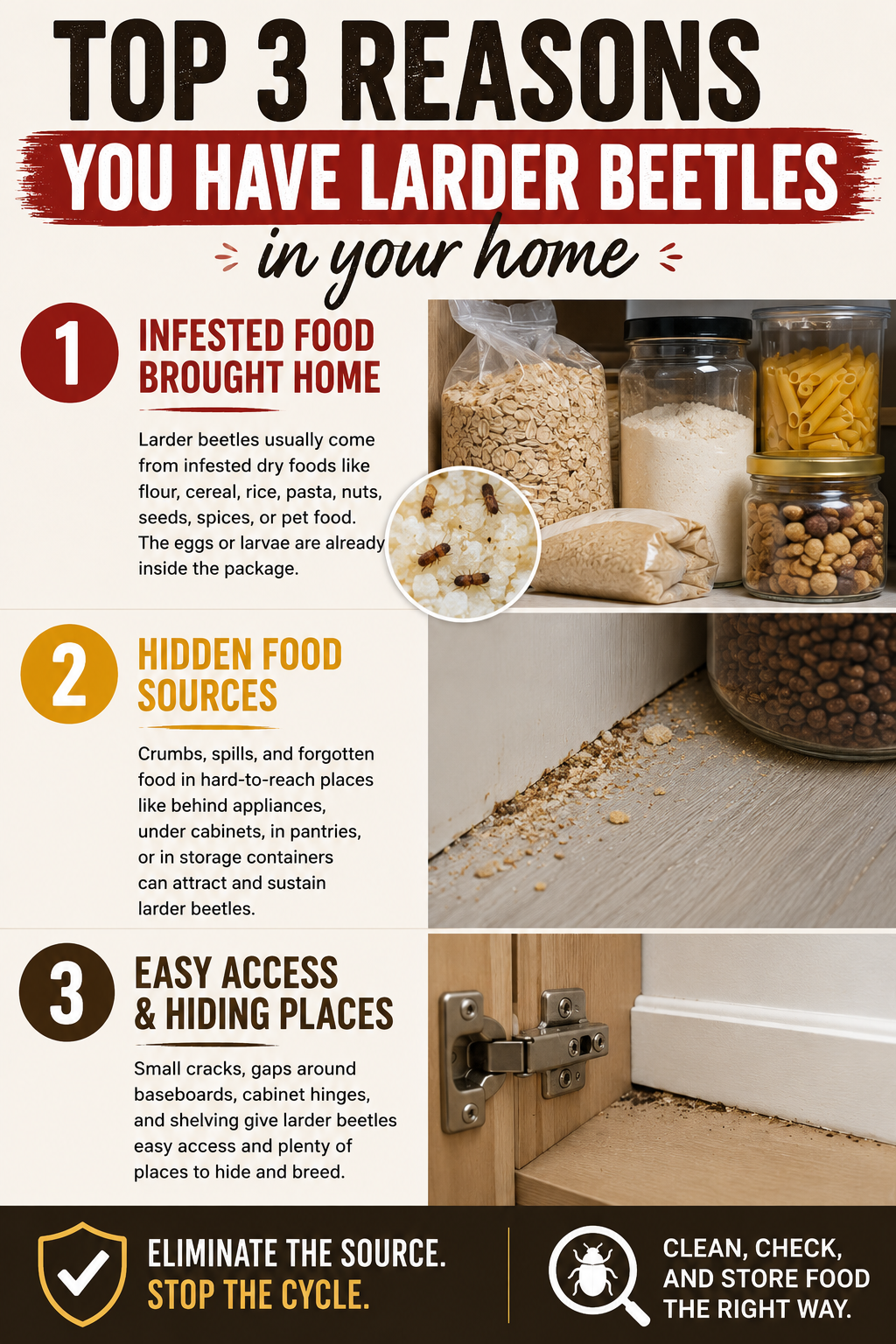
Larder beetles don’t usually establish a population inside a home unless there’s something feeding the larvae. Understanding the common larder beetle food sources can help explain why some beetles remain indoors after entering.
If you’ve already confirmed the insect is a larder beetle, my article explaining why you have larder beetles will help you understand what attracted them in the first place.
Once I started thinking that way, my inspection became much more productive.


They May Already Be Living Inside Your Walls
This is probably the hardest thing for homeowners to believe.
Sometimes the beetles you’re seeing today developed entirely inside your house.
The adults simply emerged and began wandering around after completing their life cycle.
Possible hidden breeding locations include:
- Wall voids.
- Attics.
- Crawl spaces.
- Ceiling cavities.
- Behind insulation.
- Under built-in cabinets.
If larvae have access to dead insects, animal remains, or another protein-rich food source in those hidden spaces, they may never need to leave until they become adults. Adults emerging from these hidden areas often disperse into living spaces, making it appear that they suddenly “invaded” the home. A strong vacuum for insect larvae can help remove accessible debris and insects from areas where hidden beetle food sources may be present.
Garage Doors Are One of the Biggest Entry Points
Whenever someone tells me they only find larder beetles near the garage, I immediately begin inspecting the garage itself.
Even well-built garage doors usually have small gaps around the bottom or sides.
Those openings are more than large enough for beetles to enter.
Once inside, many garages provide everything they need.
Stored dog food.
Bird seed.
Animal feed.
Dead insects.
Rodent activity.
That’s one reason garages become the starting point for so many infestations.



Window Screens Don’t Last Forever
Another place I always inspect is every window screen around the house.
Tiny tears often go unnoticed for years.
To us, they seem insignificant.
To a beetle that’s only a fraction of an inch long, they’re an open doorway.
I pay special attention to:
- Basement windows.
- Garage windows.
- Utility room windows.
- Attic vents with damaged screening.
Repairing damaged screens won’t solve an existing infestation, but it can reduce the number of wandering adults entering from outside in the future.
Utility Pipes Leave More Openings Than Most People Realize
One thing builders have to do is run plumbing, electrical wiring, gas lines, and HVAC equipment through exterior walls.
Whenever that happens, small gaps are often left around those penetrations.
Most are harmless.
Some become insect highways.
During my inspections I always look around:
- Air conditioning line sets.
- Water pipes.
- Electrical conduit.
- Cable and internet lines.
- Outdoor faucets.
- Dryer vents.
Even if larder beetles aren’t using those openings, sealing them can help reduce many other household pests while also improving energy efficiency.

Bird Nests Can Bring the Beetles Closer to Your House
One thing I rarely see discussed is how bird nests indirectly increase the chances of finding larder beetles indoors.
Bird nests often contain:
- Feathers.
- Hair.
- Dead insects.
- Organic debris.
Those materials attract larder beetles.
Once adults emerge, they don’t always stay in the nest.
Some simply crawl or fly toward nearby openings in the house.
If I notice abandoned nests attached to soffits, attic vents, or roof overhangs, I make a note to remove them when it’s legal, safe, and after nesting activity has completely ended.
You Might Bring Them Home Without Realizing It
Not every infestation starts with beetles flying into the house.
Sometimes we accidentally carry them inside ourselves.
I’ve seen infestations traced back to:
- Bags of dry dog food.
- Pet treats.
- Animal feed.
- Taxidermy.
- Hunting hides.
- Old leather goods.
- Antique animal products.
That’s why I inspect anything containing animal-based materials before bringing it into long-term storage.

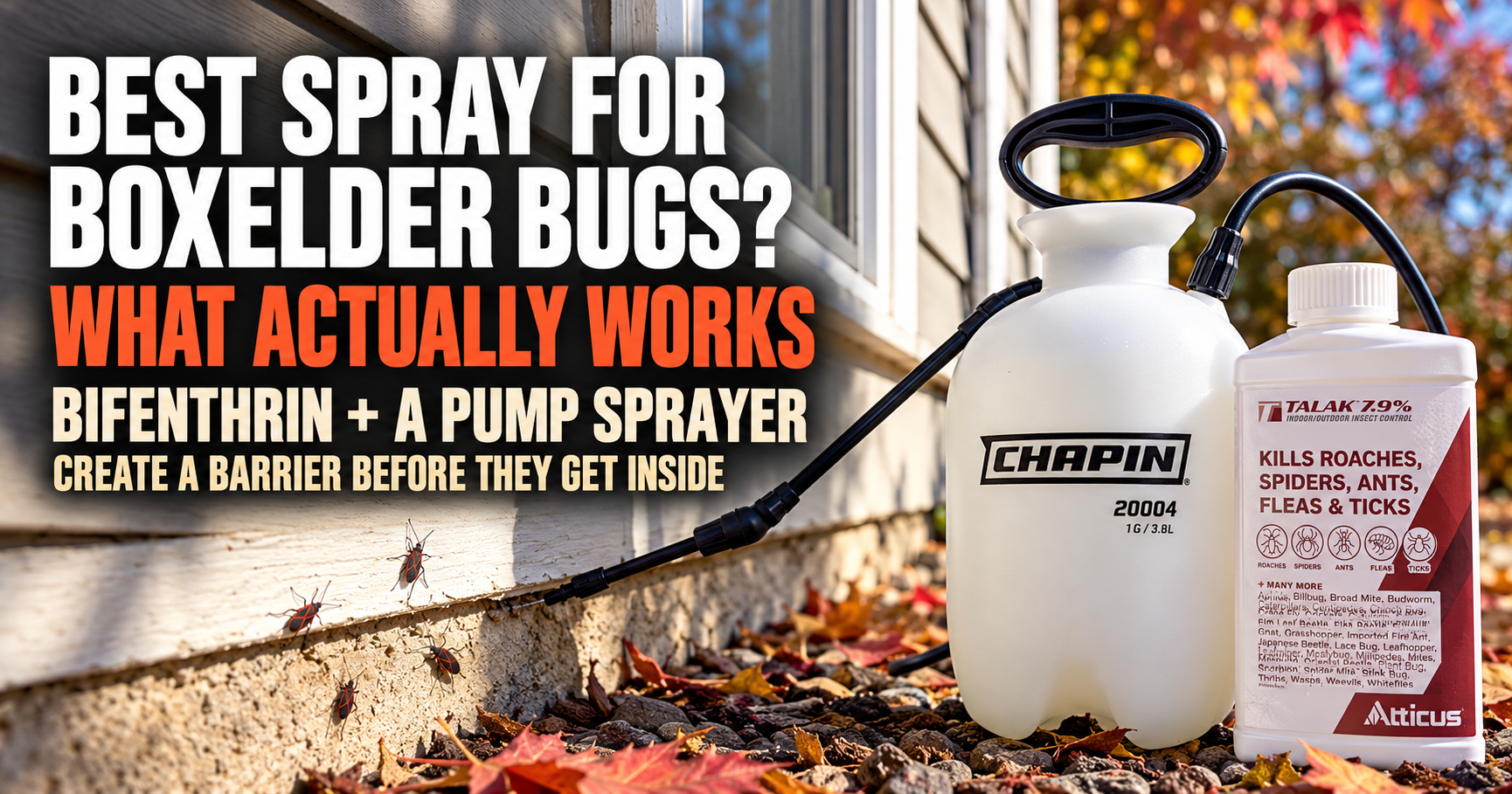
About halfway through my cleanup process, after removing the source and vacuuming thoroughly, I usually apply Ortho Home Defense Insect Killer for Indoor & Perimeter² around cracks, baseboards, and other beetle travel routes to help eliminate adults that are still emerging while the infestation winds down.


Can They Crawl Under Doors?
Absolutely.
One place I always inspect is the bottom of exterior doors, especially doors leading into garages.
Many garage doors leave a surprisingly large gap along the weather stripping.
To us, it doesn’t seem like much.
To a beetle that’s only about one-third of an inch long, it’s more than enough room to squeeze through.
If adult larder beetles are active outside your home during the spring, those openings provide an easy way inside. At the same time, those same gaps allow many other household pests to enter as well, making weather stripping one of the simplest upgrades you can make.
Foundation Cracks Can Become Insect Highways
Older homes naturally settle over time.
As they do, small cracks may develop around the foundation, siding, brick veneer, or where different building materials meet.
I don’t think these are usually the main reason homeowners have a larder beetle infestation.
However, they certainly provide another route for wandering adults to enter.
Whenever I’m sealing my home, I inspect:
- Foundation cracks.
- Gaps where siding meets concrete.
- Missing mortar around brick.
- Openings around hose bibs.
- Utility penetrations.
- Loose trim boards.
Even if those repairs don’t solve the current infestation, they help prevent future insect problems while improving energy efficiency.
Attic Vents Deserve a Close Look
Attic vents are designed to let air move through your attic.
Unfortunately, insects appreciate that airflow too.

If screening becomes damaged or was never installed correctly, beetles and other insects can easily enter attic spaces. Damaged screens can also explain how flies get inside, especially when insects appear near windows.
That becomes especially important because attics often contain another hidden food source…
Dead overwintering insects.
Once larder beetles discover those insects, the attic can become the starting point for an infestation that eventually spreads into the living areas below.
They May Have Arrived Inside Something You Bought
Not every infestation starts outdoors.
Sometimes we unknowingly bring the beetles home ourselves.
I’ve learned to inspect products like:
- Large bags of dry dog food.
- Bags of dry cat food.
- Bird seed.
- Livestock feed.
- Animal treats.
- Taxidermy.
- Antique leather items.
- Fur products.

This doesn’t mean every bag of pet food contains beetles.
Far from it.
But if you suddenly begin seeing larder beetles shortly after bringing one of these products home, it’s worth taking a careful look before assuming the insects entered through a crack somewhere.
Don’t Waste Time Sealing Every Crack Before You Find the Source
This is probably the biggest lesson I’ve learned.
Many homeowners spend an entire weekend caulking every tiny gap around the house.
There’s nothing wrong with sealing entry points.
In fact, I recommend it.
But if larvae are already feeding inside a hidden food source, sealing the outside won’t stop the adults that are about to emerge.
That’s why I always focus on the source first.
Once I’ve located and removed whatever the larvae were feeding on, I thoroughly vacuum the surrounding area and then apply Ortho Home Defense Insect Killer for Indoor & Perimeter² around baseboards, cracks, and other travel routes where any remaining adults are likely to crawl.
That combination has a much better chance of solving the problem than simply sealing cracks and hoping the beetles disappear.
How I Reduce the Chances of Another Infestation
After dealing with larder beetles once, I made a few simple changes around my house.
Now I:
- Replace damaged window screens as soon as I notice them.
- Keep weather stripping in good condition around exterior doors.
- Store dry pet food in airtight containers.
- Vacuum garages and storage rooms more often.
- Remove abandoned bird nests when it’s safe and legal to do so.
- Watch for signs of rodent activity.
- Seal obvious utility penetrations and foundation gaps.
None of these steps is complicated by itself.
Together, they make my home much less inviting to larder beetles and many other household pests.
Frequently Asked Questions
Do larder beetles fly into houses?

Yes. Adult larder beetles are capable of flying and may enter through open doors, damaged window screens, attic vents, or other openings, especially during spring when they’re most active. Carpet beetles can use several of these same openings, and how carpet beetles enter homes explains the common routes in more detail.
Can larder beetles crawl under doors?
Yes. Small gaps beneath garage doors and exterior doors are large enough for adult larder beetles to enter.
Are they coming in from outside or already inside?
Both are possible. A single adult may simply wander indoors from outside. However, if you’re repeatedly finding adults or larvae, there’s a good chance they’re developing somewhere inside the house where a food source is available. Repeated sightings make why larder beetles remain in houses especially useful to investigate.
Should I seal entry points?

Yes, but don’t rely on sealing alone. Closing gaps helps prevent future beetles from entering, but it won’t eliminate an active infestation if larvae are already feeding inside your home. For dry cracks and hidden travel routes, the diatomaceous earth barrier treatment discusses how a thin DE barrier can supplement entry-point repairs.
Why do I keep finding them on my windows?

Adult larder beetles are naturally attracted to light after emerging. That’s why they’re commonly found crawling on windowsills or around glass, even when the actual breeding source is somewhere else in the house. A similar light-seeking pattern can also explain why flies gathering on windows explained does not necessarily mean the window is the source.
About the Author
Mark Sullivan has spent years researching household beetles and helping homeowners identify the real source of infestations instead of simply treating the symptoms. After tracing larder beetles in his own home, he learned that understanding how they enter and, more importantly, why they stay is the key to long-term control.