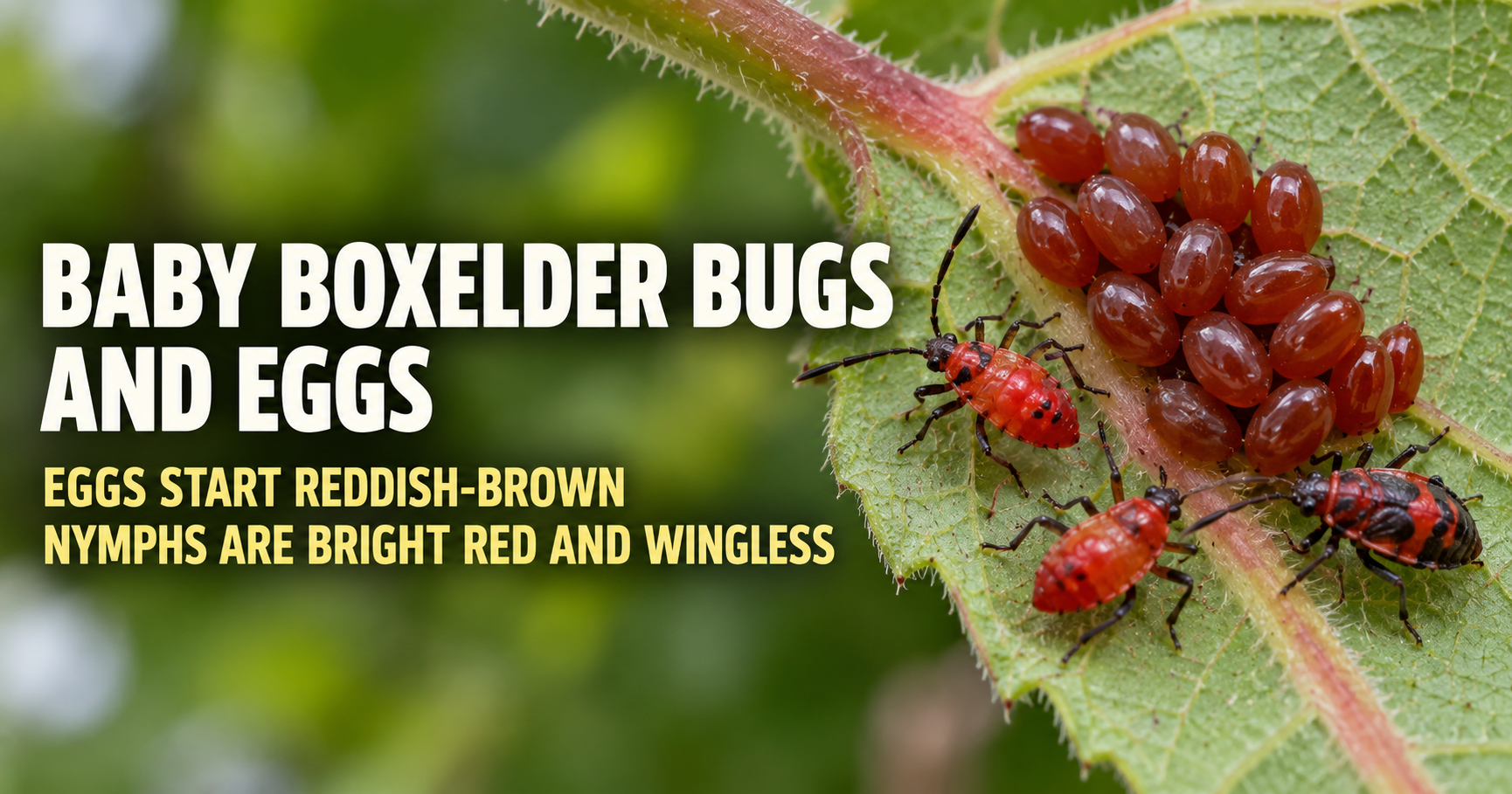
Baby boxelder bugs look much brighter than the adults. Instead of a black bug with thin red lines, young boxelder bugs are usually vivid red with dark black legs, heads, and developing wing pads. When several gather on a tree trunk, seed pod, garden plant, or sunny wall, they can look like a moving cluster of tiny red insects.
Boxelder bug eggs are much easier to miss. They are very small, usually yellow when newly laid and becoming reddish-brown as they develop. You are most likely to find them on leaves, twigs, bark crevices, or around the seed-bearing trees the adults use during summer.
What Are Baby Boxelder Bugs Called?
Baby boxelder bugs are called nymphs.
They do not go through a caterpillar-and-cocoon stage. Instead, they hatch from eggs looking like a small, wingless version of the adult, then grow through several nymph stages before developing full wings.
That is why a young boxelder bug can be recognizable once you know the colors. It has the same basic flat, narrow true-bug shape as the adult, but it is smaller, much redder, and lacks the familiar black wings that form an X on an adult’s back.
What Do Newly Hatched Boxelder Bugs Look Like?
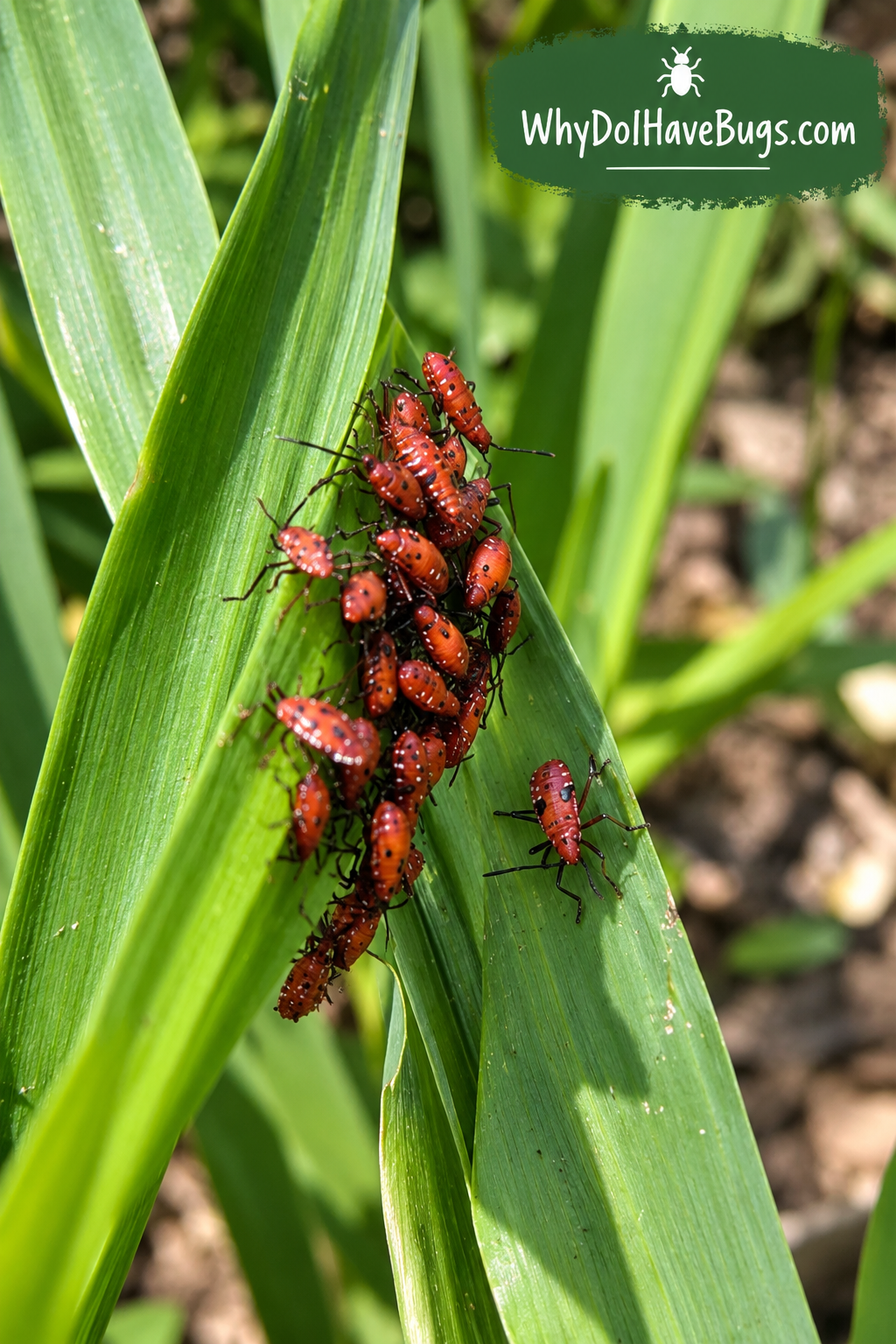
Freshly hatched nymphs are tiny, bright red, and easy to mistake for another kind of insect. At first, they may look like little red dots moving across a leaf, branch, tree trunk, or seed pod.
Their black head, antennae, and legs gradually become easier to see as they grow. The bright red body is the main clue. In the right setting, especially around a boxelder or maple tree, that color is hard to miss.
They commonly gather together after hatching, so you may spot dozens or even hundreds at once. A group on a tree can look alarming, but it is a normal part of the boxelder bug life cycle.
How Big Are Baby Boxelder Bugs?
The smallest nymphs are only about one-sixteenth of an inch long. They grow larger each time they molt, which means they shed their outer skin as they develop.
Older nymphs can reach about one-quarter inch or more before becoming adults. As they get bigger, more black appears on the body and small wing pads begin to show on their backs.
Their size can vary so much that color, body shape, black legs, and the place where you find them are more useful than size alone.
Why Are Baby Boxelder Bugs So Bright Red?
The bright red coloration helps make young boxelder bugs stand out against bark, leaves, seed pods, and light-colored siding. It is one reason people often notice them before they see the adult insects.
A bright red nymph does not mean it is poisonous, dangerous, or a biting pest. It is simply an immature boxelder bug going through its normal development.
As the nymph grows, its appearance changes from mostly red to a red-and-black pattern. Eventually it develops the black wings and red lines people recognize on full-grown adults.

What Do Boxelder Bug Eggs Look Like?
Boxelder bug eggs are tiny oval-shaped eggs laid in small groups. They may be yellow at first, then become more orange, red, or reddish-brown as they develop.
The clusters are not usually huge. University of Missouri Extension notes that a female may lay groups of around six eggs rather than the large, tightly packed clusters people often associate with stink bugs.
You may find them:
- On the underside or surface of leaves.
- Along twigs and small branches.
- In cracks and crevices of bark.
- Near boxelder seeds or seed-bearing branches.
- On host trees such as boxelder, maple, or ash.
They are easy to overlook because they blend into bark and are much smaller than a ladybug egg cluster or a caterpillar egg mass.
Where Do Female Boxelder Bugs Lay Their Eggs?
Female boxelder bugs commonly lay eggs on female, seed-bearing boxelder trees. Those trees provide both a place for the eggs and a food source for the nymphs that hatch.
They can also lay eggs on branches, leaves, and trunks of nearby host plants. Maples and ash trees may support them too, especially where boxelder trees are scarce.
If you see a bright red group of nymphs in a garden or on the ground, do not assume the eggs were laid right there. Nymphs can move to nearby plants and fallen seeds to feed after hatching.
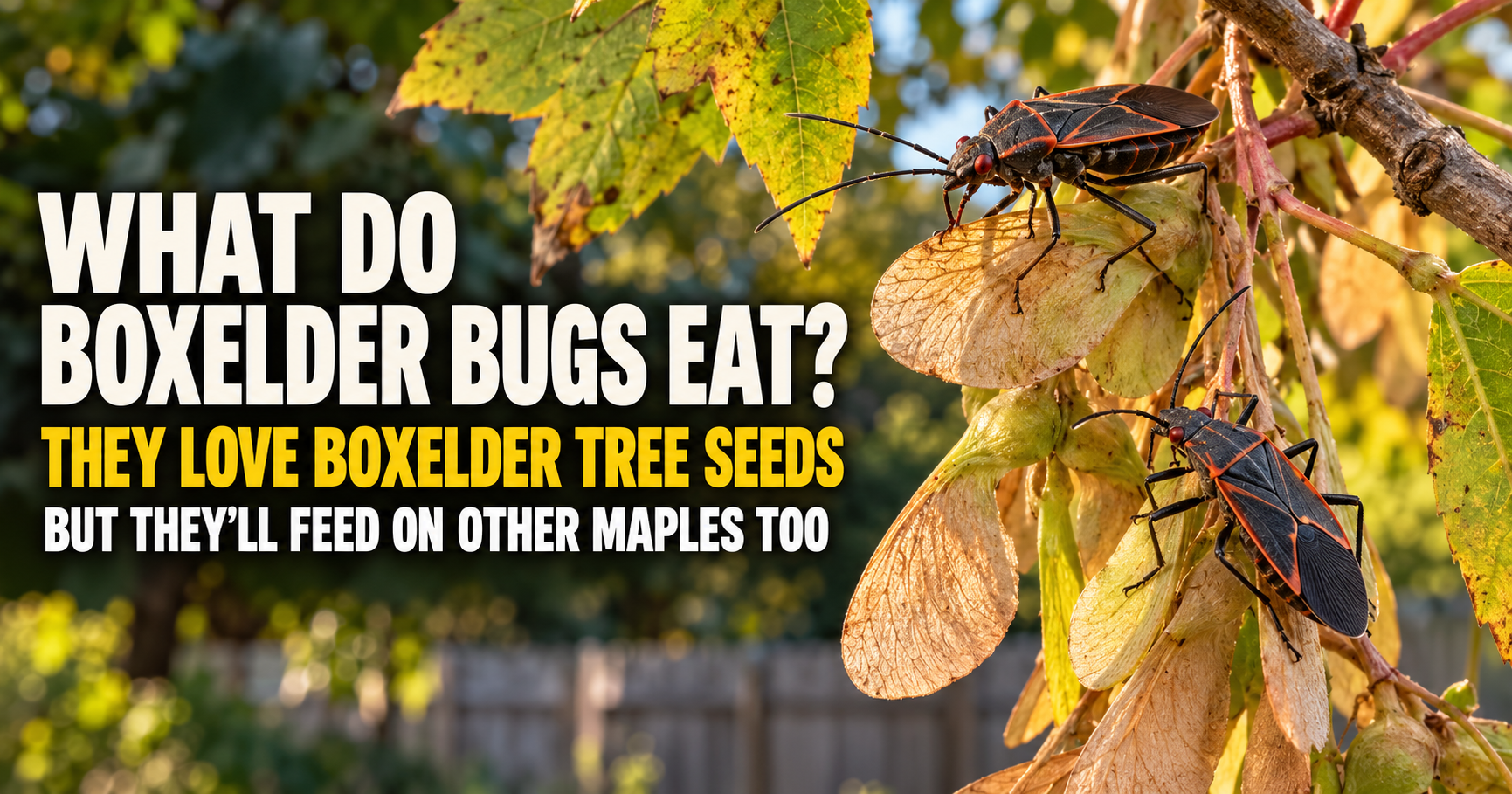
The host-tree connection makes more sense when you understand what boxelder bugs eat. Their food is one reason certain yards produce far more bugs than others.
When Do Boxelder Bug Eggs Hatch?
Egg laying begins after overwintering adults become active in spring. The exact timing varies with weather and location, but nymphs are commonly noticeable from late spring through summer.
In Missouri and much of the Midwest, adults mature later in summer and are especially noticeable around August and September, when they begin gathering before the move to winter shelter.
You may see several life stages at once. A tree can have adults, different sizes of nymphs, and a few egg clusters in the same general area.
Do Baby Boxelder Bugs Have Wings?
No. Nymphs do not have fully developed wings and cannot fly.
Older nymphs develop wing pads, which are small dark structures on the back that make them look more adult-like. But they do not have the full overlapping wings that form the adult’s distinctive X pattern.
Only adults fly to new feeding sites, sunny house walls, and overwintering locations. That is one reason fall home invasions are mostly an adult boxelder bug problem.


Are Baby Boxelder Bugs Dangerous?
No. Young boxelder bugs are not dangerous to people, children, dogs, cats, or the structure of a home.
They do not sting, are not a meaningful biting risk, and do not grow into an indoor infestation. Their main effect is nuisance when many gather on trees, garden plants, porches, siding, or around windows.
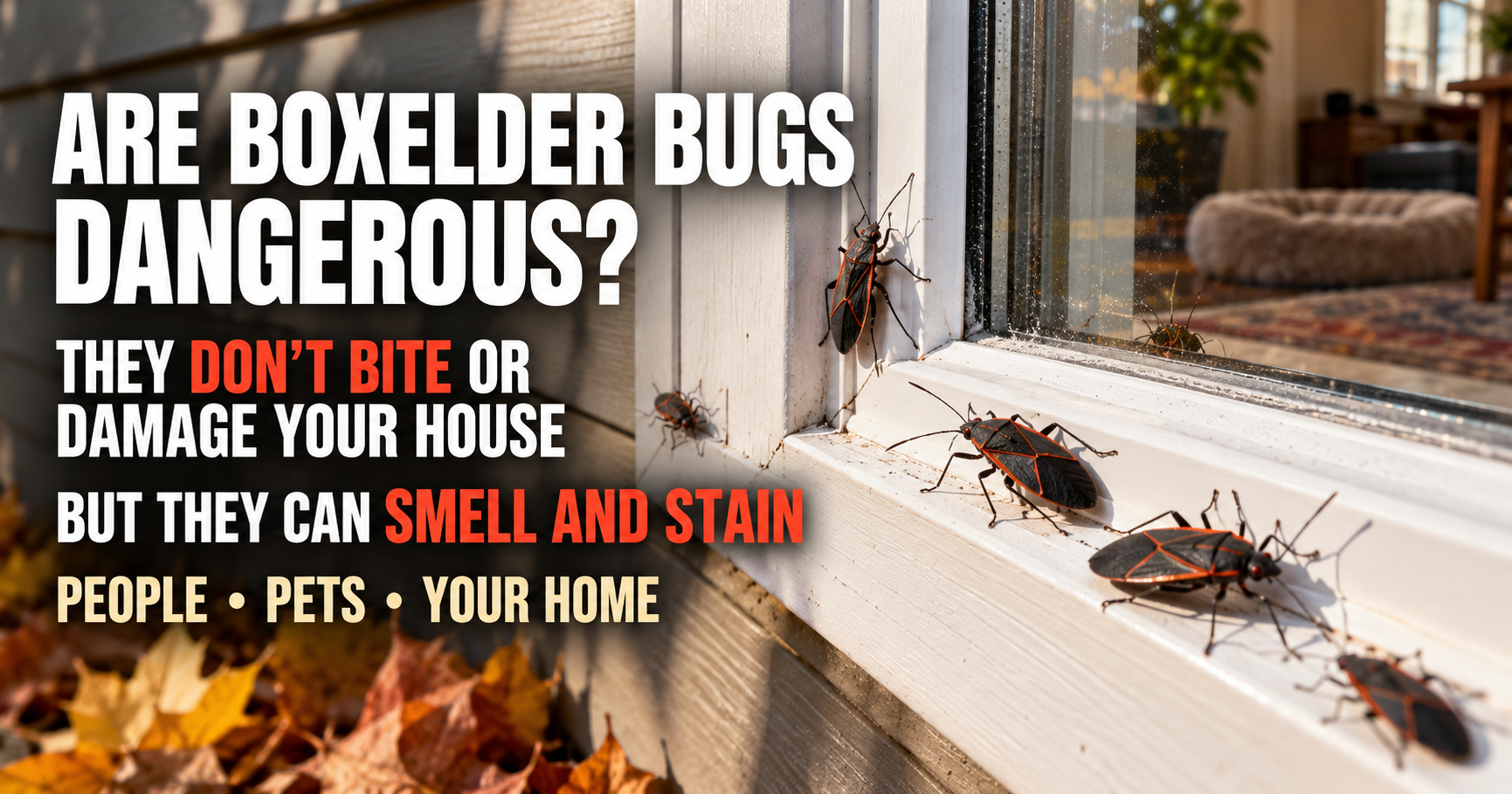
If you are concerned about a large group of red bugs, this page on whether boxelder bugs are dangerous explains the difference between an unsettling cluster and a real home or health threat.
Do Baby Boxelder Bugs Damage Plants?
Nymphs feed on plant fluids, just like adults. They are usually associated with seeds, leaves, flowers, and tender plant tissue on boxelder trees, maples, ash trees, and other suitable plants.
They may cause minor feeding injury, especially on seeds, but they do not usually create serious problems for healthy established landscape trees. A few red nymphs in a garden are not a reason to start spraying.
If a plant has major leaf loss, holes, browning, wilt, or dying branches, look for a different pest or disease before assuming boxelder bugs are responsible.



Baby Boxelder Bugs vs. Spotted Lanternfly Nymphs
Young spotted lanternflies are also black, red, and highly noticeable, so they can be confused with boxelder bugs. The key difference is the pattern.
Early spotted lanternfly nymphs are black with distinct white spots. Later-stage nymphs are bright red and black with clear white spots. Boxelder bug nymphs are generally red with dark legs, head, and developing wing pads, but they do not have a body covered in crisp white dots.
Spotted lanternflies are also a major invasive pest in areas where they occur. If you see a suspicious red-and-black bug with white spots, take a clear photo and check with your local extension office rather than assuming it is harmless.
Baby Boxelder Bugs vs. Red Spider Mites
Spider mites can make leaves look dotted, dusty, bronzed, or webbed, but they are much smaller than boxelder bug nymphs. They look more like moving specks than obvious insects.
Baby boxelder bugs have six visible legs, antennae, and a clear insect body. They can be seen moving across bark, leaves, or siding without a magnifying glass.
A group of bright red nymphs may be annoying, but it is not the same kind of plant problem as a true spider mite infestation.
Baby Boxelder Bugs vs. Boxelder Bug Lookalikes
Other red-and-black insects may show up around gardens, trees, and homes. Milkweed bugs, seed bugs, beetles, and other true bugs can all resemble boxelder bugs from a distance.
The setting gives you a useful clue. Boxelder bug nymphs are commonly associated with boxelder seeds, maples, ash trees, trunks, fallen seeds, sunny walls, and groups of similar-looking individuals.
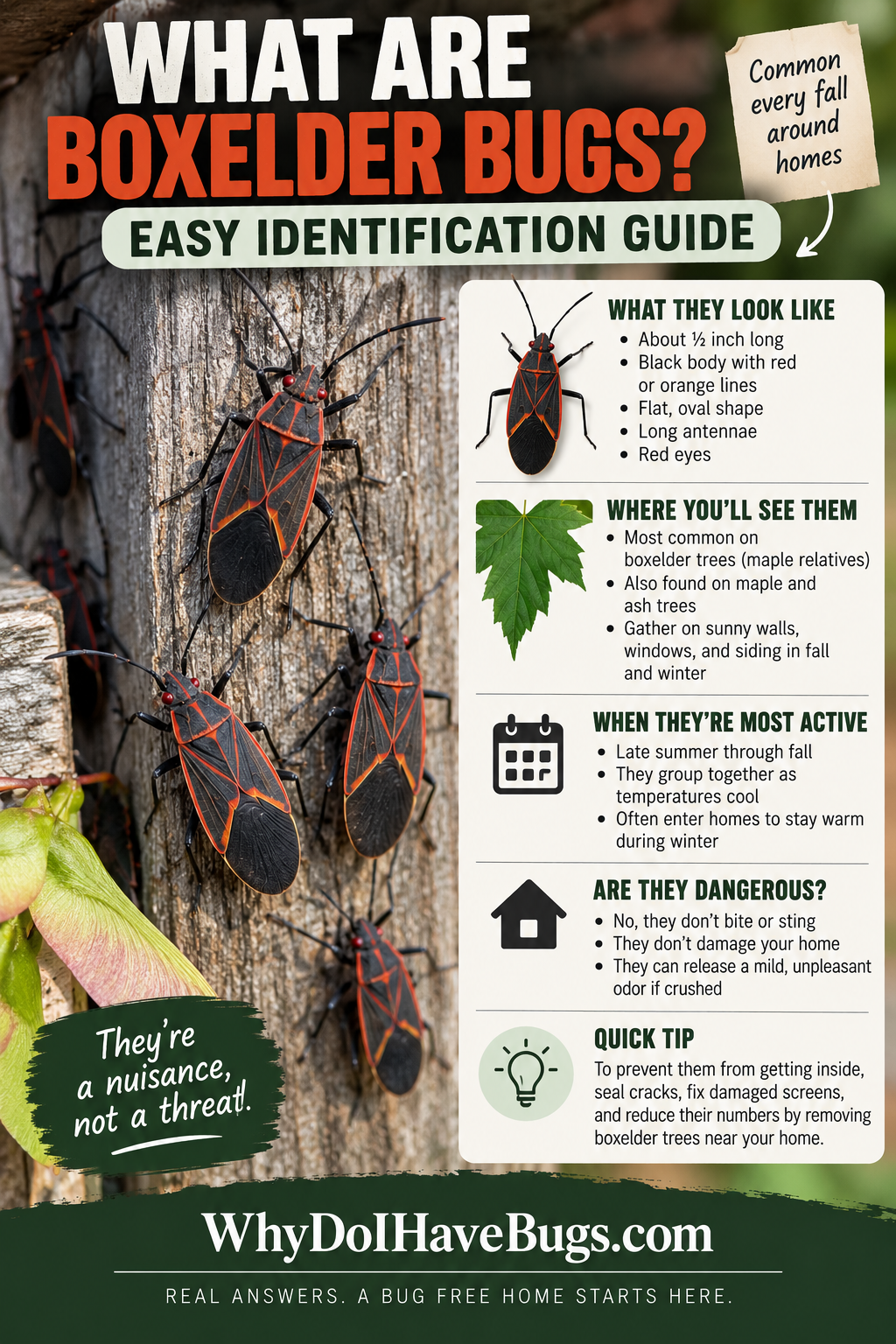
The adult insects are easier to confirm because of their black body, red lines, and wing pattern. If you are unsure, use this easy boxelder bug identification guide before deciding whether to remove what you found.
Should You Get Rid of Baby Boxelder Bugs?
A few nymphs on a tree or in the garden do not need treatment. They are part of the outdoor population and usually cause only slight feeding injury.
Large groups close to the house are different. If you are seeing hundreds on the siding, foundation, porch, tree trunks near the home, or around windows, it makes sense to reduce the population before adults begin looking for indoor winter shelter.
Start by cleaning up fallen seeds and debris around the foundation, repairing gaps, and removing the bugs you can reach. If the outdoor numbers are heavy enough to justify a pesticide, choose a product specifically labeled for boxelder bugs and follow every direction.

The practical treatment guide is in the best spray options for boxelder bugs.
Can Boxelder Bug Eggs Hatch Inside a House?
It is unlikely for a normal household problem. Boxelder bugs lay eggs outdoors on host trees and plant surfaces. They do not typically lay eggs in living rooms, closets, mattresses, or kitchen cabinets.
Bugs found indoors during fall and winter are usually adults that entered while searching for shelter. If you see a few crawling around a window in winter, they are not likely to be a new batch of babies hatching inside.
That is why indoor cleanup and exterior exclusion matter more than hunting for an imaginary nest.
What Happens After the Nymph Stage?
After several molts, the nymph becomes an adult. The adult develops full wings, more black coloration, and the red lines that make boxelder bugs recognizable.
Those adults feed outdoors through the warm season. When days shorten and temperatures begin dropping, they leave the trees and search for sheltered places to overwinter.
That is the point when homeowners start seeing them cover the sunny side of a house or gather around windows, doors, garages, and siding gaps.
Are baby boxelder bugs all red?
Freshly hatched nymphs are bright red. As they grow, they become red and black, with darker heads, legs, bodies, and developing wing pads.
Are boxelder bug eggs red?
They can be yellow when newly laid and become reddish-brown as they develop. They are tiny and usually found in small groups on leaves, bark, branches, or host trees.
Do boxelder bug eggs look like stink bug eggs?
Not usually. Stink bugs often lay larger, neater clusters with many barrel-shaped eggs. Boxelder bugs tend to lay much smaller groups of oval eggs.
Can baby boxelder bugs fly?
No. Only adult boxelder bugs have fully developed wings and can fly.
Why are there tiny red bugs all over my maple tree?
They may be boxelder bug nymphs, especially if they have black legs and dark markings. They commonly feed around boxelder and maple trees during summer.
Will baby boxelder bugs come into my house?
Nymphs may occasionally be found near a home, but adults are the stage most likely to invade structures in fall because they can fly to protected overwintering sites.
Caleb Warren writes practical pest guides for WhyDoIHaveBugs.com, helping homeowners identify insects accurately before treating the wrong bug.