
Opening your closet and spotting a tiny carpet beetle crawling across a shelf or finding mysterious damage on stored clothing can be unsettling.
My first question wouldn’t be, “How did that beetle get in here?”
It would be…
“What is keeping it here?”
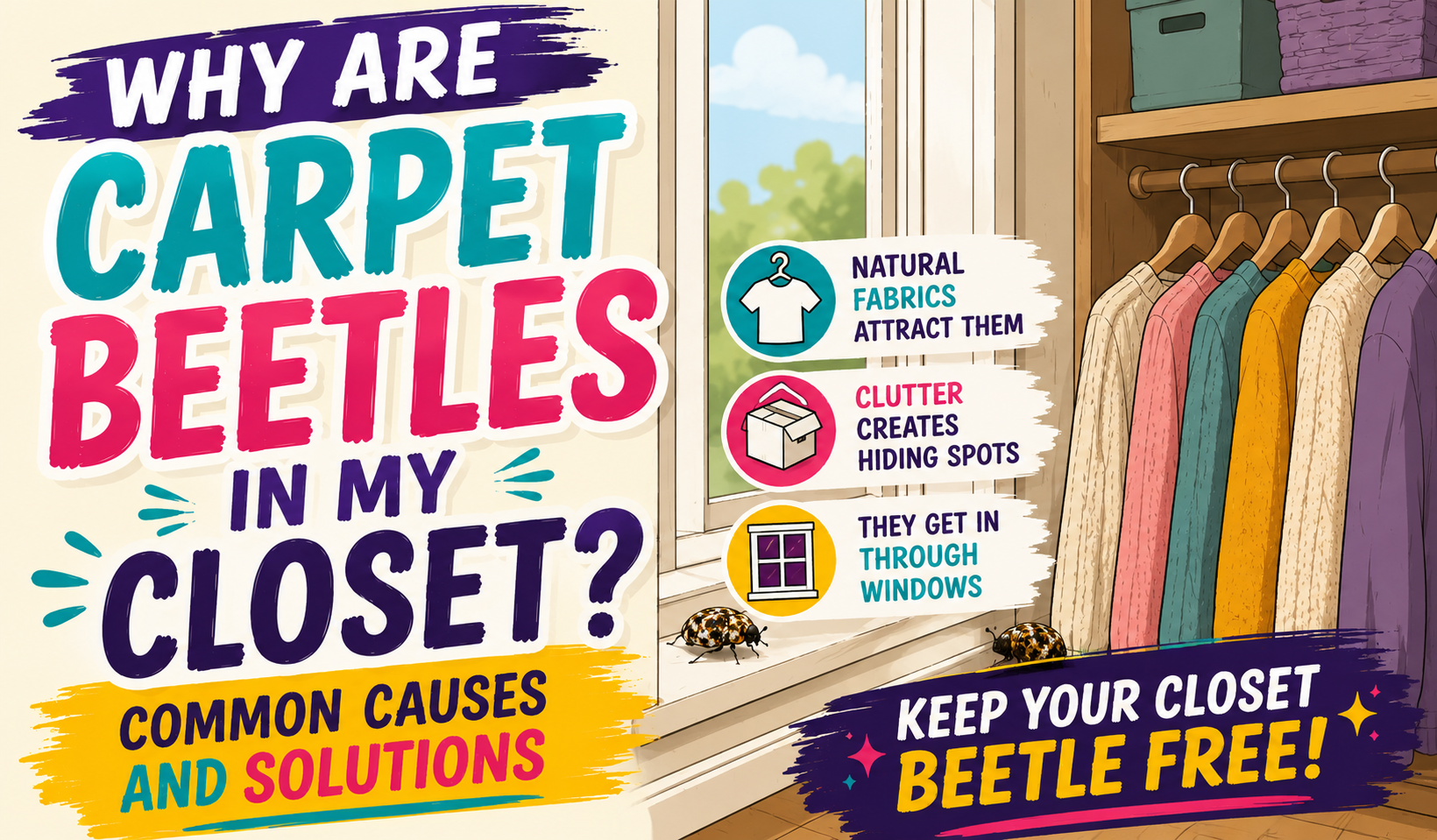
Closets are one of the most common places to discover carpet beetles because they provide almost everything the larvae need to survive: darkness, shelter, and food that’s often left undisturbed for weeks or even months.
The good news is that once you understand why they’re choosing your closet, it’s much easier to stop the infestation before more clothing or stored fabrics are damaged.
Closets Are the Perfect Nursery
Adult carpet beetles usually aren’t interested in living inside your closet forever.
They’re looking for a safe place to lay eggs.
A closet checks almost every box.
It’s usually:
- Dark.
- Quiet.
- Undisturbed.
- Full of natural fibers.
- Protected from everyday activity.
From a carpet beetle’s perspective, it’s an ideal place for the next generation to develop.
After the eggs hatch, the larvae have immediate access to food without needing to travel very far.
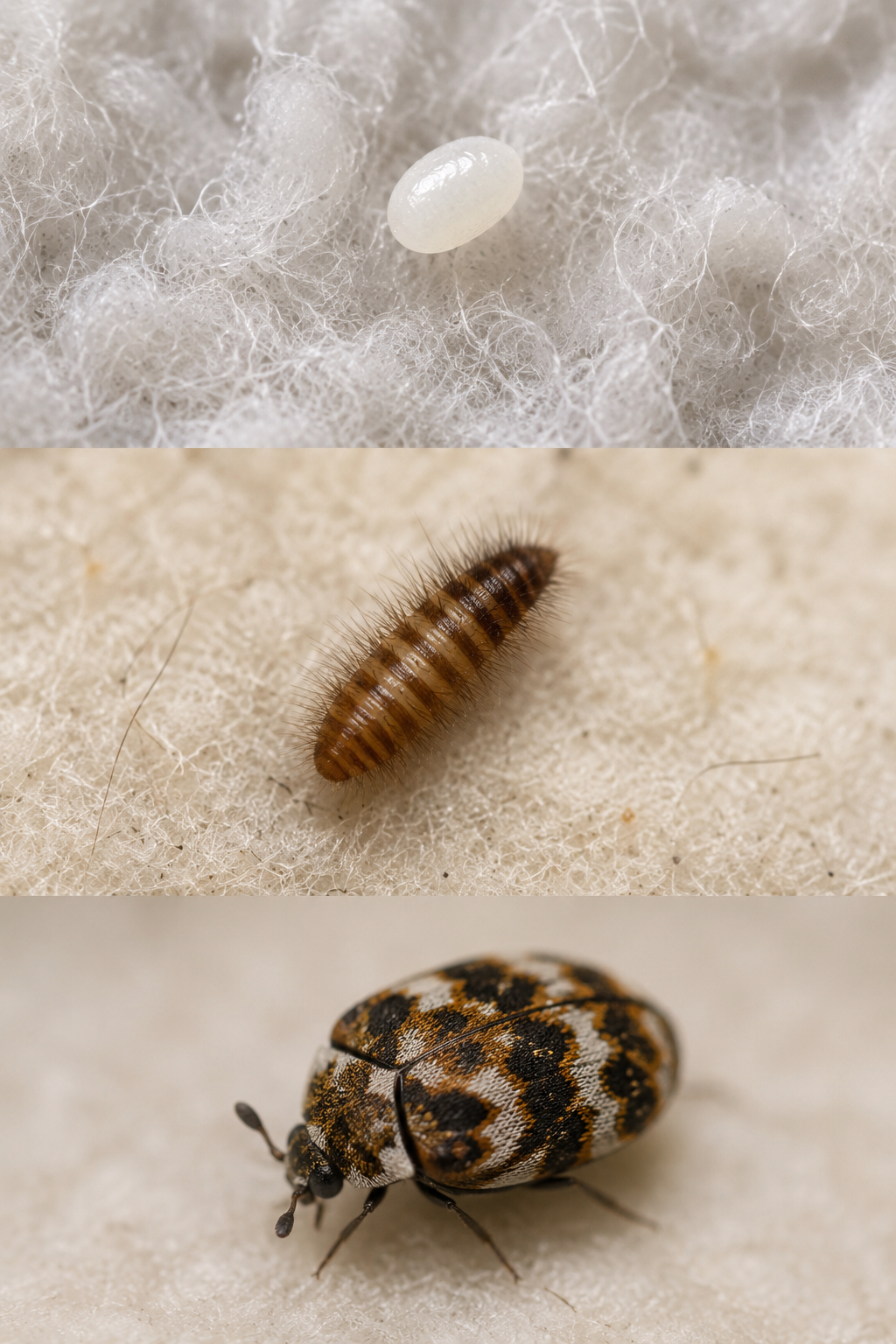
If you’re new to carpet beetles, my Everything You Need to Know About Carpet Beetles guide explains how their entire life cycle works.
It Isn’t Always Your Clothes They’re Eating
One thing that surprised me while researching carpet beetles is that your clothing isn’t always the main attraction.
Many people picture larvae chewing holes through every shirt in the closet.
Sometimes they do.
But just as often, they’re feeding on things you barely notice.
That can include:
- Pet hair trapped in corners.
- Lint beneath shelving.
- Dust mixed with natural fibers.
- Feathers.
- Wool hats and scarves.
- Leather gloves.
- Fur trim.
- Dead insects.
I’ve even seen situations where the food source wasn’t the hanging clothes at all—it was years of accumulated lint tucked behind storage bins.


Seasonal Clothing Is Especially Vulnerable
Think about the clothes you only wear once or twice a year.
Heavy winter coats.
Wool sweaters.
Holiday decorations wrapped in fabric.
Blankets stored until colder weather.
Those items may sit untouched for months.
That’s exactly the kind of environment carpet beetle larvae prefer.
The longer fabrics remain undisturbed, the more time larvae have to feed without being noticed.
Don’t Overlook the Closet Floor
If I were inspecting a closet for carpet beetles, I wouldn’t spend all my time looking at the hanging clothes.
I’d start lower.
The floor.
The corners.
The baseboards.
Behind storage containers.
Under shoe racks.
Those areas collect lint, pet hair, and dust that many homeowners rarely vacuum.
That’s often where larvae begin developing long before they reach clothing.
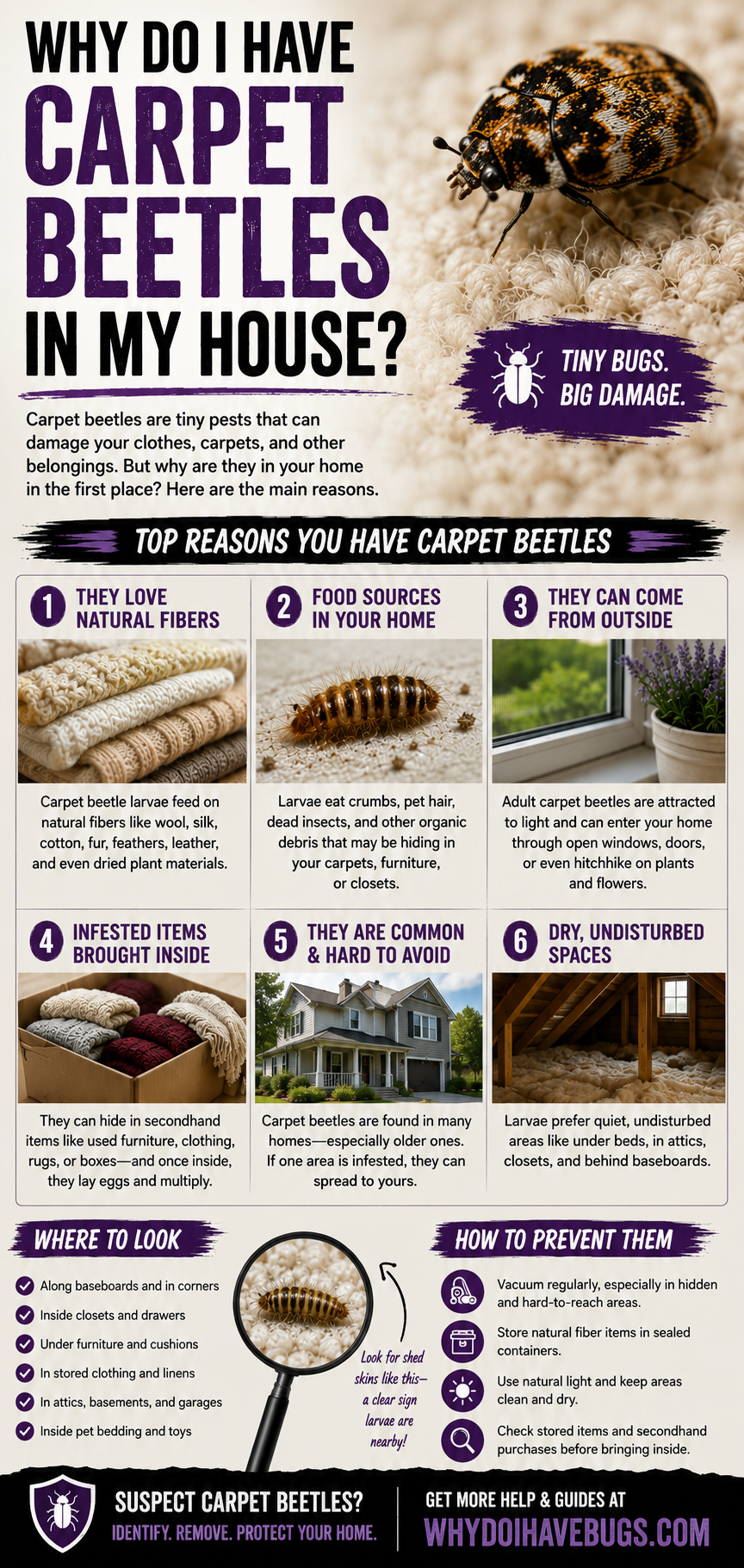
My guide on where carpet beetle larvae hide covers many of these overlooked hiding places throughout the home.
Check Stored Shoes Too
One lesson I learned firsthand is not to ignore shoes that have been sitting for a long time.
The very first evidence I found of our own carpet beetle problem wasn’t on clothing.
It was inside a shoe that had been stored in our attic.
I discovered a carpet beetle shed skin before I ever saw a live beetle.
That experience completely changed how I inspect storage areas now.
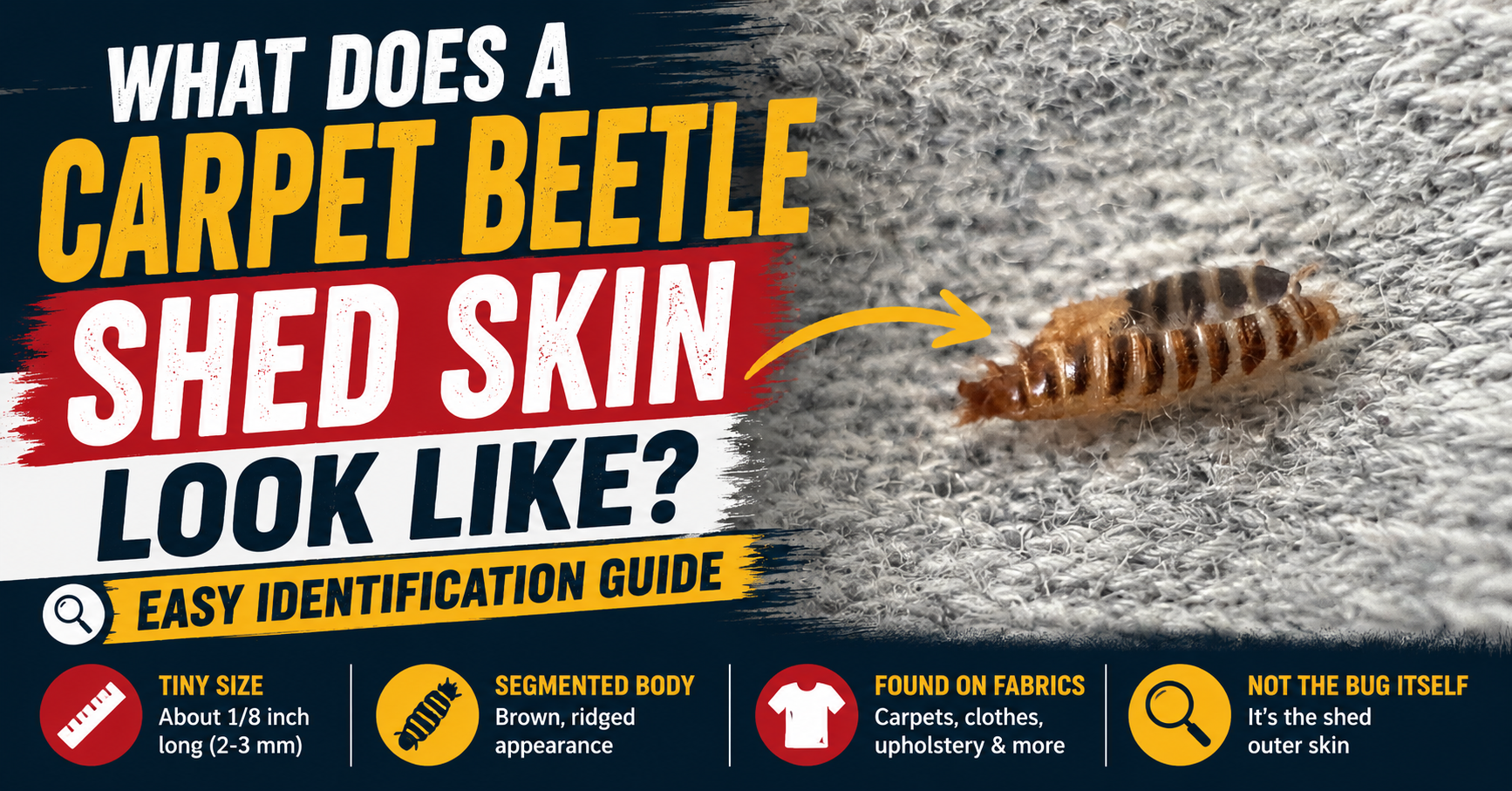
If you’ve found something similar, my guide explaining what carpet beetle shed skins look like can help you identify what you’re seeing.
Adult Beetles Usually Aren’t the Biggest Problem
It’s easy to panic when you spot an adult beetle crawling across a shelf.
Ironically, the adults usually aren’t damaging your belongings.
The larvae are.
Adults mainly exist to reproduce.
Once eggs hatch, the larvae spend weeks or months feeding before eventually becoming adults themselves.
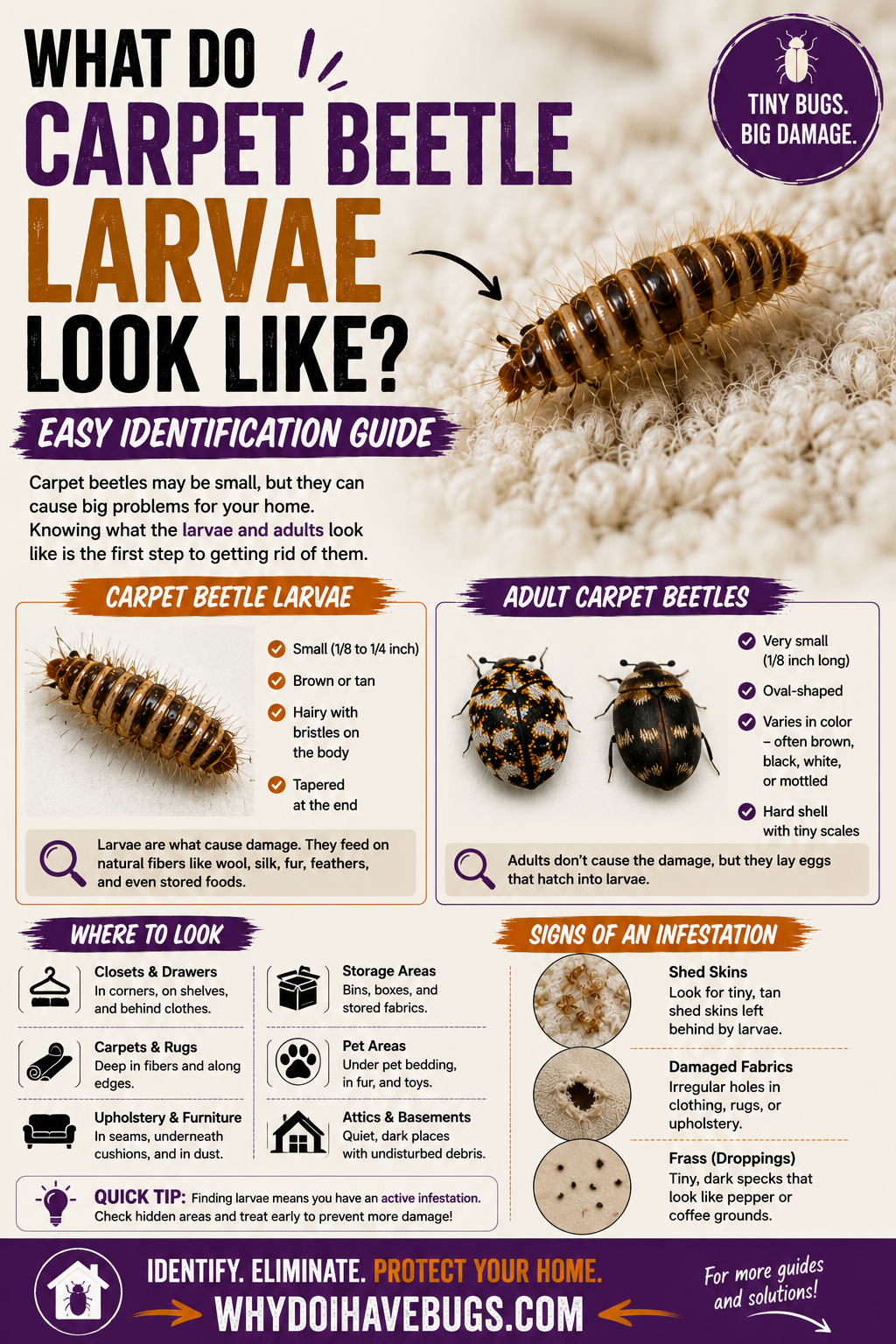
If you’re not sure what the destructive stage looks like, here’s my guide showing what carpet beetle larvae look like.
Why They Keep Returning to the Same Closet
If carpet beetles keep appearing in the same closet, there’s usually a reason.
It often means something inside that closet is still supporting the infestation.
That might be:
- Hidden eggs.
- Developing larvae.
- Pet hair.
- Lint buildup.
- Stored natural-fiber clothing.
- A forgotten blanket or rug.
Simply removing the adults you see won’t solve the underlying problem.
That’s why infestations often seem to disappear for a while before another generation emerges.

I explain that cycle in Why Do Carpet Beetles Keep Coming Back? Common Reasons Explained.
My Closet Cleanup Routine
If I suspected carpet beetles were living in a closet, here’s exactly where I’d begin.
First, I’d remove everything from the floor.
Then I’d vacuum every corner, shelf, crack, and baseboard.
Next, I’d inspect stored clothing for signs of larvae, shed skins, or feeding damage.
Finally, I’d wash or dry clean vulnerable fabrics before putting them back.
What I wouldn’t do is simply spray the floor and hope everything disappears.
The goal is to remove the larvae and the food they’re depending on.
Why a Strong Vacuum Makes Such a Difference
Closets are full of tight spaces that collect lint and pet hair.
That’s why I believe a quality vacuum is one of the most valuable tools for carpet beetle control.
A powerful vacuum helps remove:
- Larvae.
- Shed skins.
- Pet hair.
- Lint.
- Dust.
- Many eggs resting on accessible surfaces.
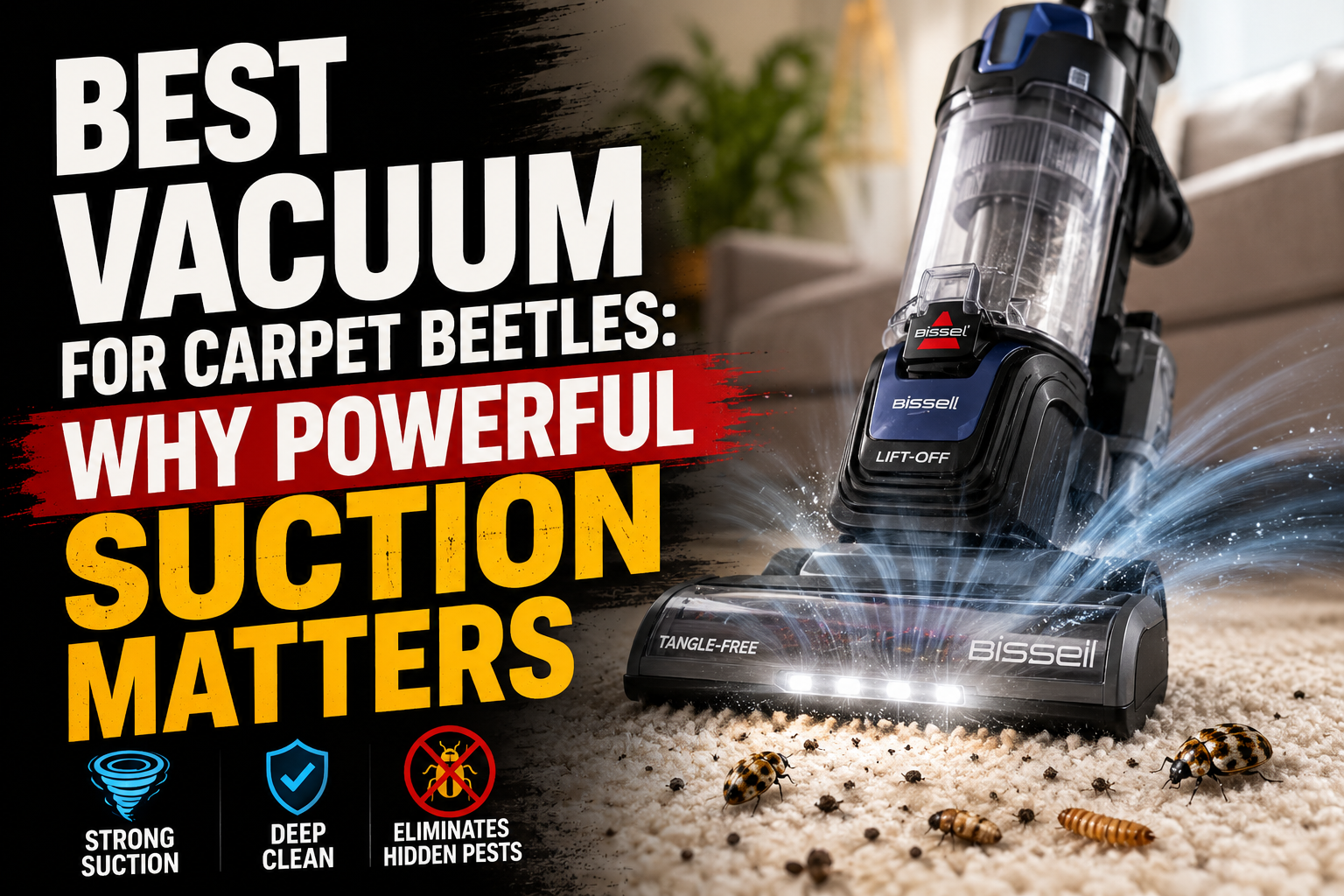
I explain exactly what I look for in Best Vacuum for Carpet Beetles: Why Powerful Suction Matters.
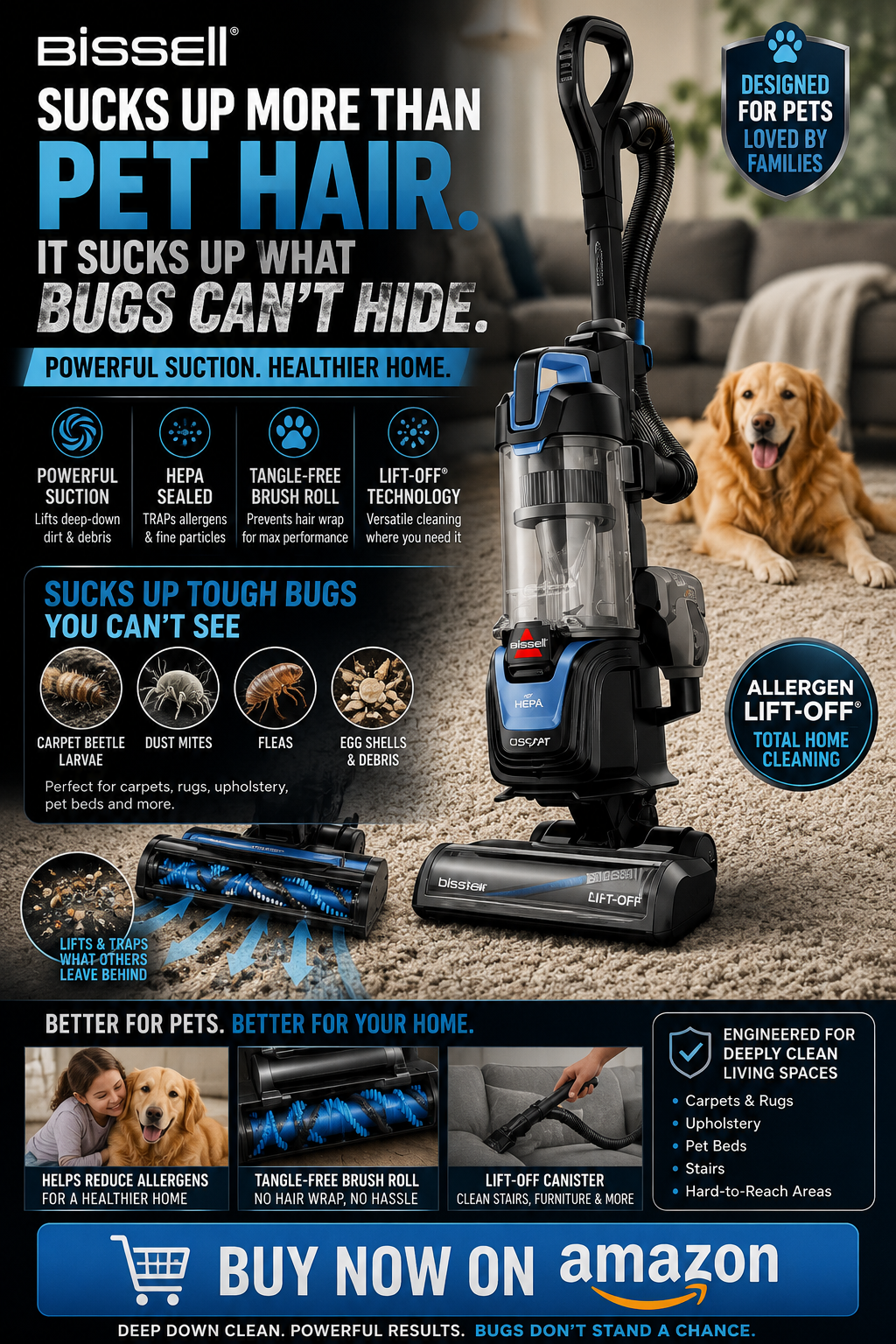
One vacuum I’d confidently recommend is the Bissell Pet Hair Eraser Allergen Lift-Off because the detachable Lift-Off pod makes it much easier to clean closet shelves, stairs, baseboards, corners, and other tight areas where carpet beetles commonly hide.
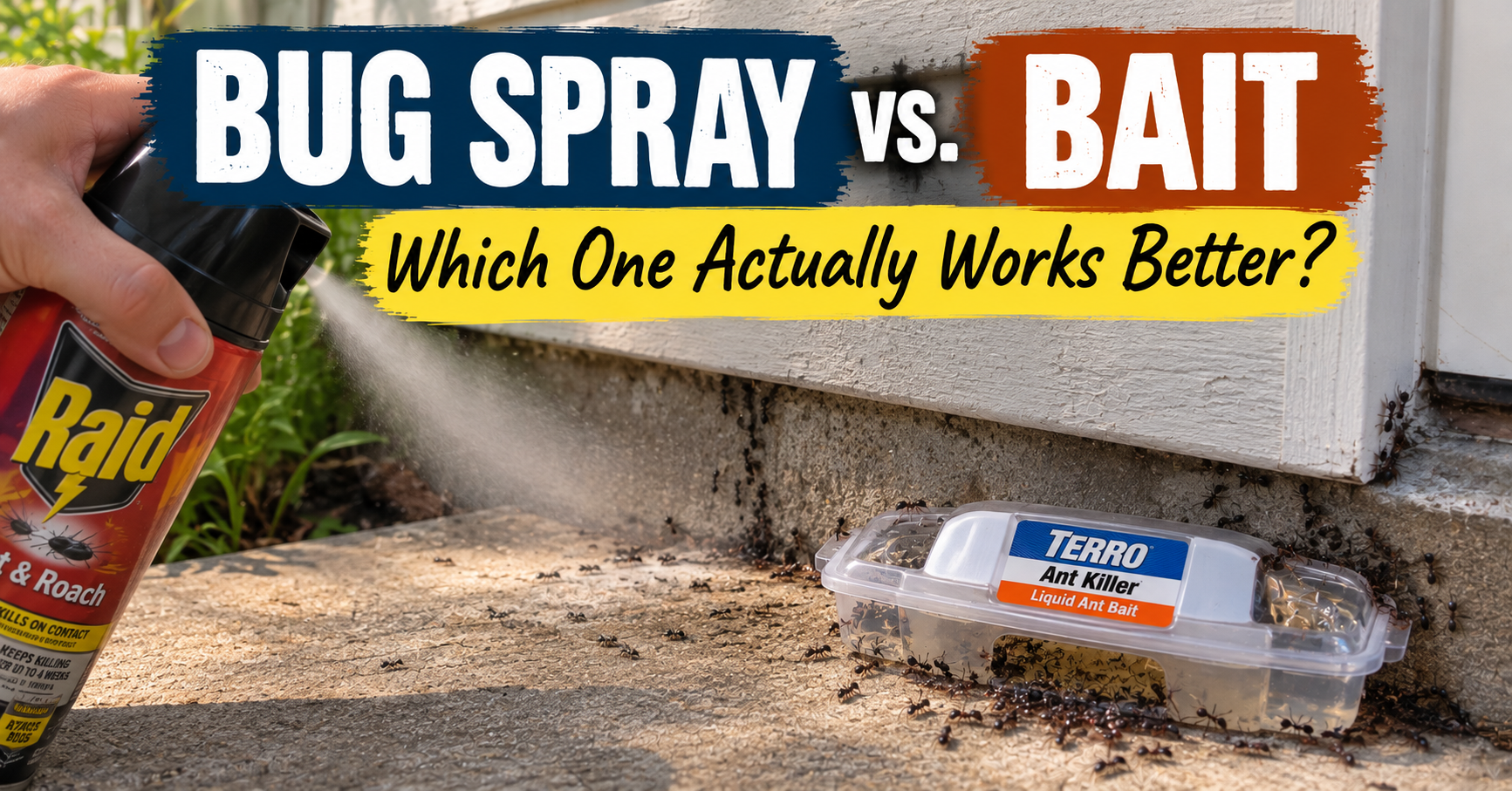
Should You Spray the Closet?
If you’ve confirmed an active infestation, an insecticide may have a place as part of your overall treatment plan.
But I wouldn’t rely on spray alone.
If eggs remain hidden or larvae still have food available, the infestation can continue long after the adults you’ve seen are gone.
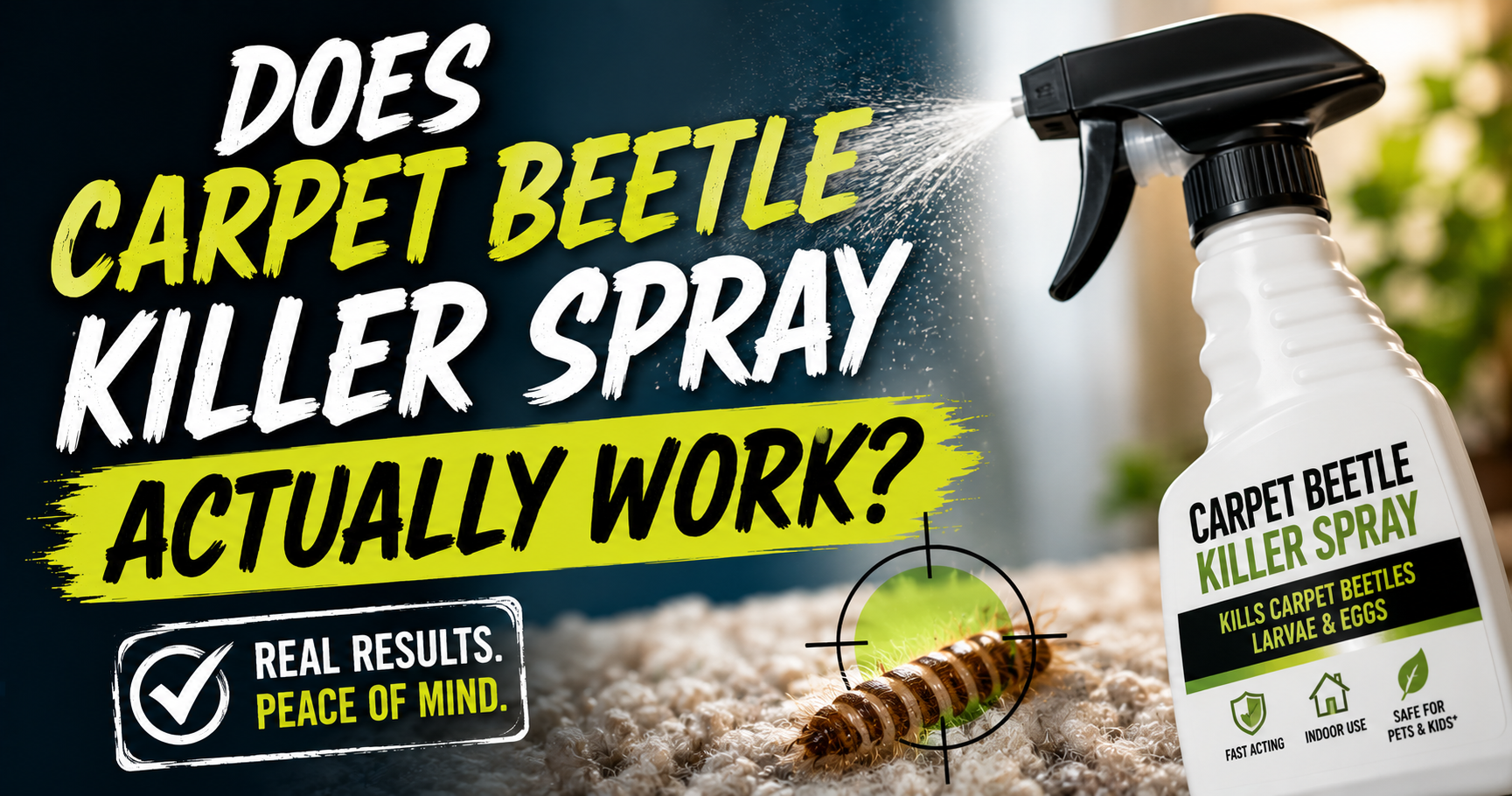
If you’re considering using one, read Does Carpet Beetle Killer Spray Actually Work? first so you know what to realistically expect.

If you decide a spray is appropriate, the Carpet Beetle Killer Spray for Indoor Use is designed to target carpet beetles and their larvae when used according to the product label.

One Closet Can Reveal a Bigger Problem
Finding carpet beetles in one closet doesn’t always mean the infestation is limited to that space.
It may simply be the first place you’ve noticed them.
After inspecting the closet, I’d also check nearby bedrooms, under furniture, stored blankets, pet bedding, and other quiet areas where larvae commonly develop.
The more thoroughly you inspect now, the less likely you’ll be surprised by another generation a few weeks later.
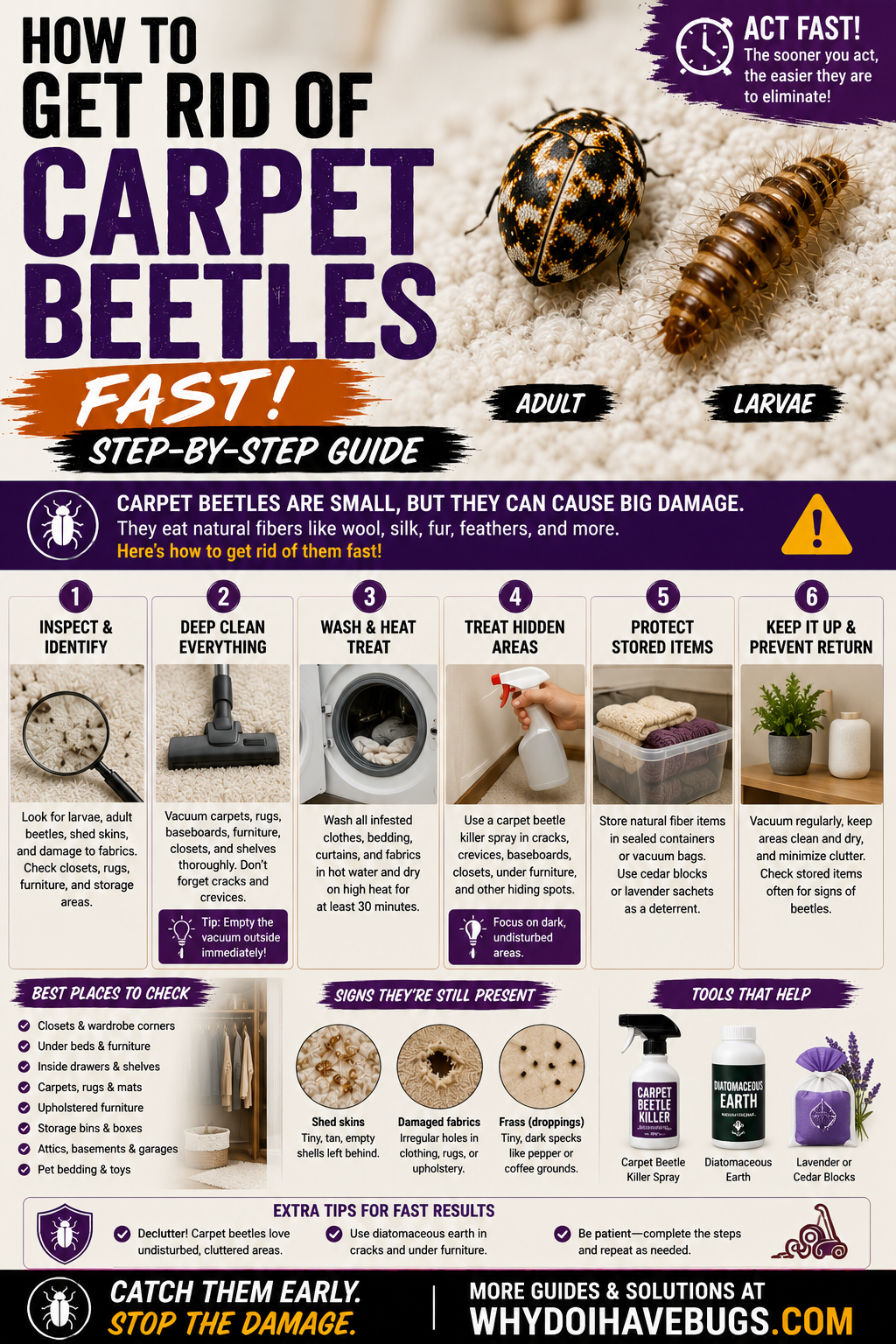
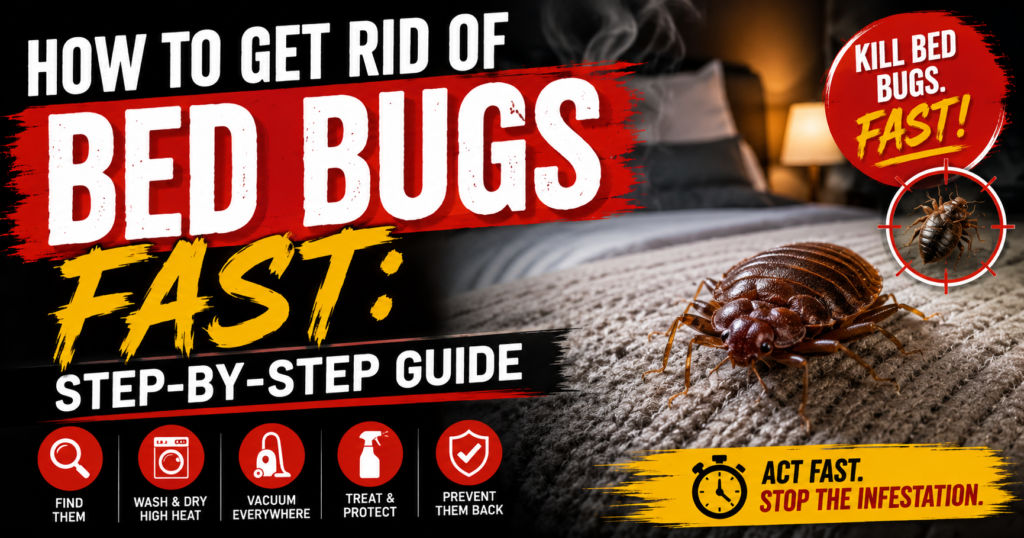
If you need a complete action plan, my How to Get Rid of Carpet Beetles Fast Step-by-Step Guide walks through the entire cleanup process from inspection to long-term prevention.
For more identification guides, treatment advice, and prevention tips, visit our growing Beetles resource center.
Frequently Asked Questions
Why are carpet beetles attracted to closets?
Closets are dark, quiet, and often contain natural-fiber clothing, blankets, lint, and pet hair that provide ideal conditions for carpet beetle larvae.
Will carpet beetles ruin all of my clothes?
Not necessarily. Carpet beetle larvae prefer natural materials like wool, fur, feathers, silk, and leather. Synthetic fabrics are generally much less attractive unless they’re soiled with food, body oils, or mixed with natural fibers.
Should I throw away clothes with carpet beetles?
Usually not. Many items can be saved by washing, dry cleaning, or otherwise treating them according to the fabric’s care instructions while thoroughly cleaning the surrounding closet.
Why do carpet beetles keep coming back to my closet?
Hidden eggs, overlooked larvae, or remaining food sources like lint and pet hair often allow new generations to continue developing even after you’ve removed the adults.
Is finding one carpet beetle in my closet a big deal?
Not always. One adult beetle doesn’t automatically mean you have a large infestation, but it’s a good reason to inspect the closet carefully for larvae, shed skins, and signs of feeding damage.
About the Author
Ryan Mitchell researches household pests and enjoys helping homeowners understand why insects appear in specific places around the home. His practical guides focus on identifying the real source of an infestation and choosing solutions that address the problem instead of just the symptoms.