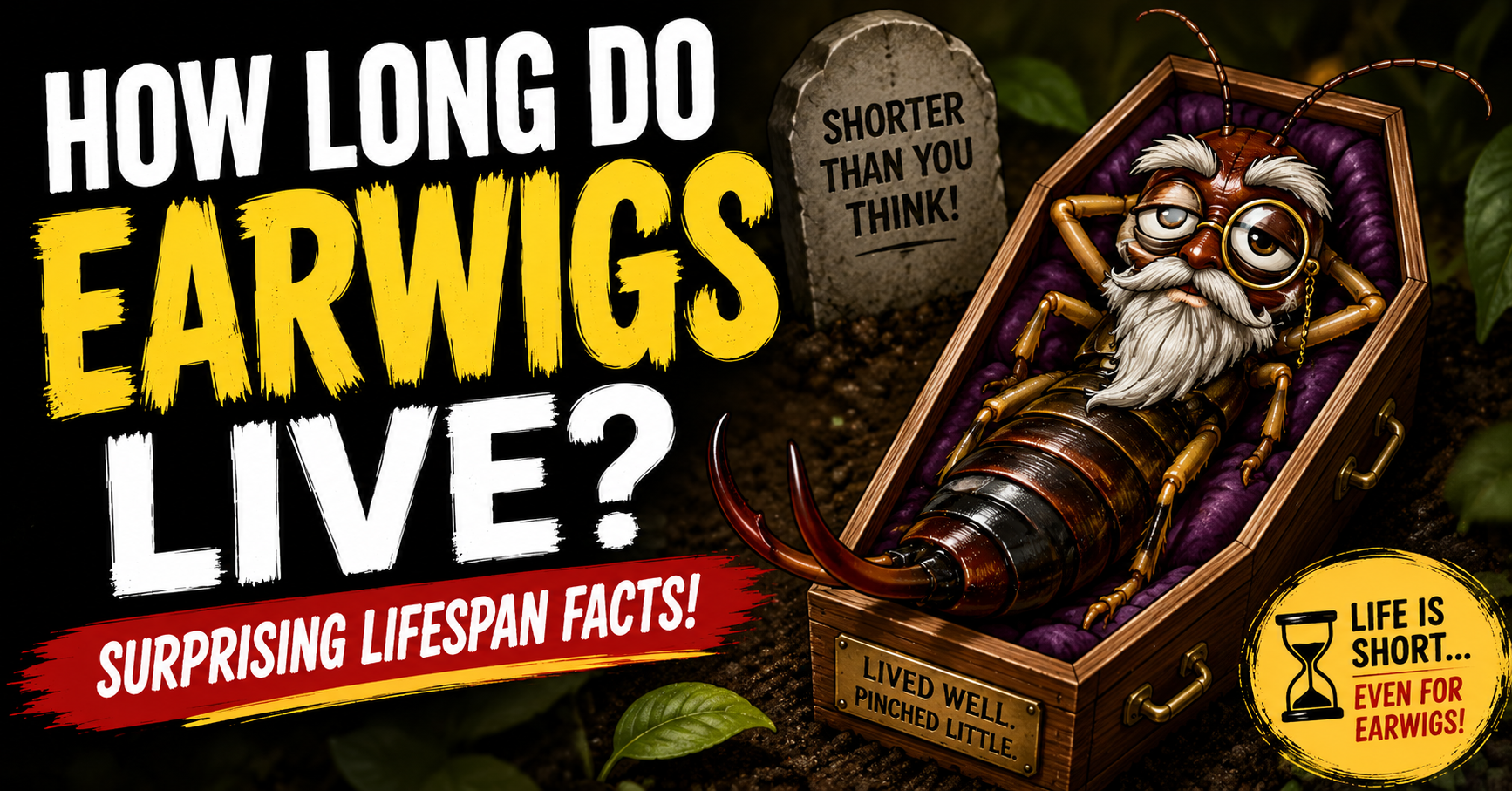
If you’ve been finding earwigs around your home, you might be wondering whether you’re dealing with a short-term nuisance or insects that will stick around for years.
It’s a fair question.
Some household pests, like termites, can live for many years under the right conditions. Others complete their entire lives in just a few weeks. Mayflies provide an especially striking example of how insect lifespans can vary between life stages; see mayfly life cycle and lifespan for the full timeline.
So where do earwigs fit?
The answer is somewhere in the middle.
While an individual earwig doesn’t live for years, its lifespan is much longer than many homeowners expect. From the moment an egg is laid until the adult eventually dies, the entire process typically takes about a year. Understanding that timeline helps explain why earwigs seem to appear in waves and why you may notice more of them during certain seasons than others. House flies follow a much faster timeline, as explained in this guide to the house fly lifespan timeline.
The Short Answer
Most common earwigs:
- Live about one year from egg to adult.
- Spend several months growing through immature stages.
- Reach adulthood after multiple molts.
- Usually survive only a few months as adults.
- Produce the next generation before dying.
Although individual earwigs don’t live very long, new generations emerge every year, creating the impression that they’re always around.



An Earwig’s Life Starts Long Before You Ever See One
When most people think about insects, they picture adults flying or crawling around outside.
For earwigs, that’s only a small part of the story.
Their lives actually begin months earlier when a female digs a small chamber beneath the soil and lays a cluster of tiny white eggs.
Unlike many insects that simply lay eggs and leave, earwig mothers stay with them.
She carefully guards the eggs, cleans them to reduce mold and fungus, and protects them from predators until they hatch. That level of parental care is surprisingly rare in the insect world and is one of the reasons earwigs are so fascinating to entomologists.

If you’ve never seen them before, my guide on What Do Earwig Eggs Look Like? Easy Identification Guide shows exactly what to look for and where they’re usually hidden.
Baby Earwigs Spend Much of Their Lives Growing
Once the eggs hatch, the young don’t suddenly become adults.
Instead, they begin one of the longest parts of their lives.
Baby earwigs, called nymphs, already resemble tiny adults, but they’re much smaller, lighter in color, and have only partially developed pincers.
Over the coming weeks and months, they’ll shed their outer skin several times.
Each molt allows them to:
- Grow larger.
- Develop stronger pincers.
- Darken in color.
- Become more independent.
- Look more and more like mature adults.
Many homeowners mistake these young earwigs for completely different insects because they don’t realize earwigs don’t have a worm-like larval stage.

If you’ve found tiny versions of adult earwigs around your home, my What Do Baby Earwigs Look Like? Easy Identification Guide explains how to identify them with confidence.
How Long Does It Take an Earwig to Become an Adult?
This is one of the most common questions people have, and the answer depends on several factors.
An earwig’s development isn’t controlled by the calendar alone.
It also depends on:
- Temperature.
- Moisture.
- Food availability.
- Local climate.
- Species.
In warmer regions with favorable conditions, young earwigs generally develop faster than those living in cooler climates.
Instead of changing all at once, they gradually mature through a series of molts until they finally reach adulthood.
This slow, steady growth is one reason homeowners often find earwigs of different sizes around the same property.



Adults Don’t Live Nearly as Long as Most People Think
Once an earwig reaches adulthood, most of the growing is finished.
The remainder of its life is focused on survival and reproduction.
Adult earwigs spend their nights:
- Searching for food.
- Looking for mates.
- Avoiding predators.
- Finding cool, damp places to hide before sunrise.
Depending on environmental conditions, adults generally live for only a few additional months before their natural lifespan comes to an end.
Because new generations are constantly replacing older ones, however, it can seem like the same earwigs have been living around your house forever.
Do Earwigs Live Longer Indoors or Outdoors?
This is a question many homeowners don’t think to ask until they start finding earwigs inside their house.
You might assume that once an earwig gets indoors, it’s found the perfect place to live.
In reality, the opposite is usually true.
Although your home protects earwigs from rain and many outdoor predators, it often lacks the one thing they need most: moisture.
Most houses are simply too dry for earwigs to thrive over the long term.
In fact, earwigs that wander indoors are usually accidental visitors rather than permanent residents. They don’t establish breeding populations inside homes, and an individual earwig generally doesn’t survive very long indoors unless unusually damp conditions exist.


What Shortens an Earwig’s Lifespan?
Very few earwigs die of old age.
Most are eaten or succumb to harsh environmental conditions long before reaching the end of their natural lifespan.
Some of the biggest threats include:
- Birds.
- Toads.
- Frogs.
- Lizards.
- Ground beetles.
- Spiders.
- Centipedes.
- Dry weather.
- Flooding.
- Lawn mowers and garden equipment.
Even something as simple as turning over a flower pot can expose dozens of earwigs to predators that otherwise would never have found them.
Nature is rarely easy on small insects.
Can Earwigs Survive the Winter?
Yes.
This surprises many homeowners because earwigs seem to disappear once cold weather arrives.
They don’t simply freeze to death every fall.
Instead, adult earwigs spend the winter hidden beneath the soil, under rocks, beneath mulch, or in other protected locations where temperatures remain more stable.
Once late winter or early spring arrives, females begin laying eggs inside underground chambers.
That’s one reason you may suddenly notice young earwigs appearing as temperatures begin warming.


Why Do You Suddenly See So Many Earwigs?
One of the biggest misconceptions is that earwigs reproduce overnight.
They don’t.
What usually happens is that weather conditions make them easier to notice.
For example:
- Heavy rain floods their hiding places.
- Hot, dry weather sends them searching for moisture.
- Warm summer evenings increase their activity.
- Newly matured adults begin leaving nesting areas.
The population didn’t suddenly appear.
You’re simply seeing more of the earwigs that were already living around your property.
Can Earwigs Live Without Food?
Not for very long.
Like every living creature, earwigs need a steady source of food and moisture.
Fortunately for them, they’re not picky eaters.
Depending on what’s available, they may feed on:
- Decaying leaves.
- Flowers.
- Seedlings.
- Aphids.
- Tiny insects.
- Dead insects.
- Fungi.
- Organic debris.
Their flexible diet helps them survive in gardens, forests, landscapes, and even around homes.

Does Weather Affect How Long Earwigs Live?
Absolutely.
Weather plays one of the biggest roles in determining whether earwigs survive long enough to reproduce.
Extended drought can dry them out before they find suitable shelter.
Heavy flooding may destroy underground nests or force earwigs into unfamiliar areas where they’re more vulnerable to predators.
Mild temperatures combined with consistent moisture generally provide the best conditions for survival.
That’s one reason earwig populations often seem larger during years with favorable weather.
What Their Lifespan Means for Homeowners
Understanding an earwig’s lifespan helps explain why simply killing the ones you see rarely solves the problem.
If conditions around your home remain attractive, new earwigs will continue wandering in from the surrounding landscape.
That’s why I always focus on eliminating the source rather than chasing individual insects.
Reducing moisture, removing hiding places, and sealing entry points usually provides much better long-term results than treating the occasional earwig you happen to find indoors.

If you’re already seeing them regularly, my How to Get Rid of Earwigs Step-by-Step Guide walks through the exact process I recommend for reducing earwig activity around a home.
Interesting Earwig Lifespan Facts
Here are a few things that surprised me when I first started learning about earwigs.
- Most earwigs complete their entire life cycle in about one year.
- Mothers guard and clean their eggs, something very few insects do.
- Young earwigs resemble tiny adults from the moment they hatch.
- Adults usually survive only a few months after reaching maturity.
- Earwigs don’t reproduce inside the average home.
- Weather often has a bigger impact on lifespan than predators.
- Female earwigs generally outlive males because they continue caring for eggs and young after mating.
Frequently Asked Questions
How long does the average earwig live?
Most common earwigs complete their life cycle in about one year, although the adult stage lasts only part of that time.
Do earwigs die after laying eggs?
Not immediately. Female earwigs remain with their eggs, protecting and cleaning them until they hatch, and often continue caring for the young for a short period afterward.
Can earwigs survive inside a house?
They can survive for a while, but most homes are too dry for them to thrive long term. Indoor earwigs are usually accidental visitors rather than permanent residents.
Why do I keep seeing earwigs every summer if they only live about a year?
Because a new generation reaches adulthood each year. As older earwigs die, younger ones take their place, making it seem like the same population is always present.
What kills most earwigs?
Predators, extreme weather, and unfavorable environmental conditions kill far more earwigs than old age. Birds, spiders, frogs, beetles, and dry conditions all help keep populations in check.
About the Author
Daniel Brooks is an urban entomology educator with more than 15 years of experience helping homeowners identify common household pests and understand why they’re invading their homes. He specializes in practical, science-backed prevention strategies and long-term pest control solutions that solve problems at their source.