
Almost every spring, someone asks me the same question.
“What is that giant mosquito flying around my house?”
Most of the time, it isn’t a mosquito at all.
It’s a crane fly.
I’ve heard them called mosquito hawks, skeeter eaters, giant mosquitoes, daddy long legs flies, and several other names over the years.
The confusing part is that crane flies really do resemble oversized mosquitoes at first glance.
Fortunately, once you know what to look for, they’re actually pretty easy to identify.
Whenever I’m trying to determine whether an insect is a crane fly, I don’t focus on one feature.
I compare its body, legs, wings, behavior, and where I found it.
The Long Legs Stand Out Immediately
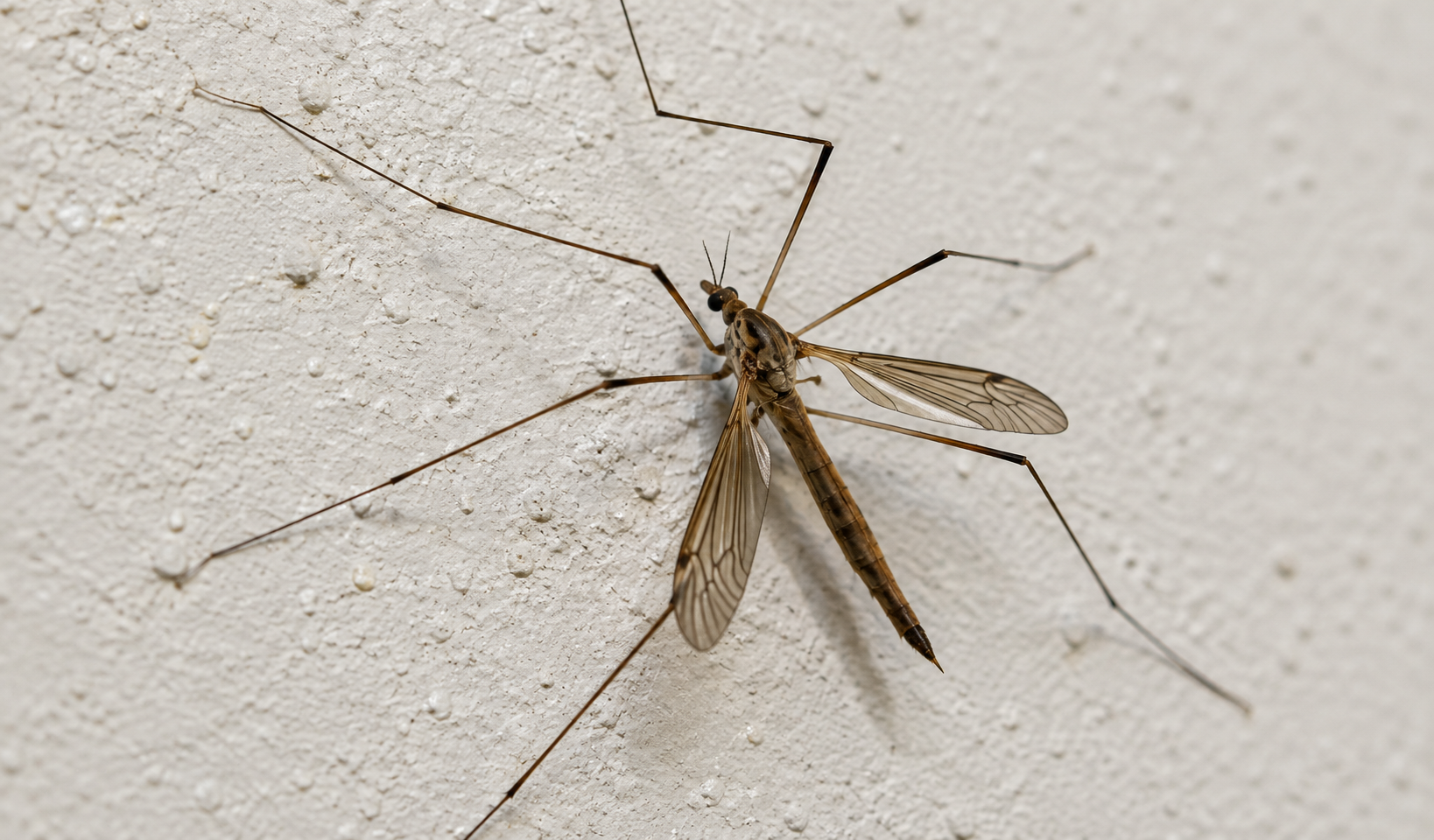
The first thing I notice is the legs.
They’re incredibly long.
Much longer than those of a mosquito.
When a crane fly lands on a wall or window, the legs often spread awkwardly in every direction.
They almost seem too long for the insect’s body.
It’s one of the easiest identification features once you’ve seen one in person.
They’re Much Larger Than Mosquitoes
People often think they’ve discovered the biggest mosquito they’ve ever seen.

In reality, crane flies are usually two to four times larger than a typical mosquito. If the insect is much smaller and gathered around houseplants instead, fungus gnat identification guide can help you compare another mosquito-like flying insect.
Most measure somewhere between 1/2 inch and over 1 inch long, not including those extremely long legs.
If an insect looks enormous compared to the mosquitoes you’re used to seeing, I immediately start considering crane fly.

Their Bodies Are Thin and Delicate
Unlike horse flies or house flies, crane flies have very slender bodies.
They’re light.
Fragile.
Almost stick-like.
They don’t have the thick, muscular appearance of biting flies.
In fact, they often look surprisingly clumsy when they land or try to take off.
Their Wings Are Clear
Another feature I check is the wings.
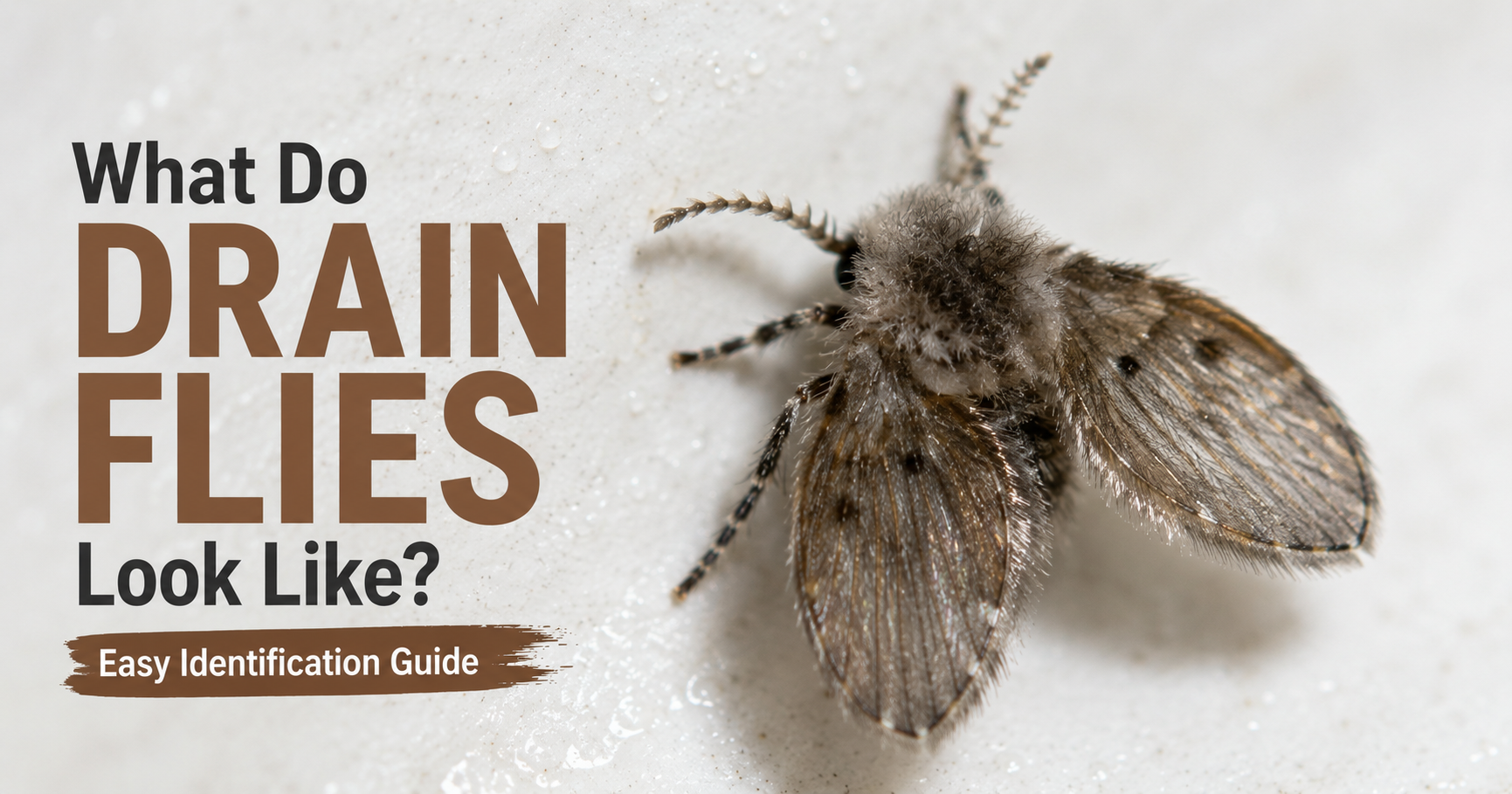
Most crane flies have long, narrow, transparent wings without the fuzzy appearance of drain flies or the dark patterns seen on many deer flies. If the wings look fuzzy rather than long and transparent, compare them with this guide to drain fly wing appearance.
When they’re resting, the wings usually fold neatly alongside the body.
Combined with the long legs, this gives crane flies a very recognizable silhouette.

Where I Usually Find Crane Flies
Location helps narrow things down.
I most often find crane flies:
- Around porch lights.
- On exterior walls.
- Inside garages.
- Near windows.
- Around damp lawns.
- Near wooded areas.
- Around streams and ponds.
- Inside homes after accidentally flying indoors.
If someone tells me they found a “giant mosquito” resting quietly on the wall near their porch light, crane fly is usually one of my first guesses.
Crane Flies vs. Mosquitoes
This is the comparison I make most often because almost everyone mistakes crane flies for giant mosquitoes.
At first glance, I understand why.
They both have long legs.
They both have narrow bodies.
They both have clear wings.
But once you look a little closer, the differences become obvious.
Crane flies usually:
- Are much larger.
- Have extremely long, delicate legs.
- Have a much longer body.
- Fly slowly and somewhat clumsily.
- Don’t bite people.
Mosquitoes usually:
- Are much smaller.
- Have shorter legs.
- Fly with quick, agile movements.
- Females bite people and animals.
- Often hold their bodies at an angle while resting.
Whenever someone tells me they found a mosquito the size of a quarter, my first thought is almost always a crane fly.



Crane Flies vs. Horse Flies
These two really aren’t very similar once you see them side by side.
Horse flies have thick, muscular bodies and huge eyes.
Crane flies look fragile.
Horse flies fly with power and purpose.
Crane flies almost seem to drift through the air.
Horse flies bite.
Crane flies don’t.
If a large fly is repeatedly chasing you around the yard, it’s probably not a crane fly.
They Often Seem Awkward
One thing I’ve always noticed is how awkward crane flies appear.
They bump into walls.
They bounce off windows.
Their long legs get tangled together when they land.
Sometimes they even lose a leg while trying to escape a predator because their legs break away surprisingly easily.
That clumsy behavior is one of the reasons they’re so easy to recognize once you’ve watched one for a few minutes.
They Love Lights
Whenever I find crane flies, it’s usually after dark.
Porch lights.
Garage lights.
Patio lights.
Bright windows.

Like many flying insects, crane flies are attracted to light, which is why they often end up inside homes by accident. That same focus on entry points can also help when investigating common ways flies enter homes.
Finding one on a living room curtain doesn’t necessarily mean you have an infestation.
It usually means one wandered inside after being drawn toward a light source.
Don’t Be Afraid of Them
This is probably the biggest misconception I hear.
People think crane flies are giant mosquitoes capable of delivering an even bigger bite.
That’s simply not true.
Adult crane flies don’t bite people.
They don’t sting.
They aren’t interested in drinking blood.
In fact, many adult crane flies eat very little or don’t feed at all during their short adult lives.
They’re much more interested in finding a mate than bothering people.


Here’s How I Identify Crane Flies
If I walked outside tonight and saw a giant mosquito-looking insect sitting beside my porch light, I’d first look at the legs.
If they’re incredibly long and spindly, that’s my first clue.
Next, I’d compare the body size to a mosquito.
Then I’d watch how it flies.
A slow, clumsy flight combined with a delicate body and oversized legs usually tells me I’m looking at a crane fly.
Finally, I’d remind myself that appearances can be deceiving.
Just because it looks intimidating doesn’t mean it’s dangerous.
If you’ve confirmed you’re looking at a crane fly, the next article I’d recommend is Do Crane Flies Bite? because it’s one of the biggest myths surrounding these harmless insects, and I’ll explain why so many people believe it.
You can also browse our growing Flies category for more identification guides, product reviews, and practical advice covering the most common flies found in and around homes.
Frequently Asked Questions
Are crane flies giant mosquitoes?
No. They may resemble oversized mosquitoes, but crane flies belong to a completely different group of insects and don’t feed on blood the way female mosquitoes do.
Do crane flies bite people?
No. Adult crane flies don’t bite or sting people, even though they’re often mistaken for giant mosquitoes.
Why are crane flies called mosquito hawks?
“Mosquito hawk” is a common nickname that’s been used for years, but it’s misleading. Adult crane flies don’t hunt mosquitoes or eat large numbers of them.
How can I tell a crane fly from a mosquito?
Crane flies are much larger, have extremely long legs, and fly more slowly than mosquitoes. They also lack the blood-feeding behavior that makes mosquitoes such common pests.
Why do crane flies keep coming into my house?

They’re often attracted to porch lights and illuminated windows at night. Once they fly close to your home, they can accidentally make their way indoors through open doors or windows. Light-driven behavior is also central to understanding why flies end up on windows after they get inside.
About the Author
Mark Sullivan has spent years identifying insects around homes, farms, and rural properties. He enjoys helping homeowners separate harmless insects from true pests so they can spend less time worrying and more time solving the problems that actually matter.