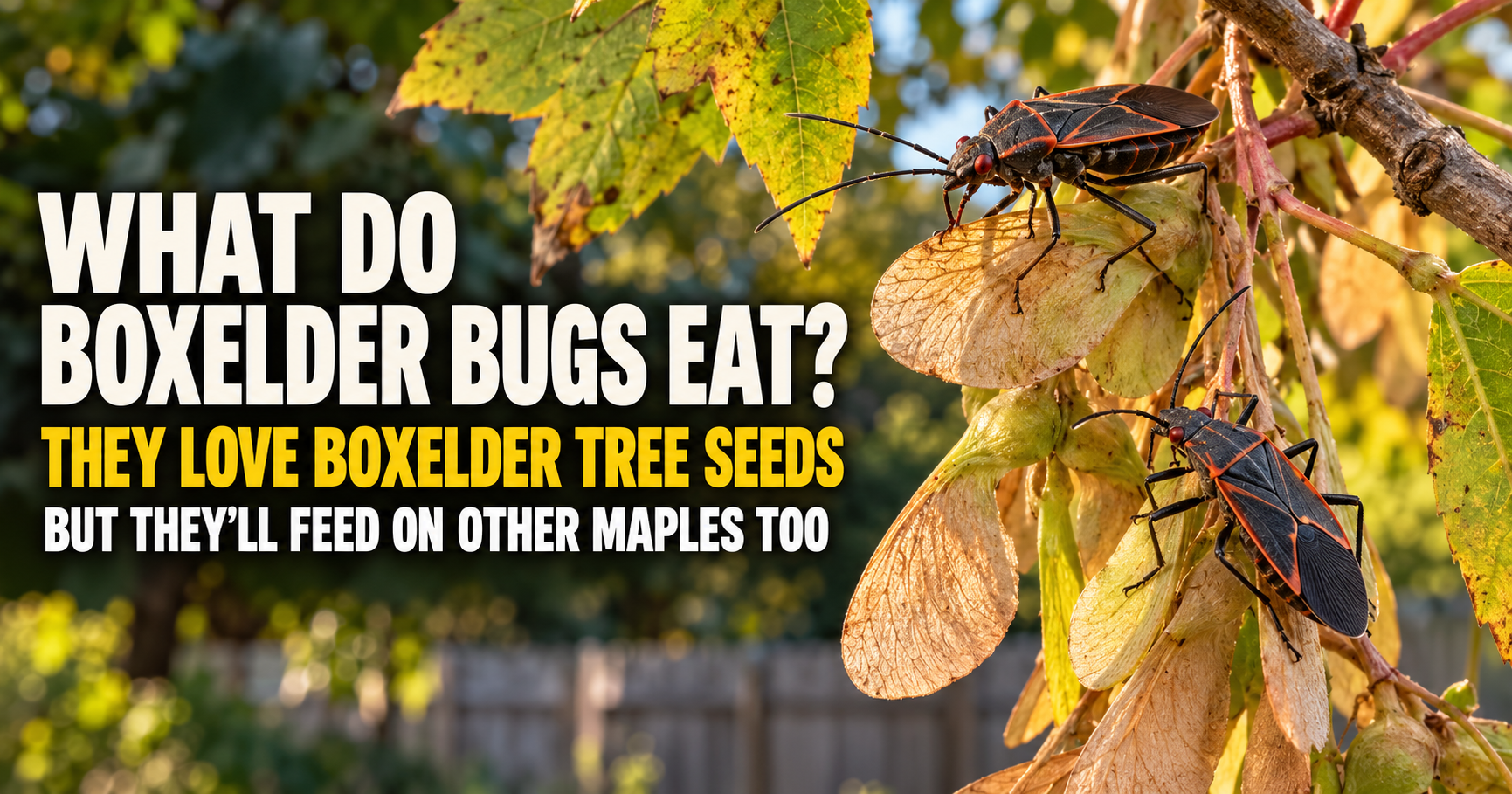
Boxelder bugs mostly eat parts of trees. Their favorite food is the seed-bearing boxelder tree, but they also feed on other maples, ash trees, and a handful of other plants when the opportunity is there.
That connection explains a lot about why they show up around homes. If there are boxelder trees, maple trees, or seed pods nearby, the bugs have a food source through the warm months. Then when fall arrives, they leave the trees and start gathering on warm exterior walls while looking for winter shelter.
What Is a Boxelder Bug’s Favorite Food?
Boxelder bugs are most strongly associated with boxelder trees, also called box elder maples. These are native maples with compound leaves that can resemble ash leaves at a glance.
Female boxelder trees produce clusters of winged seeds, and those seeds are a major food source for boxelder bugs. The bugs use their straw-like mouthparts to feed on plant juices from seeds, leaves, flowers, and tender plant tissue.
A boxelder tree near a home does not guarantee an invasion, but it can help support a large local population. If you see black-and-red bugs gathering on the trunk, seed clusters, or ground beneath one, that is a strong clue you have found their summer food source.


Do Boxelder Bugs Eat Maple Trees?
Yes. Boxelder is itself a type of maple, but boxelder bugs can also feed on other maples, especially where boxelder trees are limited.
They may be found on silver maples, red maples, sugar maples, and other species depending on what is available nearby. They are most interested in the seeds and soft plant tissues, so a tree with a heavy seed crop may attract more activity than a tree with little seed production.
That is why some homeowners see a big boxelder bug problem even when they are certain they do not have a boxelder tree in the yard. The bugs may be using maple trees down the road, in a wooded lot, or on a neighboring property.

Do Boxelder Bugs Eat Ash Trees?
They can. Ash trees are another host plant boxelder bugs may use, though boxelder and maple trees are usually more closely connected with the big visible populations around houses.
If you have ash trees on your property, a few boxelder bugs on the bark or leaves are not a reason to panic. The bugs are not known for killing healthy landscape trees or causing the kind of serious damage associated with emerald ash borers.
They are mainly taking advantage of food that is available. The nuisance begins when adults move away from the trees and choose your house as a winter shelter.
Do Boxelder Bugs Eat Fruit Trees?
Boxelder bugs may occasionally feed on fruit trees and fruit, including apples, plums, cherries, peaches, pears, grapes, raspberries, and strawberries. That sounds concerning, but they are not usually a major fruit-tree pest in a home landscape.
A handful of boxelder bugs on a fruit tree does not mean your crop is in danger. I would not spray a fruit tree just because you notice a few red-and-black bugs on it.
If fruit has deep scars, holes, soft rot, heavy leaf loss, or obvious chewing damage, another insect or disease is more likely behind the problem. Boxelder bugs feed by piercing plant tissue, not by chewing ragged holes through leaves.

Do They Eat Vegetable Gardens?
Usually, boxelder bugs are not an important garden pest. They may occasionally be found on vegetables or ornamental plants, but they are not known for stripping a garden bare the way caterpillars, Japanese beetles, grasshoppers, or some beetles can.
They can probe tender plants and fruit with their mouthparts, but most home gardeners are more likely to notice them because of their bright color than because of major damage.
Before treating any garden bug, I would look closely at the damage itself. If leaves are chewed, fruit is being hollowed out, or plants are wilting badly, identify the actual pest rather than blaming the most visible insect nearby.
Do Boxelder Bugs Eat Other Insects?
No. Boxelder bugs are plant feeders, not predators.
They do not hunt aphids, caterpillars, mosquitoes, flies, or other insects. They also do not feed on blood, which is why they are not a biting household pest.
Their mouthparts are built to draw fluids from plants. That is very different from a ladybug, praying mantis, assassin bug, or predatory stink bug, all of which may eat other insects.


Do Boxelder Bugs Eat Wood, Paper, or Fabric?
No. They do not eat wood, furniture, clothing, books, insulation, cardboard, or drywall.
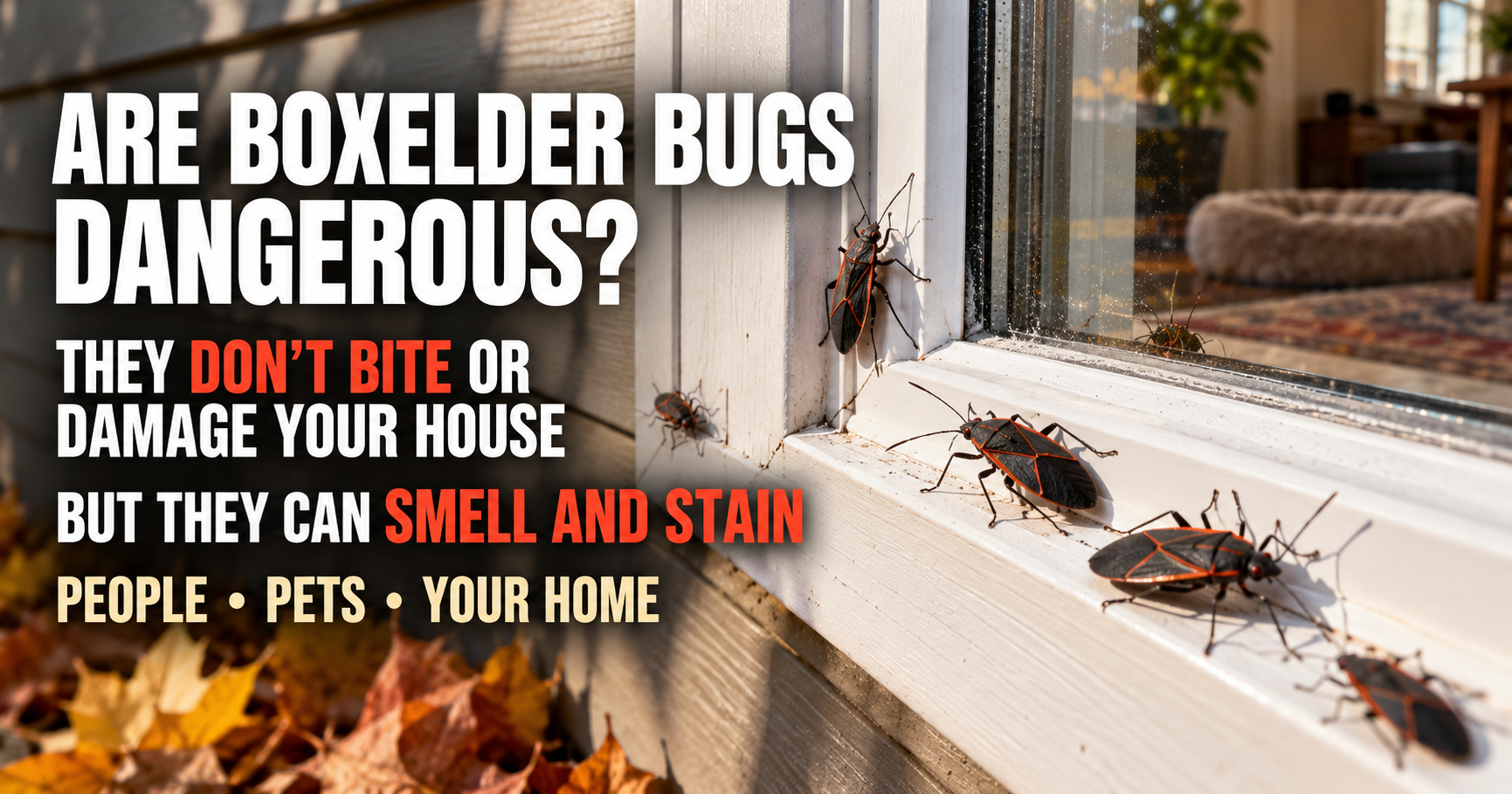
This is one of the most useful things to know when bugs are gathering inside or outside a home. They can look like a serious structural pest because so many may cover one wall, but they are not termites or carpenter ants.
They may leave dark spots from droppings or stains if crushed, but they are not quietly eating through the house behind the scenes.
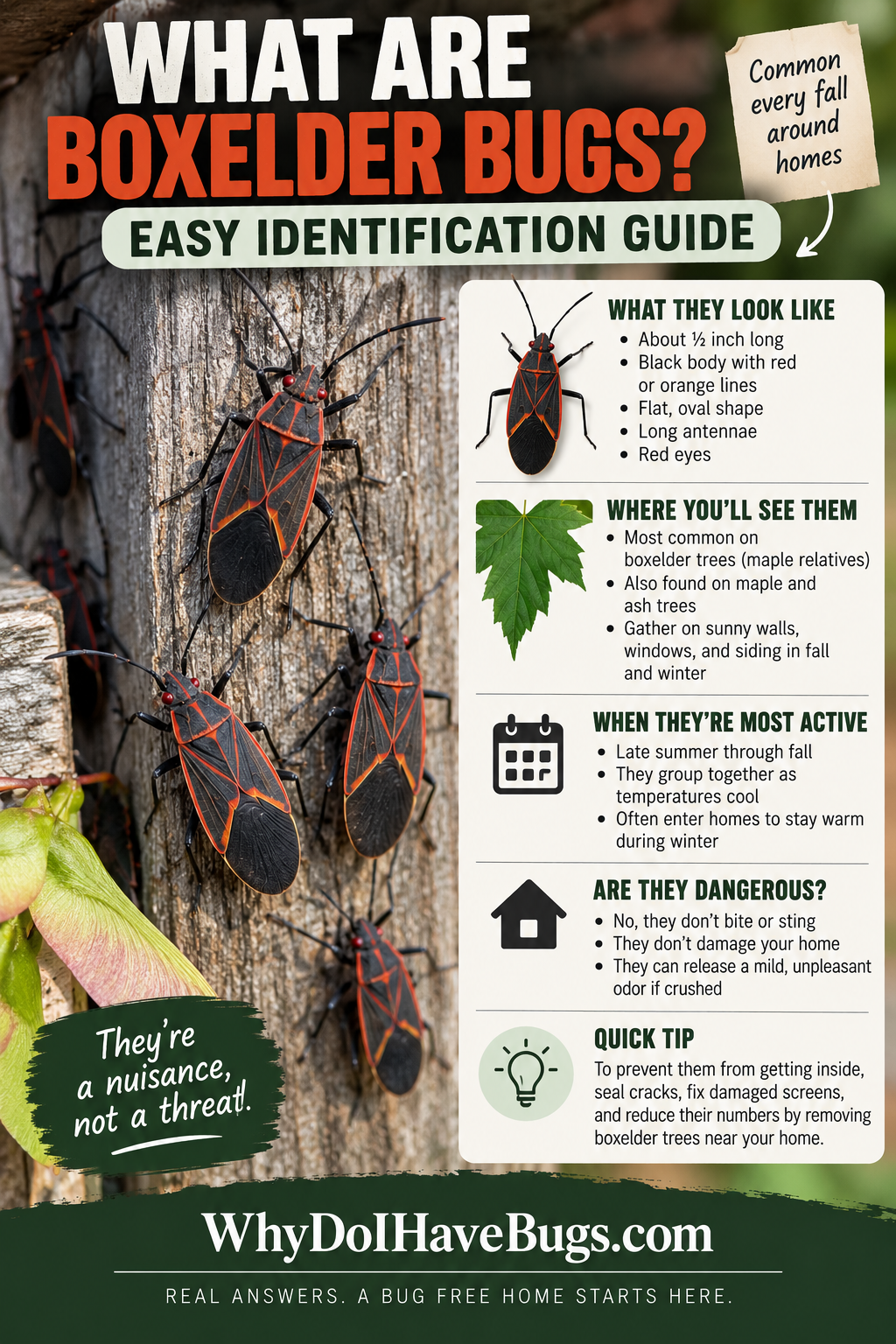
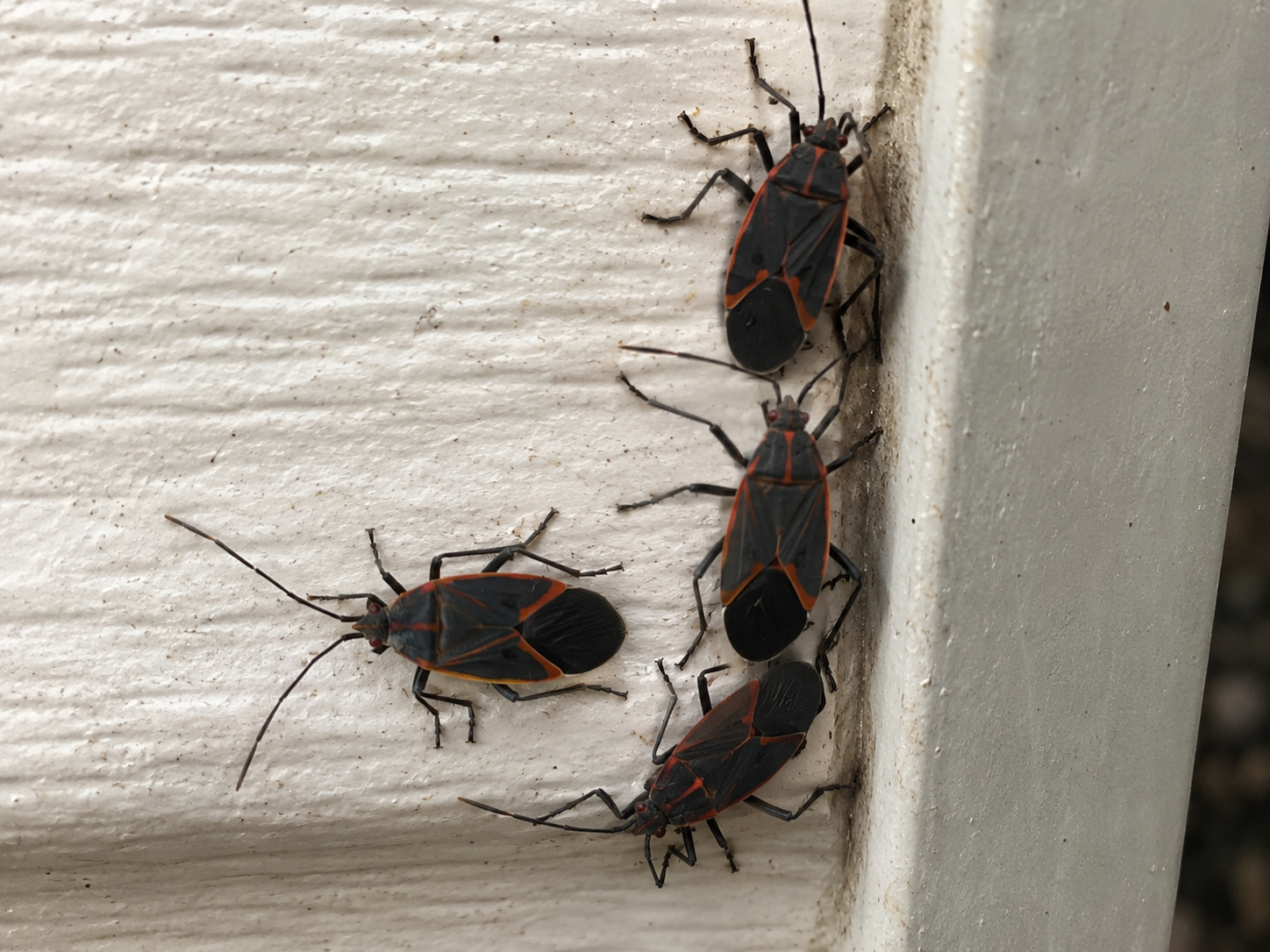
If you are unsure whether the bugs on your wall are boxelder bugs, check the clear black body and red or orange lines against this boxelder bug identification guide. Correct identification matters because wood-damaging insects need a much different response.
Do Boxelder Bugs Eat Food in Your House?
No. They are not pantry pests.
You do not need to throw away flour, cereal, pet food, or groceries because a boxelder bug appeared in the kitchen. They may crawl across counters or window sills while trying to find light or water, but they are not there to infest stored food.
Clean up the bug, wipe down the surface, and focus on how it got inside. Indoor activity is usually connected to hidden bugs emerging from wall voids or a direct gap around a window, door, or utility line.
What Do Boxelder Bugs Eat During Winter?
Boxelder bugs do very little feeding during winter. Adults spend the cold season sheltered in protected cracks, wall voids, attics, garages, under bark, or similar spaces.
That is why a house can have boxelder bugs without providing them a food source. They are using the structure as shelter, not as a restaurant.
On warm winter days, some bugs wake up and move toward sunny windows or lights. They may look active, but they are not building an indoor food-based infestation.
Why Do Boxelder Bugs Gather on Houses if They Eat Trees?
The house is not their food source. It is their winter shelter.
During spring and summer, boxelder bugs spend most of their time outside around host trees and plants. In fall, adults leave the feeding areas and gather on sunny walls that offer warmth and nearby cracks.
That is why removing every bug from a tree will not necessarily stop them from appearing on the house later. The better approach is to make the house harder to enter before the seasonal gathering begins.
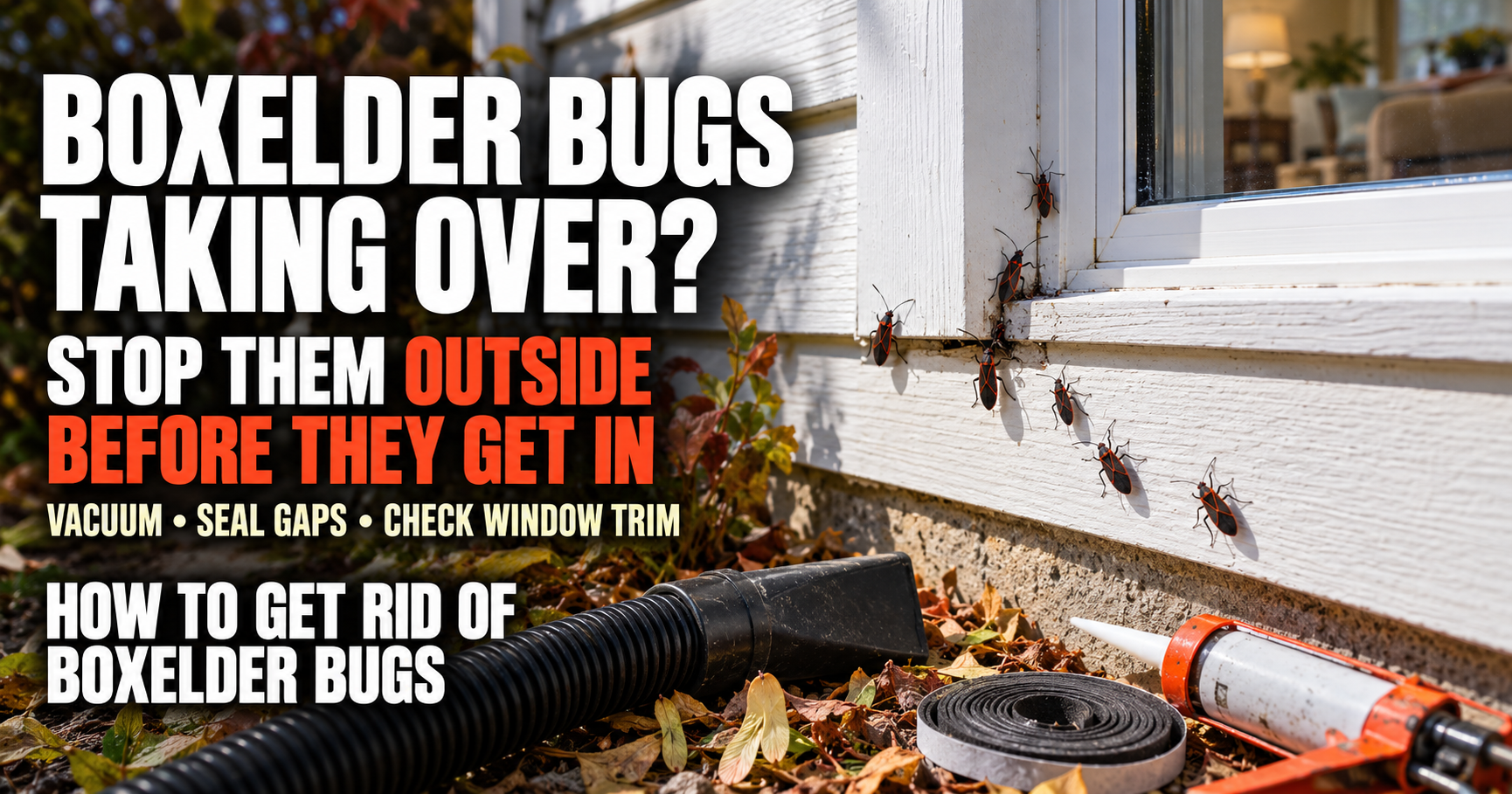
The full prevention plan is covered in how to get rid of boxelder bugs in your house and outside.
Should You Remove a Boxelder Tree?
Removing a seed-bearing female boxelder tree near the house can reduce one local food source. But I would not treat tree removal as the automatic answer.
Boxelder bugs can fly in from trees beyond your property. They can also use maples, ash trees, and other available plants. Cutting down a healthy mature tree may be expensive and may not completely solve the home problem.
If a tree is already unwanted, diseased, poorly placed, or scheduled for removal, replacing a female boxelder tree can be part of a long-term plan. Otherwise, weatherstripping, caulk, screen repair, and foundation cleanup usually give you a more direct improvement.
Do Boxelder Bugs Damage the Trees They Feed On?
They can cause minor feeding injury, but they do not usually cause serious damage to healthy established trees.
A tree with boxelder bugs may still be perfectly healthy. The bugs are often far more noticeable than the effect they have on the plant. Their bright color and habit of gathering in groups make them hard to ignore.
If a tree has major leaf loss, dead branches, trunk holes, peeling bark, oozing sap, or sudden decline, look beyond boxelder bugs. A disease, drought problem, borer, scale insect, or another pest may be the real issue.
Why Are There More Boxelder Bugs Some Years?
A strong seed crop can support more boxelder bugs. Warm weather, suitable host trees, and plenty of protected overwintering areas can also lead to a more noticeable year.
The number you see around a house may change from fall to fall. One season can bring only a few scattered bugs, while the next puts hundreds on the sunny side of the siding.
That does not mean your home suddenly became dirty or that the bugs are multiplying inside. It usually means outdoor conditions favored them and your home offered a convenient shelter site.
Do Boxelder Bugs Eat at Night?
They are not nighttime hunters and do not come out after dark to feed on people, pets, or household items.
They may move around at night, especially when they are disturbed or have entered a building, but their normal food is outdoors on plants. A boxelder bug found crawling across a floor after dark is simply wandering, not looking for a blood meal.
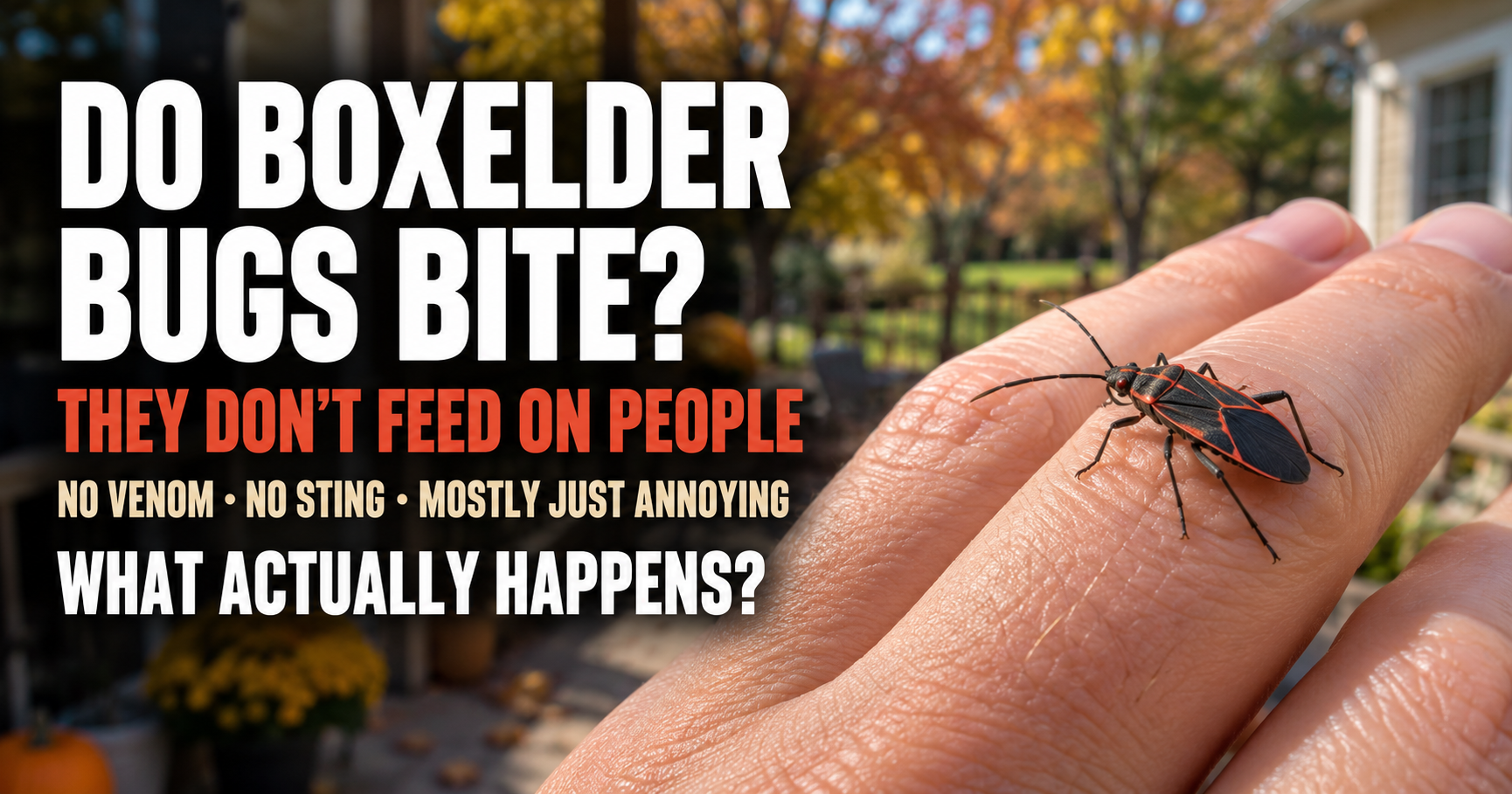
That is also why they are not a true bite risk. If you are waking with unexplained bites, this article on whether boxelder bugs bite explains why another insect is more likely responsible.
What This Means for Controlling Them
Knowing what boxelder bugs eat helps you avoid wasting time. They are not coming for crumbs, pet food, laundry, or untreated wood. Their outdoor food source may be a tree, but their indoor problem is almost always about shelter and access.
Start with the home. Seal entry gaps, repair screens, replace worn door sweeps, and clear protected debris from the foundation area. If large groups are gathering outside and you decide a treatment is justified, use a product labeled for boxelder bugs and exterior use.
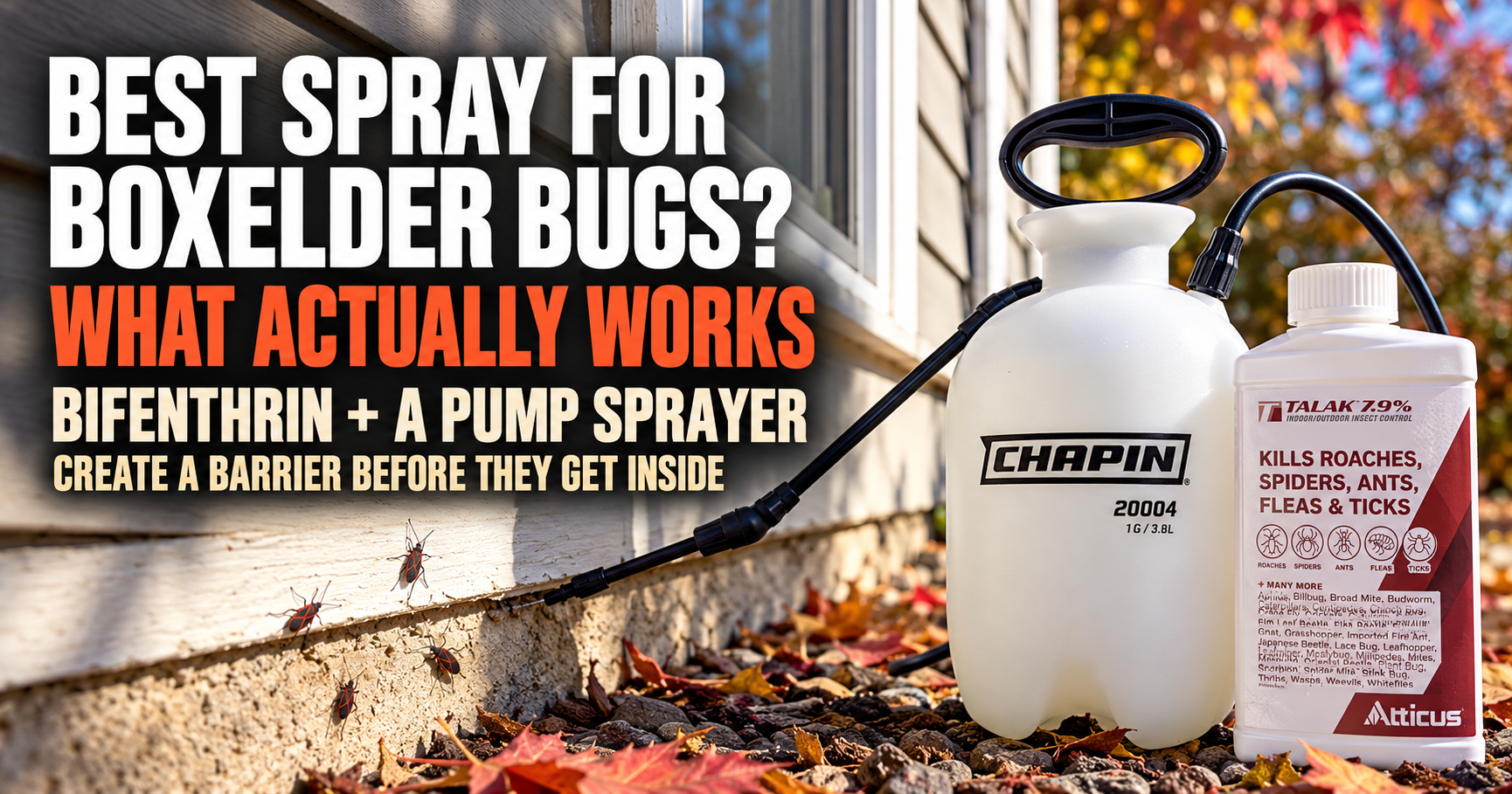
For a careful product-and-application breakdown, see the best spray options for boxelder bugs.
What trees attract boxelder bugs the most?
Female boxelder trees are the strongest attraction because they produce the seed pods boxelder bugs prefer. Other maples and ash trees can also support them.
Do boxelder bugs eat leaves?
Yes. They can feed on leaves, flowers, seeds, and soft plant tissue, although seeds are an especially important food source around boxelder trees.
Do boxelder bugs eat tomatoes?
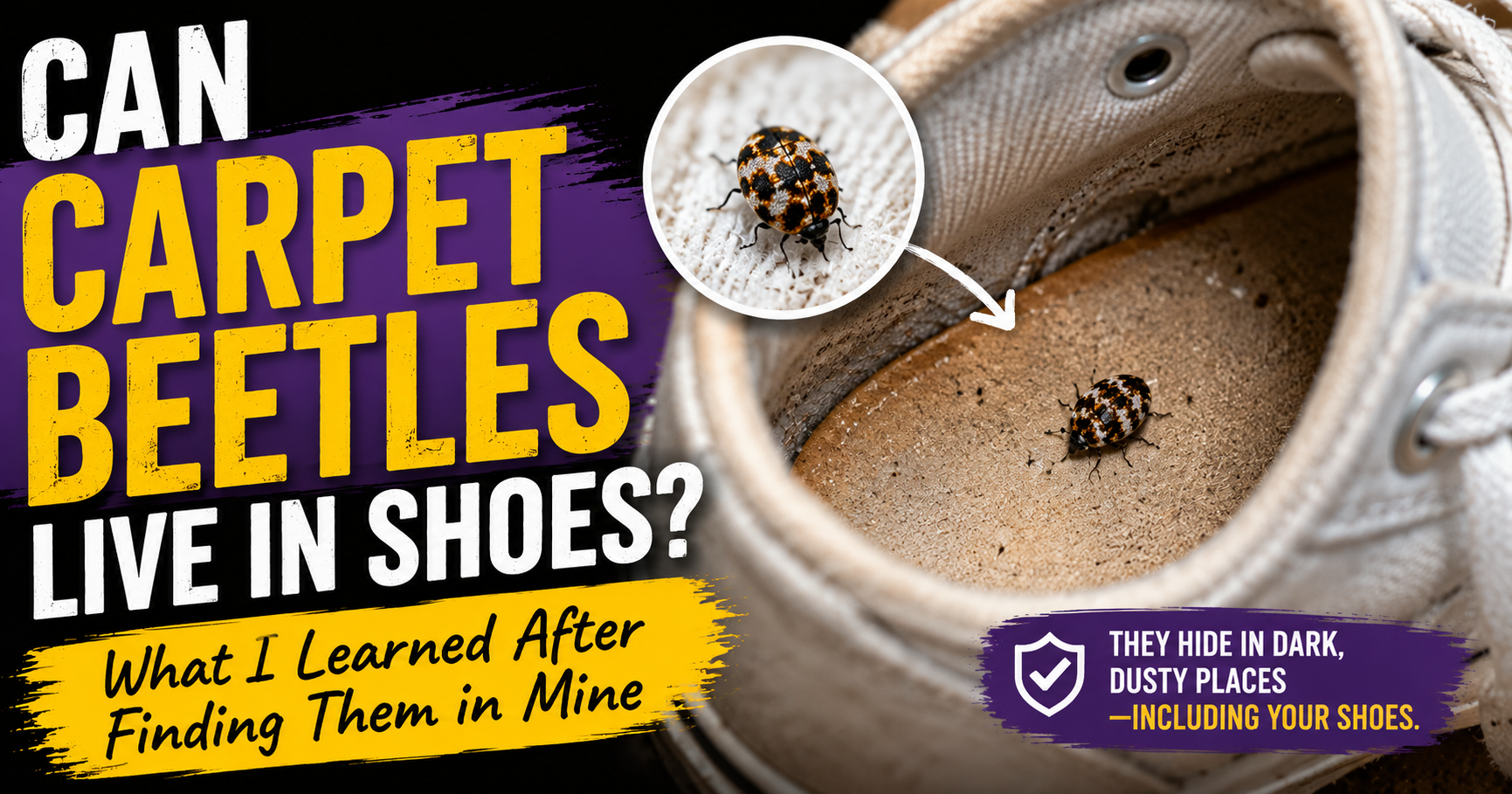
They may occasionally probe fruit or plants, but they are not usually a major tomato pest. If tomatoes show obvious damage, inspect for stink bugs, caterpillars, disease, or another likely cause.
Do boxelder bugs eat houseplants?
They may occasionally be found on houseplants after getting indoors, especially when looking for moisture, but they do not usually establish an indoor houseplant infestation.
Do boxelder bugs eat grass?
No. They are not a lawn-feeding pest. Their main food sources are trees and other plants, particularly boxelder and maple seeds.
Do boxelder bugs eat each other?
No. They are not predatory or cannibalistic insects under normal conditions. Their diet is based on plant fluids.
Caleb Warren writes practical pest guides for WhyDoIHaveBugs.com, helping homeowners understand what a pest is doing before they reach for a treatment.