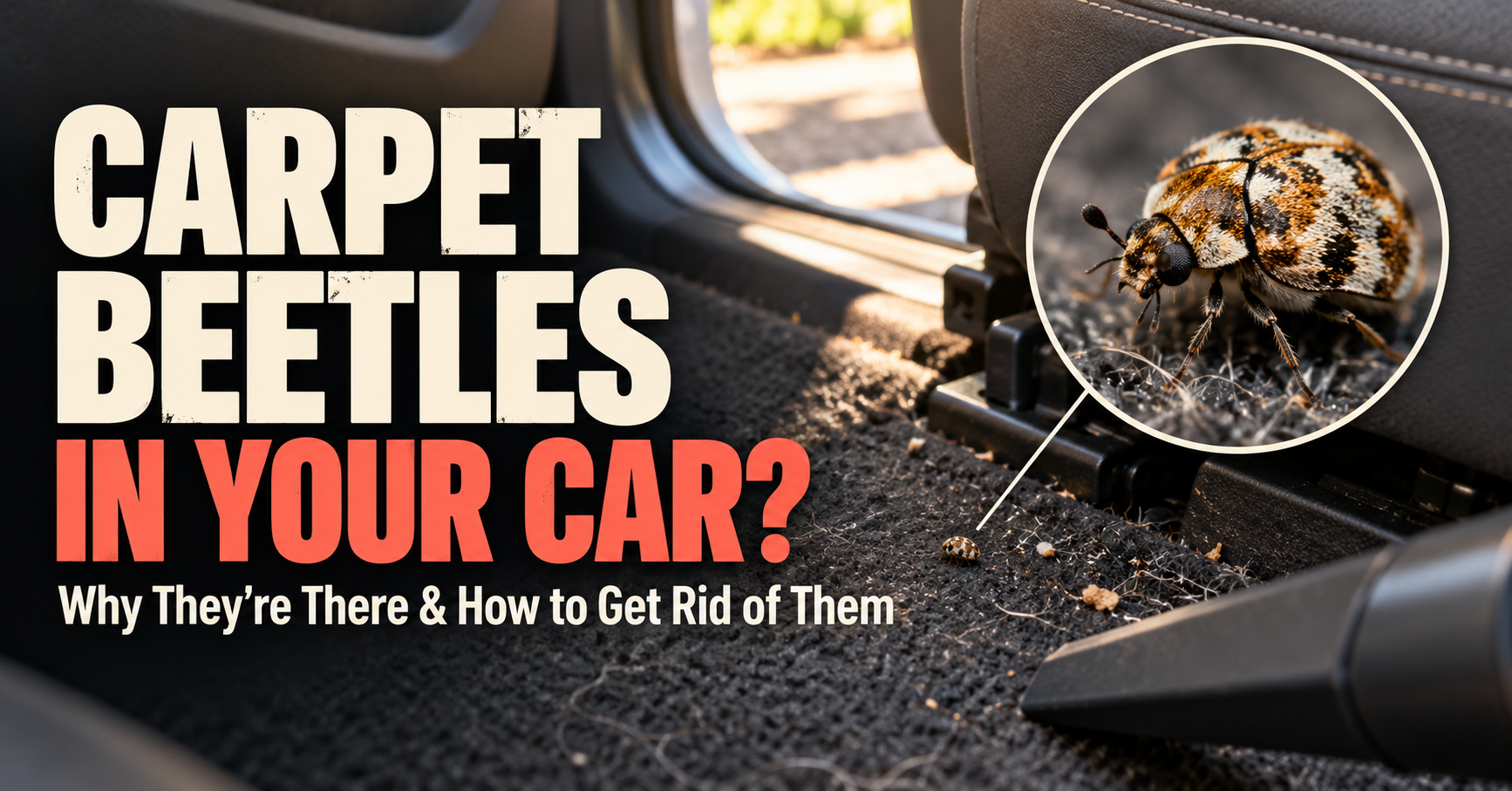
Finding carpet beetles inside your car is one of those things that can make you look at your seats and floorboards a whole lot differently. You might spot a tiny black beetle crawling across your dashboard, discover a fuzzy brown larva underneath a floor mat, or notice several little bugs around your windows.
The frustrating part is figuring out why they’re there in the first place. After all, your car isn’t exactly filled with wool rugs and closets full of clothing.
Carpet beetles can get into cars through open windows, doors, clothing, and belongings. If they find suitable food sources, particularly pet hair, lint, dead insects, or materials containing animal fibers, their larvae may survive in hidden areas of the vehicle. Because different pests can travel in personal belongings, it may also help to understand how bed bugs in a vehicle and where they tend to hide.
The good news is that finding one carpet beetle doesn’t automatically mean your car has an infestation. And if you do have larvae living somewhere inside, thorough cleaning and finding their food source are usually the best places to start.
Here’s where I’d look first and how I’d handle the problem without damaging the car’s interior.
Why Are There Carpet Beetles in My Car?
Carpet beetles aren’t specifically attracted to cars. They’re attracted to suitable places to lay eggs and materials that their larvae can eat.
Adult carpet beetles commonly live outdoors, where many species feed on pollen and nectar. Because they can fly, one might enter your car through an open window or door.
Others could be accidentally carried inside on clothing, bags, blankets, or other belongings.
Finding an adult beetle doesn’t necessarily mean it has been living inside the vehicle for weeks.

However, finding several carpet beetle larvae, especially in one concentrated area, is a stronger indication that something inside the car may be supporting them. Because larvae can remain hidden while adults die elsewhere, finding several carpet beetle larvae explains what repeated dead beetles may reveal about activity.
Pet Hair and Animal-Based Debris
If you regularly take your dog somewhere in the car, pet hair can accumulate in places that are surprisingly difficult to clean.
It works its way between seat cushions, beneath floor mats, along carpet edges, and underneath seats.
Carpet beetle larvae can feed on animal hair and other animal-based materials. This makes a buildup of pet hair and lint a potential food source.
The occasional hair isn’t proof of an infestation, but thick accumulations of debris provide a reason to inspect more closely.
Food Spills and Dirty Upholstery
A spilled drink or a few cracker crumbs won’t automatically attract carpet beetles.
Their larvae primarily feed on animal-based materials, although certain species may feed on some dried foods, and soiled fabrics can become more attractive.
For example, milk residue, food stains, body oils, and accumulated debris can make an otherwise unsuitable material more appealing to some carpet beetle larvae.
If your backseat has become the unofficial snack area, it’s worth checking around the seat seams and underneath removable mats.
Still, don’t assume crumbs alone explain every carpet beetle you find.
Old Blankets, Clothing, and Other Stored Items
Think about what you keep in your trunk.
Maybe there’s an old wool blanket, a winter coat, pet bedding, or a bag of clothing you’ve been meaning to bring inside.
Materials containing wool, fur, feathers, or other animal fibers can provide food for carpet beetle larvae.
If an item already contains eggs or larvae when placed inside the car, it could also introduce the insects.
This is one reason I’d inspect stored belongings before treating the vehicle itself.
Dead Insects Hidden Inside the Vehicle
Carpet beetle larvae are natural scavengers.
Some feed on dead insects and other dried animal material, including debris that collects in undisturbed spaces.
A car with accumulated dead bugs around hidden trim gaps, storage compartments, or other sheltered areas could provide a small food source.
That doesn’t mean every dead insect will attract carpet beetles, but it’s another possibility if you keep finding larvae in the same location.


Where Do Carpet Beetle Larvae Hide in Cars?
The most useful thing you can do is look where the insects can stay undisturbed.
Carpet beetle larvae generally prefer sheltered areas. They often avoid bright light, so you may not see them crawling around the dashboard even when they’re present elsewhere.
Here are the places I’d inspect.
Under the Front and Back Seats
This would be my first stop.
Move the seats forward and backward so you can access the carpet underneath.
Use a flashlight to look along the seat rails, carpet edges, and seams where debris collects.
Check carefully around wiring and other components underneath the seats. Don’t disconnect electrical connections or disturb airbag-related equipment during the inspection.
If you find several hairy larvae or brown shed skins in a small area, pay attention to what’s nearby.
There may be a buildup of pet hair, lint, or another material they’re feeding on.
Beneath Floor Mats
Floor mats collect all kinds of things.
Pull out removable mats and inspect both sides.
Look along the edges of the carpet, especially where it meets the door sill or center console.
Carpet beetle larvae may shelter in accumulated debris beneath these areas.
If you use removable fabric mats, inspect their seams and backing for signs of activity or damage.
Inside Seat Seams and Creases
Carpet beetles can be associated with upholstered furniture, so vehicle seating deserves attention too.
Use a flashlight to examine the seams and creases between seat cushions.
Check the gap where the seat back meets the bottom cushion.
Cloth seats may have more places for hair and lint to collect, although leather or vinyl seats don’t rule out carpet beetles. The insects may be associated with debris underneath or around the seats rather than feeding on the upholstery itself.
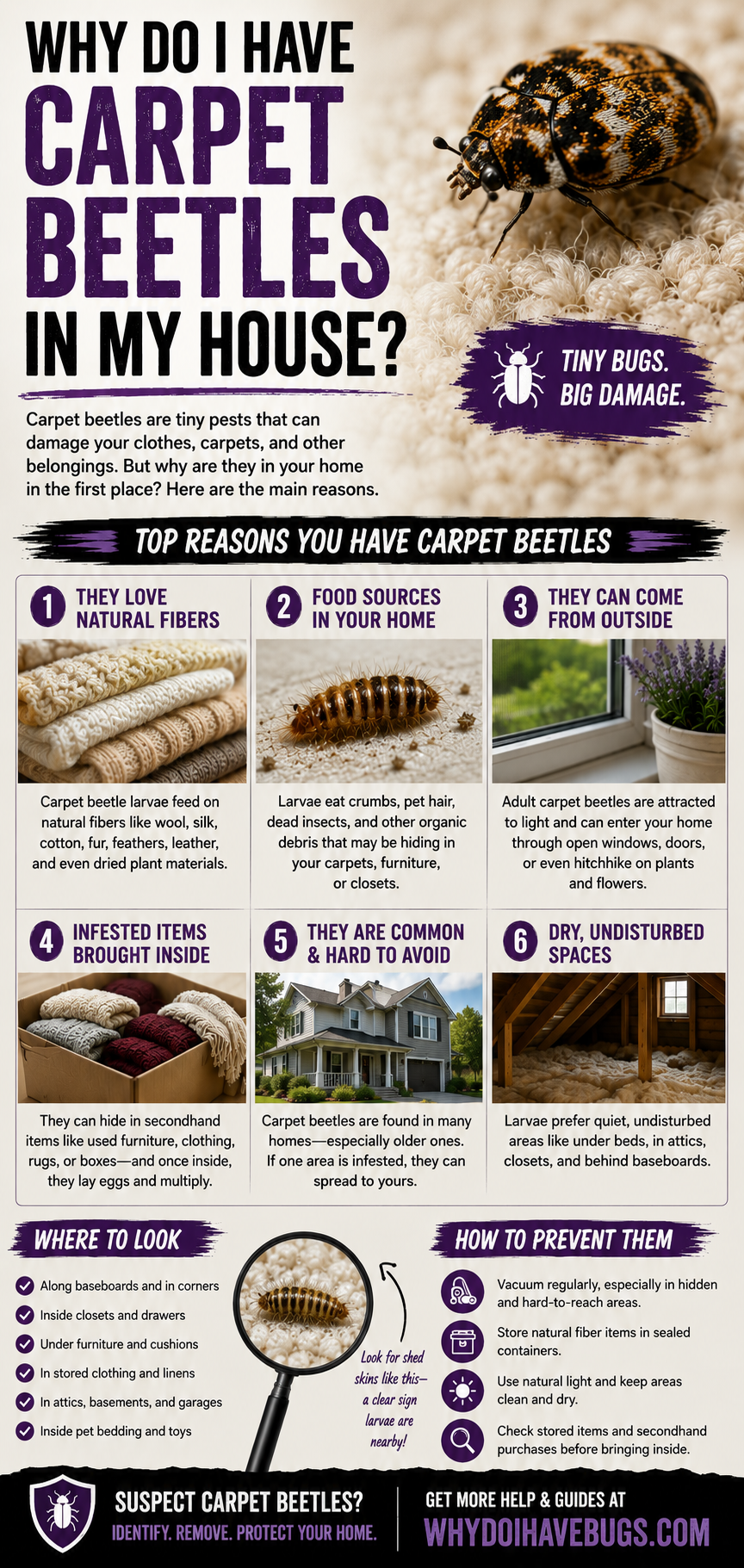
If you’ve previously found larvae around household furniture, our guide to where carpet beetle larvae hide explains why these dark, sheltered spaces are worth checking.
Trunk Carpeting and Storage Areas
Don’t forget the trunk.
Lift removable cargo mats and check around the edges of the carpeting.
Inspect any blankets, clothing, pet supplies, or other fabric items stored there.
You might also find larvae or shed skins in a storage compartment that’s rarely opened.
In vehicles with removable cargo-floor panels, inspect accessible compartments without disturbing electrical components or removing secured trim.
Around Door Seals and Window Areas
Adult carpet beetles are often attracted to light and may appear near windows.
If you’re finding small adult beetles around your car windows, they may have flown in from outside.
Check accessible window trim and door-seal areas for trapped insects or debris.
Finding adults around the glass is different from finding a group of larvae beneath a seat.
That distinction can help you decide whether you’re dealing with occasional visitors or a possible breeding population.


Signs of Carpet Beetles in Your Car
You won’t always find live insects during an inspection.
Carpet beetles can leave behind evidence, particularly when larvae are present.
Small, Hairy Brown Larvae
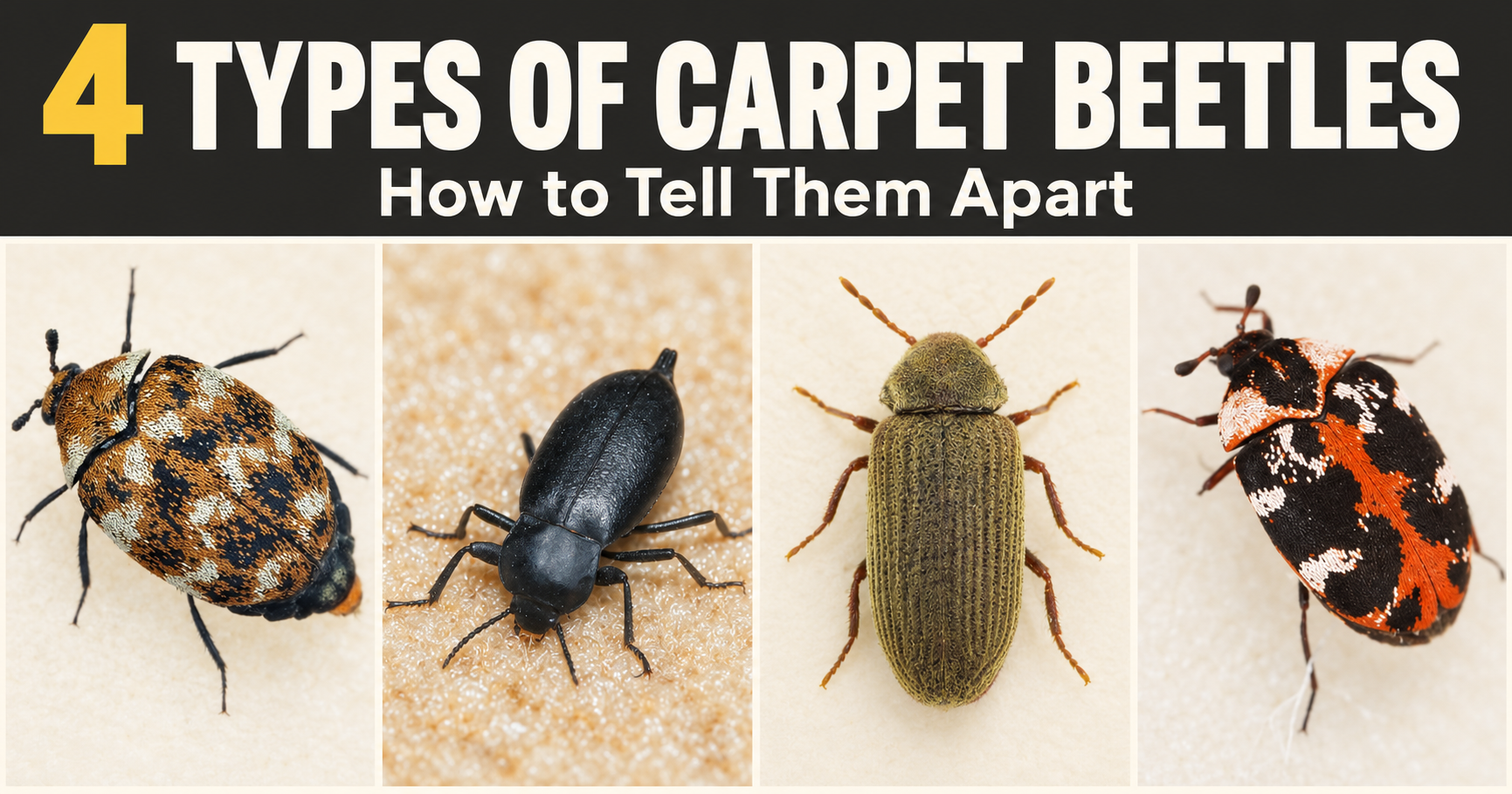
Carpet beetle larvae can look like miniature fuzzy caterpillars.
Depending on the species, they may be brown, tan, striped, or covered with noticeable bristles.
Some have a longer tuft of hairs at the rear of their bodies.
If you find one, try to photograph it before vacuuming.
Correct identification is important because other insects can also hide in vehicle carpeting and upholstery.
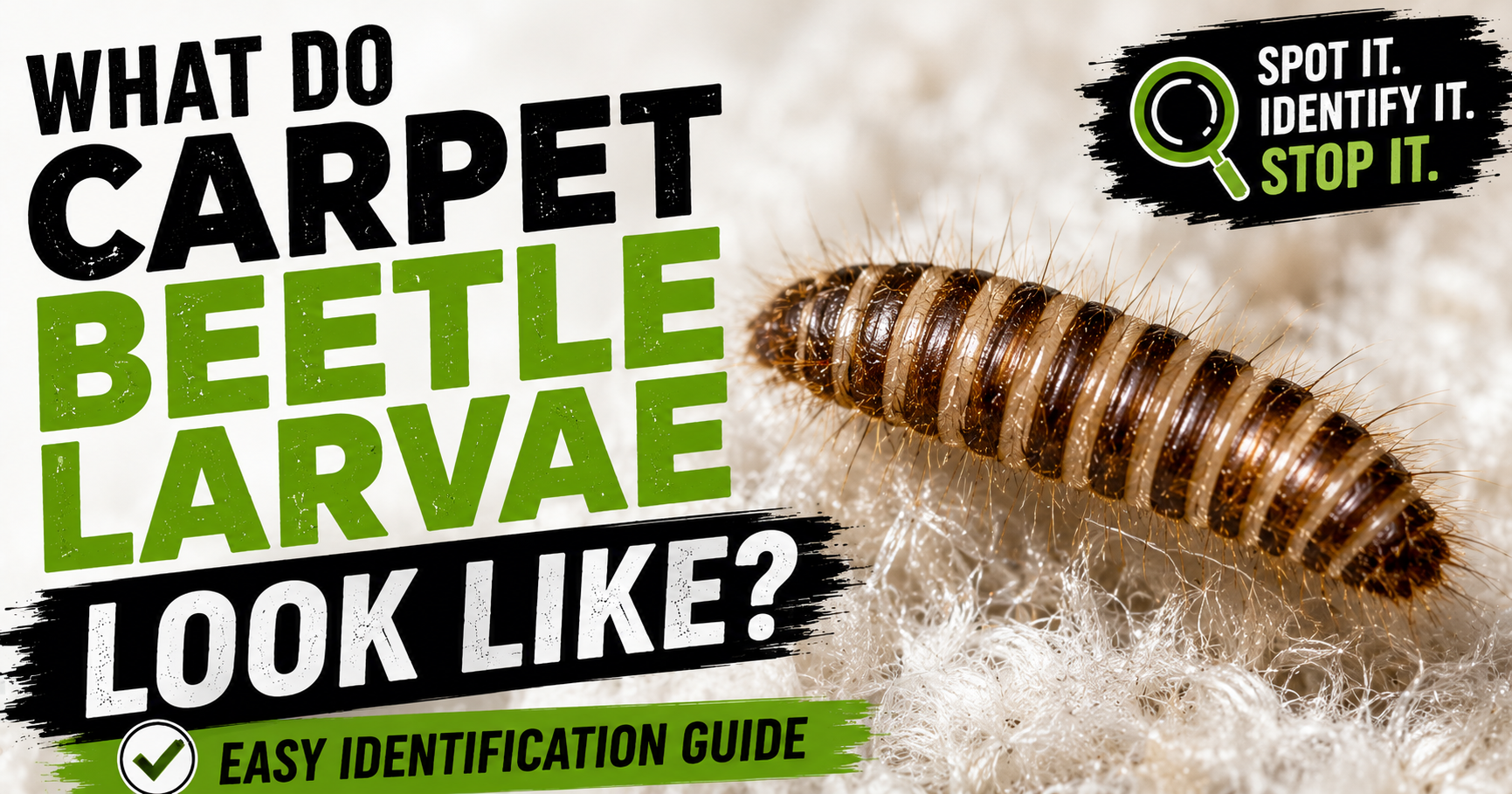
Our carpet beetle larvae identification guide covers the physical differences in greater detail.
Empty Brown Shed Skins
As carpet beetle larvae grow, they shed their outer skins.
These empty skins can look like small, dried, brown insect bodies.
They often retain the bristly appearance of the original larva.
If you find several underneath the same seat, that suggests larvae have occupied the area at some point.
However, shed skins alone don’t prove the insects are still there.
The larvae may have moved to another location, or the skins may be left over from an older problem.
Tiny Holes or Damaged Fabric
Carpet beetle larvae can damage susceptible fabric materials.
If your vehicle contains wool-blend upholstery, wool blankets, or other animal-based textiles, inspect them for irregular holes or worn areas.
Be careful about blaming every little hole on carpet beetles.
Normal wear, friction, pets, and accidental damage are far more common explanations for many problems involving car seats.

Carpet beetle damage is more convincing when you also find larvae or shed skins close to the affected material.
Repeatedly Finding Small Adult Beetles
Finding one adult carpet beetle could simply mean it wandered or flew into the vehicle.
Finding several adults over time is worth investigating.
Look for larvae in hidden areas and inspect any stored fabrics that might contain an infestation.
The adults themselves generally aren’t the stage responsible for fabric damage.
How to Get Rid of Carpet Beetles in Your Car
You don’t necessarily need to cover your car interior in insecticide to solve a carpet beetle problem.
In fact, I’d start by doing the opposite.
Thoroughly cleaning the interior and removing possible food sources can often control carpet beetles without pesticides.
The key is reaching the hidden areas where larvae and debris accumulate.
Step 1: Remove Everything You Can From the Car
Start by taking out loose belongings.
Remove floor mats, blankets, clothing, pet bedding, and anything stored in the trunk that can be safely taken out.
Inspect fabric items before moving them into your house.
You don’t want to accidentally carry larvae from the vehicle into a bedroom closet.
Wash washable items according to their care labels.
For delicate or valuable fabrics, professional cleaning may be more appropriate.
If an item is heavily infested and cannot be cleaned effectively, disposal may be necessary.
Step 2: Vacuum the Entire Interior Thoroughly
A vacuum with a crevice tool is one of the most useful things you can use.
Start underneath the seats and along the carpet edges.
Work slowly around the seams, seat tracks, removable mats, and trunk carpeting.
Pay particular attention to areas where pet hair collects.
You want to remove more than the insects you can see.
Vacuuming may also remove eggs, larvae, shed skins, and the materials they feed on.
If you have a vacuum with strong suction and a suitable filtration system, that’s helpful for collecting fine debris.
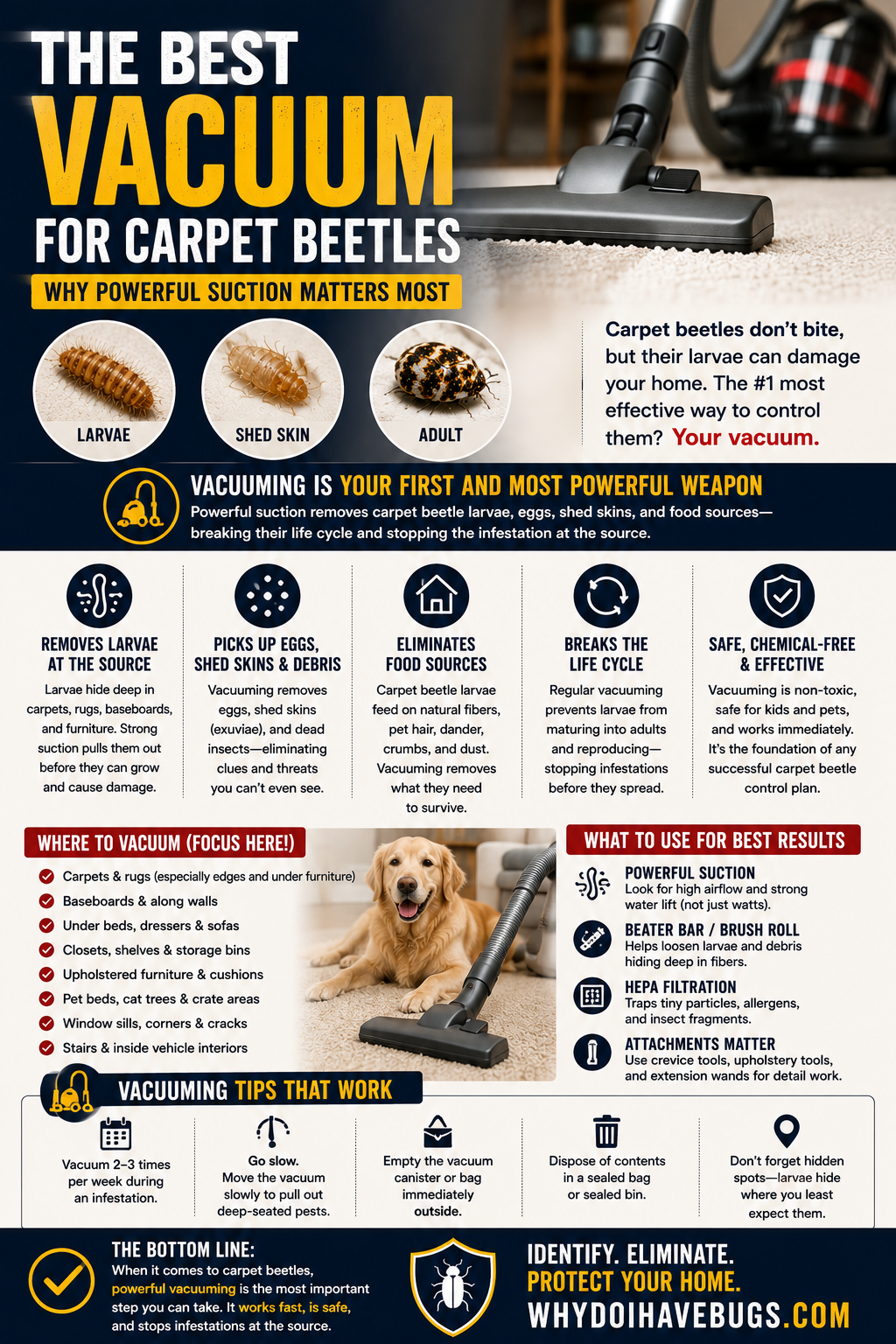
We’ve explained the importance of suction and attachments in our article about choosing a vacuum for carpet beetles.
Afterward, empty the vacuum outdoors into a sealed trash bag.
If your machine uses disposable bags, remove and dispose of the bag according to the manufacturer’s instructions.
Step 3: Clean the Floor Mats and Upholstery
Once the loose debris is gone, inspect the surfaces more closely.
Use an upholstery cleaner suitable for your specific seat material.
For removable fabric floor mats, follow the manufacturer’s cleaning recommendations.
A thorough wash can help remove the dirt and organic debris that vacuuming leaves behind.
Avoid soaking seats or carpeting.
Excess water can become trapped underneath padding and create problems with odors, mold, or vehicle electronics.
If you’re unsure whether a cleaning product is safe for your upholstery, test an inconspicuous area first.
Step 4: Find the Actual Source
This is the part I’d take seriously if the larvae keep coming back.
Don’t assume that vacuuming every visible insect means you’ve found the infestation source.
Look for an item or area where larvae have access to food.
It might be an old wool blanket in the trunk, a pet bed, or a collection of animal hair underneath a seat.
Occasionally, there may be an inaccessible accumulation of dried organic debris in a sheltered compartment.
If you find several larvae concentrated in one area, that’s a good reason to inspect what’s around it.
The goal is to remove the material they’re feeding on, not simply kill the insects that wander into view.
Step 5: Be Careful With Carpet Beetle Sprays
This is where I wouldn’t rush.
A pesticide marketed for indoor carpet beetles isn’t automatically appropriate for use inside a vehicle.
Cars have small enclosed interiors, ventilation systems, and surfaces people touch regularly.
Some products can stain upholstery or damage materials, and certain applications may create unnecessary exposure risks.
Never use an insecticide inside your vehicle unless its label specifically permits the intended application and surface.
Don’t spray seat belts, steering wheels, child car seats, ventilation openings, or other sensitive components.
Avoid bug bombs, improvised pesticide mixtures, and excessive spraying.
If cleaning doesn’t resolve a confirmed infestation, a licensed pest-control professional can help determine whether any vehicle-safe treatment is appropriate.
Step 6: Monitor the Car After Cleaning
Once everything is cleaned and dried, inspect the previously affected areas regularly.
Check beneath the seats, around floor-mat edges, and inside the trunk.
You can also use a small monitoring trap where appropriate, but it must be secured so it cannot interfere with pedals, seat mechanisms, children, or pets.
A trap may help reveal whether insects are still active, but it won’t eliminate an established infestation by itself.
Look for newly appearing larvae rather than relying entirely on old shed skins.
If you continue finding live larvae, there’s probably a source that needs more attention or the insects are being reintroduced.


Will Leaving Your Car in the Sun Kill Carpet Beetles?
This sounds like an easy solution.
Cars can get extremely hot in direct sunlight, so it seems reasonable to assume that leaving the windows closed on a summer afternoon would kill any insects inside.
The problem is that a car doesn’t heat evenly.
Air temperatures near the dashboard may be much hotter than conditions deep inside seat cushions, beneath carpeting, or in the trunk.
Carpet beetle eggs and larvae could remain protected in cooler areas.
For that reason, I wouldn’t rely on ordinary sun exposure as a dependable carpet beetle treatment.
Professional heat treatment is different because it involves controlled temperatures and monitoring throughout the treated space.
Don’t try to create your own heat treatment using portable heaters, heat guns, or other heating equipment inside the car.
Doing so can damage vehicle materials and create serious fire hazards.
Can Carpet Beetles Damage Your Car Seats?
Yes, but the risk depends heavily on what the seats are made from.
Carpet beetle larvae primarily feed on animal-based materials.
Wool, felt, fur, feathers, and other susceptible fibers can be damaged when larvae have access to them.
Most modern car interiors contain large amounts of synthetic material, which carpet beetle larvae generally don’t eat when the material is clean.
However, mixed materials or synthetic fabrics contaminated with certain animal-based residues and food soils can sometimes support feeding.
This doesn’t mean carpet beetles will automatically destroy your car seats.
In many cases, the problem may involve accumulated debris rather than the upholstery itself.
If you notice unexplained holes, collect any insects or shed skins you find before assuming carpet beetles are responsible.


How Do You Keep Carpet Beetles Out of Your Car?
Prevention mostly comes down to limiting the food and shelter available to larvae.
Start with the areas that are easiest to overlook.
Remove Pet Hair Regularly
If you transport dogs or other pets, clean the seats and flooring frequently.
Use a pet-hair attachment or other upholstery-safe tool to pull hair from creases.
Pay attention to the space underneath the seat where hair can collect over time.
Don’t Leave Dirty Fabric Items in the Trunk
Old clothing, wool blankets, and pet bedding shouldn’t sit untouched in the car for months.
If you regularly carry these items, inspect and clean them before storage.
An infested blanket can introduce larvae even into an otherwise clean vehicle.
Keep the Windows and Doors Closed When Practical
Adult carpet beetles can fly.
Open vehicle windows and doors provide a possible entry point, particularly when beetles are active outdoors.
You don’t need to keep your car sealed every second of the day.
Just remember that occasional insects may enter when the vehicle is open, especially if it’s parked near flowering plants.
Clean Up Spills and Debris
Vacuum food debris and clean up spills instead of allowing them to build up.
This is good vehicle maintenance in general, but it also reduces potential food sources for carpet beetle larvae and other pests.
Inspect Used Vehicle Accessories
Secondhand seat covers, blankets, cargo liners, and other fabric accessories could potentially carry insects or eggs.
Inspect and clean them before putting them inside the vehicle.
This is especially important for accessories containing wool or other animal-based fibers.
What if Carpet Beetles Keep Coming Back in Your Car?
Repeated carpet beetle sightings can mean different things.
If you’re finding occasional adult beetles, they may simply be entering from outside.
If you’re finding larvae repeatedly in the same area, investigate more closely for a hidden food source.
Look underneath removable mats and around accessible upholstery seams.
Inspect stored belongings and check whether pet hair or other debris is accumulating somewhere you haven’t reached.
Also consider whether insects could be coming in on items you regularly transport between your house and car.
For example, a blanket or bag stored in an infested household area might be carrying insects into the vehicle.

If you suspect your home is involved, our guide explaining why carpet beetles keep returning may help you track down the source.
Persistent infestations are a good reason to seek professional identification and inspection rather than repeatedly spraying the car.

Frequently Asked Questions
Can carpet beetles live in a car permanently?
Carpet beetles can potentially complete their development inside a vehicle if suitable food, shelter, and environmental conditions are available. However, finding an adult beetle inside doesn’t prove that an established infestation exists.
Why are black carpet beetles in my car?
Black carpet beetles may enter through open windows and doors or arrive on clothing and belongings. Their larvae can develop where suitable food materials are available, including animal hair and certain natural fibers.
Do carpet beetles eat car carpet?

Carpet beetle larvae generally prefer animal-based materials. Clean synthetic automotive carpeting is usually not a suitable food source, although debris, wool blends, and soiled fibers may create conditions that support them. The same distinction between carpet fibers and trapped food sources is important when examining whether carpet beetles living in carpet.
Can carpet beetles live under car seats?
Yes. Areas beneath seats can collect animal hair, lint, dead insects, and other debris. These sheltered spaces are worth inspecting when carpet beetle larvae appear inside a vehicle.
Will vacuuming get rid of carpet beetles in my car?
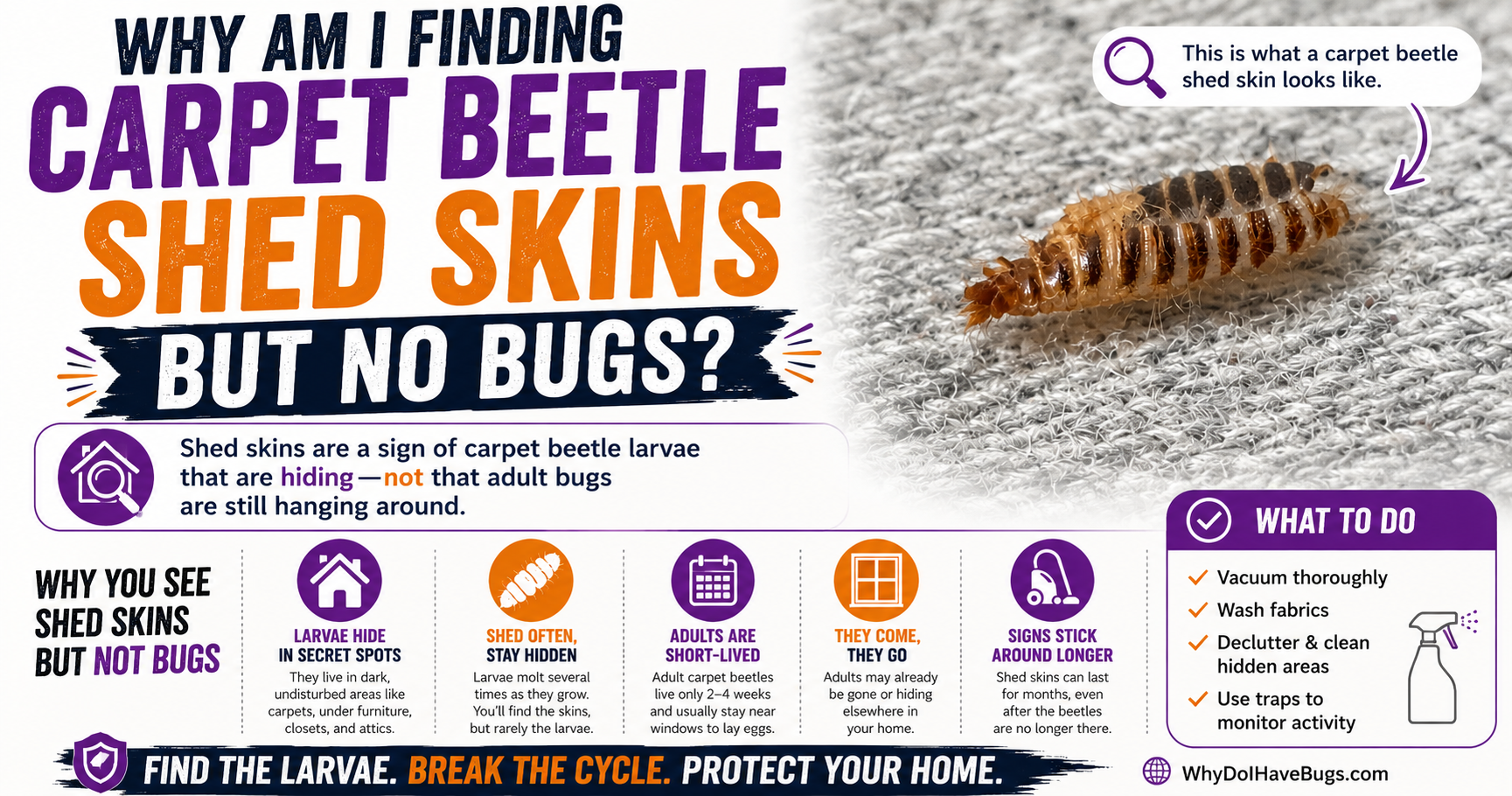
Thorough vacuuming is one of the most important control methods. It helps remove insects, eggs, shed skins, and food sources. However, you may also need to locate and remove infested items or hidden debris. If shed skins are what you keep finding, carpet beetle shed skins can help explain what that evidence means and where the living larvae may be hiding.
Can you use carpet beetle spray inside a car?
Only use a pesticide if its label specifically allows the intended application in a vehicle and on the target surface. Many household sprays aren’t appropriate for car interiors. Thorough cleaning is the safer starting point.
Can carpet beetles get into car air vents?
Small insects may enter accessible ventilation-related openings, but finding carpet beetles near an air vent doesn’t prove they’re breeding inside the HVAC system. Avoid spraying or pouring insecticides into vehicle vents.
Are carpet beetles in your car dangerous?
Carpet beetles don’t feed on human blood or bite people. However, the bristly hairs on their larvae and shed skins can irritate some people’s skin. Their main concern is potential damage to susceptible materials.
Should I worry if I find one carpet beetle in my car?
Not necessarily. A single adult may have wandered or flown into the vehicle. Remove it, inspect nearby areas, and monitor for additional insects. Repeatedly finding larvae or fresh shed skins would justify a more thorough investigation.
About the Author: Our writers at Why Do I Have Bugs focus on helping everyday homeowners identify insects, understand what attracts them, and find practical pest-control solutions without unnecessary guesswork.