
When I first heard the name carpet beetle, I assumed they spent their entire lives living inside carpets.
That isn’t exactly true.
After learning more about them, I realized the carpet itself usually isn’t what they’re interested in.
It’s what’s trapped inside it.
Pet hair.
Lint.
Dead insects.
Natural fibers.
Dust collecting along the edges of a room.
Those are the things that can turn parts of your carpet into an attractive place for carpet beetle larvae.
So yes, carpet beetles can live in carpet—but probably not in the way most people imagine.
Yes, Carpet Beetles Can Live in Carpet
The answer is yes.
Carpet beetles can absolutely live in carpeting, especially if it provides food for their larvae.
The adults usually don’t stay there for long.
Instead, female carpet beetles lay eggs in places where the larvae will have something to eat after they hatch.
A carpet that’s rarely vacuumed or tucked beneath heavy furniture can create exactly those conditions.
It’s Usually the Larvae Living There
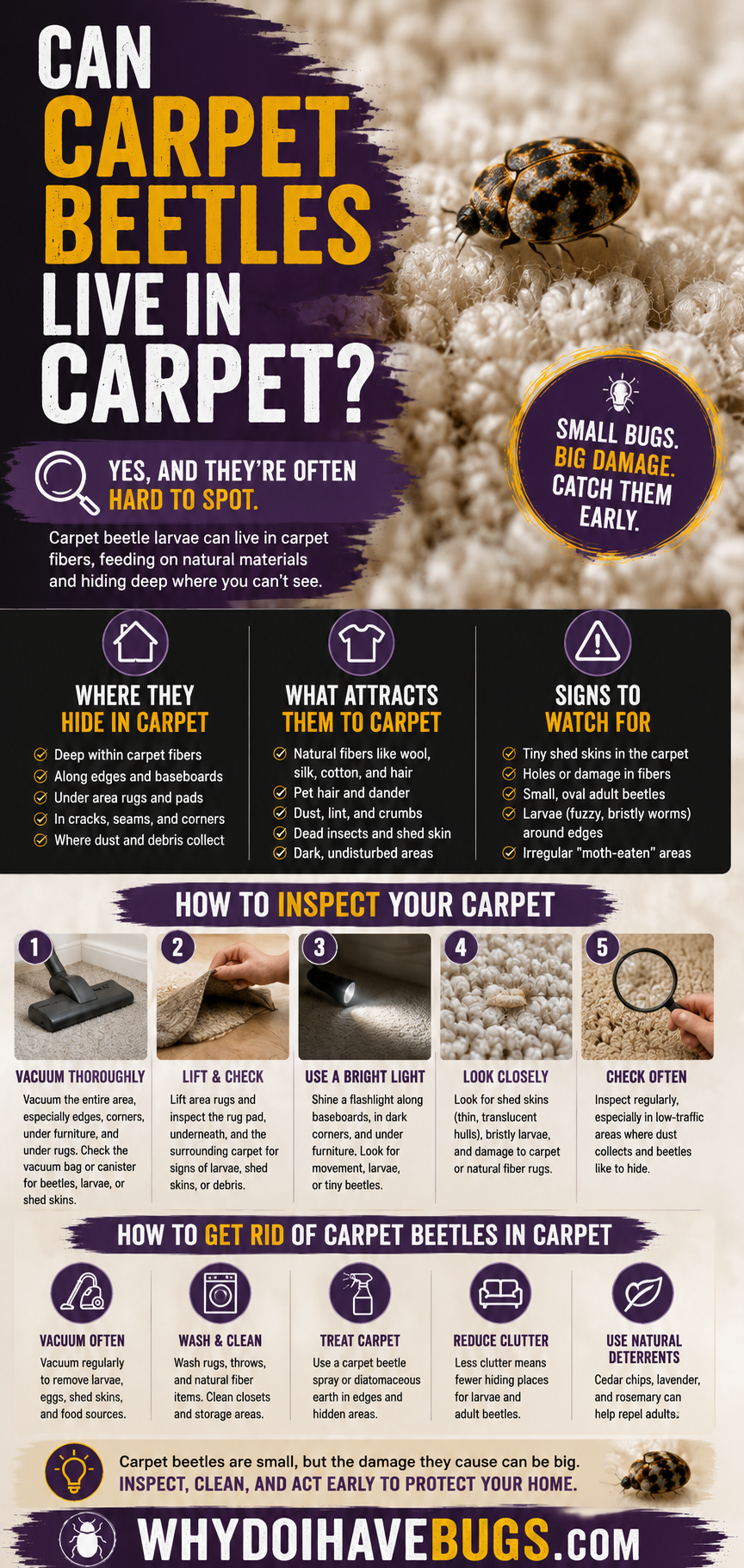
When people say they have carpet beetles in their carpet, they’re almost always talking about the larvae. Knowing Where Do Carpet Beetle Larvae Hide? Common Hiding Places can make it easier to determine whether the carpet is actually the source.
The adults are often seen crawling around windows, walls, or ceilings.
The larvae are the ones hiding deep in carpet fibers where they’re protected from light and disturbance.
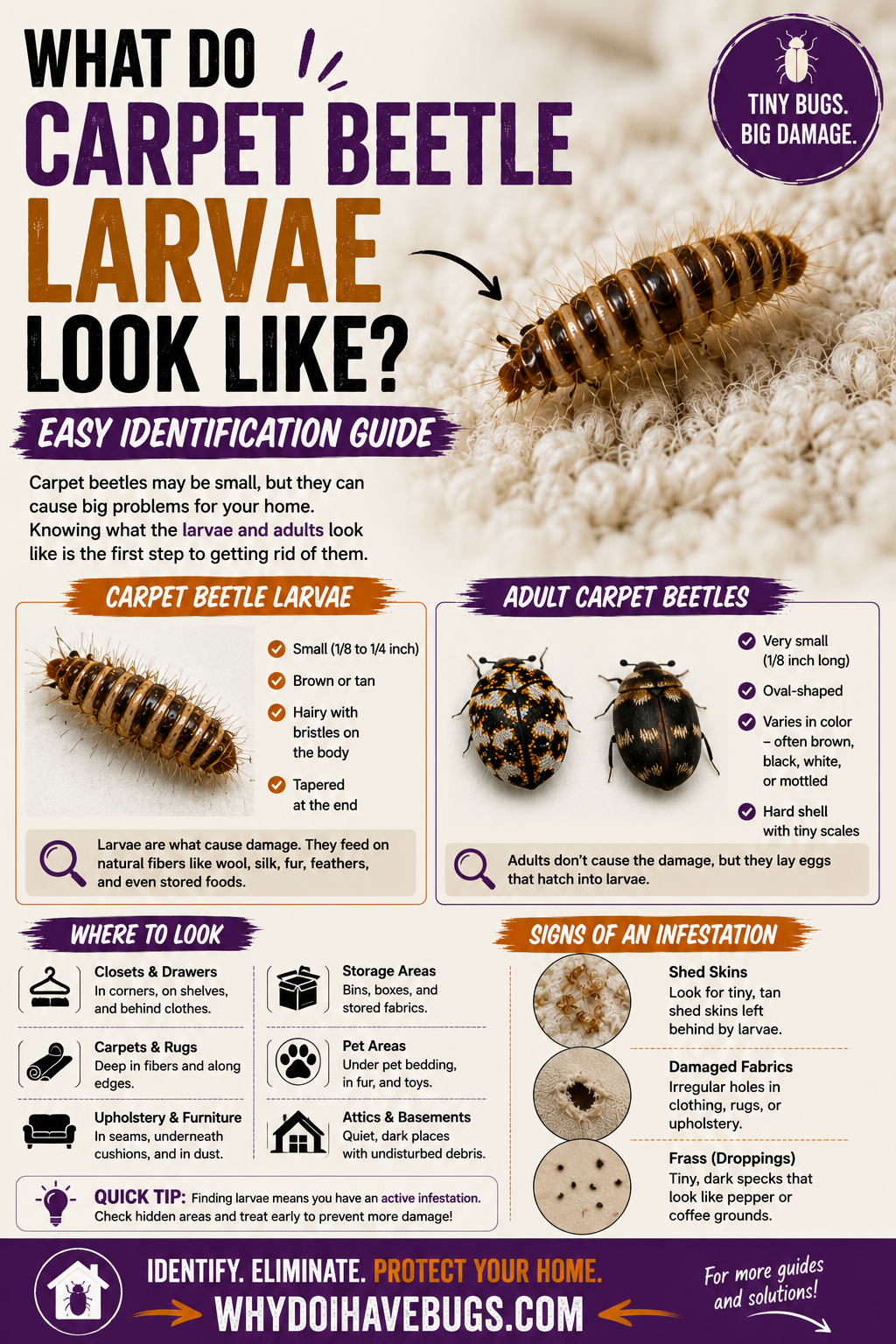
If you’re not sure what they look like, my guide showing what carpet beetle larvae look like can help you identify them correctly.
They Aren’t Eating the Carpet Itself
This surprised me.
Most modern synthetic carpets aren’t actually edible to carpet beetles.
Instead, the larvae feed on things trapped inside or underneath the carpet.
That might include:
- Human hair
- Pet hair
- Lint
- Dead insects
- Wool fibers
- Feathers
- Food crumbs mixed with organic debris
If your carpet contains wool or other natural fibers, the carpet itself can also become part of their food source.
Why They Love the Edges of Rooms
If I were inspecting my own home, one of the first places I’d check would be along the edges of each room.
Baseboards tend to collect dust, hair, and lint that normal foot traffic doesn’t disturb.
Those quiet areas are perfect hiding spots.
I’d also pay close attention to:
- Under beds
- Beneath couches
- Behind dressers
- Inside closets with carpeted floors
- Along the edges of area rugs
Those are all places where debris can slowly build up without anyone noticing.


Carpet Under Furniture Is Often Overlooked
One thing I’ve learned is that carpet beetles love places people rarely disturb.
Think about how often you vacuum underneath your sofa.
Or under a heavy entertainment center.
Or beneath the guest bed.
For many of us, the answer is “not very often.”
Those forgotten areas collect months—or even years—of dust, pet hair, and lint, making them some of the best hiding places in the house.
You May Never See the Larvae at First
One reason carpet infestations go unnoticed is because the larvae stay hidden.
They don’t usually crawl across the middle of the living room floor.
Instead, they stay tucked beneath furniture, near walls, or deep within carpet fibers where they’re less likely to be disturbed.
That’s why many homeowners first notice damaged clothing or adult beetles before they ever spot a larva.

If you’ve also started finding adults around your home, Do Carpet Beetles Fly? What Most Homeowners Don’t Realize explains why they suddenly seem to appear in completely different rooms.
Signs Carpet Beetles Are Living in Your Carpet
You don’t have to actually see a larva to suspect they’re hiding in your carpet.
Some of the most common warning signs include:
- Adult carpet beetles appearing around your home.
- Shed larval skins near baseboards or under furniture.
- Small bare patches in wool rugs.
- Damage to nearby blankets, clothing, or upholstered furniture.
- Dead carpet beetles near windows.
- Larvae crawling along the edges of rooms.
The more of these signs you notice together, the more likely it is that carpet beetles have found a suitable place to develop somewhere in your home.
How I’d Inspect a Carpet for Carpet Beetles
If I thought carpet beetles were living in my carpet, I wouldn’t start in the middle of the room.
I’d focus on the places that don’t get disturbed very often.
Here’s where I’d look first:
- Along baseboards.
- Under couches and recliners.
- Beneath beds.
- Inside bedroom closets.
- Under area rugs.
- Around heating vents.
- Near pet beds.
- Along the edges of stair carpeting.
A flashlight helps quite a bit since the larvae are small and often blend into the carpet.

Vacuuming Really Does Make a Difference
Vacuuming isn’t just about making the carpet look cleaner.
It removes many of the things carpet beetle larvae actually depend on.
Every time you vacuum thoroughly, you’re removing:
- Hair.
- Lint.
- Dead insects.
- Dust buildup.
- Eggs.
- Some larvae.
That’s one reason consistent vacuuming is one of the simplest ways to reduce a carpet beetle population.
Paying extra attention to edges, corners, and underneath furniture usually has a much bigger impact than making a few quick passes through the center of the room.
Not Every Carpet Is Equally Attractive
Carpet beetles aren’t choosing rooms because they like one color of carpet better than another.
They’re choosing rooms that provide food and protection.
For example, a synthetic carpet that’s vacuumed regularly is generally much less appealing than an older wool rug covered by furniture and full of pet hair.
The material, the amount of debris, and how often the area is cleaned all make a difference.

Carpet Isn’t Usually the Only Place They’re Living
This is something I think catches a lot of homeowners off guard.
Even if you find carpet beetles in your carpet, there’s a good chance they’re also using other nearby hiding places.
That might include:
- Closets.
- Upholstered furniture.
- Stored blankets.
- Shoes.
- Pet bedding.
- Wool clothing.
That’s why I recommend inspecting the entire room instead of focusing only on the floor.
The more hiding places you check, the better chance you have of finding where the infestation actually started.
What I’d Do If I Found Carpet Beetles in My Carpet
If I confirmed carpet beetles were living in my carpet, I wouldn’t rush to replace the flooring.
In most cases, the carpet isn’t the real problem.
The goal is to remove the food sources, eliminate the larvae, and make the area less attractive going forward.
I’d vacuum thoroughly several times each week, paying close attention to edges and underneath furniture.
I’d inspect nearby closets, furniture, and stored fabrics for additional signs of activity.
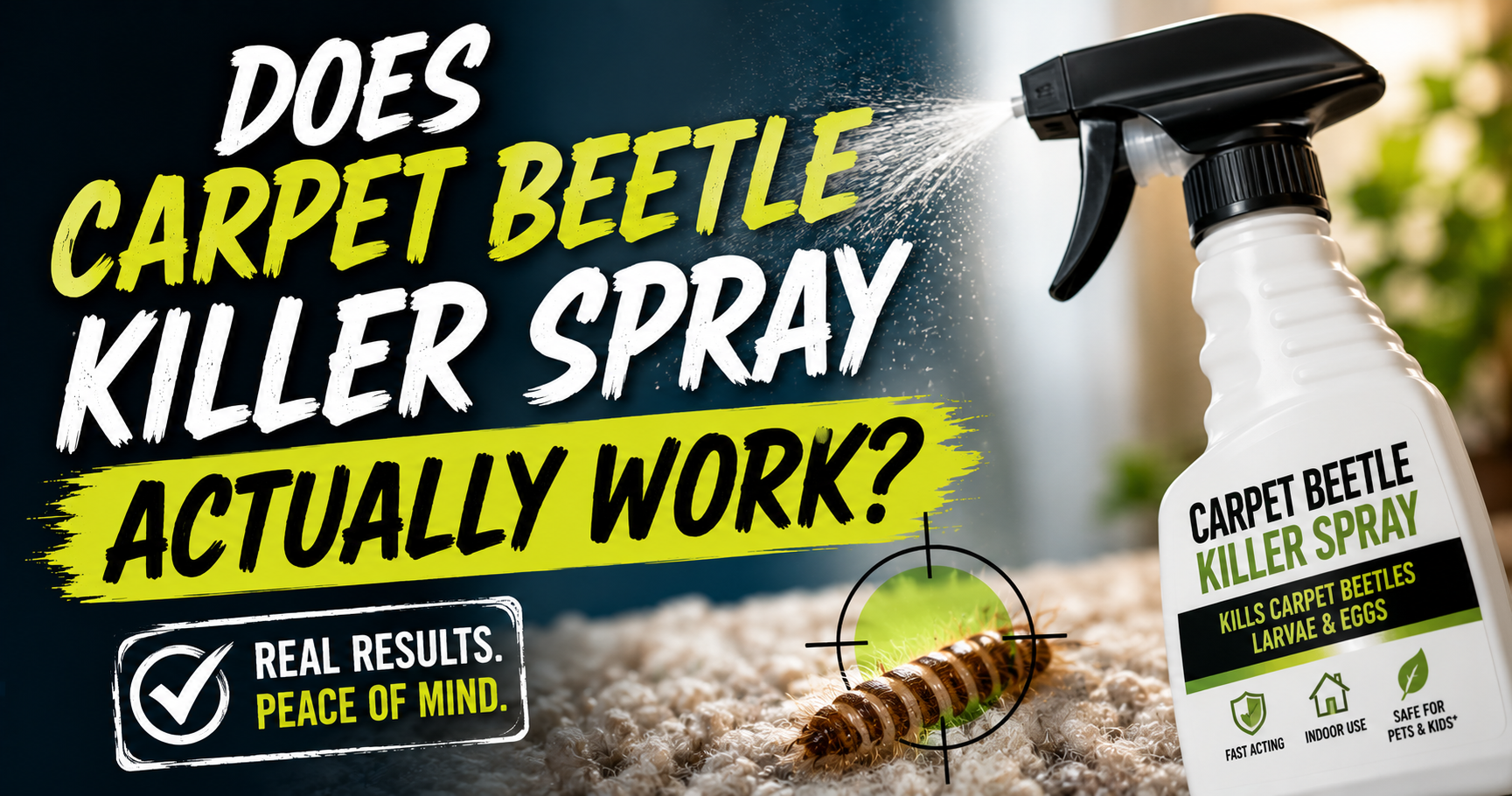
If the infestation was widespread, I’d consider using a carpet beetle treatment that’s labeled for indoor use, but I’d still focus on cleaning first because that’s what removes the things the larvae actually need to survive.
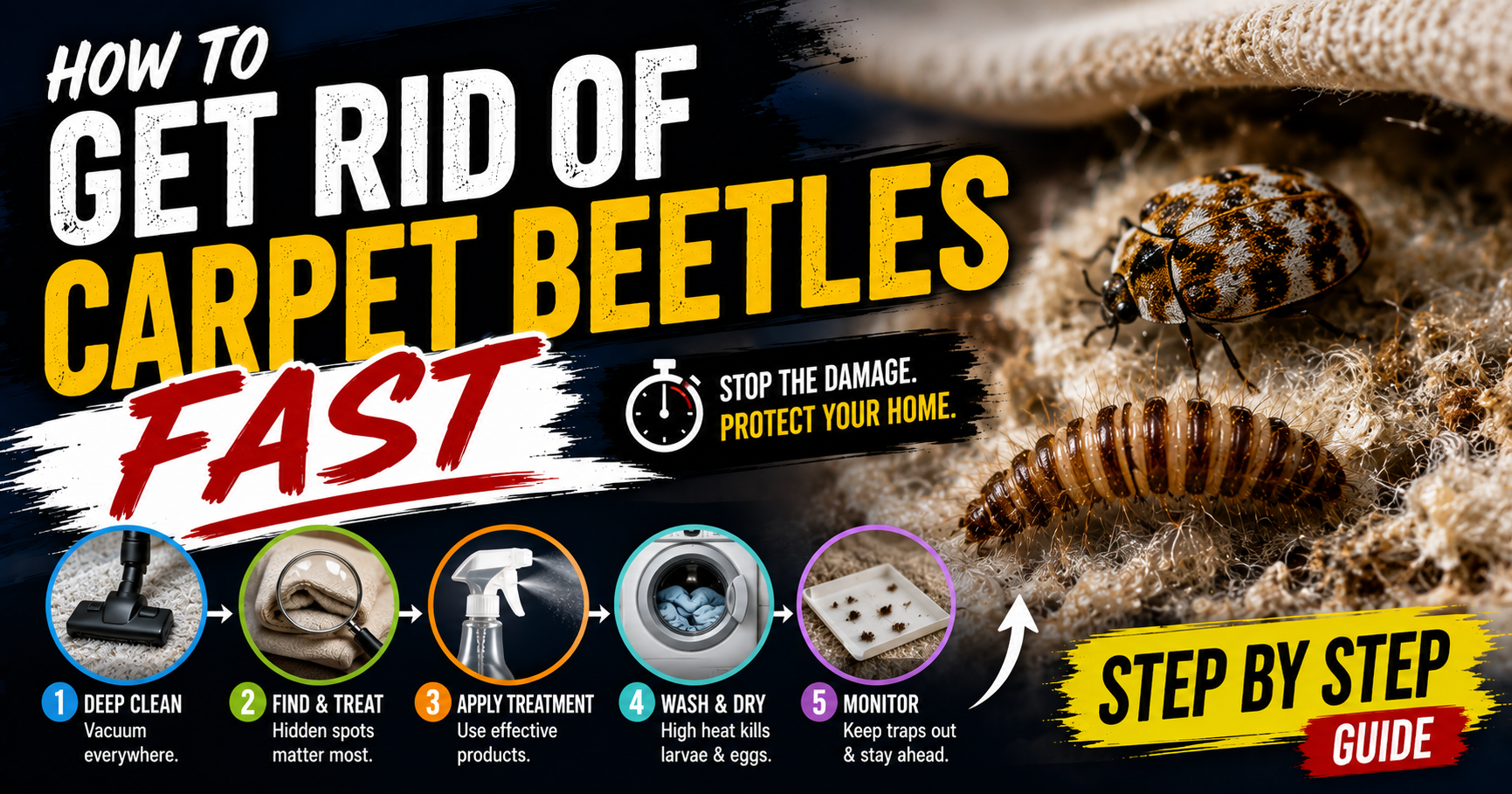
If you’re trying to eliminate an active infestation, my step-by-step guide to getting rid of carpet beetles fast walks through the entire process from inspection to prevention.
For more identification guides, prevention tips, and treatment advice, explore our growing Carpet Beetles category.
Frequently Asked Questions
Can carpet beetles live in synthetic carpet?
Yes, but they’re usually feeding on the hair, lint, dead insects, and other organic debris trapped in the carpet rather than the synthetic fibers themselves.
Do carpet beetles burrow into carpet?
No. Carpet beetles don’t burrow into carpet like termites burrow into wood. The larvae crawl through the fibers and hide in protected areas while feeding on nearby organic materials.
How do I know if carpet beetles are in my carpet?
Look for larvae, shed skins, adult beetles, damaged natural-fiber items, or insects appearing around the edges of rooms and underneath furniture. These are often the first clues that carpet beetles are present.
Should I replace my carpet if I have carpet beetles?
Usually not. Most infestations can be controlled by thoroughly cleaning the carpet, removing food sources, inspecting nearby hiding places, and treating the infestation if necessary. Replacing the carpet is rarely the first solution.
Can vacuuming get rid of carpet beetles in carpet?
Regular, thorough vacuuming can remove many larvae, eggs, and the debris they feed on. While it may not eliminate a severe infestation by itself, it’s one of the most effective parts of any carpet beetle control plan.
About the Author
Ryan Mitchell researches household pests and writes practical, experience-based guides that help homeowners understand why pests show up and how to deal with them. His articles focus on realistic solutions, clear explanations, and helping people solve problems without unnecessary panic.