If you’ve recently discovered a tiny beetle crawling across a windowsill, found mysterious holes in your favorite sweater, or stumbled across a strange fuzzy shell in a closet, you’re probably asking the same question I did.
What exactly are carpet beetles?
I didn’t know much about them until I found what turned out to be a carpet beetle shed skin inside a shoe that had been sitting in our attic for quite a while.
At first, I thought it belonged to a completely different insect.
That one discovery sent me down the rabbit hole of learning how carpet beetles live, why they invade homes, where they hide, what damage they cause, and most importantly, how to get rid of them.
What surprised me most is how misunderstood these insects are.
People often blame the adult beetles when the larvae are actually responsible for most of the damage.
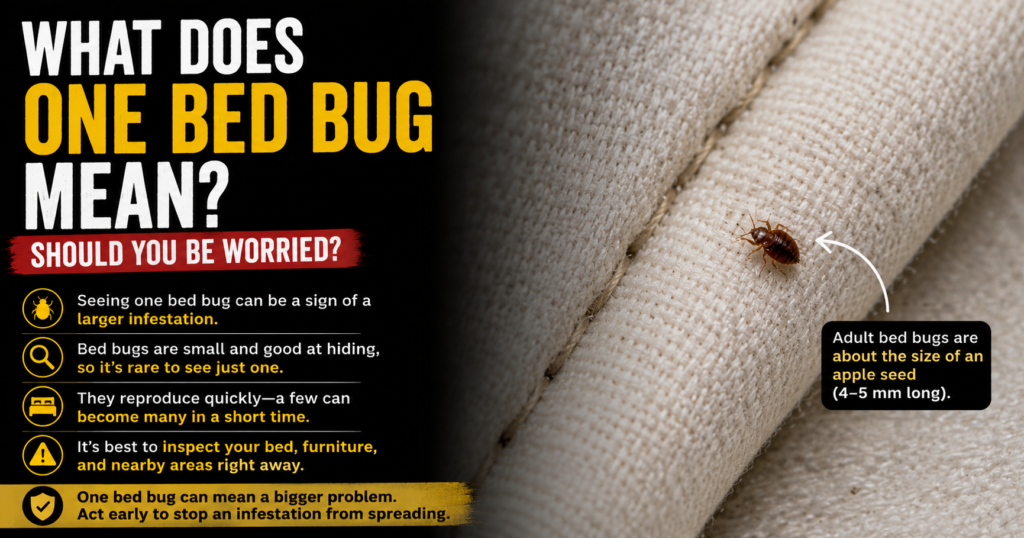
Others mistake carpet beetles for bed bugs, pantry beetles, or even tiny cockroaches.
Many homeowners don’t even realize they have carpet beetles until they’ve already damaged clothing or blankets that have been sitting in storage for months.
This guide brings together everything I’ve learned about carpet beetles in one place.
Throughout the article, I’ll also link to more detailed guides whenever a topic deserves a deeper explanation.
What Are Carpet Beetles?
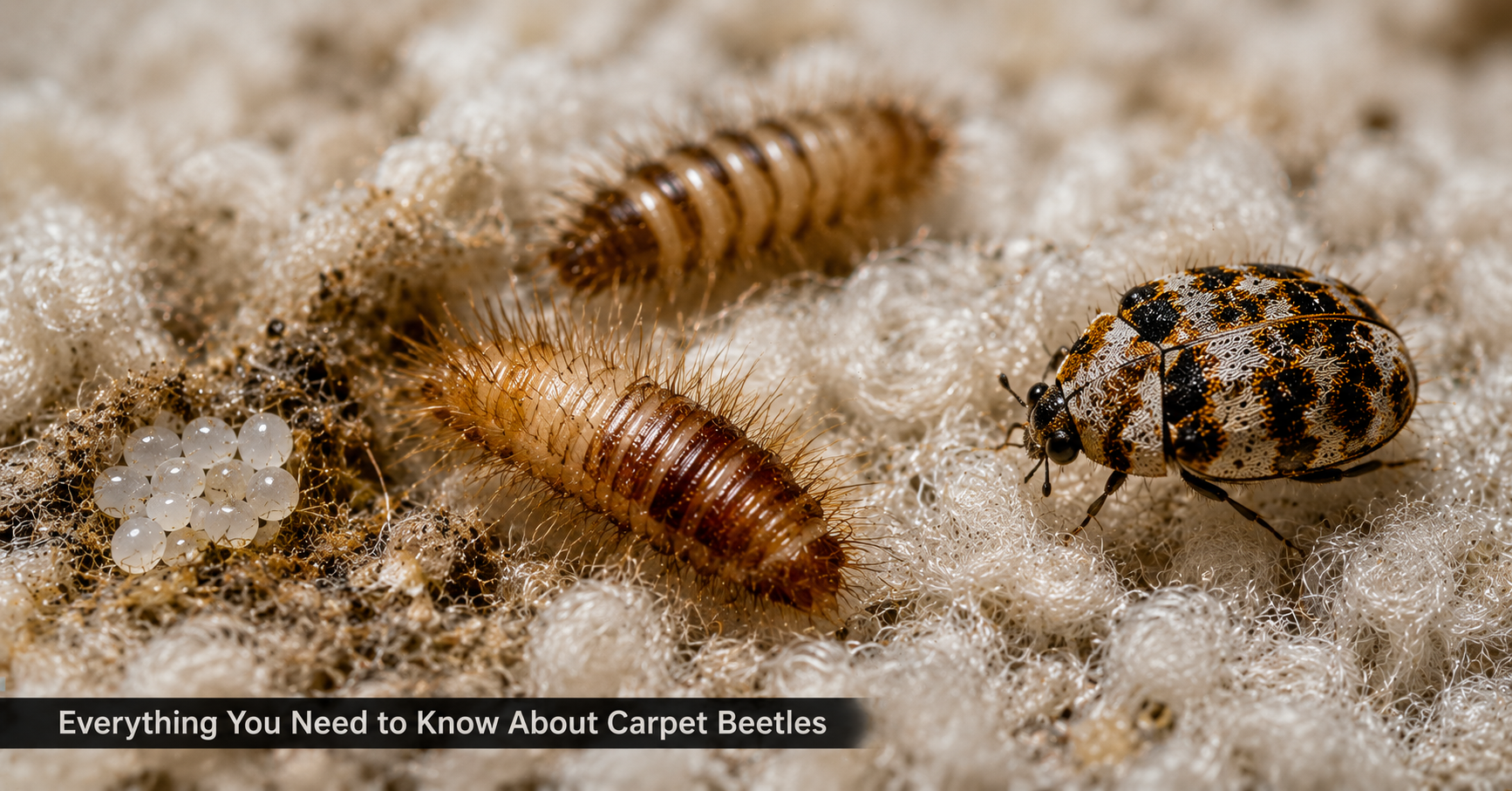
Carpet beetles are small beetles belonging to the family Dermestidae.
They’re found throughout North America and are one of the most common household pests that feed on natural animal-based materials.
Despite their name, they don’t only live in carpets.
In fact, I’ve found evidence of carpet beetles in places that weren’t anywhere near carpet.
Closets.
Attics.
Storage boxes.
Shoes.
Blankets.
Pet bedding.
Furniture.
The name “carpet beetle” comes from the fact that older homes often had wool carpets, which provided an excellent food source for developing larvae.
Today, they can survive almost anywhere natural fibers are available.



Why Carpet Beetles Are So Often Misunderstood
One reason carpet beetles confuse homeowners is because there are really two completely different insects people end up seeing.
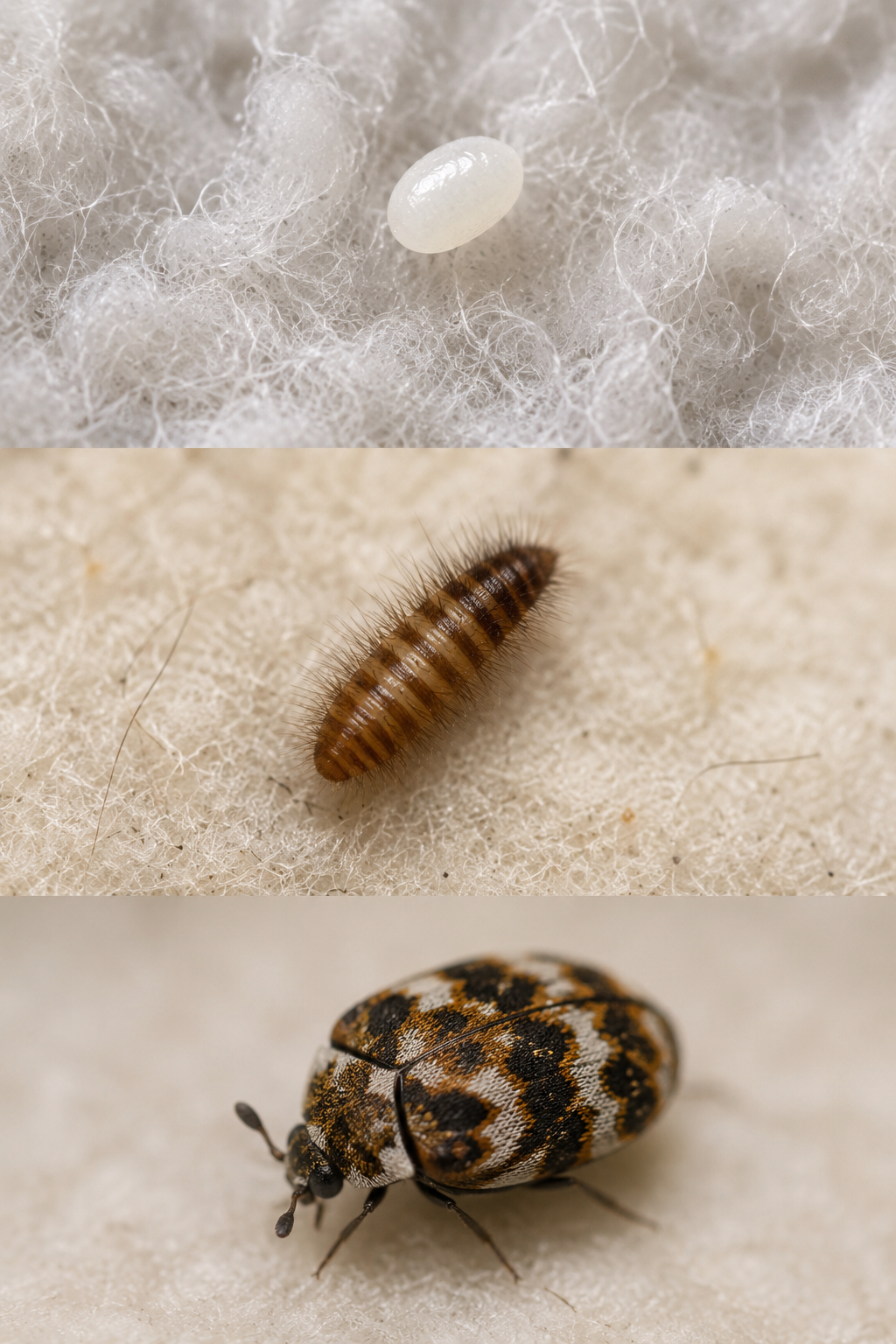
The first is the adult beetle.
The second is the larva.
They look nothing alike.
That’s why someone may identify the adult correctly but completely miss the larvae that are quietly feeding somewhere else inside the house.
Understanding the difference between those two life stages changes the way I inspect for carpet beetles.

What Adult Carpet Beetles Look Like
Adult carpet beetles are surprisingly small.
Most measure only a few millimeters long.
Depending on the species, they may appear:
- Black.
- Brown.
- White and black.
- Mottled with yellow, orange, or cream-colored scales.
They’re usually oval-shaped and often resemble tiny ladybugs without the bright red coloring.
One thing I notice fairly often is adult carpet beetles gathering around windows.
That happens because they’re attracted to light after emerging from their larval stage.
Many homeowners think the windowsill is where the infestation began.
In reality, it’s often just where the adult beetles ended up.
What Carpet Beetle Larvae Look Like
The larvae are the stage I pay the most attention to because they’re responsible for almost all of the damage homeowners experience.
Unlike the adults, carpet beetle larvae don’t look like beetles at all.
Instead, they resemble tiny fuzzy worms with clearly visible body segments and small hairs covering much of their bodies.
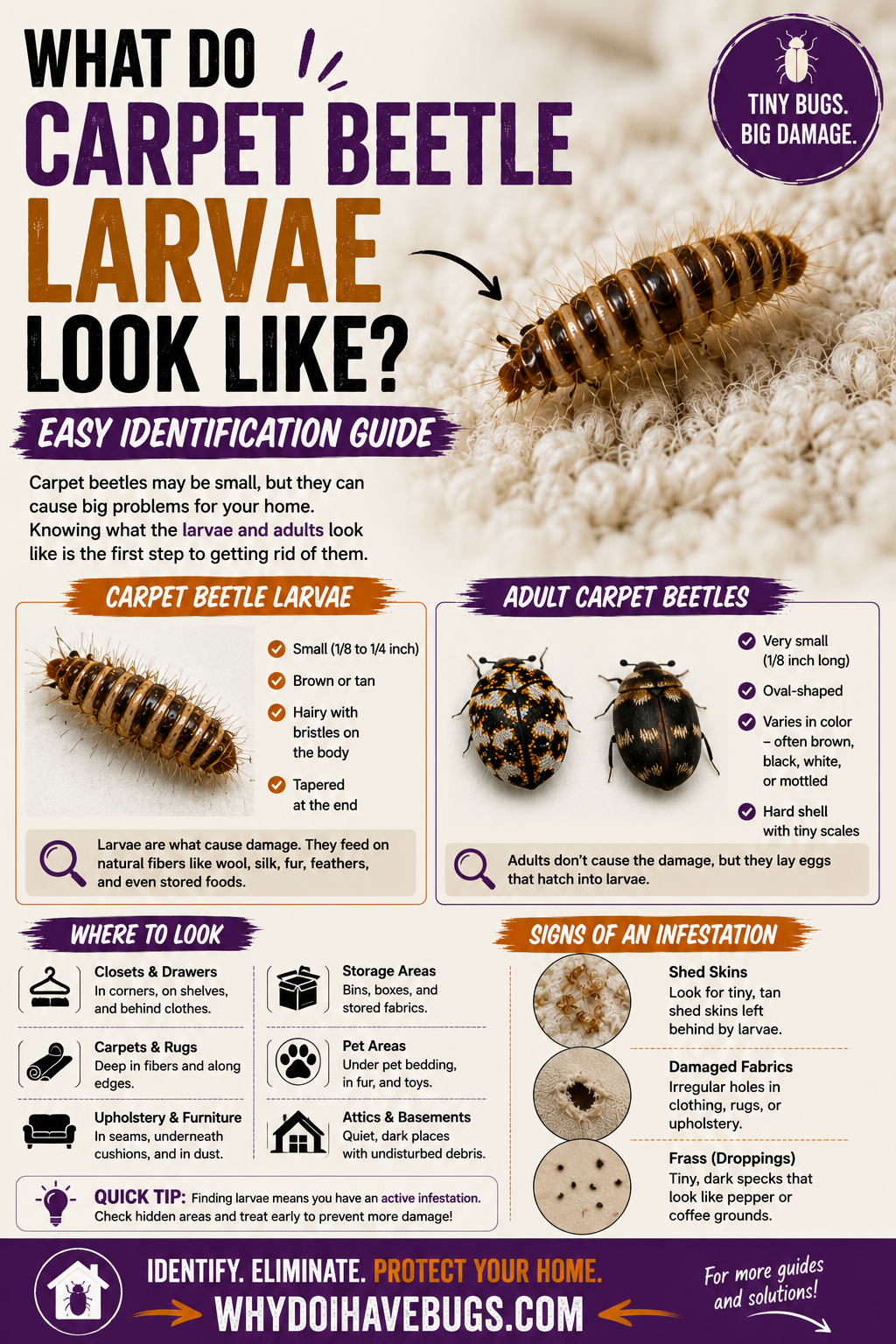
If you’re trying to identify one you’ve found, I put together a detailed guide showing what carpet beetle larvae look likealong with the characteristics I use to tell them apart from other household insects.


Carpet Beetle Shed Skins Are Often the First Clue
One thing that surprised me while researching carpet beetles was learning how many homeowners never actually find a live larva.
Instead, they discover the empty outer skin left behind after the larva molts.
That’s exactly what happened to me.
The little shell I found inside a stored shoe turned out to be a carpet beetle shed skin.
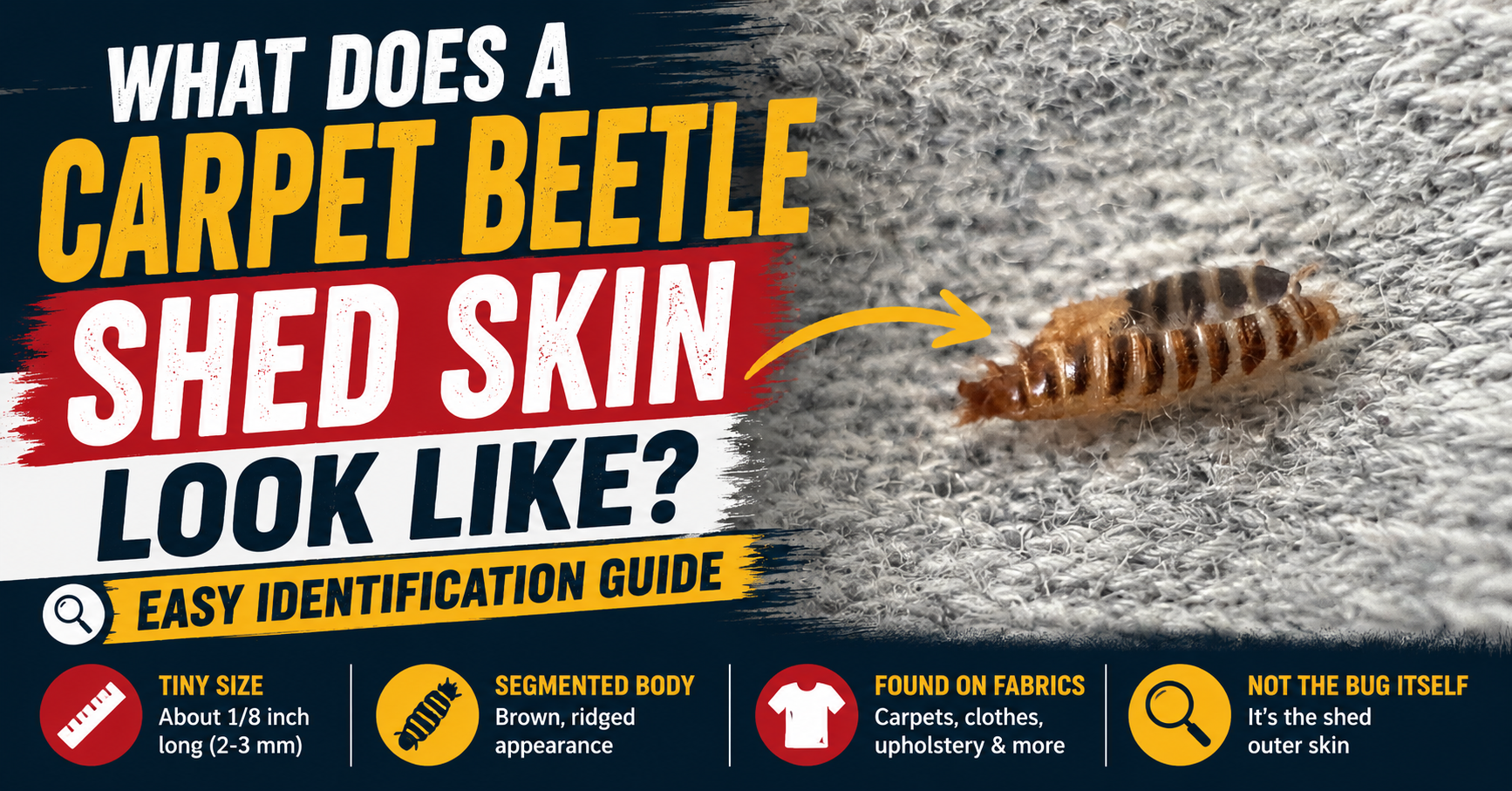
If you’ve discovered something similar, my guide on what a carpet beetle shed skin looks like walks through the easiest ways to identify one correctly.
It’s one of the most commonly misidentified signs of a carpet beetle infestation.
Why You Might Find Shed Skins but Never See the Bugs
After publishing several articles about carpet beetles, one question comes up again and again.
“Why do I keep finding the shed skins, but I never see any bugs?”
The answer is actually pretty simple.
The shed skins stay where they’re left.
The larvae keep moving.
Adult beetles eventually leave the area altogether.
That means the evidence often outlasts the insects themselves.
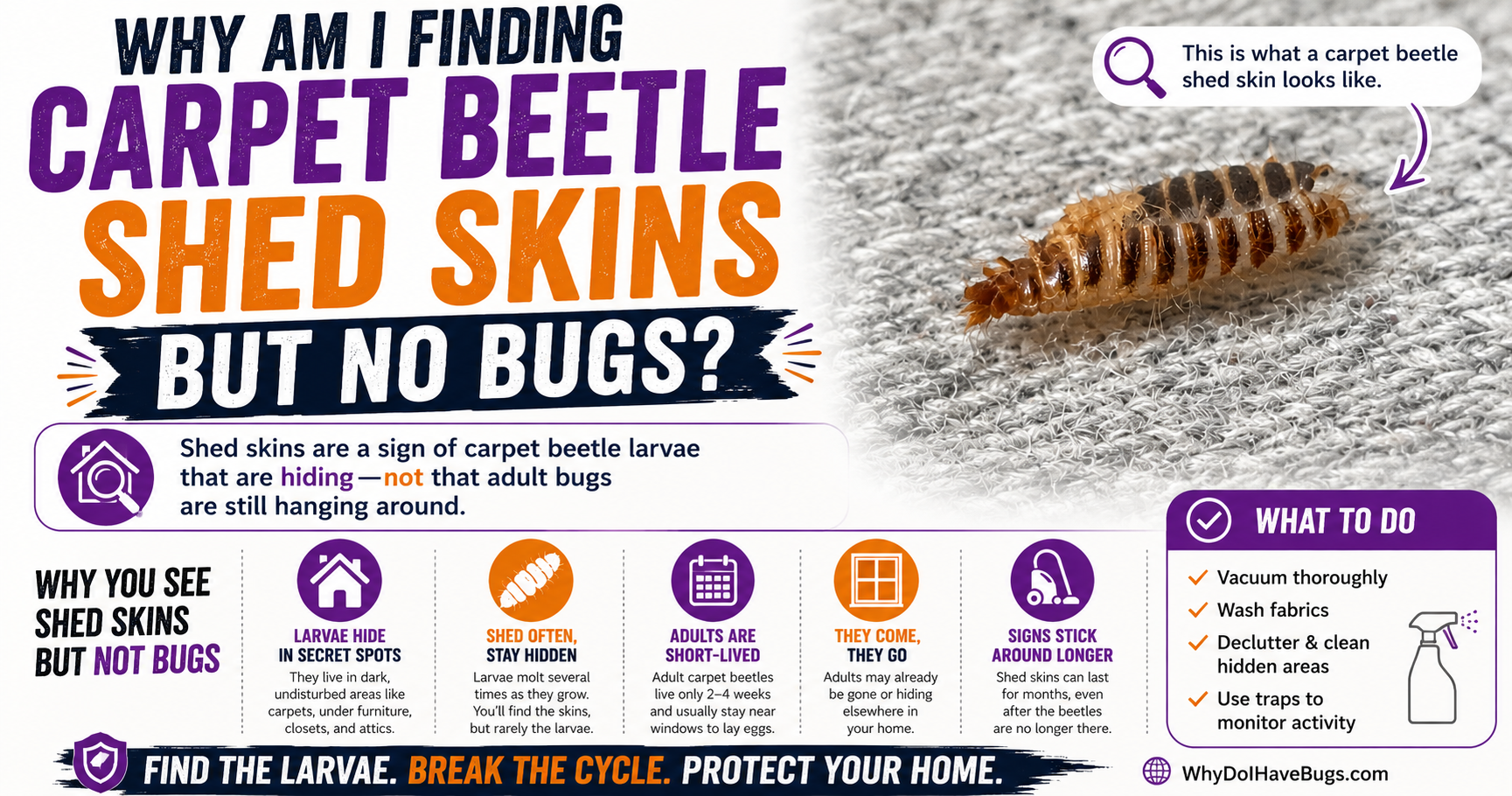
If that’s happening in your home, I explain it in much more detail in my guide on why you’re finding carpet beetle shed skins but no bugs.
Why Carpet Beetles Get Into Homes
One of the biggest myths I hear is that carpet beetles only invade dirty houses.
That’s simply not true.
I’ve seen spotless homes develop carpet beetle problems.
They’re not looking for dirt.
They’re looking for food.
Adult carpet beetles often fly indoors through open doors, windows, or damaged screens before laying eggs in areas where the larvae will have plenty to eat.
Natural fibers, pet hair, lint, feathers, and even dead insects can all provide food for developing larvae.
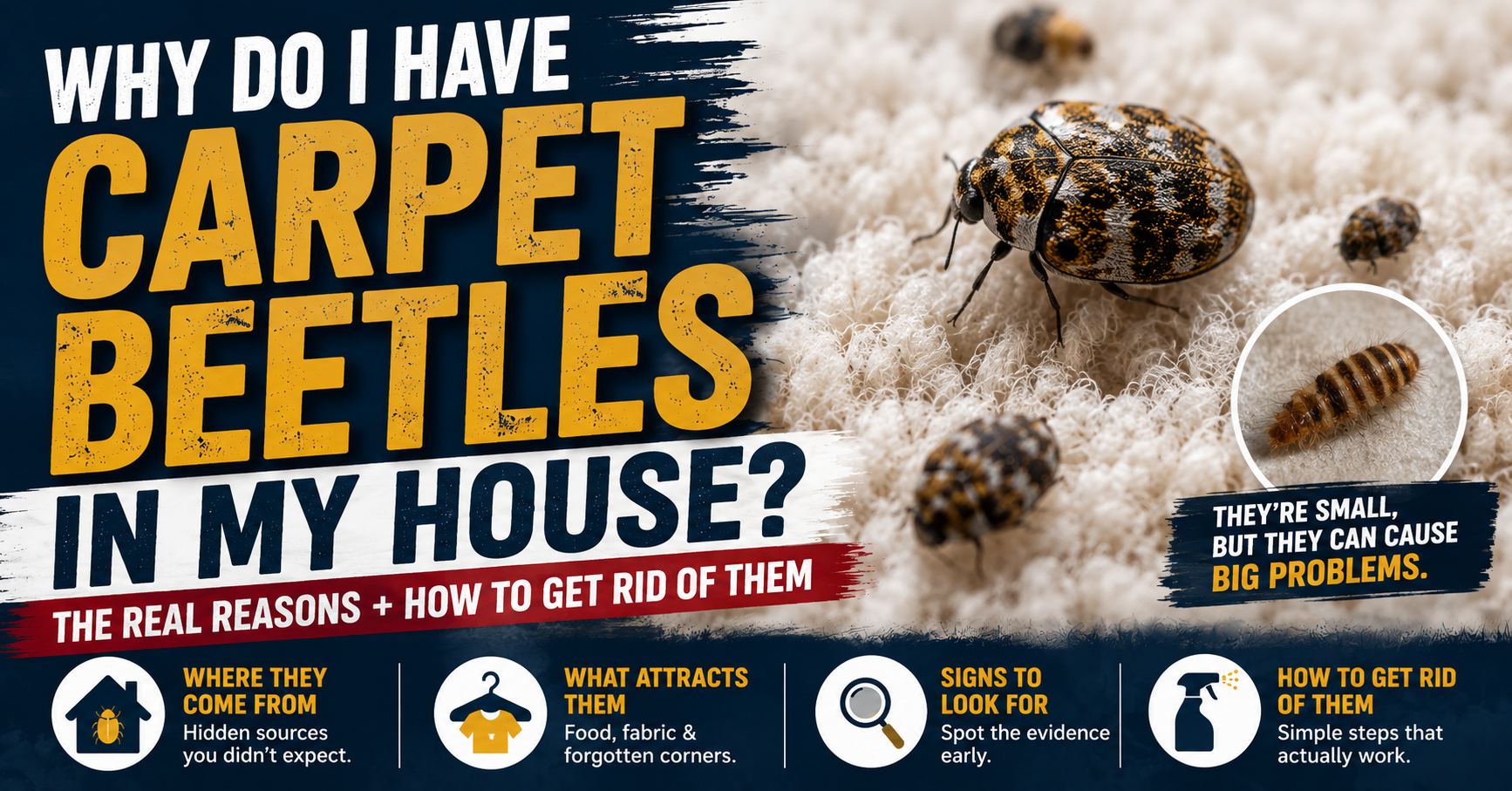
If you’re wondering why they chose your house, I explain the most common reasons in my article on why carpet beetles are in your house.
Where Carpet Beetle Larvae Hide
If there’s one lesson I’ve learned, it’s this:
The larvae almost never hide where homeowners expect.
Instead of wandering across open floors, they prefer dark, quiet locations that don’t get disturbed very often.
Some of the first places I inspect include closets, attics, storage boxes, pet bedding, blankets, and the spaces underneath furniture.
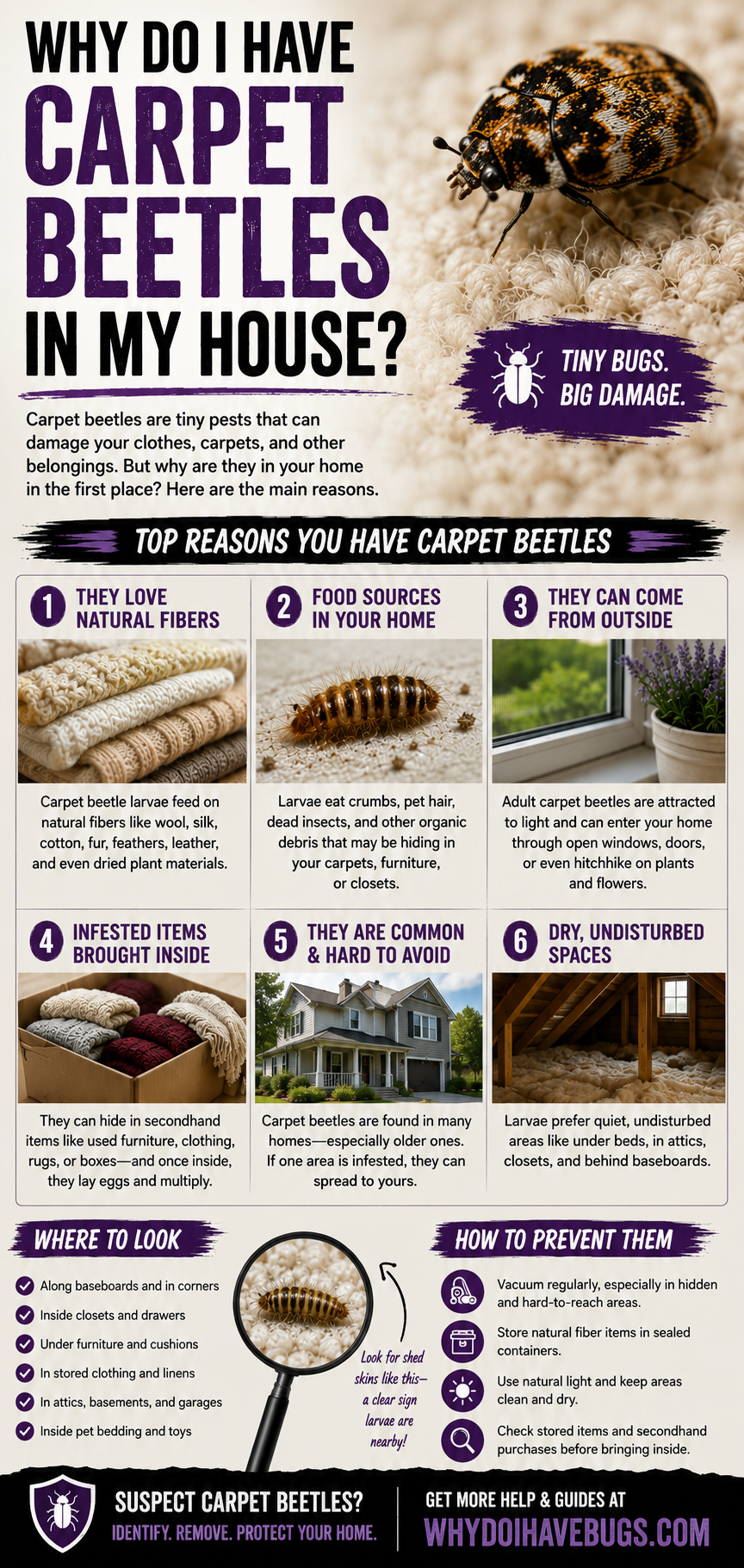
I recently wrote an entire guide covering where carpet beetle larvae hide because understanding their favorite hiding places is one of the fastest ways to locate an infestation before it spreads.



Signs You May Have a Carpet Beetle Infestation
One adult carpet beetle doesn’t always mean you have an infestation.
Sometimes a beetle simply flies inside by accident.
What gets my attention is when I start seeing multiple signs that point toward active larvae somewhere in the house.
Some of the most common clues include:
- Adult carpet beetles around windows.
- Tiny fuzzy larvae.
- Empty shed skins.
- Small holes in natural-fiber clothing.
- Damaged blankets or rugs.
- Hairy shells inside closets or storage boxes.
- Dead adult beetles collecting near windowsills.
The more of those signs I find together, the more confident I become that carpet beetles are actively developing somewhere nearby.
One Tool I Wouldn’t Fight Carpet Beetles Without
If someone asked me what piece of equipment made the biggest difference during our own carpet beetle cleanup, I’d probably say our vacuum cleaner.
A quality vacuum removes much more than visible dirt. It helps remove larvae, shed skins, lint, pet hair, dead insects, and many of the food sources that allow carpet beetles to keep developing.
That’s one reason I recommend vacuuming every day during an active infestation instead of waiting until the weekend.
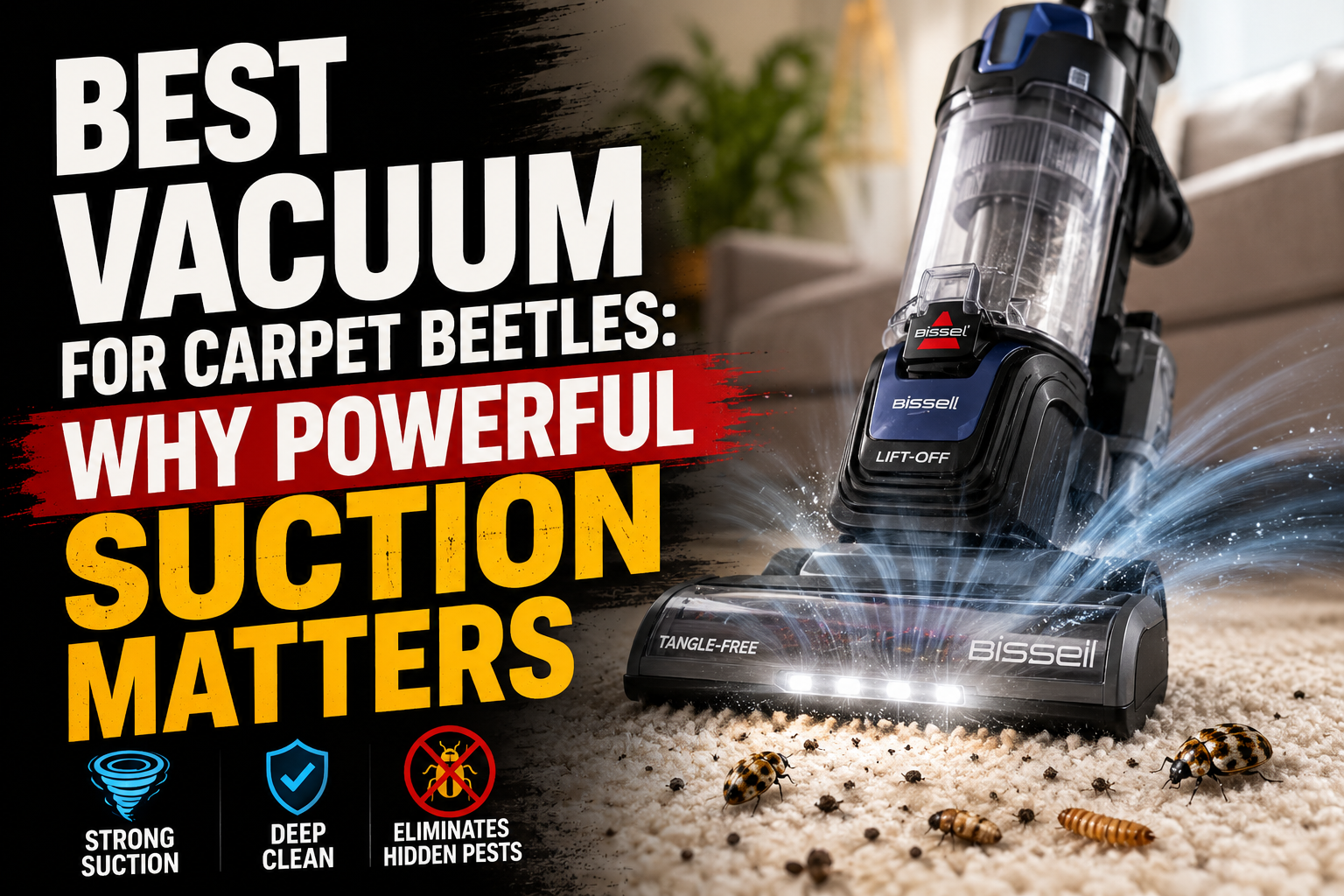
If you’d like to see what I look for in a vacuum, I explain everything in my guide to the best vacuum for carpet beetles.
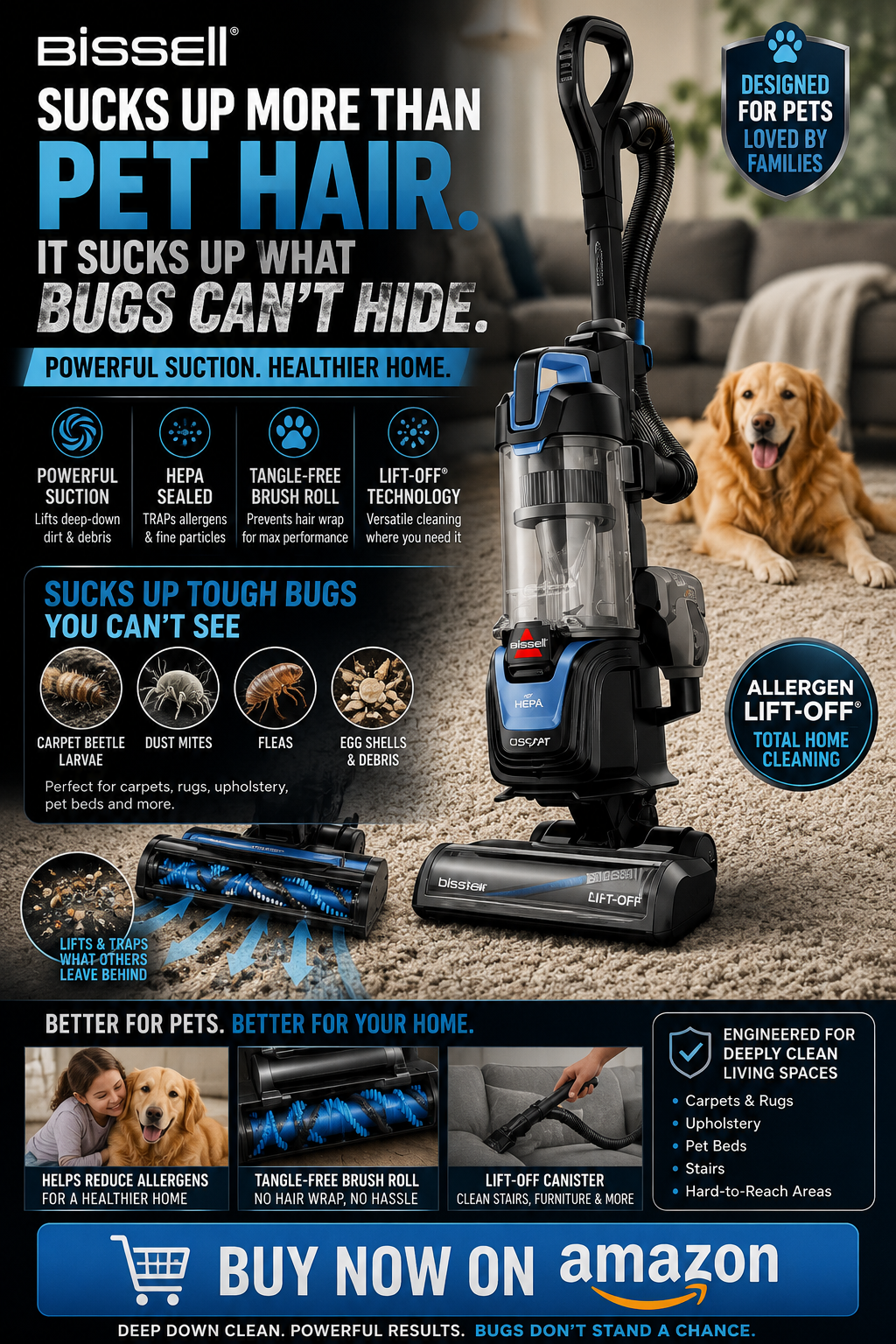
For anyone shopping for one, the Bissell Pet Hair Eraser Allergen Lift-Off is one I’d seriously consider because it’s designed for strong suction, pet hair removal, and cleaning furniture and other hard-to-reach places where carpet beetle larvae often hide.

What Damage Do Carpet Beetles Cause?
The adult beetles don’t usually damage your belongings.
The larvae do.
As they grow, they feed on materials made from natural animal proteins.
That includes items many people never think about until the damage has already happened.
I’ve seen carpet beetles damage:
- Wool sweaters.
- Blankets.
- Rugs.
- Leather gloves.
- Fur coats.
- Feather pillows.
- Taxidermy.
- Felt decorations.
- Pet beds.
- Upholstered furniture containing natural fibers.
Unlike moth damage, carpet beetle damage often appears as scattered holes instead of one large damaged area.
That’s one reason homeowners sometimes blame mice, moths, or simple wear and tear before realizing carpet beetles are responsible.
Understanding the Carpet Beetle Life Cycle
Learning the life cycle helped me understand why carpet beetles can be difficult to eliminate.
The cycle starts when an adult female lays eggs near a food source.
After hatching, the larvae spend weeks or even months feeding and growing.
As they grow, they molt several times.
Each molt leaves behind another shed skin.
Eventually the larvae pupate before emerging as adult beetles that often fly toward windows and lights.
That explains why homeowners may see adult beetles upstairs while the larvae are quietly feeding in a completely different room.
I’ll be publishing a dedicated guide covering the carpet beetle life cycle in much greater detail because it’s one of the most misunderstood parts of their behavior.
Do Carpet Beetles Bite People?
This is probably one of the biggest myths surrounding carpet beetles.
The answer is no.
Carpet beetles don’t bite people.
However, some people develop itchy skin after coming into contact with the tiny hairs covering carpet beetle larvae.
Those hairs can trigger an allergic reaction that many homeowners mistake for insect bites.
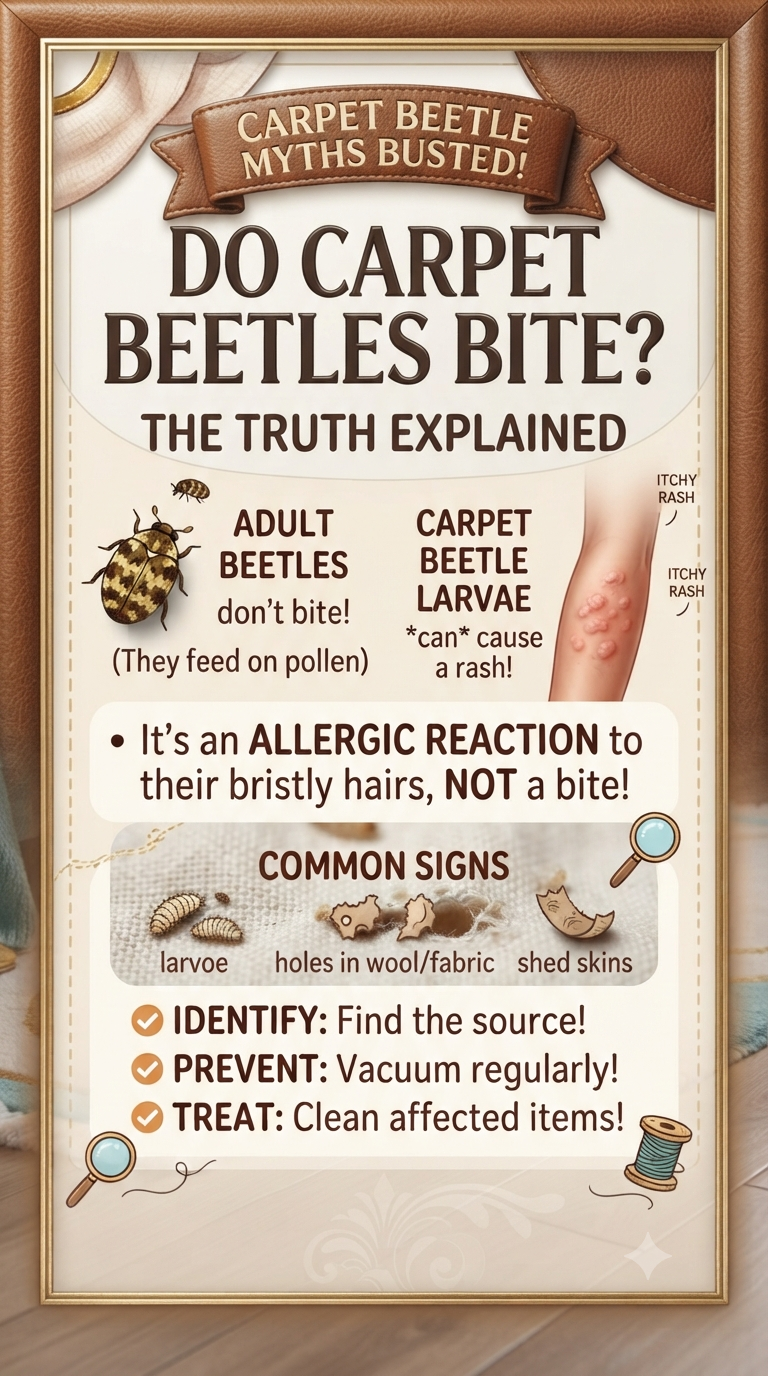
I cover that topic much more thoroughly in my article explaining whether carpet beetles bite and why the skin irritation is often mistaken for bites from another insect.
How I Would Inspect My House
Whenever I suspect carpet beetles, I don’t randomly walk around hoping to spot one.
Instead, I inspect the areas that make the most sense.
I start with closets because they often contain wool clothing, blankets, shoes, and other natural fibers.
Next, I check storage boxes that haven’t been opened in months.
Then I inspect under furniture, pet bedding, baseboards, and attic storage.
I’m looking for evidence.
Live larvae.
Adult beetles.
Shed skins.
Damaged fabrics.
The more evidence I find, the better I understand where the infestation actually started.
How to Get Rid of Carpet Beetles
People often ask me what the fastest way is to eliminate carpet beetles.
Honestly, I think many homeowners focus on the wrong step.
They immediately start looking for insecticides.
I start with inspection.
Once I know where the larvae are feeding, I thoroughly vacuum the area, inspect nearby fabrics, wash washable items, and remove as many food sources as possible.
Only after that do I decide whether a treatment product is necessary.
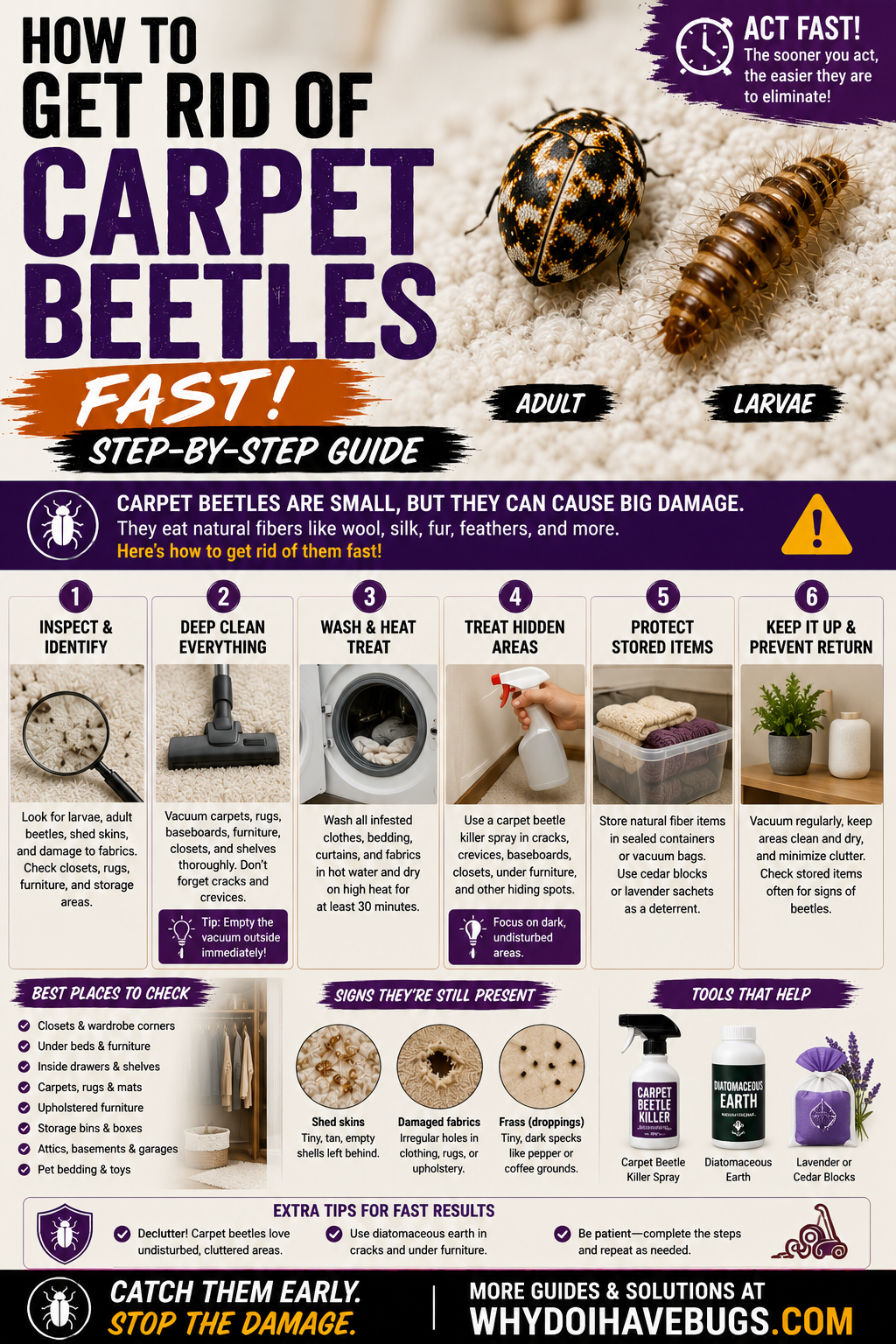
If you’d like to see the exact process I follow, I put together a complete step-by-step guide for getting rid of carpet beetles that walks through every stage of the process.
Do Carpet Beetle Sprays Actually Help?
This is another question I receive quite a bit.
My answer is yes…
when they’re used correctly.
No spray can replace a thorough inspection.
No spray can remove pet hair, lint, or damaged fabrics.
But once you’ve located the infestation, a quality product can become a useful part of your treatment plan.
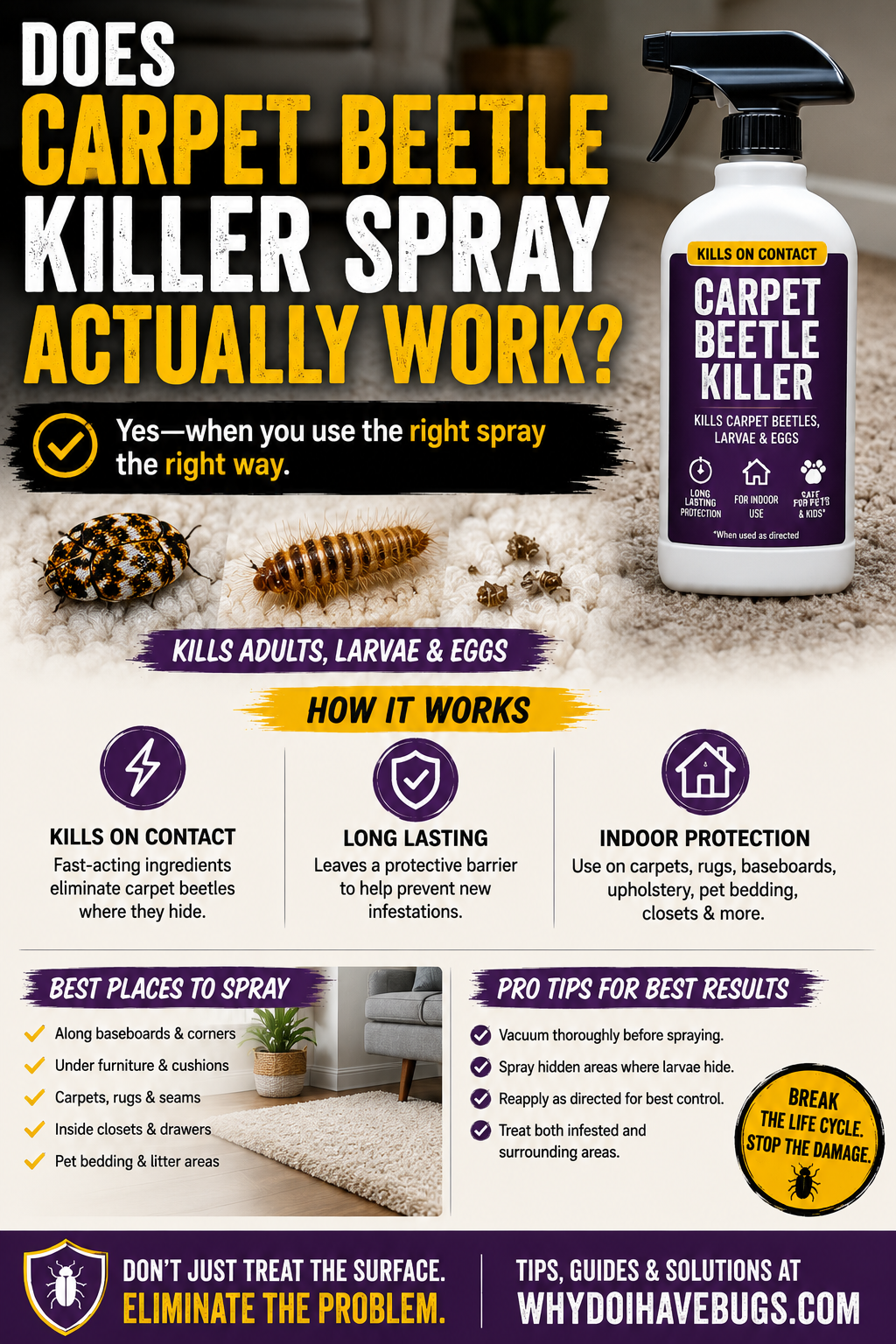
I recently tested the research behind one popular option in my article Does Carpet Beetle Killer Spray Actually Work?where I explain what I like, what I don’t like, and when I think a spray makes sense.

If you decide a spray is appropriate for your situation, the Carpet Beetle Killer Spray for Indoor Use is one product designed to target both adult carpet beetles and larvae when used according to the product label.
Preventing Carpet Beetles From Coming Back
Once you’ve eliminated carpet beetles, prevention becomes much easier than starting over.
The habits that make the biggest difference are surprisingly simple.
Regular vacuuming removes many of the food sources larvae depend on.
Cleaning pet hair from underneath furniture helps reduce another favorite food source.
Storing seasonal clothing in sealed plastic containers instead of cardboard boxes makes it much harder for adult beetles to lay eggs.
I also make a habit of checking stored blankets, shoes, and clothing every few months instead of leaving them untouched for years.
Those small habits go a long way toward preventing future infestations.
Why I Decided to Build This Carpet Beetle Resource
After finding that first shed skin inside my attic shoe, I realized how difficult it was to find straightforward information online.
Most websites either repeated the same generic advice or skipped over the questions homeowners were actually asking.
That’s why I started building this collection of carpet beetle guides.
Instead of trying to answer everything in one article, I’ve created detailed resources covering identification, hiding places, shed skins, larvae, treatment, and prevention so you can dive deeper into whichever question brought you here.
You can also explore our growing Beetles resource center where I’ll continue adding new carpet beetle articles along with guides covering other beetles commonly found inside homes.
Frequently Asked Questions
Are carpet beetles harmful to people?
Carpet beetles aren’t considered dangerous because they don’t bite or sting. However, the tiny hairs on carpet beetle larvae can cause an itchy skin reaction in some people. They can also cause expensive damage to clothing, rugs, blankets, and other natural-fiber belongings if they’re allowed to remain in the home.
Are carpet beetles active all year?
They can be.
Adult carpet beetles are most noticeable during the warmer months when they’re flying and searching for places to lay eggs. Inside climate-controlled homes, however, larvae can continue developing throughout much of the year if they have a steady food source.
Can carpet beetles live in clean houses?
Absolutely.
This is probably one of the biggest misconceptions I see.
A spotless house can still develop a carpet beetle problem if adult beetles find suitable places to lay eggs near natural fibers, pet hair, feathers, lint, or dead insects.
Clean homes simply tend to have fewer food sources available, making large infestations less likely.
What attracts carpet beetles the most?
Adult carpet beetles are attracted to pollen and flowers outdoors, but once they enter a home, the larvae are attracted to materials containing animal proteins.
Some of the biggest attractants include:
- Wool clothing.
- Fur.
- Leather.
- Silk.
- Feathers.
- Pet hair.
- Lint.
- Dead insects.
- Taxidermy.
Understanding what attracts them is often the key to preventing future infestations.
How long do carpet beetles live?
The answer depends on which stage of their life cycle you’re looking at.
Adult carpet beetles usually live only a few weeks.
The larvae, however, often spend several months feeding and growing before becoming adults.
Because of that, most homeowners deal with larvae much longer than they ever notice the adult beetles.
Should I throw away clothing with carpet beetle damage?
Not necessarily.
Many items can be washed, dry cleaned, or cleaned thoroughly before being stored again.
I usually inspect each item individually before deciding whether it’s worth keeping.
Only heavily damaged belongings typically need to be discarded.
Can carpet beetles spread from one room to another?
Yes.
Adult carpet beetles can fly throughout the house.
Larvae can slowly crawl in search of food.
That’s why finding carpet beetles in one room is a good reason to inspect nearby closets, storage areas, and adjoining rooms rather than assuming the problem is isolated.
Can carpet beetles get into beds?
They can occasionally be found around beds, especially if natural fibers, feathers, or accumulated lint are present.
However, unlike bed bugs, they aren’t living in beds to feed on people.
Their goal is finding suitable food for the larvae.
I’ll be covering this topic in much more detail in an upcoming guide dedicated entirely to carpet beetles and beds.
Do carpet beetles eventually go away on their own?
Sometimes a very small problem disappears naturally, especially if food sources become unavailable.
However, I wouldn’t count on that happening.
If larvae continue finding natural fibers to feed on, the infestation can continue for months before homeowners realize how much damage has occurred.
Final Thoughts From My Experience
Finding that first carpet beetle shed skin inside an old attic shoe completely changed the way I look at household pests.
Before then, I probably would have tossed it in the trash without thinking twice.
Now I know that little shell was actually giving me valuable information.
It told me a carpet beetle larva had developed in that area.
It reminded me to inspect nearby storage instead of simply looking for adult beetles.
And it showed me why so many homeowners struggle to identify carpet beetles correctly.
If there’s one lesson I’d leave you with, it’s this:
Don’t focus only on the bug you can see.
Focus on why it’s there.
That’s the question that leads you to the larvae, the food source, and ultimately the solution.
Whether you’ve just spotted an adult beetle, found a mysterious shed skin, or discovered damaged clothing tucked away in a closet, taking a little extra time to investigate now can save you a lot of frustration later.
As I continue expanding our Beetles resource center, I’ll keep adding new guides that answer the questions homeowners ask most often. My goal is to build one of the most complete, practical carpet beetle resources available so you can quickly identify what you’re dealing with and confidently decide what to do next.
Where Carpet Beetles Hide Inside Your Home
One of the biggest surprises for most homeowners is realizing carpet beetles don’t just live in carpet. Once they get inside, they’ll use almost any quiet location that provides food for their larvae. During our own experience with carpet beetles, I quickly learned that finding one beetle was only the beginning. The real challenge was figuring out every place they could be hiding before the infestation had a chance to grow.
Closets, furniture, rugs, blankets, shoes, and even pet beds can all become part of the problem. The more places you inspect early, the better your chances of stopping carpet beetles before they spread throughout your home.
If you’re trying to inspect your house one area at a time, these guides will help you know exactly where to look.
- Why Are Carpet Beetles in My Bedroom?
- Why Are Carpet Beetles in My Closet?
- Can Carpet Beetles Live in Furniture?
- Can Carpet Beetles Live in Carpet?
- Can Carpet Beetles Live in Rugs?
- Can Carpet Beetles Live in Blankets?
- Can Carpet Beetles Live in Clothes?
- Can Carpet Beetles Live in Shoes?
- Can Carpet Beetles Live in Pet Beds?
Understanding the Carpet Beetle Life Cycle
One reason carpet beetles are so frustrating is that they look completely different depending on their stage of life. The adults are the tiny beetles you might notice crawling across a windowsill, while the larvae are the ones responsible for damaging blankets, clothing, rugs, furniture, and other natural materials. Their eggs are incredibly small and often go unnoticed until they’ve already hatched.
Learning what each stage looks like makes it much easier to identify an infestation early and understand what you’re actually seeing around your home.
These guides cover each stage of the carpet beetle life cycle in more detail.
- How Long Do Carpet Beetles Live?
- Where Do Carpet Beetles Lay Eggs?
- What Do Carpet Beetle Eggs Look Like?
- What Do Carpet Beetle Larvae Look Like?
- Do Carpet Beetles Fly?
The Most Common Signs of a Carpet Beetle Infestation
Carpet beetles rarely announce themselves right away. Most homeowners notice clues long before they ever realize what’s happening. You might find a strange fuzzy shell on a windowsill, discover damage to a favorite sweater, or start seeing adult beetles in the same room every few days.
Knowing how to recognize these early warning signs can save you a lot of time, money, and frustration because small infestations are much easier to control than large ones.
If you’re trying to figure out whether you’re actually dealing with carpet beetles, these articles should be your next stop.
- What Does a Carpet Beetle Shed Skin Look Like?
- Why Am I Finding Carpet Beetle Shed Skins But No Bugs?
- Why Do I Keep Finding Dead Carpet Beetles?
- Why Are Carpet Beetles on My Windows?
- Carpet Beetle Rash vs Bed Bug Bites
- Carpet Beetle Shed Skin vs Bed Bug Shell
Getting Rid of Carpet Beetles the Right Way
Once you know carpet beetles are in your home, identifying them is only half the battle. The next step is breaking their life cycle before more eggs hatch and more larvae begin damaging your belongings.
Over the years, I’ve found that successful carpet beetle control isn’t about relying on a single spray or product. It comes from combining careful inspections, regular vacuuming, removing food sources, and using targeted treatments when they’re actually needed.
These guides walk you through the same approach I’d recommend to anyone dealing with an active infestation.
- How to Get Rid of Carpet Beetles Fast
- Does Carpet Beetle Killer Spray Actually Work?
- Best Vacuum for Carpet Beetles
Explore Our Complete Carpet Beetle Library
This guide covers the most important things every homeowner should know, but there’s always more to learn. As we continue publishing new research, identification guides, treatment articles, and practical tips, this collection will keep growing.
If you’re looking for answers to a specific carpet beetle question, or simply want to learn everything you can about identifying, preventing, and eliminating these pests, visit our complete Carpet Beetles category where you’ll find every carpet beetle article we’ve published in one place.
Carpet Beetles Are Often Mistaken for Other Pests
One reason carpet beetles can be so confusing is because they share symptoms with several other household pests. A strange rash might make you think you have bed bugs. Small holes in clothing can look like clothes moth damage. Even shed skins are sometimes mistaken for bed bug shells.
Taking a few minutes to correctly identify the pest before buying treatments can save you a lot of money and frustration.
If you’re trying to tell carpet beetles apart from similar problems, these guides can help.
- Carpet Beetle Rash vs Bed Bug Bites
- Carpet Beetle Shed Skin vs Bed Bug Shell
- Do Carpet Beetles Bite? The Truth Explained
Start Here if You Just Found Carpet Beetles
If you found your first carpet beetle today, don’t panic.
Most infestations can be controlled if you catch them early and focus on the areas where the larvae are actually living.
I’d start by confirming that you’re dealing with carpet beetles, inspecting the most common hiding places, vacuuming thoroughly, and then deciding whether additional treatment is necessary.
These are the articles I’d read first if I were starting from scratch.
- Everything You Need to Know About Carpet Beetles
- Why Do I Have Carpet Beetles in My House?
- How to Get Rid of Carpet Beetles Fast
- Best Vacuum for Carpet Beetles
- Does Carpet Beetle Killer Spray Actually Work?
About the Author
Ryan Mitchell researches common household pests and writes practical identification and prevention guides based on firsthand observations, careful research, and real-world inspection techniques. His focus is helping homeowners understand not only what pest they’re dealing with, but also why it’s there and how to solve the problem for good.