Have you ever stopped and watched a line of ants for a minute?
It’s actually pretty fascinating.
One ant finds a crumb on your kitchen floor, and before long there seems to be an organized parade of ants marching directly to it. The resources that make kitchens attractive are examined in Why Are Ants Coming Into My Kitchen and How Do I Stop Them?.
They don’t bump into each other.
They don’t appear confused.
They simply follow one another like they’re driving on an invisible highway.
I’ve had people ask me if ants can actually talk to each other.
Not with words.
But they communicate incredibly well.
In fact, once you understand how ants communicate, you’ll suddenly understand why they seem to know exactly where to go, why they keep returning to the same places, and why simply killing the ants you see rarely solves the real problem.
My First Thought
Whenever I notice a line of ants, I almost ignore the ants themselves.
Instead, I ask myself two questions.
Where did they come from?
Where are they going?
Those two answers usually tell me almost everything I need to know about the infestation.
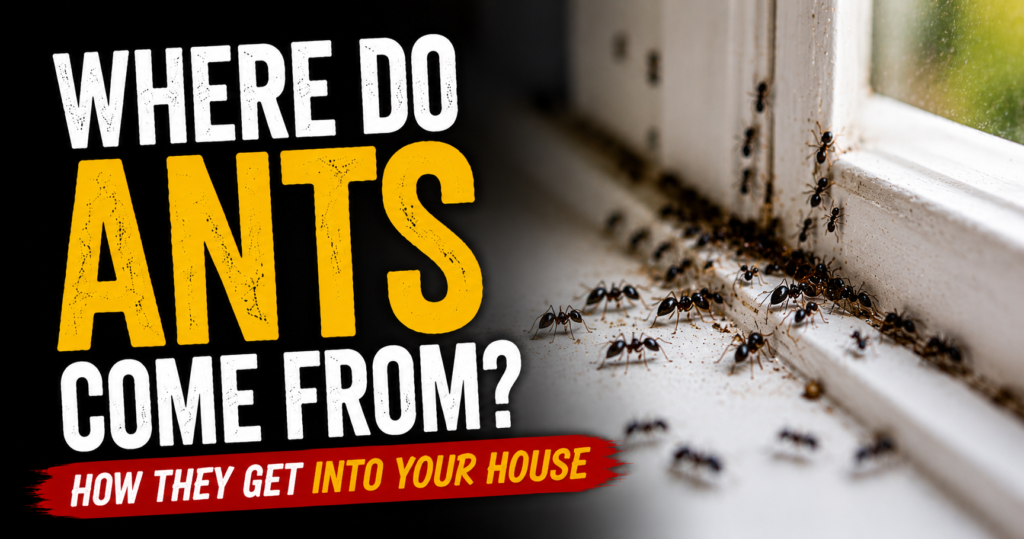
The ants in the middle of the trail aren’t the important part. Paying attention to those endpoints can help you trace the entry route described in Where Do Ants Come From? How They Get Into Your House.
The beginning and the end of the trail are.
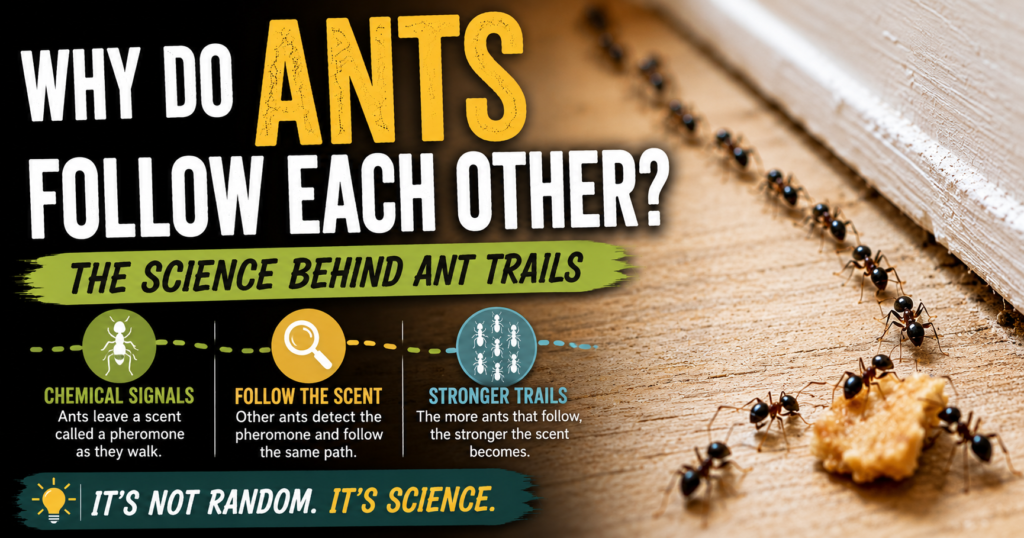
Ants Leave Invisible Chemical Trails
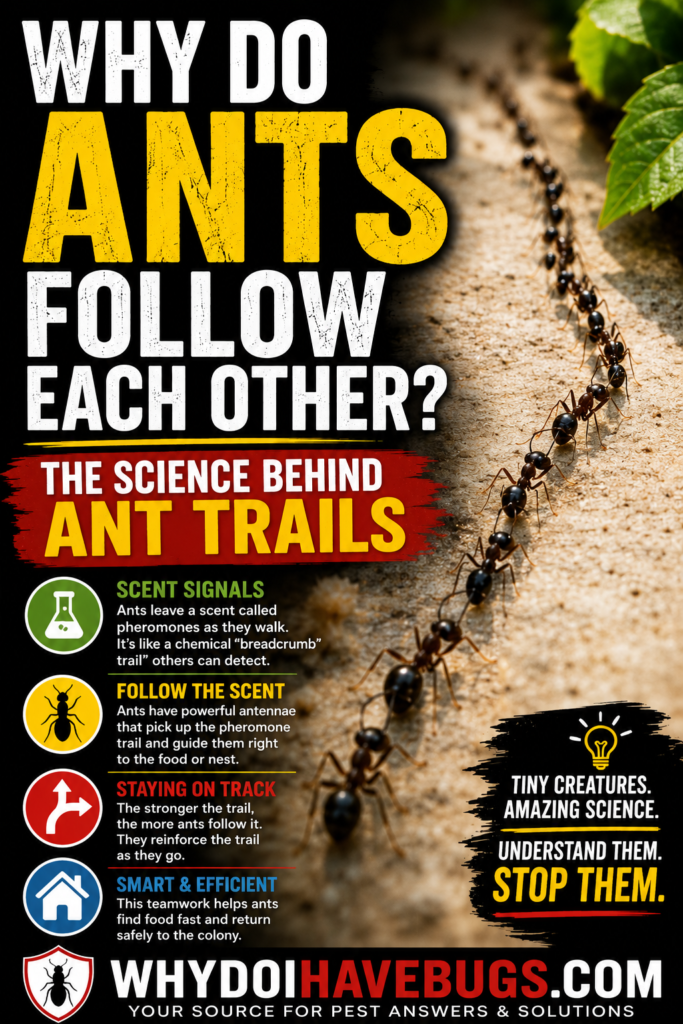
The reason ants follow one another so accurately is surprisingly simple.
Worker ants leave behind chemicals called pheromones as they travel.
You can’t see them.
You can’t smell them.
But other ants can detect them using their antennae.
Think of pheromones like invisible road signs.
When one worker discovers something valuable, such as food or water, it lays down a chemical trail while returning to the colony.
The next worker follows that exact trail.
Then another.
Then another.
As more ants travel the same path, they reinforce the trail by adding even more pheromones.
That’s why ant trails often become busier and more organized as time goes on.

Why They Almost Never Wander Randomly
At first glance, it might look like every ant knows exactly where it’s going.
The truth is a little different.
Only a small number of worker ants spend their time exploring for new food sources.
Once one of those explorers succeeds, the rest of the colony follows the chemical trail it leaves behind.
That’s much more efficient than having hundreds of ants wandering around randomly.
It’s one of the reasons ant colonies are so successful.
Why I Watch the First Five Ants Instead of Killing Them
This is probably the biggest habit that’s helped me solve ant problems over the years.
When I first spot ants inside a house, I don’t immediately grab bug spray.
Instead, I quietly watch the first few workers.
Where do they disappear?
Do they crawl beneath the dishwasher?
Are they squeezing through a gap beside a window?
Do they emerge from beneath the baseboard?
Those first five ants usually teach me more than the next hundred ever will.
Once I understand where they’re entering and where they’re going, I have a much better chance of finding the colony or at least the entry point.


Why Ant Trails Suddenly Get Longer
One thing many homeowners notice is that yesterday there were only a handful of ants.
Today there are fifty.
That’s completely normal.
Each successful trip strengthens the pheromone trail.
A stronger trail attracts more worker ants.
More workers strengthen the trail even further.
It’s a positive feedback loop that can make a small problem seem like it exploded overnight.
Why Ant Trails Suddenly Disappear
This is another question I hear all the time.
People tell me,
“The ants completely disappeared. What happened?”
Several things could have happened.
The food source may have been removed.
Another worker may have found a better source somewhere else.
Weather conditions may have changed.
Or the pheromone trail simply faded because fewer ants continued using it.
That doesn’t necessarily mean the colony disappeared.
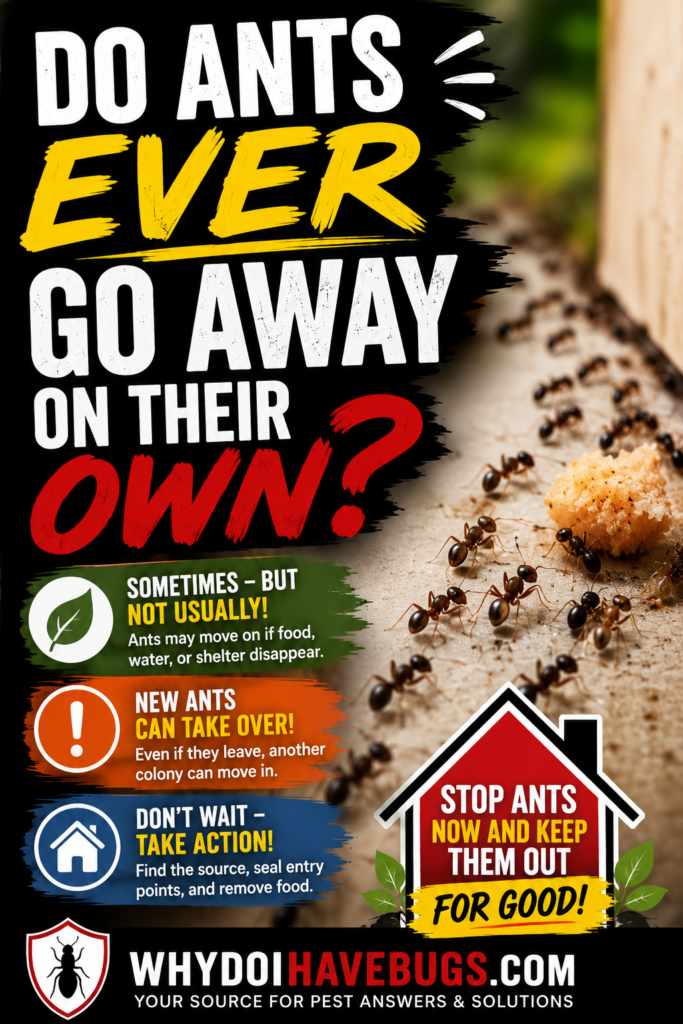
Our guide on Do Ants Ever Go Away on Their Own? explains why temporary inactivity often fools homeowners into thinking the problem has been solved.
Why They Keep Using the Same Route
Ants like efficiency.
If one route safely leads from the colony to food, they’ll continue using it until something changes.
That’s why you’ll often notice ants:
- Following the same countertop edge.
- Walking along the same baseboard.
- Climbing the same window frame.
- Crossing the exact same section of the floor.
From their perspective, there’s no reason to invent a new route every day.
Can Ants Communicate Without a Trail?
Yes.
While pheromone trails are their primary navigation system, ants also communicate through:
- Touching antennae.
- Chemical signals.
- Vibrations in certain situations.
It’s an incredibly advanced communication system considering how tiny they are.
That’s one reason ant colonies function so efficiently.



Why Cleaning the Trail Actually Helps
One question I get a lot is whether wiping down an ant trail makes any difference.
It does.
Cleaning hard surfaces removes much of the pheromone trail that guides future workers.
However, I don’t consider cleaning a complete solution.
If the colony is still active, worker ants can eventually establish a new trail.
Cleaning works best when it’s combined with removing whatever attracted the ants in the first place.
Why They Keep Returning to the Same Room
If ants continue appearing in your kitchen, bathroom, or bedroom, chances are they’re finding something valuable there.
Food.
Water.
Or an easy entry point.
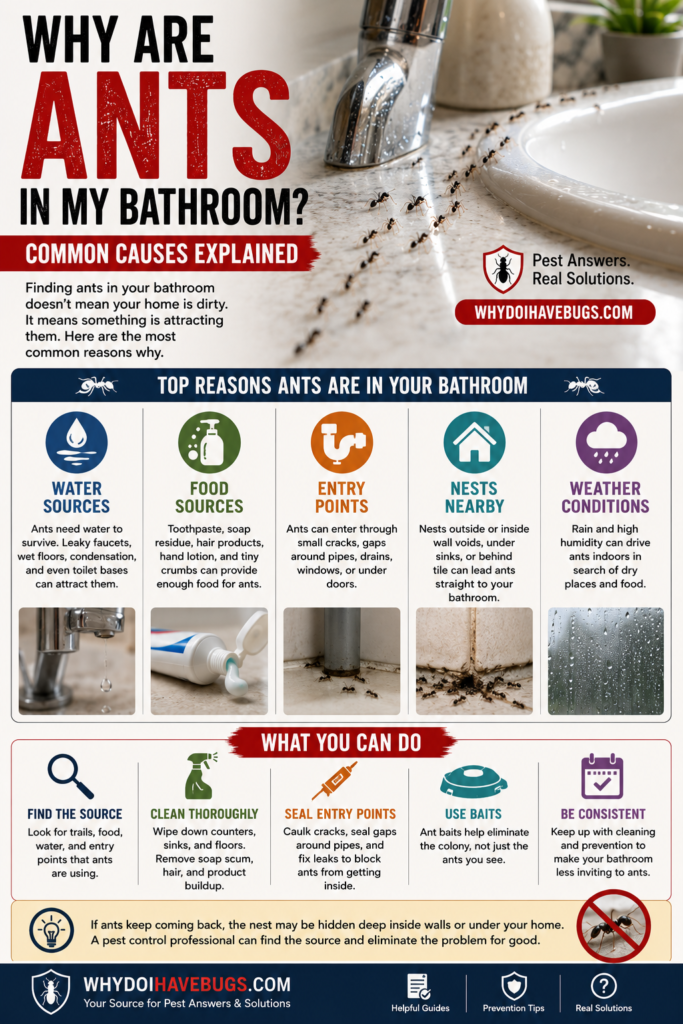
Our articles on Why Are Ants in My Bathroom? and Why Are Ants in My Bedroom? explain why those rooms often become regular destinations for worker ants.
Why They Keep Coming Back
One thing I remind homeowners is that eliminating one trail doesn’t necessarily eliminate the colony.
As long as the queen survives, new workers continue exploring.
Eventually another successful worker finds food.
Another pheromone trail forms.
The cycle begins again.
That’s why recurring infestations are so common.
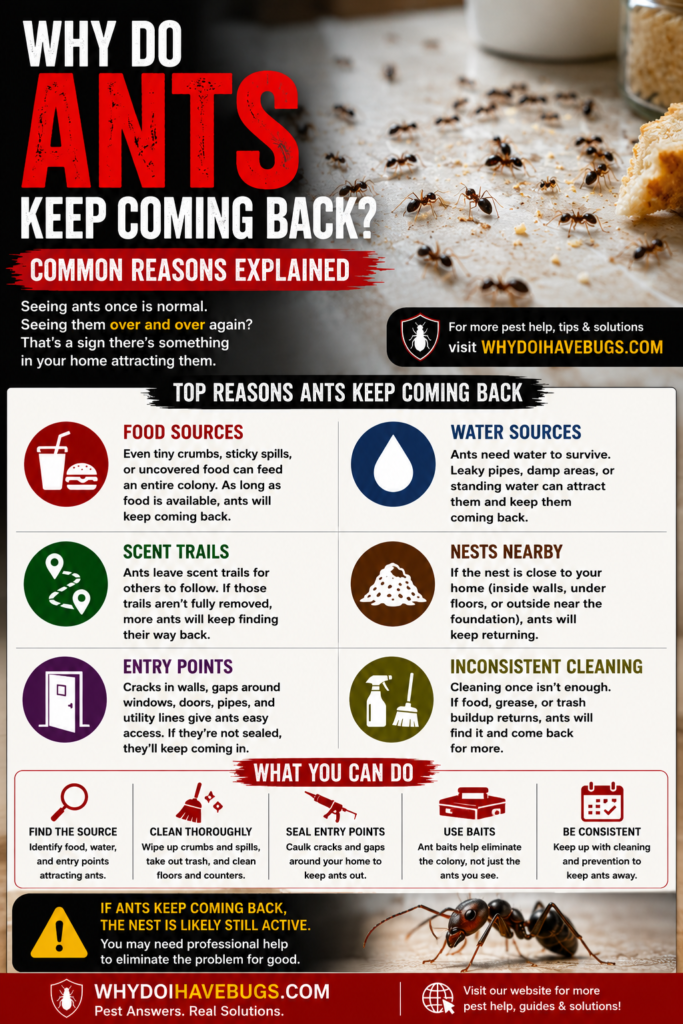
Our guide on Why Do Ants Keep Coming Back? explains why this happens and what I focus on instead.
What I Would Do If This Were My House
If I discovered an ant trail tomorrow morning, I wouldn’t panic.
I’d follow it.
I’d identify where the ants entered.
I’d figure out what they were collecting.
I’d inspect nearby windows, plumbing, doors, and foundation gaps.
Only then would I decide how to treat the problem.
I’ve found that understanding the trail almost always leads to solving the infestation much faster than simply spraying the first ants I see.
Products That Can Help
Once I’ve identified an active trail, I usually focus on eliminating the colony rather than only the visible workers.
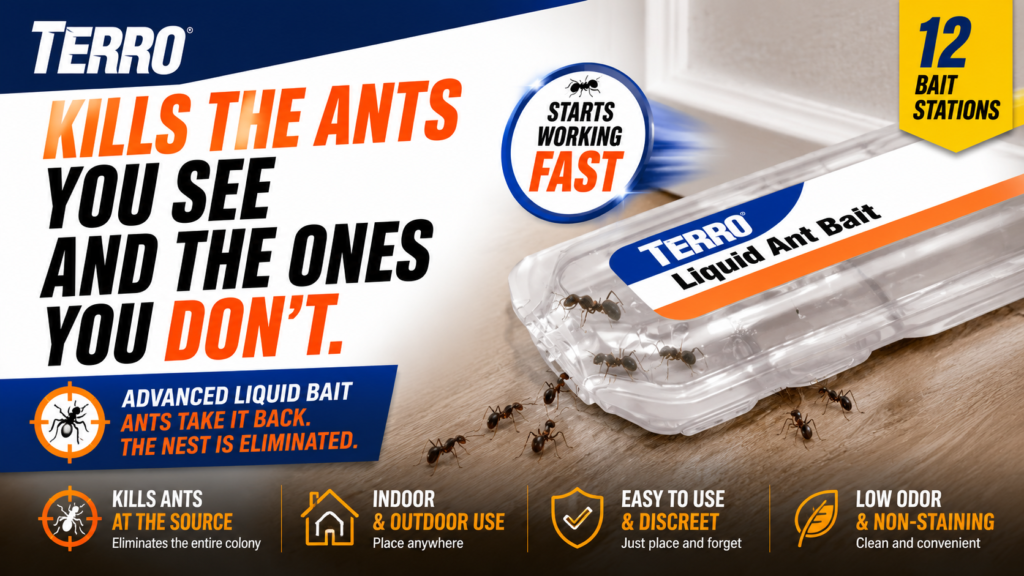
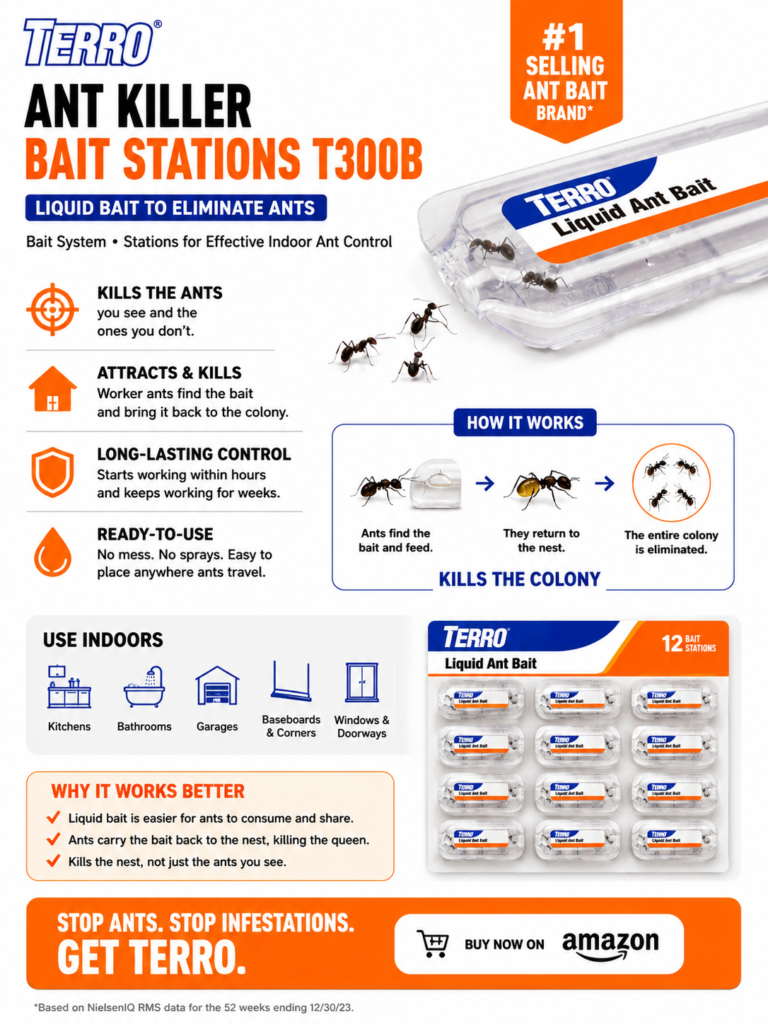
I’ve had good success with TERRO Liquid Ant Bait Stations because worker ants naturally carry the bait back along those same pheromone trails to the colony. If you’re thinking about using them, my TERRO Liquid Ant Bait Stations review explains where to place them and how long they typically take to work.


For larger infestations, Ecoxall Boric Acid Fine Powder can also be an effective part of an overall treatment plan. I explain when it works best in my Boric Acid for Roaches and Ants review.
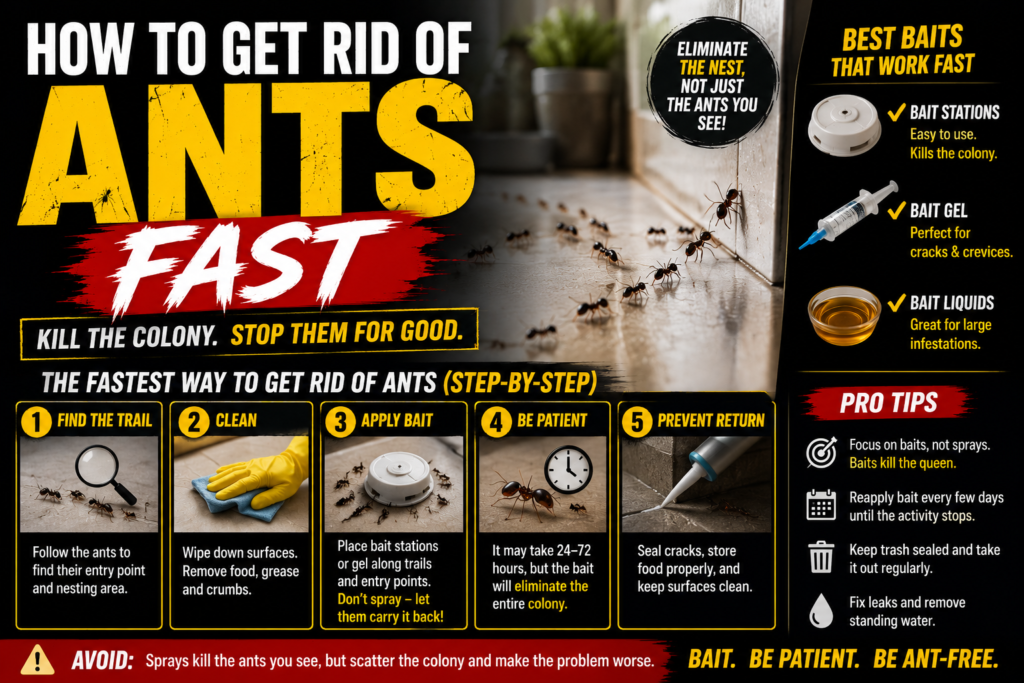
If you’re dealing with recurring trails throughout your home, don’t miss my complete guide on Getting Rid of Ants Fast.
The Biggest Mistake I See
The biggest mistake I see is homeowners treating the middle of the trail instead of learning from it.
Those ants are actually showing you valuable information.
They’re leading you toward the food source.
They’re leading you back toward the colony.
Once you understand what the trail is telling you, stopping the infestation becomes much easier.
Frequently Asked Questions
Why do ants always walk in a line?
Worker ants follow invisible pheromone trails left behind by other ants that successfully found food, water, or another valuable resource.
Do ants communicate with each other?
Yes. Ants communicate using pheromones, antennae, touch, and other chemical signals that help the colony work together.
Why did the ant trail disappear overnight?
The food source may have been removed, the trail may have faded, or the colony may have shifted to a different route.
Should I wipe away an ant trail?
Yes. Cleaning the trail helps remove pheromones that guide additional worker ants, although you’ll still need to address the colony itself for a long-term solution.
Why do ants keep using the same path?
Once ants establish a safe, reliable route between the colony and a food source, they usually continue using it until conditions change.
About the Author
Ryan Mitchell is a home pest researcher who studies ant behavior, colony communication, and practical pest prevention. He enjoys helping homeowners understand why ants behave the way they do and how understanding that behavior often leads to faster, longer-lasting solutions.