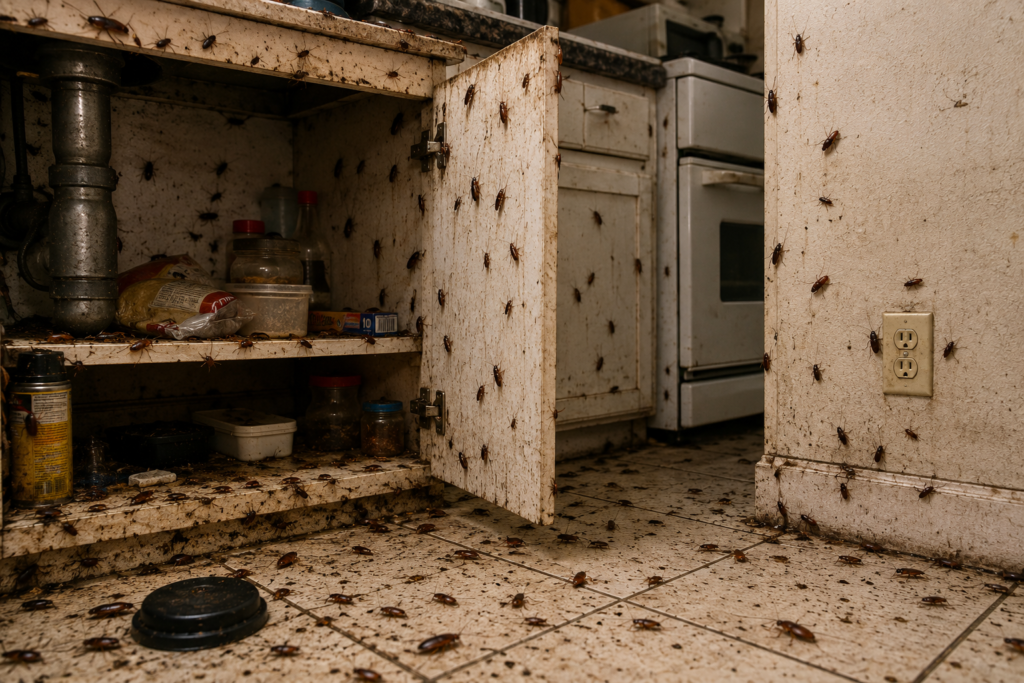
You have roaches and you want them gone. Not in a month, not after a slow methodical process — as fast as reasonably possible. The good news is that a roach infestation, even a bad one, responds quickly to the right approach. The bad news is that most people start with the wrong approach and spend weeks spinning their wheels before they figure out what actually works.
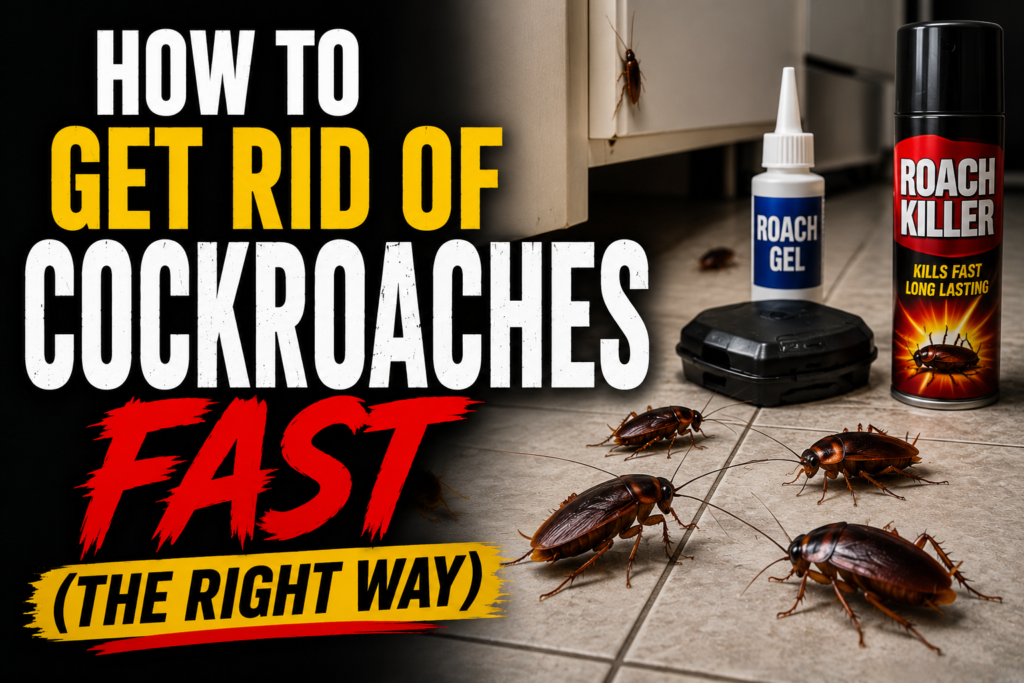
This guide skips the part where you waste time on things that don’t work and goes straight to what does — the products, the sequence, the placements, and the habits that eliminate roaches as fast as possible and keep them gone.
First — Know What You’re Actually Dealing With
Before you treat anything, confirm which roach you have. Treatment strategy differs by species and using the wrong approach costs you time.
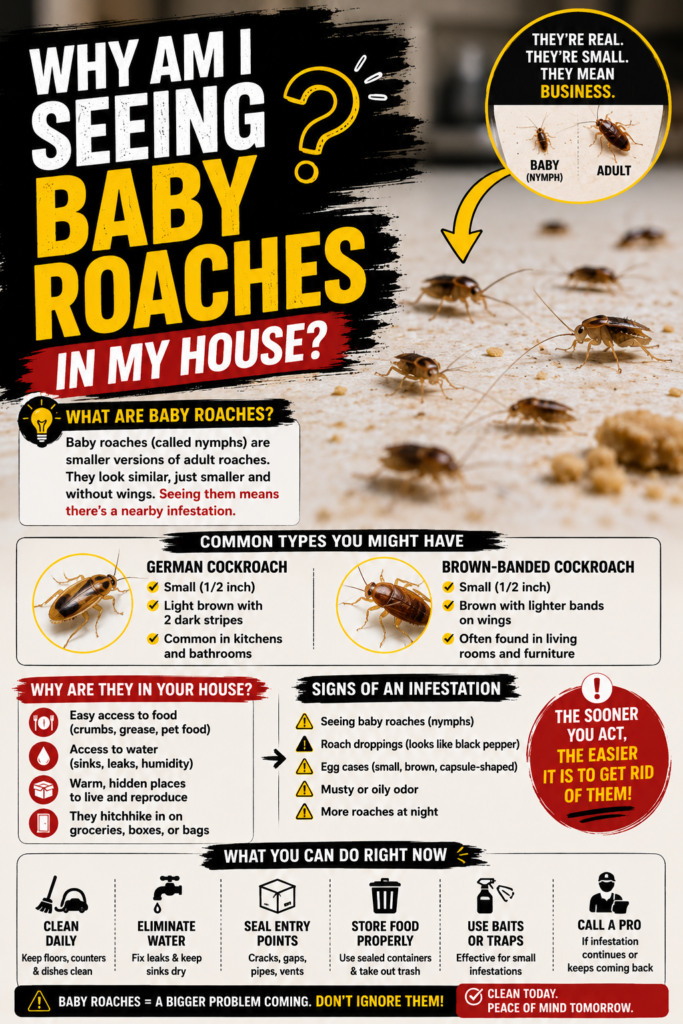
German roaches — small, tan, two dark stripes on the back, half an inch to five-eighths of an inch long. Almost always in kitchens and bathrooms. The hardest to eliminate and the most common. If you have small roaches multiplying fast, this is almost certainly what you have. When those small roaches are young rather than fully grown, small roaches multiplying fast explains why that pattern can point to nearby breeding.
American roaches — large, reddish-brown, one and a half to two inches. Often called palmetto bugs or water bugs. Come in from outside. Finding one occasionally is different from finding them regularly — occasional sightings may just mean one got in, not that you have an infestation.
Oriental roaches — dark brown to black, about an inch long, slow moving. Often near drains and in basements. Associated with moisture and sewer issues.
The rest of this guide focuses primarily on German roaches since that’s the species driving most household infestations — but the core treatment principles apply across species. For a deeper dive on identification and what each species means for your treatment approach, see our full cockroach guide.

The Honest Answer on Speed
You can see dead roaches within 24 hours of starting the right treatment. You can see a significant population drop within a week. A moderate infestation treated correctly is largely eliminated in two to three weeks.
What you cannot do is eliminate a roach infestation overnight with a single product. Anyone promising that is selling you something. The goal is the fastest realistic timeline — and that timeline is days to weeks, not hours, regardless of what you use.
The speed of your results depends on three things: using the right products, placing them correctly, and eliminating the conditions that support the population. Get all three right and you’re looking at the shorter end of that timeline. Skip any one of them and you’re dragging it out.


Step One — Stop Doing What Isn’t Working
Most people treating a roach infestation are actively making it harder to solve. Before you add any new product, stop doing these things.
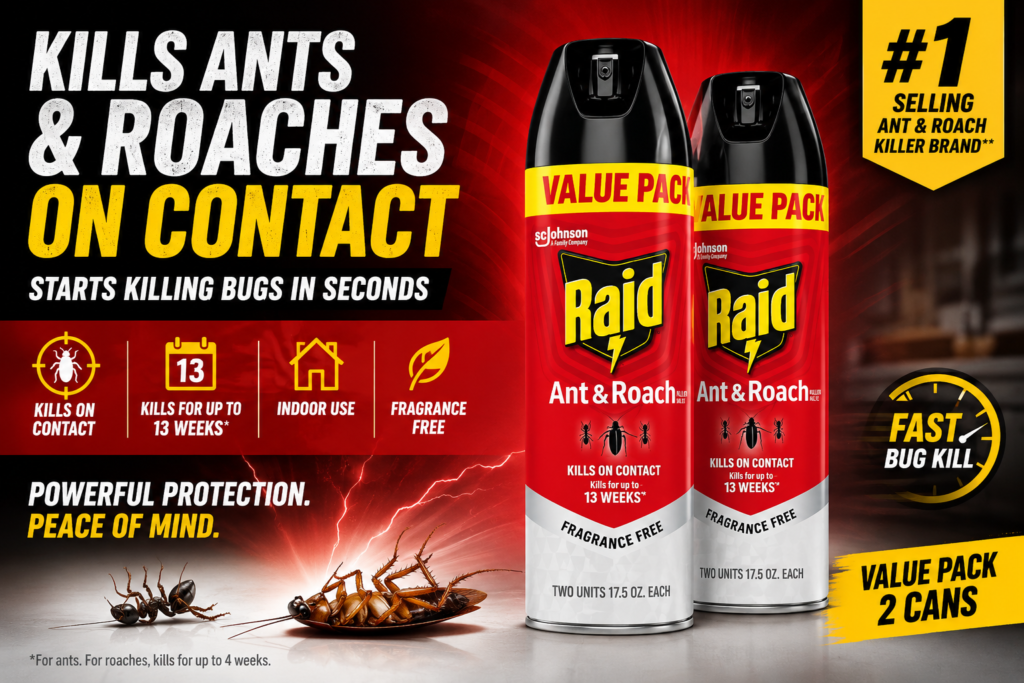
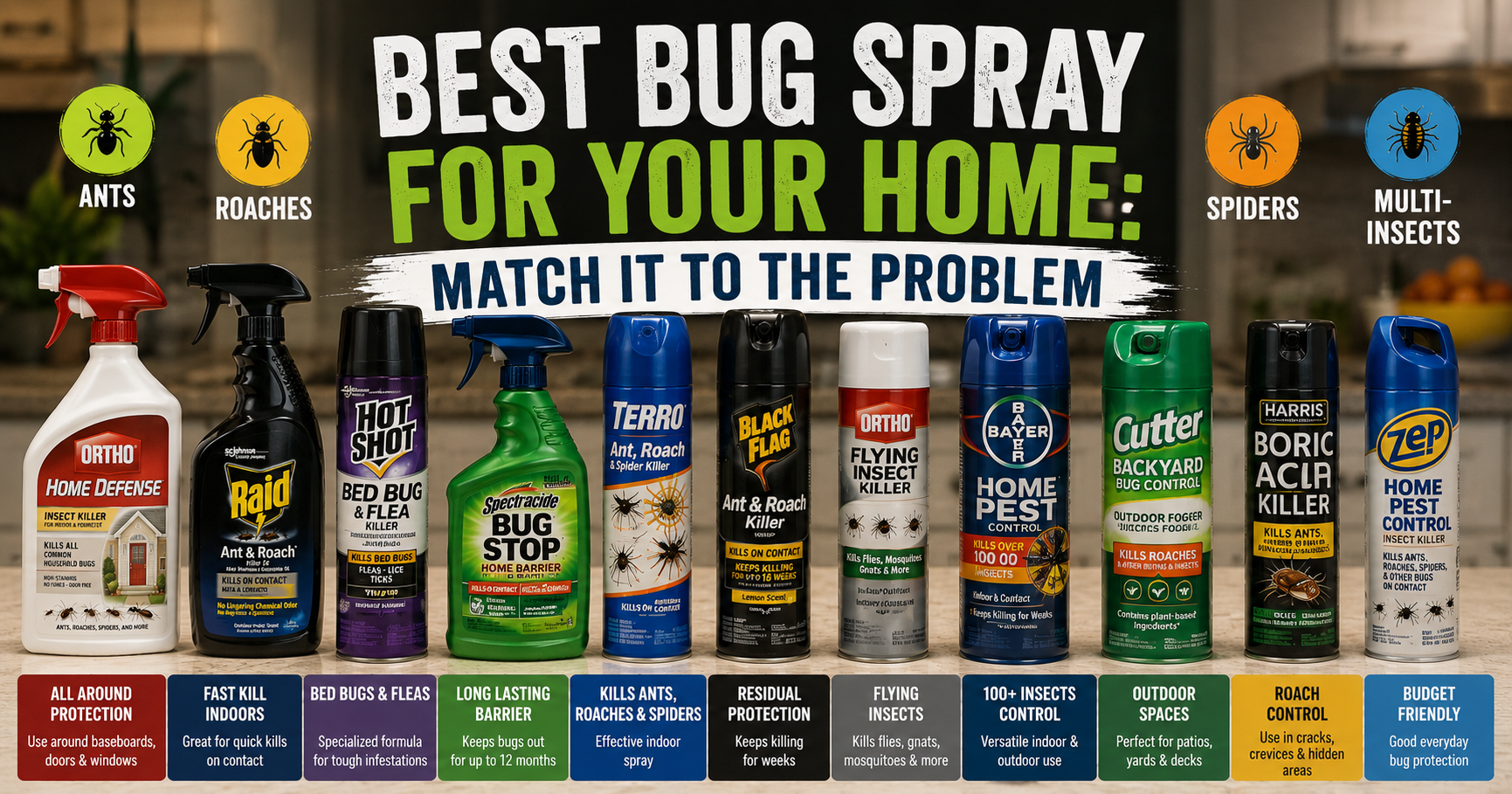
Stop spraying insecticide everywhere. Contact sprays kill the roaches you can see — which is a small fraction of the population. More importantly, pyrethroid-based sprays are repellents. They drive roaches away from treated areas, which sounds good until you realize they also drive roaches away from bait. If you spray and then apply gel bait, the roaches won’t go near the bait. You’ve just made your most effective treatment tool useless. The review of Does Raid Ant & Roach Killer Actually Work? explains when a contact spray is useful without treating it as a complete infestation solution.
Stop using foggers. Bug bombs are one of the most persistently overhyped pest control products available. The mist they release doesn’t penetrate into wall voids, under appliances, or into the cabinet crevices where roaches actually live. They kill exposed bugs in open areas — which is not where the infestation lives. They also leave a pesticide residue on every surface in the room that repels roaches from bait for weeks afterward. Foggers make roach infestations harder to treat, not easier.
Stop cleaning with bleach or strong disinfectants near treatment areas. These chemicals disrupt the pheromone trails roaches use to find bait and navigate to feeding sites. Clean your home, but keep heavy chemical cleaning away from your bait placement zones.
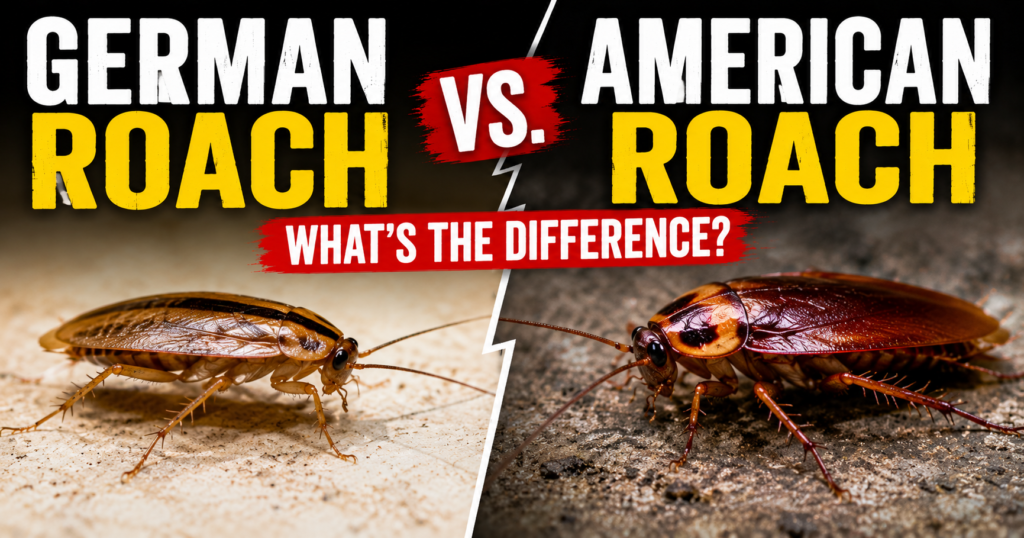
Before choosing a treatment plan, I always recommend identifying the species you’re dealing with. German cockroaches and American cockroaches behave differently and often require slightly different approaches. Our article on German roaches vs. American roaches can help you determine which type you’ve found.
Step Two — Set Up Gel Bait Immediately
Gel bait is the foundation of effective roach treatment. It’s what professional exterminators use. It’s what produces results when spray fails. If you take one thing from this article, it’s that gel bait is the product that actually solves a roach infestation.
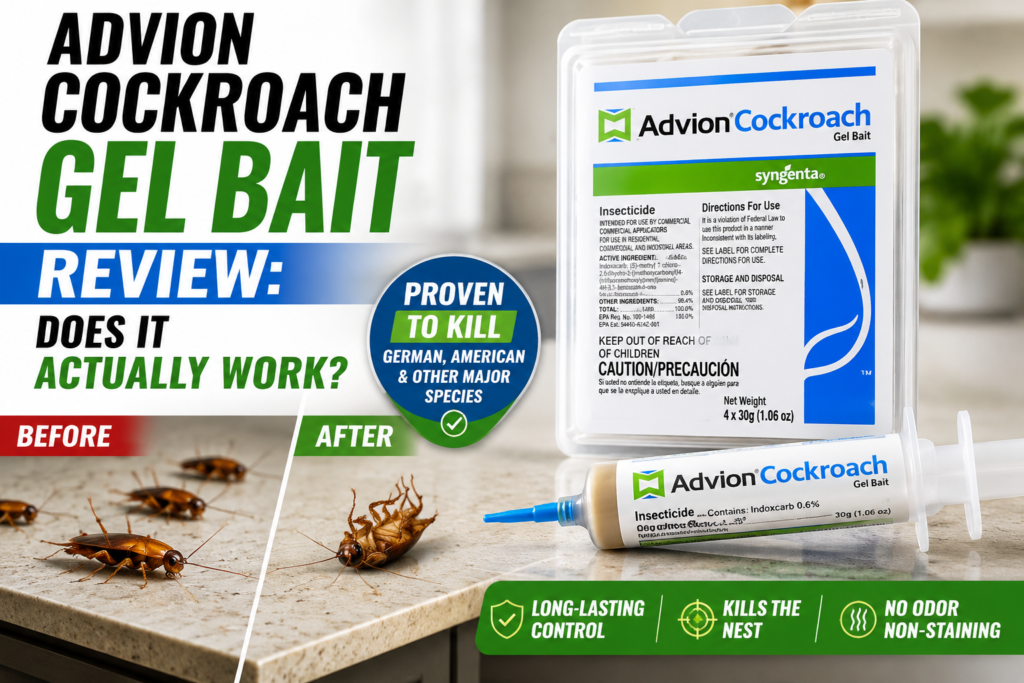
Advion Cockroach Gel Bait is the standard recommendation — it uses indoxacarb, an active ingredient roaches haven’t developed significant resistance to, at a concentration that’s attractive and slow-acting. Roaches eat it, return to the colony before dying, and other roaches eat the dead roach and its droppings. The cascade kill spreads through the population including roaches that never touched the original bait placement.
Where to Place Gel Bait
Placement is everything. Bait in the wrong spots won’t get touched. Bait in the right spots gets eaten within hours.
Roaches travel along edges, inside cracks, and through dark protected spaces. They don’t run across open areas. Every placement needs to be in a spot that matches how roaches actually move.
- Under the kitchen sink — especially right where the pipe enters the cabinet wall
- Along the back inside edge of cabinet shelves — the junction between the shelf and the back wall
- Inside cabinet door hinges
- Behind and under the refrigerator — pull it out and place bait along the back wall and floor
- Inside the refrigerator motor compartment through the kickplate area
- Behind the stove and inside the oven drawer
- Under the dishwasher
- Inside electrical outlet boxes along kitchen and bathroom walls
- Along wall-floor junctions behind appliances
- Under the bathroom sink around pipe penetrations
How Much to Use
Small dots — pea-sized. Not stripes, not blobs, not a generous squeeze. Small dots placed frequently beat large amounts placed rarely. Space them every 6 to 12 inches in active areas. Use more placement points, not more bait per point.
For a heavy infestation, use multiple tubes across multiple rooms. You have four tubes in an Advion pack — use them. More coverage means faster cascade through the colony.
What to Expect
Dead roaches within 24 to 48 hours is a good sign — it means the bait is being eaten. More visible roach activity in the first few days is also normal. The bait draws them out. Do not spray the roaches you see near bait stations. Let them eat and carry it back to the colony. That’s the treatment working.
Step Three — Apply Powder Treatments in Harborage Zones

Gel bait handles the active population. Powder treatments in the right locations create a permanent residual layer that catches roaches the bait misses and maintains a kill barrier long after the infestation is eliminated.
Two products work best here and they complement each other.
Boric Acid in Hidden Voids
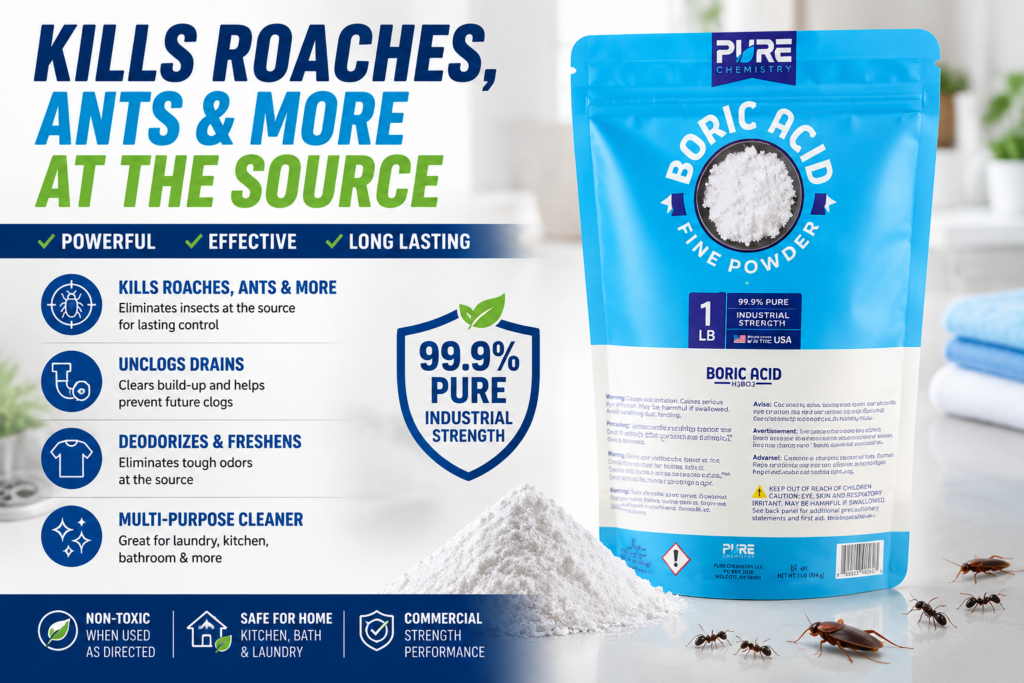
Boric acid applied as a thin dust in wall voids, outlet boxes, and under appliances kills roaches through physical abrasion and toxic ingestion when they groom themselves after walking through it. Applied in the right spots it lasts indefinitely without reapplication.
Key locations: inside electrical outlet and switch boxes throughout the kitchen, in any wall void you can access through pipe gaps, under and behind the refrigerator motor area, along the hollow spaces inside cabinet framing.
Thin layer only — barely visible dusting, not a pile. A thick layer repels roaches rather than killing them.
Diatomaceous Earth Along Travel Routes
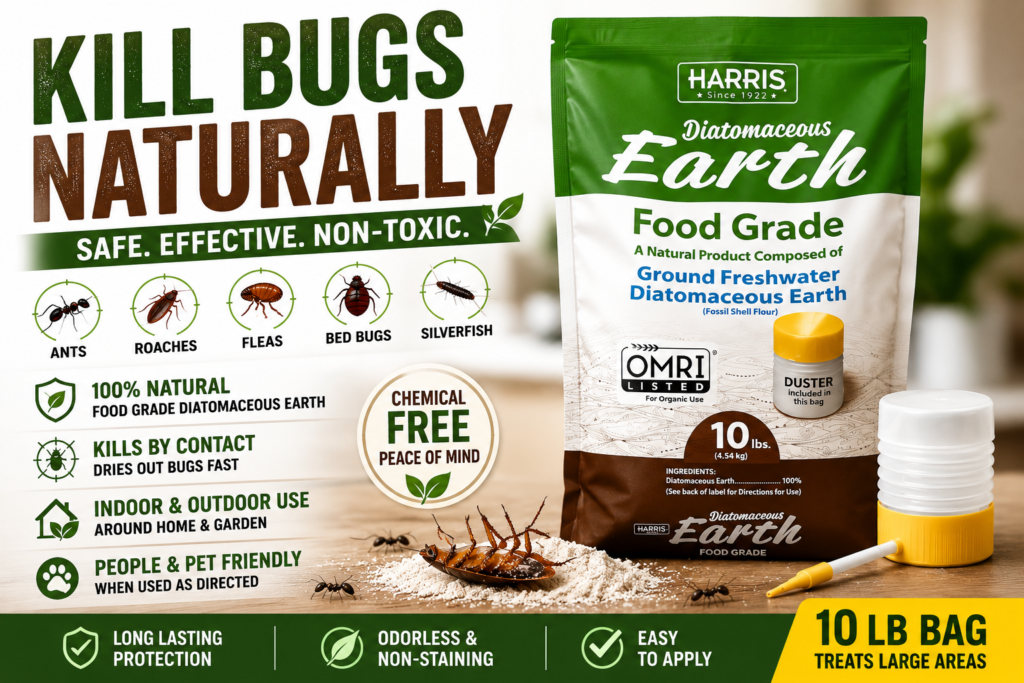
Diatomaceous earth works through physical damage to the roach’s exoskeleton, causing death by dehydration. Use it along surface travel routes — the back of cabinet shelves, along baseboards in kitchen and bathrooms, under appliances where roaches walk.
Like boric acid, apply a thin even layer and leave it undisturbed. Keep both powders dry — moisture kills their effectiveness.
Run bait and powders simultaneously — they don’t interfere with each other when placed correctly. Bait in cracks and crevices where roaches feed. Powders in the voids and pathways around them.
Step Four — Seal Entry Points
Treatment handles the population you have. Sealing entry points stops the next wave from establishing before you’ve finished eliminating the current one.
The most important entry point in most homes is the gap around pipes where they enter cabinet walls under the sink. This hole connects directly to the wall void and the building’s plumbing infrastructure — it’s the primary highway roaches use to move between units in apartment buildings and between the exterior and interior of houses.
Fill it. Steel wool stuffed into the gap is fast and effective. Caulk over it for a permanent seal. Do this under every sink in the house — kitchen and all bathrooms.
Other high-priority sealing spots:
- Gaps around electrical conduit where it enters walls
- Cracks along baseboards, especially in kitchens and bathrooms
- The gap under exterior doors — weatherstrip if you can see light coming through
- Around utility penetrations on exterior walls


Step Five — Eliminate What’s Keeping Them There
Treatment works fastest when you remove the conditions supporting the population at the same time. Roaches staying in your home need water, food, and shelter. Remove as many of those as possible while treatment is underway.
Fix every drip immediately. Roaches need water more urgently than food. A dripping pipe under the sink sustains a roach population through treatment because it provides the one resource they can’t go without. Check under every sink and behind every appliance for moisture. Fix anything that’s dripping, even slowly.
Pull out and clean behind all major appliances. The grease, debris, and food residue behind the refrigerator and stove is a food source that survives normal cleaning. Pull both appliances out, clean thoroughly, and apply bait and powder treatments in those areas before pushing them back.
Store food in sealed hard containers. Cardboard and loosely folded bags aren’t sealed. Transfer cereal, flour, rice, pasta, and pet food into containers with actual lids. This removes one of the most consistent food sources in most kitchens.
Take trash out every night. Kitchen trash sitting overnight with food waste is reliable roach sustenance. Tight-fitting lid minimum, nightly emptying is better.
Don’t leave pet food out overnight. A bowl of dry pet food on the floor overnight is a roach buffet. Pick it up before bed.
Step Six — Add a Perimeter Barrier

For houses and ground-floor units, a perimeter spray around the foundation creates an outdoor kill barrier that stops roaches from entering while you’re eliminating the population inside.
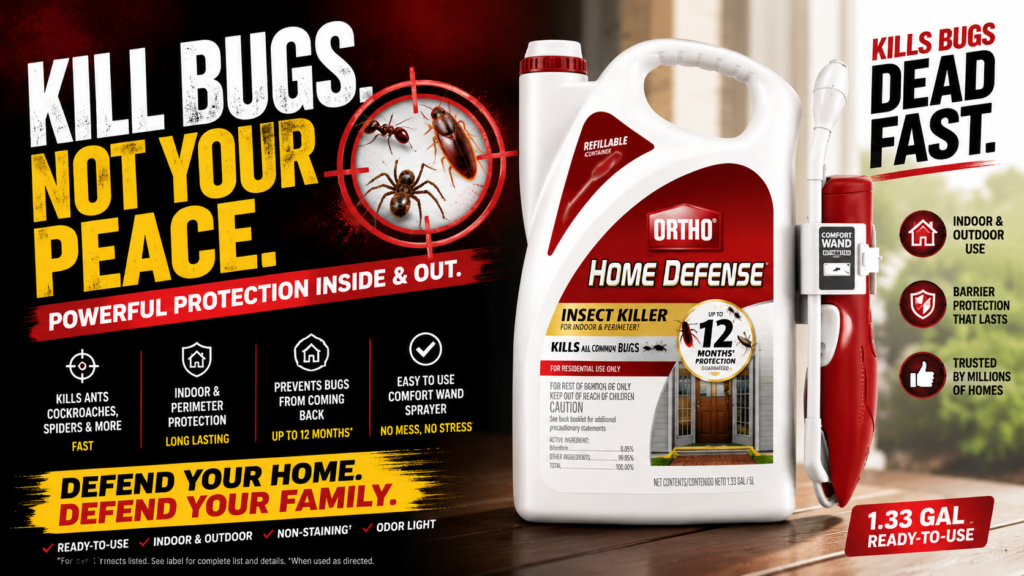
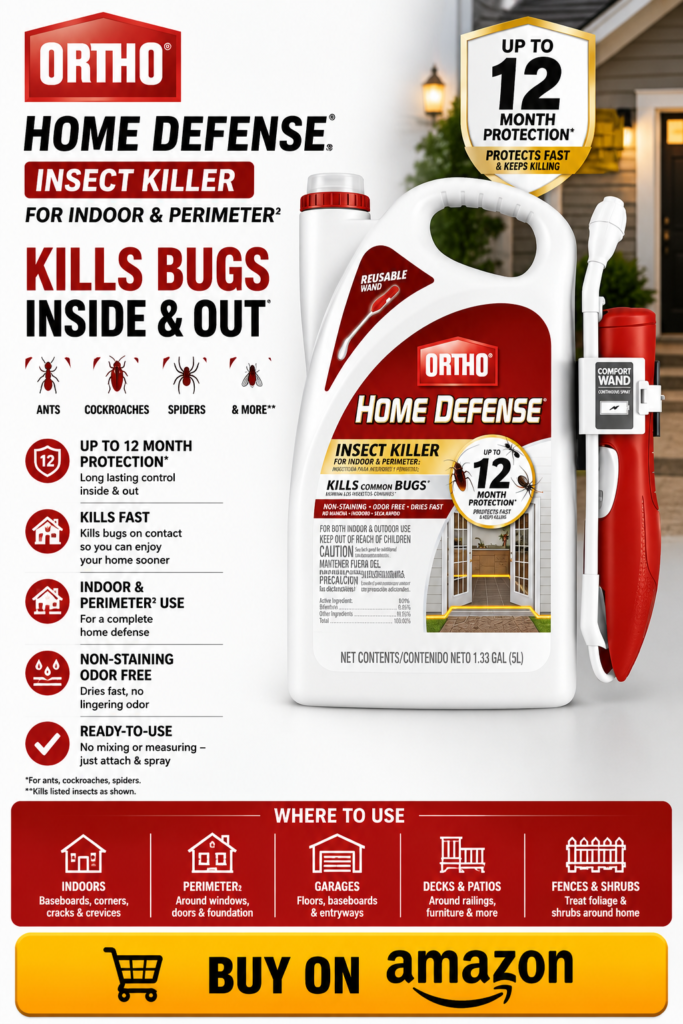
Ortho Home Defense applied along the foundation and around entry points creates a residual barrier that kills roaches approaching the exterior of your home. This is particularly important for American roaches coming in from outside — the perimeter barrier addresses the source rather than just the bugs that make it inside.
Keep the perimeter spray well away from your interior bait placements. Treat the foundation and exterior entry points. Let the bait handle the interior. Separate zones, separate tools.

The Treatment Timeline — What to Expect Week by Week
Setting realistic expectations keeps you from abandoning a treatment that’s actually working.
Day 1–2: Bait is placed. You may see more roach activity as they’re drawn out to feed. Dead roaches begin appearing. This is the treatment working — do not spray.
Day 3–5: Dead roaches accumulating. Visible live activity may still be significant. Colony is being hit by cascade kill but the full effect takes time to propagate through the population.
Week 1–2: Noticeable drop in live activity. Fewer roaches visible, especially at night. Bait that’s been consumed gets refreshed. Powder treatments are in place and working in harborage zones.
Week 2–3: Significant population reduction. For moderate infestations, most activity has stopped by this point. Continue maintaining fresh bait in key spots.
Week 3–4: A properly treated moderate infestation should be largely eliminated. Continue monitoring and maintain bait in primary spots for another few weeks to catch any stragglers.
Heavy infestations — particularly in apartments with ongoing introduction from neighboring units — may take longer and require persistent maintenance baiting rather than a single treatment cycle.
If You’re in an Apartment — Special Considerations

Apartment infestations are a different challenge because roaches can keep coming from neighboring units through shared infrastructure regardless of how thoroughly you treat your own space. That shared-infrastructure problem is one of the key causes behind a clean-home infestation, as explained in the causes behind a clean-home infestation.
Seal every pipe gap aggressively. The pipe penetrations under your sinks are the primary entry point from neighboring units. Steel wool and caulk every gap you can find. This doesn’t fully isolate you but it significantly reduces the flow.
Maintain bait permanently. In an apartment with active neighboring infestations, treatment is not a one-time event — it’s an ongoing management program. Fresh bait in key spots every 4–6 weeks catches arrivals before they establish. Think of it as maintenance rather than treatment.
Report to management. In most jurisdictions, landlords are legally responsible for pest control in rental units. Document the infestation with photos and dates and report it formally in writing. This creates a paper trail and obligates management to treat the building rather than just your unit — which is the only real solution to a building-wide problem.
How to Know the Infestation Is Actually Gone
Roaches are nocturnal and hide well. Not seeing them during the day doesn’t mean they’re gone. Here’s how to confirm elimination rather than just assuming it.
Sticky glue traps placed in key locations give you objective monitoring data. No catches over two to three weeks of continuous monitoring in active areas is a strong indicator the population has been eliminated.
Check bait placements. If bait has been sitting untouched for two weeks in previously active areas, the population isn’t there anymore.
Inspect harborage zones with a flashlight. Behind the refrigerator, under the stove, inside the kickplate area — shine a light and look carefully. No live roaches, no fresh droppings, no egg cases means the area is clear.
Keeping Them Gone
Elimination is one problem. Staying roach-free is another, especially in high-risk environments.
Maintenance bait every 4–6 weeks. A small dot of gel bait under each sink and in a few key cabinet spots catches any new arrivals before they establish. Two minutes a month.
Keep entry points sealed. Check your pipe gap seals periodically — maintenance work, plumbing repairs, and settling can reopen gaps over time.
Treat your perimeter seasonally. Reapply your outdoor barrier spray every 1–3 months during active bug season to maintain the exterior kill barrier.
Inspect everything coming into your home. Cardboard boxes, grocery bags, used appliances, secondhand furniture — roaches and their egg cases hitchhike on all of these. Break down cardboard immediately rather than storing it. Inspect secondhand items carefully before they come inside.
Roaches are beatable. The approach most people try first — spray everything and hope — is the slowest and least effective path. Switch to bait, get it in the right locations, eliminate the conditions supporting the population, and give it three weeks. That’s the fastest realistic path from infestation to clear. Start with the bait. Everything else builds on that.