
Boxelder bugs come into houses in fall because they are looking for a protected place to spend winter. Your home is not their food source, and they are not trying to build an indoor infestation. They are looking for narrow, sheltered spaces that stay dry and protected from cold weather.
That is why the problem can seem to start all at once. One warm sunny afternoon, the outside of a house may be covered with black-and-red bugs. A few days later, they are appearing around window sills, light fixtures, closets, or the garage. The bugs found indoors are usually adults that entered from outside earlier and are now wandering out of their hiding spots.
Why Boxelder Bugs Choose Houses in Fall
Boxelder bugs live outdoors through the warm months. They feed and reproduce around boxelder trees, maples, ash trees, and other host plants. As fall arrives and temperatures begin changing, adults leave those summer feeding areas and start searching for winter shelter.
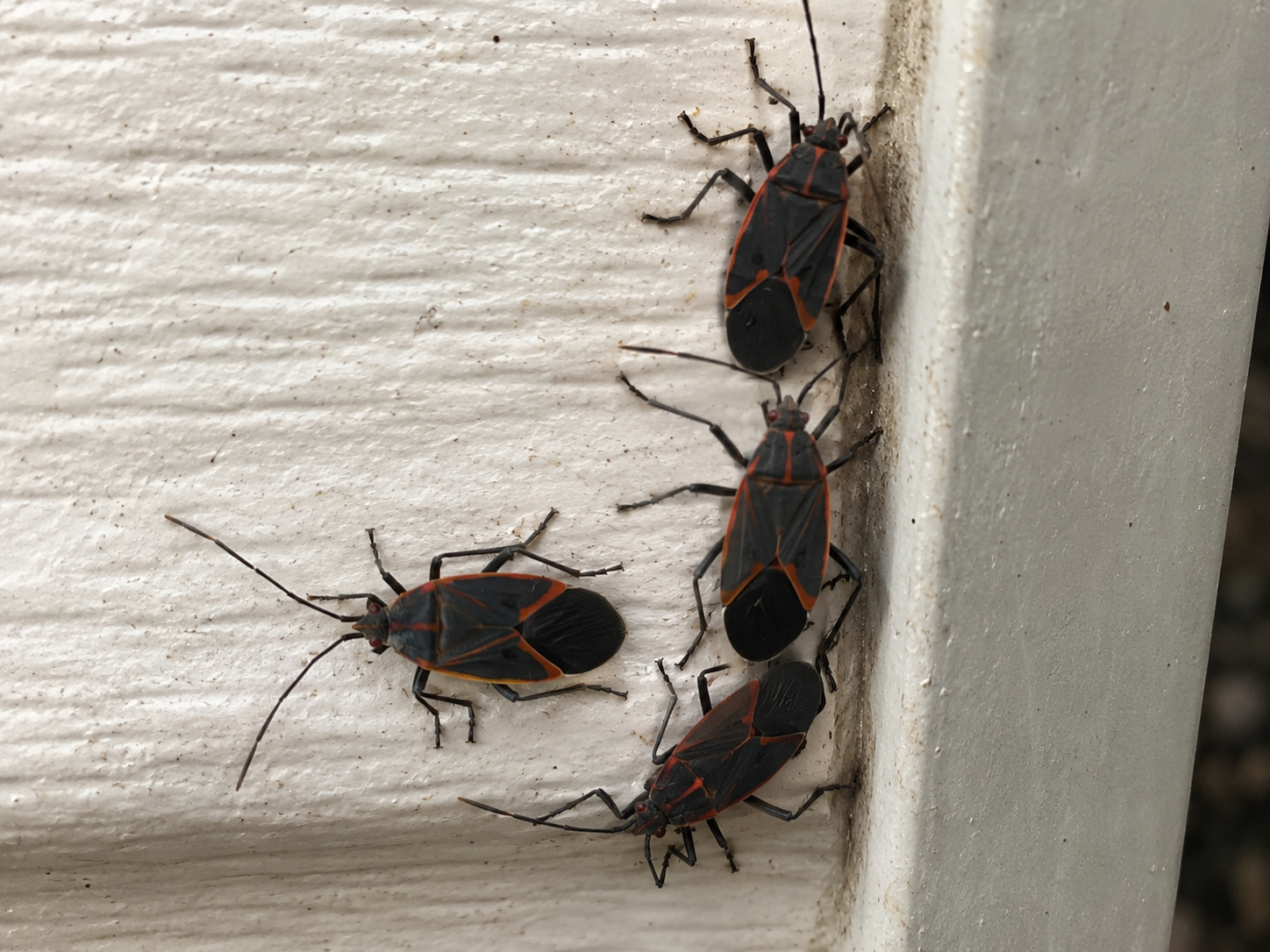
They are especially drawn to warm, sunny surfaces. A south- or west-facing wall can heat up surprisingly well on a bright fall day. The bugs gather there, then start exploring every crack around the siding, windows, doors, roofline, foundation, and utility openings.
Your house gives them two things they need: warmth during the day and tiny protected spaces where wind, rain, and freezing temperatures cannot reach them.



A House With Bugs Is Not Necessarily a Dirty House
Boxelder bugs are not an indoor sanitation pest. A clean house can get them just as easily as a cluttered one because the main issue is access, not food left on the counter.
They do not come inside because you left crumbs out, skipped vacuuming, or have a messy pantry. They are not looking for pet food, garbage, or stored groceries.
I would think of them more like a seasonal weatherproofing problem. If they can find a route into a wall void, attic, garage, or trim gap, they may use it regardless of how clean the rooms inside are.



Why They Love Sunny Sides of the House
If boxelder bugs are concentrated on one side of the home, pay attention to which direction it faces. The sunny side is often the busiest because those surfaces stay warmer than shaded walls.
Dark siding, brick, stone, and trim can hold heat even longer. Bugs may gather near windows, under shutters, around porch lights, below eaves, or beside warm utility areas.
That does not mean sunlight alone is causing the problem. It means the warm wall is the place where the bugs gather before they find a hiding place. The real entry route may be only a few inches away around the trim, siding, screen, or foundation.
How Boxelder Bugs Get Into a House
Boxelder bugs do not need a big opening. A narrow crack around a window or a small gap beneath exterior trim can be enough for them to reach protected spaces inside the structure.
The areas I would check first are:
- Worn weatherstripping around exterior doors.
- Door sweeps that no longer meet the threshold.
- Cracked caulk around windows, trim, siding, and utility lines.
- Torn or loose window screens.
- Gaps around foundation penetrations for pipes, cable, and wiring.
- Damaged soffits, attic vents, crawlspace vents, or louvers.
- Loose siding, shutters, and trim.
- Garage-door seals and the service door between the garage and house.
You may never find one dramatic hole. Often, the problem is several small gaps in the same sunny area of the home.


Why They Show Up Around Windows
A window is one of the most common places to notice boxelder bugs indoors. They are drawn toward light after emerging from a nearby wall void or trim gap.
The window itself is not always where they came in. They may have entered outside around the frame, settled behind nearby trim or siding, and then crawled into the room later through a separate tiny opening.
Still, a window with visible cracked caulk, damaged screens, loose trim, or failed weatherstripping is worth repairing. It may be both the gathering spot and the route inside.
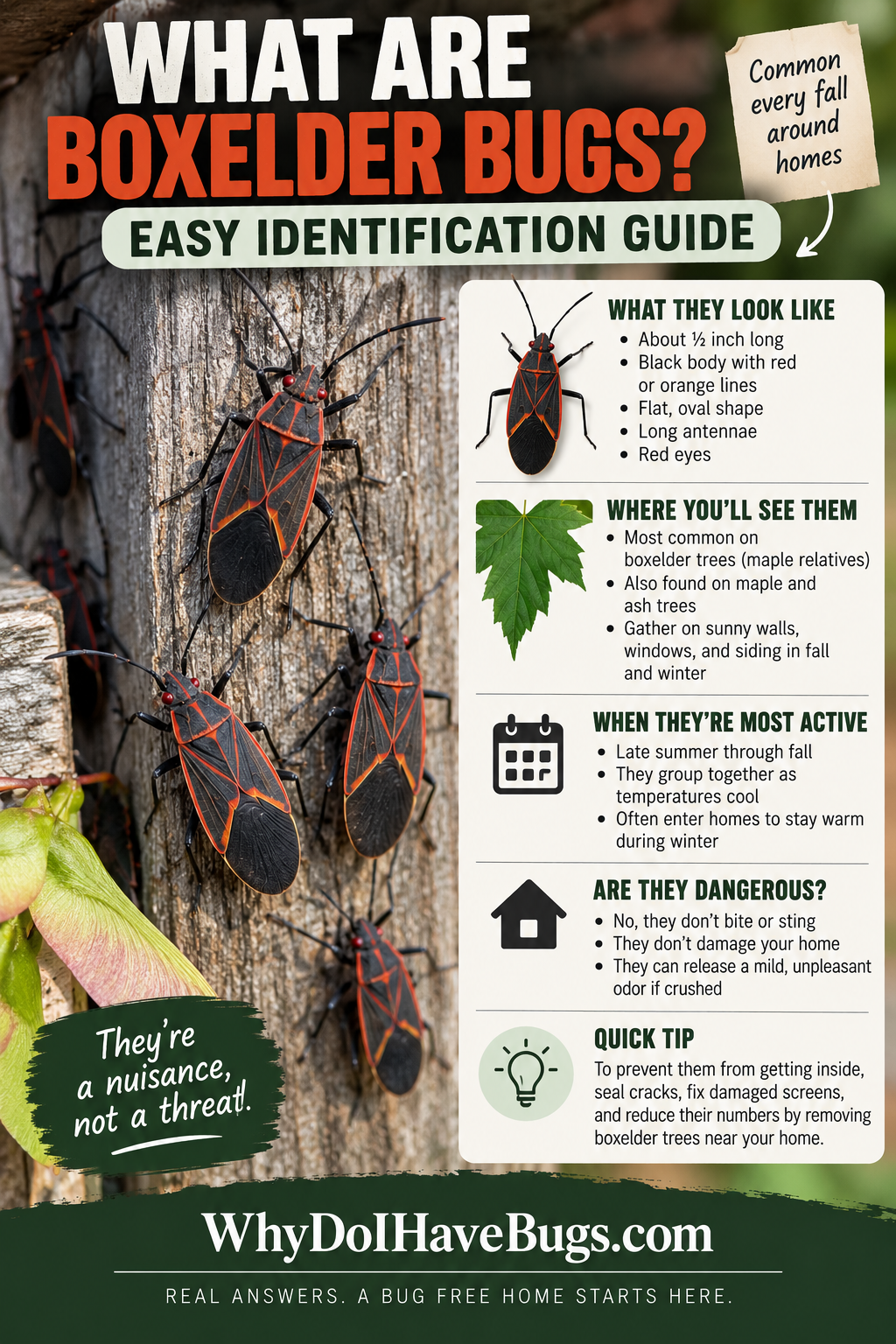
Before you treat anything, make sure the insects are actually boxelder bugs. Their black body with red or orange lines is distinctive once you know what to look for. This boxelder bug identification guide can help you separate them from stink bugs, milkweed bugs, and other lookalikes.
Why Do They Appear in the House During Winter?
A house can accidentally confuse overwintering boxelder bugs.
When the temperature rises outside or indoor heat warms the wall where they are hiding, the bugs may become active. They often move toward light, which is why they show up at sunny windows or on ceilings during a warm stretch in winter.
This does not mean they reproduced in your home. It does not mean eggs are hatching in the bedroom. It usually means adults that entered in fall are waking up and trying to find their way back outside.
You may see a few at a time for weeks. That is frustrating, but it is very different from an expanding roach, flea, or bed bug infestation.



Do Boxelder Bugs Make Nests Indoors?
No. Boxelder bugs do not build nests indoors, chew through insulation, or create colonies in walls.
They gather together in sheltered spaces because they are trying to survive the winter, not because they are setting up a permanent home. They may hide behind siding, beneath trim, inside wall voids, around attic spaces, or in garages.
The bugs are easier to notice when warmth brings them out, but the hidden group is not multiplying in the living room.
Why Are There So Many All of a Sudden?
A heavy year can happen when there are plenty of nearby host trees, a large seed crop, favorable summer weather, and a house with attractive sunny surfaces and entry points.
You may also notice more because they gather visibly. Many outdoor insects stay scattered across plants, but boxelder bugs often collect together in large groups. A wall with hundreds of bugs looks like a much bigger crisis than a few bugs quietly moving through a yard.
The number can vary dramatically from one fall to the next. A serious problem this year does not guarantee the same exact number next year, but it is still worth fixing the access points while you know where the bugs are gathering.

What Attracts Boxelder Bugs to a House?
The bugs are attracted to a combination of nearby food sources, warmth, shelter, and access.
Boxelder trees are their preferred host, especially female trees that produce seed pods. Maples, ash trees, and certain other plants can support them too. A nearby tree can increase the local population, but it is not the only reason bugs choose your home.
A warm exterior wall is what draws their attention in fall. Cracks, gaps, and protected exterior spaces give them a way to stay. In other words, trees may explain why boxelder bugs are in the neighborhood, while openings around the house explain why they are indoors.
I would not rush to remove a healthy tree just because it is associated with boxelder bugs. Start with exclusion. It is usually the less expensive, more practical fix.
Are They Attracted to Lights?
Boxelder bugs may end up around windows and lights, especially after they emerge from a wall void and start moving toward brightness. But outdoor lights are not usually the main reason they invaded the home.
Turning off a porch light may reduce some nighttime insect activity, but it will not solve a fall boxelder bug problem. The big attraction is daytime warmth and a protected overwintering space.
Focus on weatherstripping, caulk, screens, vent repairs, and gaps around the structure before worrying about which porch bulb you use.


Why Are They in My Garage?
Garages are excellent shelter for boxelder bugs. They are usually less tightly sealed than the main home, have large door gaps, and warm up during sunny days.
Check the bottom seal on the overhead door, the corners where the tracks meet the wall, the side door, windows, vents, and the wall where utilities enter. Bugs can enter the garage in large numbers and later wander through the door that connects it to the house.
A broom, dustpan, or vacuum can remove the bugs you see. The next step is fixing the seal that lets the next group get in.
What to Do When You Find Them Indoors
Do not spray every room and do not use a bug bomb. A fogger will not reach bugs hidden inside wall voids well, and it leaves pesticide residue where it does not need to be.
Vacuum the bugs from windows, curtains, baseboards, and corners. Empty the vacuum outside promptly, or seal and discard the bag. A broom and dustpan also work well on hard floors and in garages.
Avoid crushing them against painted walls, curtains, or furniture. They can leave dark marks that are harder to deal with than the bug itself.
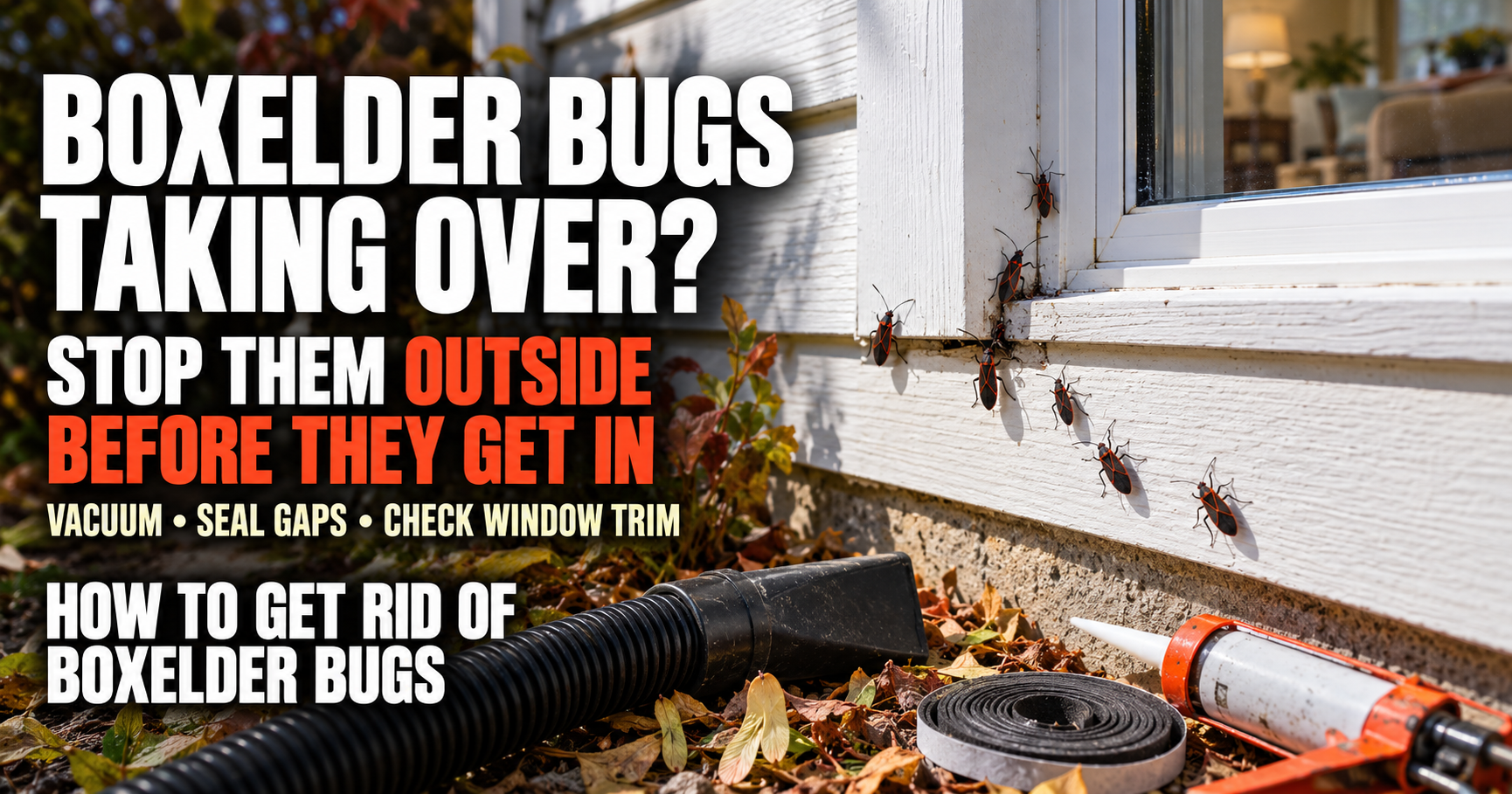
If they are appearing repeatedly, the step-by-step control plan in how to get rid of boxelder bugs in your house and outsidewill help you move beyond daily cleanup.
How to Keep Boxelder Bugs Out Next Fall
The best time to prevent an indoor problem is before the big fall gathering starts. Work on the sunny sides of the house first, especially where you saw the largest groups this year.
Replace worn door sweeps and weatherstripping. Repair torn screens. Caulk narrow stationary cracks around frames, trim, utility lines, and siding where appropriate. Make sure attic, crawlspace, and other ventilation openings are screened without blocking needed airflow.
Clean up leaves, boards, unused pots, stacked material, and dense vegetation next to the foundation. Those areas can give bugs a convenient protected place to wait near the house.
You do not have to make your home perfectly airtight. The goal is to close the obvious routes and make the structure much harder for bugs to use.
Should You Spray Outside?
A labeled outdoor treatment can be reasonable if large groups collect on the exterior every year and physical cleanup plus exclusion are not enough. The best time is when bugs are gathering outside before many get into the walls.
A spray should be one tool, not the entire plan. It can reduce bugs on exterior surfaces, but it will not repair failed weatherstripping or stop bugs from using an open vent.
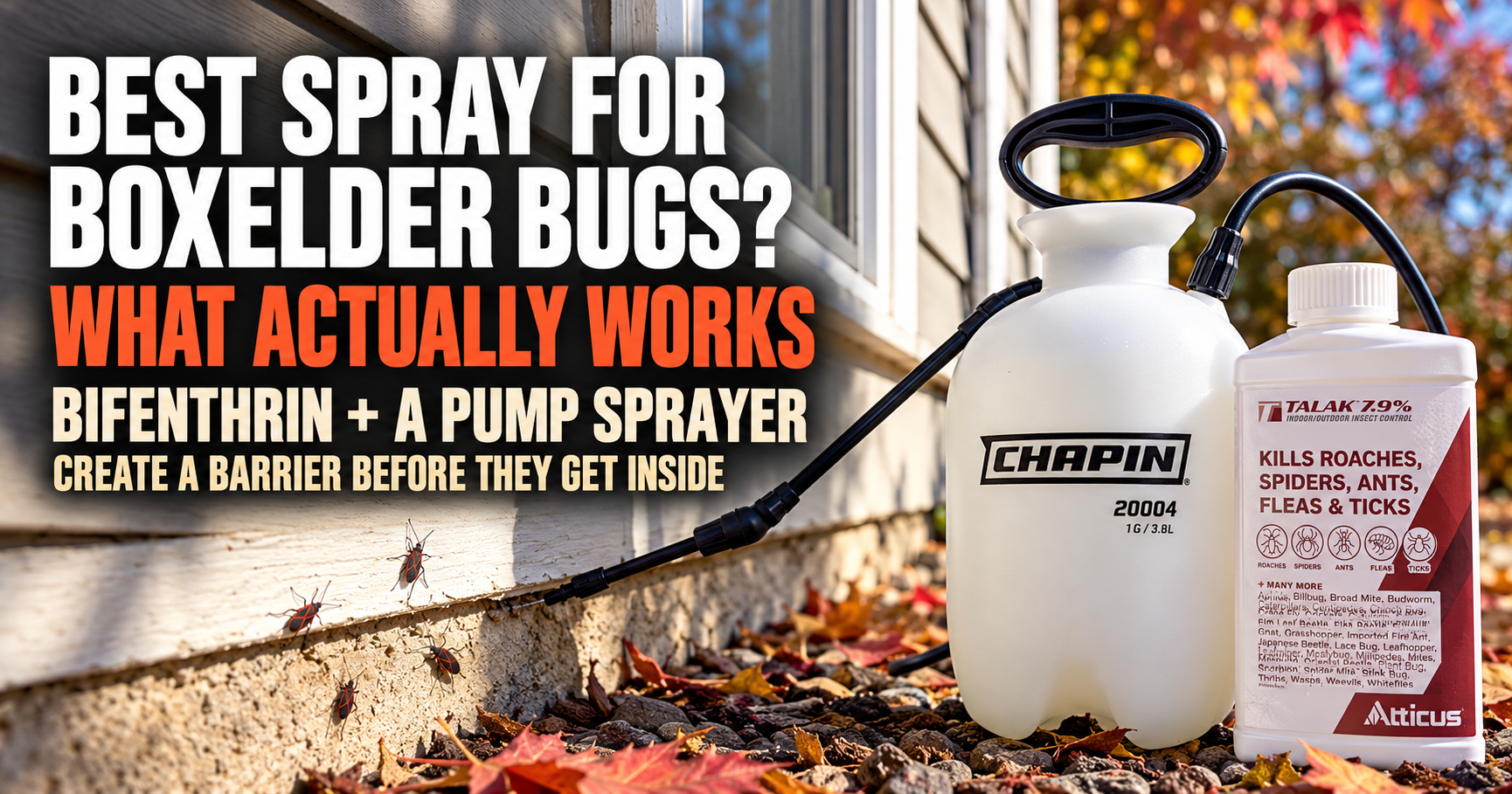
If you decide treatment is necessary, this guide to the best spray for boxelder bugs explains what to look for, where treatment is useful, and why the product label matters.
Are Boxelder Bugs Dangerous in the House?
No. They are unpleasant to find indoors, but they do not bite people in the normal sense, sting, spread a household infestation, destroy the house, or harm pets simply by being present.
The main issues are nuisance, staining when bugs are crushed, and the frustrating sight of several bugs crawling near a window when it is cold outside.
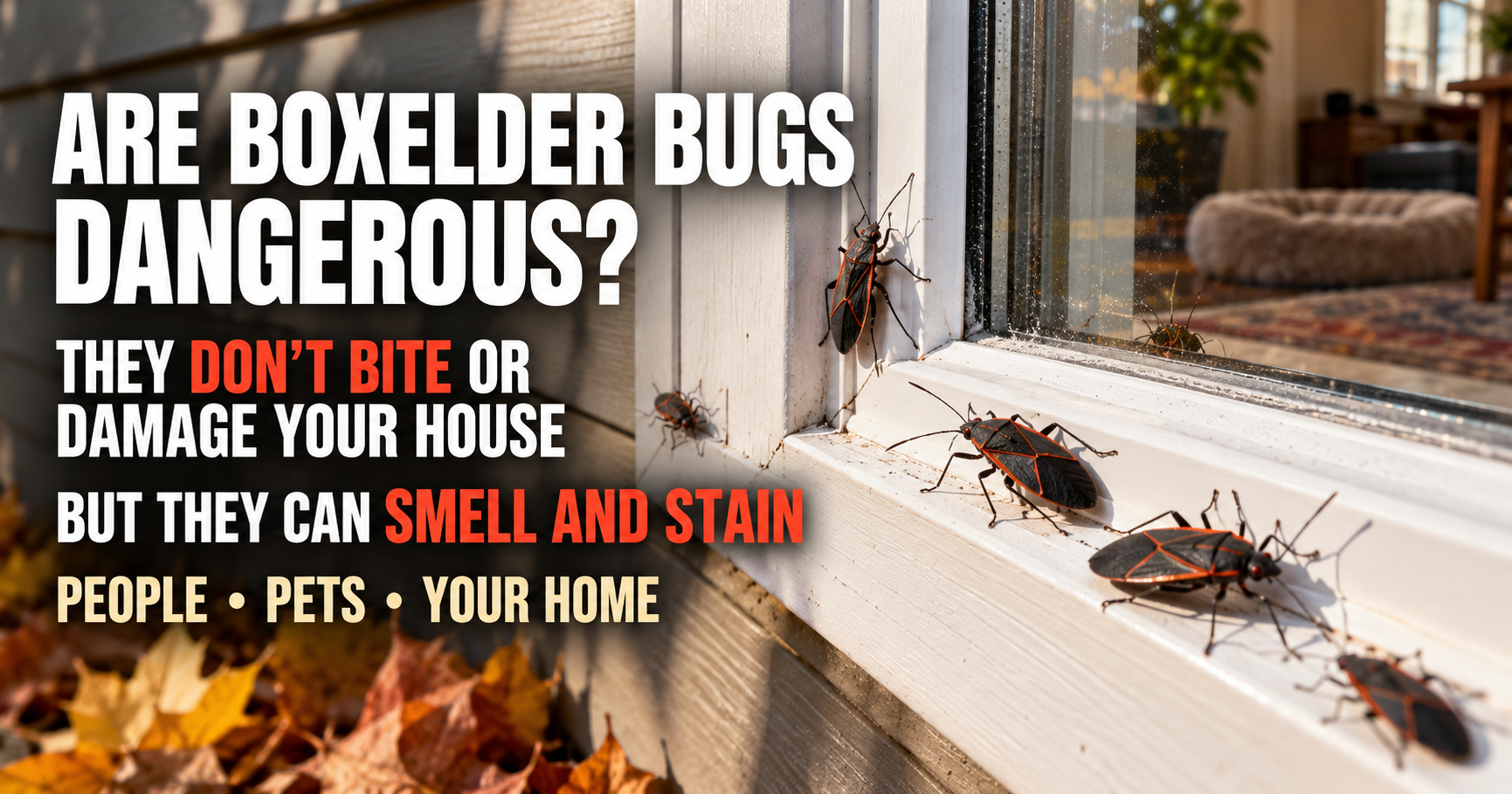
If you have children or pets and want the complete reassurance page, read whether boxelder bugs are dangerous to people, pets, or your home.
Why do boxelder bugs come in the house every fall?
They are looking for protected places to spend winter. They gather on warm exterior walls, then enter through narrow cracks around windows, doors, siding, vents, foundations, and utility openings.
Will boxelder bugs leave on their own?
The ones indoors eventually die or find their way back out, but waiting does not stop more from entering. Vacuuming them and sealing entry points gives you a much better result.
Why do I only see boxelder bugs on one side of my house?
They usually prefer the warmest, sunniest side. South- and west-facing walls are common gathering spots, especially if they have nearby cracks, trim gaps, or windows.
Are boxelder bugs coming in because my house is dirty?
No. They are looking for winter shelter, not food or filth. A clean house can have them if exterior gaps provide a route inside.
Can boxelder bugs live in walls?
They can shelter in wall voids during winter, but they do not build nests or reproduce there. Warmth may make them emerge into rooms around windows and lights.
Why are boxelder bugs in my bedroom?
They likely entered a wall or attic space from outside and emerged near a window, ceiling, or trim gap. They are not usually living in the bed, feeding on people, or building an indoor infestation.
Caleb Warren writes practical pest guides for WhyDoIHaveBugs.com, helping homeowners figure out why pests appear before they waste money on the wrong fix.