
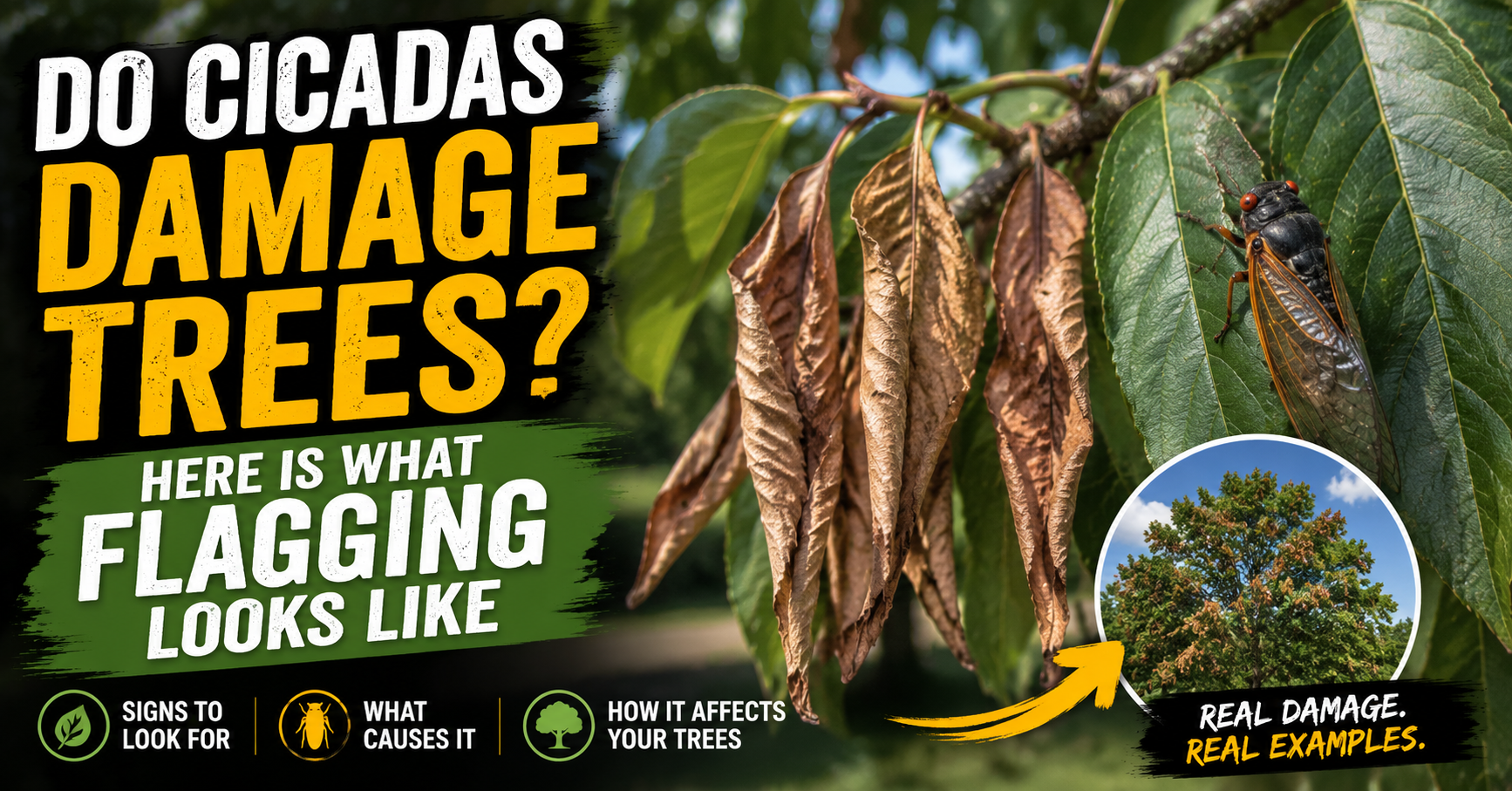
When I see brown leaves still hanging in clumps from the ends of otherwise healthy branches, I immediately check for cicada damage. Cicadas do not chew up leaves, but female cicadas can injure small twigs while laying eggs. The twig beyond the injury loses water, the leaves wilt and turn brown, and the branch tip can hang there like a brown flag.
This damage is called cicada flagging. It can look alarming, especially on young fruit trees, but it is usually much less serious than it first appears.
Do Cicadas Damage Trees?
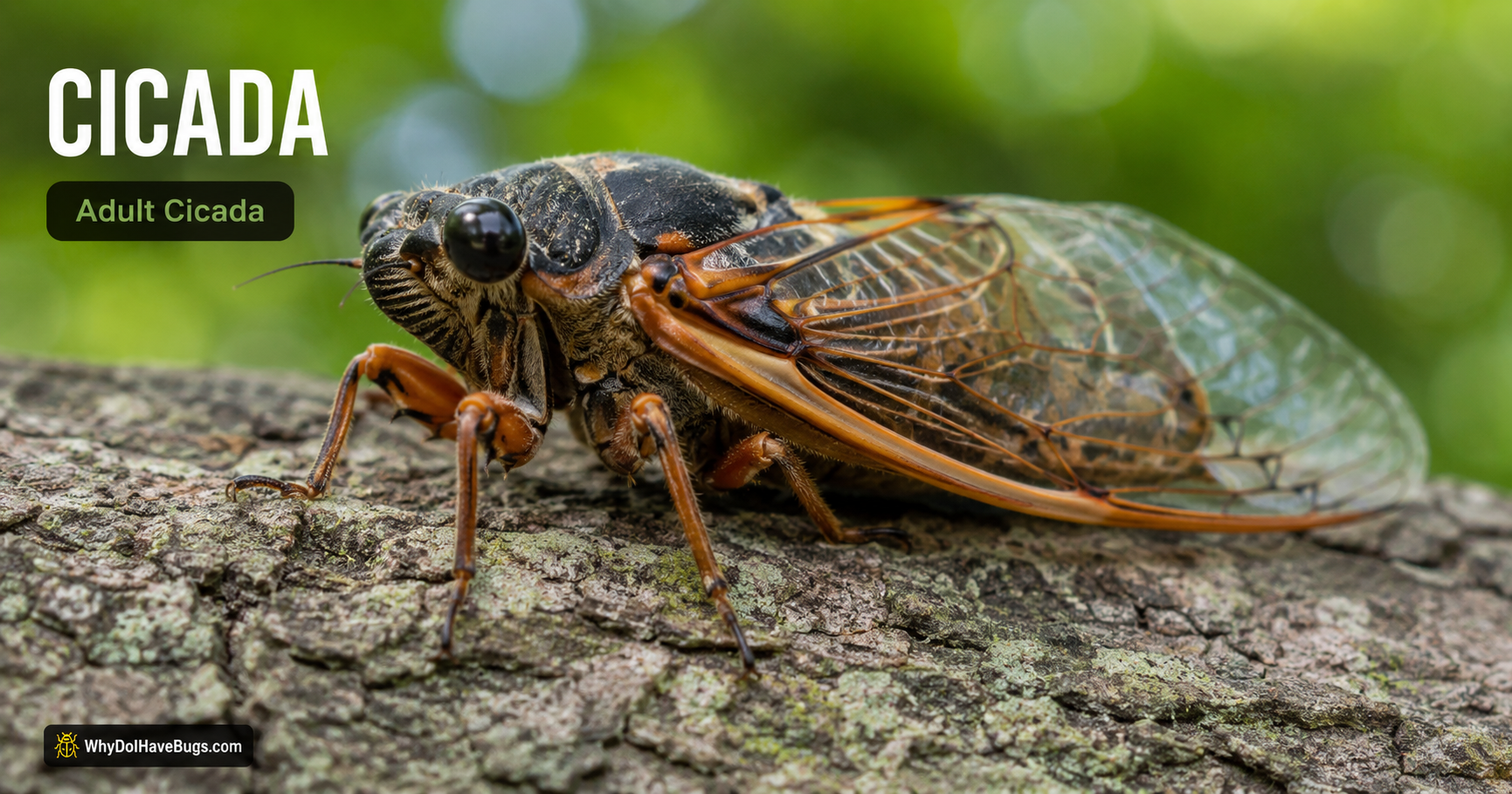
Yes, cicadas can damage trees, but the damage comes mostly from egg laying rather than feeding. A female cicada uses a sharp egg-laying tool called an ovipositor to cut a series of narrow slits into a small woody twig. She deposits eggs inside those cuts.
The cuts weaken the twig and interrupt the flow of water to the section beyond them. Leaves on the outer end of the branch wilt, curl, turn brown, and may stay attached long after they die.
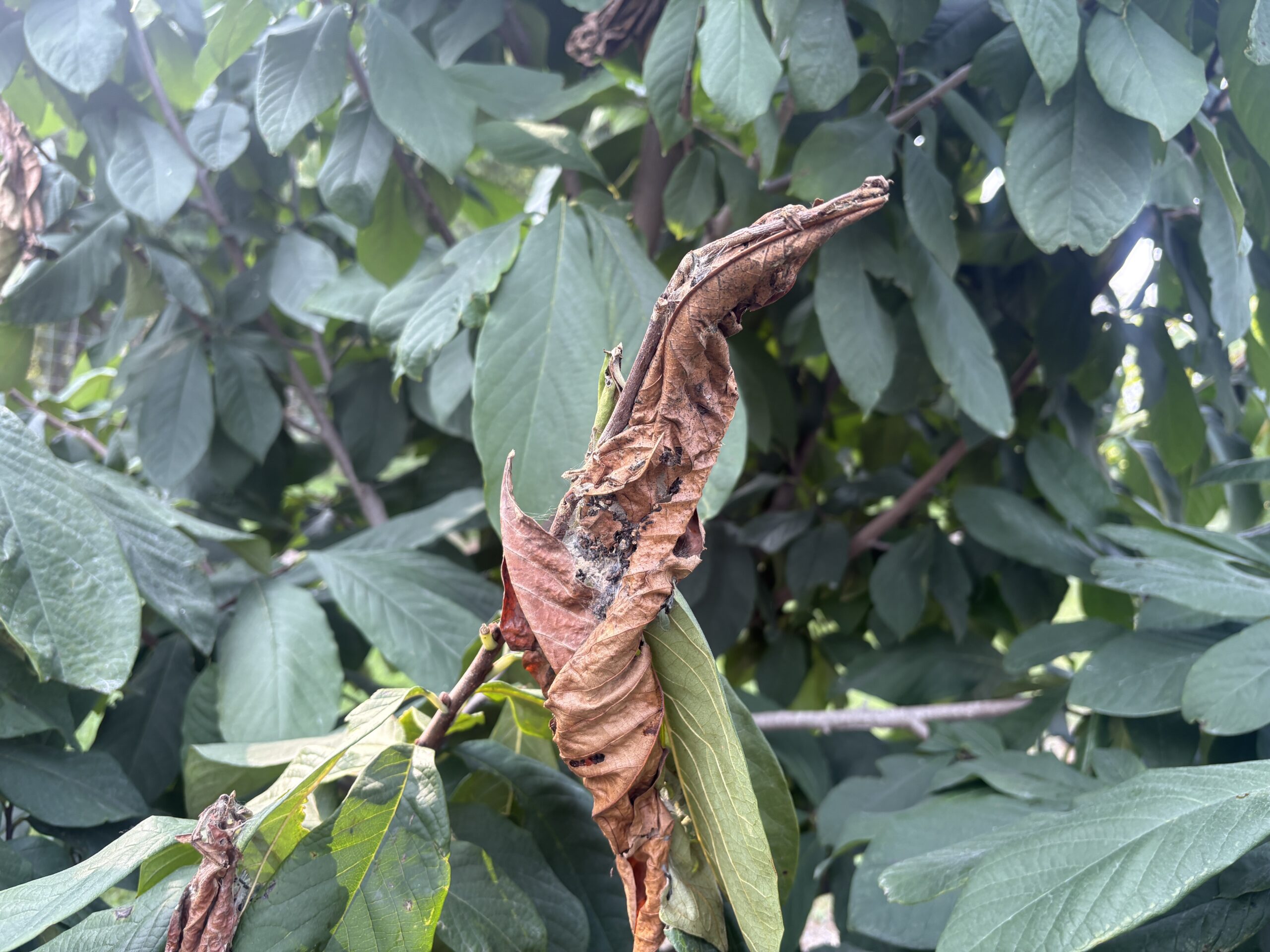
Cicadas are most likely to damage young trees, newly planted fruit trees, shrubs, grapevines, and other plants with lots of small pencil-sized branches. Large established trees normally recover without any real long-term trouble.



What Does Cicada Damage Look Like on a Tree?
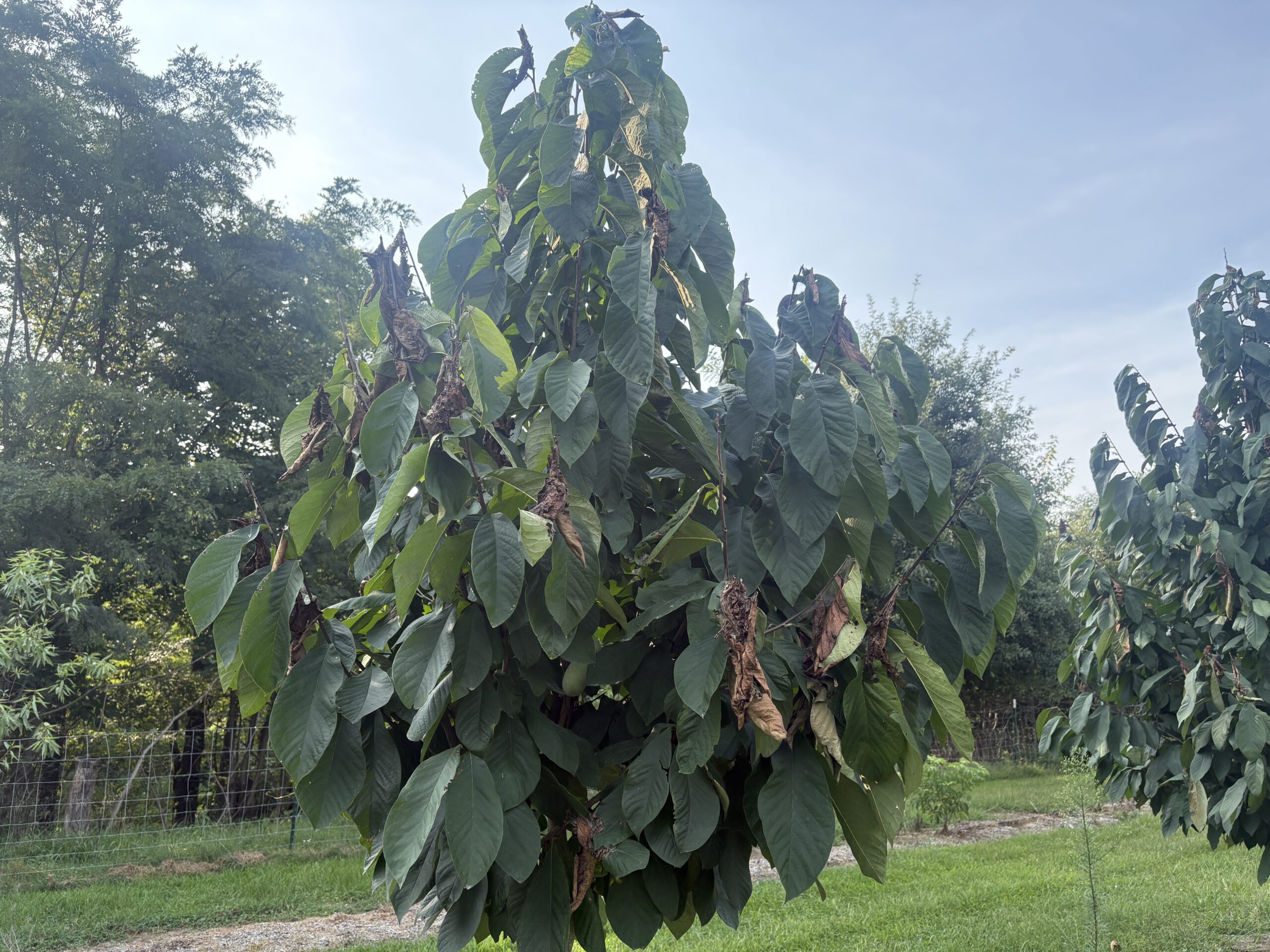
The easiest symptom to spot is a cluster of dead brown leaves at the end of a branch while the rest of the tree remains green and healthy.
The damaged tips may hang downward, snap in the wind, or eventually fall to the ground. From a distance, they can look like brown flags scattered through the canopy, which is where the name flagging comes from.
On close inspection, the damaged twig often has a row of small lengthwise slits in the bark. The scars may look like tiny cuts in a line or a zipper-like pattern. They are usually on the underside of a small twig near the base of the dead section.


Cicada Damage Does Not Look Like Leaf Feeding
Cicadas do not eat holes through leaves like caterpillars, Japanese beetles, grasshoppers, or other chewing insects. A healthy-looking leaf may suddenly wilt because the twig supporting it was injured.
That difference is important. If leaves have ragged holes, missing edges, or only certain areas chewed away, something else is likely responsible. Cicada injury kills the branch tip beyond the egg-laying wounds, so the leaves generally brown together as one clump.
Why Are the Brown Leaves Still Hanging on the Tree?
The leaves stay attached because the twig dies suddenly before the tree has a chance to shed them normally. It is similar to cutting a small branch and watching the leaves dry in place.
Those dead leaf clumps can remain on the tree for weeks. Wind may eventually break the weakened twig, causing the entire brown section to fall.

Which Trees Do Cicadas Damage Most Often?
Cicadas can lay eggs on many kinds of woody plants. Young deciduous trees and fruit trees are especially vulnerable because they often have plenty of branches in the size range females prefer.
Common plants that may show cicada flagging include:
- Apple trees
- Pear trees
- Peach and cherry trees
- Pawpaw trees
- Maples
- Oaks
- Redbuds
- Dogwoods
- Grapevines
- Young shrubs and ornamental trees
A healthy mature tree can usually replace a few injured twig tips with no lasting issue. A small tree with a thin trunk and a limited number of branches needs more attention because losing several main branches can slow its growth or change its shape.
How to Confirm It Is Cicada Flagging
I do not assume every brown branch tip is cicada damage. The quickest way to confirm it is to inspect the twig where the healthy growth meets the dead section.
Look for these signs.
- Dead leaves gathered at the outer end of a branch.
- A small twig that is brown, wilted, broken, or hanging down.
- Several narrow scars cut lengthwise into the twig bark.
- Damage mostly on twigs about the thickness of a pencil or slightly larger.
- Healthy green leaves on much of the rest of the tree.
If you find those parallel cuts, cicada egg laying is the likely cause. If the leaves are covered with spots, mildew, scorched edges, holes, or damage spread evenly throughout the tree, a disease, heat stress, or another pest may be involved instead.



Can Cicada Damage Kill a Tree?
Cicada damage rarely kills a well-established tree. Mature trees have enough branches and stored energy to replace the lost tips.
Young trees are different. A newly planted tree may have only a few main branches, and cicadas can damage a large percentage of its canopy during a heavy emergence. If egg-laying scars are on the central leader or important scaffold branches, the injury can affect the tree’s shape and future growth.
That is why I take cicada flagging seriously on newly planted fruit trees, nursery stock, and young orchard trees even though I do not worry much about it on mature shade trees.
What to Do When Cicadas Damage Your Tree
In most cases, the right response is simple. Let the tree recover, water it during dry weather, and remove only broken or clearly dead pieces.
Remove Broken or Hanging Branch Tips
A dangling twig can tear more bark in the wind or make the tree look rough for the rest of the season. Use clean, sharp hand pruners to remove a broken branch back to healthy wood, a side branch, or an outward-facing bud.
Do not cut large healthy sections of the tree just because you found cicada scars. A mature tree can often seal small wounds and continue growing normally.
Do Not Spray the Tree After Damage Appears
Once you see flagging, the egg-laying injury has already happened. Spraying cannot reverse the cuts or bring dead leaves back to life.
Broad insecticide sprays also create more problems than they solve. They can harm bees and beneficial insects while doing little to stop cicadas in a large outdoor area.
Keep Young Trees Watered
A young tree dealing with branch injury should not also have to deal with drought stress. Water deeply when rainfall is scarce, but do not keep the root zone soggy.
A two- to three-inch layer of mulch around the tree can help hold moisture and reduce competition from grass. Keep mulch several inches away from the trunk so it does not stay wet against the bark.



Should You Prune All Cicada-Damaged Twigs?
No. I would not rush to remove every twig with cicada egg scars. Some injured twigs may survive, and excessive pruning can remove more healthy growth than the cicadas did.
Prune a twig when it is snapped, hanging, obviously dead, or damaged in a way that will leave a ragged break. If the twig is still firm, green beyond the scars, and attached securely, it may be better to leave it alone and watch it.
For a very young fruit tree, remove dead tips cleanly and save the strongest healthy branch that can become the new leader if the original top was damaged.
How to Protect Young Trees From Cicadas
Physical exclusion is the most dependable protection when cicadas are actively laying eggs. Cover young trees with fine insect netting that has openings smaller than one-quarter inch.
The netting needs to go over the entire canopy and be secured around the trunk so cicadas cannot crawl or fly inside. It should not be wrapped tightly around the foliage or tied directly against branch tips.
Use netting only during the egg-laying period. Leaving a cover on too long can reduce airflow and make it harder for a fruit tree to receive enough light and pollination.
When Do Cicadas Damage Trees?
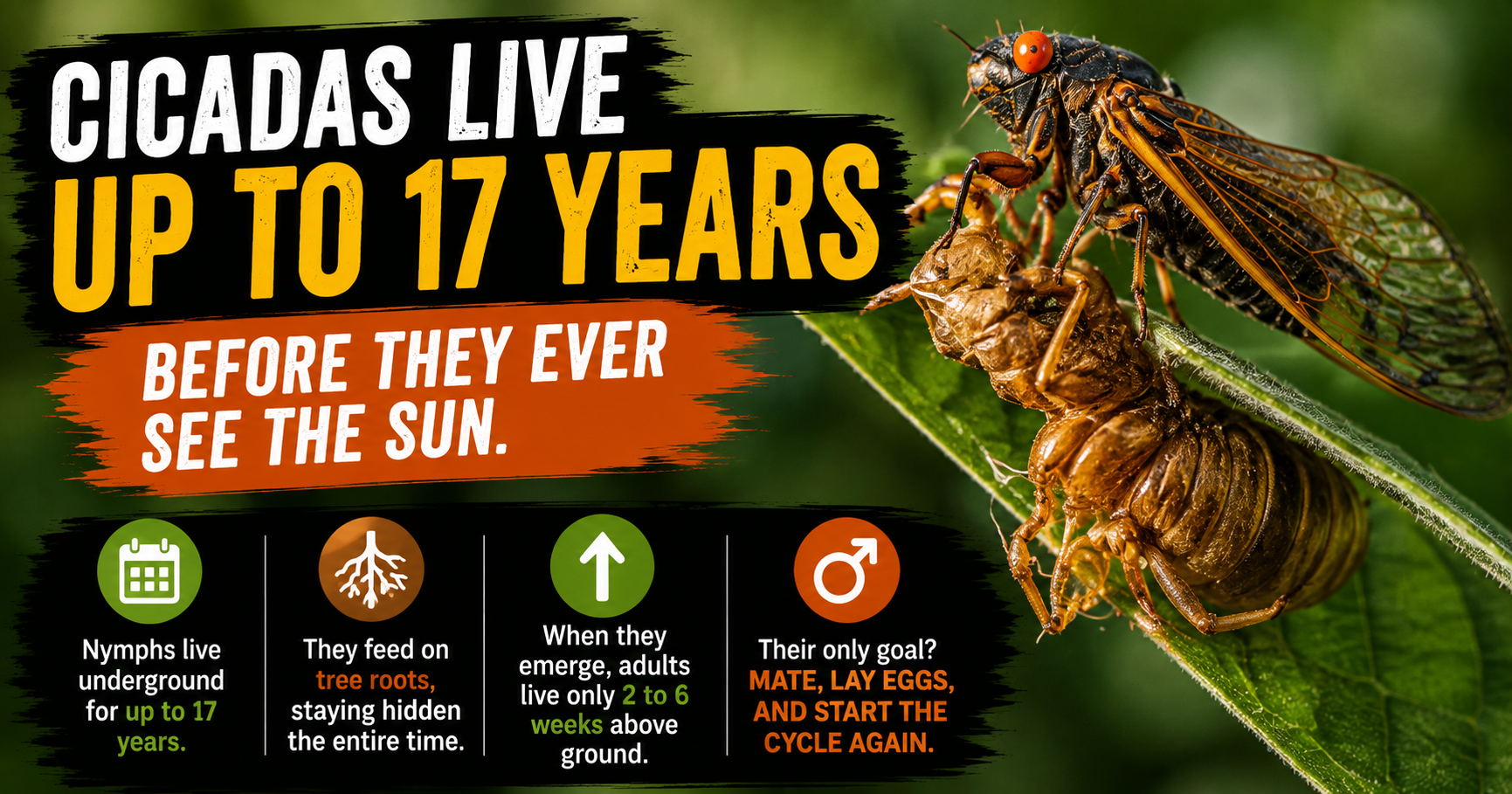
Cicada tree damage happens after adults emerge, mate, and females begin laying eggs. Periodical cicadas tend to create the biggest concern because they emerge in very large numbers during their brood year. For context on how quickly this adult period unfolds, see what happens after cicadas emerge.
Annual cicadas can also lay eggs in twigs, but their numbers are usually spread out enough that the damage is less noticeable. In either case, flagging often becomes obvious after the cicadas are no longer making as much noise.
Will the Tree Recover From Cicada Damage?
Most trees recover well. Cicada flagging can even act like a very light natural pruning on an established tree. The dead outer tips eventually fall or can be removed cleanly, and new growth develops from buds below the injured section.
Young trees may need a little more help. Keep them watered, protect them from mower or weed-trimmer damage, and watch for new growth. If the main leader was killed, choose one strong upright shoot to become the new leader rather than letting several competing shoots grow together.
Is Cicada Damage Worse Than It Looks?
Usually, yes. The dead leaf clusters make a tree look much worse than it really is because they stand out against healthy green foliage.
The injury is still worth checking, especially on young orchard trees, but it does not mean the tree is dying. If most of the canopy is green, the trunk is healthy, and the damage is limited to branch tips, recovery is the normal outcome.
Frequently Asked Questions
Do cicadas eat tree leaves?
No. Cicadas do not chew holes in leaves or strip trees bare. The visible damage happens when females cut small slits into twigs to lay eggs.
Why are branch tips turning brown after cicadas?
The egg-laying cuts can interrupt water flow to the part of the twig beyond the injury. The leaves on that section wilt, brown, and remain attached.
Can cicadas kill young fruit trees?
They can seriously stress a very small or newly planted tree if they damage many important branches or the main leader. Most established fruit trees recover, but young trees are worth protecting during a heavy cicada emergence.
Should I spray for cicadas on my trees?
No. Spraying after you see damage will not repair the egg-laying wounds, and insecticides are not a practical answer for protecting trees from cicadas. Netting is the better option for young trees before damage happens.
Should I cut off dead cicada-damaged branches?
Remove branches that are broken, hanging, or clearly dead. Do not over-prune every scarred twig, because some may survive and excess pruning can stress the tree more.
Do cicadas come back every year?
Annual cicadas appear each summer in many areas, although different species emerge at different times. Periodical cicadas appear only during their specific 13- or 17-year brood cycle.
Can cicada damage spread from tree to tree?
No. Cicada injury is not a disease and does not spread through a tree or from one tree to another. Each damaged twig was injured directly when a female cicada laid eggs in it.
Caleb Warren is a longtime gardener and backyard insect researcher who writes practical pest guides for WhyDoIHaveBugs.com, helping homeowners identify insects accurately before choosing a treatment.